

1. Search Result
Search Result
Pathways Recommended: Stem Cell/Wnt Cell Cycle/DNA Damage
Results for "

myeloid cell types

" in MedChemExpress (MCE) Product Catalog:

35

Inhibitors & Agonists

4

Inhibitory Antibodies

7

Natural
Products

2

Isotope-Labeled Compounds

Cat. No. Product Name Target Research Areas Chemical Structure
  • HY-13653
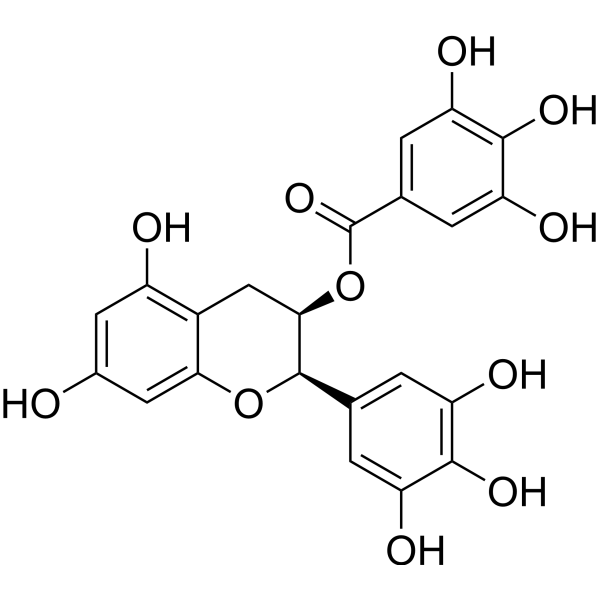
    (-)-Epigallocatechin Gallate
    55+ Cited Publications

    EGCG; Epigallocatechol Gallate

    Endogenous Metabolite Apoptosis Inflammation/Immunology Cancer
    (-)-Epigallocatechin Gallate (EGCG) is a major polyphenol in green tea, which can inhibit cell proliferation and induce cell apoptosis. (-)-Epigallocatechin Gallate inhibits glutamate dehydrogenase 1/2 (GDH1/2, GLUD1/2) activity. (-)-Epigallocatechin Gallate has a potent anticancer, antioxidant and anti-inflammatory properties against various types of cancers such as colorectal cancer, myeloid leukemia, thyroid carcinoma .
    (-)-Epigallocatechin Gallate
  • HY-P9948

    Campath-IH

    Apoptosis Cancer
    Alemtuzumab (Campath-IH) is a humanized monoclonal antibody against CD52. Alemtuzumab does not cross-react with murine CD52. Alemtuzumab selectively targets the CD52 antigen to induce profound lymphocyte depletion, followed by recovery of T and B cells with regulatory phenotypes. Alemtuzumab is capable of complement-dependent cytotoxicity and antibody-dependent cell-mediated cytotoxicity (ADCC), as well as induction of apoptosis. Alemtuzumab has the potential for B-cell chronic lymphocytic leukaemia research .
    Alemtuzumab
  • HY-13653R

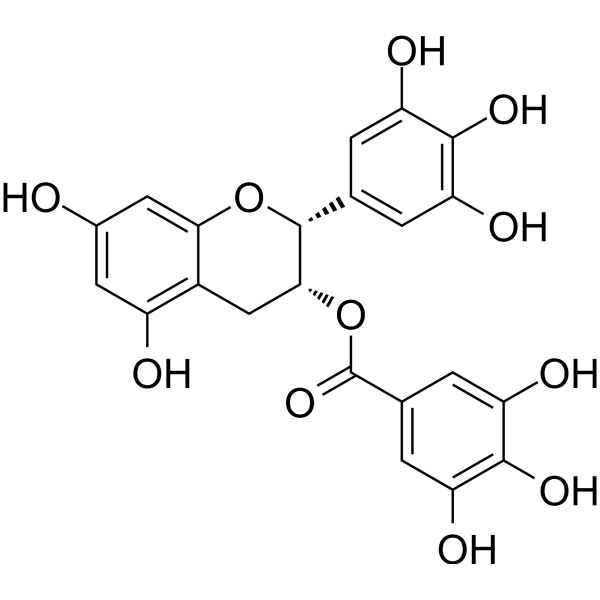
    EGCG(Standard); Epigallocatechol Gallate (Standard)

    Reference Standards Endogenous Metabolite Apoptosis Inflammation/Immunology Cancer
    (-)-Epigallocatechin Gallate (Standard) is the analytical standard of (-)-Epigallocatechin Gallate. This product is intended for research and analytical applications. (-)-Epigallocatechin Gallate (EGCG) is a major polyphenol in green tea, which can inhibit cell proliferation and induce cell apoptosis. (-)-Epigallocatechin Gallate inhibits glutamate dehydrogenase 1/2 (GDH1/2, GLUD1/2) activity. (-)-Epigallocatechin Gallate has a potent anticancer, antioxidant and anti-inflammatory properties against various types of cancers such as colorectal cancer, myeloid leukemia, thyroid carcinoma .
    (-)-Epigallocatechin Gallate (Standard)
  • HY-16271
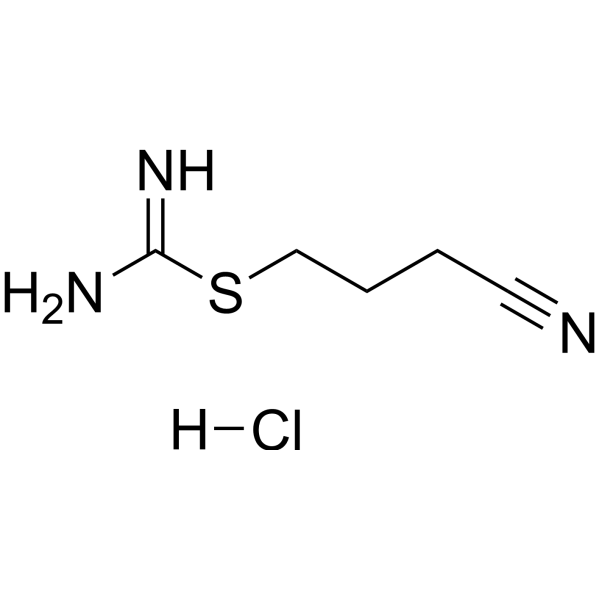
    Kevetrin hydrochloride
    4 Publications Verification

    4-Isothioureidobutyronitrile hydrochloride; thioureidobutyronitrile hydrochloride; thioureido butyronitrile hydrochloride

    MDM-2/p53 Apoptosis Cancer
    Kevetrin hydrochloride is a potent activator of p53, induces apoptosis in TP53 wild-type and mutant acute myeloid leukemia cells. Kevetrin a preferential cytotoxic activity against blast cells .
    Kevetrin hydrochloride
  • HY-145939

    BRD5846

    Casein Kinase Cancer
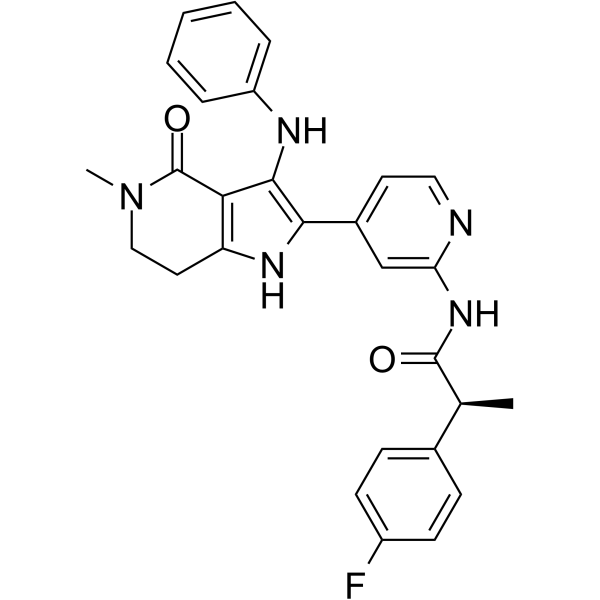
    BAY-888 is a selective CK1α/CSNK1A1 (casein kinase 1α) ATP-competitive inhibitor (IC50: 4 nM@10 μM ATP; 63 nM@1 mM ATP). BAY-888 blocks the negative regulation of p53 and other signaling pathways by CK1α, induces apoptosis and inhibits proliferation of tumor cells. BAY-888 has shown inhibitory efficacy against cancers such as acute myeloid leukemia (AML) in PRISM barcoded cell line screening and can mimic the effects of shRNA-mediated CK1α knockdown. BAY-888 is primarily used for the development of anticancer drugs for p53 wild-type tumors and for the study of the mechanisms of CK1α-related signaling pathways .
    BAY-888
  • HY-P99395
    Talacotuzumab
    1 Publications Verification

    JNJ 56022473; CSL 362

    Interleukin Related Cancer
    Talacotuzumab (JNJ 56022473; CSL 362) is an IgG1-type fully humanized, CD123-neutralizing monoclonal antibody containing a modified Fc structure. Talacotuzumab has KDs of 0.43 nM, 188 nM, 46 nM, 16.8 nM for CD123, CD32b/c, CD16-158F, CD16-158V, respectively. Talacotuzumab inhibits IL-3 binding to CD123, antagonizing IL-3 signaling in target cells. Talacotuzumab has mutated the Fc region to increase affinity for CD16 (FcγRIIIa), thereby enhancing antibody-dependent cell-mediated cytotoxicity (ADCC). Talacotuzumab is highly effective in vivo reducing leukemic cell growth in acute myeloid leukemia (AML) xenograft mouse models .
    Talacotuzumab
  • HY-153803

    PROTACs Molecular Glues Btk Cancer
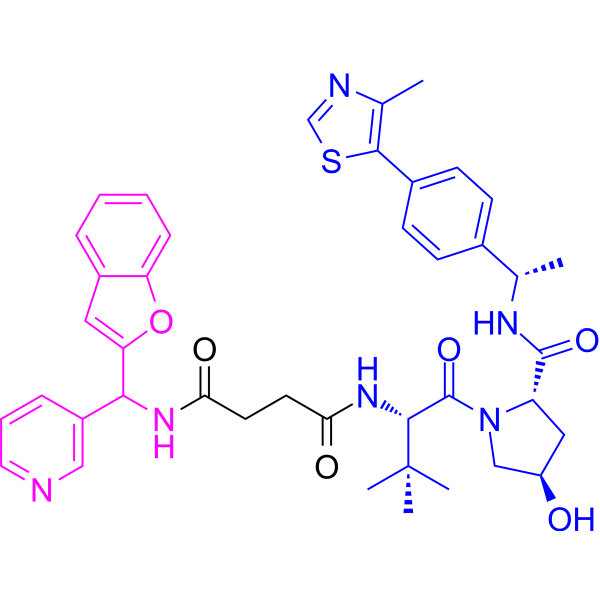
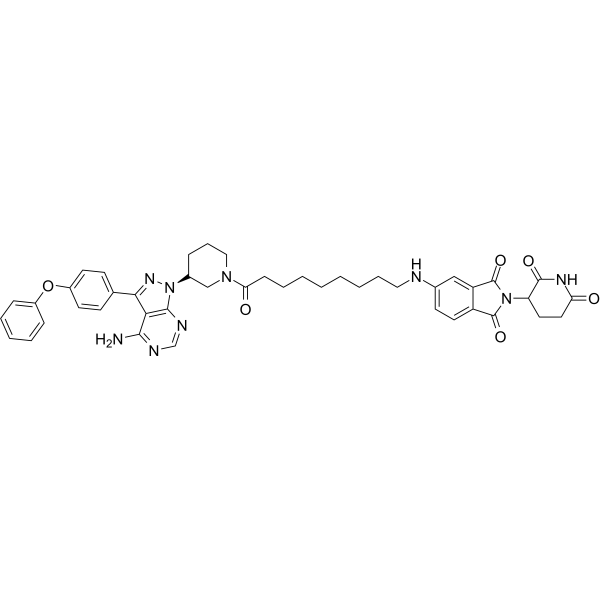
    GBD-9 is a degrader based on the E3 ubiquitin ligase CRBN that targets BTK and the G1 to S phase transition protein GSPT1. GBD-9 has both PROTAC and molecular glue properties by inducing ubiquitination and proteasomal degradation of target proteins. GBD-9 can efficiently degrade wild-type and mutant BTK (such as C481S mutation) and GSPT1. GBD-9 significantly inhibits tumor cell proliferation by inducing G1 phase arrest in cancer cells, downregulating anti-apoptotic proteins (BCL-2, MCL-1) and activating Caspase-3 to induce apoptosis. GBD-9 is mainly used in the research of hematological tumors such as diffuse large B-cell lymphoma (DLBCL) and acute myeloid leukemia (AML) .
    GBD-9 is composed of E3 ubiquitin ligase ligand (pink part) 5-Aminothalidomide (HY-W023573), target protein ligand (blue part) Btk Inhibitor: IBT6A (HY-13036A), and PROTAC linker (black part) Nonanoic acid (HY-N7057).
    GBD-9
  • HY-150526

    Endogenous Metabolite Apoptosis Inflammation/Immunology Cancer
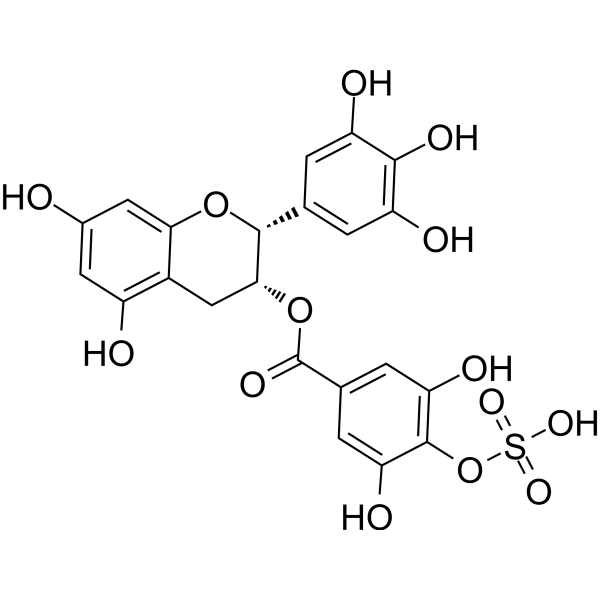
    EGCG-4″-sulfate is a major polyphenol in green tea, which can inhibit cell proliferation and induce cell apoptosis. (-)-Epigallocatechin Gallate sulfate inhibits glutamate dehydrogenase 1/2 (GDH1/2, GLUD1/2) activity. EGCG-4″-sulfate has a potent anticancer, antioxidant and anti-inflammatory properties against various types of cancers such as colorectal cancer, myeloid leukemia, thyroid carcinoma .
    EGCG-4″-sulfate
  • HY-13653S1

    EGCG-d4; Epigallocatechol Gallate-d4

    Isotope-Labeled Compounds Apoptosis Inflammation/Immunology Cancer
    (-)-Epigallocatechin Gallate-d4 (EGCG-d4) is the deuterium labeled (-)-Epigallocatechin Gallate (HY-13653). (-)-Epigallocatechin Gallate (EGCG) is a major polyphenol in green tea, which can inhibit cell proliferation and induce cell apoptosis. (-)-Epigallocatechin Gallate inhibits glutamate dehydrogenase 1/2 (GDH1/2, GLUD1/2) activity. (-)-Epigallocatechin Gallate has a potent anticancer, antioxidant and anti-inflammatory properties against various types of cancers such as colorectal cancer, myeloid leukemia, thyroid carcinoma .
    (-)-Epigallocatechin Gallate-d4
  • HY-12083

    Bcr-Abl Cancer
    PPY-A is a potent T315I mutant and wild-type Abl kinases inhibitor with IC50s of 9 and 20 nM, respectively. PPY-A inhibits Ba?F3 cells transformed with wild-type Abl and Abl T315I mutantl with IC50s of 390 and 180 nM, respectively. PPY-A can be used for the research of chronic myeloid leukemia (CML) .
    PPY-A
  • HY-179094

    PROTACs IRAK NF-κB Enolase Inflammation/Immunology Cancer
    PSP-0119 is a highly efficient and effective PROTAC degrader targeting IRAK4 (IC50 = 2.83 nM). PSP-0119 can inhibit IRAK4 kinase activity, NF-κβ activity, and IL-1β-induced IRAK4 phosphorylation. PSP-0119 degrades IRAK4 in FLT3-mutant AML cell lines, sparing FLT3-wild-type AML cells, FLT3-wild-type samples, and normal bone marrow. PSP-0119 downregulates alpha-enolase (eNOS) of MOLM-13 cells. PSP-0119 can be used for the study of Acute Myeloid Leukemia (AML) .
    PSP-0119
  • HY-116894

    Apoptosis Cancer
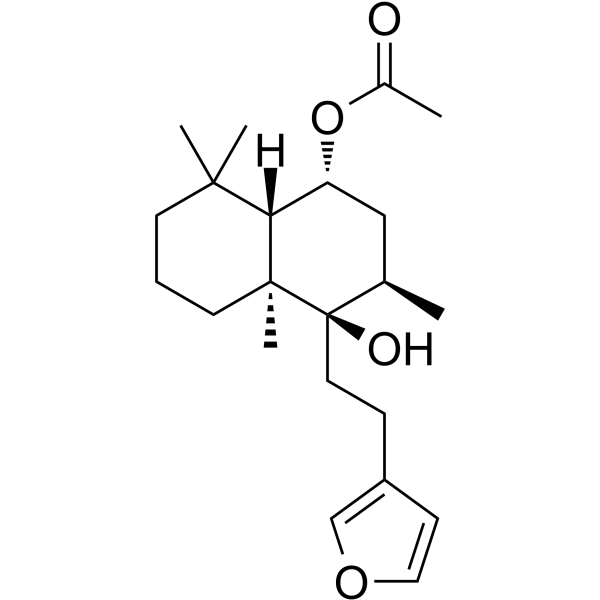
    Rotundifuran, a labdane type diterpene, is isolated from Vitex rotundifolia. Rotundifuran can inhibit the cell cycle progression and induce apoptosis in human myeloid leukaemia cells .
    Rotundifuran
  • HY-170017S

    EGCG-d3/d4; Epigallocatechol Gallate-d3/d4

    Isotope-Labeled Compounds Apoptosis Inflammation/Immunology Cancer
    (-)-Epigallocatechin Gallate-d3/d4 (EGCG-d3/d4) is the deuterium labeled (-)-Epigallocatechin Gallate (HY-13653). (-)-Epigallocatechin Gallate (EGCG) is a major polyphenol in green tea, which can inhibit cell proliferation and induce cell apoptosis. (-)-Epigallocatechin Gallate inhibits glutamate dehydrogenase 1/2 (GDH1/2, GLUD1/2) activity. (-)-Epigallocatechin Gallate has a potent anticancer, antioxidant and anti-inflammatory properties against various types of cancers such as colorectal cancer, myeloid leukemia, thyroid carcinoma .
    (−)-Epigallocatechin Gallate-d3/d4
  • HY-162698

    Thymidylate Synthase Cancer
    JMF4073 is a thymidylate (TMP) and cytidylate (CMP) kinases inhibitor with IC50s of 0.16 μM and 0.17 μM, respectively. JMF4073 eliminates wild-type (WT)-Bcr-Abl-transformed myeloid cells in vitro and in vivo .
    JMF4073
  • HY-126920

    FLT3 Apoptosis Cancer
    AFG206 is a first-generation ATP competitive “type II” FLT3 inhibitor. AFG206 potently inhibits cell proliferation (IC50 around 0.1 µM) via induction of Apoptosis in FLT3-ITD-Ba/F3 cells and D835Y-Ba/F3 cells. AFG206 is promising for research of acute myeloid leukemia .
    AFG206
  • HY-164469

    Bcr-Abl Apoptosis STAT Cancer
    CHMFL-48 is an orally active BCR-ABL kinase inhibitor targeting both wild-type (wt) and various imatinib-resistant mutants. The IC50 values for CHMFL-48 against ABL wild-type and ABL T315I mutant are 1 nM and 0.8 nM, respectively. CHMFL-48 exerts its effects by blocking the autophosphorylation of BCR-ABL wild-type and mutant forms, which impacts downstream signaling mediators such as STAT5 and CRKL, leading to cell cycle arrest and induction of apoptosis. CHMFL-48 holds potential for research into chronic myeloid leukemia (CML) .
    CHMFL-48
  • HY-111158

    c-Met/HGFR Cancer
    BMS-748730 is an oral tyrosine kinase inhibitor. BMS-748730 inhibits tyrosine kinase activity by competing with the ATP binding site of the tyrosine kinase, which prevents the kinase from phosphorylating the substrate protein, thereby inhibiting signaling pathways associated with cell proliferation and tumor growth. BMS-748730 can be used in the study of certain types of cancer, including chronic myeloid leukemia (CML) .
    BMS-748730
  • HY-E70724

    FLT3 Cancer
    FLT3 (FMS-like tyrosine kinase 3, CD135) is a type 3 receptor tyrosine kinase that plays important roles in cell survival, proliferation, and differentiation during normal hematopoiesis. FLT3 is one of the most frequently mutated genes in acute myeloid leukemia (AML). FLT3 ITD is a internal tandem duplication (ITD) mutation of FLT3 that may be present in AML cells. FLT3 ITD Recombinant Human Active Protein Kinase is a recombinant FLT3 ITD protein that can be used to study FLT3 ITD-related functions .
    FLT3 ITD Recombinant Human Active Protein Kinase
  • HY-121708

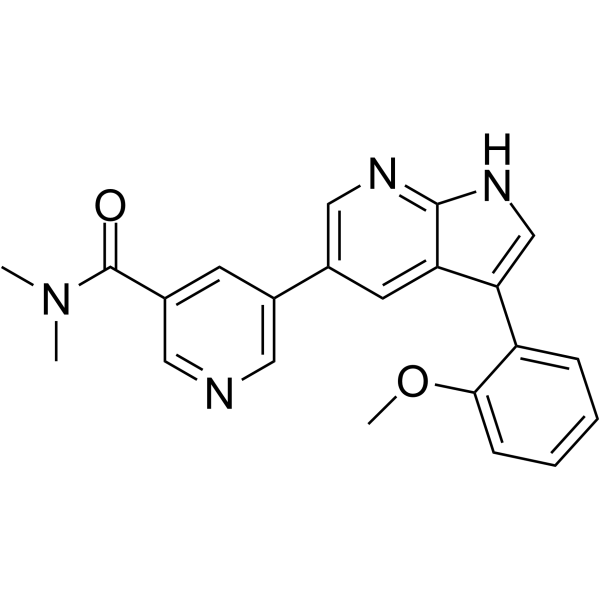
    c-Kit Cancer
    KI-328 is a novel inhibitor targeting KIT kinase that has selective activity against some KIT mutant kinases commonly found in acute myeloid leukemia (AML). KI-328 showed specificity for KIT kinase in in vitro kinase assays and inhibited the growth of wild-type (Wt) and mutant KIT-expressing cells, but had lower activity against D816V-KIT. Comparative analysis of the inhibitory effects of several potent KIT inhibitors on the growth of multiple mutant KIT-expressing cells showed that the multi-kinase inhibitors had comparable activity against D816V-KIT as against other mutant KITs; however, heat shock protein 90 (HSP90) inhibitors showed significant activity against D816V-KIT, inhibiting the growth of D816V-KIT-expressing cells at concentrations that did not affect the growth of other mutant KIT-expressing cells. These results suggest that potent KIT inhibitors have different activities against different types of KIT mutant kinases. Therefore, in clinical development, KIT inhibitors need to validate their activity against multiple types of KIT mutant kinases.
    KI-328
  • HY-143894

    FLT3 Cancer
    FLT3-IN-11 (compound 30) is a potent, selective and orally active FLT3 kinase inhibitor with IC50s of 7.22 nM and 4.95 nM for wild-type FLT3 and FLT3-D835Y, respectively. FLT3-IN-11 high selectivity for FLT3 over c-KIT (>1000-fold). FLT3-IN-11has excellent anti-acute myeloid leukemia (AML) activity (MV4-11 cells, IC50 of 3.2 nM) .
    FLT3-IN-11
  • HY-N3055

    Apoptosis AMPK Platelet-activating Factor Receptor (PAFR) Caspase Neurological Disease Metabolic Disease Cancer
    Pinusolide is an AMPK activator and PAF receptor antagonist. Pinusolide activates AMPK, phosphorylates ACC, enhances IRS-1 tyrosine phosphorylation, boosts glucose uptake, and modulates insulin signaling. Pinusolide inhibits caspase-3/7 activation, intracellular calcium elevation, reactive oxygen species overproduction, lipid peroxidation, and tumor cell proliferation. Pinusolide stabilizes superoxide dismutase activity, reduces apoptotic hallmarks, induces mitochondrial pathway apoptosis, and triggers DNA fragmentation. Pinusolide can be used for the research of type 2 diabetes, neurodegenerative diseases, acute lymphoblastic leukemia, acute myeloid leukemia, and Burkitt lymphoma .
    Pinusolide
  • HY-E70723

    FLT3 Cancer
    FLT3 (FMS-like tyrosine kinase 3, CD135) is a type 3 receptor tyrosine kinase that plays important roles in cell survival, proliferation, and differentiation during normal hematopoiesis. FLT3 is one of the most frequently mutated genes in acute myeloid leukemia (AML). FLT3 D835Y is the most frequent kinase domain mutation, converting aspartic acid to tyrosine. FLT3 D835Y Recombinant Human Active Protein Kinase is a recombinant FLT3 D835Y protein that can be used to study FLT3 D835Y-related functions .
    FLT3 D835Y Recombinant Human Active Protein Kinase
  • HY-N19664

    Others Cancer
    14-Deoxy-12-methoxyandrographolide, an ent-labdane-type diterpenoid found in the aerial parts of Andrographis paniculata, is a cell differentiation inducer. 14-Deoxy-12-methoxyandrographolide induces differentiation of myeloid leukemia cells via increased phagocytosis of polystyrene latex particles. 14-Deoxy-12-methoxyandrographolide can be used for the research of myeloid leukemia .
    14-Deoxy-12-methoxyandrographolide
  • HY-N18290

    Others Cancer
    12-Ethoxynimbolinin E is a nimbolinin-type limonoid found in the fruits of Melia toosendan. 12-Ethoxynimbolinin E induces cytotoxic activity against cancer cells. 12-Ethoxynimbolinin E can be used for the research of cancer, such as myeloid leukemia, and lung cancer .
    12-Ethoxynimbolinin E
  • HY-180979

    PROTACs Bcr-Abl Cancer
    P22D is a BCR-ABL PROTAC degrader based on Dasatinib (HY-10181), with a DC50 value of approximately 10 nM for the wild-type BCR-ABL protein. P22D cannot degrade the BCR-ABL T315I mutant. P22D has inhibitory activity against K562 cells (wild type), but is ineffective against BaF3-BCR-ABL (T315I) cells. P22D can be used for research on chronic myeloid leukemia and acute lymphocytic leukemia .
    P22D
  • HY-186167

    IKK Cancer
    CDDO-biotin is an IKKβ inhibitor with cancer cell inhibitory activity. CDDO-biotin directly interacts with and oxidizes Cys-179 in the activation loop of IKKβ, forming an adduct with wild-type IKKβ. CDDO-biotin can be used in the research of myeloid leukemia, osteosarcoma, multiple myeloma, lung cancer, breast cancer and pancreatic cancer .
    CDDO-biotin
  • HY-165532

    SGX70393

    Bcr-Abl Cancer
    SGX393 (SGX70393) is a Bcr-Abl kinase inhibitor. SGX393 binds to the active conformation of the kinase domains of both wild-type and T315I mutant Bcr-Abl, thereby inhibiting kinase activity. SGX393 exhibits antiproliferative effects in cells expressing wild-type or T315I mutant Bcr-Abl, and suppresses T315I-driven tumor growth. SGX393 can be used for the research of chronic myeloid leukemia .
    SGX393
  • HY-180981

    PROTACs Bcr-Abl Cancer
    P19As is a BCR-ABL PROTAC degrader based on Asciminib (HY-104010), with a DC50 value of approximately 200 nM for the wild-type BCR-ABL protein. P19As can degrade the T315I mutant and exhibits potent anti-proliferative activity in BaF3-BCR-ABL (T315I) cells. P19As can be used for the study of chronic myeloid leukemia and acute lymphoblastic leukemia .
    P19As
  • HY-182004

    FLT3 Cancer
    FLT3-IN-40 (compound 1) is a type I ATP-competitive FLT3 inhibitor with an IC50 of 16.26 nM. FLT3-IN-40 reduces the autophosphorylation level of FLT3 and the phosphorylation level of downstream ERK. FLT3-IN-40 exhibits antiproliferative, cell cycle regulatory and apoptosis-inducing activities. FLT3-IN-40 can be used in research related to acute myeloid leukemia .
    FLT3-IN-40
  • HY-16270

    3-Cyanopropyl carbamimidothioate; 4-Isothioureidobutyronitrile

    Apoptosis MDM-2/p53 Cancer
    Kevetrin (3-Cyanopropyl carbamimidothioate; 4-Isothioureidobutyronitrile) is an apoptosis inducer that exhibits p53-dependent and p53-independent antitumor activity. In TP53 wild-type models, Kevetrin activates and stabilizes the p53 protein by altering the processing of MDM2, thereby inducing cell cycle arrest and apoptosis. Kevetrin shows higher sensitivity in mutant models. Kevetrin is applicable for the research of various cancers including acute myeloid leukemia and breast cancer .
    Kevetrin
  • HY-P992369

    VISTA Cancer
    HMBD-002 is an Fc-independent, non-depleting IgG4 subclass antibody that targets VISTA and VSIG3. It is widely used in research related to various solid tumors, including colon cancer, triple-negative breast cancer, and non-small cell lung cancer. HMBD-002 blocks the interactions of VISTA with VSIG3 and LRIG1, relieves immunosuppression without depleting VISTA-positive cells, activates the cytotoxic program of CD8 + T cells, and drives the type I interferon signaling pathway. HMBD-002 reprograms tumor-associated macrophages to the M1 phenotype, reduces tumor infiltration of inhibitory myeloid cells, thereby significantly inhibiting tumor growth and improving survival. HMBD-002 is well tolerated in rodent and non-human primate animal models .
    HMBD-002
  • HY-145743

    Isocitrate Dehydrogenase (IDH) Cancer
    CP-17 is a potent and selective IDH2/R140Q inhibitor with an IC50 of 40.75 nM. CP-17 exhibits excellent selectivity of >55-fold against the wild-type IDH2. CP-17 exhibits robust D-2-HG suppression activity in TF-1 (IDH2/R140Q) cells and reverses the cellular differentiation block induced by the R140Q mutation. CP-17 can be used for acute myeloid leukemia (AML) research .
    CP-17
  • HY-P992388

    LILRB Cancer
    IO-108 is a humanized IgG4 monoclonal antibody and a competitive inhibitor of LILRB2, with a KD value of 1.97 nM. IO-108 competitively blocks the binding of LILRB2 to its ligands including HLA-G, MHC-I, ANGPTL2 and SEMA4A, reprograms tumor-associated myeloid cells, drives the conversion of suppressive myeloid cells into a pro-inflammatory phenotype, and restores the cytotoxic activity of T cells and NK cells. IO-108 inhibits tumor growth in LILRB2 transgenic mouse models. IO-108 can be used for the research of solid tumors .
    IO-108
  • HY-179497

    FLT3 VEGFR Akt STAT ERK Apoptosis Cancer
    FLT3-IN-37 (Compound 6z) is a potent inhibitor of FLT3-ITD, with IC50 values of 1.5 and 3.4 nM for FLT3-ITD and TEL-VEGFR2, respectively. FLT3-IN-37 exhibits high selectivity for wild-type FLT3 (WT) and c-Kit. FLT3-IN-37 inhibits FLT3 phosphorylation and downregulates the expression of p-Akt, p-STAT5, and p-ERK. FLT3-IN-37 exerts anti-leukemia effects by blocking the cell cycle and inducing apoptosis (apoptosis). FLT3-IN-37 can be used for research on acute myeloid leukemia (AML) .
    FLT3-IN-37
  • HY-180977

    PROTACs Bcr-Abl Cancer
    P19P is a BCR-ABL PROTAC degrader based on Ponatinib (HY-12047), with a DC50 value of approximately 20 nM for the wild-type BCR-ABL protein. P19P can effectively degrade various drug-resistant mutants such as T315I, E255K, H396R, and V468F, and exhibits potent anti-proliferative activity in BaF3-BCR-ABL (T315I) cells. P19P maintains strong inhibitory activity against ABL (T315I), with a IC50 of 13.1 nM. P19P does not inhibit the formation of vascular lumens in HUVEC. P19P can be used for research on chronic myeloid leukemia and acute lymphoblastic leukemia .
    P19P

Inquiry Online

Your information is safe with us. * Required Fields.

Salutation


Country or Region *

Applicant Name *


Organization Name *

Department *


Email Address *


Product Name *

Cat. No.


Requested quantity *

Phone Number *


Remarks

Inquiry Online

Inquiry Information

Product Name:
Cat. No.:
Quantity:
MCE Japan Authorized Agent:

