1. Search Result
Search Result
Results for "

nasal congestion

" in MedChemExpress (MCE) Product Catalog:

13

Inhibitors & Agonists

1

Inhibitory Antibodies

1

Isotope-Labeled Compounds

Cat. No. 상품명 Target 연구분야 Chemical Structure
  • HY-P990774

    ASP-7266; TRAB-1; UPB-101

    Interleukin Related Inflammation/Immunology
    Verekitug (ASP-7266; TRAB-1; UPB-101) is a human monoclonal antibody targeting the thymic stromal lymphopoietin receptor (TSLPR), with a mean half-life of approximately 20 days. At doses of Verekitug ≥100 mg, complete and sustained TSLPR-specific occupancy is achieved, and the antibody does not bind to IL-7Rα. By inhibiting TSLP-driven inflammatory responses, Verekitug blocks TSLP-induced cell proliferation and TARC expression, while reducing fractional exhaled NO levels, blood eosinophil counts, and levels of IL-5 and IgE. Verekitug significantly improves scores for nasal polyps, nasal congestion and olfactory dysfunction, with favorable safety and good tolerability; potential adverse reactions include headache, upper respiratory tract infection, sinusitis and nasopharyngitis. Verekitug is used in relevant studies on asthma, chronic rhinosinusitis with nasal polyps and chronic obstructive pulmonary disease .
    Verekitug
  • HY-B0556A

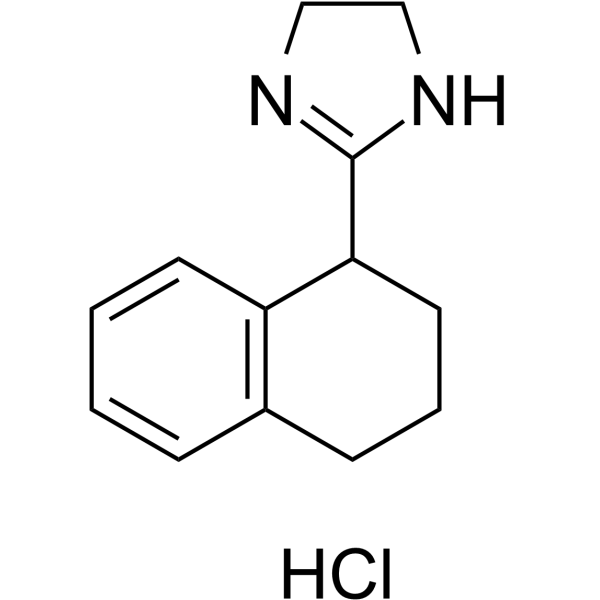
    Tetryzoline hydrochloride

    Adrenergic Receptor Cardiovascular Disease Endocrinology
    Tetrahydrozoline hydrochloride (Tetryzoline hydrochloride), a derivative of imidazoline, is an α-adrenergic agonist that causes vasoconstriction. Tetrahydrozoline hydrochloride is widely used for the research of nasal congestion and conjunctival congestion .
    Tetrahydrozoline hydrochloride
  • HY-B1317

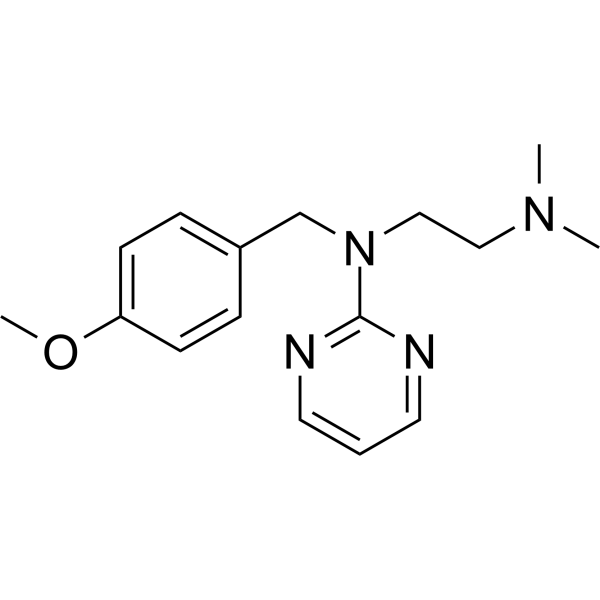
    Neohetramine

    Histamine Receptor Inflammation/Immunology
    Thonzylamine is an orally active H1 histamine receptor antagonist with good antihistaminic and antianaphylactic properties. Thonzylamine can be used for the research of hypersensitivity diseases, nasal congestion, allergic conjunctivitis and other allergic diseases .
    Thonzylamine
  • HY-B0556

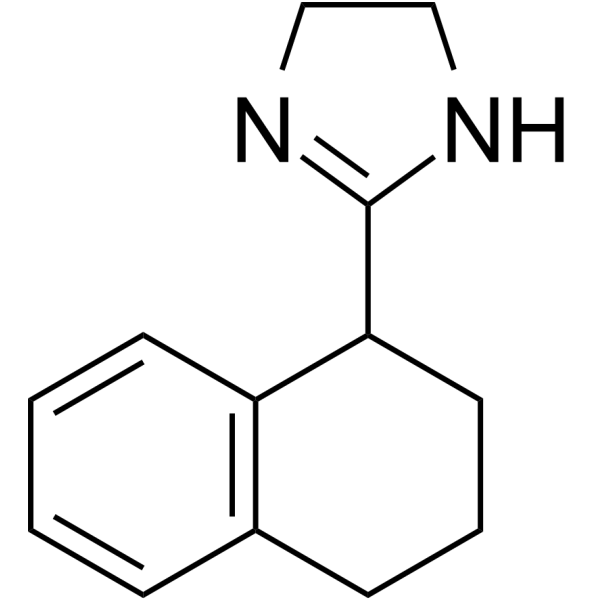
    Tetryzoline

    Adrenergic Receptor Cardiovascular Disease
    Tetrahydrozoline (Tetryzoline), a derivative of imidazoline, is an α-adrenergic agonist that causes vasoconstriction. Tetrahydrozoline is widely used for the research of nasal congestion and conjunctival congestion .
    Tetrahydrozoline
  • HY-B0556AS

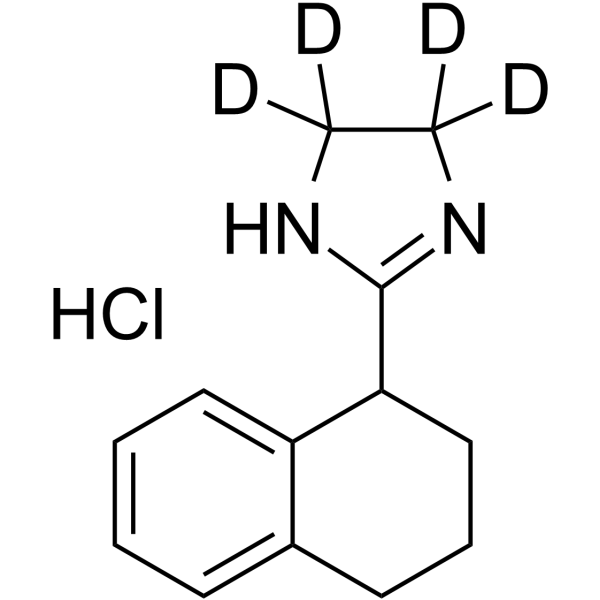
    Tetryzoline-d4 hydrochloride

    Isotope-Labeled Compounds Adrenergic Receptor Cardiovascular Disease Endocrinology
    Tetrahydrozoline-d4 (hydrochloride) is the deuterium labeled Tetrahydrozoline hydrochloride. Tetrahydrozoline hydrochloride (Tetryzoline hydrochloride), a derivative of imidazoline, is an α-adrenergic agonist that causes vasoconstriction. Tetrahydrozoline hydrochloride is widely used for the research of nasal congestion and conjunctival congestion .
    Tetrahydrozoline-d4 hydrochloride
  • HY-B0556B

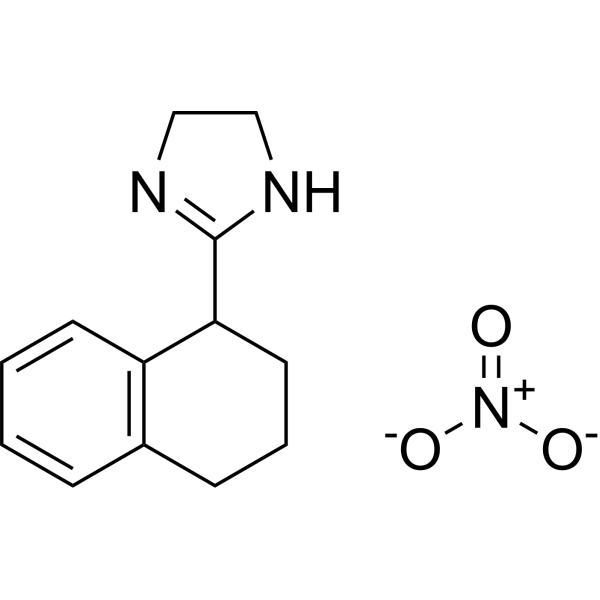
    Tetryzoline nitrate

    Adrenergic Receptor Cardiovascular Disease Metabolic Disease
    Tetrahydrozoline (Tetryzoline) nitrate , a derivative of imidazoline, is an α-adrenergic agonist that causes vasoconstriction. Tetrahydrozoline is widely used for the research of nasal congestion and conjunctival congestion .
    Tetrahydrozoline nitrate
  • HY-B0556R

    Tetryzoline (Standard)

    Reference Standards Adrenergic Receptor Cardiovascular Disease
    Tetrahydrozoline (Standard) is the analytical standard of Tetrahydrozoline. This product is intended for research and analytical applications. Tetrahydrozoline (Tetryzoline), a derivative of imidazoline, is an α-adrenergic agonist that causes vasoconstriction. Tetrahydrozoline is widely used for the research of nasal congestion and conjunctival congestion .
    Tetrahydrozoline (Standard)
  • HY-B0556AR

    Tetryzoline hydrochloride (Standard)

    Reference Standards Adrenergic Receptor Cardiovascular Disease Endocrinology
    Tetrahydrozoline (hydrochloride) (Standard) is the analytical standard of Tetrahydrozoline (hydrochloride). This product is intended for research and analytical applications. Tetrahydrozoline hydrochloride (Tetryzoline hydrochloride), a derivative of imidazoline, is an α-adrenergic agonist that causes vasoconstriction. Tetrahydrozoline hydrochloride is widely used for the research of nasal congestion and conjunctival congestion .
    Tetrahydrozoline hydrochloride (Standard)
  • HY-158194

    Adrenergic Receptor Cancer
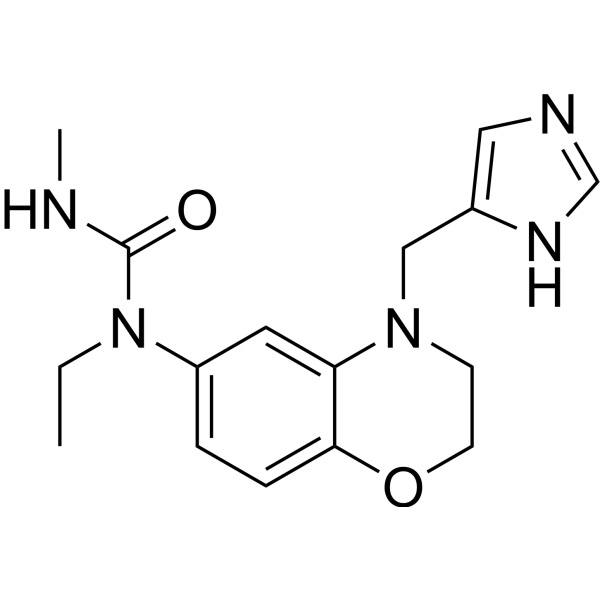
    α2C adrenoceptor agonist 1 (Compound A) is an orally active, highly selective, and non-central nervous system penetrating agonist for the α2C-adrenoceptor, with EC50 and Ki values of 108 nM and 12 nM, respectively. α2C adrenoceptor agonist 1 can be used in the study of nasal congestion .
    α2C adrenoceptor agonist 1
  • HY-B1317A

    Neohetramine hydrochloride

    Histamine Receptor Inflammation/Immunology
    Thonzylamine hydrochloride is an orally active H1 histamine receptor antagonist with good antihistaminic and antianaphylactic properties. Thonzylamine hydrochloride can be used for the research of hypersensitivity diseases, nasal congestion, allergic conjunctivitis and other allergic diseases .
    Thonzylamine hydrochloride
  • HY-B1317R

    Neohetramine (Standard)

    Reference Standards Histamine Receptor Inflammation/Immunology
    Thonzylamine (Standard) is the analytical standard of Thonzylamine. This product is intended for research and analytical applications. Thonzylamine is an orally active H1 histamine receptor antagonist, exhibits good antihistaminic and antianaphylactic properties. Thonzylamine can be used for the research of hypersensitivity diseases, nasal congestion, allergic conjunctivitis and other allergic diseases .
    Thonzylamine (Standard)
  • HY-147299

    PGE-6201204

    Adrenergic Receptor Cardiovascular Disease
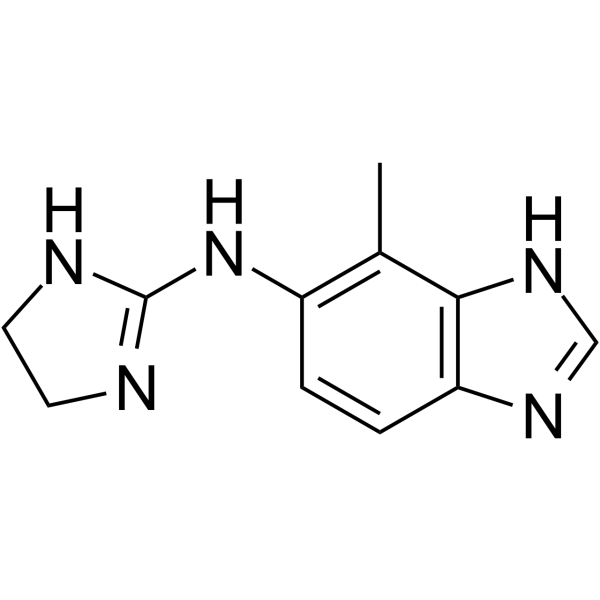
    Povafonidine (PGE-6201204) is a potent α2 adrenoreceptor agonist. Povafonidine can constrict blood vessels and reduce mucosal congestion. Povafonidine can be used for nasal congestion research .
    Povafonidine
  • HY-182296

    Histamine Receptor Inflammation/Immunology
    SCH 79687 is an orally active histamine H3 receptor antagonist, with a Ki of 1.9 nM in rats and 13 nM in guinea pigs. SCH 79687 acts as a competitive antagonist against (R)-α-methylhistamine. SCH 79687 attenuates the inhibitory effect of (R)-α-methylhistamine-induced sympathetic hypertensive responses in guinea pigs. When used in combination with H1 antagonists, SCH 79687 inhibits Compound 48/80 (HY-115768)-induced nasal congestion in cats. SCH 79687 can be used for the research of allergic rhinitis .
    SCH 79687

온라인 문의

Your information is safe with us. * Required Fields.

호칭


Country or Region *

고객명 *


회사명 *

Department *


메일주소 *


상품명 *

Cat. No.


Requested quantity *

전화번호 *


비고

온라인 문의

Inquiry Information

상품명:
Cat. No.:
수량:
MCE Japan Authorized Agent:

