
12 Results for "

nerve regeneration

" in MedChemExpress (MCE) Product Catalog:
Products (12)

12 Results for "nerve regeneration" in MCE Product Catalog:

5
5 Cited Publications
Cat. No.: HY-154848
CAS No.: 2919575-27-0
Purity:  99.98%
Target:  

PI3K Akt

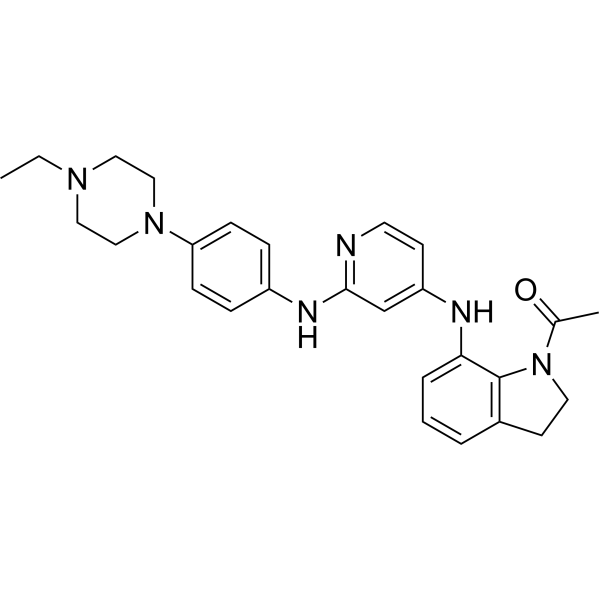
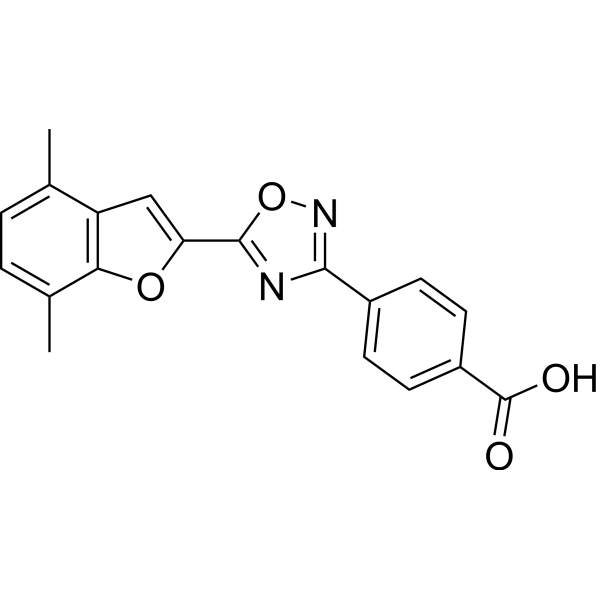
UCL-TRO-1938 is a potent small molecule allosteric activator of PI3Kα with an EC50 value of approximately 60 μM. UCL-TRO-1938 can induce cell proliferation and has cardioprotective effects from ischaemia reperfusion injury and enhances nerve regeneration following nerve crush .
loading...
    loading...
3
3 Cited Publications
Cat. No.: HY-Y0850
CAS No.: 9002-89-5
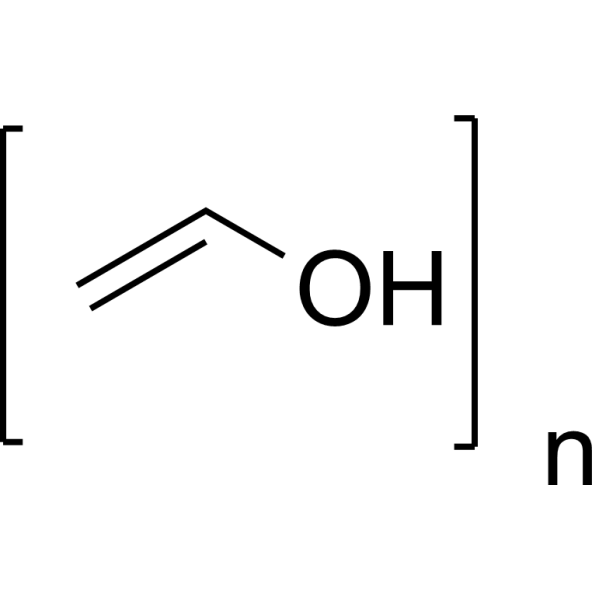
Polyvinyl alcohol (Mw 146000-186000, 99+% hydrolyzed) is a non-biodegradable, hydrophilic, odorless biomedical polymer with cell adhesion/proliferation inhibition, peripheral nerve regeneration induction, dissolution enhancement, and non-toxic, biocompatible properties .
loading...
    loading...
3
3 Cited Publications
Cat. No.: HY-P2264
CAS No.: 676657-00-4
Target:  

Ephrin Receptor

Research Areas:  

Inflammation/Immunology

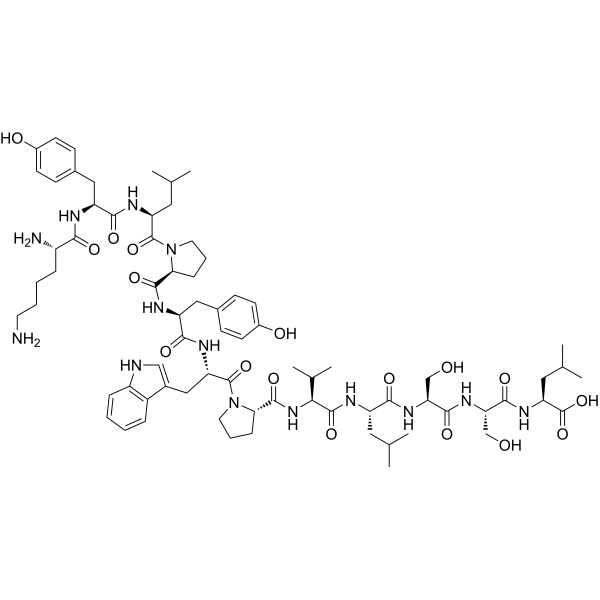
KYL peptide, an antagonistic peptide, selectively targets EphA4 receptor (IC50:4.22 μM, Kd:1.3 μM). KYL peptide binds to the ligand-binding domain of EphA4, effectively alleviates Aβ-induced synaptic dysfunction and synaptic plasticity defects in AD mice. KYL peptide can promote nerve regeneration after injury and modulating immune responses .
loading...
    loading...
1
1 Cited Publications
Cat. No.: HY-P5982
PTPσ Inhibitor, ISP is a PTPσ intracellular wedge domain mimetic peptide containing a TAT cell-penetrating domain, which acts as a PTPσ inhibitor. PTPσ Inhibitor, ISP binds to and inhibits PTPσ, thereby relieving CSPG-mediated axonal growth inhibition. PTPσ Inhibitor, ISP enhances CSPG degradation by promoting the secretion of Cathepsin B or MMP-2, and promotes DRG axonal growth, OPC migration and remyelination. PTPσ Inhibitor, ISP promotes nerve regeneration and improves sensory, motor and urinary functions in animal models of spinal cord injury, dorsal root injury and multiple sclerosis. PTPσ Inhibitor, ISP also increases the phosphorylation of ERK and AKT in colorectal cancer cells. PTPσ Inhibitor, ISP can be used in studies related to PTPσ/CSPG signaling, nerve regeneration, demyelinating diseases and RAS/ERK signaling .
loading...
    loading...
Cat. No.: HY-B0600
CAS No.: 209860-87-7
Synonyms: AFP-168; MK2452
Research Areas:  

Cardiovascular Disease Others

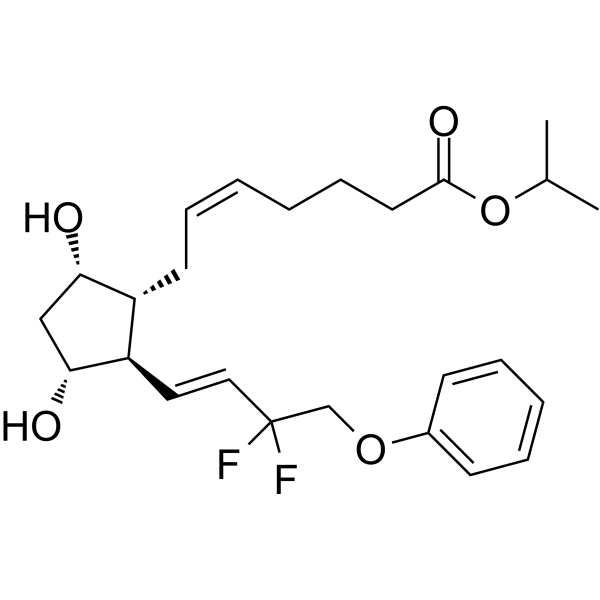
Tafluprost (AFP-168) is an anti-glaucoma prostaglandin (PG) analog. Tafluprost can inhibit the apoptosis of retinal ganglion cells (RGCs) and rat RGCs cells. Tafluprost promotes axon regeneration by regulating Zn 2+-mTORpathway, inhibits intracellular lipid accumulation in human preorbital adipocytes. Tafluprost can be used in the study of optic nerve injury in glaucoma .
loading...
    loading...
Cat. No.: HY-111573
CAS No.: 1952276-71-9
Purity:  98.93%
Synonyms: C286
KCL-286 (C286) is an orally active and brain-penetrant retinoic acid receptor (RAR) β2 agonist (EC50 = 1.9 nM). KCL-286 targets RARβ2 with good selectivity over RAR α (EC50 = 26 nM) and RAR γ (EC50 = 11 nM). KCL-286 activates RARβ2 in the injured neurons. KCL-286 induces axonal regeneration of both spinal and sensory nerves through the inhibitory environment of the CNS, modulates neuroinflammation and extracellular matrix molecules. KCL-286 can modulate the expression of CSPGs by neuronal secretion of decorin which promotes myelination and aids axonal growth. KCL-286 can be studied in research for area such as spinal cord injury and traumatic nerve injury .
loading...
    loading...
Cat. No.: HY-137984
CAS No.: 24394-09-0
Purity:  99.88%
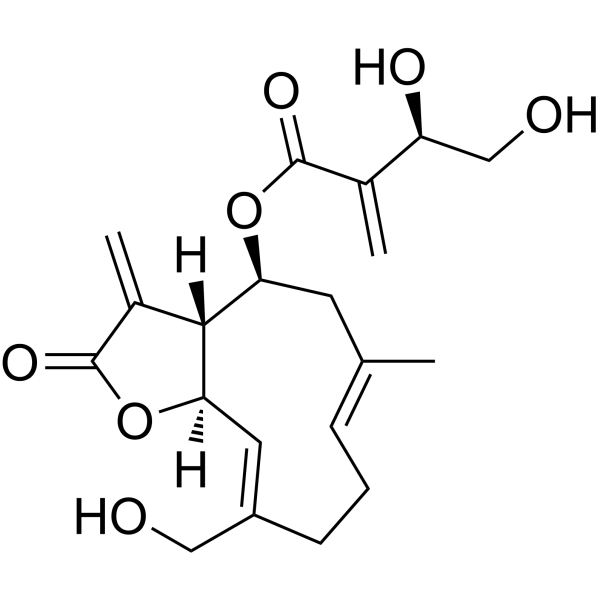
Cnicin is an orally bioavailable sesquiterpene lactone. Cnicin has antibacterial and antiproliferative properties and induces apoptosis in primary myeloma cells. Cnicin also exhibits activity against SARS-CoV-2. Cnicin inhibits the viral replication of SARS CoV-2 with an IC50 of 1.18 μg/mL. Cnicin can promote functional nerve regeneration .
loading...
    loading...
Cat. No.: HY-N14827
CAS No.: 151466-15-8
Synonyms: SM-216289
Target:  

Drug Derivative

Xanthofulvin (SM-216289) is an inhibitor of semaphorin 3A. Xanthofulvin blocks its binding to receptors, inhibits growth cone collapse, and accelerates olfactory nerve regeneration in rats in vivo. Xanthofulvin can be used in studies related to traumatic neuronal injury .
loading...
    loading...
Cat. No.: HY-W129456
CAS No.: 4214-72-6
Research Areas:  

Neurological Disease

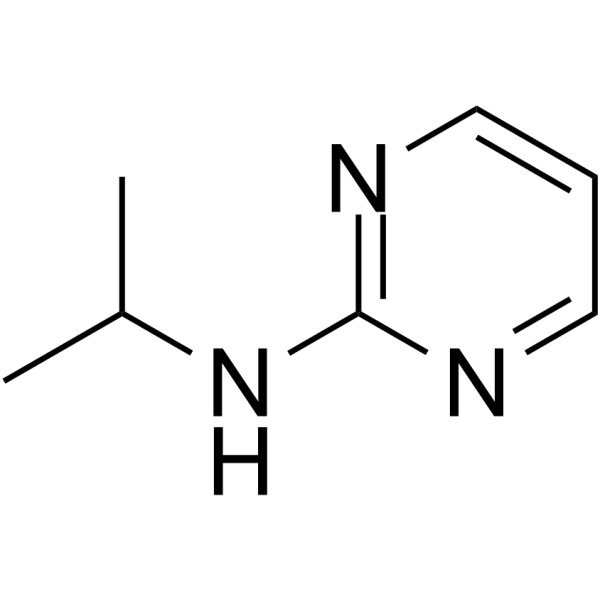
Isaxonine acts as a modifier of the surface pH of the bilayer . Isaxonine accelerates the rate of peripheral nerve regeneration, stimulate axonal sprouting and promote motor and sensory function recovery . Isaxonine is a neurotrophic agent .
loading...
    loading...
Cat. No.: HY-169675
CAS No.: 2243095-21-6
Target:  

Endogenous Metabolite

Research Areas:  

Neurological Disease Endocrinology

Lacripep is a synthetic tear protein. Lacripep binds to and activates syndecan-1 (SDC1). Lacripep restores progenitor cell identity and epithelial barrier function. Lacripep resolves dry eye .
loading...
    loading...
Cat. No.: HY-B0600R
CAS No.: 209860-87-7
Synonyms: AFP-168 (Standard); MK2452 (Standard)
Tafluprost (Standard) is the analytical standard of Tafluprost. This product is intended for research and analytical applications. Tafluprost (AFP-168) is an anti-glaucoma prostaglandin (PG) analog. Tafluprost can inhibit the apoptosis of retinal ganglion cells (RGCs) and rat RGCs cells. Tafluprost promotes axon regeneration by regulating Zn2+-mTORpathway, inhibits intracellular lipid accumulation in human preorbital adipocytes. Tafluprost can be used in the study of optic nerve injury in glaucoma [4] .
loading...
    loading...
Cat. No.: HY-111573R
CAS No.: 1952276-71-9
Synonyms: C286 (Standard)
KCL-286 (Standard) is the analytical standard of KCL-286 (HY-111573). This product is intended for research and analytical applications. KCL-286 (C286) is an orally active and brain-penetrant retinoic acid receptor (RAR) β2 agonist (EC50 = 1.9 nM). KCL-286 targets RARβ2 with good selectivity over RAR α (EC50 = 26 nM) and RAR γ (EC50 = 11 nM). KCL-286 activates RARβ2 in the injured neurons. KCL-286 induces axonal regeneration of both spinal and sensory nerves through the inhibitory environment of the CNS, modulates neuroinflammation and extracellular matrix molecules. KCL-286 can modulate the expression of CSPGs by neuronal secretion of decorin which promotes myelination and aids axonal growth. KCL-286 can be studied in research for area such as spinal cord injury and traumatic nerve injury .
loading...
    loading...
  • 1

