



676657-00-4
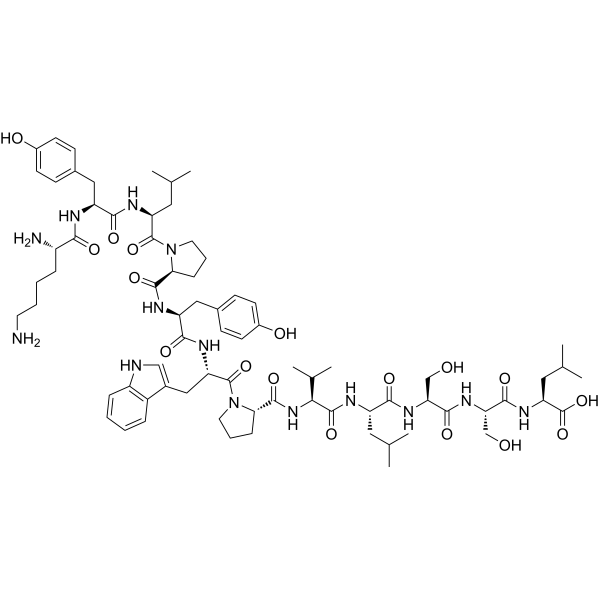
Chemical Structure
KYL peptide
- CAS No.: 676657-00-4
- Formula:C74H108N14O17
- Molecular Weight:1465.73
InChIKey: FZNPYIAZMDBRLC-RKNDTPCJSA-N
SMILES: CC(C)C[C@@H](C(O)=O)NC([C@H](CO)NC([C@H](CO)NC([C@H](CC(C)C)NC([C@H](C(C)C)NC([C@H]1N(C([C@H](CC2=CNC3=C2C=CC=C3)NC([C@H](CC4=CC=C(O)C=C4)NC([C@H]5N(C([C@H](CC(C)C)NC([C@H](CC6=CC=C(O)C=C6)NC([C@H](CCCCN)N)=O)=O)=O)CCC5)=O)=O)=O)CCC1)=O)=O)=O)=O)=O
Biological Activity: KYL peptide, an antagonistic peptide, selectively targets EphA4 receptor (IC50:4.22 μM, Kd:1.3 μM). KYL peptide binds to the ligand-binding domain of EphA4, effectively alleviates Aβ-induced synaptic dysfunction and synaptic plasticity defects in AD mice. KYL peptide can promote nerve regeneration after injury and modulating immune responses[1][2][3].
| Cat. No. | Product Name | Purity | Description | Pricing | |||||||||||||||||||
|---|---|---|---|---|---|---|---|---|---|---|---|---|---|---|---|---|---|---|---|---|---|---|---|
|
|
KYL peptide | 99.65% | KYL peptide, an antagonistic peptide, selectively targets EphA4 receptor (IC50:4.22 μM, Kd:1.3 μM). KYL peptide binds to the ligand-binding domain of EphA4, effectively alleviates Aβ-induced synaptic dysfunction and synaptic plasticity defects in AD mice. KYL peptide can promote nerve regeneration after injury and modulating immune responses. | ||||||||||||||||||||
|
loading...
/
|
|||||||||||||||||||||||
-
Similarity Score 0.76
 HY-P10789P160 peptide
-
Similarity Score 0.75
 HY-P11879LSALT peptide
-
Similarity Score 0.75
 HY-P10848RJPXD33
-
Similarity Score 0.73
 HY-P11796MOG 37-46
-
Similarity Score 0.73
 HY-P11643LVV-hemorphin-7
-
Similarity Score 0.73
 HY-P2446ORG 30276
-
Similarity Score 0.72
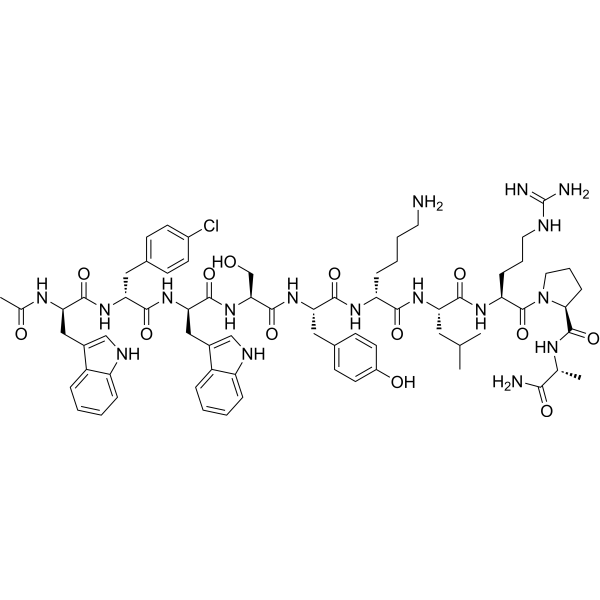 HY-P2357MI-1544
-
Similarity Score 0.72
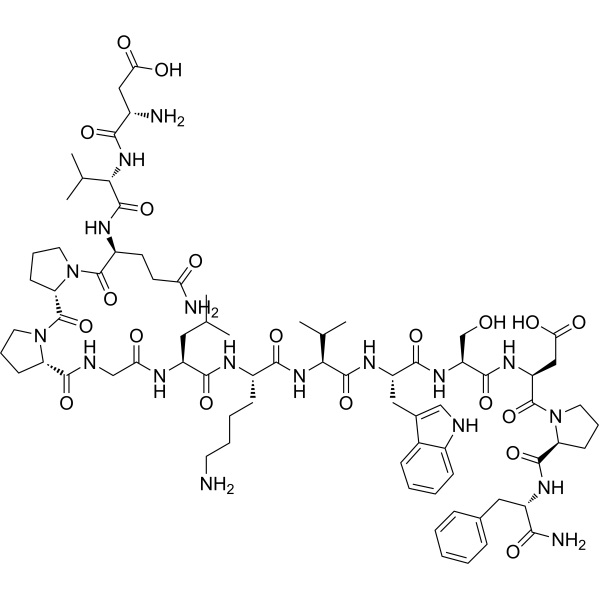 HY-P5762Phoenixin-14
-
Similarity Score 0.72
 HY-P3057[D-Trp11]-Neurotensin
-

Explore the MedChemAI to find more analogs


References
- [1]. Wu B, et.al. HTS by NMR of combinatorial libraries: a fragment-based approach to ligand discovery. Chem Biol. 2013 Jan 24;20(1):19-33. [Content Brief]
- [2]. Lamberto I, et, al. Distinctive binding of three antagonistic peptides to the ephrin-binding pocket of the EphA4 receptor. Biochem J. 2012 Jul 1;445(1):47-56. [Content Brief]
- [3]. Fu AKY, et, al. Blockade of EphA4 signaling ameliorates hippocampal synaptic dysfunctions in mouse models of Alzheimer's disease. Proc Natl Acad Sci U S A. 2014 Jul 8;111(27):9959-64. [Content Brief]



