1. Search Result
Search Result
Results for "

ophthalmic agents

" in MedChemExpress (MCE) Product Catalog:

16

Inhibitors & Agonists

6

Fluorescent Dyes

1

Biochemical Assay Reagents

2

Peptides

2

Isotope-Labeled Compounds

Cat. No. 상품명 Target 연구분야 Chemical Structure
  • HY-D0711
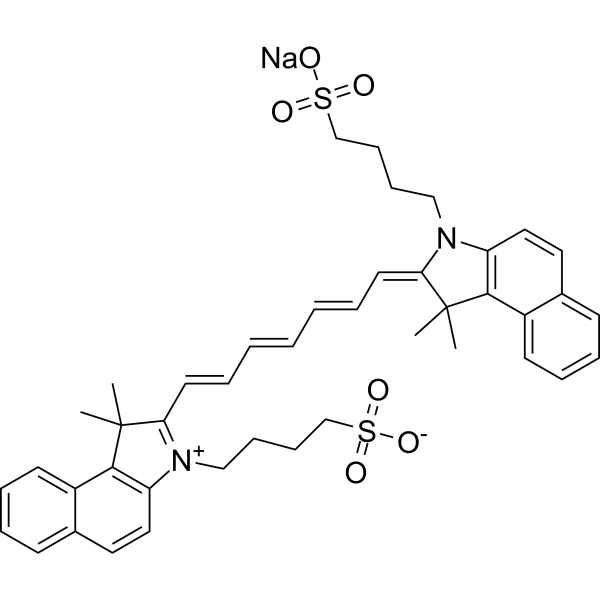
    Indocyanine green
    Maximum Cited Publications
    41 Publications Verification

    Foxgreen; IC Green; Cardiogreen

    Fluorescent Dye Cancer
    Indocyanine green (Foxgreen) is a low toxicic fluorescent agent that has been widely used in medical diagnostics, such as determining cardiac output, hepatic function, and liver blood flow, and for ophthalmic angiography (Ex/Em = 785/813 nm) .
    Indocyanine green
  • HY-D0214
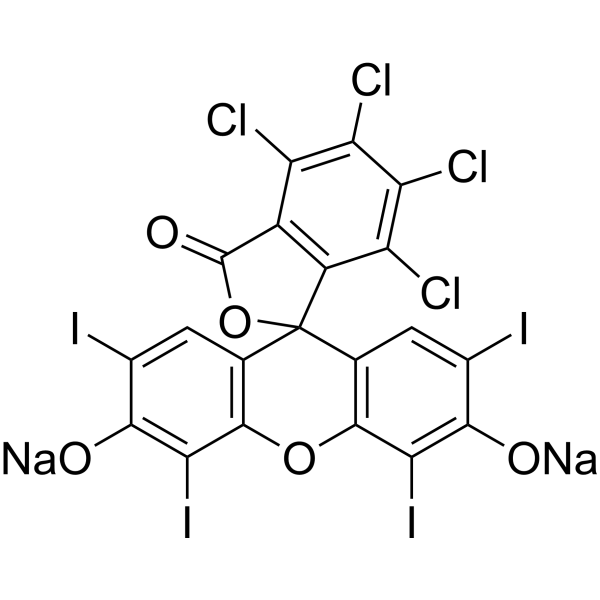
    Acid Red 94 sodium
    1 Publications Verification

    Influenza Virus Photosensitizer Amyloid-β Infection Neurological Disease Cancer
    Acid Red 94 sodium, a synthetic fluorescein derivative, is a deep red dye primarily composed of 4,5,6,7-tetrachloro-2,4,5,7-tetraiodo fluorescein. It is widely used as an ophthalmic diagnostic agent to detect dry or damaged cells on the ocular surface. Acid Red 94 sodium exhibits antitumor activity and can inhibit Friend Leukemia Virus (FLV) infection through photodynamic action. Additionally, Acid Red 94 sodium can inhibit aggregation through light irradiation. Acid Red 94 sodium holds potential for use in cancer, viral infections, and neurodegenerative disease research .
    Acid Red 94 sodium
  • HY-100543
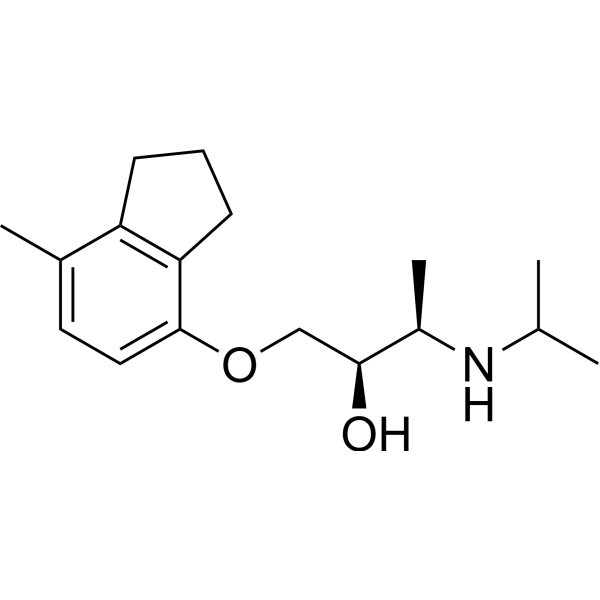
    Zenidolol
    Maximum Cited Publications
    45 Publications Verification

    ICI-118551

    Adrenergic Receptor Apoptosis Caspase Bcl-2 Family HIF/HIF Prolyl-Hydroxylase Cardiovascular Disease Neurological Disease Inflammation/Immunology
    Zenidolol (ICI-118551) is a selective β2-adrenergic receptor antagonist with Ki values of Zenidolol for β2, β1 and β3 adrenergic receptors of 0.7, 49.5 and 611 nM, respectively. Zenidolol exerts antitumor effects via inducing apoptosis, inhibiting tumor sphere formation, and downregulating the HIF pathway by blocking β2-AR on tumor cells. Zenidolol exhibits a unique pulmonary vessel-specific vasodilatory effect in mouse models. Zenidolol can be used as an intraocular pressure-lowering agent in ophthalmic disease research .
    Zenidolol
  • HY-133026

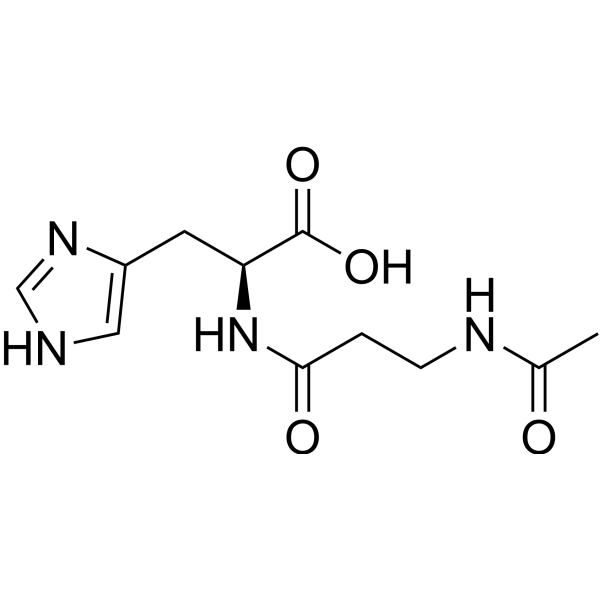
    N-Acetyl-L-carnosine

    Drug Intermediate Endogenous Metabolite Inflammation/Immunology
    N-Acetylcarnosine, a natural histidine-containing dipeptide, is a source of pharmacological principal L-carnosine. N-Acetylcarnosine is a potent ophthalmic agent in human cataracts .
    N-Acetylcarnosine
  • HY-17357

    AHR 9434; AL 6515

    COX Prostaglandin Receptor Neurological Disease Inflammation/Immunology Endocrinology Cancer
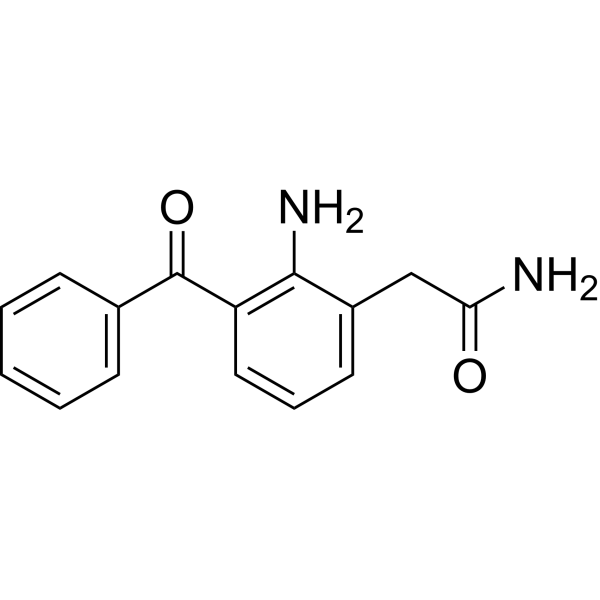
    Nepafenac (AHR 9434; AL 6515), a nonsteroidal anti-inflammatory agent, is a topically administered COX-2 inhibitor with an IC50 of 0.12 μM. Nepafenac exhibits only weak COX-1 inhibitory activity (IC50 = 64.3 μM). Nepafenac possesses unique prodrug properties, which enable it to rapidly convert into the active metabolite Amfenac (HY-17479) in the ocular tissues, thereby achieving high concentrations in the retina and choroid. Nepafenac reduces inflammation and pain by inhibiting the activity of cyclooxygenase (COX) enzymes and thereby decreasing the production of prostaglandin PGE. Nepafenac can delay the metastasis of uveal melanoma (UM) in rabbit eyes. Nepafenac is mainly used for pain management and inflammation control after ophthalmic surgeries .
    Nepafenac
  • HY-D0711R

    Foxgreen (Standard); IC Green (Standard); Cardiogreen (Standard)

    Fluorescent Dye Reference Standards Others
    Indocyanine green (Standard) is the analytical standard of Indocyanine green. This product is intended for research and analytical applications. Indocyanine green (Foxgreen) is a low toxicic fluorescent agent that has been widely used in medical diagnostics, such as determining cardiac output, hepatic function, and liver blood flow, and for ophthalmic angiography .
    Indocyanine green (Standard)
  • HY-D0214R

    Reference Standards Influenza Virus Others
    Acid Red 94 sodium (Standard) is the analytical standard of Acid Red 94 sodium. This product is intended for research and analytical applications. Acid Red 94 sodium, a synthetic fluorescein derivative, and is a crimson-coloured dye with the principal component being 4,5,6,7-tetrachloro-2,4,5,7-tetraiodo fluorescein. Acid Red 94 sodium has been widely used as an ophthalmic diagnostic agents, and can detect desiccated or damaged cells on the ocular surface. Acid Red 94 sodium exhibits antiviral activities .
    Acid Red 94 sodium (Standard)
  • HY-17357S

    AHR-9434-d5; AL-6515-d5

    Isotope-Labeled Compounds COX Prostaglandin Receptor Neurological Disease Inflammation/Immunology Endocrinology Cancer
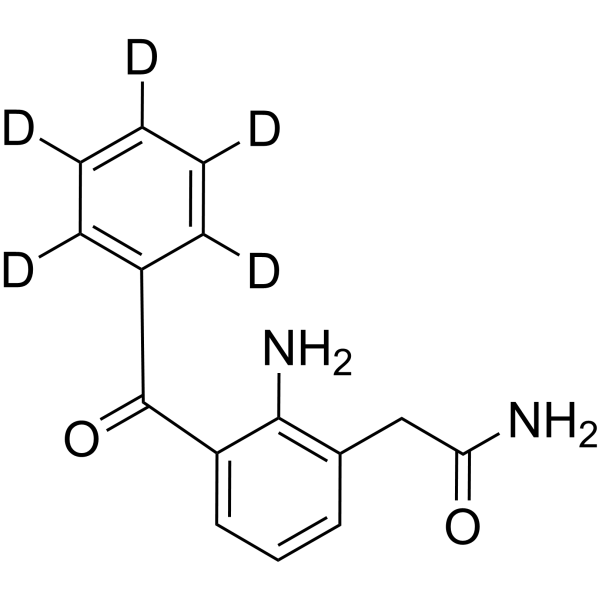
    Nepafenac-d5 (AHR-9434-d5; AL-6515-d5) is the deuterium labeled Nepafenac (HY-17357). Nepafenac, a nonsteroidal anti-inflammatory agent, is a topically administered COX-2 inhibitor with an IC50 of 0.12 μM. Nepafenac exhibits only weak COX-1 inhibitory activity (IC50 = 64.3 μM). Nepafenac possesses unique prodrug properties, which enable it to rapidly convert into the active metabolite Amfenac (HY-17479) in the ocular tissues, thereby achieving high concentrations in the retina and choroid. Nepafenac reduces inflammation and pain by inhibiting the activity of cyclooxygenase (COX) enzymes and thereby decreasing the production of prostaglandin PGE. Nepafenac can delay the metastasis of uveal melanoma (UM) in rabbit eyes. Nepafenac is mainly used for pain management and inflammation control after ophthalmic surgeries.
    Nepafenac-d5
  • HY-D1005A7

    PEG-PPG-PEG, 2400 (Average)

    Biochemical Assay Reagents Others
    Poloxamer 125 (L45) (PEG-PPG-PEG, 2400 (Average)) is a block polymer of polyoxyethylene and polyoxypropylene, belonging to water-soluble non-ionic biosurfactants with properties such as emulsification and wetting. Poloxamer 125 (L45) has thermosensitive characteristics and can form thermoreversible hydrogels in aqueous solutions, presenting a fluid state at room temperature and transforming into a viscous gel under body temperature conditions; when its concentration is higher than the critical micelle concentration, it can also self-assemble into micelles in aqueous systems. Poloxamer 125 (L45) enables controlled drug release, prolongs the local retention time of drugs, and is often used as a drug delivery carrier. Poloxamer 125 (L45) can be applied in the fields of cosmetics, biomedicine and tissue engineering .
    Poloxamer 125 (L45)
  • HY-DY1027

    Fluorescent Dye Cancer
    Indocyanine green (Foxgreen) (solution) is a low toxicic fluorescent agent that has been widely used in medical diagnostics, such as determining cardiac output, hepatic function, and liver blood flow, and for ophthalmic angiography (Ex/Em = 785/813 nm) .
    Solvent and concentration: DMSO: 10 mM
    Indocyanine green (solution)
  • HY-16183

    Echothiophate iodide

    Cholinesterase (ChE) Neurological Disease
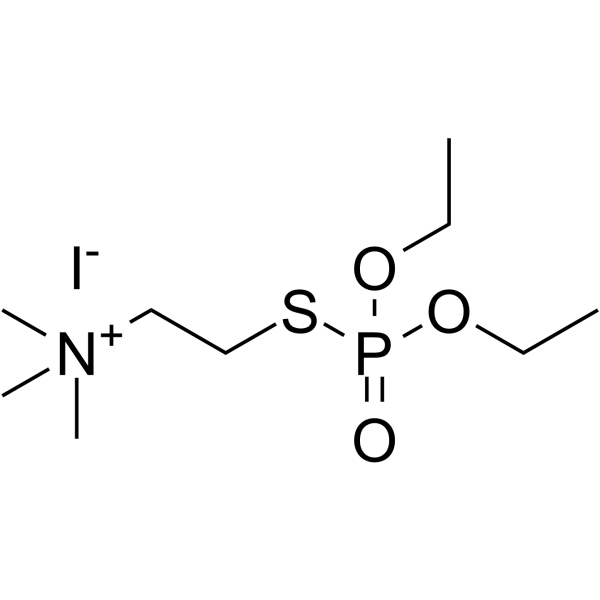
    Echothiopate iodide is a potent hBChE (human butyrylcholinesterase) inhibitor. Echothiopate iodide is a long-acting anticholinesterase agent. Echothiopate iodide can be used for glaucoma research .
    Echothiopate iodide
  • HY-133026R

    N-Acetyl-L-carnosine (Standard)

    Drug Intermediate Endogenous Metabolite Reference Standards Inflammation/Immunology
    N-Acetylcarnosine (Standard) is the analytical standard of N-Acetylcarnosine. This product is intended for research and analytical applications. N-Acetylcarnosine, a natural histidine-containing dipeptide, is a source of pharmacological principal L-carnosine. N-Acetylcarnosine is a potent ophthalmic agent in human cataracts .
    N-Acetylcarnosine (Standard)
  • HY-D0711S2

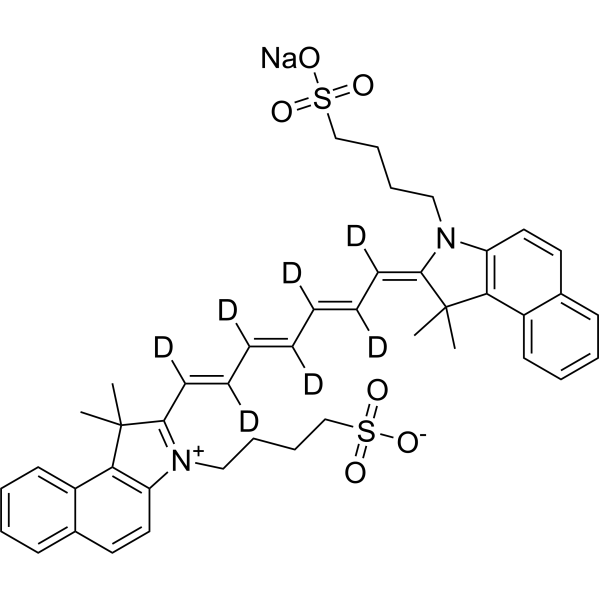
    Foxgreen-d7; IC Green-d7; Cardiogreen-d7

    Isotope-Labeled Compounds Fluorescent Dye Others
    Indocyanine green-d7 (Foxgreen-d7) is the deuterium labeled Indocyanine green (HY-D0711). Indocyanine green is a low toxicic fluorescent agent that has been widely used in medical diagnostics, such as determining cardiac output, hepatic function, and liver blood flow, and for ophthalmic angiography .
    Indocyanine green-d7
  • HY-17357R

    AHR 9434 (Standard); AL 6515 (Standard)

    Reference Standards COX Prostaglandin Receptor Neurological Disease Inflammation/Immunology Endocrinology Cancer
    Nepafenac (AHR 9434; AL 6515) (Standard) is the analytical standard of Nepafenac (HY-17357). This product is intended for research and analytical applications. Nepafenac, a nonsteroidal anti-inflammatory agent, is a topically administered COX-2 inhibitor with an IC50 of 0.12 μM. Nepafenac exhibits only weak COX-1 inhibitory activity (IC50 = 64.3 μM). Nepafenac possesses unique prodrug properties, which enable it to rapidly convert into the active metabolite Amfenac (HY-17479) in the ocular tissues, thereby achieving high concentrations in the retina and choroid. Nepafenac reduces inflammation and pain by inhibiting the activity of cyclooxygenase (COX) enzymes and thereby decreasing the production of prostaglandin PGE. Nepafenac can delay the metastasis of uveal melanoma (UM) in rabbit eyes. Nepafenac is mainly used for pain management and inflammation control after ophthalmic surgeries.
    Nepafenac (Standard)
  • HY-D0214E
    Acid Red 94 sodium (80%)
    1 Publications Verification

    Influenza Virus Photosensitizer Amyloid-β Infection Neurological Disease Cancer
    Acid Red 94 sodium (80%), a synthetic fluorescein derivative, is a deep red dye primarily composed of 4,5,6,7-tetrachloro-2,4,5,7-tetraiodo fluorescein. Acid Red 94 sodium (80%) is widely used as an ophthalmic diagnostic agent to detect dry or damaged cells on the ocular surface. Acid Red 94 sodium (80%) exhibits antitumor activity and can inhibit Friend Leukemia Virus (FLV) infection through photodynamic action. Additionally, Acid Red 94 sodium (80%) can inhibit Aβ aggregation through light irradiation. Acid Red 94 sodium (80%) holds potential for use in cancer, viral infections, and neurodegenerative disease research .
    Acid Red 94 sodium (80%)
  • HY-100543R

    ICI-118551 (Standard)

    Adrenergic Receptor Reference Standards Apoptosis Caspase Bcl-2 Family HIF/HIF Prolyl-Hydroxylase Cardiovascular Disease Neurological Disease Cancer
    Zenidolol (ICI-118551) (Standard) is the analytical standard of Zenidolol (HY-100543). This product is intended for research and analytical applications. Zenidolol is a selective β2-adrenergic receptor antagonist with Ki values of Zenidolol for β2, β1 and β3 adrenergic receptors of 0.7, 49.5 and 611 nM, respectively. Zenidolol exerts antitumor effects via inducing apoptosis, inhibiting tumor sphere formation, and downregulating the HIF pathway by blocking β2-AR on tumor cells. Zenidolol exhibits a unique pulmonary vessel-specific vasodilatory effect in mouse models. Zenidolol can be used as an intraocular pressure-lowering agent in ophthalmic disease research.
    Zenidolol (Standard)

온라인 문의

Your information is safe with us. * Required Fields.

호칭


Country or Region *

고객명 *


회사명 *

Department *


메일주소 *


상품명 *

Cat. No.


Requested quantity *

전화번호 *


비고

온라인 문의

Inquiry Information

상품명:
Cat. No.:
수량:
MCE Japan Authorized Agent:

