13 Results for "

pantothenate kinase

" in MedChemExpress (MCE) Product Catalog:
Products (13)

13 Results for "pantothenate kinase" in MCE Product Catalog:

  • Targets Recommended:
5
5 Cited Publications
Cat. No.: HY-B1028
CAS No.: 16816-67-4
Synonyms: D-Pantethine; LBF disulfide
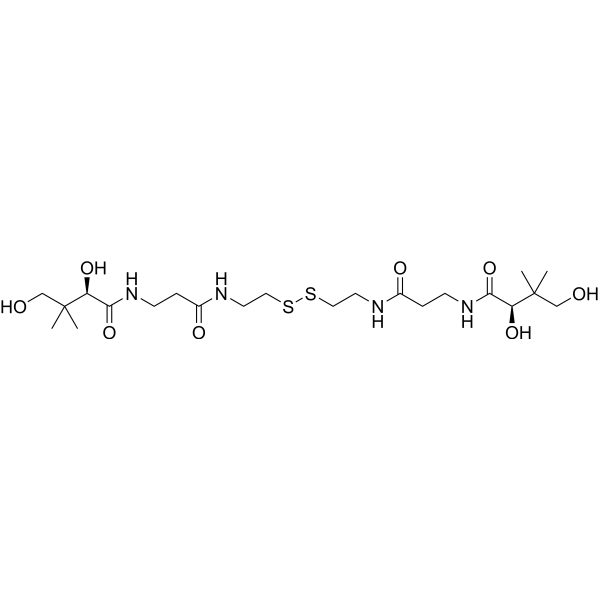
Pantethine is an orally active lipid-lowering agent. Pantethine has anti-tumor, anti-inflammatory and anti-SARS-COV virus activities. Pantethine is also a neuroprotective agent. Pantethine can be used in the study of Alzheimer's disease, Parkinson's disease, major depression, systemic sclerosis and pantothenate kinase-related neurodegeneration .
loading...
    loading...
4
4 Cited Publications
Cat. No.: HY-124634
CAS No.: 2170608-82-7
Purity:  99.68%
Target:  

PANK

Research Areas:  

Neurological Disease

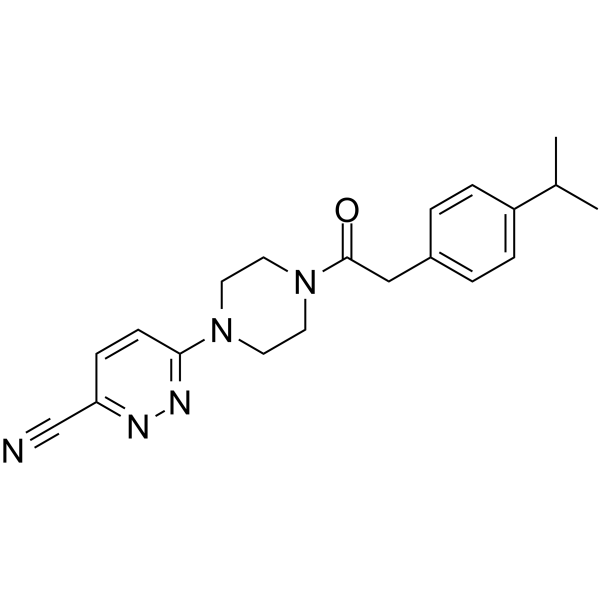
PZ-2891 is an orally bioavailable, brain penetrant pantothenate kinase (PANK) modulator. PZ-2891 act as an orthosteric inhibitor at high concentrations and an allosteric activator at lower sub-saturating concentrations. PZ-2891 inhibits human pantothenate kinases PANK1β, PANK2, and PANK3 with IC50s of 40.2 nM, 0.7 nM and 1.3 nM, respectively .
loading...
    loading...
2
2 Cited Publications
Cat. No.: HY-44170
CAS No.: 902614-04-4
Target:  

PANK

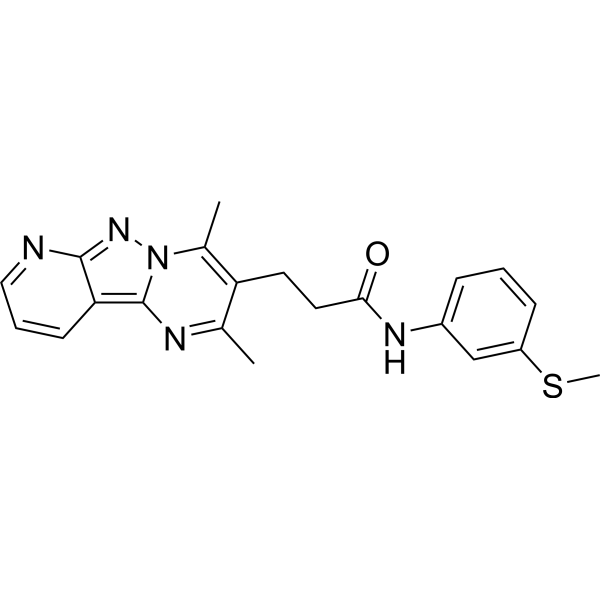
Pantothenate kinase-IN-2 is a pantothenate kinase inhibitor with IC50 values of 92 nM for PanK2, 70 nM for PanK1β, and 25 nM for PanK3. Pantothenate kinase-IN-2 can bind specifically to the ATP-PanK3 complex and block CoA biosynthesis. Pantothenate kinase-IN-2 can be used for the research of pank-associated neurodegeneration and type 2 diabetes .
loading...
    loading...
Cat. No.: HY-144734
CAS No.: 1024168-48-6
Target:  

PANK

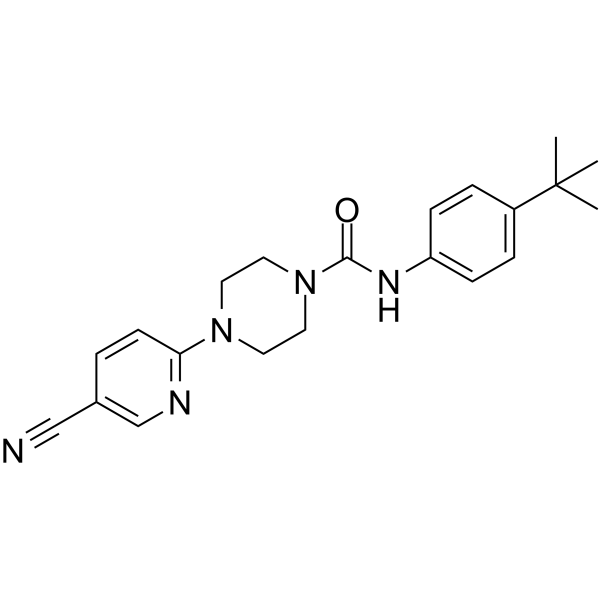
Pantothenate kinase-IN-1 is a PANK3 inhibitor with an IC50 of 0.51 μM. Pantothenate kinase-IN-1 acts as a pantothenate-competitive inhibitor, which occupies the pantothenate-binding site of PANK3 and binds to both protomers in the PANK3 dimer. Pantothenate kinase-IN-1 exhibits metabolic stability in mouse and rat plasma. Pantothenate kinase-IN-1 can be used in the research of pantothenate kinase-associated neurodegenerative diseases and metabolic diseases .
loading...
    loading...
Cat. No.: HY-159509
CAS No.: 2361124-03-8
Synonyms: Claziprotamide; BBP-671
Target:  

PANK

Claziprotamidum (Claziprotamide; BBP-671) is a panthothenate kinase (PANK) activator with oral activity and blood-brain barrier permeability. Claziprotamidum binds to and activates all PANK isoforms, with the highest affinity for PANK3 (KD = 97 pM; IC50 = 1.39 nM). Claziprotamidum increases the intracellular biosynthesis of Coenzyme A (HY-128851) and restores mitochondrial function. Claziprotamidum can be used in the research of pantothenate kinase-associated neurodegeneration and propionic acidemia .
loading...
    loading...
Cat. No.: HY-109033
CAS No.: 1858268-66-2
Synonyms: RE-024
Target:  

Drug Intermediate

Research Areas:  

Neurological Disease

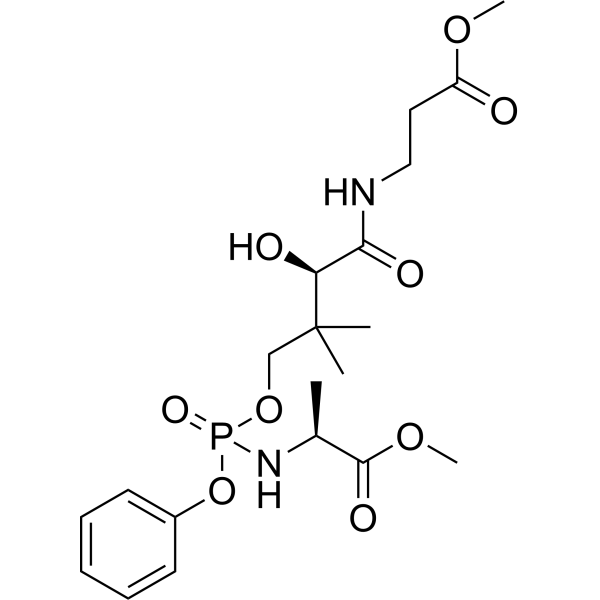
Fosmetpantotenate is a phosphopantothenic acid (PPA) precursor designed to release PPA intracellularly, leading to restoration of CoA levels. Fosmetpantotenate is used to research pantothenate kinase-associated neurodegeneration.
loading...
    loading...
Cat. No.: HY-N6663
CAS No.: 13466-78-9
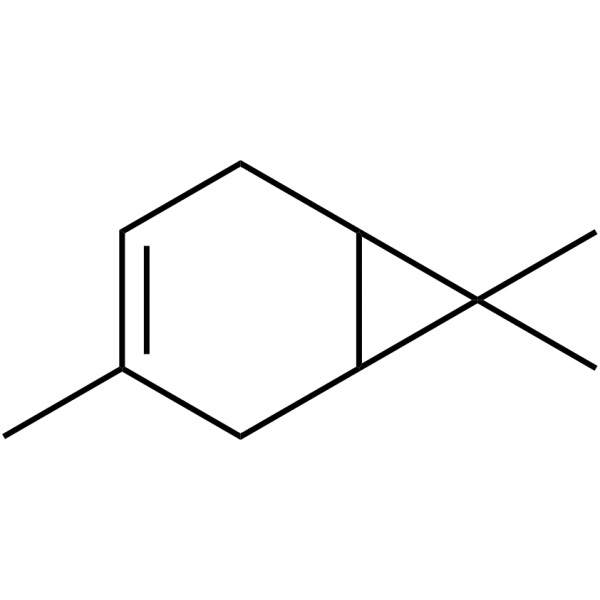
3-Carene is an orally active TCA cycle enzyme inhibitor. 3-Carene inhibits succinate dehydrogenase and malate dehydrogenase as well as pyruvate kinase, disrupting energy metabolism. 3-Carene disrupts cell wall and cell membrane integrity, leading to potassium ion leakage, protein leakage, membrane depolarization, ATP depletion, morphological disruption, and cell lysis. 3-Carene interferes with amino acid metabolism, pantothenate and CoA biosynthesis, purine and pyrimidine metabolism, and aminoacyl-tRNA biosynthesis. 3-Carene enhances GABA receptor-mediated synaptic responses. 3-Carene can be used in research on bacterial infections, inflammation, anxiety, and sleep disorders .
loading...
    loading...
Cat. No.: HY-164909
CAS No.: 2170608-85-0
Target:  

PANK

Research Areas:  

Metabolic Disease

PZ-3022 is an orally active allosteric agonist of pantothenate kinase (PanK) with an EC50 of 5.3 nM against PanK3. PZ-3022 antagonizes the inhibitory effect of C3-CoA. PZ-3022 increases CoA levels in cells and the liver, upregulates CoASH and C2-CoA, downregulates C3-CoA, and restores impaired TCA cycle and mitochondrial function. PZ-3022 can be used for the research of propionic acidemia and metabolic CoA deficiency .
loading...
    loading...
Cat. No.: HY-B1028R
CAS No.: 16816-67-4
Synonyms: D-Pantethine (Standard); LBF disulfide (Standard)
Pantethine (Standard) is the analytical standard of Pantethine. This product is intended for research and analytical applications. Pantethine is an orally active lipid-lowering agent. Pantethine has anti-tumor, anti-inflammatory and anti-SARS-COV virus activities. Pantethine is also a neuroprotective agent. Pantethine can be used in the study of Alzheimer's disease, Parkinson's disease, major depression, systemic sclerosis and pantothenate kinase-related neurodegeneration .
loading...
    loading...
Cat. No.: HY-181917
Target:  

PANK

Research Areas:  

Metabolic Disease

Pantothenate kinase-IN-3 is an orally active PANK3-selective binder and CoA biosynthesis activator with a human PANK3 Ki of 9.1 nM, human PANK3 Ka of 1.8 nM, human PANK1β Ki of 113 nM, human PANK1β Ka of 23.4 nM, and oral effectiveness.Pantothenate kinase-IN-3 binds PANK3 via a water-mediated interaction between its sulfonamide NH and Gly193, elevates cellular, hepatic, and forebrain CoA levels, and shows improved metabolic stability in mouse and human microsomes.Pantothenate kinase-IN-3 has solubility properties favorable at pH 7.Pantothenate kinase-IN-3 can be used for the research of hepatic metabolic CoA deficiencies (acidemias) .
loading...
    loading...
Cat. No.: HY-B1028S
Synonyms: D-Pantethine-15N2; LBF disulfide-15N2
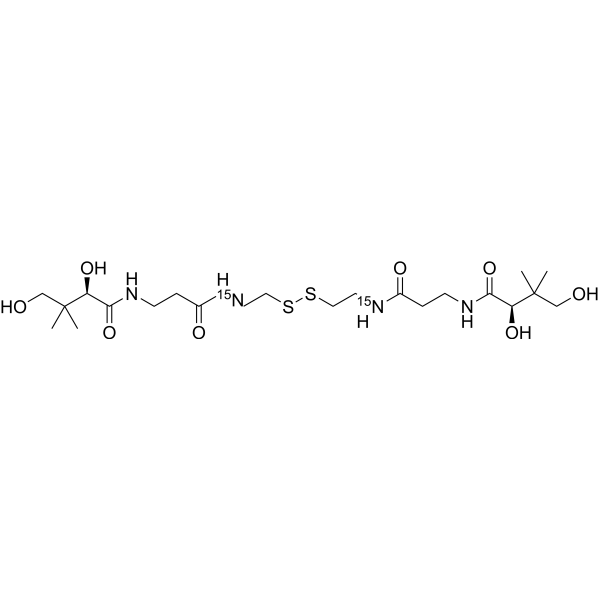
Pantethine- 15N2 is the 15N2 labeled Pantethine. Pantethine is an orally active lipid-lowering agent. Pantethine has anti-tumor, anti-inflammatory and anti-SARS-COV virus activities. Pantethine is also a neuroprotective agent. Pantethine can be used in the study of Alzheimer's disease, Parkinson's disease, major depression, systemic sclerosis and pantothenate kinase-related neurodegeneration .
loading...
    loading...
Cat. No.: HY-N6663R
CAS No.: 13466-78-9
3-Carene (Standard) is the analytical standard of 3-Carene (HY-N6663). This product is intended for research and analytical applications. 3-Carene is an orally active TCA cycle enzyme inhibitor. 3-Carene inhibits succinate dehydrogenase and malate dehydrogenase as well as pyruvate kinase, disrupting energy metabolism. 3-Carene disrupts cell wall and cell membrane integrity, leading to potassium ion leakage, protein leakage, membrane depolarization, ATP depletion, morphological disruption, and cell lysis. 3-Carene interferes with amino acid metabolism, pantothenate and CoA biosynthesis, purine and pyrimidine metabolism, and aminoacyl-tRNA biosynthesis. 3-Carene enhances GABA receptor-mediated synaptic responses. 3-Carene can be used in research on bacterial infections, inflammation, anxiety, and sleep disorders .
loading...
    loading...
Cat. No.: HY-W1143867
CAS No.: 2226-71-3
4’-Phosphopantetheine is an orally active coenzyme A (CoA) precursor. 4’-Phosphopantetheine is membrane-permeable and acts as a CoA precursor, a prosthetic group, and a reactive oxygen species (ROS) inhibitor. 4’-Phosphopantetheine binds covalently to rat liver fatty acid synthase, modifies the conserved serine residue in the PKS/NRPS carrier protein domain, and serves as a substrate for CoA synthase and PPAT. 4’-Phosphopantetheine undergoes non-catalytic exchange on rat liver fatty acid synthase, with a faster turnover rate than that of the enzyme complex, and restores intracellular CoA levels in cells with impaired de novo biosynthesis. 4’-Phosphopantetheine rescues phenotypes induced by CoA deficiency, normalizes PKAN-related biomarkers, restores mitochondrial enzyme activity, and alleviates vascular endothelial damage. 4’-Phosphopantetheine shows biological stability in serum, acts as a prosthetic group and degradation product of ACP, and inhibits the formation of atherosclerotic plaques. 4’-Phosphopantetheine can be used in the research of brain iron accumulation neurodegenerative diseases, pantothenate kinase-associated neurodegeneration, CoASY protein-associated neurodegenerative diseases, coronary heart disease, and atherosclerosis .
loading...
    loading...
  • 1

