
Search Result
Results for "
positive inotropic
" in MedChemExpress (MCE) Product Catalog:
| Cat. No. |
Product Name |
Target |
Research Areas |
Chemical Structure |
-
- HY-B1294
-
|
Inamrinone
|
Phosphodiesterase (PDE)
|
Cardiovascular Disease
|
|
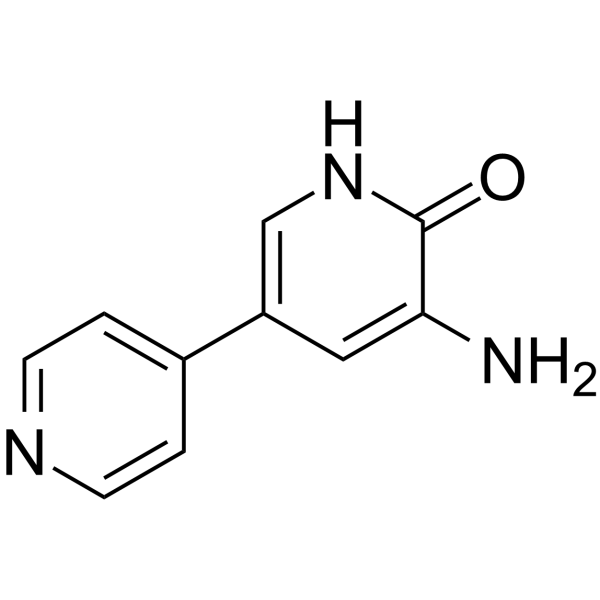
Amrinone (Inamrinone) is a positive inotropic-vasodilator agent. Amrinone is a selective phosphodiesterase III inhibitor that increases cyclic adenosine monophosphate by preventing its breakdown. Amrinone is also an orally active, non-glycosidic and non-catecholamine cardiotonic agent .
|
-
-
- HY-15477
-
|
|
Akt
PI3K
Angiotensin Receptor
Adrenergic Receptor
|
Cardiovascular Disease
Endocrinology
|
|
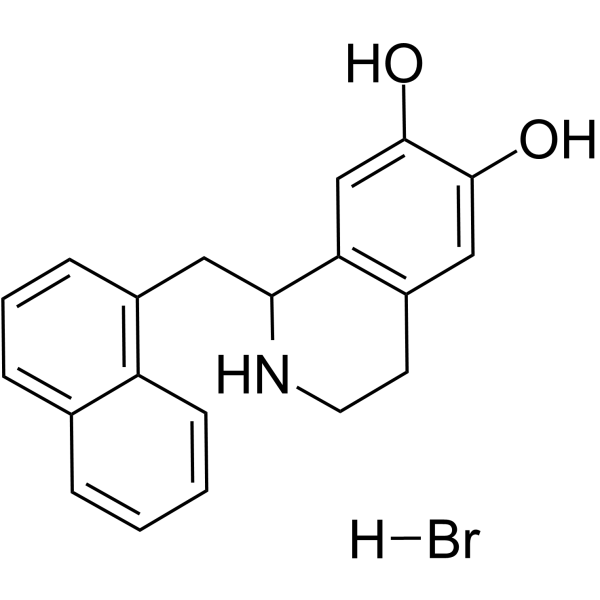
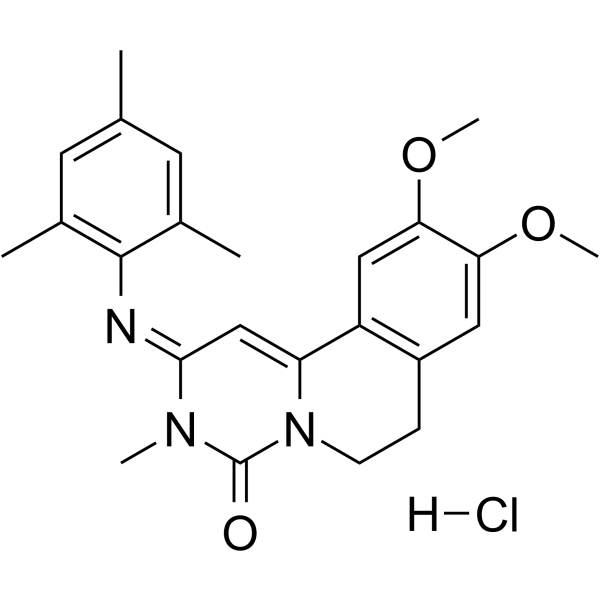
YS-49 is a PI3K/Akt (a downstream target of RhoA) activator, to reduce RhoA/PTEN activation in the 3-methylcholanthrene-treated cells. YS-49 inhibits angiotensin II (Ang II)-stimulated proliferation of VSMCs via induction of heme oxygenase (HO)-1. YS-49 is also an isoquinoline compound alkaloid, has a strong positive inotropic action through activation of cardiac β-adrenoceptors .
|
-
-
- HY-14254A
-
|
Loprinone
|
Phosphodiesterase (PDE)
|
Cardiovascular Disease
|
|
Olprinone (Loprinone) is a potent phosphodiesterase (PDE) 3 inhibitor, with IC50s of 150, 100, 0.35 and 14 μM for PDE1, PDE2, PDE3 and PDE4, respectively. Olprinone is used for the research of heart failure due to its positive inotropic and vasodilative effects. Anti-inflammatory activity .
|
-
-
- HY-15297
-
|
OPC-8212
|
Phosphodiesterase (PDE)
|
Infection
Cardiovascular Disease
|
|
Vesnarinone (OPC-8212) is an orally active phosphodiesterase 3 (PDE3) inhibitor. Vesnarinone can increase in calcium flux and decrease in potassium flux. Vesnarinone shows dose-dependent positive inotropic activity. Vesnarinone can be used in heart failure research .
|
-
-
- HY-P2106
-
|
|
Arrestin
Apelin Receptor (APJ)
|
Cardiovascular Disease
|
|
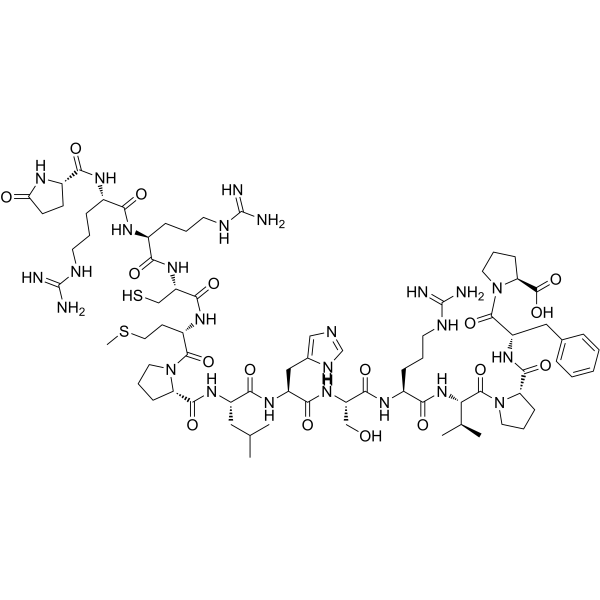
Elabela(19-32) is an active fragment of ELABELA (ELA) that binds to apelin receptor (APJ). Elabela(19-32) activates the Gαi1 and β-arrestin-2 signaling pathways with EC50s of 8.6 nM and 166 nM. Elabela(19-32) induces receptor internalization and reduces arterial pressure, exerts positive inotropic effects on the heart .
|
-
-
- HY-14254
-
|
Loprinone Hydrochloride
|
Phosphodiesterase (PDE)
|
Cardiovascular Disease
|
|
Olprinone (Loprinone) Hydrochloride is a potent phosphodiesterase (PDE) 3 inhibitor, with IC50s of 150, 100, 0.35 and 14 μM for PDE1, PDE2, PDE3 and PDE4, respectively. Olprinone Hydrochloride is used for the research of heart failure due to its positive inotropic and vasodilative effects. Anti-inflammatory activity .
|
-
-
- HY-B1233
-
|
2-Amino-6-methylheptane; 1,5-Dimethylhexylamine; 6-Methyl-2-heptylamine
|
Dopamine Receptor
|
Others
|
|
Octodrine (2-Amino-6-methylheptane) is a central nervous stimulant that increases the uptake of dopamine and noradrenaline. Octodrine is found to increase the pain threshold, cardiac rate (positive chronotropic effect) and myocardial contractility (positive inotropic effect) .
|
-
-
- HY-18740A
-
|
HL 725
|
Phosphodiesterase (PDE)
|
Neurological Disease
Metabolic Disease
Cancer
|
|
Trequinsin hydrochloride (HL 725) is a PDE inhibitor, CatSper channel activator, and sperm potassium channel modulator. Trequinsin hydrochloride targets PDE3 with an IC50 of <1 nM. Trequinsin hydrochloride enhances currents and elevates intracellular calcium and cGMP levels via direct activation of the CatSper channel, while inhibiting the outward current conductance of sperm potassium channels. Without inducing premature acrosome reaction, Trequinsin hydrochloride significantly enhances sperm hyperactivated motility, forward motility, and the ability to penetrate viscous media. Trequinsin hydrochloride exerts age-specific positive inotropic and positive lusitropic effects on rabbit ventricular papillary muscles. Trequinsin hydrochloride has been used in studies on the mechanisms underlying male infertility (e.g., asthenozoospermia) .
|
-
-
- HY-P2106A
-
|
|
Apelin Receptor (APJ)
Arrestin
|
Cardiovascular Disease
|
|
Elabela(19-32) TFA is an active fragment of ELABELA (ELA) that binds to apelin receptor (APJ). Elabela(19-32) TFA activates the Gαi1 and β-arrestin-2 signaling pathways with EC50s of 8.6 nM and 166 nM. Elabela(19-32) TFA induces receptor internalization and reduces arterial pressure, exerts positive inotropic effects on the heart .
|
-
-
- HY-19666
-
|
SDZ 201106
|
Sodium Channel
|
Cardiovascular Disease
|
|
DPI 201-106 (SDZ 201106) is a cardiotonic agent with a synergistic sarcolemmal and intracellular mechanism of action. DPI 201-106 shows cardioselective modulation of voltage-gated sodium channels (VGSCs) resulting in a positive inotropic effect .
|
-
-
- HY-15477A
-
|
|
Akt
PI3K
Angiotensin Receptor
Adrenergic Receptor
|
Cardiovascular Disease
Endocrinology
|
|
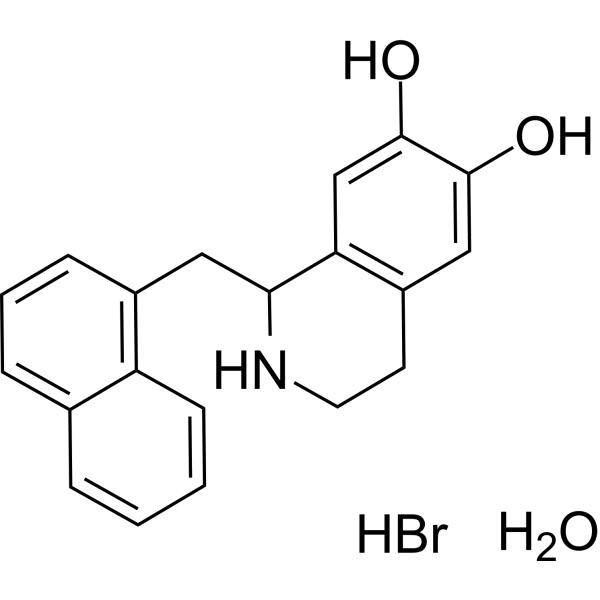
YS-49 (monohydrate) is a PI3K/Akt (a downstream target of RhoA) activator, to reduce RhoA/PTEN activation in the 3-methylcholanthrene-treated cells. YS-49 inhibits angiotensin II (Ang II)-stimulated proliferation of VSMCs via induction of heme oxygenase (HO)-1. YS-49 is also an isoquinoline compound alkaloid, has a strong positive inotropic action through activation of cardiac β-adrenoceptors .
|
-
-
- HY-14252A
-
|
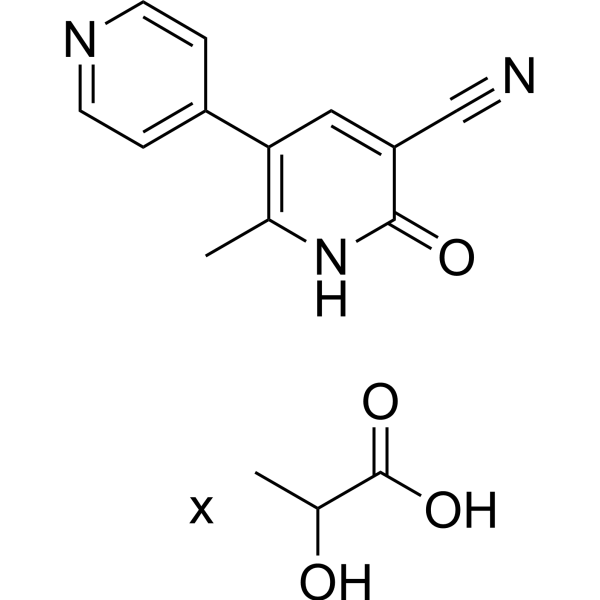
Win 47203 lactate
|
Phosphodiesterase (PDE)
|
Cardiovascular Disease
|
|
Milrinone lactate is a potent inotropic dilating agent. Milrinone lactate shows simultaneous positive inotropic and vasodilating activities. Milrinone lactate promotes reduction of SVR and PVR in patients with DCM and NYHA class III and IV of heart failure. Milrinone lactate has the potential for the research of cardiovascular function after cardiac surgery and in septic shock .
|
-
-
- HY-B1233A
-
|
2-Amino-6-methylheptane hydrochloride; 1,5-Dimethylhexylamine hydrochloride; 6-Methyl-2-heptylamine hydrochloride
|
Dopamine Receptor
|
Neurological Disease
|
|
Octodrine (2-Amino-6-methylheptane) is a central nervous activator that increases the uptake of dopamine and noradrenaline. Octodrine is found to increase the pain threshold, cardiac rate (positive chronotropic effect) and myocardial contractility (positive inotropic effect) .
|
-
-
- HY-165439
-
|
LY195115
|
Phosphodiesterase (PDE)
|
Cardiovascular Disease
|
|
Indolidan (LY195115) is an orally active cardiotonic agent and a selective cyclic nucleotide phosphodiesterase inhibitor. Indolidan has a Ki of 80 nM for sarcoplasmic reticulum phosphodiesterase (SR-PDE). Indolidan exhibits positive inotropic and vasodilator effects. Indolidan can be used in the research of diseases such as congestive heart failure .
|
-
-
- HY-N3198A
-
|
(-)-Sophoramine
|
Adrenergic Receptor
|
Cardiovascular Disease
|
|
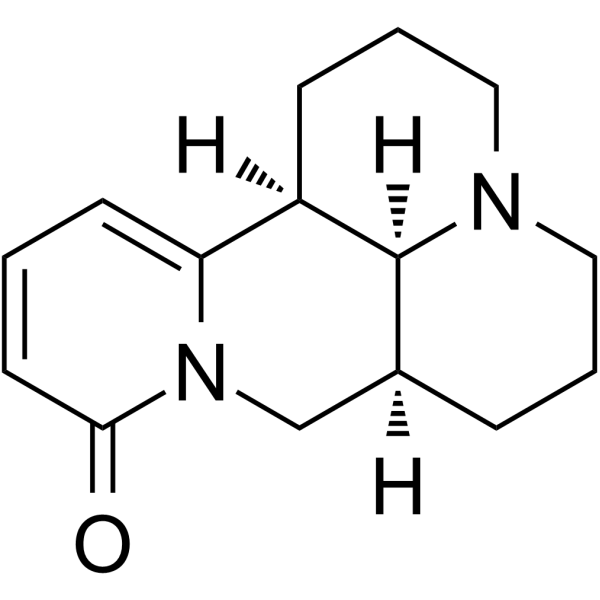
Sophoramine ((-)-Sophoramine) is a prejunctional α2-adrenoceptor inhibitor that can be found in the seeds of Sophora alopecuroides. Sophoramine inhibits prejunctional α2-adrenoceptors to facilitate norepinephrine release from adrenergic nerves. Sophoramine shows cytotoxic activity against human cancer cells, positive inotropic activity, and activity in rodent arrhythmia models. Sophoramine can be used for the research of arrhythmias .
|
-
-
- HY-W017764
-
-
-
- HY-118643
-
|
BMS-986231; CXL-1427
|
Drug Intermediate
|
Cardiovascular Disease
|
|
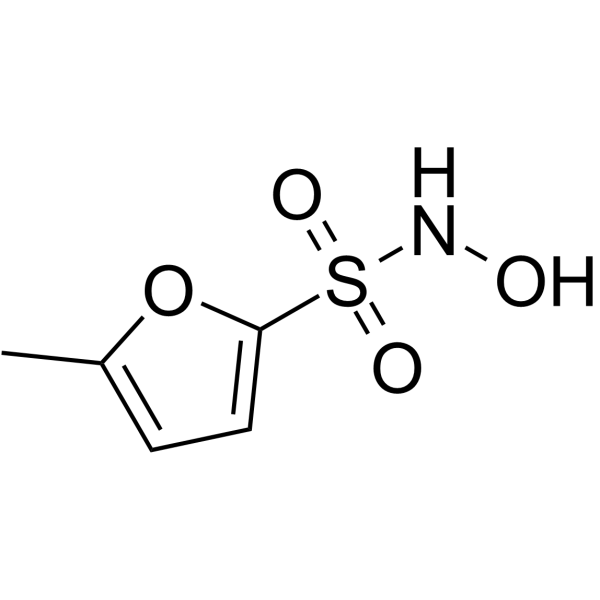
Cimlanod (BMS-986231) is a second-generation Nitroxyl (HNO) donor for heart failure. Cimlanod (BMS-986231) delivers HNO via pH-dependent chemical breakdown when exposed to the neutral pH environment of the bloodstream. Cimlanod (BMS-986231) possesses positive lusitropic and inotropic as well as vasodilatory effects. Cimlanod is the prodrug of CXL-1020 (HY-147384) .
|
-
-
- HY-105431
-
|
|
Na+/K+ ATPase
|
Cardiovascular Disease
|
|
ASI-222 is an aminosugar cardiac glycoside. ASI-222 can inhibit Na+/K+ ATPase and show positive inotropic effect. ASI-222 can be used for the research of cardiovascular disease .
|
-
-
- HY-167079
-
|
|
Drug Derivative
|
Cardiovascular Disease
|
|
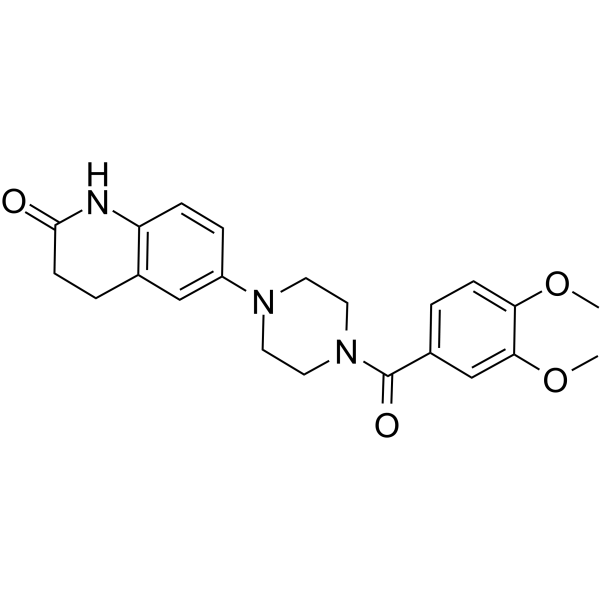
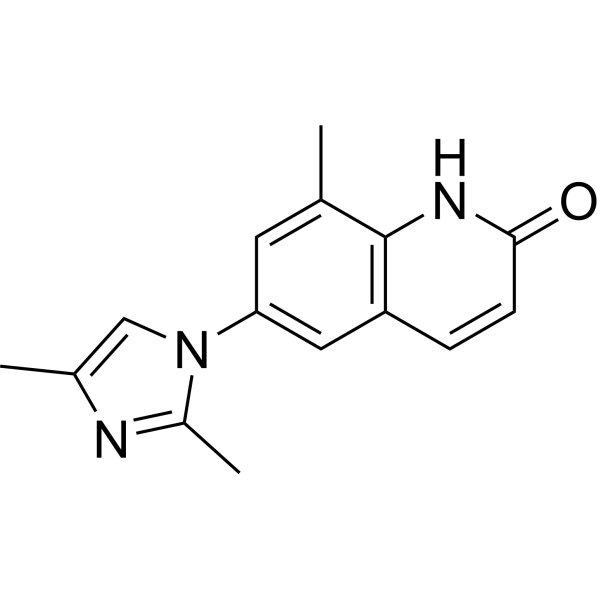
OPC-18750 is a novel positive inotropic agent and 2(lH)-quinolinone derivative. OPC-18750 displays positive inotropic and coronary vasodilating effects .
|
-
-
- HY-113547
-
-
-
- HY-112072
-
|
SB 7505 hydrochloride; SKF 100168 hydrochloride
|
Dopamine Receptor
Adrenergic Receptor
|
Cardiovascular Disease
|
|
Ibopamine (SB 7505) hydrochloride is an orally active dopamine derivative. Ibopamine hydrochloride exerts agonistic effects on α, β adrenergic receptors and dopaminergic receptors. Ibopamine hydrochloride can be hydrolyzed to produce the active metabolite Epinine. Ibopamine hydrochloride possesses positive inotropic and vasodilatory effects, which can improve hemodynamics and renal function in heart failure models. Ibopamine hydrochloride has good safety profile and can be used in the research of diseases such as congestive heart failure .
|
-
-
- HY-129733
-
|
|
Na+/K+ ATPase
|
Cardiovascular Disease
|
|
LND 623 is an inotropic aminosteroid with positive inotropic properties. LND 623 inhibits Na +/K + ATPase activity. The LD50 of LND 623 infused i.v. is around 45 mg/kg, a value ten times higher than the LD50 for Ouabain (HY-B1457) .
|
-
-
- HY-105269A
-
|
|
Calcium Channel
|
Cardiovascular Disease
|
|
Org 30029 hydrochloride is a Ca 2+ sensitizer with positive inotropic effect. Org 30029 hydrochloride can be used for the research of cardiovascular disease .
|
-
-
- HY-14254AR
-
|
Loprinone (Standard)
|
Phosphodiesterase (PDE)
Reference Standards
|
Cardiovascular Disease
|
|
Olprinone (Standard) is the analytical standard of Olprinone. This product is intended for research and analytical applications. Olprinone (Loprinone) is a potent phosphodiesterase (PDE) 3 inhibitor, with IC50s of 150, 100, 0.35 and 14 μM for PDE1, PDE2, PDE3 and PDE4, respectively. Olprinone is used for the research of heart failure due to its positive inotropic and vasodilative effects. Anti-inflammatory activity .
|
-
-
- HY-136677
-
|
|
Calcium Channel
|
Cardiovascular Disease
|
|
LND 796 is an aminosteroidal derivative with positive inotropic effects similar to those of digitalis. It exhibits electrophysiological, toxic, and inotropic effects in normal and partially potassium-depolarized ventricular muscles. LND 796 requires higher concentrations than digoxin to induce the same toxic symptoms. It exhibits a concentration-dependent positive inotropic effect on guinea pig papillary muscles in normal potassium solution. In partially potassium-depolarized papillary muscles, LND 796 enhances both components of contraction and increases the amplitude of slow action potentials. The mechanism of positive inotropic action of LND 796 involves enhanced calcium entry in calcium channels and inhibition of sodium-potassium ATPase. Due to its expanded positive inotropic range, LND 796 may have potential application in the treatment of congestive heart failure.
|
-
-
- HY-167079A
-
-
-
- HY-101811
-
-
-
- HY-P5824
-
-
-
- HY-122405
-
|
|
Others
|
Cardiovascular Disease
|
|
Quebrachidine is an indole alkaloid that exhibits antiarrhythmic profile. Quebrachidine also demonstrates a net positive inotropic action on cardiac tissues .
|
-
-
- HY-113847
-
|
UK-61260-27
|
Phosphodiesterase (PDE)
|
Cardiovascular Disease
|
|
Nanterinone mesylate (UK-61260-27) is an orally active and positive inotropic and balanced-type vasodilating agent, partially based on phosphodiesterase III inhibition with venodilating properties. Nanterinone mesylate is promising for research of cardiovascular diseases .
|
-
-
- HY-116119
-
|
|
Sodium Channel
|
Cardiovascular Disease
|
|
BDF 9148 is a sodium-channel activator with antiarrhythmic properties that produces a significant CAMP-independent positive inotropic effect in left ventricular myocardium from failing hearts. BDF 9148 is promising for research of myocardial failure .
|
-
-
- HY-117574
-
|
|
5-HT Receptor
|
Cardiovascular Disease
|
|
SB 207710 is a highly selective antagonist of the 5-HT4 receptor that has been shown to effectively block the positive inotropic effect induced by serotonin in human right atrial appendage preparations .
|
-
-
- HY-164430
-
|
BU-E-50
|
Histamine Receptor
|
Cardiovascular Disease
|
|
Arpromidine (BU-E-50) is the agonist for histamine H2 receptor and the antagonist for histamine H1 receptor. Arpromidine exhibits positive inotropic effect with less risks in causing arrhythmias. Arpromidine can be used in research of congestive heart failure .
|
-
-
- HY-16256
-
|
|
Phosphodiesterase (PDE)
|
Cardiovascular Disease
|
|
Amrinone lactate is a positive inotropic-vasodilator agent. Amrinone lactate is a selective phosphodiesterase III inhibitor that increases cyclic adenosine monophosphate by preventing its breakdown. Amrinone lactate is also an orally active, non-glycosidic and non-catecholamine cardiotonic agent .
|
-
-
- HY-117715
-
|
|
Phosphodiesterase (PDE)
|
Cardiovascular Disease
|
|
CK-3197 is a weak inhibitor of Peak lll cyclic 3'5'-adenosine monophosphate phosphodiesterase
(CAMP PDEl). CK-3197 has hemodynamic and myocardial energetic effects in vivo. CK-3197 is an imidazolone derivative used as a selective positive inotropic agent for congestive heart failure .
|
-
-
- HY-B1294R
-
|
Inamrinone (Standard)
|
Reference Standards
Phosphodiesterase (PDE)
|
Cardiovascular Disease
|
|
Amrinone (Standard) is the analytical standard of Amrinone. This product is intended for research and analytical applications. Amrinone (Inamrinone) is a positive inotropic-vasodilator agent. Amrinone is a selective phosphodiesterase III inhibitor that increases cyclic adenosine monophosphate by preventing its breakdown. Amrinone is also an orally active, non-glycosidic and non-catecholamine cardiotonic agent .
|
-
-
- HY-19666R
-
|
SDZ 201106 (Standard)
|
Sodium Channel
Reference Standards
|
Cardiovascular Disease
|
|
DPI 201-106 (Standard) is the analytical standard of DPI 201-106. This product is intended for research and analytical applications. DPI 201-106 (SDZ 201106) is a cardiotonic agent with a synergistic sarcolemmal and intracellular mechanism of action. DPI 201-106 shows cardioselective modulation of voltage-gated sodium channels (VGSCs) resulting in a positive inotropic effect .
|
-
-
- HY-123449A
-
|
|
Adrenergic Receptor
|
Cardiovascular Disease
Neurological Disease
|
|
MK-761 TFA is an orally effective β2-adrenergic receptor antagonist. MK-761 TFA attenuates positive inotropic effects, reduces arterial pressure, enhances the contractility of papillary muscles in cat hearts, and exerts effects mediated by catecholamine release. MK-761 TFA can be used in the research of hypertension .
|
-
-
- HY-123449
-
|
|
Adrenergic Receptor
|
Cardiovascular Disease
|
|
MK-761 free base is an orally effective β2-adrenergic receptor antagonist. MK-761 free base attenuates positive inotropic effects, reduces arterial pressure, enhances the contractility of papillary muscles in cat hearts, and exerts effects mediated by catecholamine release. MK-761 free base can be used in the research of hypertension .
|
-
-
- HY-19089
-
|
|
Phosphodiesterase (PDE)
|
Cardiovascular Disease
|
|
DPN-205-734 is an orally administered cGMP-PDE inhibitor. DPN-205-734 exhibits positive inotropic effects in various animal cardiomyocytes. DPN-205-734 reduces blood pressure and total peripheral resistance in multiple animal models, demonstrating a debulking effect. DPN-205-734 can be used in research on cardiovascular and cerebrovascular diseases such as heart failure .
|
-
-
- HY-107567
-
|
β-Alanylhistamine
|
Histamine Receptor
|
Cardiovascular Disease
Neurological Disease
Metabolic Disease
Inflammation/Immunology
|
|
Carcinine (β-Alanylhistamine) is a selective and orally active histamine H3 receptor antagonist with a Ki of 0.2939 μM. Carcinine can reduce histamine content. Carcinine exhibits anti-oxidant activity and neuroprotective effects. Carcinine shows positive inotropic effect and can reduce blood sugar and blood lipid levels. Carcinine can be used for the researches of inflammation, neurological, cardiovascular and metabolic disease, such as retinal damage, seizure and diabetes .
|
-
-
- HY-P3565
-
|
STX-b
|
Calcium Channel
|
Cardiovascular Disease
|
|
Sarafotoxin S6d (STX-b) is a polypeptide toxin isolated from the venom of the Israeli sand boa constrictor. Sarafotoxin S6d induces multiple electrocardiogram (ECG) changes including myocardial ischemia and hyperkalemia. Sarafotoxin S6d induces strong extracellular calcium-dependent vasoconstriction in rat aorta and exhibits positive inotropic effects in rat atria. Sarafotoxin S6d can be used in the study of cardiovascular diseases .
|
-
-
- HY-107567B
-
|
β-Alanylhistamine dihydrochloride
|
Histamine Receptor
|
Cardiovascular Disease
Neurological Disease
Metabolic Disease
Inflammation/Immunology
|
|
Carcinine (β-Alanylhistamine) dihydrochloride is the dihydrochloride salt of Carcinine (HY-107567). Carcinine is a selective and orally active histamine H3 receptor antagonist with a Ki of 0.2939 μM. Carcinine can reduce histamine content. Carcinine exhibits anti-oxidant activity and neuroprotective effects. Carcinine shows positive inotropic effect and can reduce blood sugar and blood lipid levels. Carcinine can be used for the researches of inflammation, neurological, cardiovascular and metabolic disease, such as retinal damage, seizure and diabetes .
|
-
-
- HY-P2601A
-
|
|
CGRP Receptor
|
Others
|
|
Tyr-α-CGRP (human) TFA is an N-terminally extended human α-CGRP analog. Tyr-α-CGRP (human) TFA can bind to membrane preparations from rat brain and spleen with IC50 values of 0.2 nM and 0.5 nM, respectively, and induce positive chronotropic and inotropic effects in isolated guinea pig right and left atria with EC50 values of 282 nM and 74 nM, respectively. Tyr-α-CGRP (human) TFA also inhibits contractile responses in rat vas deferens with an EC50 value of 1.9 nM .
|
-
-
- HY-14254R
-
|
Loprinone Hydrochloride (Standard)
|
Phosphodiesterase (PDE)
Reference Standards
|
Cardiovascular Disease
|
|
Olprinone (Hydrochloride) (Standard) is the analytical standard of Olprinone (Hydrochloride). This product is intended for research and analytical applications. Olprinone (Loprinone) Hydrochloride is a potent phosphodiesterase (PDE) 3 inhibitor, with IC50s of 150, 100, 0.35 and 14 μM for PDE1, PDE2, PDE3 and PDE4, respectively. Olprinone Hydrochloride is used for the research of heart failure due to its positive inotropic and vasodilative effects. Anti-inflammatory activity .
|
-
-
- HY-W748419
-
|
|
Others
|
Cardiovascular Disease
|
|
Acetylstrophanthidin is a cardiac glycoside compound and a positive inotropic agent. Acetylstrophanthidin increases myocardial oxygen consumption in cat papillary muscles under constant load or tension, as well as under afterload (isotonic) and isometric contraction conditions .
|
-
-
- HY-15297R
-
|
OPC-8212 (Standard)
|
Phosphodiesterase (PDE)
Reference Standards
|
Infection
Cardiovascular Disease
|
|
Vesnarinone (Standard) is the analytical standard of Vesnarinone. This product is intended for research and analytical applications. Vesnarinone (OPC-8212) is an orally active phosphodiesterase 3 (PDE3) inhibitor. Vesnarinone can increase in calcium flux and decrease in potassium flux. Vesnarinone shows dose-dependent positive inotropic activity. Vesnarinone can be used in heart failure research .
|
-
-
- HY-165486
-
|
|
Potassium Channel
Calcium Channel
|
Cardiovascular Disease
|
|
AWD 122-60 is a potassium channel blocker and calcium sensitizer, with IC50 values of 11 μM and 29 μM, respectively, against mouse skeletal muscle ATP-sensitive potassium (KATP) channels. AWD 122-60 exerts potent positive inotropic activity. AWD 122-60 exhibits antiarrhythmic activity in vivo and prolongs myocardial refractory period in vitro. AWD 122-60 can be used for research related to arrhythmias .
|
-
-
- HY-106829A
-
|
|
Others
|
Cardiovascular Disease
|
|
OPC 8490 is a stimulant. OPC 8490 has a positive inotropic effect. OPC 8490 can be used for research on heart failure .
|
-
-
- HY-106500
-
|
HOE 224
|
Adrenergic Receptor
|
Cardiovascular Disease
|
|
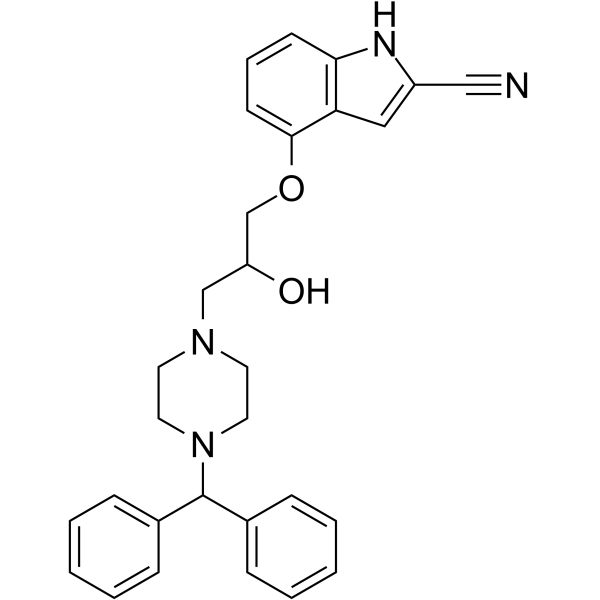
Pacrinolol (HOE 224) is a selective and orally active beta1 adrenergic receptor blocker. Pacrinolol can inhibit Isoprenaline (HY-108353)-induced positive inotropic effect and increased heart rate. Pacrinolol can be used for the research of cardiovascular disease .
|
-
- HY-112071A
-
|
|
Adrenergic Receptor
|
Endocrinology
|
|
Prenalterol hydrochloride is a partial adrenal agonist with functional β1-receptor specificity and positive inotropic effects. Prenalterol hydrochloride is effective in suppressing acute heart failure, low output syndrome after myocardial infarction, shock, and reducing orthostatic hypotension in Shy-Drager syndrome .
|
-
- HY-165397
-
|
|
PKC
|
Cardiovascular Disease
|
|
NA 0345 is a PKC inhibitor with IC50 values of 70 nM and 110 nM in the presence and absence of 12-O-tetradecanoyl-13-acetate, respectively. NA 0345 inhibits PKC and selectively suppresses the positive inotropic effect mediated by α1-adrenergic receptors .
|
-
- HY-N19224
-
|
|
Drug Derivative
Bacterial
|
Infection
Neurological Disease
Cancer
|
|
Pulvinic acid dilactone (Compound 1) is a pulvinic acid derivative and Antibacterial agent. Pulvinic acid dilactone can be isolated from the lichen Candelaria concolor. Pulvinic acid dilactone moderately inhibits the growth of Bacillus subtilis. Pulvinic acid dilactone exerts positive inotropic effects. Pulvinic acid dilactone can be used in studies related to Bacillus subtilis infections and leukemia .
|
-
- HY-N18500
-
|
Adlumidine
|
SARS-CoV
Virus Protease
|
Cardiovascular Disease
Infection
|
|
(+)-Adlumidine (Adlumidine) is an isoquinoline alkaloid. (+)-Adlumidine efficiently binds to two key targets of SARS-CoV-2, Mpro and RBD, with IC50 values of 953.86 nM and 9.48 μM, respectively. (+)-Adlumidine exerts significant positive inotropic effects and certain positive chronotropic effects on cultured mouse embryonic cardiomyocytes. (+)-Adlumidine can be used for research on cardiovascular-related diseases and SARS-CoV-2 infection.
|
-
- HY-165443
-
|
Nervocidine
|
Na+/K+ ATPase
|
Cardiovascular Disease
|
|
Cassaine (Nervocidine) is a Na +/K +-ATPase inhibitor. Cassaine stabilizes phosphorylated intermediates, slows spontaneous dephosphorylation and blocks potassium-stimulated dephosphorylation. Cassaine exhibits non-competitive inhibition with respect to K +, shows inhibition enhanced by Pi and antagonized by Na +. Cassaine induces positive inotropic effects in perfused hearts with faster inotropy offset. Cassaine can be used for research on cardiac arrhythmias .
|
-
- HY-105931
-
|
RS-82856
|
Phosphodiesterase (PDE)
|
Cardiovascular Disease
Endocrinology
|
|
Lixazinone (RS-82856) is a selective inhibitor of cGMP-inhibited phosphodiesterase (PDE3) with an IC50 value of 22 nM. Lixazinone exhibits positive inotropic effects, afterload reduction and antithrombotic properties. Lixazinone increases cyclic adenosine monophosphate (cAMP) levels in human platelets, inhibits thrombin-induced aggregation of human platelets, and blocks the photolabeling of PDE3 active sites by [ 32P]cGMP. Lixazinone can be used in the research of polycystic kidney disease and congestive heart failure .
|
-
- HY-106830
-
|
|
Phosphodiesterase (PDE)
|
Cardiovascular Disease
|
|
Pelrinone is an orally active cardiotonic agent and PDE III inhibitor with an IC50 of 36 μM. Pelrinone elevates intracellular cAMP levels. The action of Pelrinone is independent of β-adrenergic receptors, and it does not inhibit Na +/K +-ATPase. Pelrinone exerts positive inotropic and vasodilatory effects. Pelrinone inhibits platelet aggregation, reduces thrombus formation, and exerts weak anticoagulant activity without altering hematocrit or circulating platelet counts. Pelrinone can be used in research related to congestive heart failure and coronary thrombosis .
|
-
- HY-113822
-
|
RS-82856 hydrogensulfate
|
Phosphodiesterase (PDE)
|
Cardiovascular Disease
Endocrinology
|
|
Lixazinone (RS-82856) hydrogensulfate is a selective inhibitor of cGMP-inhibited phosphodiesterase (PDE3) with an IC50 value of 22 nM. Lixazinone hydrogensulfate exhibits positive inotropic effects, afterload reduction and antithrombotic properties. Lixazinone hydrogensulfate increases cyclic adenosine monophosphate (cAMP) levels in human platelets, inhibits thrombin-induced aggregation of human platelets, and blocks the photolabeling of PDE3 active sites by [ 32P]cGMP. Lixazinone hydrogensulfate can be used in the research of polycystic kidney disease and congestive heart failure .
|
-
- HY-18740
-
|
HL 725 free base
|
Phosphodiesterase (PDE)
|
Endocrinology
|
|
Trequinsin (HL 725 free base) is a PDE inhibitor, CatSper channel activator, and sperm potassium channel modulator. Trequinsin targets PDE3 with an IC50 of <1 nM. Trequinsin enhances currents and elevates intracellular calcium and cGMP levels via direct activation of the CatSper channel, while inhibiting the outward current conductance of sperm potassium channels. Without inducing premature acrosome reaction, Trequinsin significantly enhances sperm hyperactivated motility, forward motility, and the ability to penetrate viscous media. Trequinsin exerts age-specific positive inotropic and positive lusitropic effects on rabbit ventricular papillary muscles. Trequinsin has been used in studies on the mechanisms underlying male infertility (e.g., asthenozoospermia) .
|
-
- HY-107567BR
-
|
β-Alanylhistamine dihydrochloride (Standard)
|
Reference Standards
Histamine Receptor
|
Cardiovascular Disease
Neurological Disease
Metabolic Disease
Inflammation/Immunology
|
|
Carcinine dihydrochloride (Standard) is the analytical standard of Carcinine (dihydrochloride) (HY-107567B). This product is intended for research and analytical applications. Carcinine (β-Alanylhistamine) dihydrochloride is the dihydrochloride salt of Carcinine (HY-107567). Carcinine is a selective and orally active histamine H3 receptor antagonist with a Ki of 0.2939 μM. Carcinine can reduce histamine content. Carcinine exhibits anti-oxidant activity and neuroprotective effects. Carcinine shows positive inotropic effect and can reduce blood sugar and blood lipid levels. Carcinine can be used for the researches of inflammation, neurological, cardiovascular and metabolic disease, such as retinal damage, seizure and diabetes .
|
-
| Cat. No. |
Product Name |
Target |
Research Area |
-
- HY-P2106
-
|
|
Arrestin
Apelin Receptor (APJ)
|
Cardiovascular Disease
|
|
Elabela(19-32) is an active fragment of ELABELA (ELA) that binds to apelin receptor (APJ). Elabela(19-32) activates the Gαi1 and β-arrestin-2 signaling pathways with EC50s of 8.6 nM and 166 nM. Elabela(19-32) induces receptor internalization and reduces arterial pressure, exerts positive inotropic effects on the heart .
|
-
- HY-P2106A
-
|
|
Apelin Receptor (APJ)
Arrestin
|
Cardiovascular Disease
|
|
Elabela(19-32) TFA is an active fragment of ELABELA (ELA) that binds to apelin receptor (APJ). Elabela(19-32) TFA activates the Gαi1 and β-arrestin-2 signaling pathways with EC50s of 8.6 nM and 166 nM. Elabela(19-32) TFA induces receptor internalization and reduces arterial pressure, exerts positive inotropic effects on the heart .
|
-
- HY-P5824
-
-
- HY-P3565
-
|
STX-b
|
Calcium Channel
|
Cardiovascular Disease
|
|
Sarafotoxin S6d (STX-b) is a polypeptide toxin isolated from the venom of the Israeli sand boa constrictor. Sarafotoxin S6d induces multiple electrocardiogram (ECG) changes including myocardial ischemia and hyperkalemia. Sarafotoxin S6d induces strong extracellular calcium-dependent vasoconstriction in rat aorta and exhibits positive inotropic effects in rat atria. Sarafotoxin S6d can be used in the study of cardiovascular diseases .
|
-
- HY-P2601A
-
|
|
CGRP Receptor
|
Others
|
|
Tyr-α-CGRP (human) TFA is an N-terminally extended human α-CGRP analog. Tyr-α-CGRP (human) TFA can bind to membrane preparations from rat brain and spleen with IC50 values of 0.2 nM and 0.5 nM, respectively, and induce positive chronotropic and inotropic effects in isolated guinea pig right and left atria with EC50 values of 282 nM and 74 nM, respectively. Tyr-α-CGRP (human) TFA also inhibits contractile responses in rat vas deferens with an EC50 value of 1.9 nM .
|
| Cat. No. |
Product Name |
Category |
Target |
Chemical Structure |
Your information is safe with us. * Required Fields.
Inquiry Information
- Product Name:
- Cat. No.:
- Quantity:
- MCE Japan Authorized Agent:

