1. Search Result
Search Result
Results for "

remodelling

" in MedChemExpress (MCE) Product Catalog:

192

Inhibitors & Agonists

2

Screening Libraries

1

Fluorescent Dye

8

Biochemical Assay Reagents

19

Peptides

6

Inhibitory Antibodies

19

Natural
Products

12

Isotope-Labeled Compounds

2

Click Chemistry

3

Oligonucleotides

Cat. No. Product Name Target Research Area
  • HY-P0003

    Brain Natriuretic Peptide-32 human; BNP-32

    Natriuretic Peptide Receptor (NPR) Calcium Channel Cardiovascular Disease
    Nesiritide (Brain Natriuretic Peptide-32 human) is a recombinant human B-type natriuretic peptide. Nesiritide is a NPRs agonist, with Kd values of 7.3 and 13 pM for NPR-A and NPR-C, respectively. Nesiritide regulates V1/2 activation/inactivation of the L-type calcium channel. Nesiritide shows vasodilatory, diuretic, and natriuretic activities. Nesiritide is used in cardiovascular diseases such as heart failure and vascular remodeling after arterial injury .
  • HY-P5366

    Liposome Others
    PEP1 is an amphipathic α-helical peptide containing 31 residues. The interaction of PEP1 with POPC-supported lipid bilayers (SLBs) is concentration-dependent: at low concentrations, it inserts into SLBs to generate compressive stress; at medium concentrations, it saturates the membrane surface to maintain constant stress; and at high concentrations, it solubilizes SLBs. PEP1 can be used for research on the mechanism of membrane-peptide interactions .
  • HY-P0204A
    Endothelin-3, human, mouse, rabbit, rat TFA
    1 Publications Verification

    Endothelin 3 (Rat,Human) TFA

    Endothelin Receptor Integrin Neurological Disease
    Endothelin-3, human, mouse, rabbit, rat TFA (Endothelin 3 (Rat,Human) TFA) is an adhesion stimulant. Endothelin-3, human, mouse, rabbit, rat TFA stimulates the adhesion of enteric neural crest cells to various ECM components. Endothelin-3, human, mouse, rabbit, rat TFA plays an important role in the maintenance and self-renewal of intestinal progenitor cells, participates in the migration of enteric neural crest cells, and helps maintain a suitable environment for the colonization of enteric neural crest cells. Endothelin-3, human, mouse, rabbit, rat TFA acts synergistically with the β1-integrin signaling pathway during enteric nervous system development. Endothelin-3, human, mouse, rabbit, rat TFA can be used in studies related to distal aganglionosis .
  • HY-125553

    Serilesine

    Amino Acid Derivatives Others
    Hexapeptide-10 (Serilesine) is a synthetic hexapeptide. Hexapeptide-10 promotes wound healing and tissue remodeling. Hexapeptide-10 is applicable in cosmetic research .
  • HY-P3304

    GHSR Neurological Disease Cancer
    MR 409 is a selected growth hormone-releasing hormone (GHRH) agonist. MR 409 has remarkable neuroprotective effects through enhancing endogenous neurogenesis in cerebral ischemic mice. MR 409 also inhibits the in vivo growth of lung cancer .
  • HY-141867

    Z-Phe-Phe-FMK

    Cathepsin MEK Caspase DNA/RNA Synthesis Apoptosis Cardiovascular Disease Neurological Disease
    Z-FF-FMK (Z-Phe-Phe-FMK) is a cell-permeable, irreversible, and cysteine protease inhibitor targeting cathepsin-L. Z-FF-FMK inhibits angiotensin II-induced MEK activation in vascular walls, aortic medial remodeling, blood pressure elevation, and upregulation of cystatin C in aortic walls. Z-FF-FMK prevents β-amyloid-mediated caspase-3 activation, poly (ADP-ribose) polymerase cleavage, DNA fragmentation, and apoptosis of cortical neurons (apoptosis). Z-FF-FMK can be used in research related to hypertension and Alzheimer's disease .
  • HY-P4111

    CXCR Inflammation/Immunology Cancer
    Peptide R is a cyclic peptide and a specific CXCR4 antagonist. Peptide R exhibits excellent ability to effectively remodel tumor stroma. Peptide R has potential for use in tumor research .
  • HY-P3012

    Cathepsin ERK p38 MAPK PKC Protease Activated Receptor (PAR) MMP Inflammation/Immunology
    Cathepsin G is a pH-dependent serine protease. Cathepsin G hydrolyzes diverse synthetic and protein substrates and remodels extracellular matrix. Cathepsin G exerts immunomodulatory effects via recruiting phagocytes, enhancing T cell motility, activating ERK1/2 and p38 MAPK signaling, and mediating PKCζ membrane translocation. Cathepsin G regulates inflammatory responses by cleaving inflammatory mediators. Cathepsin G participates in vascular regulation by converting angiotensin I to angiotensin II. Cathepsin G induces PAR4-dependent platelet activation, facilitates platelet-neutrophil aggregation, and mediates VITT-related NETosis, thrombus formation. Cathepsin G can be used for the research of immune thrombotic thrombocytopenia, cardiovascular disease, and select autoimmune and inflammatory diseases .
  • HY-P4846
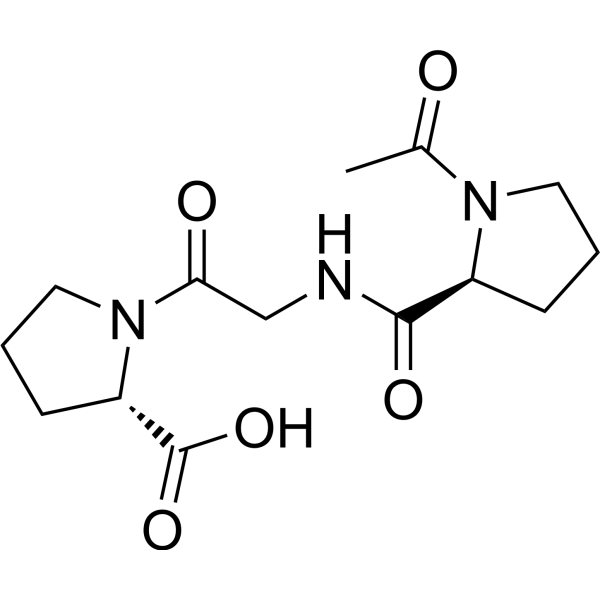
    Ac-Pro-Gly-Pro-OH
    2 Publications Verification

    CXCR Apoptosis IFNAR TNF Receptor Interleukin Related Infection Inflammation/Immunology
    Ac-Pro-Gly-Pro-OH is an endogenous degradation product of extracellular collagen and acts as a CXCR2 agonist . Ac-Pro-Gly-Pro-OH exerts bactericidal activity by generating hydrogen peroxide, inhibits pulmonary inflammation, and reduces immune cell apoptosis (apoptosis). Ac-Pro-Gly-Pro-OH promotes the production of IFN-γ and inhibits the production of TNF-α and IL-6 in leukocytes. Ac-Pro-Gly-Pro-OH increases the survival rate of mice in sepsis models, enhances the bactericidal activity of neutrophils, acts as a neutrophil chemoattractant, induces neutrophil polarization, and regulates inflammatory and repair processes. Ac-Pro-Gly-Pro-OH induces chronic inflammation and tissue remodeling through sustained action. Ac-Pro-Gly-Pro-OH is released via alkaline hydrolysis of corneal proteins in alkali-injured eyes, thereby driving the early infiltration of neutrophils into the cornea. Ac-Pro-Gly-Pro-OH is applicable to research related to sepsis, chronic obstructive pulmonary disease, cystic fibrosis, bronchiolitis obliterans syndrome, severe asthma, idiopathic pulmonary fibrosis, and corneal ulcer .
  • HY-P2588

    Osteocalcin (1-49) (human)

    Endogenous Metabolite Metabolic Disease Cancer
    Osteocalcin (Osteocalcin (1-49)) (human) is a vitamin K-dependent bone specific protein. Osteocalcin (human) is chemotactic for several of the cell types frequently found at bone remodeling surfaces .
  • HY-P4911A
    SDF-1α (human) TFA
    2 Publications Verification

    CXCR Cardiovascular Disease
    SDF-1α (human) TFA is a mononuclear cells chemoattractant that can bind to CXCR4. SDF-1α plays a central role in stem cell homing, retention, survival, proliferation, cardiomyocyte repair, angiogenesis and ventricular remodelling following myocardial infarction. SDF-1α (human) TFA can be used in cardiovascular disease research .
  • HY-124081

    Apoptosis Metabolic Disease
    N-Oleoyl-L-Serine is an endogenous amide of long-chain fatty acids with ethanolamine (N-acyl amides). N-Oleoyl-L-Serine is a lipid regulator of bone remodeling and stimulates osteoclast apoptosis. N-Oleoyl-L-Serine can be used for antiosteoporotic drug discovery development .
  • HY-P4911

    CXCR Cardiovascular Disease
    SDF-1α (human) is a mononuclear cells chemoattractant that can bind to CXCR4. SDF-1α plays a central role in stem cell homing, retention, survival, proliferation, cardiomyocyte repair, angiogenesis and ventricular remodelling following myocardial infarction. SDF-1α (human) can be used in cardiovascular disease research .
  • HY-P2588A

    Osteocalcin (1-49) (human) TFA

    Endogenous Metabolite Metabolic Disease Cancer
    Osteocalcin (Osteocalcin (1-49)) (human) TFA is a vitamin K-dependent bone specific protein. Osteocalcin (human) TFA is chemotactic for several of the cell types frequently found at bone remodeling surfaces .
  • HY-P4111A

    CXCR Cancer
    Peptide R (TFA) is a synthetic and specific CXCR4 antagonist. Peptide R (TFA) shows outstanding capacities to remodel the tumor stroma. Peptide R (TFA) can be used for solid tumor (glioblastoma, etc.) research .
  • HY-P3227

    XJ735

    Integrin Inflammation/Immunology
    Cyclo(Ala-Arg-Gly-Asp-Mamb) is a selective RGD peptide antagonist and has the potential for Pulmonary arterial hypertension research .
  • HY-P5377

    Cathepsin K substrate

    Ser/Thr Protease Others
    Abz-HPGGPQ-EDDnp (Cathepsin K substrate) is a biological active peptide. (Cathepsins are a class of globular lysosomal proteases, playing a vital role in mammalian cellular turnover. They degrade polypeptides and are distinguished by their substrate specificities. Cathepsin K is the lysosomal cysteine protease involved in bone remodeling and resorption. It has potential as a drug target in autoimmune diseases and osteoporosis.This FRET peptide can be used to monitor selectively cathepsin K activity in physiological fluids and cell lysates. Abz-HPGGPQ-EDDnp [where Abz represents o-aminobenzoic acid and EDDnp represents N -(2, 4-dinitrophenyl)-ethylenediamine], a substrate initially developed for trypanosomal enzymes, is efficiently cleaved at the Gly-Gly bond by cathepsin K. This peptide is resistant to hydrolysis by cathepsins B, F, H, L, S and V, Ex/Em=340 nm/420 nm.)
  • HY-P4839

    Peptides Metabolic Disease
    GLP-2 (1-34) (human) is a polypeptide released from the intestine within minutes after food intake. GLP-2 (1-34) (human) can be used for the research of bone remodeling processes .
  • HY-P0003A

    Brain Natriuretic Peptide-32 human acetate; BNP-32 acetate

    Natriuretic Peptide Receptor (NPR) Calcium Channel Cardiovascular Disease
    Nesiritide (Brain Natriuretic Peptide-32 human) acetate is a recombinant human B-type natriuretic peptide. Nesiritide acetate is a NPRs agonist, with Kd values of 7.3 and 13 pM for NPR-A and NPR-C, respectively. Nesiritide acetate regulates V1/2 activation/inactivation of the L-type calcium channel. Nesiritide acetate shows vasodilatory, diuretic, and natriuretic activities. Nesiritide acetate is used in cardiovascular diseases such as heart failure and vascular remodeling after arterial injury .

Inquiry Online

Your information is safe with us. * Required Fields.

Salutation


Country or Region *

Applicant Name *


Organization Name *

Department *


Email Address *


Product Name *

Cat. No.


Requested quantity *

Phone Number *


Remarks

Inquiry Online

Inquiry Information

Product Name:
Cat. No.:
Quantity:
MCE Japan Authorized Agent:

