1. Search Result
Search Result
Results for "

retinol

" in MedChemExpress (MCE) Product Catalog:

44

Inhibitors & Agonists

14

Natural
Products

14

Recombinant Proteins

6

Isotope-Labeled Compounds

4

Antibodies

Cat. No. Product Name Target Research Areas Chemical Structure
  • HY-B1342

    Vitamin A1; all-trans-retinol

    Environmental Pollutants Endogenous Metabolite Metabolic Disease
    Vitamin A (Vitamin A1) is an endogenous metabolite.
    Vitamin A
  • HY-W004500
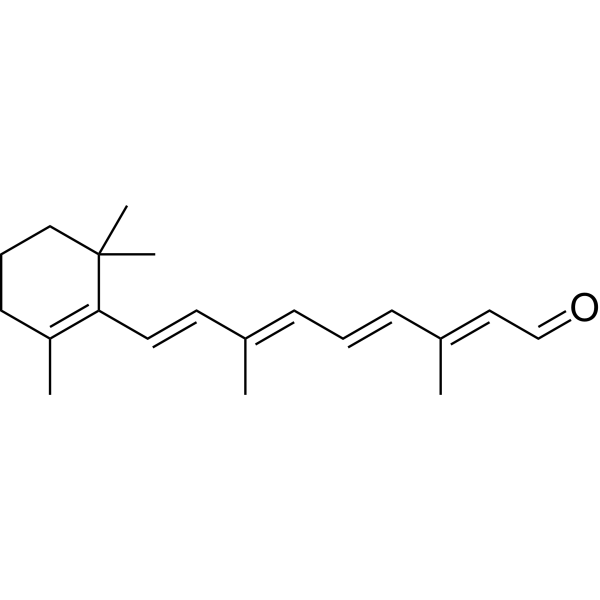
    All-trans-retinal
    3 Publications Verification

    Endogenous Metabolite Apoptosis Metabolic Disease
    All-trans-retinal is an vitamin A metabolite in the retina, and is produced following photo-isomerization of the visual chromophore 11-cis-Retinal. All-trans-retinal is cleared from photoreceptors by ATP-binding cassette transporter (ABCA4) and all-trans-retinol dehydrogenase (RDH). All-trans-retinal induces Bax activation via DNA damage to mediate retinal cell apoptosis .
    All-trans-retinal
  • HY-N0679
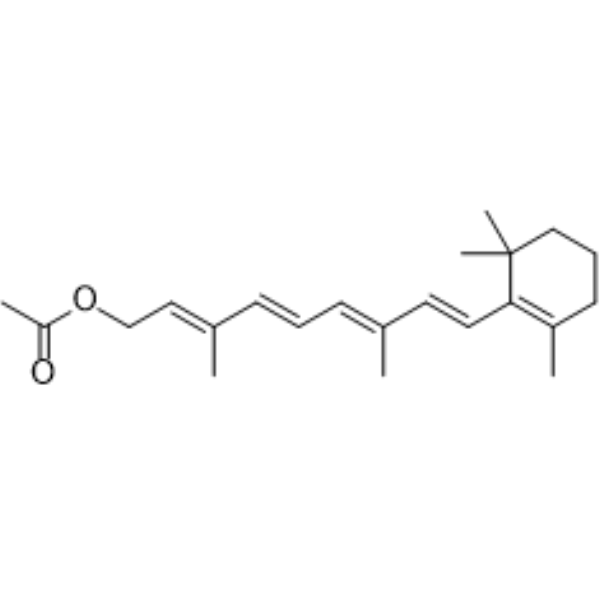
    Retinyl acetate
    4 Publications Verification

    retinol acetate; Vitamin A acetate

    Environmental Pollutants Cancer
    Retinyl acetate is a synthetic acetate ester form derived from retinol and has potential antineoplastic and chemo preventive activities .
    Retinyl acetate
  • HY-B1384

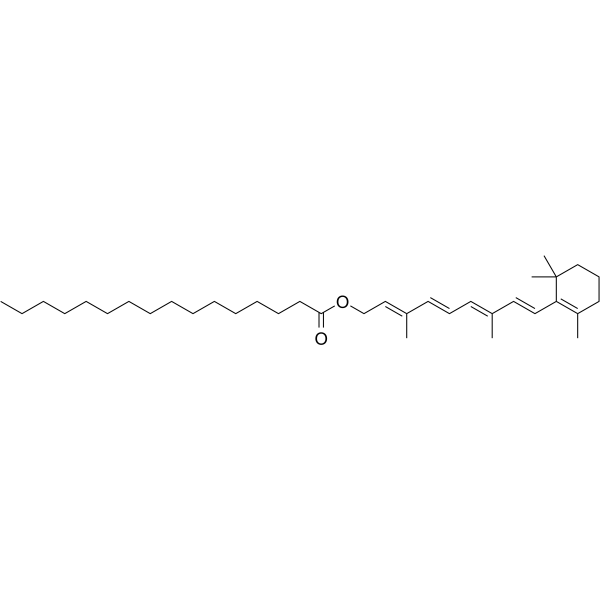
    Vitamin A palmitate; retinol palmitate

    Endogenous Metabolite Infection
    Retinyl palmitate is an ester of Retinol and is the major form of vitamin A found in the epidermis. Retinyl palmitate has been widely used in researches of pharmaceutical and cosmetic formulations .
    Retinyl palmitate
  • HY-W009310

    Endogenous Metabolite Organoid Others
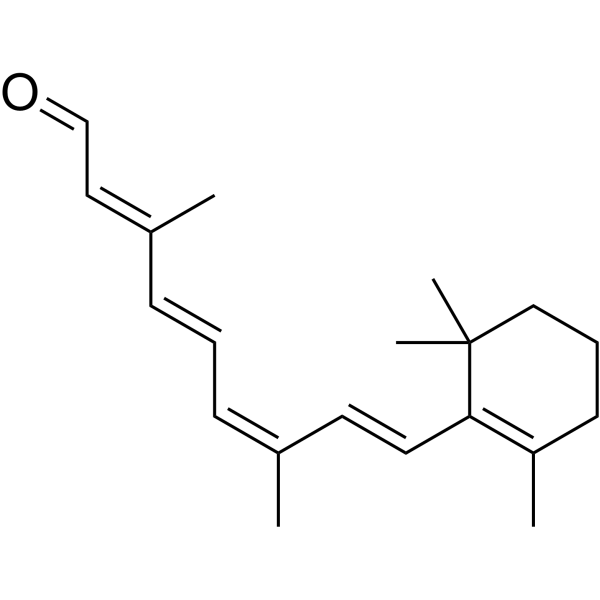
    9-cis-Retinal is a natural retinoid. Dietary 9-cis-β-carotene generates 9-cis-retinoids via cleavage into 9-cis-retinal. 9-cis Retinal binds to cellular retinol-binding protein-I (CRBP-I) and CRBP-II with Kds of 8 nM and 5 nM, respectively. 9-cis-Retinal expedites differentiation and maturation of rod photoreceptors in retinal organoids .
    9-cis-Retinal
  • HY-W011094
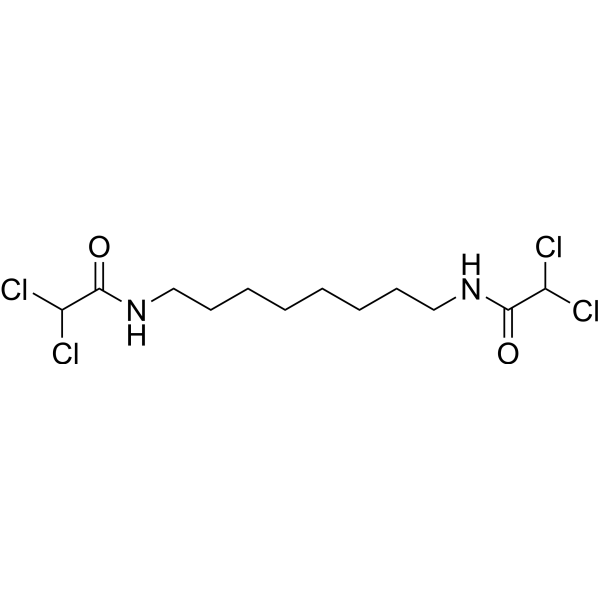
    Win 18446
    3 Publications Verification

    Aldehyde Dehydrogenase (ALDH) Endocrinology
    Win 18446 is an orally active testes-specific enzyme ALDH1a2 inhibitor, with an IC50 of 0.3 μM. Win 18446 reversibly inhibits spermatogenesis in many species and inhibits Retinoic acid (HY-14649) biosynthesis from Retinol (HY-B1342) within the testes .
    Win 18446
  • HY-N7495

    Anhydrovitamin A

    Drug Metabolite Metabolic Disease
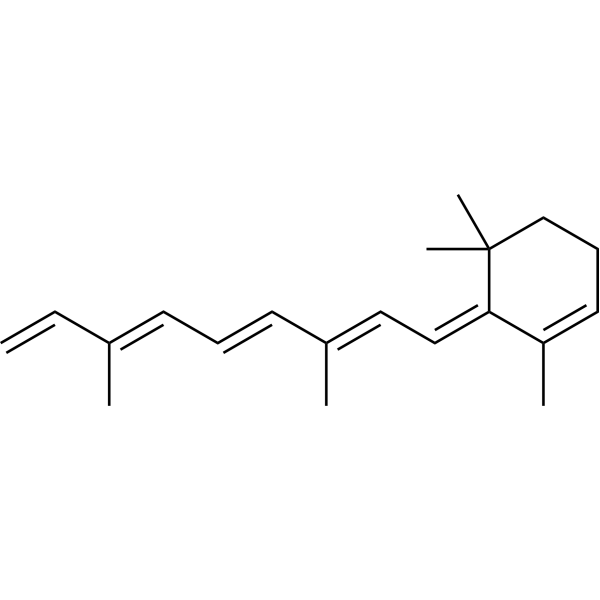
    all-trans-Anhydro Retinol (Anhydrovitamin A) is an orally active degradation product formed by the dehydration of vitamin A alcohol and its esters under conditions such as acidic catalysis or hydroxylic solvents, with a biological activity only 0.4% of that of Vitamin A (HY-B1342). In rats, all-trans-Anhydro Retinol can be metabolized into hydroxy derivatives and their esters, but it cannot be converted into Vitamin A (HY-B1342) and has a low storage capacity in the body .
    all-trans-Anhydro Retinol
  • HY-116711

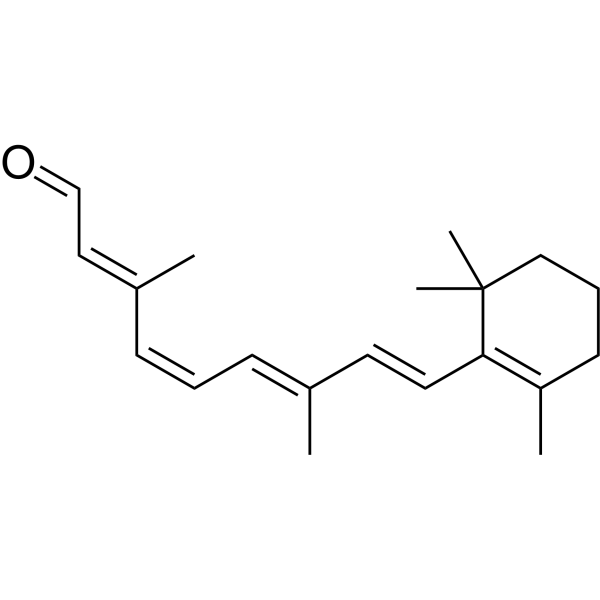
    11-cis Retinaldehyde; 11-cis Vitamin A aldehyde

    Drug Derivative Endogenous Metabolite Neurological Disease
    11-cis-Retinal (11-cis Retinaldehyde; 11-cis Vitamin A aldehyde), oxidized form of 11-cis-Retinol (HY-W587807), is a naturally occurring visual component. 11-cis-Retinal binds to opsin in the mammalian visual system as an inverse agonist forming the inactive conformation of rhodopsin. 11-cis-Retinal plays a crucial role in vision, growth and development. 11-cis-Retinal can restore visual function in moths with visual impairments. 11-cis-Retinal can restore retinal function in an early-age LCA2 retinal degeneration 12 mouse model .
    11-cis-Retinal
  • HY-107633
    A 1120
    1 Publications Verification

    Transthyretin (TTR) Metabolic Disease
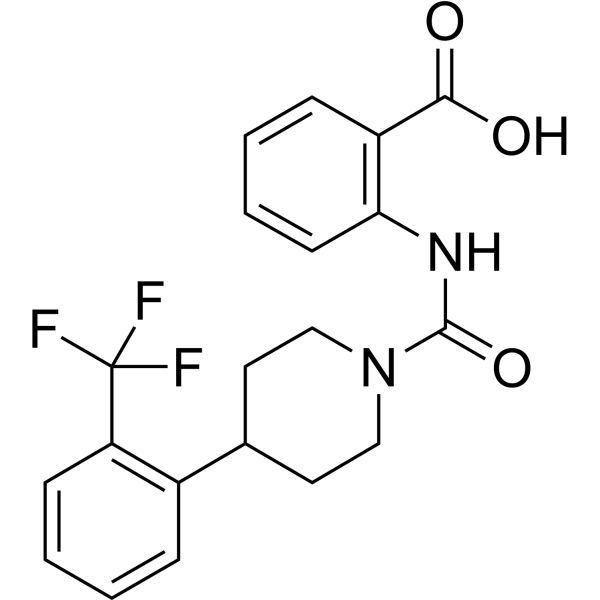
    A 1120 is a high-affinity nonretinoid retinol-binding protein 4 (RBP4) antagonist with a Ki value of 8.3 nM. A 1120 disrupts the interaction between RBP4 and its binding partner transthyretin .
    A 1120
  • HY-19720A

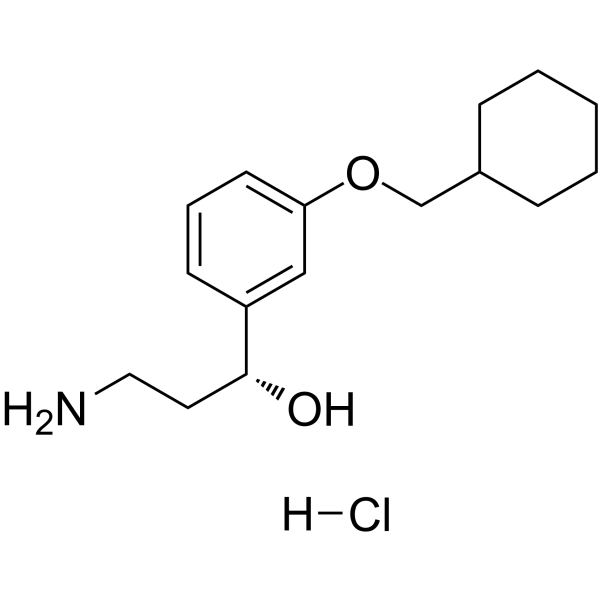
    ACU-4429 hydrochloride

    RPE65 Metabolic Disease
    Emixustat (ACU-4429) hydrochloride is an orally active RPE65 inhibitor with an IC50 value of 4.4 nM. Emixustat hydrochloride is also a visual cycle modulator, capable of regulating visual cycle activity by inhibiting retinol isomerization, and holds potential for studying vision disorders such as age-related macular degeneration (AMD) .
    Emixustat hydrochloride
  • HY-108059

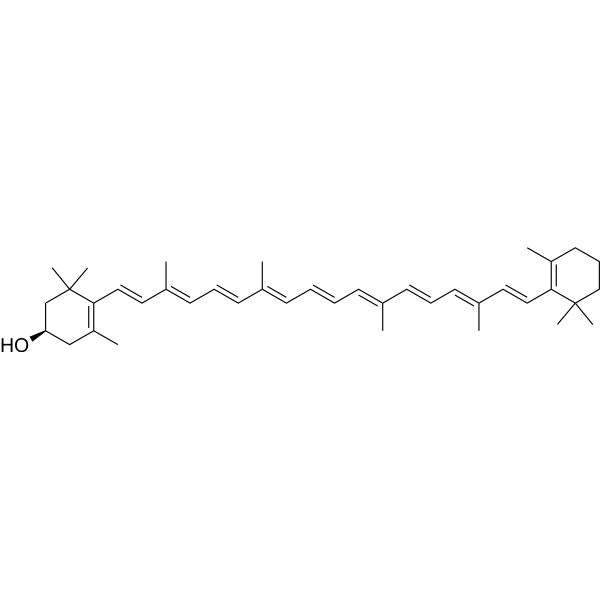
    (3R)-β-Cryptoxanthin

    Drug Derivative Neurological Disease Metabolic Disease Inflammation/Immunology Cancer
    β-Cryptoxanthin ((3R)-β-Cryptoxanthin) is an orally active carotenoid found in fruits and vegetables such as angerines, red peppers, and pumpkin. β-Cryptoxanthin inhibits prevents osteoclast formation and inhibits bone resorption. β-Cryptoxanthin maintains retinol status in vivo. β-cryptoxanthin shows anti-inflammation and anticancer activity. β-Cryptoxanthin can be used for the researches of osteoporosis and bladder carcer .
    β-Cryptoxanthin
  • HY-125904
    4-Hydroxyretinoic acid
    1 Publications Verification

    RAR/RXR UGT Cytochrome P450 Apoptosis Drug Derivative Neurological Disease Inflammation/Immunology Cancer
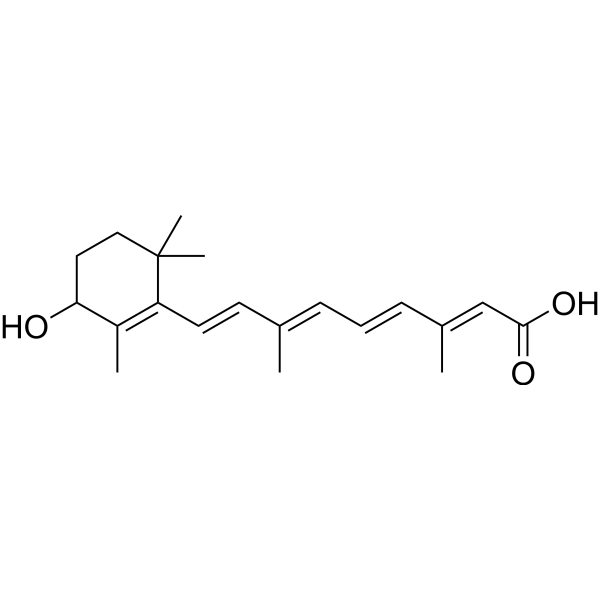
    4-Hydroxyretinoic acid (4-HRA) is a derivative of Retinoic acid (HY-14649). 4-Hydroxyretinoic acid is formed via the catalysis of retinol by cytochrome P-450 isoenzymes. 4-Hydroxyretinoic acid also serves as a substrate for UDP-glucuronosyltransferase (s) and recombinant UGT2B7. 4-Hydroxyretinoic acid binds to the nuclear receptor RAR (Retinoic Acid Receptor), activates RAR and RXR-alpha, subsequently regulates gene expression and cell differentiation, and induces cancer cell apoptosis (Apoptosis). 4-Hydroxyretinoic acid also participates in multiple physiological processes such as immunoregulation, neuroprotection and antioxidation .
    4-Hydroxyretinoic acid
  • HY-19720

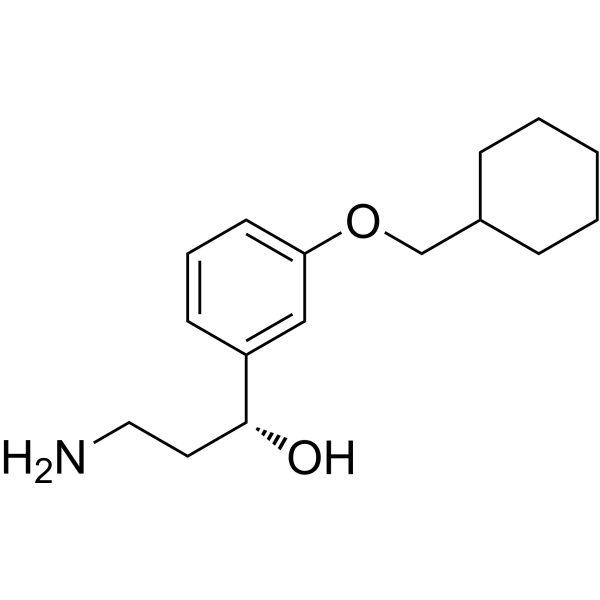
    ACU-4429

    RPE65 Metabolic Disease
    Emixustat is an orally active RPE65 inhibitor with an IC50 value of 4.4 nM. Emixustat is also a visual cycle modulator, capable of regulating visual cycle activity by inhibiting retinol isomerization, and holds potential for studying vision disorders such as age-related macular degeneration (AMD) .
    Emixustat
  • HY-B1384R

    Vitamin A palmitate (Standard); retinol palmitate (Standard)

    Endogenous Metabolite Reference Standards Others
    Retinyl palmitate (Standard) is the analytical standard of Retinyl palmitate. This product is intended for research and analytical applications. Retinyl palmitate is an ester of Retinol and is the major form of vitamin A found in the epidermis. Retinyl palmitate has been widely used in pharmaceutical and cosmetic formulations.
    Retinyl palmitate (Standard)
  • HY-W739769

    13,14-Dihydroretinol

    Endogenous Metabolite Others
    all-trans-13,14-Dihydroretinol is a metabolite of all-trans-retinol (HY-B1342). all-trans-retinol is catalyzed by retinol saturase to form all-trans-13,14-Dihydroretinol .
    all-trans-13,14-Dihydroretinol
  • HY-W654334

    Isotope-Labeled Compounds Endogenous Metabolite Inflammation/Immunology
    9-cis-Retinol-d5 is deuterium labeled 9-cis Retinol (HY-W587806). 9-cis Retinol is a precursor of 9-cis-Retinal (HY-W009310). 9-cis Retinol can inhibit 9-cis-Retinoic acid (HY-15128) synthesis in Hep G2 cells .
    9-cis-Retinol-d5
  • HY-N0679R

    retinol acetate (Standard); Vitamin A acetate (Standard)

    Reference Standards Others Cancer
    Retinyl acetate (Standard) is the analytical standard of Retinyl acetate. This product is intended for research and analytical applications. Retinyl acetate is a synthetic acetate ester form derived from retinol and has potential antineoplastic and chemo preventive activities .
    Retinyl acetate (Standard)
  • HY-N0679S

    ALK-001; retinol acetate-d3; Vitamin A acetate-d3

    Isotope-Labeled Compounds Metabolic Disease
    Retinyl acetate-d3 (ALK-001) is a deuterated Vitamin A. Retinyl acetate-d3 can be used for research of geographic atrophy (GA) secondary to age-related macular degeneration (AMD) .
    Retinyl acetate-d3
  • HY-16760

    9-cis-Vitamin A acetate; Zuretinol acetate

    Others Others
    9-cis-Retinol acetate is a retinal derivative.
    9-cis-Retinol acetate
  • HY-147251

    Drug Derivative Others
    SRI 6409-94 is an orally active Ro 13-6298 analogue that is teratogenic. SRI 6409-94 serves as a molecular tool to study the effect of the three-dimensional configuration of retinol on teratogenic activity .
    SRI 6409-94
  • HY-143793

    Lipocalin Family Metabolic Disease
    RBP4 inhibitor 1 (compound 43b) is a potent and orally active retinol-binding protein 4 (RBP4) inhibitor with IC50s of 28 nM and 110 nM for human and mouse RBP4. RBP4 inhibitor 1 has a potent and long-lasting blood RBP4-level-reducing effect in mice .
    RBP4 inhibitor 1
  • HY-W587806

    Endogenous Metabolite Inflammation/Immunology
    9-cis Retinol is a precursor of 9-cis-Retinal (HY-W009310). 9-cis Retinol can inhibit 9-cis-Retinoic acid (HY-15128) synthesis in Hep G2 cells .
    9-cis Retinol
  • HY-123623

    LBS-008; BPN-14967

    Lipocalin Family Others
    Tinlarebant (LBS-008) is an orally active non-retinoid RBP4 (retinol-binding protein 4) antagonist. Tinlarebant can be used for the research of the Stargardt disease .
    Tinlarebant
  • HY-W011094R

    Reference Standards Aldehyde Dehydrogenase (ALDH) Endocrinology
    Win 18446 is an orally active testes-specific enzyme ALDH1a2 inhibitor, with an IC50 of 0.3 μM. Win 18446 reversibly inhibits spermatogenesis in many species and inhibits Retinoic acid (HY-14649) biosynthesis from Retinol (HY-B1342) within the testes .
    Win 18446 (Standard)
  • HY-B1342A

    13-cis-Vitamin A1; 13-cis-retinol

    Drug Isomer Drug Metabolite Metabolic Disease
    13-cis-Vitamin A (13-cis-Vitamin A1) is the 13-cis-isomer of Vitamin A (HY-B1342), which is an active metabolite found in butter .
    13-cis-Vitamin A
  • HY-169085

    Acyltransferase Metabolic Disease
    LRAT-IN-1 (compound 1) is a retinol acyltransferase (LRAT) inhibitor (IC50=21.1 μM). LRAT-IN-1 provides anti-aging effects by inhibiting the esterification of retinol to form retinol esters, increasing the available retinol in the skin. Research on LRAT-IN-1 as an anti-aging ingredient in cosmetics .
    LRAT-IN-1
  • HY-W442049

    HPR

    RAR/RXR Inflammation/Immunology
    Hydroxypinacolone retinoate (HPR) is a retinol derivative, which binds directly with retinoic acid receptors (RARs). Hydroxypinacolone retinoate, when used in combination with Retinyl propionate, can be used in anti-skin aging research .
    Hydroxypinacolone retinoate
  • HY-N0679S4

    retinol acetate-d4; Vitamin A acetate-d4

    Isotope-Labeled Compounds Cancer
    Retinyl acetate-d4 is the deuterium labeled Retinyl acetate . Retinyl acetate is a synthetic acetate ester form derived from retinol and has potential antineoplastic and chemo preventive activities .
    Retinyl acetate-d4
  • HY-W719989

    Drug Intermediate Metabolic Disease
    γ-Carotene is a carotenoid found in Hippophae rhamnoides L. and peach palm fruits. γ-Carotene exhibits no significant inhibitory activity against self-activated hepatic stellate cells in vitro. γ-Carotene can be converted into retinol (Vitamin A) (HY-B1342) and can be used for the research of vitamin A deficiency [2].
    γ-Carotene
  • HY-W587807

    Endogenous Metabolite Neurological Disease
    11-cis-Retinol, a form of retinol, can bind to RDH5. 11-cis-Retinol promote dark adaptation and recovery of photoresponsiveness of red cones but not of red rods .
    11-cis-Retinol
  • HY-142107S

    Isotope-Labeled Compounds Others
    9-cis,13-cis-Retinol-d5 is the deuterium labeled 9-cis,13-cis-Retinol .
    9-cis,13-cis-Retinol-d5
  • HY-N7495R

    Anhydrovitamin A (Standard)

    Reference Standards Drug Metabolite Metabolic Disease
    all-trans-Anhydro Retinol (Standard) (Anhydrovitamin A (Standard)) is the analytical standard of all-trans-Anhydro Retinol (HY-N7495). This product is intended for research and analytical applications. all-trans-Anhydro Retinol (Anhydrovitamin A) is an orally active degradation product formed by the dehydration of vitamin A alcohol and its esters under conditions such as acidic catalysis or hydroxylic solvents, with a biological activity only 0.4% of that of Vitamin A (HY-B1342). In rats, all-trans-Anhydro Retinol can be metabolized into hydroxy derivatives and their esters, but it cannot be converted into Vitamin A (HY-B1342) and has a low storage capacity in the body .
    all-trans-Anhydro Retinol (Standard)
  • HY-16760S

    9-cis-Vitamin A acetate-d5; Zuretinol acetate-d5

    Isotope-Labeled Compounds Others
    9-cis-Retinol acetate-d5 is the deuterium labeled 9-cis-Retinol acetate. 9-cis-Retinol acetate is a retinal derivative .
    9-cis-Retinol acetate-d5
  • HY-172232

    Lipocalin Family Neurological Disease
    STG-001 is a retinol binding protein 4 (RBP4) antagonist. STG-001 inhibits RBP4 to reduce the synthesis of retinal and diretinol, thereby preventing photoreceptor degeneration. STG-001 can be used in the study of sexually precocious nephropathy (STGD) .
    STG-001
  • HY-145806

    13-cis-retinol acetate; 13-cis-Vitamin A acetate

    Endogenous Metabolite Endocrinology
    13-cis-Retinyl acetate (13-cis-Retinol acetate; 13-cis-Vitamin A acetate) is a 13-cis isomer formed by Retinyl acetate. 13-cis-Retinyl acetate is an active metabolite of vitamin A .
    13-cis-Retinyl acetate
  • HY-139394

    Lipocalin Family Metabolic Disease
    Arachidonoyl-1-thio-glycerol (Compound 5) is an nonretinoid ligand lipid that can interact with cellular retinol binding protein 2 (CRBP2) .
    Arachidonoyl-1-thio-glycerol
  • HY-115731

    Desmethyltocopherol; DL-Tocol; rac-Tocol

    Endogenous Metabolite Metabolic Disease
    (±)-Tocol is a synthetic vitamin E derivative.nlike (±)-α-tocopherol, (±)-tocol does not suppress retinol-induced erythrocyte hemolysis or increase microviscosity of rat liver phosphatidylcholine (PC) liposomes.
    Tocol
  • HY-147366

    Lipocalin Family Metabolic Disease
    RBP4 ligand-1 is a non-retinoid ligands for (RBP4) retinol-binding protein 4. The hRBP4SPA IC50 and RBP4-TTR FRET IC50 values are 0.23±0.11 and 0.13±0.12 μM in the radioligand binding assay and FRET assay, respectively .
    RBP4 ligand-1
  • HY-E71179

    Biochemical Assay Reagents Others
    11-cis-Retinol dehydrogenase (EC 1.1.1.315) catalyses the reduction of 11-cis-Retinol to 11-cis-retinal while the substrate is bound to the retinal-binding protein. This is a crucial step in the regeneration of 11-cis-retinal, the chromophore of rhodopsin. The enzyme can also accept other cis forms of retinol.
    11-cis-Retinol dehydrogenase
  • HY-B1384S

    Vitamin A palmitate-d4; retinol palmitate-d4

    Isotope-Labeled Compounds Endogenous Metabolite Others
    Retinyl palmitate-d4 is the deuterium labeled Retinyl palmitate (HY-B1384). Retinyl palmitate is an ester of Retinol and is the major form of vitamin A found in the epidermis. Retinyl palmitate has been widely used in researches of pharmaceutical and cosmetic formulations .
    Retinyl palmitate-d4
  • HY-182385

    Lipocalin Family Metabolic Disease
    BPN-14136 is an orally effective retinol-binding protein 4 (RBP4) inhibitor. BPN-14136 inhibits the binding of retinol to RBP4 with an IC50 of 12.8 nM. BPN-14136 inhibits retinol-dependent RBP4-transthyretin interaction (IC50 = 43.6 nM) and reduces circulating plasma RBP4 levels in vivo. BPN-14136 decreases the formation of cytotoxic bisretinoids in retinal pigment epithelial cells. BPN-14136 can be used for the research of atrophic age-related macular degeneration and Stargardt disease .
    BPN-14136
  • HY-W587809

    Retinyl oleate

    Others Others
    All-trans-Retinyl oleate (Retinyl oleate) is a synthetic ester formed from the combination of Retinol (vitamin A) and oleic acid. All-trans-Retinyl oleate belongs to the class of retinoids, which are derivatives of vitamin A.
    All-trans-Retinyl oleate
  • HY-185133

    Lipocalin Family Cardiovascular Disease Metabolic Disease
    RBP4-IN-3 (Compound 38) is a retinol-binding protein 4 (RBP4) inhibitor. RBP4-IN-3 can be used in studies related to cardiovascular diseases and obesity.
    RBP4-IN-3
  • HY-107633R

    Transthyretin (TTR) Reference Standards Metabolic Disease
    A 1120 (Standard) is the analytical standard of A 1120 (HY-107633). This product is intended for research and analytical applications. A 1120 is a high-affinity nonretinoid retinol-binding protein 4 (RBP4) antagonist with a Ki value of 8.3 nM. A 1120 disrupts the interaction between RBP4 and its binding partner transthyretin .
    A 1120 (Standard)

Inquiry Online

Your information is safe with us. * Required Fields.

Salutation


Country or Region *

Applicant Name *


Organization Name *

Department *


Email Address *


Product Name *

Cat. No.


Requested quantity *

Phone Number *


Remarks

Inquiry Online

Inquiry Information

Product Name:
Cat. No.:
Quantity:
MCE Japan Authorized Agent:

