15 Results for "

reversibly inhibition

" in MedChemExpress (MCE) Product Catalog:
Products (15)

15 Results for "reversibly inhibition" in MCE Product Catalog:

4
4 Cited Publications
Cat. No.: HY-15529
CAS No.: 1019331-10-2
Purity:  99.74%
Research Areas:  

Cardiovascular Disease

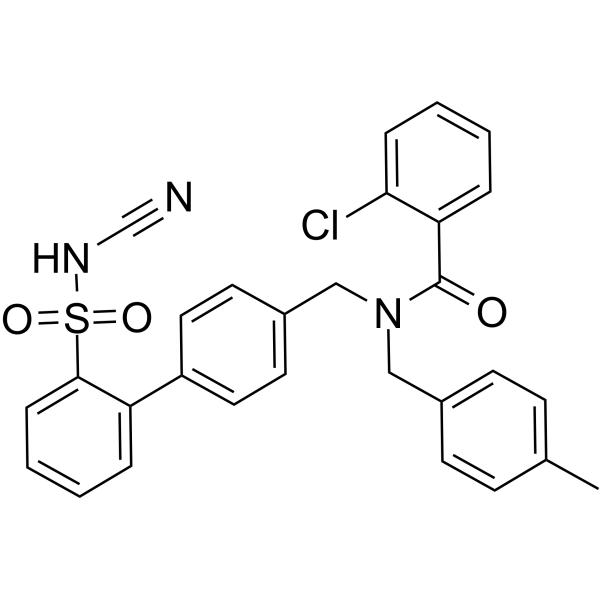
S0859 is a selective, high-affinity generic Na +/HCO3 - transporter (NBC) inhibitor. S0859 reversibly inhibits NBC-mediated intracellular pH (pHi) recovery (Ki=1.7 μM, full inhibition at approximately 30 μM).
loading...
    loading...
1
1 Cited Publications
Cat. No.: HY-B0958
CAS No.: 12650-69-0
Synonyms: BRL-4910A; Pseudomonic acid
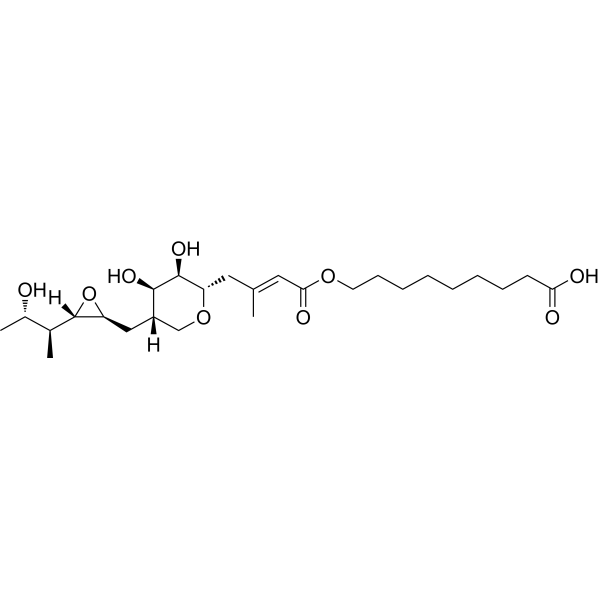
Mupirocin is an antibiotic. Mupirocin inhibits bacterial isoleucyl-tRNA synthetase, blocking protein synthesis. Mupirocin has high activity against Gram-positive bacteria such as Staphylococcus and Streptococcus, as well as some Gram-negative bacteria (such as Haemophilus influenzae). Mupirocin can be used in the research of diseases such as skin infections (such as MRSA infections) and chronic sinusitis .
loading...
    loading...
1
1 Cited Publications
Cat. No.: HY-B0364A
CAS No.: 536-43-6
Synonyms: Dyclocaine hydrochloride
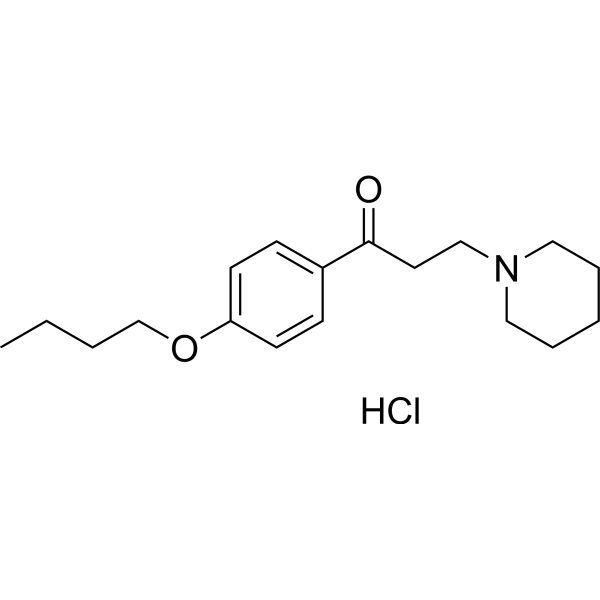
Dyclonine hydrochloride (Dyclocaine hydrochloride) is an orally active, blood-brain barrier-permeable piperidine phenylacetone small molecule commonly used as a local anesthetic. Dyclonine hydrochloride acts as a highly selective allosteric antagonist of TRPV3; it also reversibly inhibits G9a, ALDH2 and ALDH3A1, non-competitively blocks AChE. Dyclonine hydrochloride activates the Nrf2/ARE pathway, relieves the epigenetic silencing of FXN, blocks Aβ42 aggregation, and promotes remyelination and reparative polarization of microglia. Dyclonine hydrochloride alleviates pruritus via TRPV3 inhibition; it is used in studies of neurodegenerative disease models based on its AChE inhibitory, antioxidant and remyelinating effects; it sensitizes drug-resistant tumors through ALDH inhibition, and combined use with protease inhibitors induces more tumor cell apoptosis; it inhibits Candida albicans in vitro. Dyclonine hydrochloride can be used for research on multiple diseases including neurodegenerative diseases, cancer and pruritic dermatitis .
loading...
    loading...
1
1 Cited Publications
Cat. No.: HY-W108875
CAS No.: 73346-79-9
Synonyms: BRL-4910A lithium; Pseudomonic acid lithium
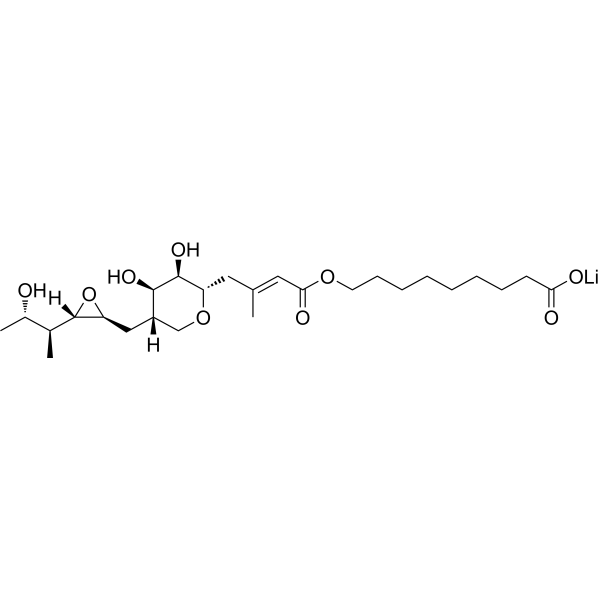
Mupirocin lithium is an antibiotic. Mupirocin lithium inhibits bacterial isoleucyl-tRNA synthetase, blocking protein synthesis. Mupirocin lithium has high activity against Gram-positive bacteria such as Staphylococcus and Streptococcus, as well as some Gram-negative bacteria (such as Haemophilus influenzae). Mupirocin lithium can be used in the research of diseases such as skin infections (such as MRSA infections) and chronic sinusitis .
loading...
    loading...
1
1 Cited Publications
Cat. No.: HY-N7068
CAS No.: 115074-43-6
Synonyms: BRL-4910A calcium hydrate; Pseudomonic acid calcium hydrate
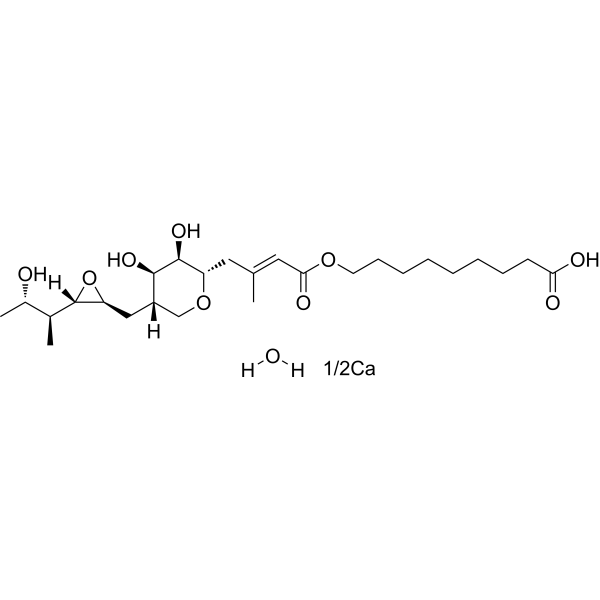
Mupirocin (BRL-4910A, Pseudomonic acid) calcium hydrate is an orally active antibiotic isolated from Pseudomonas fluorescens. Mupirocin calcium hydrate apparently exerts its antimicrobial activity by reversibly inhibiting isoleucyl-transfer RNA, thereby inhibiting bacterial protein and RNA synthesis .
loading...
    loading...
Cat. No.: HY-B0958A
CAS No.: 104486-81-9
Synonyms: BRL-4910A calcium; Pseudomonic acid calcium
Target:  

Antibiotic Bacterial

Research Areas:  

Infection

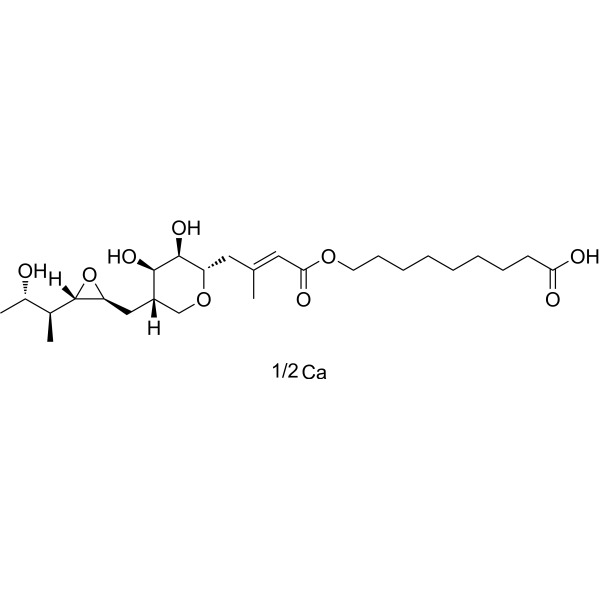
Mupirocin (BRL-4910A, Pseudomonic acid) calcium is an orally active antibiotic isolated from Pseudomonas fluorescens. Mupirocin calcium apparently exerts its antimicrobial activity by reversibly inhibiting isoleucyl-transfer RNA, thereby inhibiting bacterial protein and RNA synthesis .
loading...
    loading...
Cat. No.: HY-B0958R
CAS No.: 12650-69-0
Synonyms: BRL-4910A (Standard); Pseudomonic acid (Standard)
Mupirocin (Standard) is the analytical standard of Mupirocin (HY-B0958). This product is intended for research and analytical applications. Mupirocin is an antibiotic. Mupirocin inhibits bacterial isoleucyl-tRNA synthetase, blocking protein synthesis. Mupirocin has high activity against Gram-positive bacteria such as Staphylococcus and Streptococcus, as well as some Gram-negative bacteria (such as Haemophilus influenzae). Mupirocin can be used in the research of diseases such as skin infections (such as MRSA infections) and chronic sinusitis .
loading...
    loading...
Cat. No.: HY-N7068R
CAS No.: 115074-43-6
Synonyms: BRL-4910A calcium hydrate (Standard); Pseudomonic acid calcium hydrate (Standard)
Mupirocin (calcium hydrate) (Standard) is the analytical standard of Mupirocin (calcium hydrate). This product is intended for research and analytical applications. Mupirocin (BRL-4910A, Pseudomonic acid) calcium hydrate is an orally active antibiotic isolated from Pseudomonas fluorescens. Mupirocin calcium hydrate apparently exerts its antimicrobial activity by reversibly inhibiting isoleucyl-transfer RNA, thereby inhibiting bacterial protein and RNA synthesis .
loading...
    loading...
Cat. No.: HY-W108875R
CAS No.: 73346-79-9
Synonyms: BRL-4910A lithium (Standard); Pseudomonic acid lithium (Standard)
Mupirocin (lithium) (Standard) is the analytical standard of Mupirocin lithium (HY-W108875). This product is intended for research and analytical applications. Mupirocin lithium is an antibiotic. Mupirocin lithium inhibits bacterial isoleucyl-tRNA synthetase, blocking protein synthesis. Mupirocin lithium has high activity against Gram-positive bacteria such as Staphylococcus and Streptococcus, as well as some Gram-negative bacteria (such as Haemophilus influenzae). Mupirocin lithium can be used in the research of diseases such as skin infections (such as MRSA infections) and chronic sinusitis .
loading...
    loading...
Cat. No.: HY-W016586R
CAS No.: 42228-92-2
Synonyms: AT-125 (Standard); U-42126 (Standard)
Articaine (Standard) is the analytical standard of Articaine. This product is intended for research and analytical applications. Articaine (Hoe-045 free base) is an amide agent that can suppress or relieve pain. containing an ester group, reversibly binding to the α-subunit of the voltage-gated sodium channels within the inner cavity of the nerve, can provide effective pain relief. Articaine ameliorates LPS-induced acute kidney injury via inhibition of NF-κB activation and the NLRP3 inflammasome pathway .
loading...
    loading...
Cat. No.: HY-B0364AR
CAS No.: 536-43-6
Synonyms: Dyclocaine hydrochloride (Standard)
Dyclonine hydrochloride (Standard) (Dyclocaine hydrochloride (Standard)) is the analytical standard of Dyclonine hydrochloride (HY-B0364A). This product is intended for research and analytical applications. Dyclonine hydrochloride (Dyclocaine hydrochloride) is an orally active, blood-brain barrier-permeable piperidine phenylacetone small molecule commonly used as a local anesthetic. Dyclonine hydrochloride acts as a highly selective allosteric antagonist of TRPV3; it also reversibly inhibits G9a, ALDH2 and ALDH3A1, non-competitively blocks AChE. Dyclonine hydrochloride activates the Nrf2/ARE pathway, relieves the epigenetic silencing of FXN, blocks Aβ42 aggregation, and promotes remyelination and reparative polarization of microglia. Dyclonine hydrochloride alleviates pruritus via TRPV3 inhibition; it is used in studies of neurodegenerative disease models based on its AChE inhibitory, antioxidant and remyelinating effects; it sensitizes drug-resistant tumors through ALDH inhibition, and combined use with protease inhibitors induces more tumor cell apoptosis; it inhibits Candida albicans in vitro. Dyclonine hydrochloride can be used for research on multiple diseases including neurodegenerative diseases, cancer and pruritic dermatitis .
loading...
    loading...
Cat. No.: HY-B0364AS
Synonyms: Dyclocaine-d9 hydrochloride
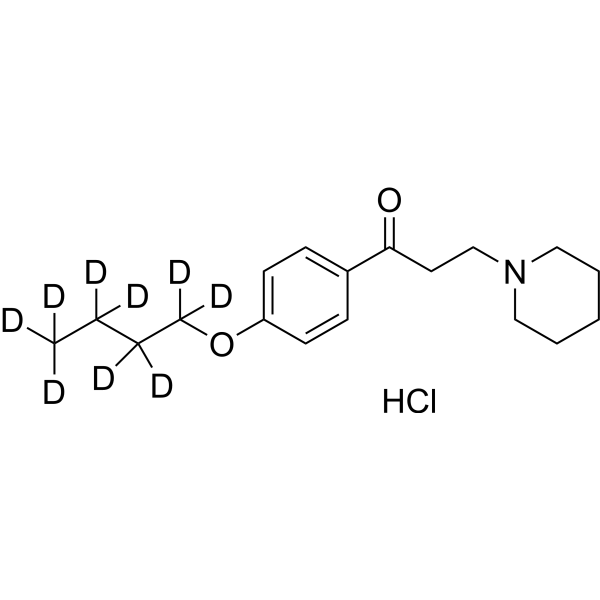
Dyclonine-d9 hydrochloride (Dyclocaine-d9 hydrochloride) is the deuterated-labeled Dyclonine hydrochloride (HY-B0364A). Dyclonine hydrochloride (Dyclocaine hydrochloride) is an orally active, blood-brain barrier-permeable piperidine phenylacetone small molecule commonly used as a local anesthetic. Dyclonine hydrochloride acts as a highly selective allosteric antagonist of TRPV3; it also reversibly inhibits G9a, ALDH2 and ALDH3A1, non-competitively blocks AChE. Dyclonine hydrochloride activates the Nrf2/ARE pathway, relieves the epigenetic silencing of FXN, blocks Aβ42 aggregation, and promotes remyelination and reparative polarization of microglia. Dyclonine hydrochloride alleviates pruritus via TRPV3 inhibition; it is used in studies of neurodegenerative disease models based on its AChE inhibitory, antioxidant and remyelinating effects; it sensitizes drug-resistant tumors through ALDH inhibition, and combined use with protease inhibitors induces more tumor cell apoptosis; it inhibits Candida albicans in vitro. Dyclonine hydrochloride can be used for research on multiple diseases including neurodegenerative diseases, cancer and pruritic dermatitis .
loading...
    loading...
Cat. No.: HY-182708
CAS No.: 112808-99-8
Target:  

Cytochrome P450

Research Areas:  

Metabolic Disease

CGS 18320B is a human placental microsomal aromatase inhibitor with a Ki of 0.16 nM. CGS 18320B interacts reversibly with the enzyme's active site to block estrogen biosynthesis from androstenedione. CGS 18320B can be used for the research of aromatase inhibition and estrogen biosynthesis regulation .
loading...
    loading...
Cat. No.: HY-12435
CAS No.: 1279867-21-8
Target:  

P2Y Receptor

Research Areas:  

Cardiovascular Disease

SAR216471 is a P2Y12 receptor antagonist. SAR216471 reversibly blocks the binding of 2MeSADP to P2Y12 receptors in vitro with an IC50 of 17 nM. SAR216471 can result in the inhibition of platelet aggregation. SAR216471 exhibits anti-thrombotic activity in rat model. SAR216471 can be studied in research on thrombosis .
loading...
    loading...
Cat. No.: HY-184776
CAS No.: 586-60-7
Synonyms: Dyclocaine
Dyclonine (Dyclocaine) is an orally active, blood-brain barrier-permeable piperidine phenylacetone small molecule commonly used as a local anesthetic. Dyclonine acts as a highly selective allosteric antagonist of TRPV3; it also reversibly inhibits G9a, ALDH2 and ALDH3A1, non-competitively blocks AChE. Dyclonine activates the Nrf2/ARE pathway, relieves the epigenetic silencing of FXN, blocks Aβ42 aggregation, and promotes remyelination and reparative polarization of microglia. Dyclonine alleviates pruritus via TRPV3 inhibition; it is used in studies of neurodegenerative disease models based on its AChE inhibitory, antioxidant and remyelinating effects; it sensitizes drug-resistant tumors through ALDH inhibition, and combined use with protease inhibitors induces more tumor cell apoptosis; it inhibits Candida albicans in vitro. Dyclonine can be used for research on multiple diseases including neurodegenerative diseases, cancer and pruritic dermatitis .
loading...
    loading...
  • 1

