17 Results for "

skin penetration

" in MedChemExpress (MCE) Product Catalog:
Products (17)

17 Results for "skin penetration" in MCE Product Catalog:

2
2 Cited Publications
Cat. No.: HY-101180
CAS No.: 3102-57-6
Purity:  99.85%
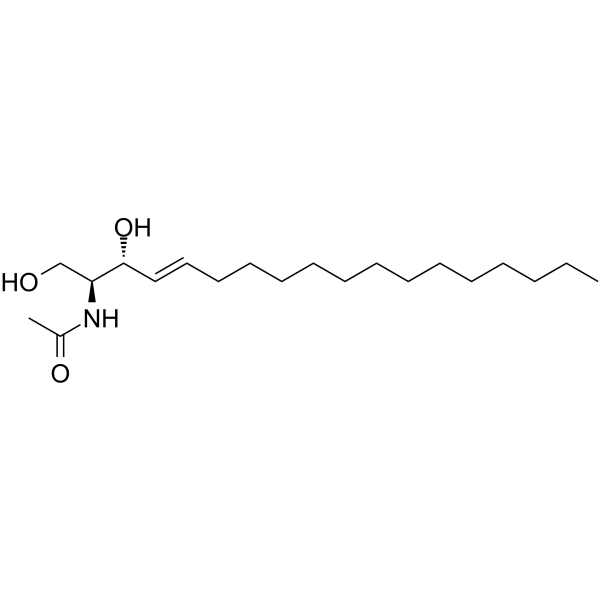
Synonyms: Ceramide 2
C2 Ceramide (Ceramide 2) is the main lipid of the stratum corneum and a protein phosphatase 1 (PP1) activator. C2 Ceramide activates PP2A and ceramide-activated protein phosphatase (CAPP). C2 Ceramide induces cells differentiation, autophagy and apoptosis, inhibits mitochondrial respiratory chain complex III. C2 Ceramide is also a skin conditioning agent that protects the epidermal barrier from water loss .
loading...
    loading...
1
1 Cited Publications
Cat. No.: HY-W009326
CAS No.: 59227-89-3
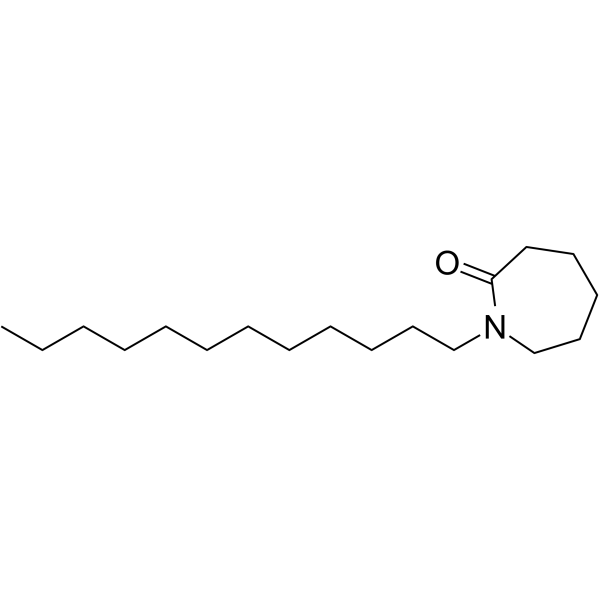
Laurocapram is a chemical penetration enhancer that increases the permeability of compounds through the skin and mucous membranes, thereby improving their local or systemic efficacy. Laurocapram improves the skin permeability of a variety of hydrophilic and lipophilic compounds .
loading...
    loading...
Cat. No.: HY-N7132
CAS No.: 2623-23-6
Synonyms: L-Menthyl acetate
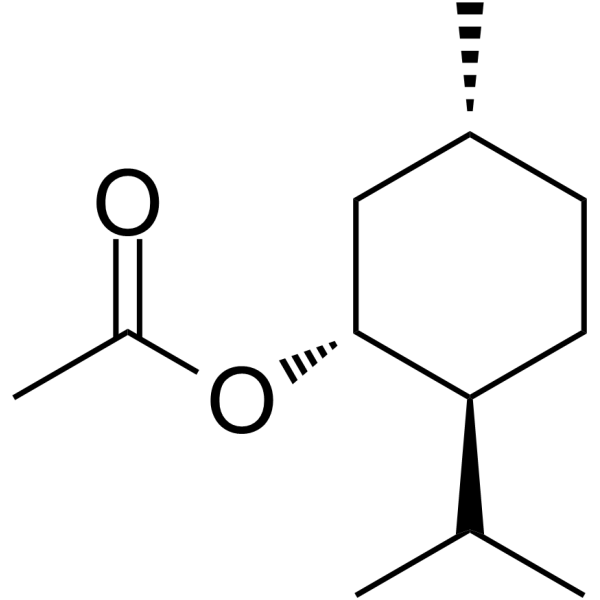
(-)-Menthyl acetate (L-Menthyl acetate) is a derivative of L-menthol and also a skin penetration enhancer for 5-aminolevulinic acid (ALA). (-)-Menthyl acetate exhibits strong ALA skin penetration-enhancing activity .
loading...
    loading...
Cat. No.: HY-66015
CAS No.: 171263-26-6
Target:  

Interleukin Related

Research Areas:  

Endocrinology

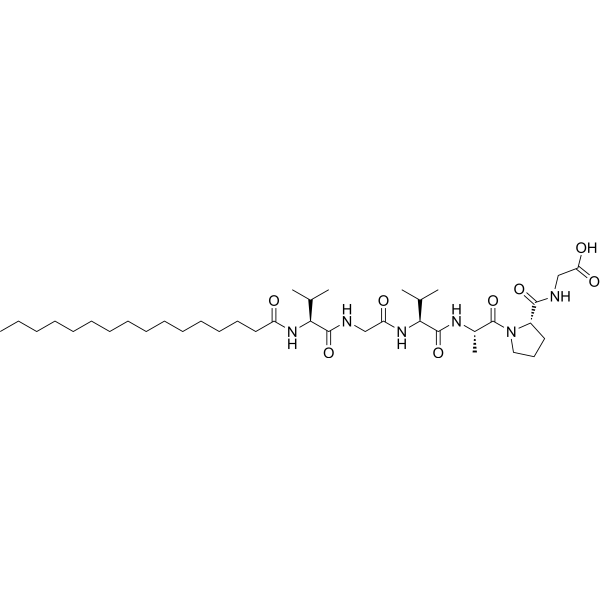
Palmitoyl hexapeptide-12 is a bioactive peptide. Palmitoyl hexapeptide-12 reduces IL-6. Palmitoyl hexapeptide-12 has anti-aging effects. Palmitoyl hexapeptide-12 can be used in the research of photoaging and related aging skin problems .
loading...
    loading...
Cat. No.: HY-117401
CAS No.: 107827-77-0
Purity:  99.32%
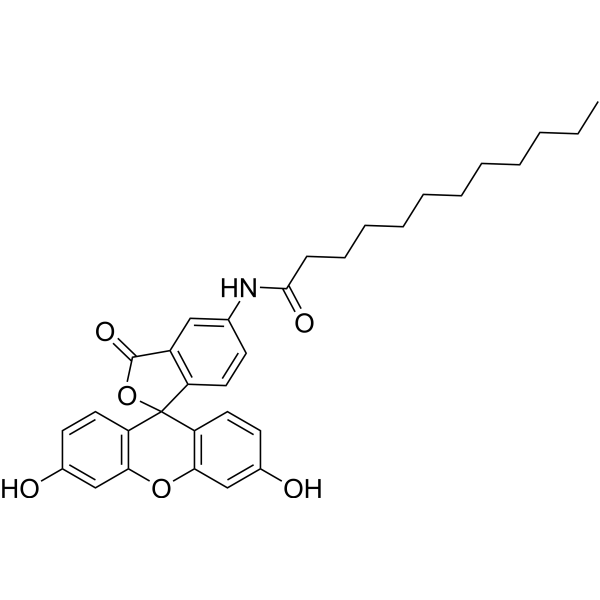
5-Dodecanoylaminofluorescein is an amphipathic (amphoteric) fluorescent probe (Ex/Em = 485 nm/515-535 nm), which consists of a hydrophilic fluorescein core and a hydrophobic dodecanoyl group (C12 fatty acid chain) linked by an amide bond. 5-Dodecanoylaminofluorescein is mainly used as an interface-localized radical trapping/indicator probe. Dodecanoylaminofluorescein can be used for the determination of the antioxidant properties of emulsions, or can serve as a lipophilic drug model for the study of passive skin penetration when encapsulated in tyrosine-derived nanospheres .
loading...
    loading...
Cat. No.: HY-122056
CAS No.: 39036-04-9
Synonyms: L-α-Diheptanoyllecithin; 12-Diheptanoyl-sn-glycero-3-PC
Research Areas:  

Others

1,2-Diheptanoyl-SN-glycero-3-phosphocholine (L-α-Diheptanoyllecithin; 12-Diheptanoyl-sn-glycero-3-PC) is a short-chain phospholipid. 11,2-Diheptanoyl-SN-glycero-3-phosphocholine forms bimolecular micelles with long-chain phospholipids, and these micelles undergo adsorption and spontaneous fusion to generate supported lipid bilayers. 1,2-Diheptanoyl-SN-glycero-3-phosphocholine enhances the transdermal penetration of hydrophilic low-molecular-weight compounds via micellar pretreatment of the skin of hairless mice. 1,2-Diheptanoyl-SN-glycero-3-phosphocholine can be used in studies of membrane biology, structural biology and transdermal drug delivery .
loading...
    loading...
Cat. No.: HY-164066
CAS No.: 287390-12-9
Research Areas:  

Others

Sodium Acetylated Hyaluronate is an acetylated hyaluronic acid derivative with anti-wrinkle and deep skin penetration properties, which can be used in skin aging research and cosmetic development .
loading...
    loading...
Cat. No.: HY-112809
CAS No.: 1398695-47-0
Purity:  98.39%
Research Areas:  

Inflammation/Immunology

GSK2646264 (Compound 44) is a potent and selective spleen tyrosine kinase (SYK) inhibitor with a pIC50 of 7.1. GSK2646264 also inhibits other kinases with pIC50 values of 5.4, 5.4, 5.3, 5, 4.5, <4.6 and <4.3 against LCK, LRRK2, GSK3β, JAK2, VEGFR2, Aurora B and Aurora A, respectively. GSK2646264 is penetrable into the epidermis and dermis of the skin .
loading...
    loading...
Cat. No.: HY-139322
CAS No.: 35179-86-3
Research Areas:  

Others

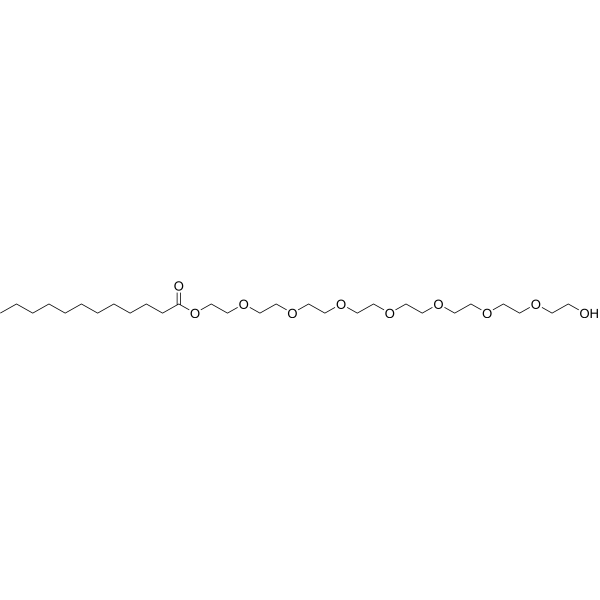
PEG-8 laurate is a single chain surfactant. PEG-8 laurate reduces the skin barrier, and acts as a penetration enhancer. PEG-8 laurate can be used to synthesize elastic vesicles .
loading...
    loading...
Cat. No.: HY-W250300
CAS No.: 4536-30-5
Synonyms: Ethylene glycol monododecyl ether
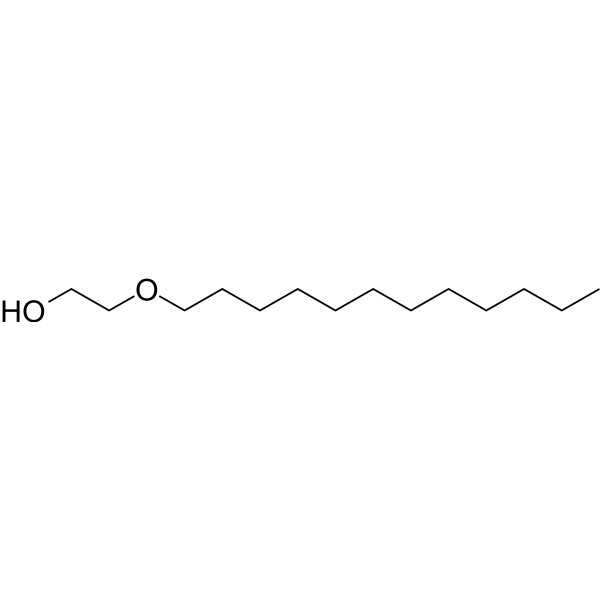
2-(Dodecyloxy) ethanol (Ethylene glycol monododecyl ether) is a nonionic ether monohydroxy C12 surfactant with a fragrance-like odor similar to jasmone and gardenia. 2-(Dodecyloxy) ethanol acts as a phase transition inducer and micelle-forming agent. 2-(Dodecyloxy) ethanol also serves as a skin penetration enhancer .
loading...
    loading...
Cat. No.: HY-B1747A
CAS No.: 15922-78-8
Target:  

Bacterial

Research Areas:  

Others

Pyrithione sodium has poor skin penetration.
loading...
    loading...
Cat. No.: HY-N7132R
CAS No.: 2623-23-6
Synonyms: L-Menthyl acetate (Standard)
(-)-Menthyl acetate (Standard) (L-Menthyl acetate (Standard)) is the analytical standard of (-)-Menthyl acetate (HY-N7132). This product is intended for research and analytical applications. (-)-Menthyl acetate (L-Menthyl acetate) is a derivative of L-menthol and also a skin penetration enhancer for 5-aminolevulinic acid (ALA). (-)-Menthyl acetate exhibits strong ALA skin penetration-enhancing activity .
loading...
    loading...
Cat. No.: HY-W009326R
CAS No.: 59227-89-3
Research Areas:  

Infection

Laurocapram is a chemical penetration enhancer that increases the permeability of compounds through the skin and mucous membranes, thereby improving their local or systemic efficacy. Laurocapram improves the skin permeability of a variety of hydrophilic and lipophilic compounds .
loading...
    loading...
Cat. No.: HY-W009326S
Laurocapram-15N is a deuterated labeled Laurocapram . Laurocapram is a chemical penetration enhancer that increases the permeability of compounds through the skin and mucous membranes, thereby improving their local or systemic efficacy. Laurocapram improves the skin permeability of a variety of hydrophilic and lipophilic compounds .
loading...
    loading...
Cat. No.: HY-113819
CAS No.: 100-95-8
Synonyms: Dodecarbonium chloride
Research Areas:  

Infection

Metalkonium chloride (Dodecarbonium chloride) is a quaternary ammonium salt, surfactant, and transdermal penetration enhancer. Metalkonium chloride increases skin permeability to facilitate transdermal delivery. Metalkonium chloride enhances the growth inhibitory activity of Nystatin (HY-17409) ointment against C. monosa. Metalkonium chloride can be used in studies related to Candida monosa infections .
loading...
    loading...
Cat. No.: HY-184021
Target:  

CD38

Research Areas:  

Neurological Disease

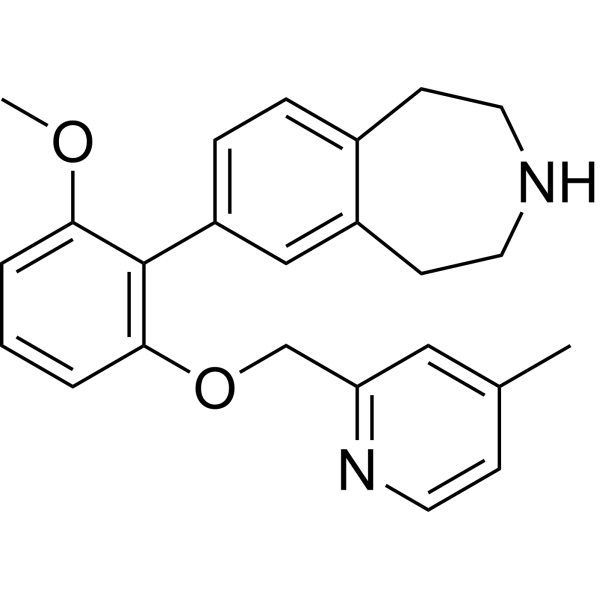
A-8531 is an orally active CD38 inhibitor with IC50 values of 1.10 nM against human CD38, IC50 values of 2.93 nM against mouse CD38, and a human Ka of 0.32 nM. A-8531 exerts its inhibitory activity via its 4-pyridine reactive warhead interacting with the CD38 substrate NAD +, and binds stably to CD38 only in the presence of NAD +, with a binding KD of 0.32 nM as detected by SPR. A-8531 dose-dependently increases NAD + levels in mouse skin, lung and liver tissues, while simultaneously reducing the contents of NAM and ADPR in these tissues. A-8531 derivative A-3190 (HY-184206) has blood-brain barrier penetration. A-8531 can be used in studies related to neurodegenerative diseases .
loading...
    loading...
Cat. No.: HY-203862
CAS No.: 125275-25-4
Research Areas:  

Others

Polyquaternium-51 is a hydrophilic polymeric zwitterion with counter ions, and an artificial cell membrane-mimicking material with high biocompatibility. Polyquaternium-51 functions as a penetration inhibitor and exfoliation efficacy reducer. Polyquaternium-51 can be used as cosmetic moisturizing ingredient, and can be used as coating biological scaffolds .
loading...
    loading...
  • 1

