1. Search Result
Search Result
Results for "

spinal glutamate

" in MedChemExpress (MCE) Product Catalog:

12

Inhibitors & Agonists

2

Isotope-Labeled Compounds

Cat. No. Product Name Target Research Areas Chemical Structure
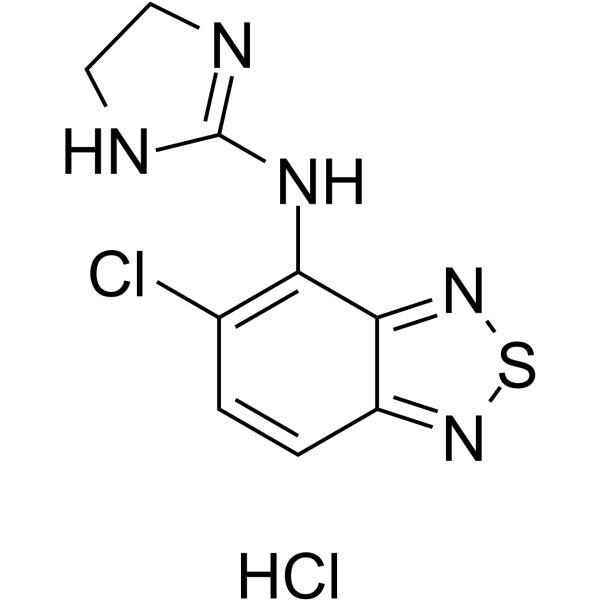
  • HY-B0194A

    Adrenergic Receptor Apoptosis Akt Wnt β-catenin Neurological Disease Endocrinology Cancer
    Tizanidine hydrochloride, a skeletal muscle relaxant, is an orally effective central α2-adrenoceptor agonist (IC50 = 6.9 nmol). Tizanidine hydrochloride primarily exerts muscle relaxation effects by inhibiting the release of excitatory amino acids (glutamate and aspartate) from the presynaptic terminals of spinal cord interneurons. Tizanidine hydrochloride has anti-injury activity and can inhibit gastrointestinal (GI) transport. Tizanidine hydrochloride can inhibit the proliferation, migration, and invasion of lung cancer cells and induce cell apoptosis by upregulating Nischarin and inhibiting the AKT and Wnt3a/β-catenin signaling pathways. Tizanidine hydrochloride can be used to treat spasticity caused by diseases such as multiple sclerosis (MS), stroke, and spinal cord injury (SCI) .
    Tizanidine hydrochloride
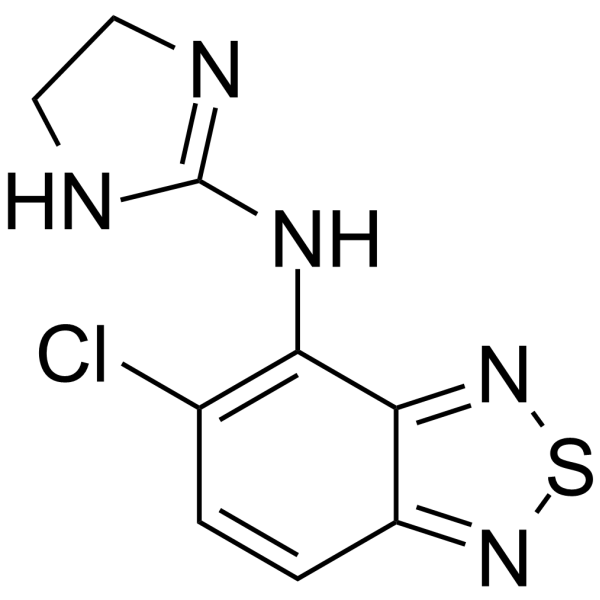
  • HY-B0194

    Adrenergic Receptor Apoptosis Akt Wnt β-catenin Neurological Disease Endocrinology Cancer
    Tizanidine, a skeletal muscle relaxant, is an orally effective central α2-adrenoceptor agonist (IC50 = 6.9 nmol). Tizanidine primarily exerts muscle relaxation effects by inhibiting the release of excitatory amino acids (glutamate and aspartate) from the presynaptic terminals of spinal cord interneurons. Tizanidine has anti-injury activity and can inhibit gastrointestinal (GI) transport. Tizanidine can inhibit the proliferation, migration, and invasion of lung cancer cells and induce cell apoptosis by upregulating Nischarin and inhibiting the AKT and Wnt3a/β-catenin signaling pathways. Tizanidine can be used to treat spasticity caused by diseases such as multiple sclerosis (MS), stroke, and spinal cord injury (SCI) .
    Tizanidine
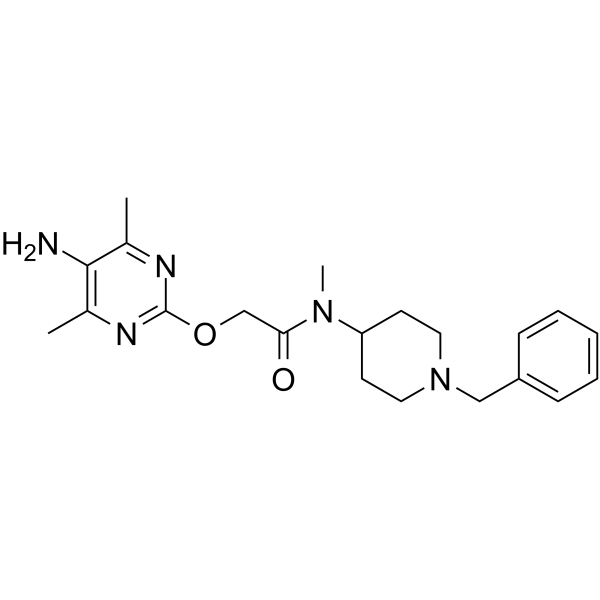
  • HY-171844

    iGluR Neurological Disease Inflammation/Immunology
    CX1739 is an orally active, blood-brain barrier permeable, low-efficacy AMPA-glutamate receptor (AMPAR) potentiator. CX1739 enhances excitatory neurotransmission by potentiating glutamate-induced excitatory currents and promoting in vivo long-term potentiation. CX1739 eliminates amphetamine-induced locomotor activity, reverses opioid-, pentobarbital- and ethanol-induced respiratory depression, and exerts pro-cognitive effects in animals. CX1739 impairs motor function recovery and increases the risk of post-injury complications. CX1739 can be used in research related to attention-deficit/hyperactivity disorder, dementia, respiratory depression and spinal cord injury .
    CX1739
  • HY-106865

    Dopamine Receptor Adrenergic Receptor Cardiovascular Disease
    Mivazerol is a selective α2-adrenoceptor agonist. Mivazerol decreases the spontaneous release of serotonin (5-HT) and significantly inhibits the immobilization stress-induced enhancement of norepinephrine (NE), dopamine (DA) and dihydroxyphenylacetic acid (DOPAC). Mivazerol inhibits intrathecal release of glutamate evoked by halothane withdrawal in rats, and exerts neuroprotective effects in forebrain ischemia rats. Mivazerol can be used for myocardial ischemia research .
    Mivazerol
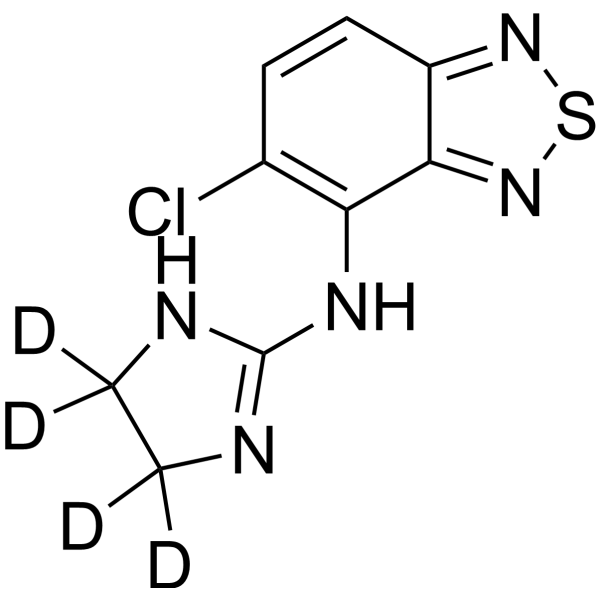
  • HY-B0194S

    Isotope-Labeled Compounds Adrenergic Receptor Apoptosis Akt Wnt β-catenin Neurological Disease Endocrinology Cancer
    Tizanidine-d4 is the deuterium labeled Tizanidine (HY-B0194). Tizanidine, a skeletal muscle relaxant, is an orally effective central α2-adrenoceptor agonist (IC50 = 6.9 nmol). Tizanidine primarily exerts muscle relaxation effects by inhibiting the release of excitatory amino acids (glutamate and aspartate) from the presynaptic terminals of spinal cord interneurons. Tizanidine has anti-injury activity and can inhibit gastrointestinal (GI) transport. Tizanidine can inhibit the proliferation, migration, and invasion of lung cancer cells and induce cell apoptosis by upregulating Nischarin and inhibiting the AKT and Wnt3a/β-catenin signaling pathways. Tizanidine can be used to treat spasticity caused by diseases such as multiple sclerosis (MS), stroke, and spinal cord injury (SCI).
    Tizanidine-d4
  • HY-147681

    FGFR Neurological Disease
    SUN13837 is an orally active, blood-brain barrier permeable FGFR modulator and neuroprotective agent. SUN13837 mimics the activity of basic fibroblast growth factor, stimulates intracellular tyrosine phosphorylation of FGFR and signal transduction in neuronal cells, induces neurite outgrowth, and inhibits glutamate-induced neuronal death. SUN13837 can be used in research related to acute cervical spinal cord injury and severe spinal cord injury .
    SUN13837
  • HY-B0194R

    Reference Standards Adrenergic Receptor Apoptosis Akt Wnt β-catenin Neurological Disease Endocrinology Cancer
    Tizanidine (Standard) is the analytical standard of Tizanidine (HY-B0194). This product is intended for research and analytical applications. Tizanidine, a skeletal muscle relaxant, is an orally effective central α2-adrenoceptor agonist (IC50 = 6.9 nmol). Tizanidine primarily exerts muscle relaxation effects by inhibiting the release of excitatory amino acids (glutamate and aspartate) from the presynaptic terminals of spinal cord interneurons. Tizanidine has anti-injury activity and can inhibit gastrointestinal (GI) transport. Tizanidine can inhibit the proliferation, migration, and invasion of lung cancer cells and induce cell apoptosis by upregulating Nischarin and inhibiting the AKT and Wnt3a/β-catenin signaling pathways. Tizanidine can be used to treat spasticity caused by diseases such as multiple sclerosis (MS), stroke, and spinal cord injury (SCI).
    Tizanidine (Standard)
  • HY-B0194AR

    Reference Standards Adrenergic Receptor Apoptosis Akt Wnt β-catenin Neurological Disease Endocrinology Cancer
    Tizanidine hydrochloride (Standard) is the analytical standard of Tizanidine hydrochloride (HY-B0194A). This product is intended for research and analytical applications. Tizanidine hydrochloride, a skeletal muscle relaxant, is an orally effective central α2-adrenoceptor agonist (IC50 = 6.9 nmol). Tizanidine hydrochloride primarily exerts muscle relaxation effects by inhibiting the release of excitatory amino acids (glutamate and aspartate) from the presynaptic terminals of spinal cord interneurons. Tizanidine hydrochloride has anti-injury activity and can inhibit gastrointestinal (GI) transport. Tizanidine hydrochloride can inhibit the proliferation, migration, and invasion of lung cancer cells and induce cell apoptosis by upregulating Nischarin and inhibiting the AKT and Wnt3a/β-catenin signaling pathways. Tizanidine hydrochloride can be used to treat spasticity caused by diseases such as multiple sclerosis (MS), stroke, and spinal cord injury (SCI).
    Tizanidine hydrochloride (Standard)
  • HY-B0194AS

    Isotope-Labeled Compounds Adrenergic Receptor Apoptosis Akt Wnt β-catenin Neurological Disease Endocrinology Cancer
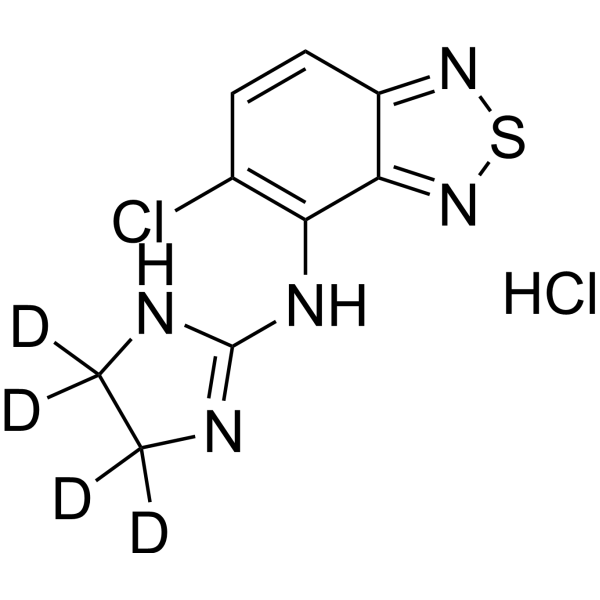
    Tizanidine-d4 hydrochloride is deuterium labeled Tizanidine hydrochloride (HY-B0194A). Tizanidine hydrochloride, a skeletal muscle relaxant, is an orally effective central α2-adrenoceptor agonist (IC50 = 6.9 nmol). Tizanidine hydrochloride primarily exerts muscle relaxation effects by inhibiting the release of excitatory amino acids (glutamate and aspartate) from the presynaptic terminals of spinal cord interneurons. Tizanidine hydrochloride has anti-injury activity and can inhibit gastrointestinal (GI) transport. Tizanidine hydrochloride can inhibit the proliferation, migration, and invasion of lung cancer cells and induce cell apoptosis by upregulating Nischarin and inhibiting the AKT and Wnt3a/β-catenin signaling pathways. Tizanidine hydrochloride can be used to treat spasticity caused by diseases such as multiple sclerosis (MS), stroke, and spinal cord injury (SCI).
    Tizanidine-d4 hydrochloride
  • HY-120251A

    AIT-082

    Reactive Oxygen Species (ROS) Neurological Disease
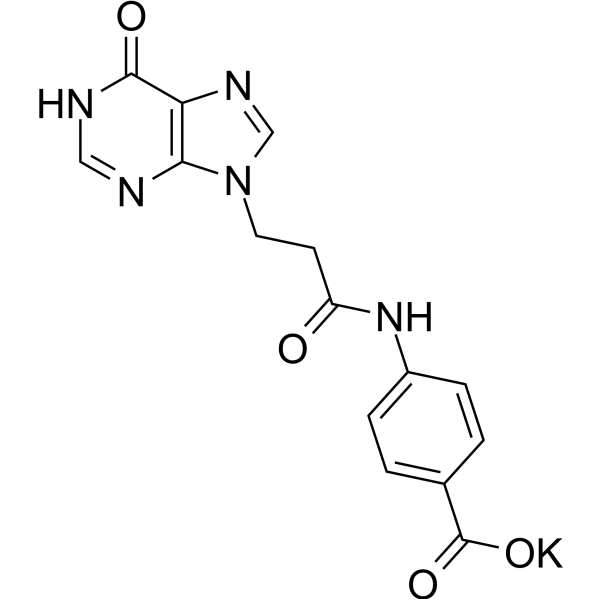
    Leteprinim potassium (AIT-082), a purine analog, is a neuroprotective agent and cognitive enhancer. Leteprinim potassium is a hypoxanthine derivative neurotrophic agent. Leteprinim potassium can induce brain-derived neurotrophic factor (BDNF) mRNA production following spinal cord lesions, and nerve growth factor (NGF) mRNA production in basal forebrain. Leteprinim potassium reduces glutamate toxicity in cultured hippocampal neurons. Leteprinim potassium increases heme-oxygenase 1 and 2 mRNA levels that play role in cellular defense against reactive oxygen species .
    Leteprinim potassium
  • HY-120251

    AIT-082 free acid

    Reactive Oxygen Species (ROS) Neurological Disease
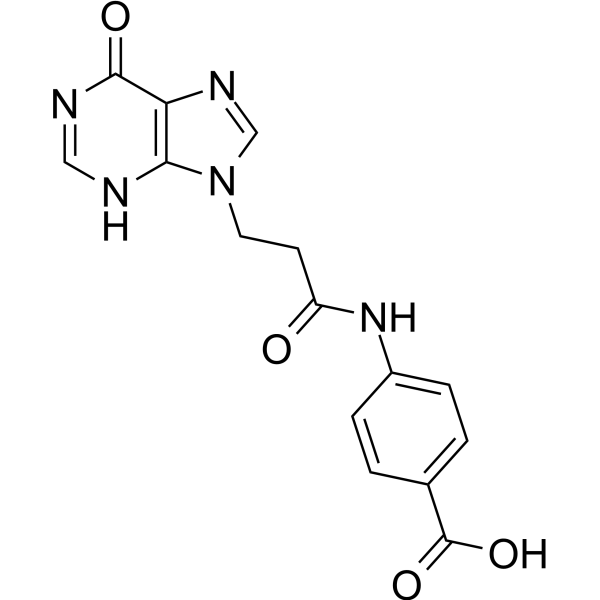
    Leteprinim (AIT-082 free acid), a purine analog, is a neuroprotective agent and cognitive enhancer. Leteprinim is a hypoxanthine derivative neurotrophic agent. Leteprinim can induce brain-derived neurotrophic factor (BDNF) mRNA production following spinal cord lesions, and nerve growth factor (NGF) mRNA production in basal forebrain. Leteprinim reduces glutamate toxicity in cultured hippocampal neurons. Leteprinim increases heme-oxygenase 1 and 2 mRNA levels that play role in cellular defense against reactive oxygen species .
    Leteprinim
  • HY-175073

    Toll-like Receptor (TLR) Interleukin Related Neurological Disease Inflammation/Immunology
    Ganglioside GT1b bovine trisodium is a trisialic acid ganglioside. Ganglioside GT1b bovine trisodium binds to botulinum toxin type A (BTxA), BTxA heavy chain, and tetanus toxin with IC50 values of 11, 0.74, and 7.2 μM, respectively. Ganglioside GT1b bovine trisodium acts as a TLR2 agonist, leading to microglial activation, increased expression of pro-inflammatory factors, and increased pain sensitivity in spinal microglia. Ganglioside GT1b bovine trisodium also reduces the production of IL-6, IL-10, IgG, IgM, and IgA in human peripheral blood mononuclear cells (PBMCs). Ganglioside GT1b bovine trisodium increases extracellular glutamate levels in neural cell models. Ganglioside GT1b bovine trisodium has potential applications in research on immune system diseases and nervous system diseases .
    Ganglioside GT1b (bovine) trisodium

Inquiry Online

Your information is safe with us. * Required Fields.

Salutation


Country or Region *

Applicant Name *


Organization Name *

Department *


Email Address *


Product Name *

Cat. No.


Requested quantity *

Phone Number *


Remarks

Inquiry Online

Inquiry Information

Product Name:
Cat. No.:
Quantity:
MCE Japan Authorized Agent:

