



Leteprinim potassium

Based on 1 Customer Validation
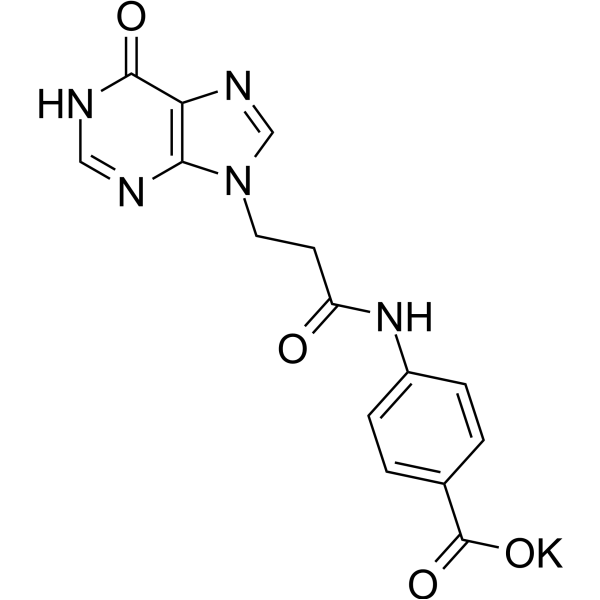
Leteprinim potassium (AIT-082), a purine analog, is a neuroprotective agent and cognitive enhancer. Leteprinim potassium is a hypoxanthine derivative neurotrophic agent. Leteprinim potassium can induce brain-derived neurotrophic factor (BDNF) mRNA production following spinal cord lesions, and nerve growth factor (NGF) mRNA production in basal forebrain. Leteprinim potassium reduces glutamate toxicity in cultured hippocampal neurons. Leteprinim potassium increases heme-oxygenase 1 and 2 mRNA levels that play role in cellular defense against reactive oxygen species.
연구목적의 판매만을 진행합니다. 환자를 대상으로 한 판매는 하지 않습니다.
- Purity : 99.0%
- CAS No.: 192564-13-9
- 화학식: C15H12KN5O4
- 분자량:365.39
-
보관:Powder -20°C, 3 years ; In solvent -80°C, 6 months , -20°C, 1 month

To place orders, for customer services and technical support, please contact: MedChemExpress USA
Tel: 609-228-6898 E-mail: [email protected] [email protected]


-
 Biological Activity
-
Chemical Information
- Protocol
- 순도&문서
- References
-
 Help & FAQs


-
HY-W009123
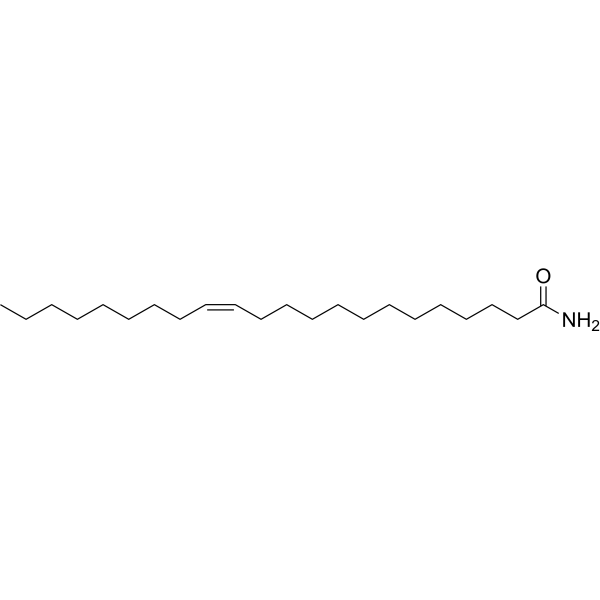
ErucamideTMEM19 Ligand, T3SS Inhibitor -
HY-N3126
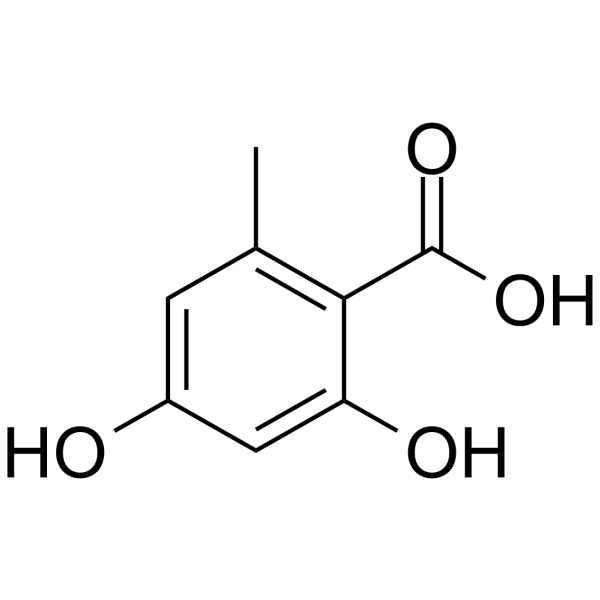
Orsellinic acidBenzoic Acid Derivative -

HY-B1116
Metaraminol tartrateα-Adrenergic Agonist -
HY-138806
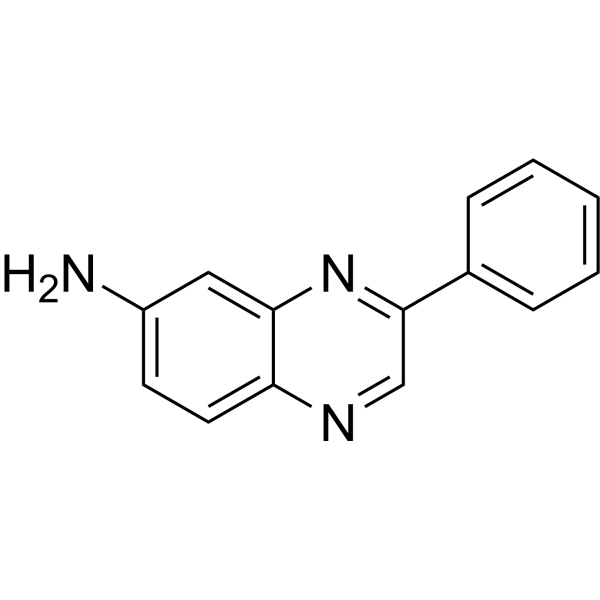
PAQNeuroprotective Agent -
HY-155126
LZWL02003Anti-Neuroinflammatory Agent -

HY-N3126R
Orsellinic acid (Standard)Standard Of Orsellinic Acid -

HY-W009123R
Erucamide (Standard)Bioactive Fluid Regulator -

HY-B1116R
Metaraminol tartrate (Standard)α-Adrenergic Agonist -

HY-138185
Collismycin ABacterial Metabolite Xie -

HY-139008
RC363GPx1 Activator


Biological Activity
제품 설명
In Vitro
Leteprinim (5-50 ng/mL, 24 and 48 h) potassium enhances neurotransmitter release, increases secretion of synaptophysin in PC12 cells[2].
MedChemExpress (MCE) has not independently confirmed the accuracy of these methods. They are for reference only.
In Vivo
Leteprinim (60 mg/kg, i.p.) potassium enhances working memory in young and aged mice[3].
Leteprinim (60 mg/kg; i.p.; single dosage) potassium significantly reduces the number of apoptotic neurons in hypoxic-ischemic brain injury rat pups[4].
MedChemExpress (MCE) has not independently confirmed the accuracy of these methods. They are for reference only.
-
Animal Model:Wistar rat pups (hypoxic-ischemic brain injury induced by permanent unilateral carotid ligation)[4]
-
Dosage:60 mg/kg
-
Administration:IP; single dosage
-
Result:The number of preserved neurons was significantly high in CA1, CA3 regions of hippocampus and dentate gyrus in the left hemispheres when compared with the saline-treated group.
In the right hemisphere, neuronal densities of CA1, CA2, CA3 regions of hippocampus and dentate gyrus were significantly high in neotrofin treatment group when compared with the group given saline.


Chemical Information
-
CAS No. 192564-13-9
-
Appearance Solid
-
분자량 365.39
-
화학식 C15H12KN5O4
-
Color White to off-white
-
SMILES
O=C(C1=CC=C(C=C1)NC(CCN2C=NC3=C2N=CNC3=O)=O)O[K]
-
Synonyms
AIT-082
-
선적
Room temperature in continental US; may vary elsewhere.
-
보관
Powder -20°C 3 years In solvent -80°C 6 months -20°C 1 month


순도&문서
-
Data Sheet (274 KB)
-
SDS (251 KB)
- English - EN (251 KB)
- Français - FR (251 KB)
- Deutsch - DE (251 KB)
- Norwegian - NO (251 KB)
- Español - ES (251 KB)
- Swedish - SV (251 KB)
- Italian - IT (251 KB)
- Korean - KR (251 KB)
- Portuguese - PT (251 KB)
-
Handling Instructions (2659 KB)
References
[1]. Di Iorio P, et al. AIT-082 is neuroprotective against kainate-induced neuronal injury in rats. Exp Neurol. 2001 Jun;169(2):392-9. [Content Brief]
[2]. Lahiri DK, et al. Effect of a memory-enhancing drug, AIT-082, on the level of synaptophysin. Ann N Y Acad Sci. 2000 Apr;903:387-93. [Content Brief]
[3]. Glasky AJ, et al. Effect of AIT-082, a purine analog, on working memory in normal and aged mice. Pharmacol Biochem Behav. 1994 Feb;47(2):325-9. [Content Brief]
[4]. Gencpınar P, et al. Effects of neotrofin on neonatal hypoxic ischemic brain injury. Neurosci Lett. 2011 Nov 14;505(2):205-10. [Content Brief]

Calculators
Concentration (start) × Volume (start) = Concentration (final) × Volume (final)


Leteprinim potassium Related Classifications
HY-120251A Related Classifications
 Powered by Bioz