


1. Search Result
Search Result
Results for "

thioester

" in MedChemExpress (MCE) Product Catalog:

35

Inhibitors & Agonists

2

Fluorescent Dyes

4

Biochemical Assay Reagents

5

Peptides

3

Natural
Products

1

Isotope-Labeled Compounds

1

Click Chemistry

1

Oligonucleotides

Cat. No. Product Name Target Research Areas Chemical Structure
  • HY-134124

    Reactive Oxygen Species (ROS) Metabolic Disease
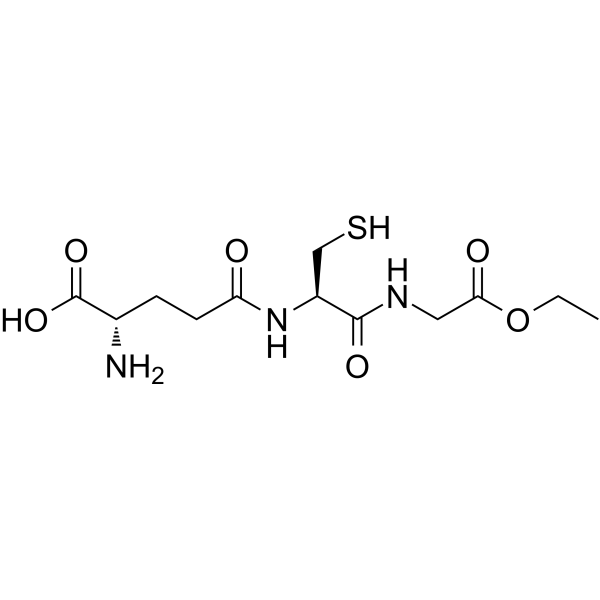
    Glutathione ethyl ester is a cell-permeable GSH donor and provides an efficient supply of GSH to the oocyte. Glutathione ethyl ester shows positive effect on the in vitro production of embryos by enhancement of the antioxidative defense .
    Glutathione ethyl ester
  • HY-13817
    IU1
    Maximum Cited Publications
    25 Publications Verification

    Deubiquitinase Autophagy Apoptosis Cardiovascular Disease Neurological Disease Endocrinology Cancer
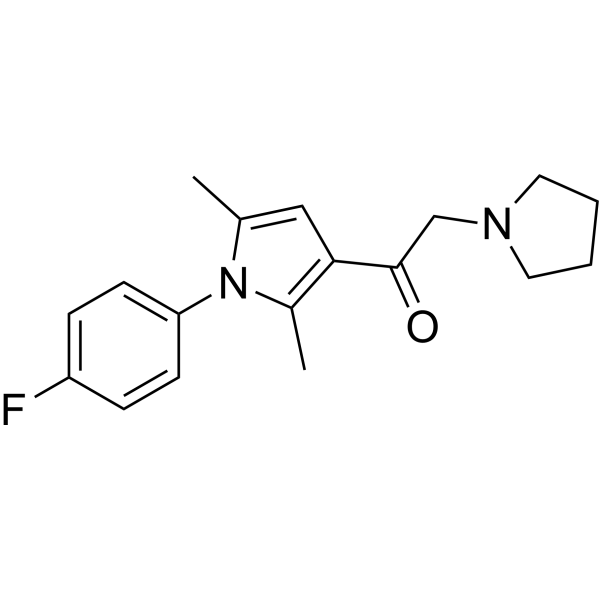
    IU1 is a selective, reversible USP14 inhibitor with an IC50 of 4-5 μM. IU1 binds USP14’s catalytic cleft to block deubiquitinase activity. IU1 induces calpain-dependent Tau cleavage, causes ATP deficits, reduces E1~Ub thioester levels and 26S proteasome assembly. IU1 enhances 26S proteasome chymotrypsin-like activity, modulates LC3B-dependent autophagy flux, reduces cancer cell proliferation and migration, and blocks G0/G1 to S phase cell cycle transition in follicular thyroid cancer cells. IU1 activates autophagy-lysosomal and ubiquitin-proteasome pathways, triggers apoptosis, and reduces cervical cancer cell growth. IU1 enhances degradation of proteasome substrates linked to neurodegenerative disease, accelerates oxidized protein degradation, and increases oxidative stress resistance. IU1 can be used for the research of Alzheimer’s disease, follicular thyroid cancer, ischemic stroke, cervical cancer, and neurodegenerative disease .
    IU1
  • HY-134427
    Palmitoyl coenzyme A lithium
    2 Publications Verification

    Palmitoyl CoA lithium

    Endogenous Metabolite Metabolic Disease
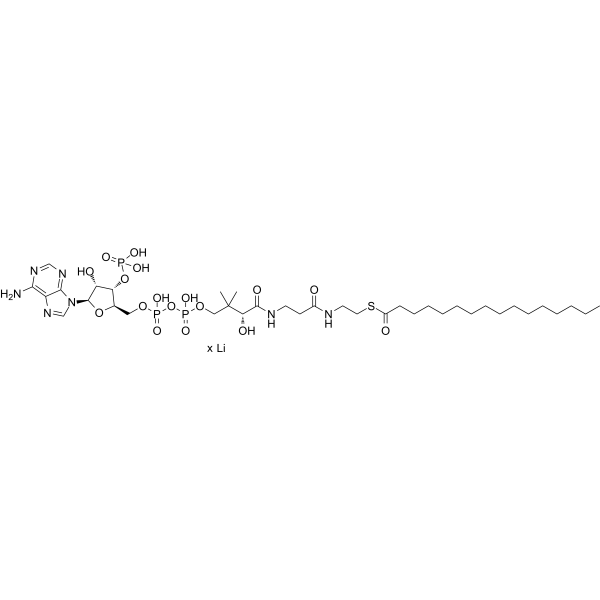
    Palmitoyl coenzyme A lithium is an acyl-CoA thioester that can be transported into the mitochondrial matrix via the carnitine shuttle system and is involved in β-oxidation. Palmitoyl coenzyme A lithium can also be used as a substrate for sphingosine biosynthesis .
    Palmitoyl coenzyme A lithium
  • HY-P2831
    Esterase, pig liver
    2 Publications Verification

    CESs

    Endogenous Metabolite Metabolic Disease
    Esterase, pig liver (CESs), namely carboxylate hydrolases, are widely distributed in nature, commonly found in mammalian liver, and often used in biochemical research. Esterase catalyzes the hydrolysis of a variety of endogenous and exogenous substrates, including esters, thioesters, carbamates, and amides, hydrolyzing carboxylic acid esters to the corresponding alcohols and carboxylic acids .
    Esterase, pig liver
  • HY-175606

    ATP Citrate Lyase Cancer
    EVT0185 is an orally active ATP citrate lyase (ACLY) inhibitor. EVT0185 is converted to a CoA thioester in the liver by SLC27A2 and interacts with the CoA-binding site of ACLY. EVT0185-CoA inhibits ACLY activity with an IC50 of 2.5 μM. EVT0185 can phenocopy the immune and antitumour effects of genetic ACLY deletion. EVT0185 can increase tumour-infiltrating B cells and chemokine CXCL13 levels. EVT0185 can be used for the research of cancer, such as hepatocellular carcinoma (HCC) .
    EVT0185
  • HY-N9480
    Vinaxanthone
    3 Publications Verification

    SM-345431

    Phospholipase Bacterial Infection Cancer
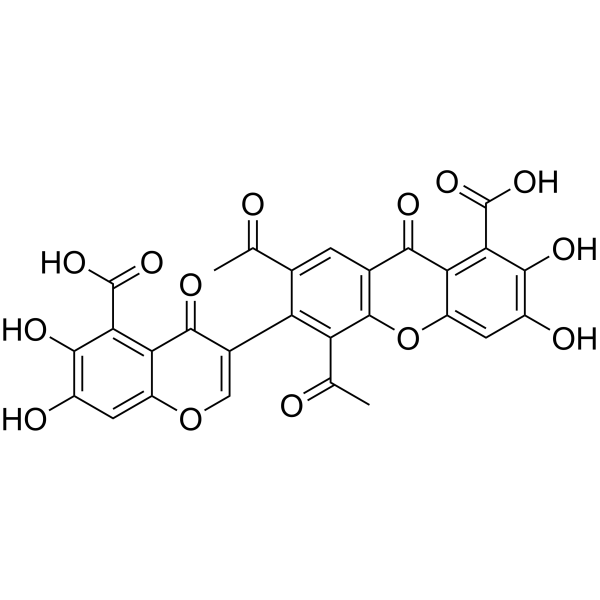
    Vinaxanthone (SM-345431) is a potent and selective semaphorin3A, phospholipase C (PLC) and FabI inhibitor, with IC50s of 0.1-0.2 μM and 0.9 mM for semaphorin3A and FabI. Vinaxanthone inhibits the substrate (t-o-NAC thioester) and the cofactor (NADPH) with Kis of 3.1 μM and 1.0 μM, respectively. Vinaxanthone can be used to handle infections caused by multidrug-resistant pathogens .
    Vinaxanthone
  • HY-134222A

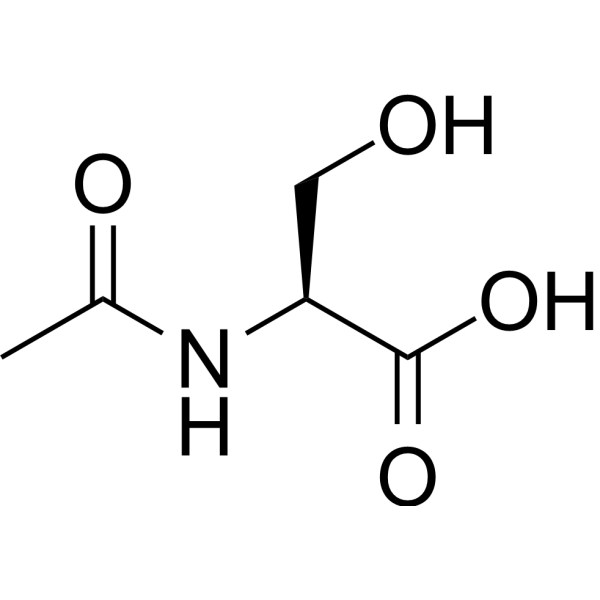
    N-Acetyl-L-serine

    Endogenous Metabolite Complement System Others
    N-Acetylserine (N-Acetyl-L-serine) is a complement pathway modulator targeting activated third complement protein (C3b) and an amino-terminal residue (an N-terminal acetylation modification group). N-Acetylserine reacts with the exposed thioester group of C3b via its hydroxyl group, thereby blocking the covalent binding of glycerol to this thioester group. N-Acetylserine widely exists in soluble proteins of mammalian cells (accounting for approximately 80% of such proteins). N-Acetylserine has a blocking property that prevents direct Edman sequencing of proteins; deblocking is achievable through trifluoroacetic acid-catalyzed N→O acetyl migration followed by β-elimination. N-Acetylserine is suitable for sequencing of proteins with N-terminal acetylserine modification .
    N-Acetylserine
  • HY-150217
    CpG ODN 10101
    2 Publications Verification

    ODN 10101

    Toll-like Receptor (TLR) Infection Inflammation/Immunology
    CpG ODN 10101 (ODN 10101; CPG 10101) is a selective agonist targeting TLR9, a synthetic oligodeoxynucleotide modified with phosphate thioester. CpG ODN 10101 activates B cells and plasmacytoid dendritic cells (pDCs), inducing the production of cytokines and chemokines such as interferon-IFN-α, interferon-inducible protein IP-10, and 2'5'-oligoadenylate synthase (2'5'-OAS), regulating innate immunity and promoting Th1 adaptive immune responses. CpG ODN 10101 also possesses antiviral properties and enhances vaccine immunogenicity, making it suitable as an immunomodulator and vaccine adjuvant for vaccine development in chronic hepatitis C and infectious diseases such as melioidosis, pertussis, and respiratory syncytial virus (RSV) .
    CpG ODN 10101
  • HY-101404A

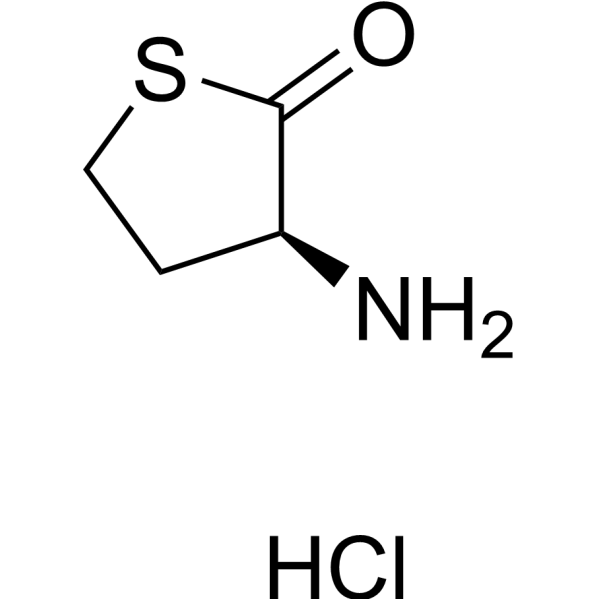
    Amino Acid Derivatives Cardiovascular Disease Inflammation/Immunology
    L-Homocysteine thiolactone hydrochloride is an intramolecular thioester of Homocysteine. Homocysteine thiolactone hydrochloride prevents translational incorporation of homocysteine into proteins. L-Homocysteine thiolactone hydrochloride can induce elevated HHcy (hyperhomocysteinemia) in mice .
    L-Homocysteine thiolactone hydrochloride
  • HY-134424

    Endogenous Metabolite Metabolic Disease
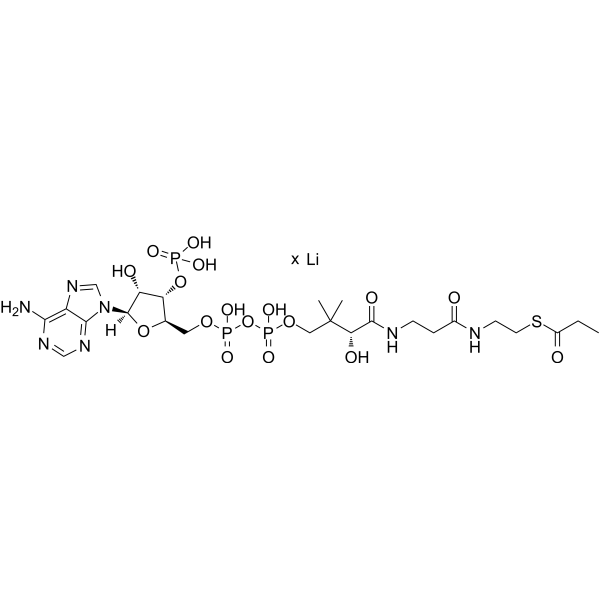
    Propionyl coenzyme A lithium, a coenzyme A derivative of propionic acid, is an important metabolic intermediate formed by the thioester bond between coenzyme A and propionic acid. The breakdown and production of Propionyl coenzyme A lithim is important for the metabolism of organisms .
    Propionyl coenzyme A lithium
  • HY-137899
    Dephospho-CoA
    1 Publications Verification

    Endogenous Metabolite Metabolic Disease Cancer
    Dephospho-CoA is a key intermediate in the biosynthesis of coenzyme A (CoA), which is catalyzed to form CoA by GTP-dependent Dephospho-CoA kinase (DPCK). Dephospho-CoA completes the final synthetic step of CoA via phosphorylation and participates in energy metabolism and cellular signal transduction. Dephospho-CoA can be used in studies involving cancer (e.g., regulation of cell proliferation) and metabolic diseases (e.g., mitochondrial dysfunction) .
    Dephospho-CoA
  • HY-153775

    E1/E2/E3 Enzyme Apoptosis Cancer
    UC-764864 is a selective UBE2N inhibitor. UC-764864 covalently binds UBE2N catalytic Cys87, blocks ubiquitin-UBE2N thioester formation and polyubiquitin chain synthesis. UC-764864 blocks ubiquitination of innate immune- and inflammatory-related substrates, and induces cell apoptosis. UC-764864 can be used for the research of acute myeloid leukemia .
    UC-764864
  • HY-109591A

    Oleoyl-CoA lithium

    Endogenous Metabolite Others
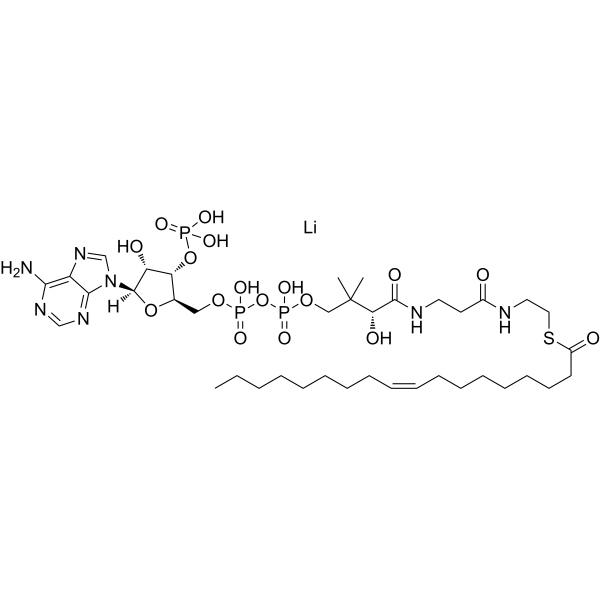
    Oleoyl coenzyme A (Oleoyl-CoA) lithium is a thioester of oleic acid and coenzyme A. Oleoyl coenzyme A lithium has a role as an Escherichia coli metabolite and a mouse metabolite .
    Oleoyl coenzyme A lithium
  • HY-103436

    E1/E2/E3 Enzyme Cancer
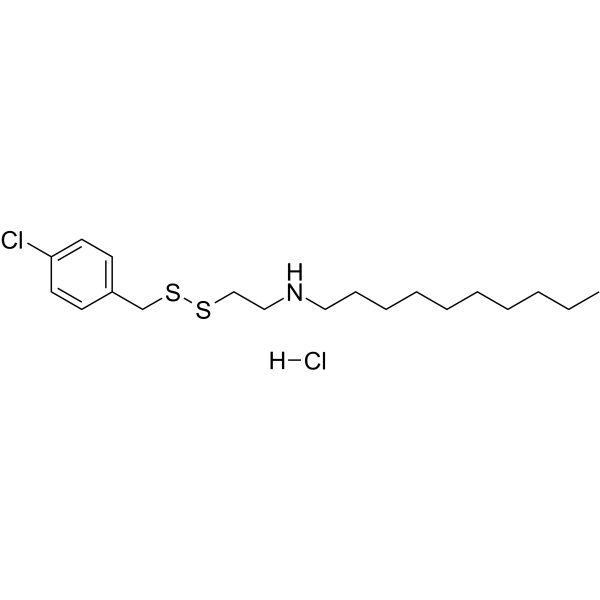
    NSC624206 is an inhibitor of ubiquitin E1 (UBA1), with an IC50 of ~9 μM. NSC624206 specifically blocks ubiquitin-thioester formation (IC50=13 μM) but has no effect on ubiquitin adenylation .
    NSC624206
  • HY-P2827

    ACS

    Acetyl-CoA synthetase Cancer
    Acetyl-CoA synthetase (ACS) is a key enzyme that catalyzes the conversion of acetate to acetyl-CoA (Ac-CoA). Acetyl-CoA synthetase catalyzes the formation of thioester bonds between coenzyme A and carboxylic acids, while simultaneously hydrolyzing ATP into AMP and pyrophosphate .
    Acetyl-CoA synthetase
  • HY-E70394

    Acetonyl-coenzyme A

    Biochemical Assay Reagents N-myristoyltransferase Metabolic Disease
    S-Acetonyl-CoA (Acetonyl-coenzyme A) is a non-reactive structural analog of acetyl-CoA that acts as a competitive inhibitor against multiple target enzymes. S-Acetonyl-CoA lacks the characteristic thioester group of acetyl-CoA, retaining only a thioether structure. S-Acetonyl-CoA competes with acetyl-CoA for binding to citrate synthase, phosphate transacetylase, carnitine acetyltransferase, and N-myristoyltransferase 1. S-Acetonyl-CoA serves as a reagent for investigating acetyl-CoA-dependent physiological processes .
    S-Acetonyl-CoA
  • HY-P2424

    CCK-J

    Calcium Channel Others
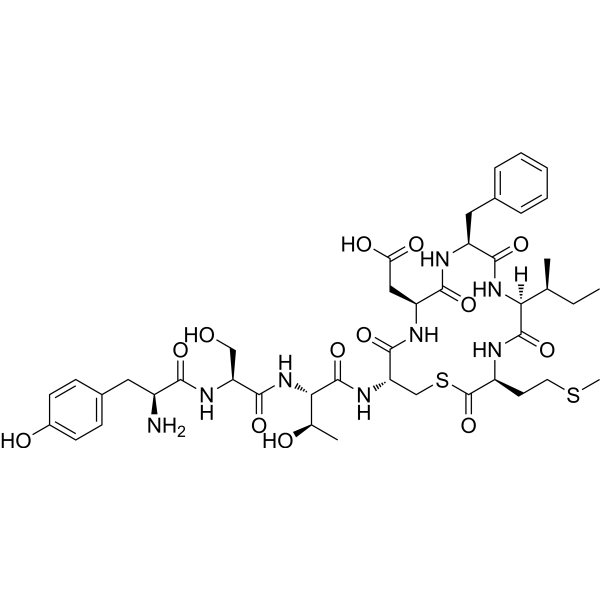
    Cholecystokinin-J (CCK-J), a cholecystokinin, stimulates Ca 2+ release .
    Cholecystokinin-J
  • HY-CE01950

    Tetradec-13-ynoic acid - coenzyme A thioester

    Biochemical Assay Reagents Metabolic Disease
    Tetradec-13-ynoicacid-CoA,thioester (Tetradec-13-ynoic acid-coenzyme A thioester) is a coenzyme A derivative .
    Tetradec-13-ynoicacid-CoA,thioester
  • HY-W250129

    Biochemical Assay Reagents Others
    2,3,4,5-Tetrafluorobenzoyl chloride is a fluorinated organic compound that belongs to the class of benzoyl chlorides. It is a colorless liquid with a pungent smell and is mainly used as an intermediate in the synthesis of various pharmaceutical and pesticide compounds. 2,3,4,5-Tetrafluorobenzoyl chloride is an acylating agent that can react with a variety of nucleophiles, including amines, alcohols, and thiols, to form amides, esters, or thioesters, respectively. Its unique fluorine-containing structure can impart desired properties to target molecules, such as increased lipophilicity or increased stability against metabolic degradation. However, due to its high reactivity and potential health hazards, proper safety measures and handling procedures must be followed when using this compound.
    2,3,4,5-Tetrafluorobenzoyl chloride
  • HY-185044

    Drug Intermediate Others
    Galloyl-coenzyme A thioester is a CoA-thioester of Gallic acid (HY-N05230) that can be found in plants as an intermediate in gallotannin biosynthesis.Galloyl-coenzyme A thioester possesses spectral properties that support photometric assay use in enzymatic studies .
    Galloyl-coenzyme A thioester
  • HY-126982

    Biochemical Assay Reagents Others
    ThioD is a protein linker with a hydrophobic thioester .
    ThioD
  • HY-CE00825

    3-(Methylthio)acryloyl-coenzyme A

    Biochemical Assay Reagents Metabolic Disease
    3-(Methylthio)acryloyl-CoA (3-(Methylthio)acryloyl-coenzyme A) is an acyl-CoA thioester.
    3-(Methylthio)acryloyl-CoA
  • HY-125744

    Biochemical Assay Reagents Others
    Palmitoyl thio-PC is a chromogenic substrate specific for PLA2 with a palmitoyl thioester at the sn-2 position. Palmitoyl thio-PC could be used to measure bee-venom sPLA2 activity in a phospholipid system .
    Palmitoyl thio-PC
  • HY-109591S

    Oleoyl-CoA-13C18 lithium

    Isotope-Labeled Compounds Others
    Oleoyl coenzyme A- 13C18 (lithium) is the 13C labeled Oleoyl Coenzyme A lithium . Oleoyl coenzyme A (Oleoyl-CoA) is a thioester of oleic acid and coenzyme A. Oleoyl coenzyme A has a role as an Escherichia coli metabolite and a mouse metabolite .
    Oleoyl coenzyme A-13C18 lithium
  • HY-163672

    Glucocorticoid Receptor Metabolic Disease Inflammation/Immunology
    Glucocorticoid receptor modulator 3 (Payload 6) is a thioester-containing glucocorticoid receptor modulator (IC50=0.6 nM). Glucocorticoid receptor modulator 3 is designed to inactivate unconjugated payloads rapidly through liver metabolism, thereby minimizing systemic exposure. Glucocorticoid receptor modulator 3 can be utilized in the development of antibody-drug conjugates (ADCs) targeting autoimmune diseases .
    Glucocorticoid receptor modulator 3
  • HY-105572

    MC-838 calcium

    Angiotensin-converting Enzyme (ACE) Cardiovascular Disease
    Moveltipril calcium (MC-838 calcium) is an orally active angiotensin converting enzyme (ACE) inhibitor with antihypertensive activity. Moveltipril calcium binds via a stable thioester bond and exhibits relative resistance to enzymatic hydrolysis in rat liver homogenate. Moveltipril calcium effectively inhibits ACE extracted from rabbit lung in a concentration-dependent manner. Moveltipril calcium is able to highly specifically inhibit the contractile response to angiotensin-I (AI) in free rat aortic rings and guinea pig ileum preparations, while enhancing the contractile response to calcitonin .
    Moveltipril calcium
  • HY-107852

    Insecticide Others
    Demeton-S-methyl sulfone is an organophosphorus insecticide metabolite.Demeton-S-methyl sulfone serves as a substrate for metabolic breakdown.Demeton-S-methyl sulfone forms via oxidation of demeton S-methyl sulfoxide in sugar-beet cell suspension cultures.Demeton-S-methyl sulfone undergoes thioester bond cleavage, producing ethanethiols that convert into S-methylated compounds or S-glucosides .
    Demeton-S-methyl sulfone
  • HY-W800829

    Biochemical Assay Reagents Others
    S-Undecyl 6-bromohexanethioate is an aliphatic linker featuring a bromide, a C6 spacer, and a thioester linked to a C11 chain.
    S-Undecyl 6-bromohexanethioate
  • HY-109591D

    Oleoyl-CoA sodium

    Biochemical Assay Reagents Others
    Oleoyl coenzyme A (Oleoyl-CoA) sodium is a thioester of oleic acid and coenzyme A. Oleoyl coenzyme A sodium has a role as an Escherichia coli metabolite and a mouse metabolite .
    Oleoyl coenzyme A sodium
  • HY-E71126

    Biochemical Assay Reagents Others
    (S)-Methylmalonyl-CoA hydrolase (EC 3.1.2.17) belongs to the family of hydrolases, specifically those acting on thioester bonds. (S)-Methylmalonyl-CoA hydrolase (EC 3.1.2.17) participates in propanoate metabolism.
    (S)-Methylmalonyl-CoA hydrolase
  • HY-105368

    Drug Derivative Cancer
    KF 22678 is a thioester derivative of leinamycin. KF 22678 exhibits a broad antitumor spectrum against human carcinoma xenografts, including lung, colon, ovary, and prostate cancers. KF 22678 can be used for the study of cancer .
    KF 22678
  • HY-D3052

    Fluorescent Dye Others
    5(6)-carbonylated rhodamine 110 maleimide is a maleimide-based fluorescent reagent based on 5(6)-carbonylated rhodamine 110. Maleimide can be labeled by forming a stable thioester structure through an affinity addition reaction with a thiol group (-SH) (Ex/Em = 502/527 nm).
    5(6)-carbonylated rhodamine 110 maleimide
  • HY-D3056

    Fluorescent Dye Others
    5(6)-Rhodamine 6G maleimide is a maleimide-based fluorescent reagent based on Rhodamine 6G (HY-D0309). Maleimide can be labeled by forming a stable thioester structure through an affinity addition reaction with a thiol group (-SH) (Ex/Em = 526/547 nm).
    5(6)-Rhodamine 6G maleimide
  • HY-E71085

    Biochemical Assay Reagents Others
    (R)-2-Hydroxy-4-methylpentanoate CoA-transferase (EC 2.8.3.24) , characterized from the bacterium Peptoclostridium difficile, participates in an L-leucine fermentation pathway. The reaction proceeds via formation of a covalent anhydride intermediate between a conserved aspartate residue and the acyl group of the CoA thioester substrate.
    (R)-2-Hydroxy-4-methylpentanoate CoA-transferase
  • HY-W121887

    Zomepirac glucuronide

    Dipeptidyl Peptidase Transmembrane Glycoprotein Inflammation/Immunology
    Zomepirac acyl-O-β-D-glucuronide (Zomepirac glucuronide) is a dipeptidyl peptidase IV Inhibitor. Zomepirac acyl-O-β-D-glucuronide is an unstable and chemically reactive metabolite of Zomepirac (HY-B0890A). Zomepirac acyl-O-β-D-glucuronide forms covalent adducts with cell membrane glycoproteins. Zomepirac acyl-O-β-D-glucuronide can be used for research on immunotoxicity .
    Zomepirac acyl-O-β-D-glucuronide

Inquiry Online

Your information is safe with us. * Required Fields.

Salutation


Country or Region *

Applicant Name *


Organization Name *

Department *


Email Address *


Product Name *

Cat. No.


Requested quantity *

Phone Number *


Remarks

Inquiry Online

Inquiry Information

Product Name:
Cat. No.:
Quantity:
MCE Japan Authorized Agent:

