1. Search Result
Search Result
Results for "

virus assembly

" in MedChemExpress (MCE) Product Catalog:

28

Inhibitors & Agonists

1

Screening Libraries

1

Biochemical Assay Reagents

3

Natural
Products

Cat. No. Product Name Target Research Areas Chemical Structure
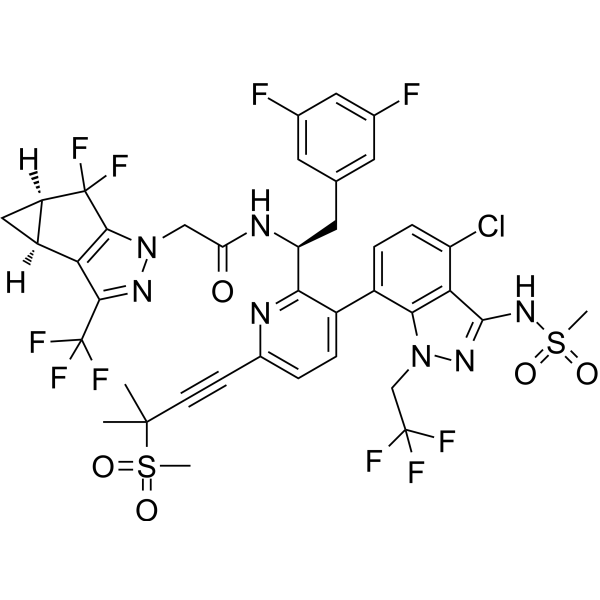
  • HY-111964
    Lenacapavir
    Maximum Cited Publications
    19 Publications Verification

    GS-6207

    HIV Infection
    Lenacapavir (GS-6207) is an HIV-1 capsid inhibitor. Lenacapavir binds to the interface between capsid hexamers and CA monomers, disrupts capsid assembly and viral maturation, inhibits nuclear translocation of HIV-1 DNA, interferes with CA-mediated protein-protein interactions, reduces the formation of 2-LTR circles and pre-integration proviruses, induces aberrant capsids, and decreases the production of mature HIV-1. Lenacapavir exhibits activity against a variety of HIV-1 subtypes and clinical isolates. Lenacapavir is applicable to research related to human immunodeficiency virus type 1 (HIV-1) infection .
    Lenacapavir
  • HY-N2397

    MSB

    DNA/RNA Synthesis PPAR NF-κB Autophagy Cardiovascular Disease Infection Inflammation/Immunology
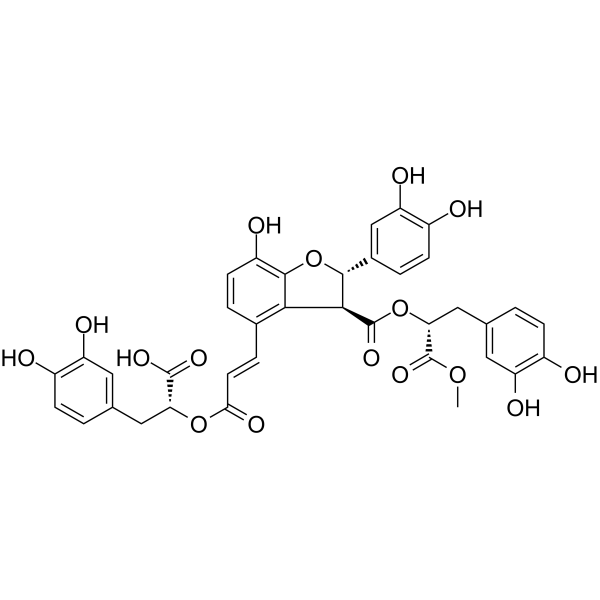
    9''-Methyl salvianolate B (MSB) is a blood-brain barrier-permeable inhibitor with high affinity for g5Rp, with a Kd value of 117 nM against African swine fever virus (ASFV) g5Rp. 9''-Methyl salvianolate B also acts as a ZBP1 inhibitor. It exhibits strong binding affinity to key proteins in the PPARγ/NF-κB pathway. 9''-Methyl salvianolate B blocks the interaction between ASFV g5Rp and host proteins eIF5A or RPS15. It restores hypusination modification of eIF5A, promotes autophagy (Autophagy), and inhibits ASFV replication. 9''-Methyl salvianolate B effectively disrupts ZBP1-mediated PANoptosome assembly. It effectively alleviates myocardial ischemia/reperfusion injury. 9''-Methyl salvianolate B can be used in studies related to African swine fever .
    9''-Methyl salvianolate B
  • HY-E70529

    DNA/RNA Synthesis Bacterial Infection
    Ribonucleoside vanadyl complexes are a class of potent RNase and Taq polymerase inhibitors. Ribonucleoside vanadyl complexes protect RNA during RNA isolation by inhibiting ribonucleases, and also reduce the viability of bacteria and eukaryotic cells by interfering with ribosomal subunit assembly. Ribonucleoside vanadyl complexes block PCR and reverse transcription reactions templated by viral nucleic acids and enhance the effects of antibiotics against Staphylococcus aureus, but do not directly inhibit protein synthesis. Ribonucleoside vanadyl complexes can be effectively removed by phenol-chloroform extraction, thus enabling subsequent PCR analysis. Ribonucleoside vanadyl complexes can be applied in research related to chronic hepatitis C (HCV) and Staphylococcus aureus infection .
    Ribonucleoside vanadyl complexes
  • HY-112564
    JNJ-632
    2 Publications Verification

    HBV Infection
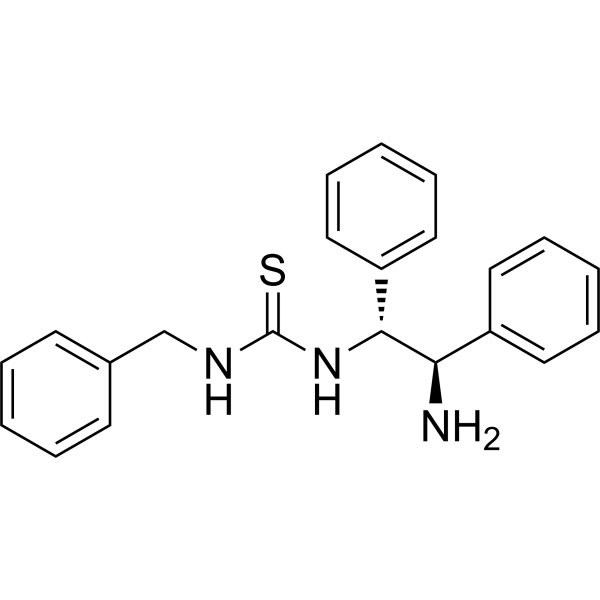
    JNJ-632 is a hepatitis B virus (HBV) capsid assembly modulator (CAM).
    JNJ-632
  • HY-124600
    NVR 3-778
    3 Publications Verification

    HBV Infection
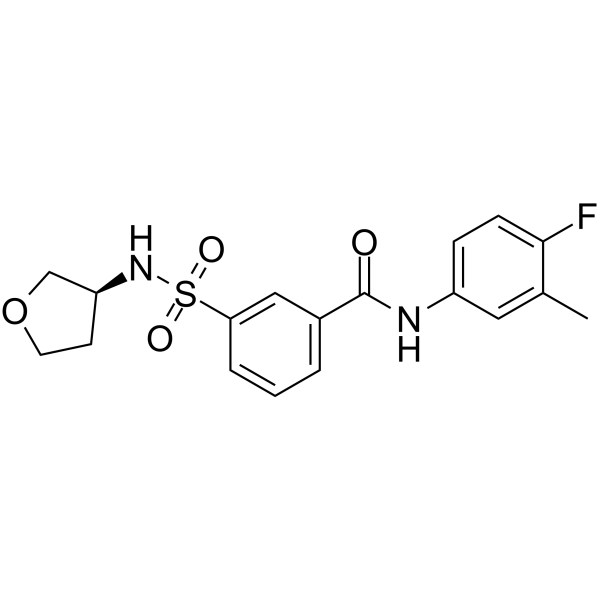
    NVR 3-778 is a first-in-Class and oral bioavailable HBV CAM (capsid assembly modulator) belonging to the SBA (sulfamoylbenzamide) class, with anti-HBV activity .
    NVR 3-778
  • HY-172760

    SARS-CoV Infection
    CIM-834 is an orally effective inhibitor of SARS-CoV-2 membrane protein. CIM-834 can prevent the assembly of infectious virus particles without inhibiting the synthesis of viral RNA. CIM-834 can reduce the viral titer in the lungs of SCID mice infected nasally with SARS-CoV-2, block the spread of SARS-CoV-2 among Syrian hamsters, and inhibit the replication of SARS-CoV-2 (including variants) and SARS-CoV. CIM-834 can be used in related research on COVID-19 .
    CIM-834
  • HY-W540972

    Primuline

    Fluorescent Dye HCV Dengue Virus Infection
    Primulin is a versatile fluorescent dye and bioactive compound widely used in analytical, biological, botanical and virological studies. Primulin acts as a versatile stain that labels plant cell walls and differentiates live and dead spermatozoa via distinct fluorescence patterns. Primulin exhibits strong albumin‑binding capacity. Primulin acts as a retrograde axonal tracer in neurobiological investigations. Primulin and its derivatives inhibit HCV NS3, block dengue virus NS3-mediated ATP hydrolysis, and disrupt HCV replicase assembly .
    Primulin
  • HY-111964A
    Lenacapavir sodium
    Maximum Cited Publications
    19 Publications Verification

    GS-6207 sodium

    HIV Infection
    Lenacapavir (GS-6207) sodium is an HIV-1 capsid inhibitor. Lenacapavir sodium binds to the interface between capsid hexamers and CA monomers, disrupts capsid assembly and viral maturation, inhibits nuclear translocation of HIV-1 DNA, interferes with CA-mediated protein-protein interactions, reduces the formation of 2-LTR circles and pre-integration proviruses, induces aberrant capsids, and decreases the production of mature HIV-1. Lenacapavir sodium exhibits activity against a variety of HIV-1 subtypes and clinical isolates. Lenacapavir sodium is applicable to research related to human immunodeficiency virus type 1 (HIV-1) infection .
    Lenacapavir sodium
  • HY-N13047

    TMV SOD Infection
    Ningnanmycin is a plant antiviral agent. Ningnanmycin binds to specific residues on the TMV CP disc, inhibits CP assembly, disassembles the CP disc into monomers, and disrupts the structure of the TMV CP disc to reduce pathogenicity. Ningnanmycin binds to key amino acids of PVY CP, interferes with CP-CP interactions, inhibits CP assembly and virion formation, and blocks PVY replication. Ningnanmycin induces the expression of antiviral response genes PRXIIB, PRXIIE, PUB4 and PER42, thereby activating the host defense system. Ningnanmycin can be used in studies related to Tobacco Mosaic Virus infection and Potato Virus Y infection .
    Ningnanmycin
  • HY-114314

    HBV Infection
    BA-53038B is a HBV core protein allosteric modulator (CpAM), binding to the HAP pocket and modulating HBV capsid assembly. BA-53038B has antiviral activity for hepatitis B virus (HBV) with an EC50 value of 3.32 μM. BA-53038B can be used for the research of chronic hepatitis B .
    BA-53038B
  • HY-N14780

    (+)-Pochonin D

    HSP Interleukin Related Enterovirus Infection Inflammation/Immunology Cancer
    Pochonin D ((+)-Pochonin D) is an inhibitor of heat shock protein 90 (Hsp90) with antiviral and anti-inflammatory activities. Pochonin D inhibits Hsp90, affects the homeostasis, folding and assembly processes of viral proteins, and reduces the replication capacity of viruses. Pochonin D reduces the infiltration of inflammatory cells, decreases the secretion of inflammatory cytokines such as TNF-α and IL-1β, and alleviates inflammatory responses. Pochonin D is a promising candidate for research on human rhinovirus (HRV) infection and cancer .
    Pochonin D
  • HY-113761

    Filovirus Infection
    ASN03576800 could be a potent inhibitor for Ebola virus matrix protein VP40 in process of viral assembly and budding process. ASN03576800 occupies the RNA binding region of VP40 .
    ASN03576800
  • HY-176433

    Flavivirus Infection
    NSC-323241 is a potent STT3A-mediated mega protein complex assembly inhibitor. NSC-323241 disrupts he endoplasmic reticulum (ER) mega complex nucleated by STT3A during dengue virus (DENV) and Zika virus (ZIKV) infection. NSC-323241 targets the binding of STT3A subcomplex with viral nonstructural proteins (e.g., NS2B, NS3) and host translocon proteins, disrupting the formation of viral replication microenvironment. NSC-323241 is promising for research of flavivirus infection, such as dengue fever and Zika virus .
    NSC-323241
  • HY-136111

    HBV Infection
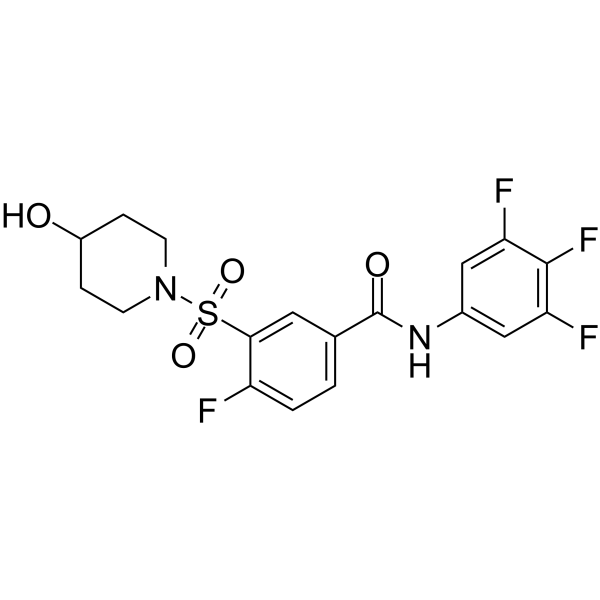
    KR-26556 is a sulfonamide type hepatitis B virus (HBV) capsid assembly regulator. KR-26556 exhibits anti-HBV activity with an EC50 of 0.04 μM. KR-26556 has favorable safety characteristics. KR-26556 can be used for research on chronic hepatitis B .
    KR-26556
  • HY-174819

    HBV Infection
    VNRX-9945 is a potent, broadly and orally active HBV CAM (capsid assembly modulator) with an EC50 of 2.6 nM. VNRX-9945 exhibits excellent and broad antiviral activity against multiple HBV genotypes in vitro, along with favorable pharmacokinetic profiles across multiple species. VNRX-9945 demonstrates robust antiviral efficacy in the adeno-associated virus mice models of HBV (AAV-HBV) infection .
    VNRX-9945
  • HY-155045

    TMV Infection
    TMV-IN-6 (Compound 4g) is a novel antiviral and fungicidal agent. TMV-IN-6 inhibits virus assembly by binding totobacco mosaic virus (TMV) CP and interfere with the assembly process of TMV CP and RNA .
    TMV-IN-6
  • HY-163201

    TMV Infection
    TMV-IN-7 (compound G2) is a potent inhibitor of tobacco mosaic virus (TMV). TMV-IN-7 exhibits strong hydrophobic interactions to obstructing the virus’s self-assembly .
    TMV-IN-7
  • HY-155044

    TMV Fungal Infection
    TMV-IN-5 (compound 1a) is an anti-plant virus/fungal agent. TMV-IN-5 inhibits viral assembly by binding to tobacco mosaic virus (TMV) CP. TMV-IN-5 can be used in the development of pesticides .
    TMV-IN-5
  • HY-122196

    Flavivirus Others
    TYT-1 is a sulfonamide-thiourea compound that has inhibitory activity against West Nile virus replication with a 50% effective concentration of 0.7 microM, blocking a post-entry, pre-assembly step of viral replication.
    TYT-1
  • HY-173278

    HBV Potassium Channel Infection
    AIC263282 is a potent Hepatitis B Virus (HBV) capsid assembly modulator with an EC50 of 3.8 nM. AIC263282 shows an IC50 of 61 nM for hERG. AIC263282 exhibits activity against viral replication and hepatitis B surface antigen (HBsAG) on primary human hepatocytes .
    AIC263282
  • HY-116633

    Endogenous Metabolite Infection
    BCM-599 is a HBV (hepatitis B virus) capsid assembly inhibitor with the activity of inhibiting HBV capsid assembly. BCM-599 showed an IC50 value of 0.88μM and a CC50 value of 144μM in HepG2.2.15 cells. When used in combination with lamivudine, BCM-599 showed a synergistic inhibitory effect on viral concentration. BCM-599 can be used as an effective combined inhibition option for HBV infection .
    BCM-599
  • HY-162400

    TMV Infection
    TMV-IN-8 (compound 7 d) is an anti tobacco mosaic virus (TMV) agent with an antiviral EC50 of 157.6 μg/mL.TMV-IN-8 blocks the assembly of TMV by binding with coat protein (Kd = 0.7 μM) and suppressed TMV coat protein gene expression and biosynthesis process .
    TMV-IN-8
  • HY-163999

    TMV Infection
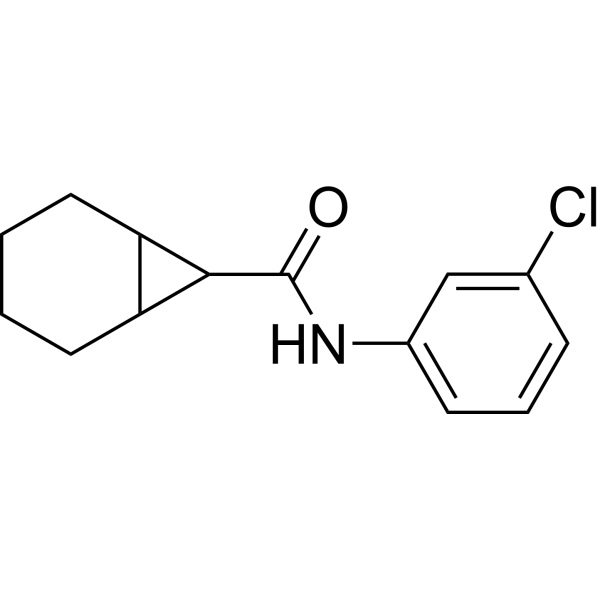
    TMV-IN-12 (compound 4) is an inhibitor of tobacco mosaic virus (TMV) with antifungal properties. TMV-IN-12 effectively prevents TMV particle aggregation and self-assembly of TMV capsid protein (TMV-CP) (Kd=0.142 μM), preventing TMV from infecting tobacco plants .
    TMV-IN-12
  • HY-162795

    HBV Infection
    HBV-IN-47 (compound 4a) is a capsid assembly regulator with inhibitory activity against hepatitis B virus (HBV). HBV-IN-47 exhibits strong anti-HBV activity in HepAD38 cells with low toxicity (EC50=0.24 μM). HBV-IN-47 can be used for the study of chronic hepatitis B (CHB) .
    HBV-IN-47
  • HY-124600R

    HBV Infection
    NVR 3-778 (Standard) is the analytical standard of NVR 3-778. This product is intended for research and analytical applications. NVR 3-778 is a first-in-Class and oral bioavailable HBV CAM (capsid assembly modulator) belonging to the SBA (sulfamoylbenzamide) class, with anti-HBV activity .
    NVR 3-778 (Standard)
  • HY-180524

    HBV Infection
    CAB7-3 is an orally active HBV capsid assembly modulator (CAM). CAB7-3 exhibits an exceptional antiviral efficacy reducing HBV DNA with an EC50 = 70 nM, CC50 = 32.3 μM in HepDES19 cells. CAB7-3 exhibits significant anti-HBV activity in HBV-integrated HepDES19 (EC50 = 70 nM), HepAD38 (EC50 = 1 nM) and HBV-infected HLCZ01 cells (EC50 = 2 nM), respectively. CAB7-3 effectively reduces Hepatic HBV core protein levels and suppresses viral replication in vivo. CAB7-3 demonstrates a favorable drug-like and safety profile. CAB7-3 can be used for Hepatitis B Virus (HBV) research .
    CAB7-3
  • HY-180269

    Influenza Virus DNA/RNA Synthesis Infection
    Anti-Influenza agent 10 (Compound 41) is an influenza A virus RNA-dependent RNA polymerase (RdRp) inhibitor. Anti-Influenza agent 10 exhibits potent antiviral activity against A/PR/8/34(H1N1) with an IC50 of 0.29μM and a KD of 4.11 μM. Anti-Influenza agent 10 can inhibit the assembly of the viral RdRp complex by disrupting the protein interaction between PA and PB1 subunits, thereby blocking the transcription and replication of the viral genome. Anti-Influenza agent 10 shows significant broad-spectrum effects on multiple influenza virus strains, such as H3N2, H3N8 and H9N2 with IC50 values of 3.96, 1.91 and 1.45 μM. Anti-Influenza agent 10 can be used for the research of influenza A Virus Infection .
    Anti-Influenza agent 10
  • HY-181920

    PROTACs Dengue Virus Infection
    RPG-01-132 is a DENV capsid protein PROTAC degrader, with a DC50 of 2.4 μM. RPG-01-132 blocks viral assembly, eliminates viral particles, and interferes with the non-structural functions of capsid protein. RPG-01-132 exhibits significant antiviral activity against all four DENV serotypes and the ST148 (HY-121663)-resistant DENV2 mutant strain. RPG-01-132 is applicable to research related to dengue virus infection .
    RPG-01-132

Inquiry Online

Your information is safe with us. * Required Fields.

Salutation


Country or Region *

Applicant Name *


Organization Name *

Department *


Email Address *


Product Name *

Cat. No.


Requested quantity *

Phone Number *


Remarks

Inquiry Online

Inquiry Information

Product Name:
Cat. No.:
Quantity:
MCE Japan Authorized Agent:

