



Bacterial
Anything that destroys bacteria or suppresses their growth or their ability to reproduce. Heat, chemicals such as chlorine, and antibiotic drugs all have antibacterial properties. Many antibacterial products for cleaning and handwashing are sold today. Such products do not reduce the risk for symptoms of viral infectious diseases in otherwise healthy persons. This does not preclude the potential contribution of antibacterial products to reducing symptoms of bacterial diseases in the home.
All Product Categories
-
Bacterial Inhibitors
(7436)
View all products
-
Bacterial Agonists
(3)
View all products
-
Bacterial Antagonists
(9)
View all products
-
Bacterial Activators
(23)
View all products
-
Bacterial Modulators
(20)
View all products
-
Bacterial Chemicals
(2)
View all products
-
Bacterial Inducers
(7)
View all products
-
Bacterial Controls
(14)
View all products
-
Bacterial Substrates
(2)
View all products
-
Bacterial Ligand
(1)
View all products
-
Bacterial Related Products (8733)
Related Products (8733)

-
Antibodies (14)
-
Related Compound Screening Libraries (1)
-
Actinonin (Standard)
 0 ImagesCat. No.: HY-113952RCAS No.: 13434-13-4Synonyms: (-)-Actinonin (Standard)Actinonin (Standard) is the analytical standard of Actinonin. This product is intended for research and analytical applications. Actinonin ((-)-Actinonin) is a naturally occurring antibacterial agent produced by Actinomyces. Actinonin inhibits aminopeptidase M, aminopeptidase N and leucine aminopeptidase. Actinonin is a potent reversible peptide deformylase (PDF) inhibitor with a Ki of 0.28 nM. Actinonin also inhibits MMP-1, MMP-3, MMP-8, MMP-9, and hmeprin α with Ki values of 300 nM, 1,700 nM, 190 nM, 330 nM, and 20 nM, respectively. Actinonin is an apoptosis inducer. Actinonin has antiproliferative and antitumor activities[1][2][3][4][5].
-
Ppc-1
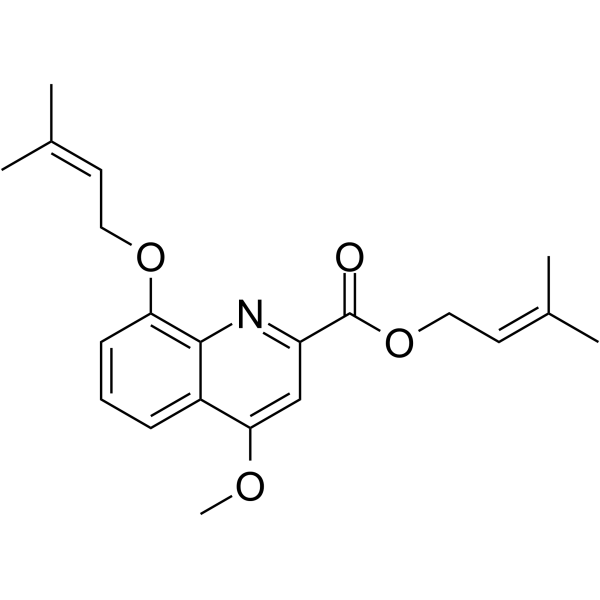 0 ImagesCat. No.: HY-117843CAS No.: 1245818-17-0Ppc-1 is a mitochondrial uncoupler. Ppc-1 enhances mitochondrial oxygen consumption without adverse effects on ATP production. Ppc-1 is a cell-permeate interleukin-2 (IL-2) inhibitor. Ppc-1 inhibits the Gram-negative periodontopathogen Porphyromonas gingivalis. Ppc-1 has anti-obesity, antibacterial and anti-inflammatory activities.
-
Fleroxacin-d3
 0 ImagesCat. No.: HY-B0414SSynonyms: RO 23-6240-d3; AM-833-d3Fleroxacin-d3 (RO 23-6240-d3) is the deuterium labeled Fleroxacin (HY-B0414). Fleroxacin (RO 23-6240) is a broad-spectrum antimicrobial fluoroquinolone.
-
β-defesin 1 (pig)
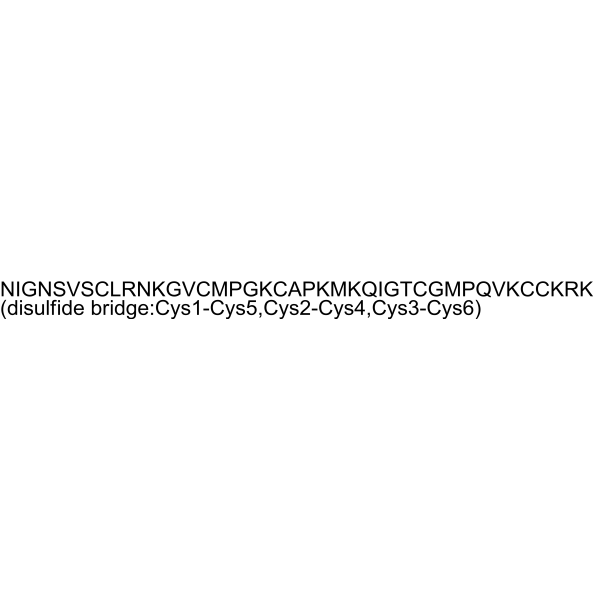 0 ImagesCat. No.: HY-P2289Synonyms: pBD-1β-defesin 1 (pig) (pBD-1) is an endogenous and constitutively expressed antimicrobial peptide (AMP) from porcine tissues, particularly expresses in pig mucosal epithelial sites. β-defesin 1 (pig) has antimicrobial activities and contributes to mucosal and systemic host defenses in pigs.
-
TP-1161
 0 ImagesCat. No.: HY-N10168CAS No.: 1287303-66-5TP-1161 is a novel thiopeptide antibiotic. TP-1161 has strong inhibitory effects on various Gram positive bacteria (MIC = 0.25-4 μg/mL), but is inactive against Gram negative bacteria. TP-1161 can be used for research on bacterial infections.
-
OXF-077
 0 ImagesCat. No.: HY-180128OXF-077 is a potent SOS response inhibitor with an IC50 of 1.2 µM against Ciprofloxacin (HY-B0356)-activated SOS response. OXF-077 targets SpsB. OXF-077 suppresses the emergence of Ciprofloxacin resistance in Staphylococcus aureus.
-
DNA Gyrase-IN-4
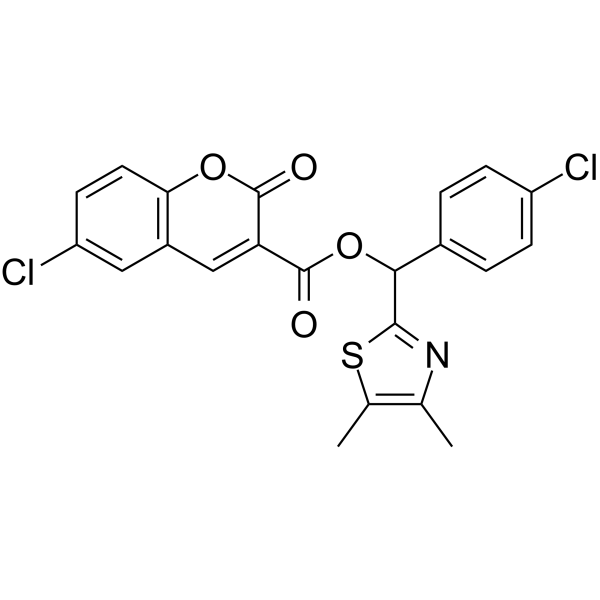 0 ImagesCat. No.: HY-147948CAS No.: 2416400-32-1DNA Gyrase-IN-4 (compound 8p) is a potent DNA gyrase inhibitor, with an IC50 of 0.13 μM. DNA Gyrase-IN-4 shows excellent antibacterial activity against Staphylococcus aureus, Listeria monocytogenes, Salmonella and Escherichia coli, with MIC values of 0.05, 0.05, 0.05, and 8 μg/mL, respectively.
-
Ampicillin sodium and Sulbactam sodium
 0 ImagesCat. No.: HY-185351Synonyms: Ampicillin/Sulbactam combinationAmpicillin sodium and Sulbactam sodium are formed by mixing HY-B0522A Ampicillin sodium with HY-B0334A Sulbactam sodium (each 1.5 g of this product contains 1 g amoxicillin sodium and 0.5 g sulbactam sodium). Ampicillin is a β-lactam antimicrobial, whereas sulbactam is a β-lactamase inhibitor. Ampicillin has a broad spectrum of bactericidal activity against many gram-positive and gram-negative aerobic and anaerobic bacteria. However, ampicillin is degraded by beta-lactamases. The combination of ampicillin and sulbactam demonstrates synergy in addressing bacterial strains resistant to ampicillin, thus providing broader coverage. Bacteria susceptible to ampicillin/sulbactam include Haemophilus influenzae, Escherichia coli, Acinetobacter, Klebsiella, Staphylococcus aureus, Enterobacter, and anaerobes.
-
Medermycin
 0 ImagesCat. No.: HY-117285CAS No.: 60227-09-0Synonyms: Lactoquinomycin A; LQM-ALactoquinomycin A is a quinone antibiotic. Lactoquinomycin A has the activity of anti-Gram-positive bacteria and some Gram-negative bacteria, but the effect of anti-Gram-negative bacteria is weak and has no effect on fungi. Lactoquinomycin A inhibits a variety of cell lines including lymphoma L5178Y progenitor, Adriamycin resistant, Bleomycin-resistant, human leukemia K562, mouse leukemia L-1210 and mouse leukemia P 388 with ID50 (μg/mL) of 0.02, 0.006, 0.008, 0.033, 0.013 and 0.03, respectively.
-
Methdilazine hydrochloride (Standard)
 0 ImagesCat. No.: HY-B1690ARCAS No.: 1229-35-2Thioridazine (Standard) is the analytical standard of Thioridazine. This product is intended for research and analytical applications. Thioridazine, an antagonist of the dopamine receptor D2 family proteins, exhibits potent anti-psychotic and anti-anxiety activities. Thioridazine is also a potent inhibitor of PI3K-Akt-mTOR signaling pathways with anti-angiogenic effect. Thioridazine shows antiproliferative and apoptosis induction effects in various types of cancer cells, with specificity on targeting cancer stem cells (CSCs).
-
Okra fruit extract
 0 ImagesCat. No.: HY-N20321Synonyms: Abelmoschus esculentus fruit extractOkra fruit extract (Abelmoschus esculentus fruit extract) is an extract of okra (Abelmoschus esculentus) containing a variety of bioactive components, with properties such as anti-diabetic, antioxidant, antimalarial, antibacterial, anticancer, analgesic, antidiarrheal, and anti-inflammatory effects.
-
Pyraclostrobin (Standard)
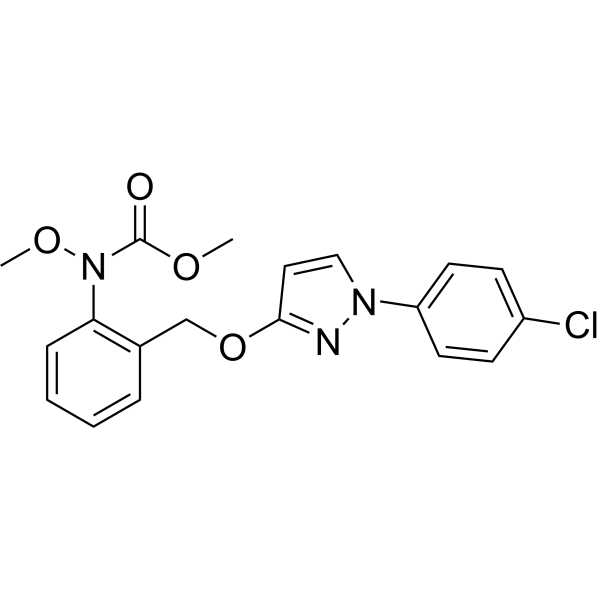 0 ImagesPyraclostrobin (Standard) is the analytical standard of Pyraclostrobin. This product is intended for research and analytical applications. Pyraclostrobin is a highly effective and broad-spectrum strobilurin fungicide. Pyraclostrobin can induce oxidative DNA damage, mitochondrial dysfunction and autophagy through the activation of AMPK/mTOR signaling. Pyraclostrobin can be used to control crop diseases.
-
PA-IIL
 0 ImagesCat. No.: HY-NP216Synonyms: LecBPA-IIL (LecB) is a lectin produced by Pseudomonas aeruginosa. PA-IIL binds to glycosylated β1-integrin, fucose-containing glycosphingolipids, fucosylated/mannosylated neutrophil glycoconjugates, and pre-formed neutrophil extracellular traps. PA-IIL disrupts host defenses: it creates favorable conditions for Pseudomonas aeruginosa infection and dissemination by modulating the bactericidal activity of neutrophils, impairing the trafficking and recruitment of immune cells, and compromising the repair capacity of epithelial barriers. PA-IIL can be used in studies related to Pseudomonas aeruginosa infection.
-
VP-4604 (Standard)
 0 ImagesVP-4604 (Standard) is the analytical standard of VP-4604. This product is intended for research and analytical applications. VP-4604 is a potent anti-methicillin-resistant Staphylococcus aureus (MRSA) agent. VP-4604 exhibits significant microbial growth inhibition toward Staphylococcus aureus (ATCC 43300) with MIC of 4-8 μg/mL. VP-4604 inhibits the growth of methicillin‐resistant Staphylococcus aureus with growth inhibition >95%[1].
-
ND-011458
 0 ImagesCat. No.: HY-183075CAS No.: 1648720-01-7ND-011458 is an Antibacterial agent, a QcrB inhibitor, and also an inhibitor of cytochrome bcc:aa3 oxidase function. ND-011458 binds to the QcrB subunit of cytochrome bcc:aa3 oxidase. ND-011458 inhibits ATP formation. When used in combination with Clofazimine (HY-B1046), ND-011458 exhibits bactericidal activity against Mycobacterium abscessus. ND-011458 can be used in studies related to Mycobacterium abscessus pulmonary infections.
-
2-Heptanol (Standard)
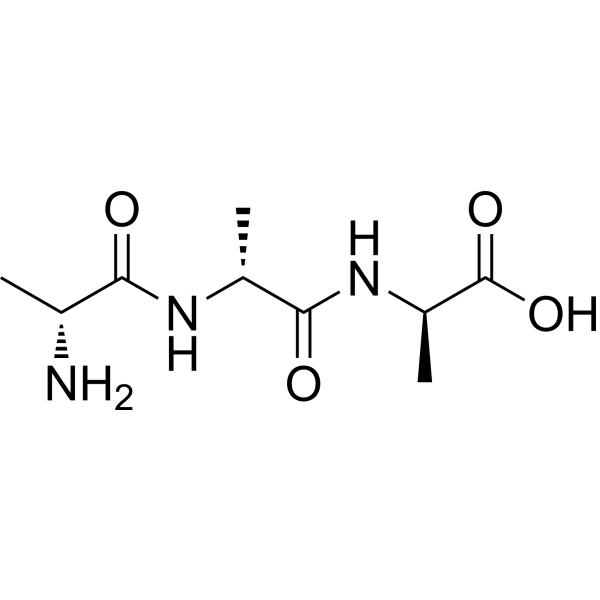
 0 Images2-Heptanol (Standard) is the analytical standard of 2-Heptanol. This product is intended for research and analytical applications. 2-Heptanol is one of the chemical compounds identified in turmeric and turmeric rhizome essential oil. 2-Heptanol can speed up amino acid metabolism and slow down membrane transport, exhibiting antibacterial activity. The rhizome essential oil has good antibacterial and antioxidant properties[1][2].
-
cCF10
 0 ImagesCat. No.: HY-P11106CAS No.: 116355-81-8cCF10 is a peptide sex pheromone. cCF10 induces transfer of the conjugative plasmid pCF10 from plasmid-containing donor cells to plasmid-free recipient cells. cCF10 induces Opp system and enters bacterial cells to inhibit (p)ppGpp accumulation. cCF10 reduces persister cell generation via maintaining the metabolically active state of bacteria.
-
Cefroxadine
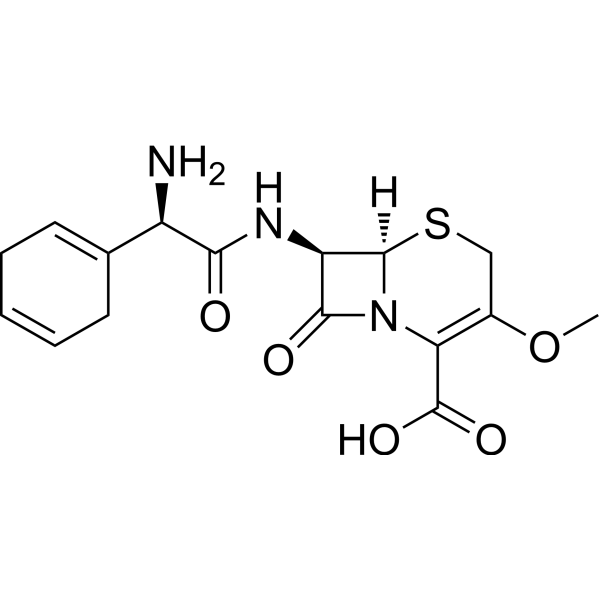 0 ImagesCat. No.: HY-107064CAS No.: 51762-05-1Synonyms: CGP 9000; OrasporCefroxadine (CGP 9000) is an orally active cephalosporin antibiotic. Cefroxadine is more effective than cephalexin against Escherichia coli and Klebsiella pneumoniae with MIC values of 3.13 and 1.56 μg/mL respectively with a concentration of 106 μg/mL. Cefroxadine can be used for the research of infection.
-
Bambusa arundinacea extract
 0 ImagesCat. No.: HY-N18770CAS No.: 91771-32-3Bambusa arundinacea extract is rich in various bioactive compounds, including flavonoids, phenolic acids, and lignans. Bambusa arundinacea extract possesses antioxidant, anti-inflammatory, and antibacterial properties.




