



CCR Inhibitor
-
Pirfenidone
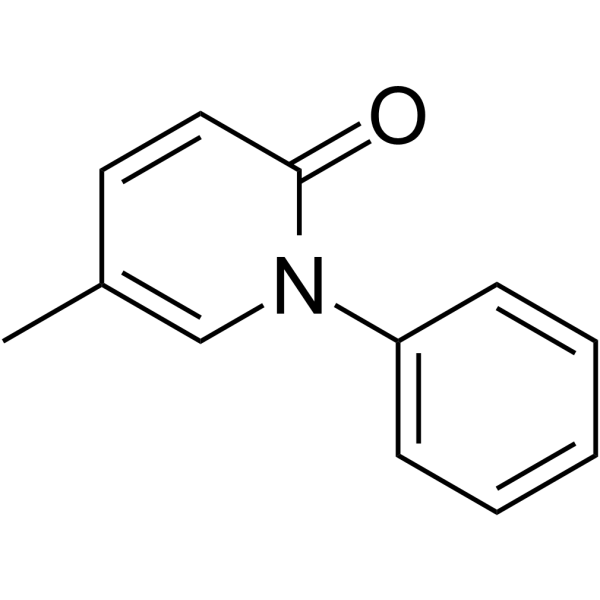 0 ImagesSynonyms: AMR69
-
Bindarit
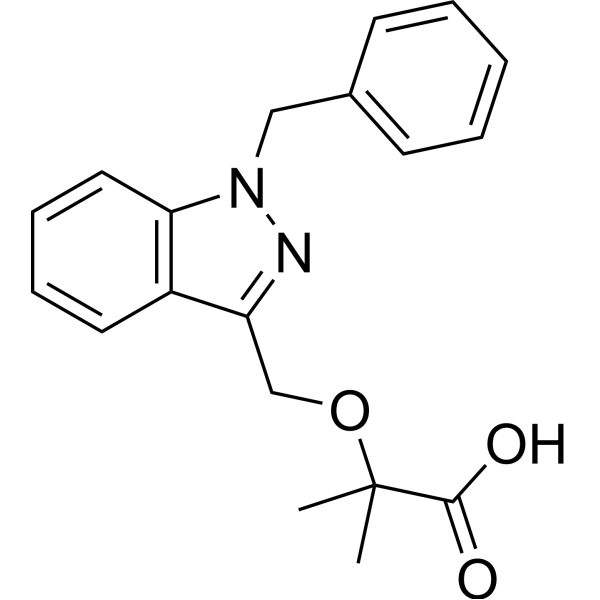 0 ImagesSynonyms: AF2838
Bindarit (AF2838) is a selective inhibitor of the monocyte chemotactic proteins MCP-1/CCL2, MCP-3/CCL7, and MCP-2/CCL8, and no effect on other CC and CXC chemokines such as MIP-1α/CCL3, MIP-1β/CCL4, MIP-3/CCL23. Bindarit also has anti-inflammatory activity.
-
Anti-Mouse/Rat/Human CCL2/MCP-1 Antibody (2H5)
 0 ImagesCat. No.: HY-P990297Purity: 99.5%
Anti-Mouse/Rat/Human CCL2/MCP-1 Antibody (2H5) is an anti-mouse/rat/human CCL2/MCP-1 IgG monoclonal antibody. Anti-Mouse/Rat/Human CCL2/MCP-1 Antibody (2H5) can reverse the immunosuppressive microenvironment by blocking the CCL2 signaling pathway. Anti-Mouse/Rat/Human CCL2/MCP-1 Antibody (2H5) can reduce the secretion of IFN-γ and the infiltration of macrophages. CCL2/MCP-1 Antibody (2H5) can reduce the amount of HIV virus by increasing the proportion of T cells. Anti-Mouse/Rat/Human CCL2/MCP-1 Antibody (2H5) can be used for researches on inflammation conditions, virus infection and cancer such as inflammatory bowel disease (IBD), hepatocellular carcinoma (HCC) and HIV.
-
Carlumab
 0 ImagesCat. No.: HY-P99188CAS No.: 915404-94-3Synonyms: CNTO 888
Carlumab (CNTO 888) is a human anti-CCL2 (chemokine ligand 2) monoclonal antibody. Carlumab binds and neutralises profibrotic activities of human CCL2. Carlumab inhibits tumor growth by reducing macrophage infiltration and decreasing tumor microvascular density. Carlumab can be used for the research of cancer, suah as prostate cancer.
-
Emapticap pegol sodium
 0 ImagesCat. No.: HY-148100ASynonyms: NOX-E36 sodium
Emapticap pegol sodium is a inhibitor of pro-inflammatory chemokine C-C motif-ligand 2 (CCL2). Emapticap pegol sodium is a 40-nucleotide pegylated aptamer, displays different Spiegelmers (L-RNA aptamer) isform in human (NOX-E36) and mouse (mNOX-E36).
-
Emapticap pegol
 0 ImagesCat. No.: HY-148100CAS No.: 1390630-22-4Synonyms: NOX-E36
Emapticap pegol (NOX-E36) is a inhibitor of pro-inflammatory chemokine C-C motif-ligand 2 (CCL2). Emapticap pegol is a 40-nucleotide pegylated aptamer, displays different Spiegelmers (L-RNA aptamer) isform in human (NOX-E36) and mouse (mNOX-E36). mNOX-E36 is a murine-specific analogue of NOX-E36, an anti-MCP-1 L-RNA aptamer that was previously shown to attenuate liver fibrosis in mice.
-
Denrakibart
 0 ImagesSynonyms: GSK3858279
-
7,4'-Dihydroxyflavone
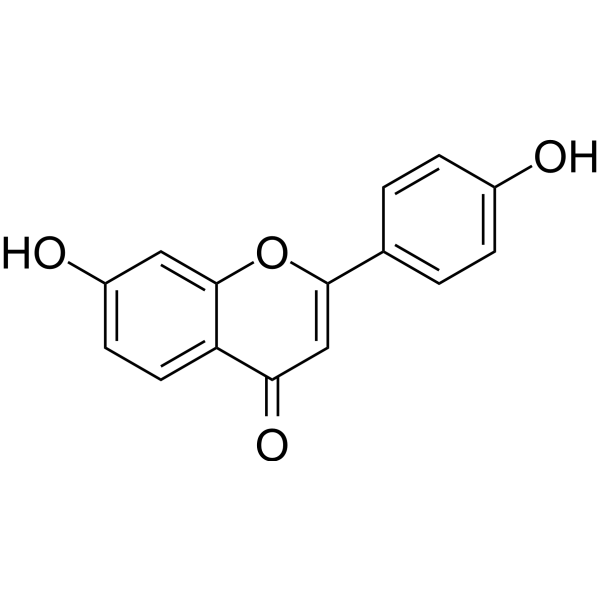 0 Images
7,4'-Dihydroxyflavone (7,4'-DHF) is a flavonoid, which can be isolated from Glycyrrhiza uralensis. 7,4'-Dihydroxyflavone is eotaxin/CCL11 inhibitor and CBR1 inhibitor (IC50=0.28 μM). 7,4'-Dihydroxyflavone has the ability to consistently suppress eotaxin production and prevent dexamethasone (Dex)‐paradoxical adverse effects on eotaxin production. 7,4'-Dihydroxyflavone (7,4'-DHF) inhibits MUC5AC gene expression, mucus production and secretion via regulation of NF-κB, STAT6 and HDAC2.7,4'-Dihydroxyflavone (7,4'-DHF) decreases phorbol 12-myristate 13-acetate (PMA) stimulated NCI-H292 human airway epithelial cell MUC5AC gene expression and mucus production with IC50 value of 1.4 µM.
-
Pirfenidone (Standard)
 0 ImagesSynonyms: AMR69 (Standard)
Pirfenidone (Standard) is the analytical standard of Pirfenidone. This product is intended for research and analytical applications. Pirfenidone (AMR69) is an antifibrotic agent that attenuates CCL2 and CCL12 production in fibrocyte cells. Pirfenidone has growth-inhibitory effect and reduces TGF-β2 protein levels in human glioma cell lines. Pirfenidone also has anti-inflammatory activities.

-
Pirfenidone-d5
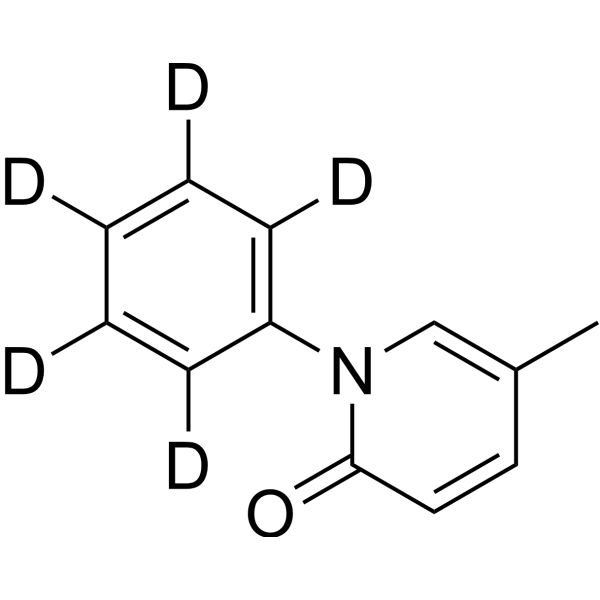 0 ImagesSynonyms: AMR69-d5
Pirfenidone-d5 (AMR69-d5) is a deuterium labeled Pirfenidone. Pirfenidone is an antifibrotic agent that attenuates CCL2 and CCL12 production in fibrocyte cells. Pirfenidone has growth-inhibitory effect and reduces TGF-β2 protein levels in human glioma cell lines. Pirfenidone also has anti-inflammatory activities.
-
Bertilimumab
 0 ImagesCat. No.: HY-P99474CAS No.: 375348-49-5Synonyms: CAT 213; iCo-008
Bertilimumab (CAT 213; iCo-008) is a human monoclonal antibody targeting eotaxin-1 (CCL11). Bertilimumab has the potential for allergic disorders research.
-
CAP-100
 0 ImagesCat. No.: HY-P991224Purity: 99.84%
CAP-100 is a monoclonal antibody that targets CCR7. CAP-100 neutralizes the ligand-binding site and signaling of CCR7. CAP-100 strongly inhibits CCR7-induced migration, extravasation, homing, and survival in chronic lymphocytic leukemia (CLL) samples. CAP-100 triggers potent tumor cell killing, mediated by host immune mechanism. CAP-100 shows a favorable toxicity profile on relevant hematopoietic subsets. CAP-100 is involved in research on anti-tumor and disease such as CLL.
-
Resolvin D5
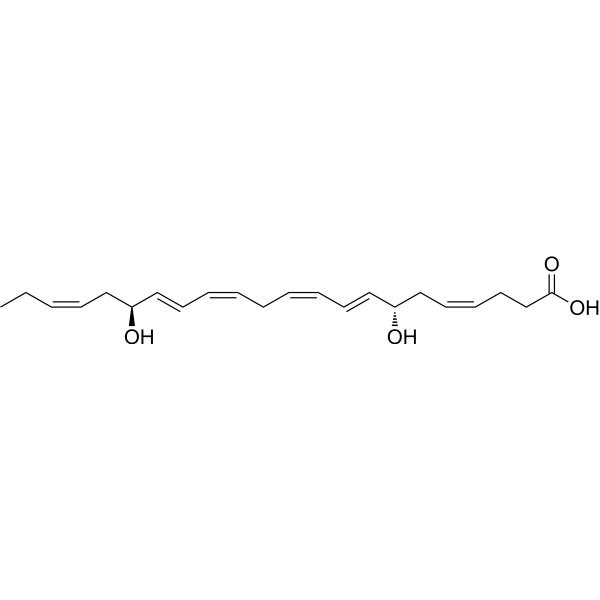 0 Images
Resolvin D5 is an anti-inflammatory and analgesic agent produced in M2 macrophages. Resolvin D5 alleviates Paclitaxel (HY-B0015)-induced mechanical allodynia and inflammatory pain by activating the GPR32 receptor, with gender specificity (effective only in male mice) and independence from TRPV1 or TRPA1 channels. Resolvin D5 attenuates LPS-induced ERK phosphorylation and NF-κB nuclear translocation, downregulates proinflammatory mediators such as IL-6 and CCL5, inhibits Th17 cell differentiation and osteoclastogenesis, promotes regulatory T cell differentiation, and shows no cytotoxicity to human monocytes. The level of Resolvin D5 is elevated in arthritic SKG mice, but Resolvin D5 has no effect on dendritic cell differentiation or M1 macrophage polarization, nor does it prevent ZyA-induced arthritis progression. Resolvin D5 is suitable for research related to chemotherapy-induced peripheral neuropathy, inflammatory pain and rheumatoid arthritis.
-
ECL1i TFA
 0 ImagesCat. No.: HY-P11553A
ECL1i TFA is an allosteric, selective CCR2 inhibitor. ECL1i TFA specifically inhibits CCL2-/CCR2-mediated chemotaxis. ECL1i TFA interferes with CCR2-positive cell recruitment and attenuates disease progression in experimental autoimmune encephalomyelitis.

-
Minokitug
 0 Images
Minokitug is a humanized monoclonal antibody targeting the CCR2 protein. Minokitug can be used for the research of refractory/relapsed ulcerative colitis.
-
DPC-168
 0 ImagesCat. No.: HY-19501CAS No.: 275810-55-4
DPC-168 is an orally effective CCR3 antagonist (IC50 = 41 nM). DPC-168 exhibits a significant ability to inhibit eosinophil chemotaxis and pulmonary inflammation. DPC-168 can be used for research on airway inflammation.




