



CRFR
Corticotropin-releasing Factor Receptor; CRHR
The CRFR (Corticotropin-releasing Factor Receptor, CRHR) belongs to the G-coupled receptor superfamily. Two receptor subtypes, CRF1 receptor and CRF2 receptor, and several splice variants for both receptor subtypes have been discovered. CRF itself has a greater affinity for CRF1 receptors while urocortin 1 (Ucn 1) binds with high affinity to both receptors and Ucn 2 and Ucn 3 both preferentially bind to CRF2 receptors.
Two CRF receptor subtypes are encoded by distinct genes which exhibit diverse alternative pre-mRNA splicing patterns resulting in multiple variants derived from partial or total exon deletions or insertions. With regard to the nine human CRF1 variants, CRF1a-i, described, CRF1a being the main wild type functional receptor while the other isoforms may modulate CRF signaling. For the CRF2, three functionally active splice variants, CRF2a-c, have been described in humans.
CRFR Isoform Specific Products
All Product Categories
-
CRFR Related Products (90)
Related Products (90)

-
CRFR Isoform Comparison
-
Urotensin I
 0 ImagesCat. No.: HY-P1542CAS No.: 83930-33-0Synonyms: Catostomus urotensin IUrotensin I (Catostomus urotensin I), a CRF-like neuropeptide, acts as an agonist of CRF receptor with pEC50s of 11.46, 9.36 and 9.85 for human CRF1, human CRF2 and rat CRF2α receptors in CHO cells, and Kis of 0.4, 1.8, and 5.7 nM for hCRF1, rCRF2α and mCRF2β receptors, respectively.
-
NBI-27914 hydrochloride
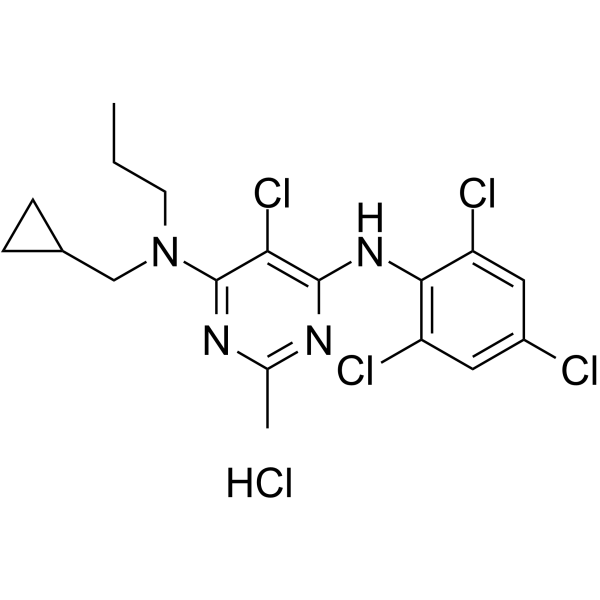 0 ImagesCat. No.: HY-103376CAS No.: 1215766-76-9NBI-27914 (hydrochloride) is a selective Corticotropin-Releasing Factor 1 (CRF1) receptor antagonist with a Ki value of 1.7 nM.
-
Urocortin III (human) TFA
 0 ImagesCat. No.: HY-P3019AUrocortin III (human) TFA is a corticotropin-releasing factor (CRF)-related peptide. Urocortin III (human) TFA preferentially binds and activates CRF-R2 and has a discrete central nervous system and peripheral distribution. Urocortin III (human) TFA potently binds to type 2 CRF receptors, specifically mCRF2β (Ki = 13.5 nM) and rCRF2α (Ki = 21.7 nM), while demonstrating negligible affinity for hCRF1 (Ki >100 nM). Urocortin III (human) TFA mediates somatostatin-dependent negative feedback control of Insulin (human) (HY-P0035) secretion.
-
NBI 35965 methanesulfonate
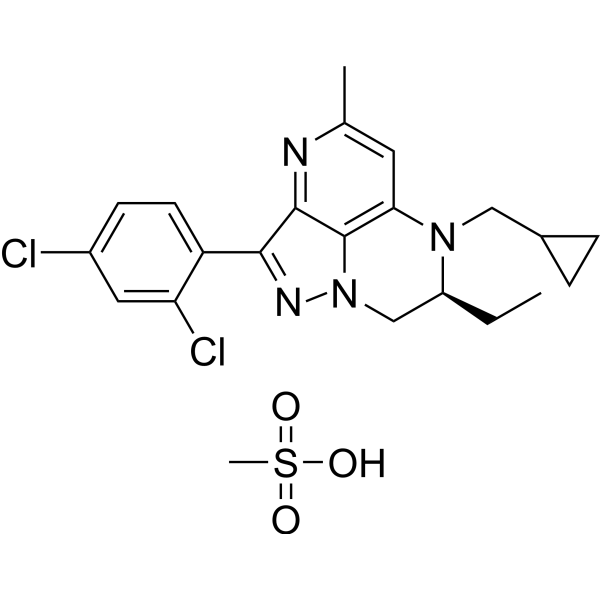 0 ImagesCat. No.: HY-103378CAS No.: 603151-83-3NBI 35965 methanesulfonate is a selective, orally active and brain-penetrant corticotropin-releasing factor receptor 1 (CRF1) antagonist with a Ki value of 4 nM and a pKi value of 8.5. NBI 35965 methanesulfonate does not inhibit CRF2. NBI 35965 methanesulfonate reduces CRF or stress-induced adrenocorticotropic hormone (ACTH) production in vivo with pIC50 values of 7.1 and 6.9, respectively. NBI 35965 methanesulfonate shows anxiolytic effects.
-
Emicerfont
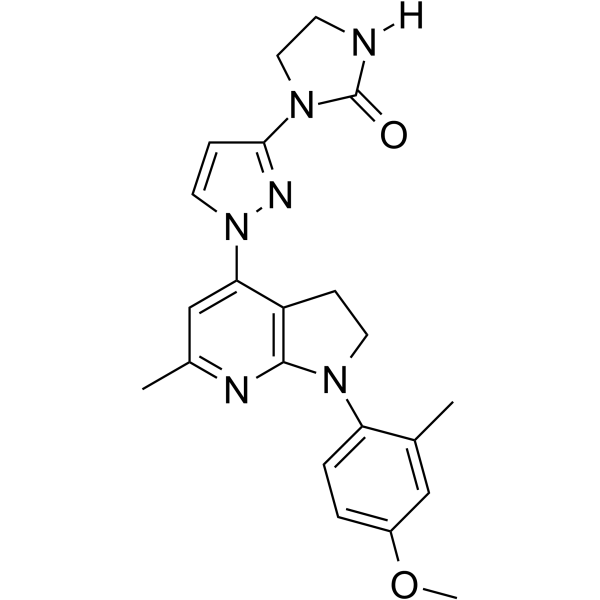 0 ImagesSynonyms: GW876008Emicerfont is a corticotropin-releasing factor type 1 (CRF1) receptor antagonist with an IC50 of 66 nM.
-
Urocortin III (human)
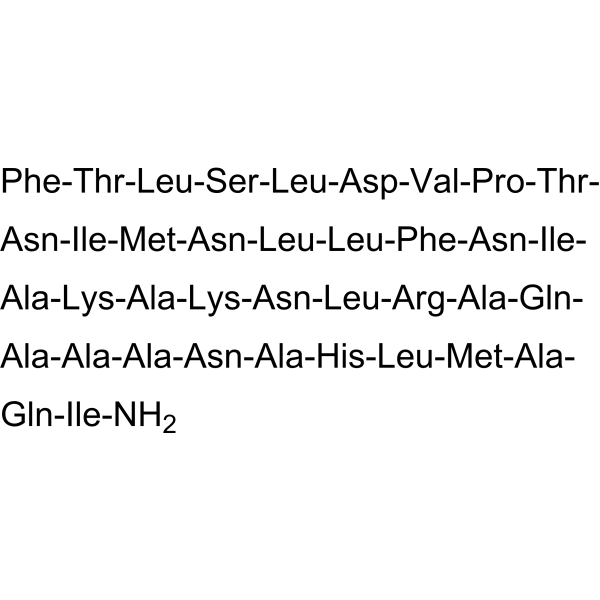 0 ImagesUrocortin III (human) is a corticotropin-releasing factor (CRF)-related peptide. Urocortin III (human) preferentially binds and activates CRF-R2 and has a discrete central nervous system and peripheral distribution. Urocortin III (human) potently binds to type 2 CRF receptors, specifically mCRF2β (Ki = 13.5 nM) and rCRF2α (Ki = 21.7 nM), while demonstrating negligible affinity for hCRF1 (Ki >100 nM). Urocortin III (human) mediates somatostatin-dependent negative feedback control of Insulin (human) (HY-P0035) secretion[1][2].
-
NVS-CRF38
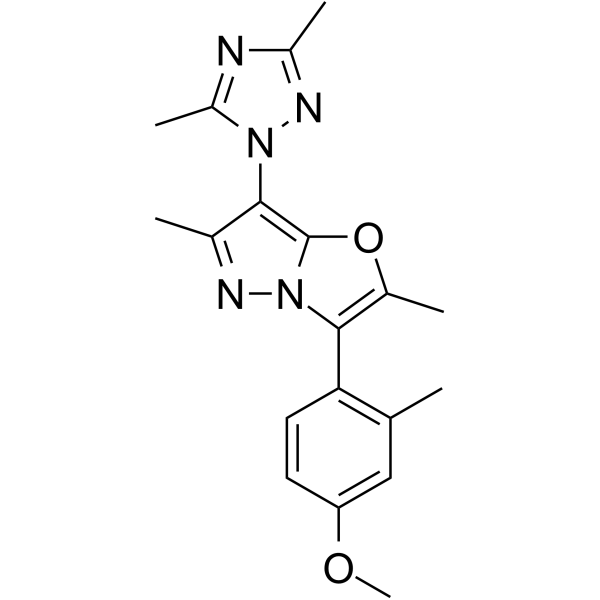 0 ImagesCat. No.: HY-12339CAS No.: 1207258-55-6NVS-CRF38 is a novel corticotropin-releasing factor receptor 1 (CRF1) antagonist with low water solubility.
-
1,1′-Ethylidenebis[L-tryptophan]
![1,1′-Ethylidenebis[L-tryptophan]](https://file.medchemexpress.com/product_pic/hy-w585843.gif "Click to View 1,1′-Ethylidenebis[L-tryptophan] Product Detail") 0 ImagesCat. No.: HY-W585843CAS No.: 132685-02-01,1′-Ethylidenebis[L-tryptophan] is an orally active amino acid analog. 1,1′-Ethylidenebis[L-tryptophan] promotes the release of adrenocorticotropic hormone and corticosterone in rat plasma, and transiently inhibits CRH mRNA in the paraventricular nucleus of the hypothalamus via glucocorticoid negative feedback. 1,1′-Ethylidenebis[L-tryptophan] induces multi-tissue inflammation and fibrosis in rodents and human cells, increases the number of degranulated mast cells, and activates the IL-5 pathway in lymphocytes. 1,1′-Ethylidenebis[L-tryptophan] is activated by tryptophanyl-tRNA synthetase and replaces L-tryptophan during translation; it also interferes with tryptophan metabolism in mice via the kynurenine pathway and dynamically alters their plasma quinolinic acid levels. 1,1′-Ethylidenebis[L-tryptophan] can be used for studies on metabolism-related mechanisms.
0 ImagesCat. No.: HY-W585843CAS No.: 132685-02-01,1′-Ethylidenebis[L-tryptophan] is an orally active amino acid analog. 1,1′-Ethylidenebis[L-tryptophan] promotes the release of adrenocorticotropic hormone and corticosterone in rat plasma, and transiently inhibits CRH mRNA in the paraventricular nucleus of the hypothalamus via glucocorticoid negative feedback. 1,1′-Ethylidenebis[L-tryptophan] induces multi-tissue inflammation and fibrosis in rodents and human cells, increases the number of degranulated mast cells, and activates the IL-5 pathway in lymphocytes. 1,1′-Ethylidenebis[L-tryptophan] is activated by tryptophanyl-tRNA synthetase and replaces L-tryptophan during translation; it also interferes with tryptophan metabolism in mice via the kynurenine pathway and dynamically alters their plasma quinolinic acid levels. 1,1′-Ethylidenebis[L-tryptophan] can be used for studies on metabolism-related mechanisms.
-
R121919 hydrochloride
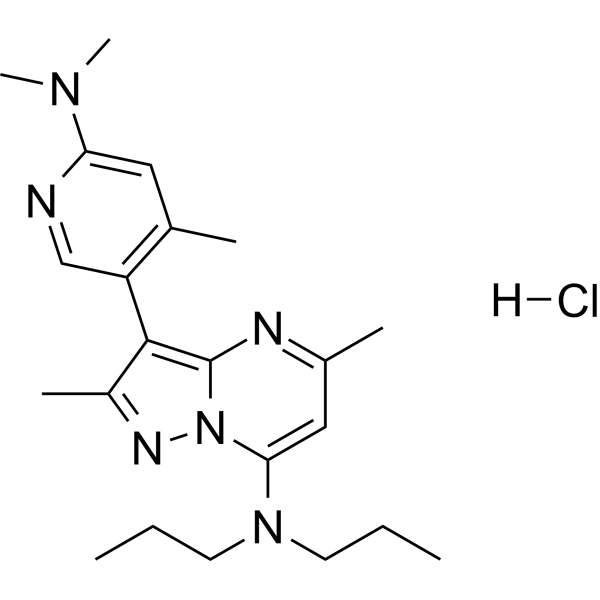 0 ImagesCat. No.: HY-115645CAS No.: 195055-66-4Synonyms: NBI30775 hydrochlorideR121919 (NBI30775) hydrochloride is a potent and selective CRF1R antagonist with a Ki of 2 to 5 nM. R121919 hydrochloride has antidepressant and anxiolytic effects. R121919 hydrochloride alleviates defensive withdrawal in rats.
-
CP 154526
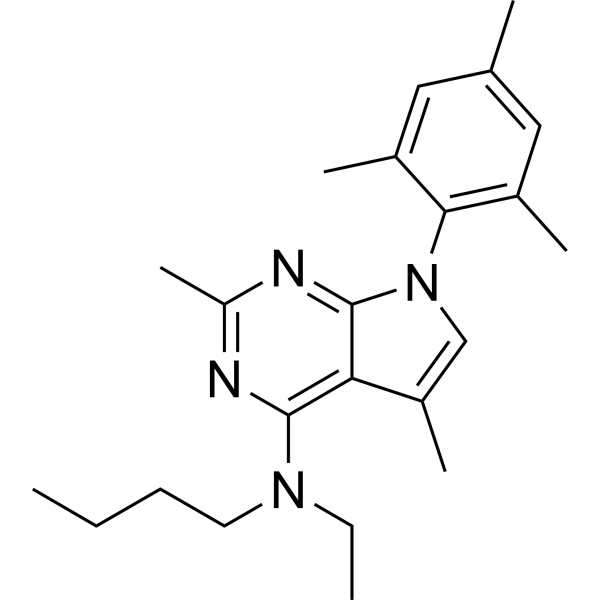 0 ImagesCat. No.: HY-12130CAS No.: 157286-86-7CP 154526 is a potent, brain-penetrant and selective corticotropin-releasing factor receptor 1 (CRF1) antagonist with a Ki of 2.7 nM. CP 154526 shows selective for CRF1 over CRF2 (Ki = >10 μM). CP 154526 has anxiolytic activities.
-
DMP 904
 0 ImagesCat. No.: HY-12132CAS No.: 202579-74-6DMP 904 is a noncompetitive full corticotropin-releasing factor receptor (CRFR) antagonist. DMP 904 can inhibit CRF-stimulated adenylate cyclase activity and ACTH release. DMP 904 exhibits anti-depressant and anti-anxiety activity.
-
CRF, bovine
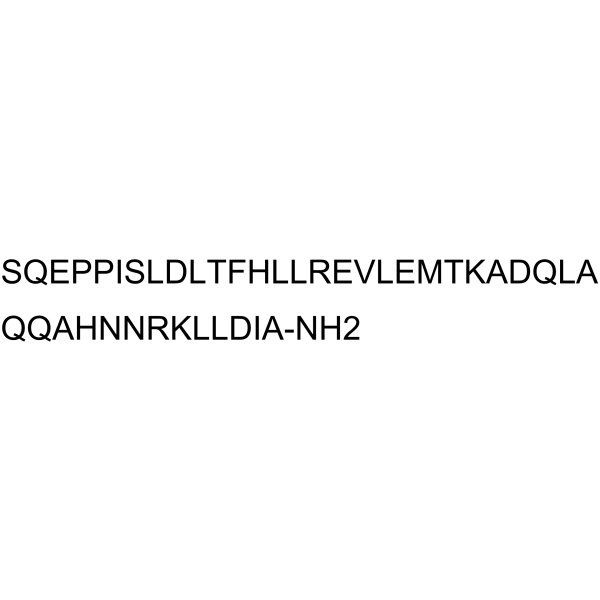 0 ImagesCat. No.: HY-P1533CAS No.: 92307-52-3Synonyms: Corticotropin Releasing Factor bovineCRF, bovine is a potent agonist of CRF receptor, and displaces [125I-Tyr]ovine CRF with a Ki of 3.52 nM.
-
CP 376395 hydrochloride
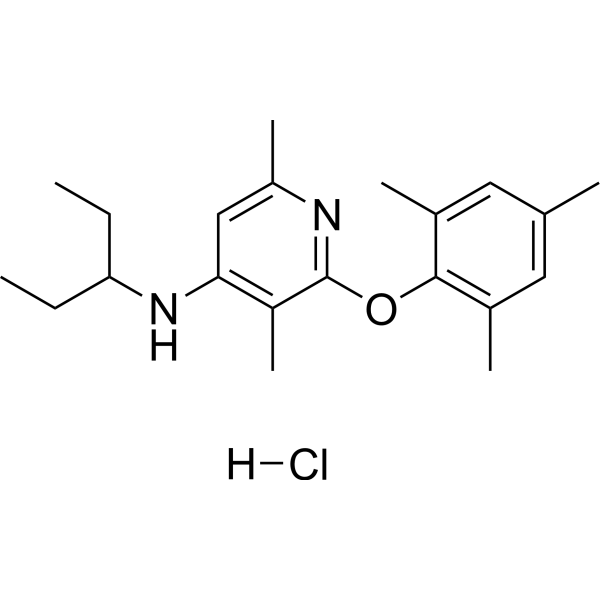 0 ImagesCat. No.: HY-103379CAS No.: 1013933-37-3CP 376395 hydrochloride is a potent, selective, and brain-penetrable Corticotropin releasing factor 1 (CRF1) receptor antagonist.
-
BMS-665053
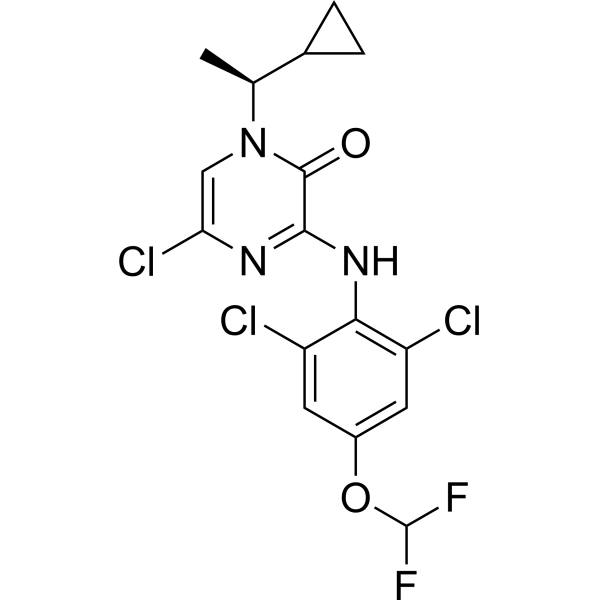 0 ImagesCat. No.: HY-14132CAS No.: 1173435-64-7BMS-665053 is a corticotropin-releasing factor-1 (CRF1) receptor antagonist (IC50 = 1.0 nM). BMS-665053)11 is a potent inhibitor of CRF-stimulated cyclic adenosine monophosphate (cAMP) production in human Y-79 retinoblastoma cells (IC50 = 4.9 nM).
-
NGD 98-2 hydrochloride
 0 ImagesCat. No.: HY-110310CAS No.: 1780390-58-0NGD 98-2 hydrochloride is an orally active corticotropin releasing factor-1 (CRF-1) receptor antagonist
-
Mepixanox
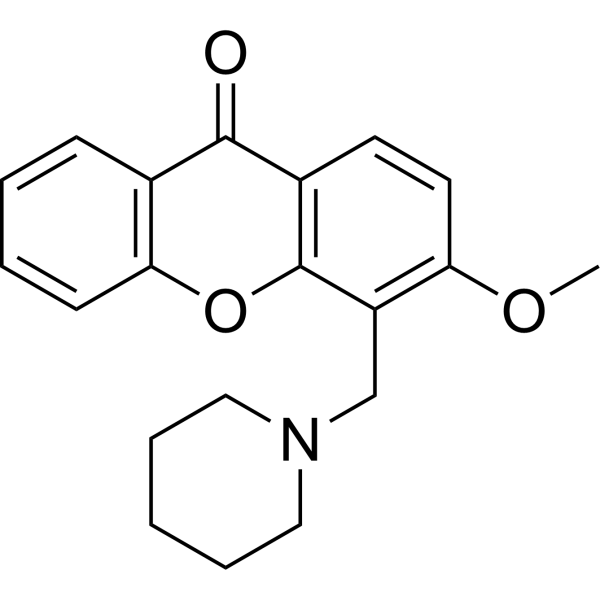 0 ImagesCat. No.: HY-100150CAS No.: 17854-59-0Synonyms: PimexoneMepixanox (Pimexone) is an analeptic agent used in respiratory and cardiorespiratory insufficiency.
-
E-2508 free base
 0 ImagesCat. No.: HY-119114CAS No.: 685885-75-0E-2508 free base is an orally active and highly selective corticotropin-releasing factor type 1 receptor (CRF1) antagonist with anxiolytic effects (Ki=11 nM). E-2508 free base blocks CRF-induced cAMP accumulation via CRF1 receptor inhibition. E-2508 free base is promising for research of stress-related psychiatric disorders, such as anxiety and depression.
-
BMS-763534
 0 ImagesCat. No.: HY-120564CAS No.: 1188407-40-0BMS-763534 is a CRF1 antagonist that inhibits neurological disorders such as depression and anxiety..
-
BMS-764459
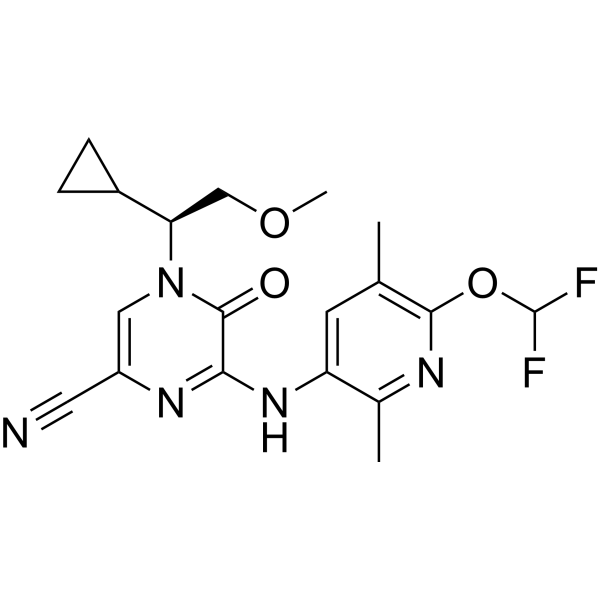 0 ImagesCat. No.: HY-14225CAS No.: 1188407-45-5BMS-764459 is a CRF1 antagonist. BMS-764459 can be used for the research of neurological disorders such as depression and anxiety. BMS-764459 is also an atypical CYP1A1 inducer.
-
a-Helical Corticotropin Releasing Factor (12-41)
 0 ImagesCat. No.: HY-P3683CAS No.: 158535-55-8a-Helical Corticotropin Releasing Factor (12-41) is a 30 amino acids long, α-helical analogue of corticotropin releasing factor/hormone. Corticotropin releasing factor (CRF) is a hypothalamic hormone, which stimulates the secretion of adrenocorticotrophic hormone (ACTH). a-Helical Corticotropin Releasing Factor (12-41) would suppress the stimulatory effect.



