



-
CRFR Produits associés (61)
Produits associés (61)

-
Antalarmin hydrochloride
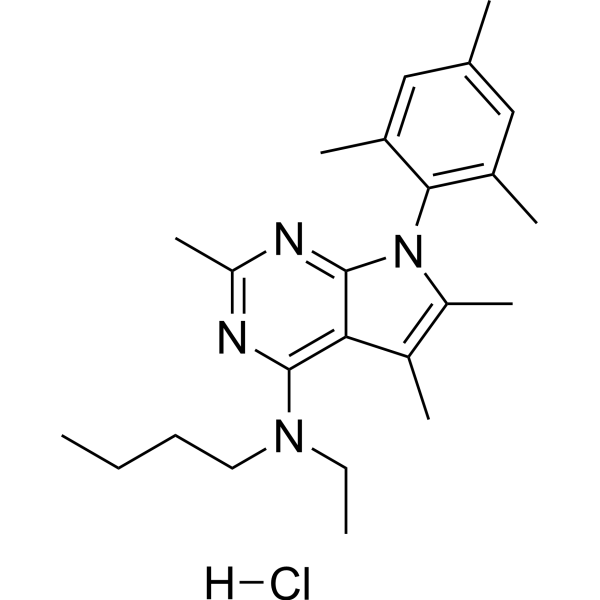 0 ImagesAntalarmin (hydrochloride) is an oral active non-peptide corticotropin-releasing hormone receptor 1 (CRHR1) antagonist with a Ki of 1 nM. Antalarmin hydrochloride suppresses CRH-induced ACTH secretion and blocks CRH and novelty induced anxiety-like behavior in animal models. Antalarmin hydrochloride produces anti-inflammatory effects in arthritis models, and suppresses stress-induced gastric ulceration related to irritable bowel syndrome.
-
Corticotropin-releasing factor (human)
 0 ImagesSynonyms: Human CRF; Human corticotropin-releasing factorCorticotropin-releasing factor human (Human CRF) stimulates the synthesis and secretion of adrenocorticotropin in the anterior pituitary.
-
Urocortin, human
 0 ImagesSynonyms: Urocortin (human); Human urocortin; Human urocortin 1; Human urocortin IUrocortin, human, a 40-aa neuropeptide, acts as an agonist of endogenous CRF receptor, with Kis of 0.4, 0.3, and 0.5 nM for hCRF1, rCRF2α and mCRF2β, respectively.
-
Sauvagine TFA
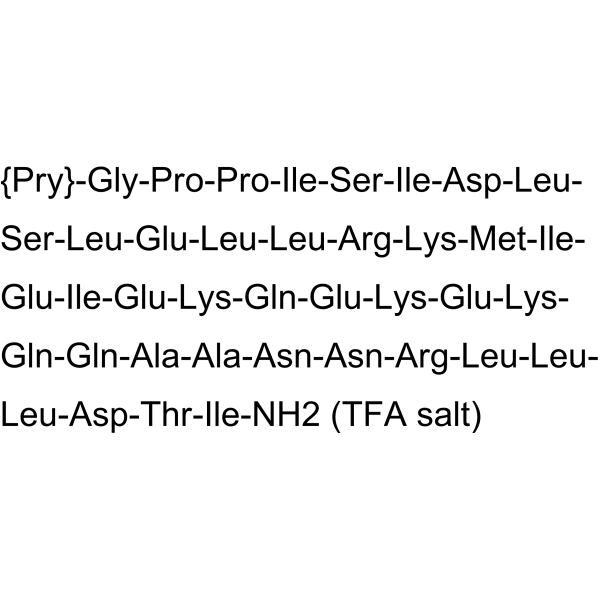 0 ImagesCat. No.: HY-P1298APureté: 99.96%Sauvagine TFA is a corticotropin-releasing factor receptor (CRFR) agonist. Sauvagine TFA activates HM-CRF receptors to stimulate intracellular cAMP accumulation, activates PC-CRF receptors to trigger associated signaling pathways, and stimulates the hypothalamic-pituitary-adrenal axis. Sauvagine TFA can be used for research on central nervous system and blood diseases.
![[Tyr0] Corticotropin Releasing Factor, ovine acetate](https://file.medchemexpress.com/product_pic/hy-p3687a.gif "Click to View [Tyr0] Corticotropin Releasing Factor, ovine acetate Product Detail")
-
Sauvagine
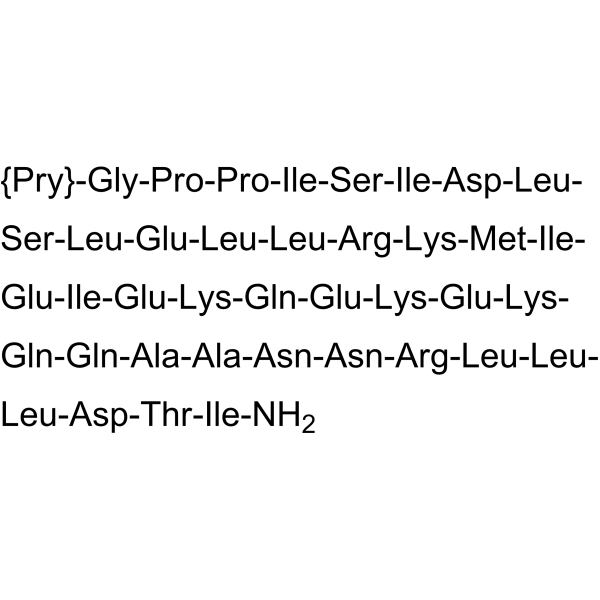 0 ImagesCat. No.: HY-P1298CAS No.: 74434-59-6Sauvagine is a corticotropin-releasing factor receptor (CRFR) agonist. Sauvagine activates HM-CRF receptors to stimulate intracellular cAMP accumulation, activates PC-CRF receptors to trigger associated signaling pathways, and stimulates the hypothalamic-pituitary-adrenal axis. Sauvagine can be used for research on central nervous system and blood diseases.
-
Antalarmin
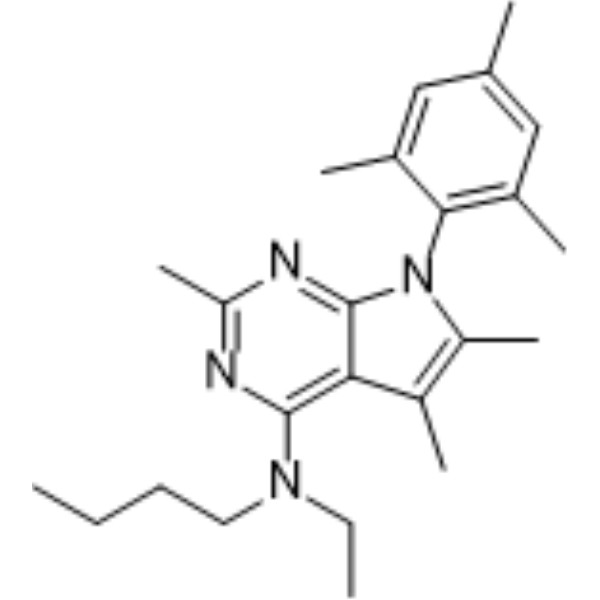 0 ImagesAntalarmin is a selective nonpeptide corticotropin-releasing factor receptor 1 (CRHR1) antagonist with a Ki of 2.7 nM. Antalarmin can pass through the blood–brain barrier.
-
Urocortin III, mouse TFA
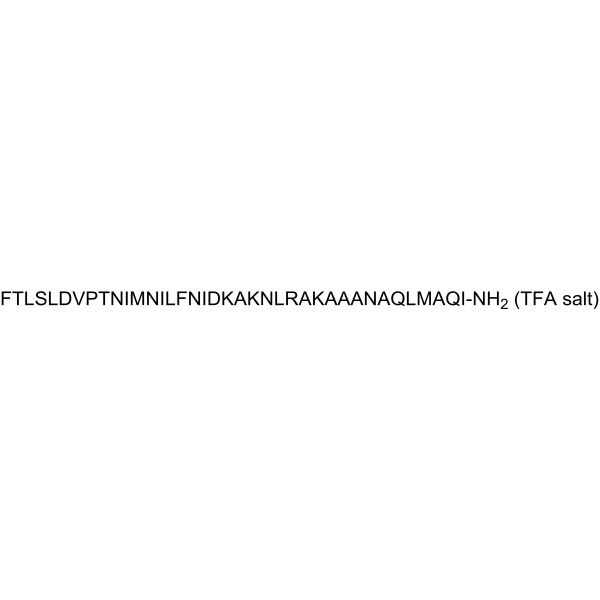 0 ImagesCat. No.: HY-P1858APureté: 98.06%Urocortin III, mouse TFA is a corticotropin-releasing factor (CRF)-related peptide. Urocortin III preferentially binds and activates CRF-R2. Urocortin III (Ucn3) is a known component of the behavioral stress response system. Urocortin III and CRF-R2 in the medial amygdala regulate complex social dynamics.
-
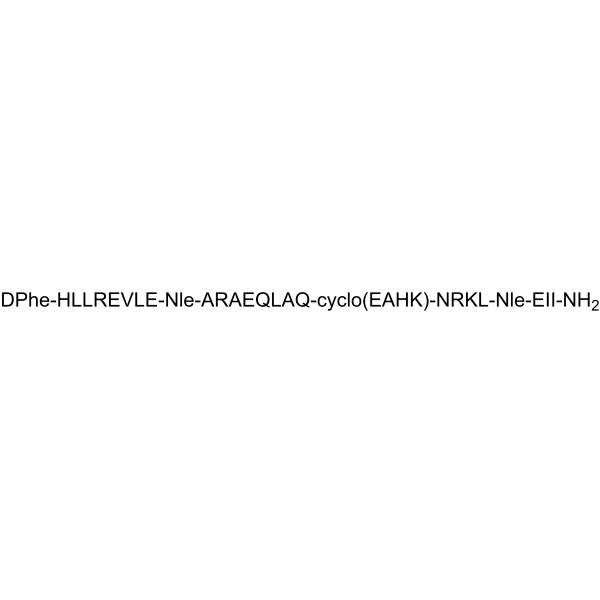
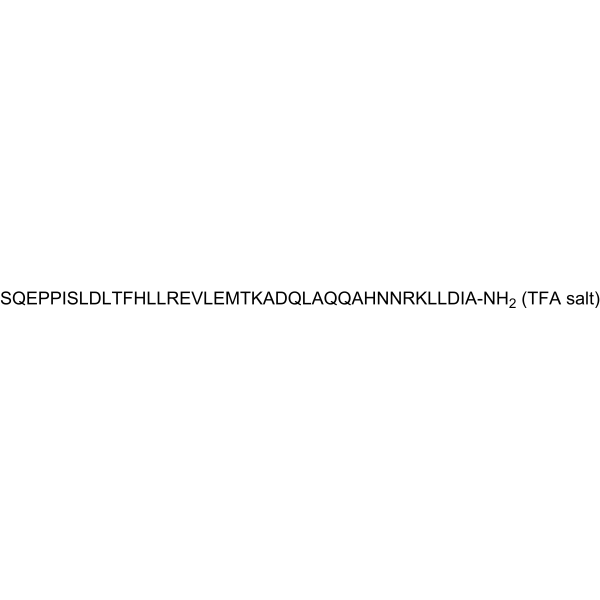
Stressin I
 0 ImagesCat. No.: HY-P1368Pureté: 98.85%Synonyms: Cyclo(31-34)[DPhe12,Nle21,38,Glu31,Lys34]Ac-hCRF(4-41)Stressin I (Cyclo(31-34)[DPhe12,Nle21,38,Glu31,Lys34]Ac-hCRF(4-41)) is a potent CRF1 receptor-selective agonist with a Ki of 1.7 nM. Stressin I induces increases in adrenocorticotropic hormone (ACTH) levels in rats.
-
Pexacerfont
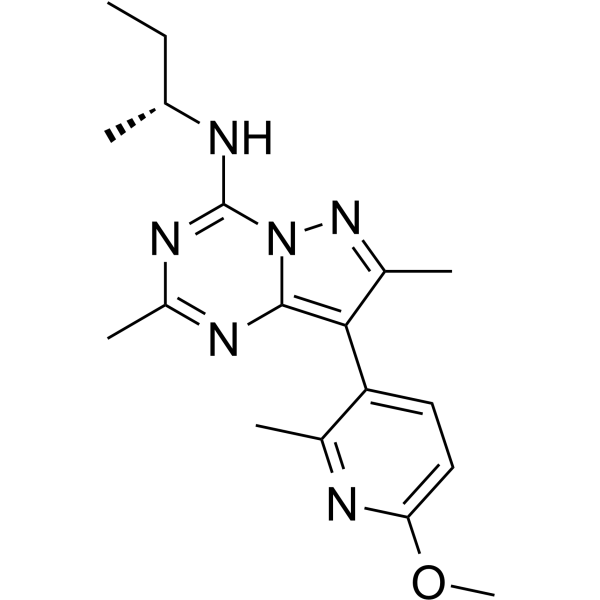 0 ImagesSynonyms: BMS-562086Pexacerfont is a selective corticotropin-releasing factor (CRF1) receptor antagonist with IC50 of 6.1±0.6 nM for human CRF1 receptor.
-
Stressin I TFA
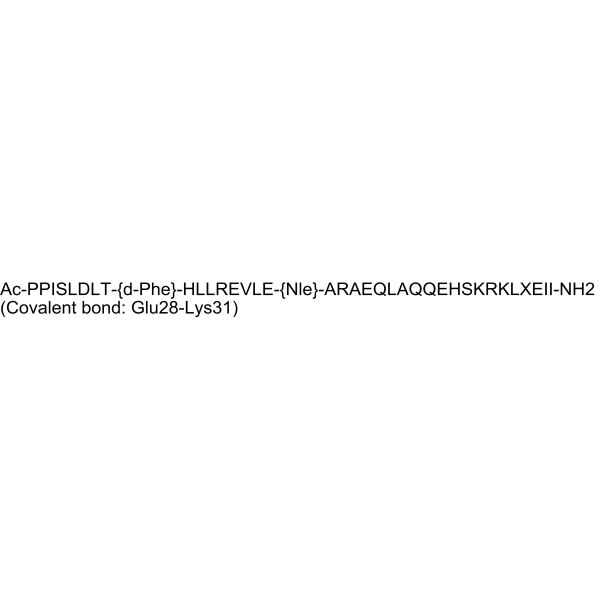 0 ImagesCat. No.: HY-P1368APureté: 98.63%Synonyms: Cyclo(31-34)[DPhe12,Nle21,38,Glu31,Lys34]Ac-hCRF(4-41) TFAStressin I (Cyclo(31-34)[DPhe12,Nle21,38,Glu31,Lys34]Ac-hCRF(4-41)) TFA is a potent CRF1 receptor selective agonist, Ki is 1.7 nM. Stressin I induces an increase in adrenocorticotropic hormone (ACTH) levels in rats.
-
α-Helical CRF(9-41)
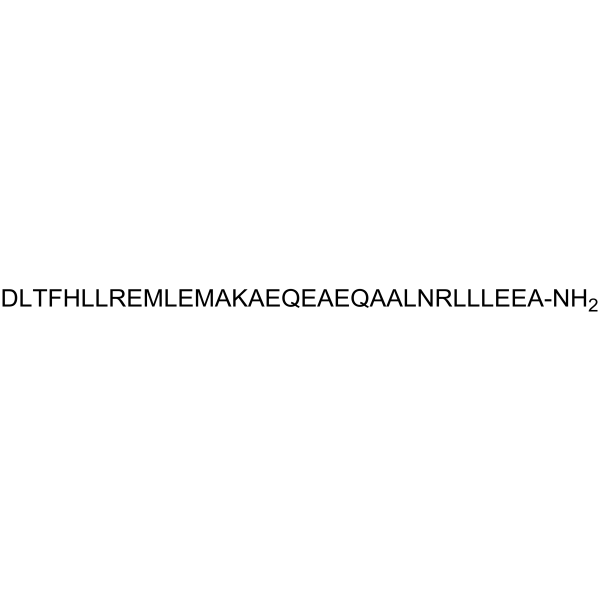 0 Imagesα-Helical CRF(9-41) is a competitive CRF2 receptor antagonist with KB of ~100 nM. α-Helical CRF(9-41) is also a partial agonist of CRF1 receptor with an EC50 of 140 nM.
-
Tildacerfont-d8
 0 ImagesSynonyms: SPR001-d8; LY2371712-d8Tildacerfont-d8 (SPR001-d8; LY2371712-d8) is a deuterium labeled Tildacerfont (HY-113603). Tildacerfont (SPR001; LY2371712) is an orally active, blood-brain barrier-penetrant selective corticotropin-releasing factor type 1 (CRF1) receptor antagonist. Tildacerfont selectively blocks CRF1 receptors, thereby inhibiting the release of pituitary adrenocorticotropic hormone (ACTH). Tildacerfont can be used in research related to congenital adrenal hyperplasia.
-
[DPro5] Corticotropin Releasing Factor, human, rat TFA
![[DPro5] Corticotropin Releasing Factor, human, rat TFA](https://file.medchemexpress.com/product_pic/hy-p3684a.gif "Click to View [DPro5] Corticotropin Releasing Factor, human, rat TFA Product Detail") 0 ImagesCat. No.: HY-P3684APureté: 98.71%[DPro5] Corticotropin Releasing Factor, human, rat TFA is a selective corticotropin releasing factor/hormone R2 (CRH-R2)agonist. [DPro5] Corticotropin Releasing Factor, human, rat TFA fails to cause the typical anxiogenic effect, but modulates learning and memory processes in rat.
0 ImagesCat. No.: HY-P3684APureté: 98.71%[DPro5] Corticotropin Releasing Factor, human, rat TFA is a selective corticotropin releasing factor/hormone R2 (CRH-R2)agonist. [DPro5] Corticotropin Releasing Factor, human, rat TFA fails to cause the typical anxiogenic effect, but modulates learning and memory processes in rat.
-
Neuropeptide SF (human)
 0 ImagesSynonyms: Neuropeptide NPFF (human)Neuropeptide SF human augments paraventricular corticotrophin-releasing hormone (CRH) release and increases adrenocorticotropic hormone (ACTH) and corticosterone levels in the plasma. Neuropeptide SF human play a physiologic role in the regulation of such circadian functions as the activity of motor centers and the HPA axis, through the release of CRH.
-
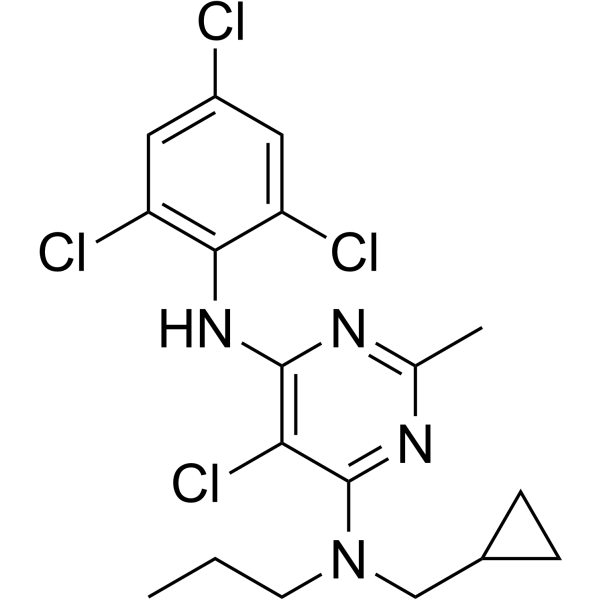
DMP 696
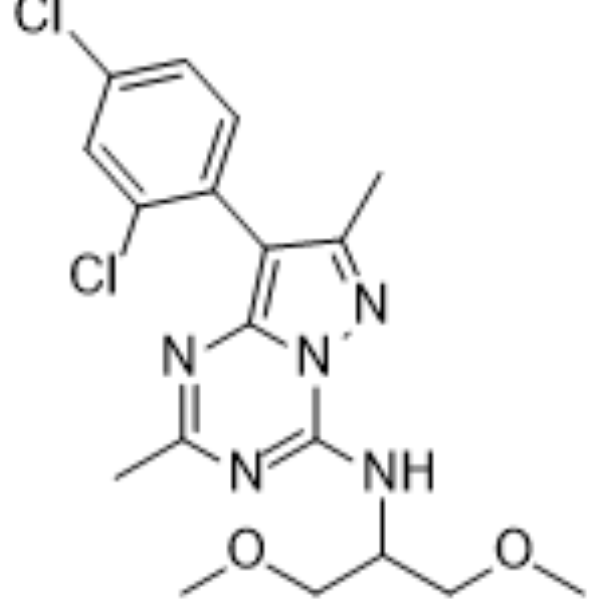 0 ImagesDMP 696 is a selective corticotropin-releasing hormone receptor 1 (CRHR1) antagonist, used for the treatment of anxiety and depression.
-
CRF(6-33)(human)
 0 ImagesCRF(6-33)(human) is a CRF binding protein (CRF-BP) ligand inhibitor. CRF(6-33)(human) competitively binds the CRF-BP but not the post-synaptic CRF receptors. CRF(6-33)(human) has anti-obesity effect.



