



Astressin
Based on 3 publication(s) in Google Scholar
Astressin is a potent corticotropin releasing factor (CRF) antagonist.
Para uso exclusivo en investigación. No vendemos a pacientes.
- Pureza : 98.37%
- No. CAS: 170809-51-5
- Fòrmula: C161H269N49O42
- Peso molecular:3563.16
-
Almacenamiento:
Sealed storage, away from moisture and light, under nitrogen.
Powder -80°C, 2 years , -20°C, 1 year* In solvent : -80°C, 6 months; -20°C, 1 month (sealed storage, away from moisture and light, under nitrogen)

To place orders, for customer services and technical support, please contact: MedChemExpress USA
Tel: 609-228-6898 E-mail: [email protected] [email protected]


-
 Actividad biológica
-
Chemical Information
-
Solvente y solubilidad
- Pureza y Documentación
- Referencias
-
 Help & FAQs


-
HY-P1295
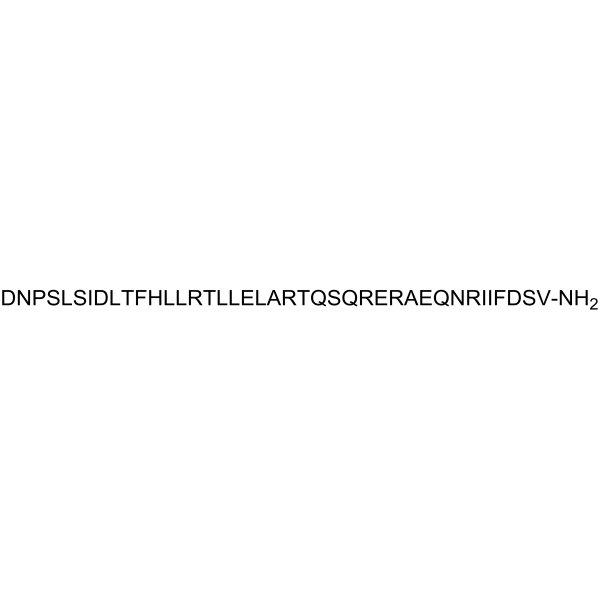
Urocortin, humanCRF Receptor Agonist -

HY-12129
CP 154526 hydrochlorideCRF1 Antagonist -

HY-P0086
Corticotropin-releasing factor (human)CRFR Modulator -
HY-P1294
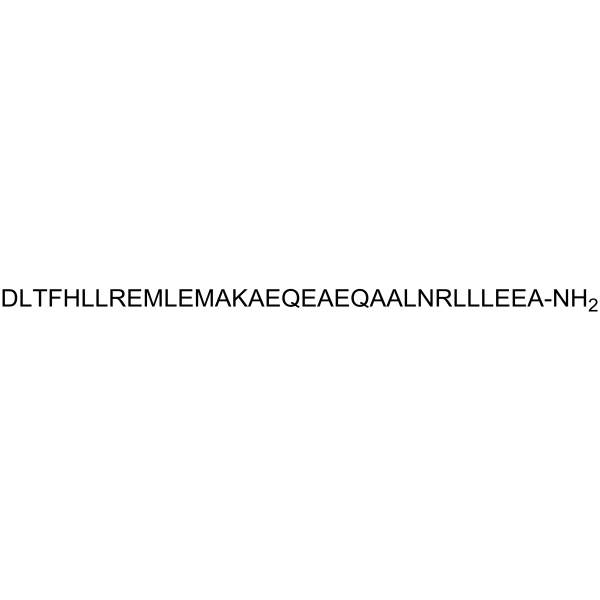
α-Helical CRF(9-41)CRFR Modulator -
HY-P1107
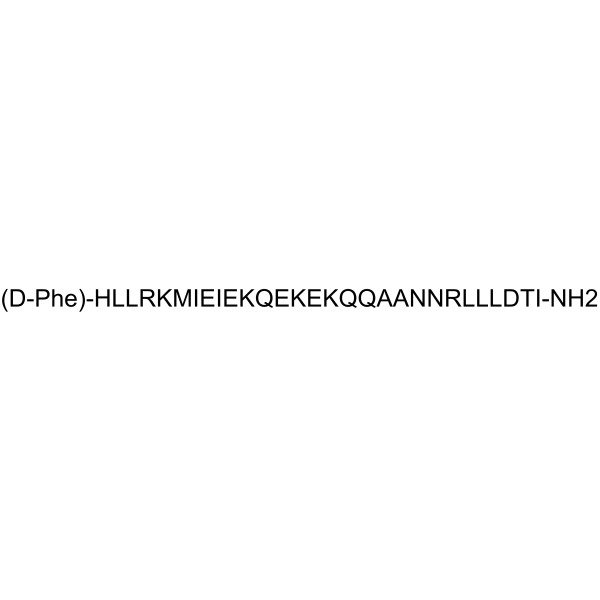
Antisauvagine-30CRF2 Receptor Antagonist -
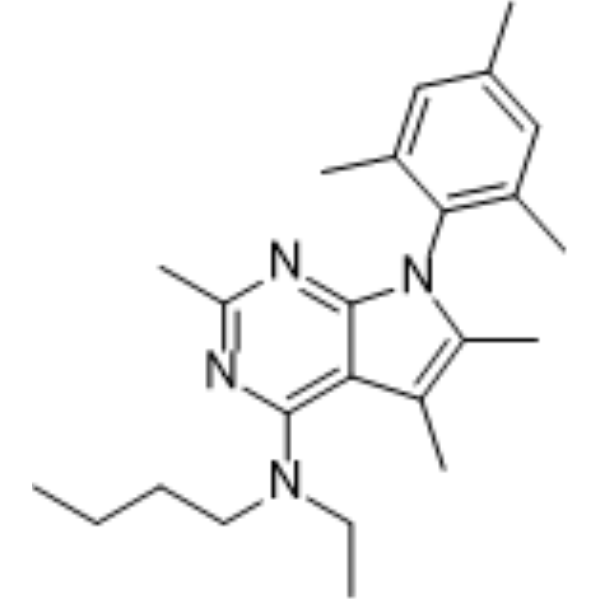
HY-124475
AntalarminCRHR1 Antagonist -
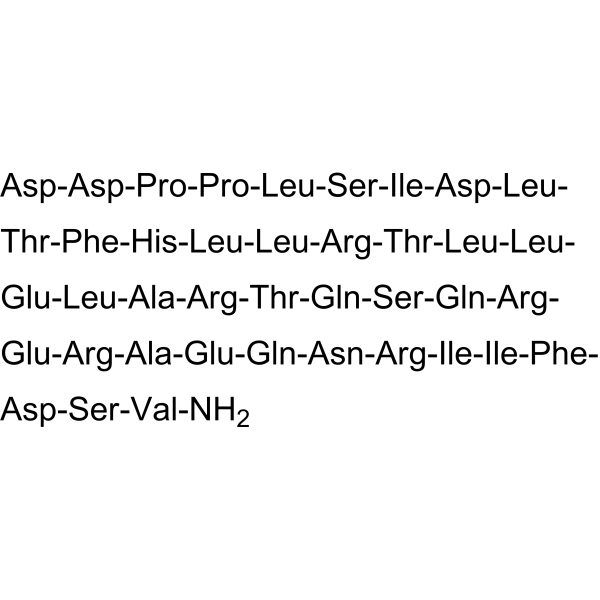
HY-P1296
Urocortin, ratCRFR Agonist -

HY-P1297
CRF(6-33)(human)CRF-BP Inhibitor -
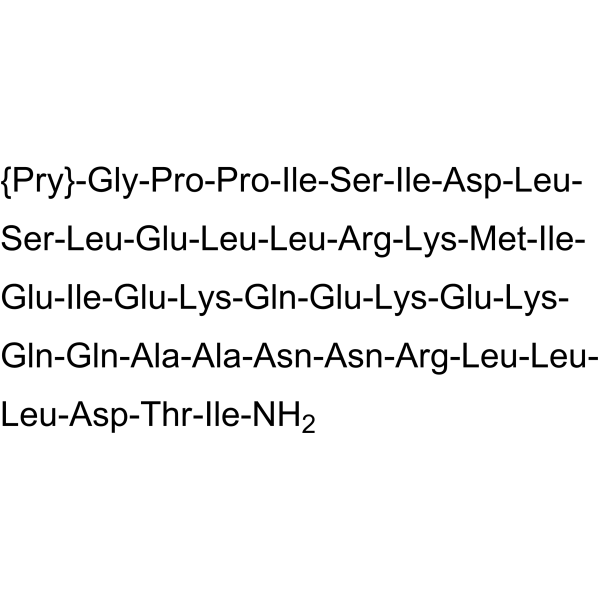
HY-P1298
SauvagineCRFR Agonist -
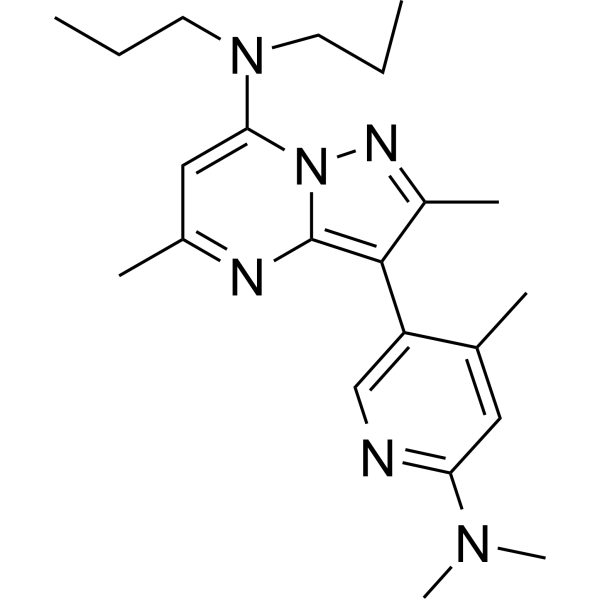
HY-14127
R121919CRF1 Receptor Antagonist -
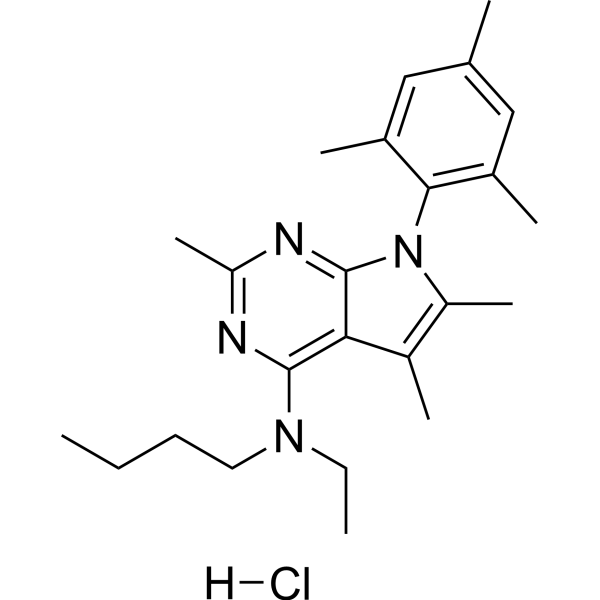
HY-103377
Antalarmin hydrochlorideCRHR1 Antagonist -
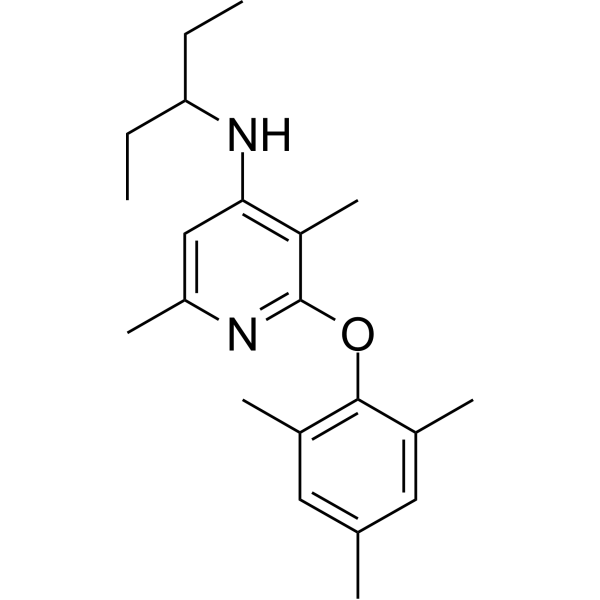
HY-14130
CP 376395CRF1 Receptor Antagonist
Publications Citing Use of MedChemExpress (MCE) Astressin
More

Actividad biológica
Descripciòn
In Vitro
Astressin has low affinity for the CRF binding protein and high affinity (Ki=2 nM) for the cloned pituitary receptor. Astressin shows high affinity for cloned human CRF-RA1 stably expressed in CHO cells and high potency to inhibit ACTH secretion[1].
MedChemExpress (MCE) has not independently confirmed the accuracy of these methods. They are for reference only.
In Vivo
MedChemExpress (MCE) has not independently confirmed the accuracy of these methods. They are for reference only.
Ensayo clínico
| NCT Number | Sponsor | Condition | Start Date |
Phase

|
|---|---|---|---|---|
| NCT01329991 | 2011-05 | PHASE1 |


Chemical Information
-
No. CAS 170809-51-5
-
Appearance Solid
-
Peso molecular 3563.16
-
Fòrmula C161H269N49O42
-
Color White to off-white
-
Sequence Shortening
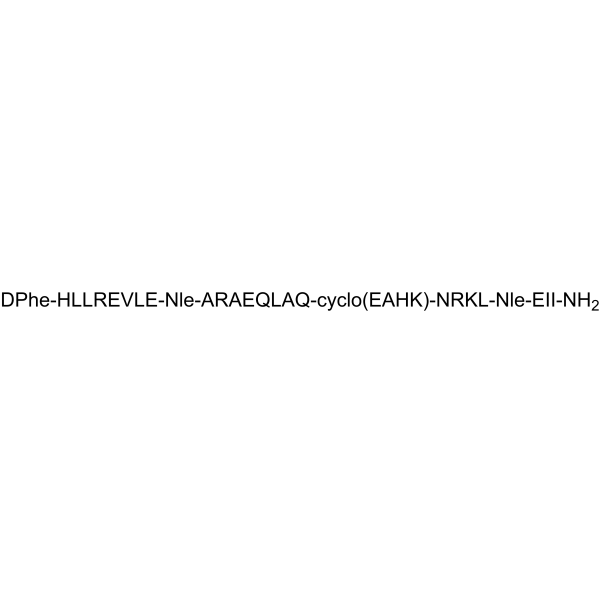
DPhe-HLLREVLE-Nle-ARAEQLAQ-cyclo(EAHK)-NRKL-Nle-EII-NH2
-
Envío
Room temperature in continental US; may vary elsewhere.
-
Almacenamiento
Sealed storage, away from moisture and light, under nitrogen
Powder -80°C 2 years -20°C 1 year * In solvent : -80°C, 6 months; -20°C, 1 month (sealed storage, away from moisture and light, under nitrogen)


Publications (3)
-
Journal Impact Factor
-
Most Recent
-
Nat Commun
Hypothalamus-sympathetic-liver axis mediates the early phase of stress-induced hyperglycemia in the male mice. [Abstract]2024 Oct 5;15(1):8632. PMID: 39366937 -
Lab Anim (NY)
2024 Jun;53(6):148-159. PMID: 38806681 -


Solvente y solubilidad
In Vitro:
H2O : 18.18 mg/mL (5.10 mM; ultrasonic and adjust pH to 4 with HCl)
Please refer to the solubility information to select the appropriate solvent. Once prepared, please aliquot and store the solution to prevent product inactivation from repeated freeze-thaw cycles.
Storage method and period of stock solution: -80°C, 6 months; -20°C, 1 month (sealed storage, away from moisture and light, under nitrogen). When stored at -80°C, please use it within 6 months. When stored at -20°C, please use it within 1 month.
* Note: If you choose water as the stock solution, please dilute it to the working solution, then filter and sterilize it with a 0.22 μm filter before use.
Please refer to the solubility information to select the appropriate solvent. Once prepared, please aliquot and store the solution to prevent product inactivation from repeated freeze-thaw cycles.
Storage method and period of stock solution: -80°C, 6 months; -20°C, 1 month (sealed storage, away from moisture and light, under nitrogen). When stored at -80°C, please use it within 6 months. When stored at -20°C, please use it within 1 month.
* Note: If you choose water as the stock solution, please dilute it to the working solution, then filter and sterilize it with a 0.22 μm filter before use.
Concentration (start) × Volume (start) = Concentration (final) × Volume (final)


Pureza y Documentación
-
Ficha de datos (270 KB)
-
SDS (252 KB)
- English - EN (252 KB)
- Français - FR (252 KB)
- Deutsch - DE (252 KB)
- Norwegian - NO (252 KB)
- Español - ES (252 KB)
- Swedish - SV (252 KB)
- Italian - IT (252 KB)
- Korean - KR (252 KB)
- Portuguese - PT (252 KB)
-
Instrucciones de manejo (2659 KB)
Referencias
[1]. Gulyas J, et al. Potent, structurally constrained agonists and competitive antagonists of corticotropin-releasing factor. Proc Natl Acad Sci U S A. 1995 Nov 7;92(23):10575-9. [Content Brief]
[2]. Spina MG, et al. Behavioral effects of central administration of the novel CRF antagonist astressin in rats. Neuropsychopharmacology. 2000 Mar;22(3):230-9. [Content Brief]
[3]. Maecker H, et al. Astressin, a novel and potent CRF antagonist, is neuroprotective in the hippocampus when administered after a seizure. Brain Res. 1997 Jan 2;744(1):166-70. [Content Brief]


Complete Stock Solution Preparation Table
Please refer to the solubility information to select the appropriate solvent. Once prepared, please aliquot and store the solution to prevent product inactivation from repeated freeze-thaw cycles.
Storage method and period of stock solution: -80°C, 6 months; -20°C, 1 month (sealed storage, away from moisture and light, under nitrogen). When stored at -80°C, please use it within 6 months. When stored at -20°C, please use it within 1 month.
| Optional Solvent | Concentration Solvent Mass | 1 mg | 5 mg | 10 mg | 25 mg |
|---|---|---|---|---|---|
| H2O | 1 mM | 0.2806 mL | 1.4032 mL | 2.8065 mL | 7.0162 mL |
| 5 mM | 0.0561 mL | 0.2806 mL | 0.5613 mL | 1.4032 mL |
* Note: If you choose water as the stock solution, please dilute it to the working solution, then filter and sterilize it with a 0.22 μm filter before use.


Astressin Related Classifications
HY-P0257 Related Classifications
 Powered by Bioz