



CRFR
Corticotropin-releasing Factor Receptor; CRHR
The CRFR (Corticotropin-releasing Factor Receptor, CRHR) belongs to the G-coupled receptor superfamily. Two receptor subtypes, CRF1 receptor and CRF2 receptor, and several splice variants for both receptor subtypes have been discovered. CRF itself has a greater affinity for CRF1 receptors while urocortin 1 (Ucn 1) binds with high affinity to both receptors and Ucn 2 and Ucn 3 both preferentially bind to CRF2 receptors.
Two CRF receptor subtypes are encoded by distinct genes which exhibit diverse alternative pre-mRNA splicing patterns resulting in multiple variants derived from partial or total exon deletions or insertions. With regard to the nine human CRF1 variants, CRF1a-i, described, CRF1a being the main wild type functional receptor while the other isoforms may modulate CRF signaling. For the CRF2, three functionally active splice variants, CRF2a-c, have been described in humans.
CRFR Isoform Specific Products
All Product Categories
-
CRFR Related Products (90)
Related Products (90)

-
CRFR Isoform Comparison
-
CP 376395
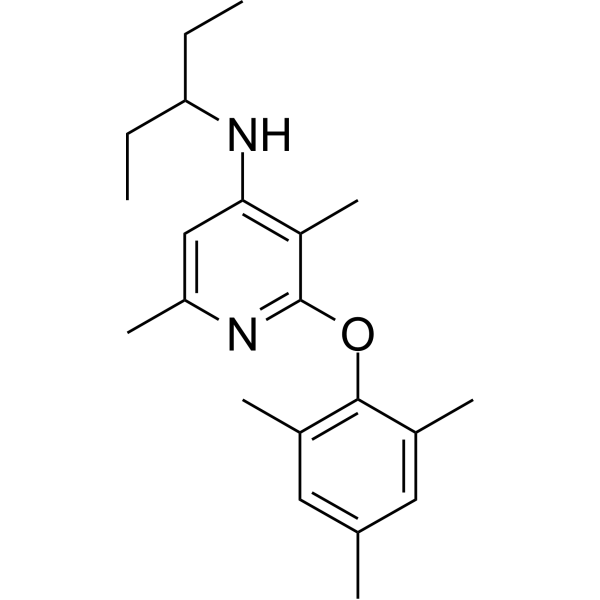 0 ImagesCP 376395 is a potent, selective, and brain-penetrable Corticotropin releasing factor 1 (CRF1) receptor antagonist.
-
Verucerfont
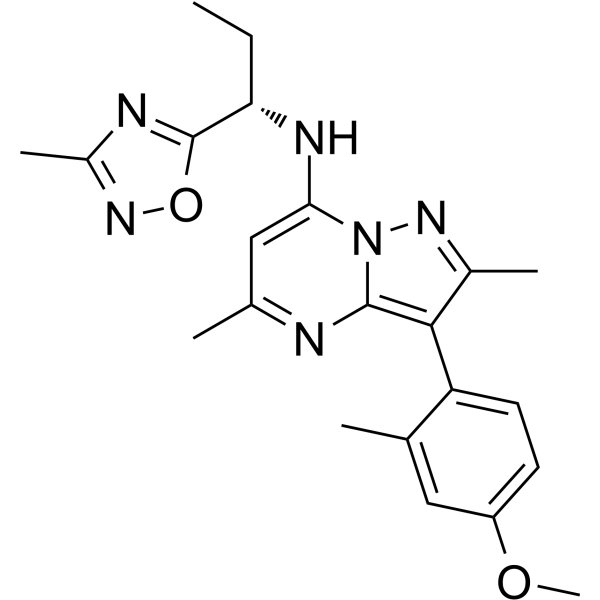 0 ImagesSynonyms: GSK561679Verucerfont is a corticotropin-releasing factor receptor 1 (CRF1) antagonist with IC50s of ~6.1, >1000 and >1000?nM for CRF1, CRF2, and CRF-BP, respectively.
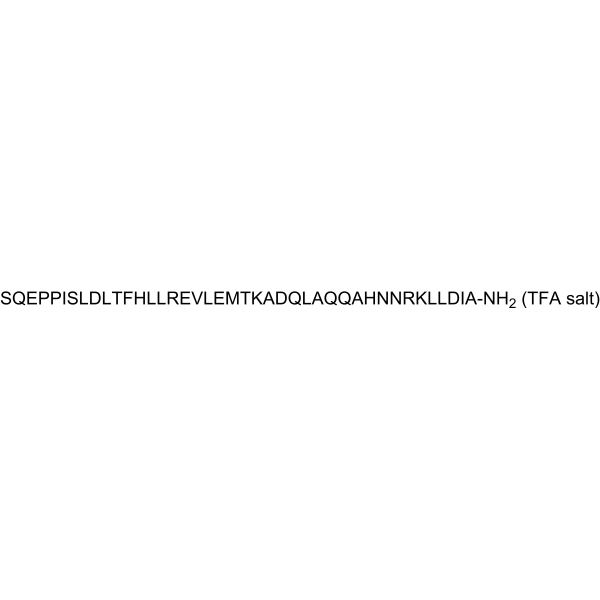
-
Stressin I TFA
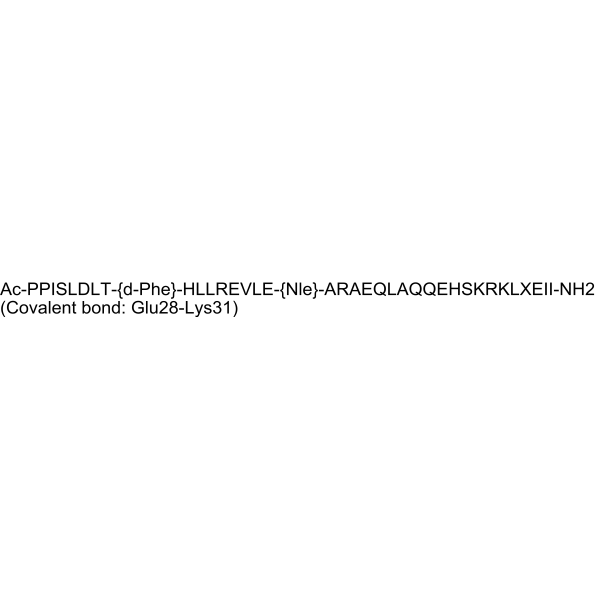 0 ImagesCat. No.: HY-P1368APurity: 98.63%Synonyms: Cyclo(31-34)[DPhe12,Nle21,38,Glu31,Lys34]Ac-hCRF(4-41) TFAStressin I (Cyclo(31-34)[DPhe12,Nle21,38,Glu31,Lys34]Ac-hCRF(4-41)) TFA is a potent CRF1 receptor selective agonist, Ki is 1.7 nM. Stressin I induces an increase in adrenocorticotropic hormone (ACTH) levels in rats.
-
Tetracosactide acetate
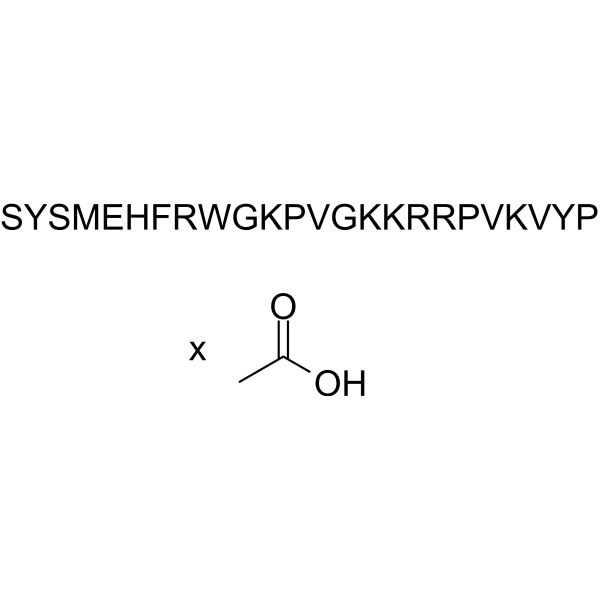 0 ImagesSynonyms: Tetracosactrin acetate; ACTH(1–24) acetateTetracosactide acetate (Tetracosactrin acetate ) is the acetate salt form of Tetracosactide (HY-P0060). Tetracosactide acetate is an analogue of adrenocorticotrophic hormone (ACTH). Tetracosactide acetate is the agonist for melanocortin-4 receptor (MC4R) that activates human MC4R with an EC50 of 0.65 nM. Tetracosactide acetate can stimulate the release of corticosteroids such as cortisol from the adrenal gland. Tetracosactide acetate is currently used for the research of ulcerative colitis and Crohn's disease, juvenile/adult rheumatoid arthritis and osteoarthrosis.
-
Antisauvagine-30
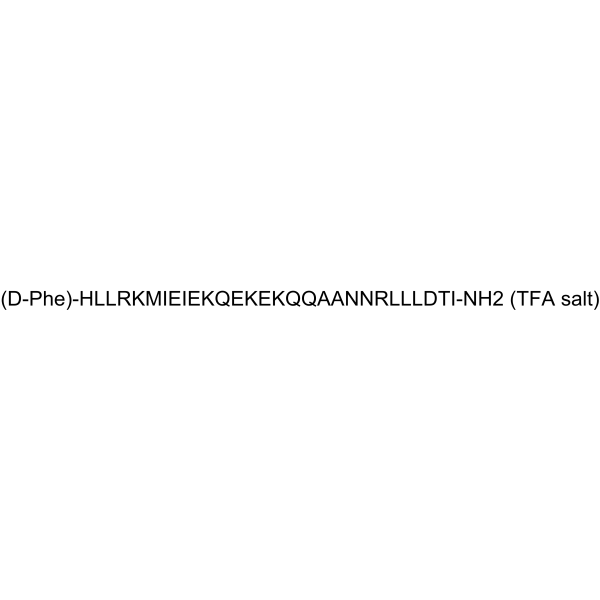
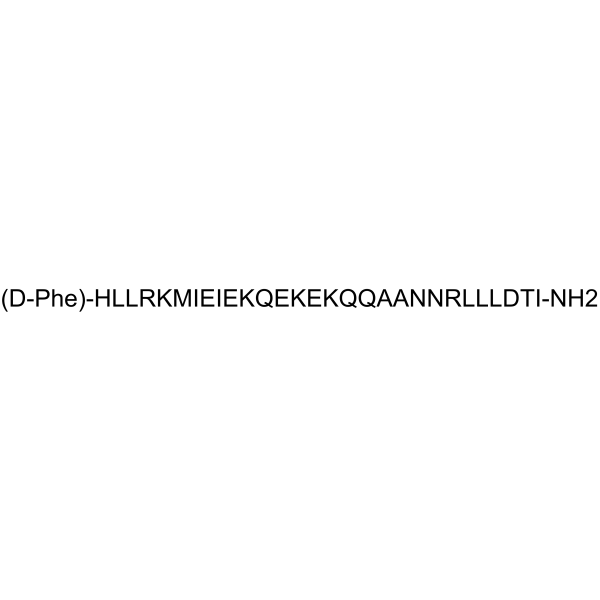 0 ImagesSynonyms: aSvg-30Antisauvagine-30 (aSvg-30) is a potent, competitive and selective CRF2 receptor antagonist with Kd values of 1.4 nM and 153.6 nM for mouse CRF2β and rat CRF1 receptors, respectively.
-
Urocortin II, human acetate
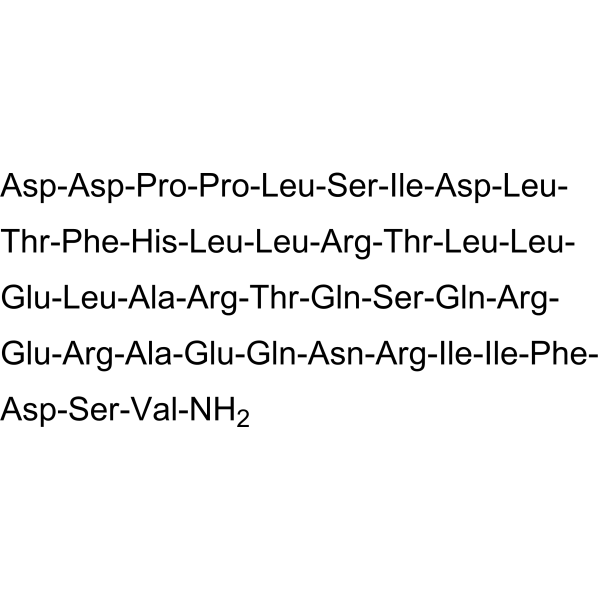
 0 ImagesCat. No.: HY-P1752BUrocortin II, human acetate is a selective endogenous peptide agonist of type-2 corticotropin-releasing factor (CRF2) receptor. Urocortin II, human acetate has an effect of promoting satiet and neuroprotective effect. Urocortin II, human acetate also has bactericidal, antiparasitic and pro-inflammation activity. Urocortin II, human acetate can activate NF-κB pathway and ERK1/2 MAP kinase. Urocortin II, human acetate can reduce pulmonary arterial hypertension and shows cardiac protection effect. Urocortin II, human acetate can be used for the researches of infection, inflammation, metabolic, neurological and cardiovascular disease.
-
α-Helical CRF(9-41)
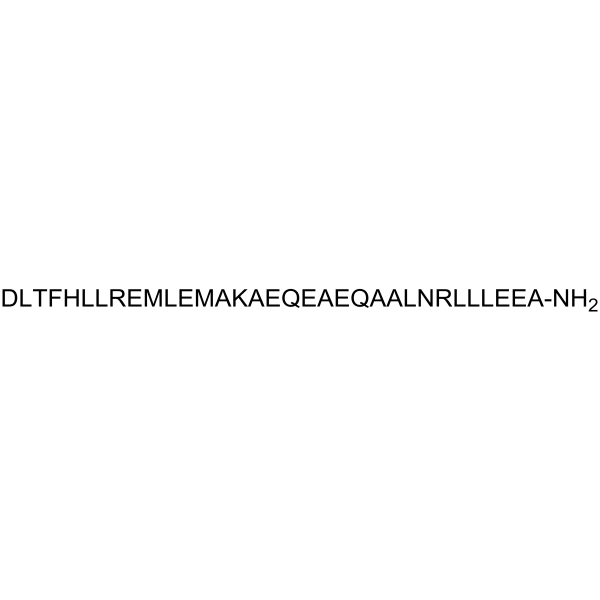 0 Imagesα-Helical CRF(9-41) is a competitive CRF2 receptor antagonist with KB of ~100 nM. α-Helical CRF(9-41) is also a partial agonist of CRF1 receptor with an EC50 of 140 nM.
-
Tildacerfont-d8
 0 ImagesSynonyms: SPR001-d8; LY2371712-d8Tildacerfont-d8 (SPR001-d8; LY2371712-d8) is a deuterium labeled Tildacerfont (HY-113603). Tildacerfont (SPR001; LY2371712) is an orally active, blood-brain barrier-penetrant selective corticotropin-releasing factor type 1 (CRF1) receptor antagonist. Tildacerfont selectively blocks CRF1 receptors, thereby inhibiting the release of pituitary adrenocorticotropic hormone (ACTH). Tildacerfont can be used in research related to congenital adrenal hyperplasia.
-
K41498
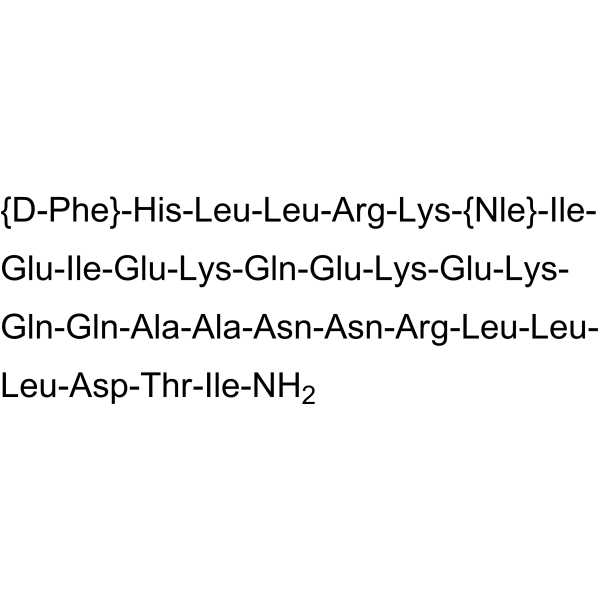 0 ImagesK41498 is a highly selective CRF 2 receptor antagonist, with a Ki of 0.66 nM for human CRF2α receptor and a Ki of 0.62 nM for human CRF2β receptor. K41498 inhibits cAMP accumulation in cells expressing CRF2. K41498 antagonizes the hypotensive response induced by systemic administration of urocortin in conscious rats. K41498 undergoes radioiodination without loss of activity and serves for autoradiographic studies of native CRF2 receptors in rat brain and peripheral tissues.
-
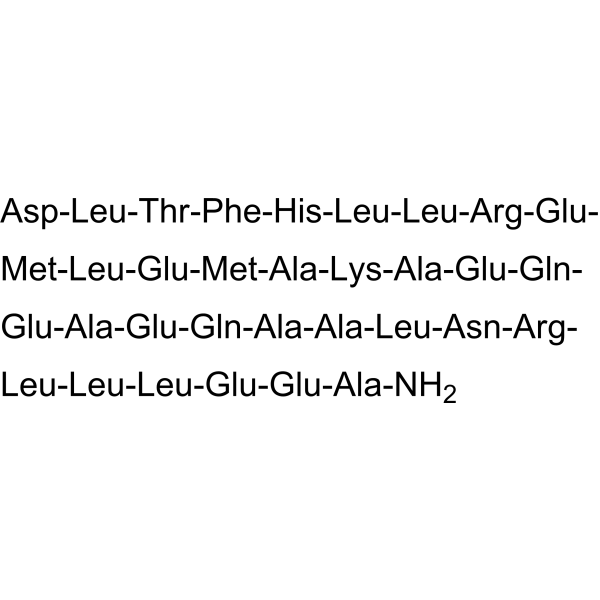
[DPro5] Corticotropin Releasing Factor, human, rat TFA
![[DPro5] Corticotropin Releasing Factor, human, rat TFA](https://file.medchemexpress.com/product_pic/hy-p3684a.gif "Click to View [DPro5] Corticotropin Releasing Factor, human, rat TFA Product Detail") 0 ImagesCat. No.: HY-P3684APurity: 98.71%[DPro5] Corticotropin Releasing Factor, human, rat TFA is a selective corticotropin releasing factor/hormone R2 (CRH-R2)agonist. [DPro5] Corticotropin Releasing Factor, human, rat TFA fails to cause the typical anxiogenic effect, but modulates learning and memory processes in rat.
0 ImagesCat. No.: HY-P3684APurity: 98.71%[DPro5] Corticotropin Releasing Factor, human, rat TFA is a selective corticotropin releasing factor/hormone R2 (CRH-R2)agonist. [DPro5] Corticotropin Releasing Factor, human, rat TFA fails to cause the typical anxiogenic effect, but modulates learning and memory processes in rat.
-
Neuropeptide SF (human)
 0 ImagesSynonyms: Neuropeptide NPFF (human)Neuropeptide SF human augments paraventricular corticotrophin-releasing hormone (CRH) release and increases adrenocorticotropic hormone (ACTH) and corticosterone levels in the plasma. Neuropeptide SF human play a physiologic role in the regulation of such circadian functions as the activity of motor centers and the HPA axis, through the release of CRH.
-
Tildacerfont
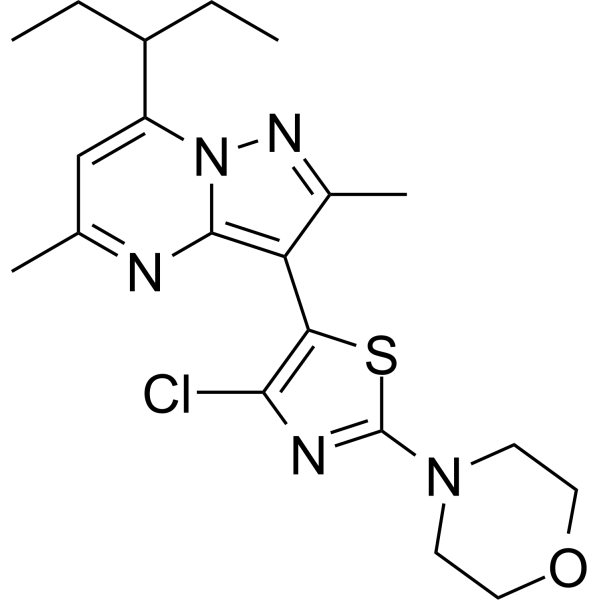 0 ImagesSynonyms: SPR001; LY2371712Tildacerfont (SPR001; LY2371712) is an orally active, blood-brain barrier-penetrant selective corticotropin-releasing factor type 1 (CRF1) receptor antagonist. Tildacerfont selectively blocks CRF1 receptors, thereby inhibiting the release of pituitary adrenocorticotropic hormone (ACTH). Tildacerfont can be used in research related to congenital adrenal hyperplasia.
-
DMP 696
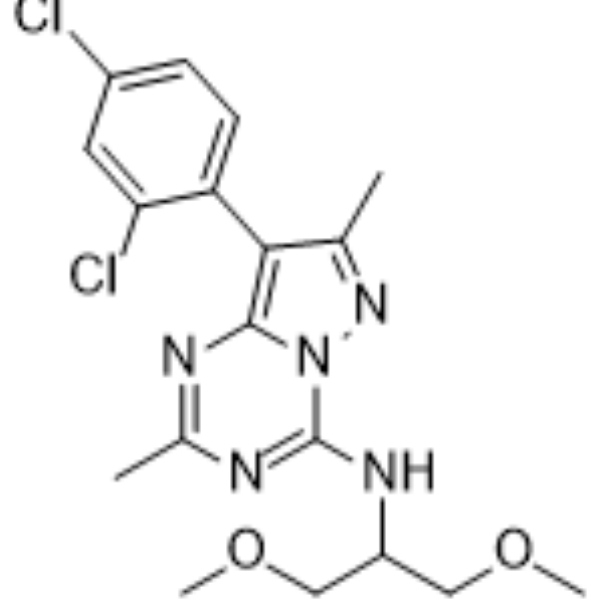 0 ImagesDMP 696 is a selective corticotropin-releasing hormone receptor 1 (CRHR1) antagonist, used for the treatment of anxiety and depression.
-
CRF(6-33)(human)
 0 ImagesCRF(6-33)(human) is a CRF binding protein (CRF-BP) ligand inhibitor. CRF(6-33)(human) competitively binds the CRF-BP but not the post-synaptic CRF receptors. CRF(6-33)(human) has anti-obesity effect.
-
Urotensin I TFA
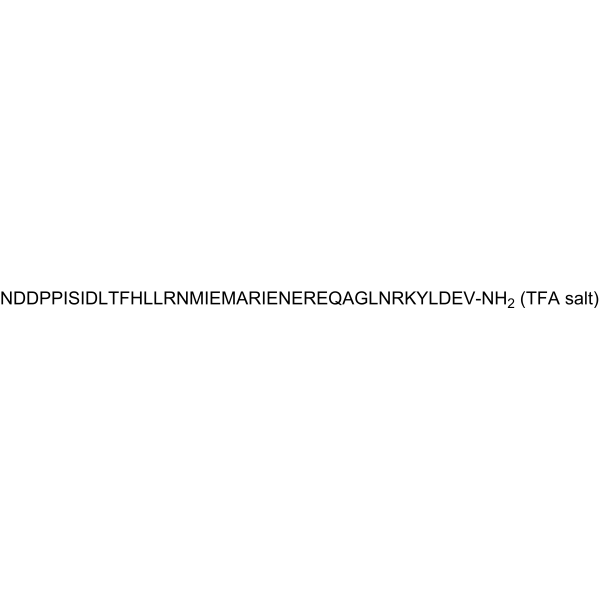 0 ImagesCat. No.: HY-P1542BSynonyms: Catostomus urotensin I TFAUrotensin I (Catostomus urotensin I) TFA, a CRF-like neuropeptide, acts as an agonist of CRF receptor with pEC50s of 11.46, 9.36 and 9.85 for human CRF1, human CRF2 and rat CRF2α receptors in CHO cells, and Kis of 0.4, 1.8, and 5.7 nM for hCRF1, rCRF2α and mCRF2β receptors, respectively.
-
Urocortin III, mouse
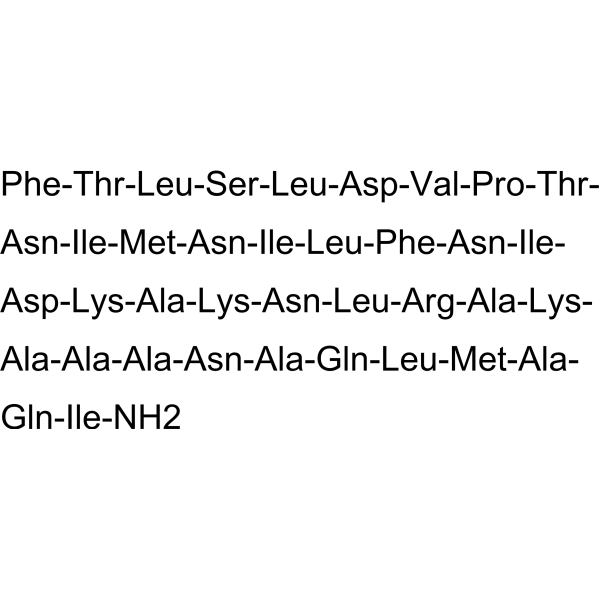 0 ImagesUrocortin III, mouse is a corticotropin-releasing factor (CRF)-related peptide. Urocortin III preferentially binds and activates CRF-R2. Urocortin III (Ucn3) is a known component of the behavioral stress response system. Urocortin III and CRF-R2 in the medial amygdala regulate complex social dynamics.



