



Antisauvagine-30 TFA
Based on 5 publication(s) in Google Scholar
Antisauvagine-30 TFA (aSvg-30 TFA) is a selective peptide antagonist of the CRF2 receptor, with an IC50 of 1.1 nM for mouse CRF2. Antisauvagine-30 TFA modulates cAMP signaling, gastric emptying, food intake, fear conditioning, anxiety-like behavior, stress responses, corticosterone levels, c-Fos expression, and CRF expression. Antisauvagine-30 TFA is used in studies of anxiety-related disorders.
For research use only. We do not sell to patients.
- Purity : 99.64%
- Formula: C161H274N48O46S·xC2HF3O2
- Molecular Weight:3650.26 (free base)
-
Storage:
Sealed storage, away from moisture.
Powder -80°C, 2 years , -20°C, 1 year* In solvent : -80°C, 6 months; -20°C, 1 month (sealed storage, away from moisture)

To place orders, for customer services and technical support, please contact: MedChemExpress USA
Tel: 609-228-6898 E-mail: [email protected] [email protected]


-
 Biological Activity
-
Chemical Information
-
Solvent & Solubility
- Protocols
- Purity & Documentation
- References
-
 Help & FAQs


Publications Citing Use of MedChemExpress (MCE) Antisauvagine-30 TFA
More

Biological Activity
Description
|
CRFR2 1.1 nM nM (IC50) |
In Vitro
Antisauvagine-30 (90 min) TFA (aSvg-30 TFA) is a CRF2-selective competitive antagonist with an IC50 of 1.1 nM at mouse CRF2β receptors and an IC50 of 400 nM at human CRF1 receptors in stably transfected CHO cell membranes[1].
Antisauvagine-30 TFA binds with high affinity to CRF2 receptor subtypes (Ki = 0.41-0.8 nM; Kd = 1.4 nM for mouse CRF2b) and with lower affinity to CRF1 receptor subtypes (Ki = 66-170 nM) in transfected HEK293 cell membrane preparations[2].
Antisauvagine-30 TFA functionally antagonizes CRF1-mediated cAMP signaling in HEK293-rat CRF1 cells and Y79 retinoblastoma cells with IC50 values of 1-2 μM[2].
Antisauvagine-30 (0-1 µM; 60 min) TFA binds with high affinity and strong selectivity to mCRFR2b over rCRFR1 in membrane preparations from transfected HEK 293 cells, with a Kd of 1.4 nM for mCRFR2b[4].
Antisauvagine-30 (0.01-1 µM; 30 min) TFA is a potent antagonist of Svg-stimulated cAMP production in HEK-mCRFR2b cells with low intrinsic activity, while displaying much weaker antagonist activity in HEK-rCRFR1 cells, consistent with CRFR2b selectivity[4].
Antisauvagine-30 TFA is a highly selective CRF-R2 ligand with nanomolar affinity for murine CRF-R2b and human CRF-R2α, and negligible affinity for CRF-R1 in recombinant HEK293 cell membrane preparations[5].
Antisauvagine-30 TFA binds with high affinity to recombinant CRF2 receptor splice variants (Kd of 0.125 nM for CRF2(a), Ki of 1.4 nM for CRF2(b)) and exhibits substantially lower affinity for CRF1 receptors (Ki of 154 nM at rat CRF1, no detectable specific binding at human CRF1), confirming its selectivity as a CRF2 receptor ligand[7].
MedChemExpress (MCE) has not independently confirmed the accuracy of these methods. They are for reference only. Further protocols information, click here.
In Vivo
Antisauvagine-30 (100 µg/kg; s.c.; single dose; 3 or 6 h prior to Urocortin) TFA at 100 µg/kg does not significantly antagonize Urocortin-induced delayed gastric emptying when administered 3 or 6 h prior to Urocortin in mice[1].
Antisauvagine-30 (3 nmol; i.c.v.; single bolus) TFA reduces shock-induced freezing in mice independently of CRF2 receptor status, with no effect on marble burying or elevated plus-maze measures of anxiety-like behavior[2].
Antisauvagine-30 (2.70-5.40 nmol/rat; i.c.v.; single dose 15 min before the conditioned fear test) TFA dose-dependently enhances conditioned fear responses, elevates plasma corticosterone, and increases c-Fos and CRF expression in corticolimbic and hypothalamic brain regions of fear-conditioned Wistar rats[3].
Antisauvagine-30 (30-200 μg/kg; i.p.; single dose 10 min before Urocortin) TFA at 100 μg/kg completely blocks Urocortin-induced inhibition of gastric emptying in mice, while the 30 μg/kg dose produces 54% antagonism[5].
Antisauvagine-30 (30-200 μg/kg; i.p.; single dose 10 min before Urocortin) TFA only partially reverses Urocortin-induced hypophagia in fasted mice, with ~35% reduction of the inhibitory effect at 100 μg/kg[5].
Antisauvagine-30 (100 μg/kg; i.p.; single dose 10 min before Urocortin) TFA combined with the CRF-R1 antagonist CP 154526 (HY-12130) does not show enhanced partial reversal of Urocortin-induced hypophagia compared to Antisauvagine-30 alone[5].
Antisauvagine-30 (400 ng per mouse; bilateral injection into dorsal hippocampus or lateral intermediate septum; 15 min before training alone or 10 min before h/rCRF for combined treatment) TFA, a CRFR2-preferring antagonist, blocks septal CRFR2-mediated impairment of fear conditioning and enhances fear conditioning when administered alone into the lateral intermediate septum, while having no effect on hippocampal CRFR1-mediated enhancement of fear conditioning[6].
Antisauvagine-30 (100 pmol per mouse; bilateral injection into lateral intermediate septum; 10 min before h/rCRF for combined treatment or 30 min before plus-maze test alone) TFA completely blocks CRF-induced anxiety mediated by septal CRFR2 without affecting baseline anxiety levels in mice[6].
Antisauvagine-30 (bilateral injection into lateral intermediate septum; before immobilization stress) TFA fully prevents stress-induced anxiety when administered into the lateral intermediate septum, confirming the role of septal CRFR2 in mediating stress-generated anxiety[6].
Antisauvagine-30 (0.03-10 mg/kg; i.v. bolus) TFA, a selective CRF2 receptor antagonist, completely blocks Urocortin 2-induced hypotension in conscious rats at doses of 1-10 mg/kg i.v., but has no effect on basal mean arterial blood pressure or heart rate when administered alone[7].
MedChemExpress (MCE) has not independently confirmed the accuracy of these methods. They are for reference only.
-
Animal Model:C57BL/6 (male; 8-12 weeks old; 20-25 g)[1]
-
Dosage:3 µg/kg; 10 µg/kg; 30 µg/kg
-
Administration:i.p.; single dose; 10 min before Urocortin
-
Result:Showed no significant antagonist effect on Urocortin-induced inhibition of gastric emptying at 3 µg/kg.
Increased gastric emptying to 38.0% at 10 µg/kg.
Increased gastric emptying to 44.0% at 30 µg/kg.
Did not alter basal gastric emptying when injected alone at 30 µg/kg.
-
Animal Model:C57BL/6 (male; 8-12 weeks old; 20-25 g)[1]
-
Dosage:100 µg/kg (3 h before Urocortin); 100 µg/kg (6 h before Urocortin)
-
Administration:s.c.; single dose (3 h before Urocortin); single dose (6 h before Urocortin)
-
Result:Had no significant antagonist effect on Urocortin-induced inhibition of gastric emptying when administered 3 h before Urocortin at 100 µg/kg.
Had no significant antagonist effect on Urocortin-induced inhibition of gastric emptying when administered 6 h before Urocortin at 100 µg/kg.
Did not influence basal gastric emptying when injected alone at 100 µg/kg.
Did not significantly alter food intake measured at 2 h or 5 h after injection at 100 µg/kg.
-
Animal Model:C57BL/6J (adult male; ≥12 generations backcrossed; CRF2 receptor knockout and wildtype littermates; 26.5-32.3 g at study onset; cannulated)[2]
-
Dosage:3 nmol (10.7 µg)
-
Administration:i.c.v.; single bolus infusion of 2 µL delivered by gravity over 30 sec; pretreatment 15 min before marble burying test, 30 min before elevated plus-maze and shock-induced freezing tests
-
Result:Reduced the duration of shock-induced freezing in both wildtype and CRF2 knockout mice, with treated mice freezing less than vehicle-pretreated mice.
Showed no significant effects on % open arm time, raw open arm time, total number of arm entries in the elevated plus-maze, or number of marbles buried in the marble burying test.
-
Animal Model:Wistar rats (male; adult; 200 g)[3]
-
Dosage:2.70 nmol/rat (10 μg/rat); 5.40 nmol/rat (20 μg/rat)
-
Administration:i.c.v.; single dose 15 min before the conditioned fear test
-
Result:Increased total freezing duration relative to vehicle-treated fear-conditioned rats at both tested doses.
Elevated plasma corticosterone levels in fear-conditioned rats compared to vehicle-treated fear-conditioned controls at both tested doses.
Increased c-Fos expression at 115 min after administration in the cingulate cortex areas 1 and 2 (Cg1: 56.83 cells per 0.1 mm2; Cg2: 86.58 cells per 0.1 mm2), secondary motor cortex (M2: 78.67 cells per 0.1 mm2), central amygdala (CeA: 78.00 cells per 0.1 mm2), medial amygdala (MeA: 67.58 cells per 0.1 mm2), and parvocellular paraventricular hypothalamic nucleus (pPVN: 60.00 cells per 0.1 mm2) in fear-conditioned rats relative to vehicle-treated fear-conditioned rats at the 5.40 nmol/rat dose.
Increased CRF expression at 35 min after administration in the Cg1 (57.17 cells per 0.1 mm2), M2 (64.67 cells per 0.1 mm2), and pPVN (36.00 cells per 0.1 mm2) in fear-conditioned rats compared to vehicle-treated fear-conditioned rats at the 5.40 nmol/rat dose.
Increased CRF expression in the CeA (44.83 cells per 0.1 mm2) reflecting a significant fear×reagent interaction at the 5.40 nmol/rat dose.
-
Animal Model:C57BL/6 (male; 8-12 weeks old; 20-25 g; 18-20 h fasted with solid nutrient meal challenge)[5]
-
Dosage:30 μg/kg (54% antagonism); 100 μg/kg (complete antagonism); 200 μg/kg
-
Administration:i.p.; single dose 10 min before Urocortin
-
Result:Dose-dependently antagonized Urocortin-induced inhibition of gastric emptying by 54% at 30 μg/kg and 100% at 100 μg/kg.
Resulted in gastric emptying values of 40.9% at 30 μg/kg and 71.2% at 100 μg/kg.
Showed a tendency to increase basal gastric emptying to 78.3% at 100 μg/kg alone.
-
Animal Model:C57BL/6 (male; 8-12 weeks old; 20-25 g; 18-20 h fasted with food intake measurement after refeeding)[5]
-
Dosage:30 μg/kg (no effect); 100 μg/kg (35% reversal); 200 μg/kg (31% reversal)
-
Administration:i.p.; single dose 10 min before Urocortin
-
Result:Partially reversed Urocortin-induced decrease in 2-h cumulative food intake by 35% at 100 μg/kg and 31% at 200 μg/kg.
Showed no effect on Urocortin-induced hypophagia at 30 mg/kg.
Resulted in 2-h cumulative food intake values of 0.36 g at 100 μg/kg, 0.34 g at 200 μg/kg, and 0.26 g at 30 μg/kg.
Did not influence basal food intake at 30, 100, or 200 μg/kg alone, with values of 0.54 g, 0.53 g, and 0.57 g, respectively.
-
Animal Model:C57BL/6 (male; 8-12 weeks old; 20-25 g; 18-20 h fasted with Urocortin challenge and food intake measurement)[5]
-
Dosage:100 μg/kg (co-administered with CP-154,526 10 μg/kg)
-
Administration:i.p.; single dose 10 min before Urocortin
-
Result:Resulted in 32% inhibition of 2-h cumulative food intake by Urocortin when co-administered with CP-154,526, similar to the antagonism observed when administered alone.
-
Animal Model:BALB/c mice (9-week-old male)[6]
-
Dosage:400 ng (100 pmol) per mouse
-
Administration:bilateral injection into dorsal hippocampus or lateral intermediate septum (0.25 μl per side); 15 min before training (alone); 10 min before h/rCRF (combined treatment)
-
Result:Did not affect context- or tone-dependent fear conditioning when injected alone into the dorsal hippocampus.
Significantly enhanced both context-dependent and tone-dependent fear conditioning when injected alone into the lateral intermediate septum.
Did not block h/rCRF-induced enhancement of fear conditioning when co-administered before intrahippocampal h/rCRF injection.
Completely blocked h/rCRF-induced impairment of both context-dependent and tone-dependent fear conditioning when co-administered before intraseptal h/rCRF injection.
-
Animal Model:BALB/c mice (9-week-old male)[6]
-
Dosage:100 pmol per mouse
-
Administration:bilateral injection into lateral intermediate septum (0.25 μl per side); 10 min before h/rCRF (combined treatment); 30 min before plus-maze test (alone)
-
Result:Did not affect baseline anxiety levels as measured by time spent and number of entries on the open arms of the elevated plus-maze when injected alone into the lateral intermediate septum.
Completely antagonized h/rCRF-induced reduction in time spent on the open arms and reduction in the number of open arm entries when co-administered with h/rCRF via intraseptal injection.
-
Animal Model:Sprague-Dawley rats (male; adult; 220-240 g upon arrival; conscious freely moving with indwelling carotid artery and jugular vein cannulae)[7]
-
Dosage:0.03, 0.1, 0.3, 1, 3, 10 mg/kg (assessment of effects alone); 1, 3, 10 mg/kg (antagonist pretreatment assessment)
-
Administration:i.v. bolus (cumulative dosing every 20 min, for assessment of effects alone); i.v. bolus (administered 30 min prior to Urocortin 2 challenge, for antagonist pretreatment assessment)
-
Result:Produced no significant effects on mean arterial blood pressure or heart rate at doses up to 10 mg/kg in the cumulative dose-response study.
Blocked Urocortin 2 (0.1 mg/kg, i.v.)-induced reduction in mean arterial blood pressure at 1, 3, and 10 mg/kg in the pretreatment experiment.
Had no significant effect on mean arterial blood pressure at any tested dose when administered alone.
Produced no statistically significant effects on heart rate in the pretreatment experiment.


Chemical Information
-
Appearance Solid
-
Molecular Weight 3650.26 (free base)
-
Formula C161H274N48O46S·xC2HF3O2
-
Color White to off-white
-
SMILES
O=C(N[C@@H](CC1=CNC=N1)C(N[C@@H](CC(C)C)C(N[C@@H](CC(C)C)C(N[C@@H](CCCNC(N)=N)C(N[C@@H](CCCCN)C(N[C@@H](CCSC)C(N[C@@H]([C@@H](C)CC)C(N[C@@H](CCC(O)=O)C(N[C@@H]([C@@H](C)CC)C(N[C@@H](CCC(O)=O)C(N[C@@H](CCCCN)C(N[C@@H](CCC(N)=O)C(N[C@@H](CCC(O)=O)C(N[C@@H](CCCCN)C(N[C@@H](CCC(O)=O)C(N[C@@H](CCCCN)C(N[C@@H](CCC(N)=O)C(N[C@@H](CCC(N)=O)C(N[C@@H](C)C(N[C@@H](C)C(N[C@@H](CC(N)=O)C(N[C@@H](CC(N)=O)C(N[C@@H](CCCNC(N)=N)C(N[C@@H](CC(C)C)C(N[C@@H](CC(C)C)C(N[C@@H](CC(C)C)C(N[C@@H](CC(O)=O)C(N[C@@H]([C@H](O)C)C(N[C@@H]([C@@H](C)CC)C(N)=O)=O)=O)=O)=O)=O)=O)=O)=O)=O)=O)=O)=O)=O)=O)=O)=O)=O)=O)=O)=O)=O)=O)=O)=O)=O)=O)=O)=O)[C@@H](CC2=CC=CC=C2)N.O=C(O)C(F)(F)F.[x]
-
Synonyms
aSvg-30 TFA
-
Sequence
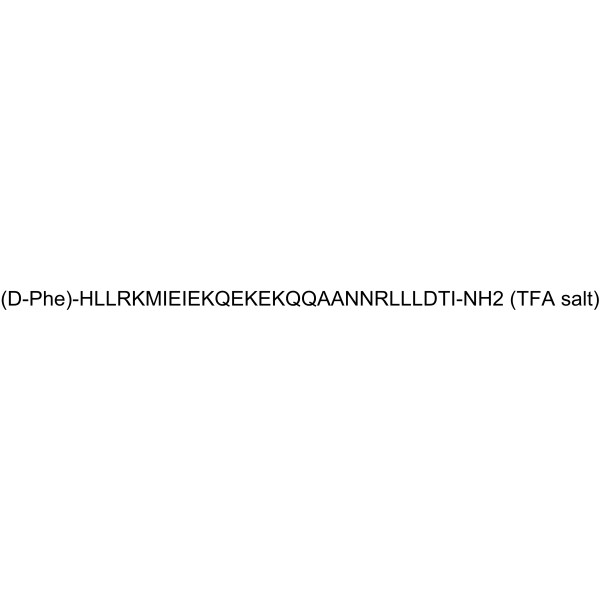
{DPhe}-His-Leu-Leu-Arg-Lys-Met-Ile-Glu-Ile-Glu-Lys-Gln-Glu-Lys-Glu-Lys-Gln-Gln-Ala-Ala-Asn-Asn-Arg-Leu-Leu-Leu-Asp-Thr-Ile-NH2
-
Sequence Shortening
{DPhe}-HLLRKMIEIEKQEKEKQQAANNRLLLDTI-NH2
-
Shipping
Room temperature in continental US; may vary elsewhere.
-
Storage
Sealed storage, away from moisture
Powder -80°C 2 years -20°C 1 year * In solvent : -80°C, 6 months; -20°C, 1 month (sealed storage, away from moisture)


Publications (5)
-
Journal Impact Factor
-
Most Recent
-
Adv Sci (Weinh)
PVNCRF Neurons Regulate Migraine-Like Allodynia by Activating CRFR2 on Spinal Trigeminal Caudalis Glutamatergic Neurons. [Abstract]2026 Feb 28:e20530. PMID: 41762709 -
Pain
Mast cell corticotropin-releasing factor receptor 1 contributes to pancreatic cancer pain via mitogen-activated protein kinase/sphingosine kinases type 1 signaling. [Abstract]2026 Apr 1;167(4):962-975. PMID: 41615309 -
Ann Med
Corticotropin-releasing hormone inhibits autophagy by suppressing PTEN to promote apoptosis in dermal papilla cells. [Abstract]2025 Dec;57(1):2490823. PMID: 40219757 -
Sci Rep
Spinal CRH facilitates the micturition reflex via the CRH2 receptor in rats with normal bladder and bladder outlet obstruction. [Abstract]2025 Jan 29;15(1):3604. PMID: 39875474 -


Solvent & Solubility
In Vitro:
DMSO : 100 mg/mL (Need ultrasonic; Hygroscopic DMSO has a significant impact on the solubility of product, please use newly opened DMSO)
H2O : 25 mg/mL (Need ultrasonic)
In Vivo:
Select the appropriate dissolution method based on your experimental animal and administration route.
- For the following dissolution methods, please ensure to first prepare a clear stock solution using an In Vitro approach and then sequentially add co-solvents:
- To ensure reliable experimental results, the clarified stock solution can be appropriately stored based on storage conditions. As for the working solution for In Vivo experiments, it is recommended to prepare freshly and use it on the same day.
- The percentages shown for the solvents indicate their volumetric ratio in the final prepared solution. If precipitation or phase separation occurs during preparation, heat and/or sonication can be used to aid dissolution.
Add each solvent one by one: 10% DMSO 40% PEG300 5% Tween-80 45% Saline
Solubility: ≥ 2.5 mg/mL; Clear solution
This protocol yields a clear solution of ≥ 2.5 mg/mL (saturation unknown).
Taking 1 mL working solution as an example, add 100 μL DMSO stock solution (25.0 mg/mL) to 400 μL PEG300, and mix evenly; then add 50 μL Tween-80 and mix evenly; then add 450 μL Saline to adjust the volume to 1 mL.
Preparation of Saline: Dissolve 0.9 g sodium chloride in ddH₂O and dilute to 100 mL to obtain a clear Saline solution.
Add each solvent one by one: 10% DMSO 90% (20% SBE-β-CD in Saline)
Solubility: ≥ 2.5 mg/mL; Clear solution
This protocol yields a clear solution of ≥ 2.5 mg/mL (saturation unknown).
Taking 1 mL working solution as an example, add 100 μL DMSO stock solution (25.0 mg/mL) to 900 μL 20% SBE-β-CD in Saline, and mix evenly.
Preparation of 20% SBE-β-CD in Saline (4°C, storage for one week): 2 g SBE-β-CD powder is dissolved in 10 mL Saline, completely dissolve until clear.
In Vivo Dissolution Calculator
Please enter the basic information of animal experiments:
-
-
-
-
Recommended: Prepare an additional quantity of animals to account for potential losses during experiments.
Working solution concentration: 0.22 mg/mL
This product has good water solubility, please refer to the measured solubility data in water/PBS/Saline for details.

Protocols
-
RNA extraction experimental
By lysing cells, releasing RNA, and removing impurities such as proteins and DNA, high-purity RNA products are finally obtained. The commonly used traditional method is the guanidine isothiocyanate/phenol/chloroform method (Trizol), which is suitable for a variety of animal materials including animal tissues, microorganisms, cultured cells, etc., and most plant materials.
-
Protocol for Open Field Test (OF)
The Open Field Test is a rodent behavioral assay that measures spontaneous locomotion, exploratory behavior, and anxiety-like behavior when an animal is placed in a novel open arena. The main readouts are total distance traveled, movement time, velocity, center-zone entries, center-zone time, peripheral-zone time, and thigmotaxis. The assay is based on the conflict between exploration of a novel environment and avoidance of exposed open areas; higher center exploration is commonly interpreted as lower anxiety-like behavior, whereas increased wall-following or peripheral occupancy is interpreted as higher anxiety-like behavior.
-
Protocol for Elevated Plus Maze Test
The Elevated Plus Maze is a rodent anxiety-like behavior assay based on the conflict between spontaneous exploration and avoidance of open, elevated, exposed spaces. The apparatus contains two open arms and two closed arms arranged in a plus shape, and rodents normally spend more time in closed arms than open arms. The assay readout is generated by recording arm entries, time spent in open and closed arms, and related exploratory behaviors. Increased open-arm time or open-arm entries is commonly interpreted as reduced anxiety-like behavior, whereas reduced open-arm exploration is interpreted as increased anxiety-like behavior.


Purity & Documentation
-
Data Sheet (291 KB)
-
SDS (254 KB)
- English - EN (254 KB)
- Français - FR (254 KB)
- Deutsch - DE (254 KB)
- Norwegian - NO (254 KB)
- Español - ES (254 KB)
- Swedish - SV (254 KB)
- Italian - IT (254 KB)
- Korean - KR (254 KB)
- Portuguese - PT (254 KB)
-
Handling Instructions (2659 KB)
References
[1]. Rivier J, et al. Potent and long-acting corticotropin releasing factor (CRF) receptor 2 selective peptide competitive antagonists. Journal of medicinal chemistry. 2002 Oct 10;45(21):4737-47. [Content Brief]
[6]. Radulovic J, et al. Modulation of learning and anxiety by corticotropin-releasing factor (CRF) and stress: differential roles of CRF receptors 1 and 2. The Journal of neuroscience : the official journal of the Society for Neuroscience. 1999 Jun 15;19(12):5016-25. [Content Brief]
[7]. Mackay KB, et al. Effects of a selective agonist and antagonist of CRF2 receptors on cardiovascular function in the rat. European journal of pharmacology. 2003 May 23;469(1-3):111-5. [Content Brief]

Calculators
Concentration (start) × Volume (start) = Concentration (final) × Volume (final)


Antisauvagine-30 TFA Related Classifications
HY-P1107A Related Classifications
 Powered by Bioz