



EGFR
Epidermal growth factor receptor; ErbB-1; HER1
The EGFR family of receptor tyrosine kinases (RTK) comprises four distinct receptors: the EGFR (also known as ErbB-1/HER1), ErbB-2 (neu, HER2), ErbB-3 (HER3) and ErbB-4 (HER4). All EGFR family members are characterized by a modular structure consisting of an extracellular ligand-binding domain, a single hydrophobic transmembrane region, and the intracellular part harbouring the highly conserved tyrosine kinase domain. The ErbB family of receptor tyrosine kinases (RTKs) couples binding of extracellular growth factor ligands to intracellular signaling pathways regulating diverse biologic responses, including proliferation, differentiation, cell motility, and survival. Ten growth factors and their ErbB specificities are: EGF, amphiregulin (AR), and TGF bind ErbB-1; betacellulin, and epiregulin bind both ErbB-1 and ErbB-4; the neuregulins (also called heregulins and Neu differentiation factors) NRG-1 and NRG-2 bind ErbB-3 and ErbB-4; and NRG-3 and NRG-4 bind ErbB-4. No known ligand binds ErbB-2. The three best characterized signaling pathways induced through ErbBs are Ras-mitogen-activated protein kinase (Ras-MAPK), phosphatidylinositol 3 kinase-protein kinase B (PI3K-PKB/Akt), and phospholipase C-protein kinase C (PLC-PKC) pathways.
EGFR Isoform Specific Products
All Product Categories
-
EGFR Inhibitors
(1035)
View all products
-
EGFR Agonists
(4)
View all products
-
EGFR Antagonists
(5)
View all products
-
EGFR Activators
(8)
View all products
-
EGFR Modulators
(7)
View all products
-
EGFR Chemicals
(3)
View all products
-
EGFR Inducers
(4)
View all products
-
EGFR Degraders
(45)
View all products
-
EGFR Controls
(6)
View all products
-
EGFR Substrate
(1)
View all products
-
EGFR Ligands
(19)
View all products
-
ErbB2/HER2 Proteins
(39)
View all products
-
ErbB3/HER3 Proteins
(15)
View all products
-
EGFR Proteins
(46)
View all products
-
ErbB4/HER4 Proteins
(10)
View all products
-
EGFR Related Products (1259)
Related Products (1259)

-
Recombinant Proteins (110)
-
Antibodies (19)
-
EGFR Isoform Comparison
-
Nezutatug
 0 ImagesSynonyms: HMBD-001Nezutatug (HMBD-001) is a humanized IgG1 monoclonal antibody inhibitor targeting HER3. Nezutatug inhibits the dimerization of HER3 and inhibits the growth, proliferation and other activities of tumor cells. Nezutatug is promising for research of cancers, such as pancreatic cancer and non-small cell lung cancer.
-
RG13022
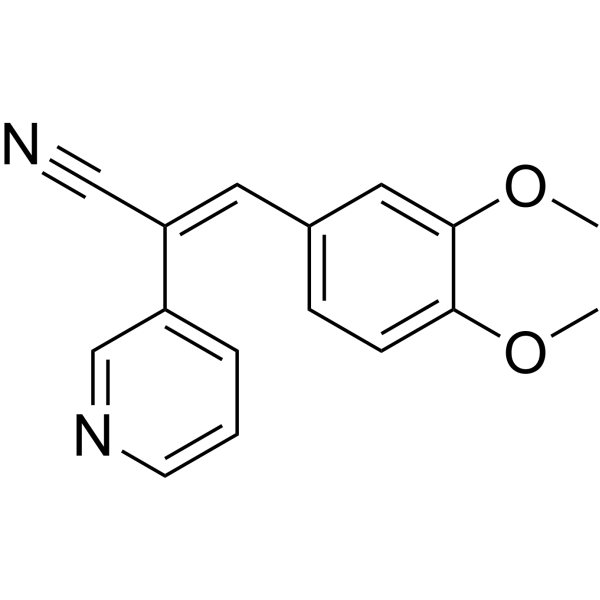 0 ImagesCat. No.: HY-101429CAS No.: 136831-48-6Synonyms: Tyrphostin RG13022RG13022 is a tyrosine kinase inhibitor; inhibits the autophosphorylation reaction of the EGF receptor with an IC50 of 4 μM.
-
EGFR/ErbB-2/ErbB-4 inhibitor-3
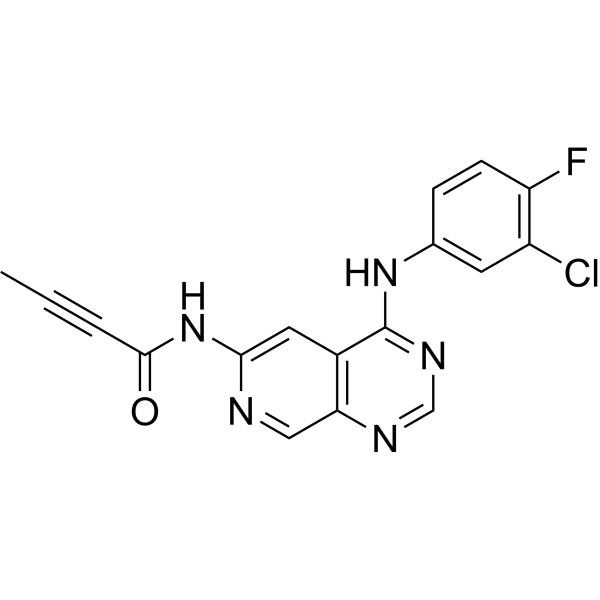 0 ImagesCat. No.: HY-103440CAS No.: 881001-19-0EGFR/ErbB-2/ErbB-4 inhibitor-3 (compound 29) is a potent tyrosine kinase inhibitor with IC50s of 0.3, 1.1, 0.5, 2.5, 24 nM for erbB1, erbB2, erbB4, EGF, HER, respectively. EGFR/ErbB-2/ErbB-4 inhibitor-3 is a click chemistry reagent, it contains an Alkyne group and can undergo copper-catalyzed azide-alkyne cycloaddition (CuAAc) with molecules containing Azide groups.
-
LY456236
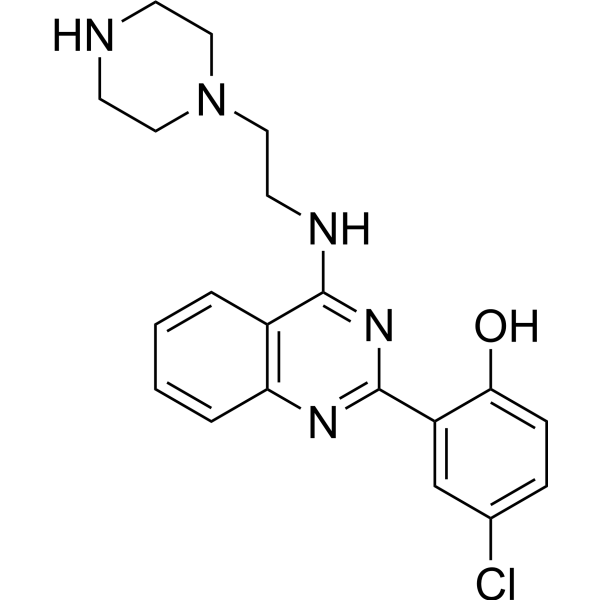
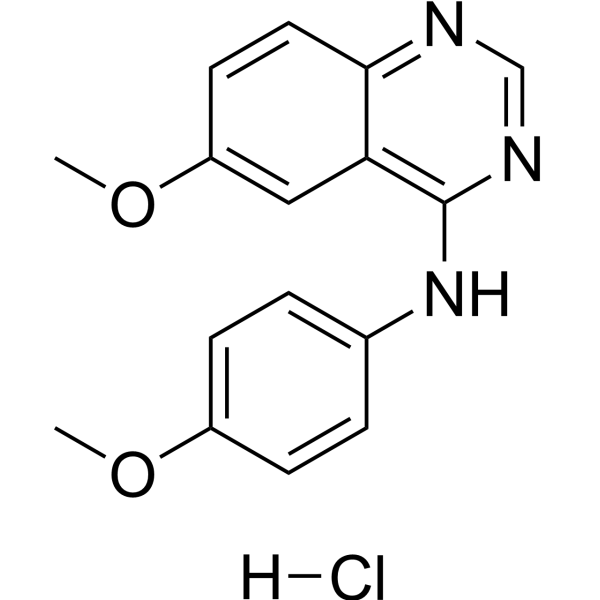 0 ImagesLY456236 is a selective, non-competitive and orally active antagonist of glutamate receptor 1 (mGlu1), which can inhibit phosphatidylinositol hydrolysis with an IC50 of 0.145 μM. LY456236 can also inhibit EGFR, with an IC50 of 0.918 μM. LY456236 blocks cell proliferation by inhibiting the MAPK pathway, reversing the anti-apoptotic effect of DHPG (HY-12598A). LY456236 can be used in epilepsy research.
-
EGFRvIII peptide (PEPvIII) TFA
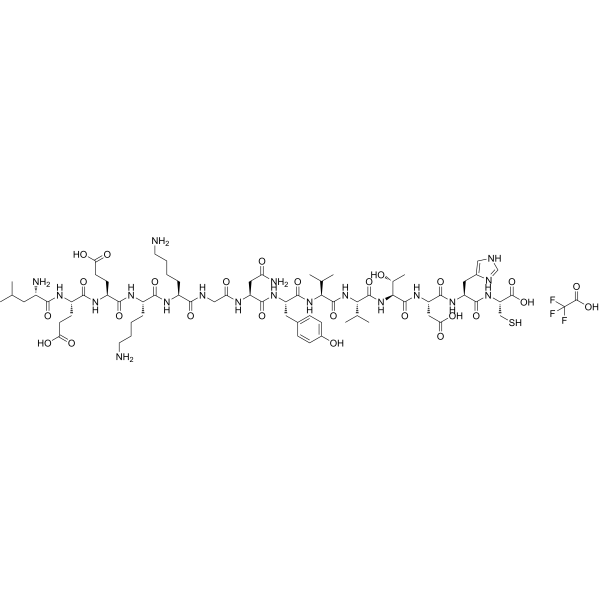 0 ImagesCat. No.: HY-P1828APurity: 98.73%EGFRvIII peptide (PEPvIII) TFA is a tumor-specific mutation that is widely expressed in glioblastoma multiforme (GBM) and other neoplasms and its expression enhances tumorigenicity. EGFRvIII peptide TFA represents a truly tumor-specific target for antitumor immunotherapy.
-
(3S,4S)-PF-06459988
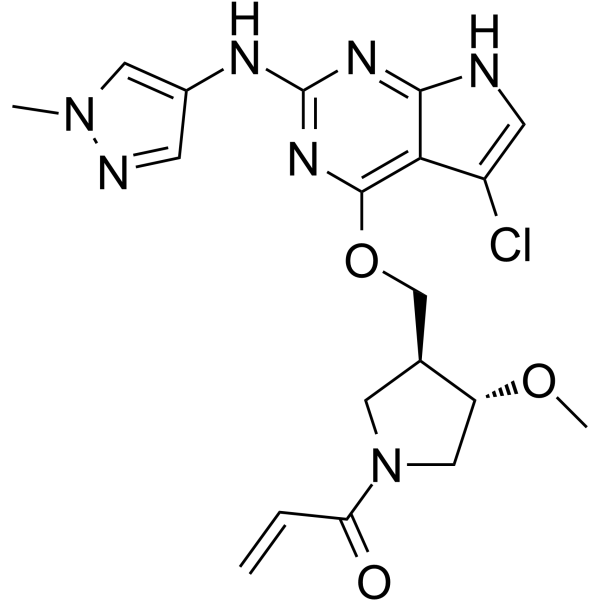 0 Images(3S, 4S)-PF-06459988 is the S enantiomer of PF-06459988 with less active. PF-06459988 is a potent irreversible inhibitor of T790M mutant epidermal growth factor receptor (EGFR). PF-06459988 has excellent selectivity against EGFR wild-type while possessing a minimally reactive electrophile that reduces the propensity of off-target labeling.
-
PROTAC HER2 degrader-1
 0 ImagesPROTAC HER2 degrader-1 is a highly selective HER2 PROTAC degrader, with a DC50 of 69 nM and a Dmax of 96%. PROTAC HER2 degrader-1 inhibits HER2-positive cell proliferation and tumor growth through persistent HER2 degradation and potent inhibition of downstream pathways (AKT and ERK). PROTAC HER2 degrader-1 induces apoptosis in BT-474 cells. PROTAC HER2 degrader-1 can be used for research of HER2-positive cancers.
-
Cys-GE11
 0 ImagesCys-GE11 is an N-terminal modified GE11 (HY-P10128) with cysteine (Cys) added. Cys-GE11 can be coupled through the thiol group of Cys. Cys-GE11 can be linked to PEG-P (TMC-DTC) through the N-terminus of cysteine to form a targeted polymer. Cys-GE11 can target cells with high EGFR expression (such as SMMC-7721 cells). Cys-GE11 can significantly enhance drug enrichment at the tumor site and exhibit low toxicity.
-
CCT365623 hydrochloride
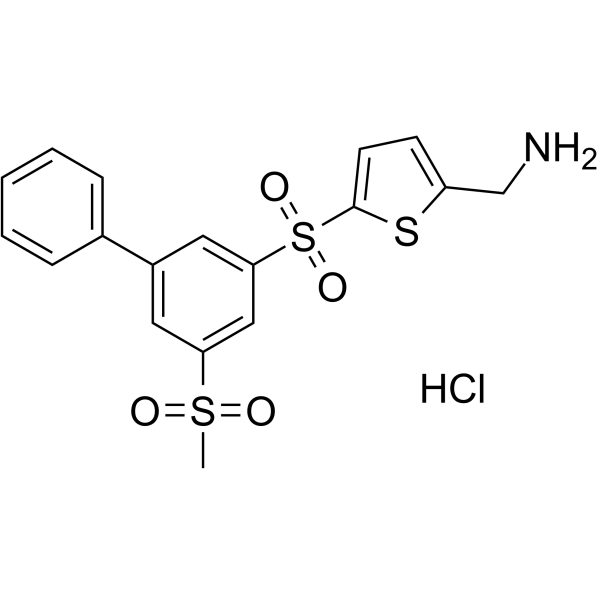 0 ImagesCCT365623 hydrochloride is an orally active lysyl oxidase (LOX) inhibitor, with an IC50 of 0.89 μM. CCT365623 hydrochloride suppresses EGFR (pY1068) and AKT phosphorylation driven by EGF. CCT365623 hydrochloride is extremely well tolerated, and has good pharmacokinetic properties.
-
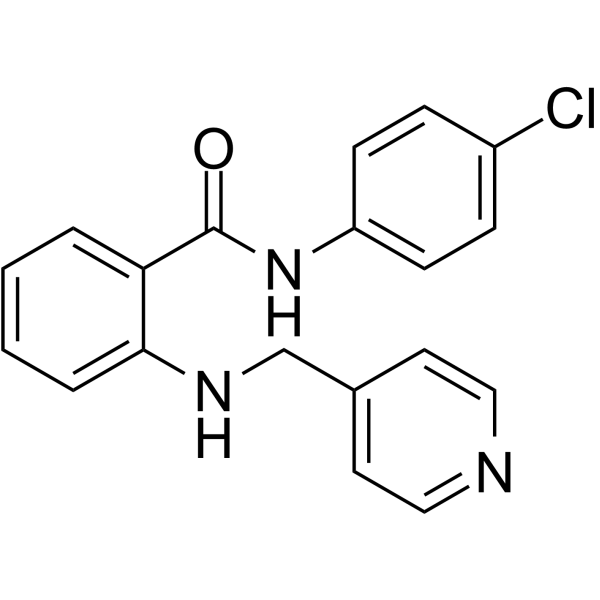
PROTAC EGFR degrader 15
 0 ImagesCat. No.: HY-175839Purity: 99.23%PROTAC EGFR degrader 15 is a Pomalidomide (HY-10984)-based Gefitinib (HY-50895) EGFR PROTAC degrader. PROTAC EGFR degrader 15 triggers EGFR degradation via ubiquitin-proteasome-dependent proteolysis and autophagy-lysosome activation pathways. PROTAC EGFR degrader 15 targets ETFA to enhance ATP production. PROTAC EGFR degrader 15 significantly suppresses tumor growth in a Gefitinib-acquired resistant HCC-827 xenograft model. PROTAC EGFR degrader 15 can be used for the study of non-small cell lung cancer (NSCLC).
-
HER2-targeted peptide H6F
 0 ImagesHER2-targeted peptide H6F is a HER2 targeting peptide that binds to HER2 to target breast cancer cells, with the amino acid sequence YLFFVFER. The HER2-targeted peptide H6F can be conjugated with the bifunctional chelating agent hydrazinonicotinamide (HYNIC) for radiolabeling with 99mTc. Single-photon emission computed tomography (SPECT) imaging shows that the labeled HER2-targeted peptide H6F specifically accumulates in HER2-positive MDA-MBA-453 tumor-bearing mice models. The HER2-targeted peptide H6F can be used for tumor molecular imaging studies.
-
GW2974
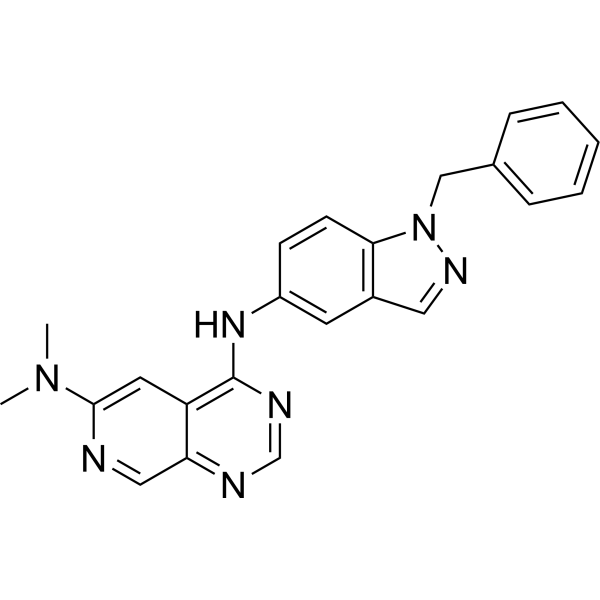 0 ImagesGW2974 is a potent dual inhibitor of EGFR and HER2 with IC50 value of 0.007 μM and 0.016 μM, respectively. GW2974 demonstrates in vitro inhibition of the EGFR and HER2 and inhibits the growth of tumor cell. GW2974 can be used for glioblastoma multiforme (GBM) disease research.
-
GC1118
 0 ImagesCat. No.: HY-P991571Purity: 99.22%Synonyms: GC-1118AGC1118 (GC-1118A) is a fully human anti-EGFR monoclonal antibody with binding affinity of 0.16 nM (KD) to EGFR. GC1118 displays potent inhibitory effects on high- and low-affinity EGFR ligand-induced signaling. GC1118 shows potent anti proliferative activity in KRAS wild-type and KRAS mutant cells. GC1118 can reach the tumor by crossing both BBB (blood-brain barrier) and BTB (brain-tumor barrier) and shows superior anti-tumor effects in various mice xenograft models. GC1118 can be used for the researches of cancer, such as colorectal cancer.
-
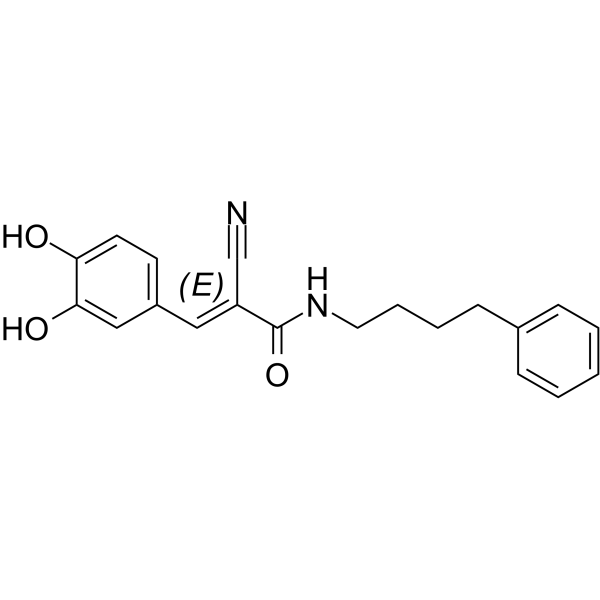
Dalmitamig
 0 ImagesCat. No.: HY-P990913CAS No.: 2765077-69-6Synonyms: bsAb7075; REGN-7075; Marlotamig
-
Epertinib hydrochloride
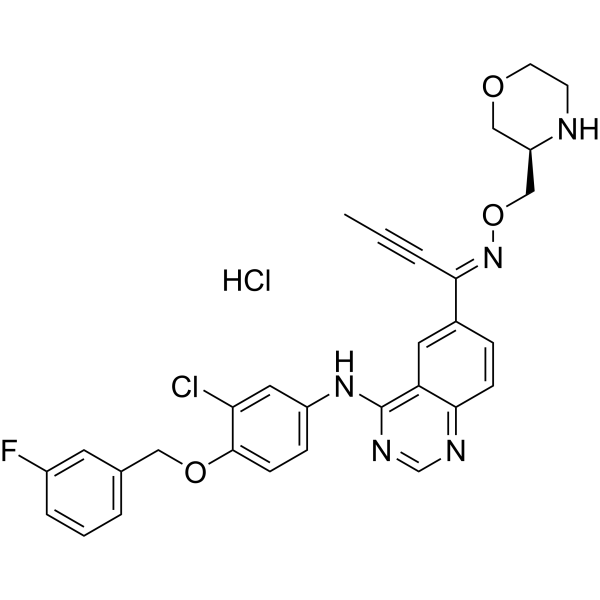 0 ImagesSynonyms: S-22611 hydrochlorideEpertinib (S-22611) hydrochloride is a potent, orally active, reversible, and selective tyrosine kinase inhibitor of EGFR, HER4 and HER2, with IC50s of 1.48 nM, 2.49 nM and 7.15 nM, respectively. Epertinib hydrochloride shows potent antitumor activity. Epertinib (hydrochloride) is a click chemistry reagent, it contains an Alkyne group and can undergo copper-catalyzed azide-alkyne cycloaddition (CuAAc) with molecules containing Azide groups.




