



VEGFR-IN-1

Based on 1 Customer Validation
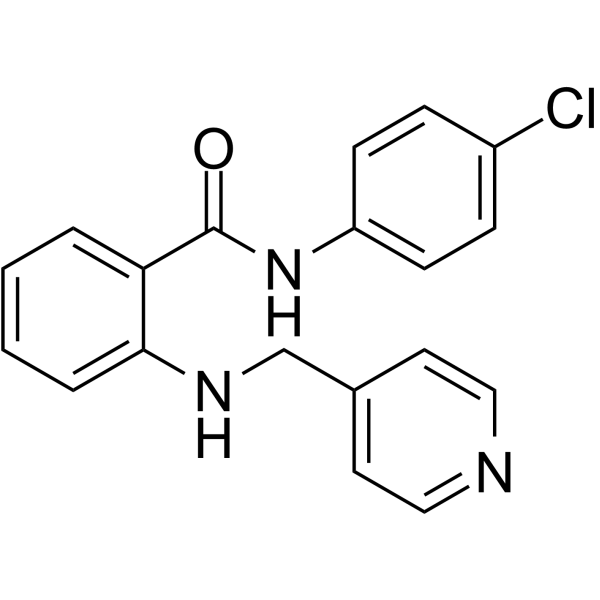
VEGFR-IN-1 (compound 3) is a potent angiogenesis inhibitor with IC50s of 0.02, 0.18, 0.24 7.3, and 7 µM for KDR, Flt-1, c-Kit, EGF-R, and c-Src, respectively.
For research use only. We do not sell to patients.
- Purity : 99.07%
- CAS No.: 269390-69-4
- Formula: C19H16ClN3O
- Molecular Weight:337.80
-
Storage:
-20°C, protect from light, stored under nitrogen
* In solvent : -80°C, 6 months; -20°C, 1 month (protect from light, stored under nitrogen)

To place orders, for customer services and technical support, please contact: MedChemExpress USA
Tel: 609-228-6898 E-mail: [email protected] [email protected]


-
 Biological Activity
-
Chemical Information
-
Solvent & Solubility
- Protocols
- Purity & Documentation
- References
-
 Help & FAQs


-
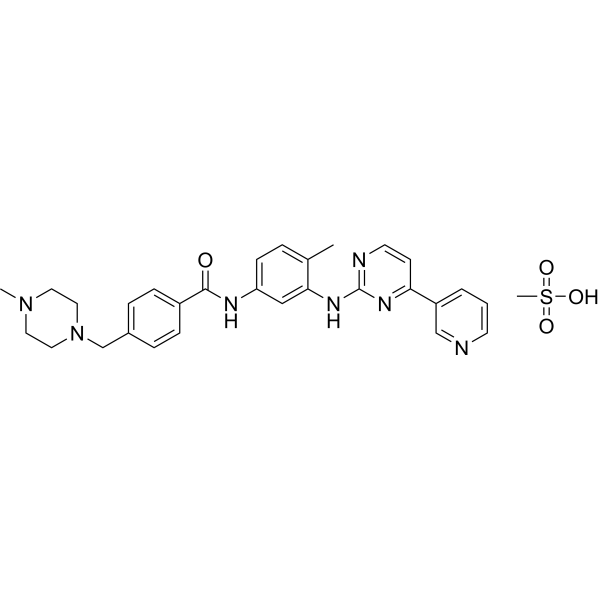
HY-50946
Imatinib Mesylatec-Kit Inhibitor -
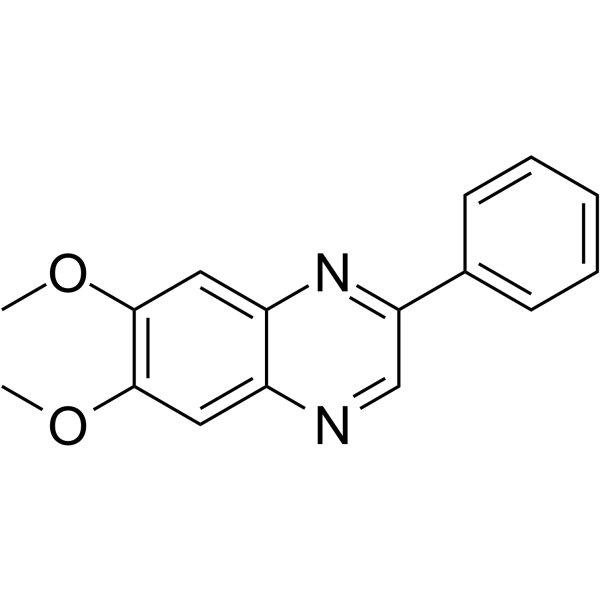
HY-13894
Tyrphostin AG1296PDGFR Inhibitor -
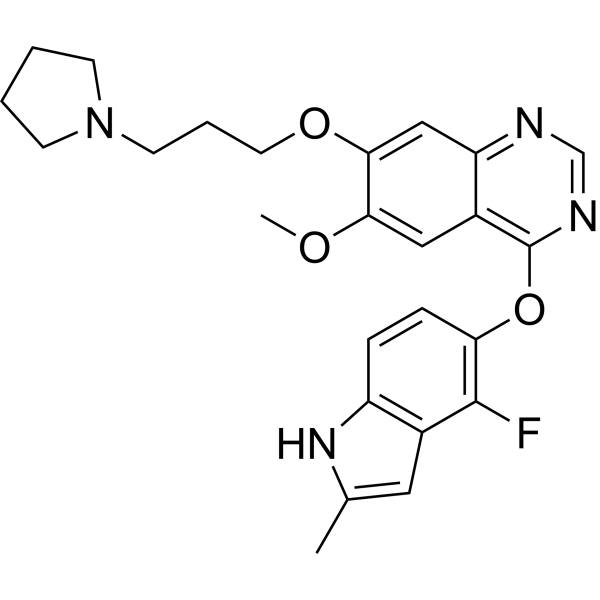
HY-10205
CediranibVEGFR2 Inhibitor -
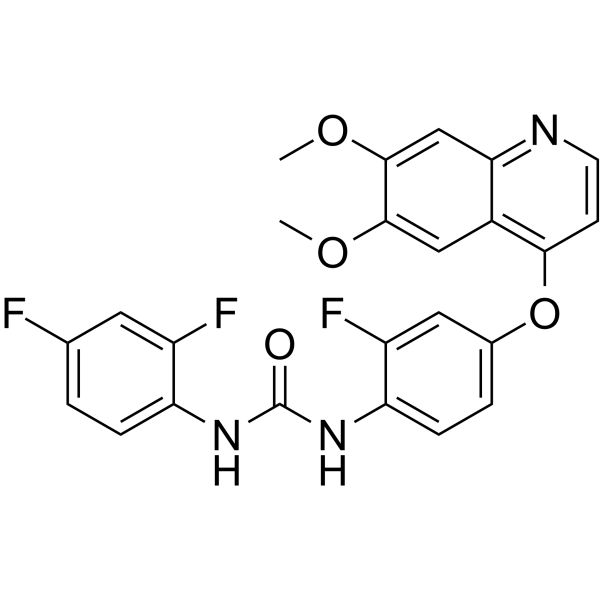
HY-12038
Ki8751VEGFR Inhibitor -
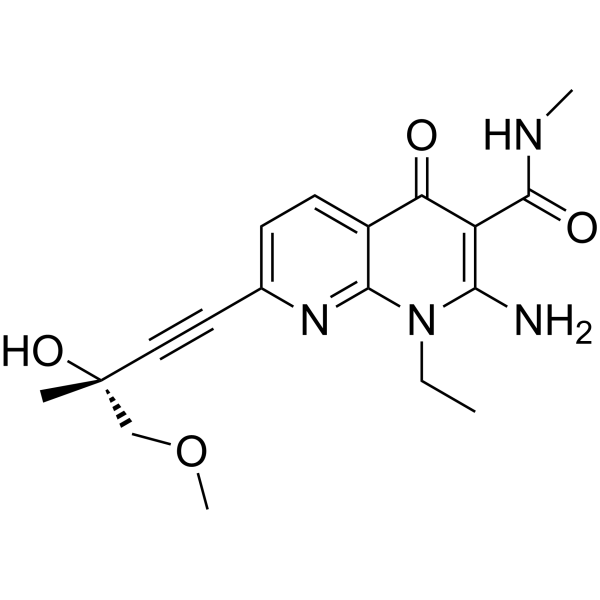
HY-15458
SAR131675VEGFR3 Inhibitor -
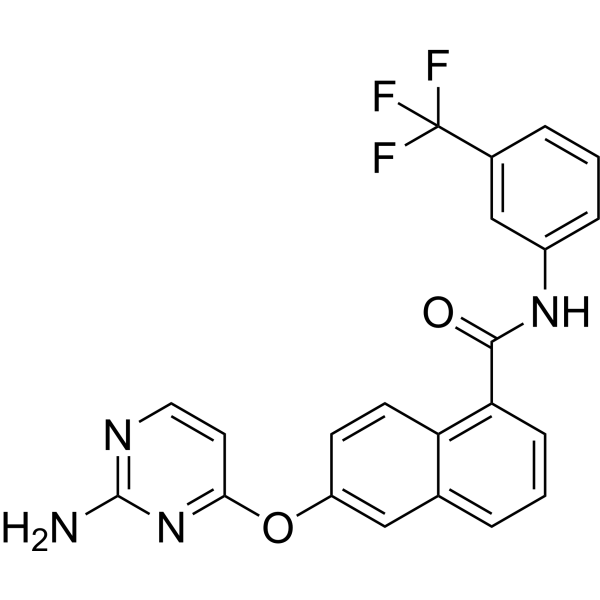
HY-100394
NVP-BAW2881VEGFR Inhibitor -
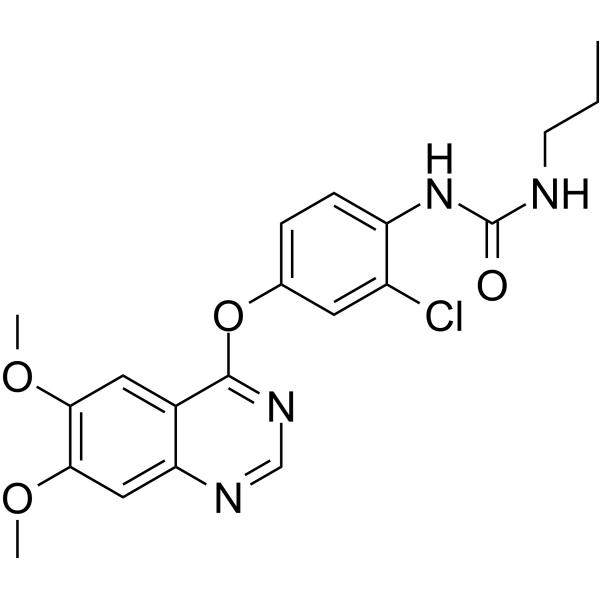
HY-12060
KRN-633VEGFR Inhibitor -
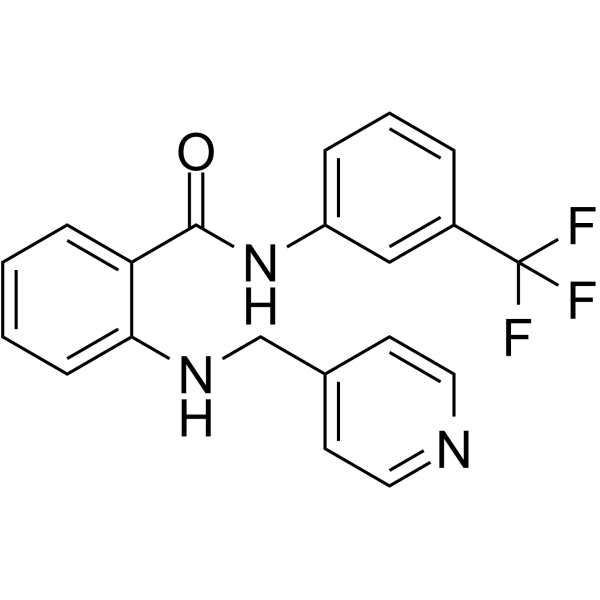
HY-19986
AAL993VEGFR Inhibitor -
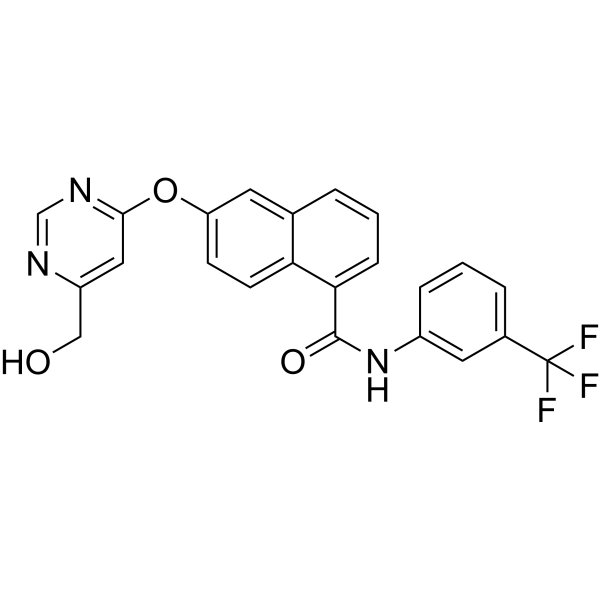
HY-100419
BFH772VEGFR2 Inhibitor -
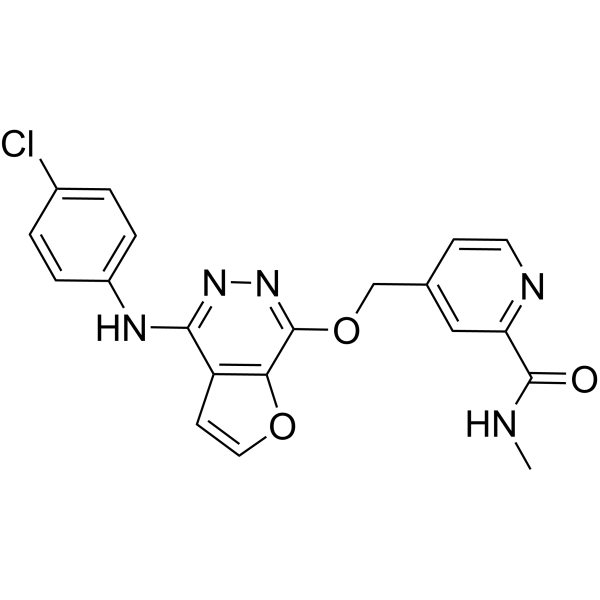
HY-10527
TelatinibVEGFR/PDGFα/c-Kit Inhibitor -
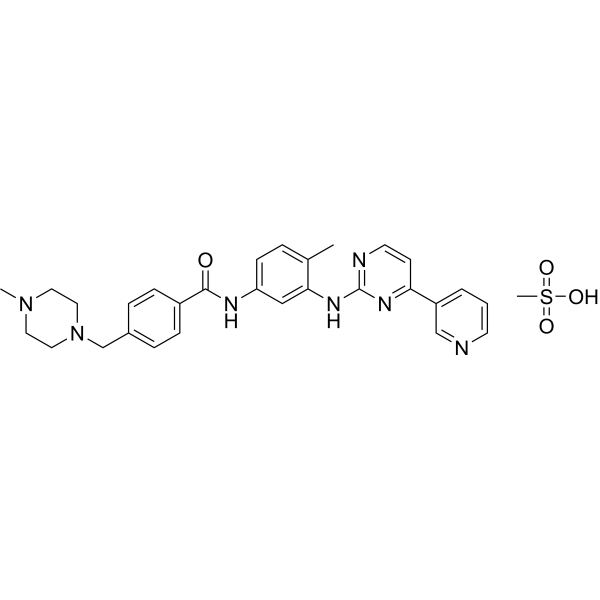
HY-50946R
Imatinib Mesylate (Standard)c-Kit Inhibitor -
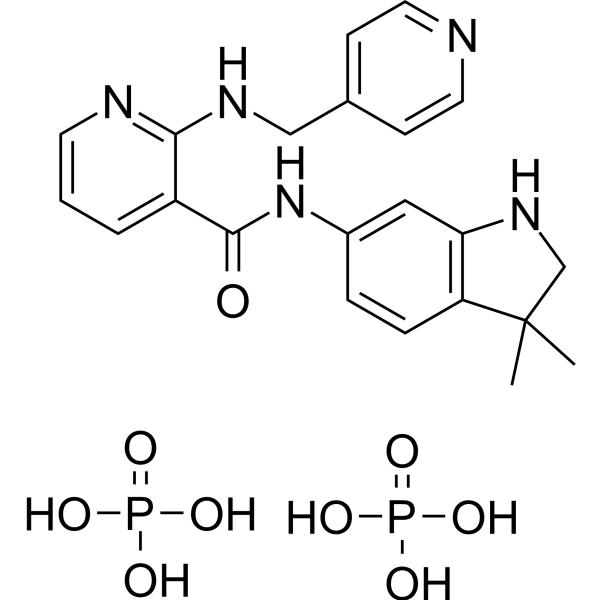
HY-10229
Motesanib DiphosphateVEGFR1/2/3 Inhibitor


Biological Activity
Description
IC50 & Target
[1]|
KDR 0.02 μM (IC50) |
Flt-1 0.18 μM (IC50) |
EGFR 0.24 μM (IC50) |


Chemical Information
-
CAS No. 269390-69-4
-
Appearance Solid
-
Molecular Weight 337.80
-
Formula C19H16ClN3O
-
Color White to off-white
-
SMILES
O=C(NC1=CC=C(Cl)C=C1)C2=CC=CC=C2NCC3=CC=NC=C3
-
Shipping
Room temperature in continental US; may vary elsewhere.
-
Storage
-20°C, protect from light, stored under nitrogen
* In solvent : -80°C, 6 months; -20°C, 1 month (protect from light, stored under nitrogen)


Solvent & Solubility
In Vitro:
DMSO : 125 mg/mL (370.04 mM; Need ultrasonic; Hygroscopic DMSO has a significant impact on the solubility of product, please use newly opened DMSO)
Please refer to the solubility information to select the appropriate solvent. Once prepared, please aliquot and store the solution to prevent product inactivation from repeated freeze-thaw cycles.
Storage method and period of stock solution: -80°C, 6 months; -20°C, 1 month (protect from light, stored under nitrogen). When stored at -80°C, please use it within 6 months. When stored at -20°C, please use it within 1 month.
Please refer to the solubility information to select the appropriate solvent. Once prepared, please aliquot and store the solution to prevent product inactivation from repeated freeze-thaw cycles.
Storage method and period of stock solution: -80°C, 6 months; -20°C, 1 month (protect from light, stored under nitrogen). When stored at -80°C, please use it within 6 months. When stored at -20°C, please use it within 1 month.
Concentration (start) × Volume (start) = Concentration (final) × Volume (final)
In Vivo:
Select the appropriate dissolution method based on your experimental animal and administration route.
- For the following dissolution methods, please ensure to first prepare a clear stock solution using an In Vitro approach and then sequentially add co-solvents:
- To ensure reliable experimental results, the clarified stock solution can be appropriately stored based on storage conditions. As for the working solution for In Vivo experiments, it is recommended to prepare freshly and use it on the same day.
- The percentages shown for the solvents indicate their volumetric ratio in the final prepared solution. If precipitation or phase separation occurs during preparation, heat and/or sonication can be used to aid dissolution.
Add each solvent one by one: 10% DMSO 90% (20% SBE-β-CD in Saline)
Solubility: 2.08 mg/mL (6.16 mM); Suspended solution; Need ultrasonic
This protocol yields a suspended solution of 2.08 mg/mL. Suspended solution can be used for oral and intraperitoneal injection.
Taking 1 mL working solution as an example, add 100 μL DMSO stock solution (20.8 mg/mL) to 900 μL 20% SBE-β-CD in Saline, and mix evenly.
Preparation of 20% SBE-β-CD in Saline (4°C, storage for one week): 2 g SBE-β-CD powder is dissolved in 10 mL Saline, completely dissolve until clear.
In Vivo Dissolution Calculator
Please enter the basic information of animal experiments:
-
-
-
-
Recommended: Prepare an additional quantity of animals to account for potential losses during experiments.
Please enter your animal formula composition:
-
%DMSO +
Recommended: Keep the proportion of DMSO in working solution below 2% if your animal is weak.
-
%+
-
+%Tween-80 + +
-
%Saline +
The co-solvents required include: DMSO, . All of co-solvents are available by MedChemExpress (MCE). , Tween 80. All of co-solvents are available by MedChemExpress (MCE).
Working solution concentration: 0.22 mg/mL
Method for preparing stock solution: mg drug dissolved in μL DMSO. Stock solution concentration: mg/mL. * In solvent : -80°C, 6 months; -20°C, 1 month (protect from light, stored under nitrogen)
1. Take μL DMSO stock solution;
2. Add μL .
μL , mix evenly;
3. Then add μL Tween 80, mix evenly;
4. Then add μL
Please ensure that the stock solution in the first step is dissolved to a clear state, and add co-solvents in sequence. You can use ultrasonic heating (ultrasonic cleaner, recommended frequency 20-40 kHz), vortexing, etc. to assist dissolution.


Purity & Documentation
-
Data Sheet (275 KB)
-
SDS (393 KB)
- English - EN (393 KB)
- Français - FR (393 KB)
- Deutsch - DE (393 KB)
- Norwegian - NO (393 KB)
- Español - ES (393 KB)
- Swedish - SV (393 KB)
- Italian - IT (393 KB)
- Korean - KR (393 KB)
- Portuguese - PT (393 KB)
-
Handling Instructions (2659 KB)
References


Complete Stock Solution Preparation Table
Please refer to the solubility information to select the appropriate solvent. Once prepared, please aliquot and store the solution to prevent product inactivation from repeated freeze-thaw cycles.
Storage method and period of stock solution: -80°C, 6 months; -20°C, 1 month (protect from light, stored under nitrogen). When stored at -80°C, please use it within 6 months. When stored at -20°C, please use it within 1 month.
| Optional Solvent | Concentration Solvent Mass | 1 mg | 5 mg | 10 mg | 25 mg |
|---|---|---|---|---|---|
| DMSO | 1 mM | 2.9603 mL | 14.8017 mL | 29.6033 mL | 74.0083 mL |
| 5 mM | 0.5921 mL | 2.9603 mL | 5.9207 mL | 14.8017 mL | |
| 10 mM | 0.2960 mL | 1.4802 mL | 2.9603 mL | 7.4008 mL | |
| 15 mM | 0.1974 mL | 0.9868 mL | 1.9736 mL | 4.9339 mL | |
| 20 mM | 0.1480 mL | 0.7401 mL | 1.4802 mL | 3.7004 mL | |
| 25 mM | 0.1184 mL | 0.5921 mL | 1.1841 mL | 2.9603 mL | |
| 30 mM | 0.0987 mL | 0.4934 mL | 0.9868 mL | 2.4669 mL | |
| 40 mM | 0.0740 mL | 0.3700 mL | 0.7401 mL | 1.8502 mL | |
| 50 mM | 0.0592 mL | 0.2960 mL | 0.5921 mL | 1.4802 mL | |
| 60 mM | 0.0493 mL | 0.2467 mL | 0.4934 mL | 1.2335 mL | |
| 80 mM | 0.0370 mL | 0.1850 mL | 0.3700 mL | 0.9251 mL | |
| 100 mM | 0.0296 mL | 0.1480 mL | 0.2960 mL | 0.7401 mL |


VEGFR-IN-1 Related Classifications
HY-101219 Related Classifications
 Powered by Bioz