EGFR
Epidermal growth factor receptor; ErbB-1; HER1
The EGFR family of receptor tyrosine kinases (RTK) comprises four distinct receptors: the EGFR (also known as ErbB-1/HER1), ErbB-2 (neu, HER2), ErbB-3 (HER3) and ErbB-4 (HER4). All EGFR family members are characterized by a modular structure consisting of an extracellular ligand-binding domain, a single hydrophobic transmembrane region, and the intracellular part harbouring the highly conserved tyrosine kinase domain. The ErbB family of receptor tyrosine kinases (RTKs) couples binding of extracellular growth factor ligands to intracellular signaling pathways regulating diverse biologic responses, including proliferation, differentiation, cell motility, and survival. Ten growth factors and their ErbB specificities are: EGF, amphiregulin (AR), and TGF bind ErbB-1; betacellulin, and epiregulin bind both ErbB-1 and ErbB-4; the neuregulins (also called heregulins and Neu differentiation factors) NRG-1 and NRG-2 bind ErbB-3 and ErbB-4; and NRG-3 and NRG-4 bind ErbB-4. No known ligand binds ErbB-2. The three best characterized signaling pathways induced through ErbBs are Ras-mitogen-activated protein kinase (Ras-MAPK), phosphatidylinositol 3 kinase-protein kinase B (PI3K-PKB/Akt), and phospholipase C-protein kinase C (PLC-PKC) pathways.
EGFR Isoform Specific Products
All Product Categories
-
EGFR Inhibitors
(1037)
View all products
-
EGFR Agonists
(4)
View all products
-
EGFR Antagonists
(5)
View all products
-
EGFR Activators
(8)
View all products
-
EGFR Modulators
(7)
View all products
-
EGFR Chemicals
(3)
View all products
-
EGFR Inducers
(4)
View all products
-
EGFR Degraders
(45)
View all products
-
EGFR Controls
(6)
View all products
-
EGFR Substrate
(1)
View all products
-
EGFR Ligands
(19)
View all products
-
ErbB2/HER2 Proteins
(39)
View all products
-
ErbB3/HER3 Proteins
(15)
View all products
-
EGFR Proteins
(46)
View all products
-
ErbB4/HER4 Proteins
(10)
View all products
-
EGFR Related Products (1261)
Related Products (1261)

-
Recombinant Proteins (110)
-
Antibodies (19)
-
EGFR Isoform Comparison
-
Calotatug ginistinag
 0 ImagesCat. No.: HY-164919CAS No.: 2847102-44-5Synonyms: XMT-2056Calotatug ginistinag (XMT-2056) is an antibody-drug conjugate (ADC) targeting HER2, linked to a payload composed of XMT-1519 conjugate-1 (HY-148067) and STING agonist-20 (HY-148068). Calotatug ginistinag activates the STING signaling pathway in tumor cells and tumor-resident immune cells, induces the production of type I interferons and cytokines (CXCL10, IFN-β, IL-6, TNF-α, triggers innate anti-tumor immune responses, and exerts a bystander effect. Calotatug ginistinag exhibits efficacy against HER2-expressing cancer cells in co-culture with PBMCs. Calotatug ginistinag induces tumor regression and reduces systemic inflammation in various tumor models. Combination treatment with Calotatug ginistinag, Trastuzumab (HY-P9907) and T-DXd (HY-138298) yields benefits. Calotatug ginistinag can be used in studies related to HER2-expressing solid tumors such as breast cancer, gastric cancer and ovarian cancer.
-
BI-4142
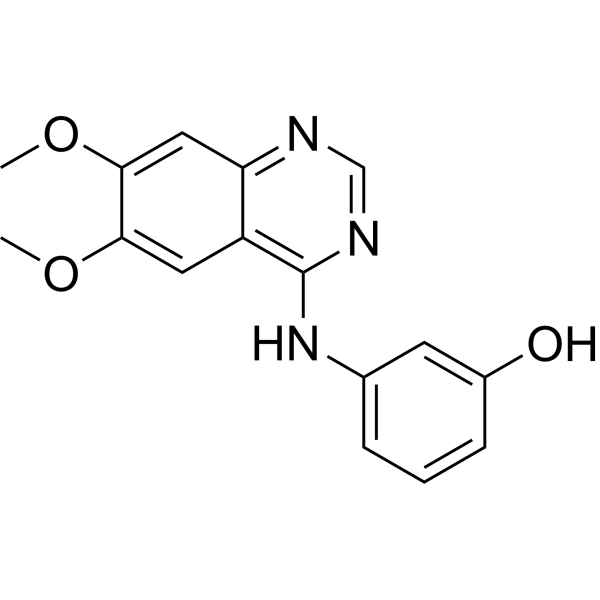
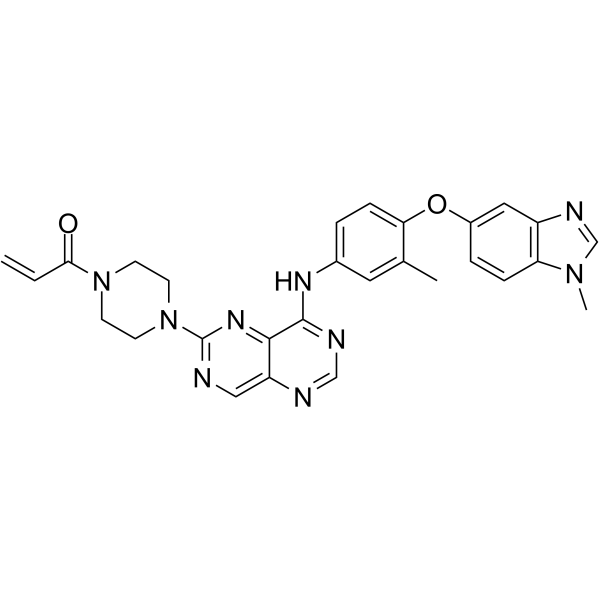 0 ImagesBI-4142 is a potent, highly selective and orally active HER2 inhibitor with an IC50 of 5 nM.
-
Dosimertinib-d5 mesylate
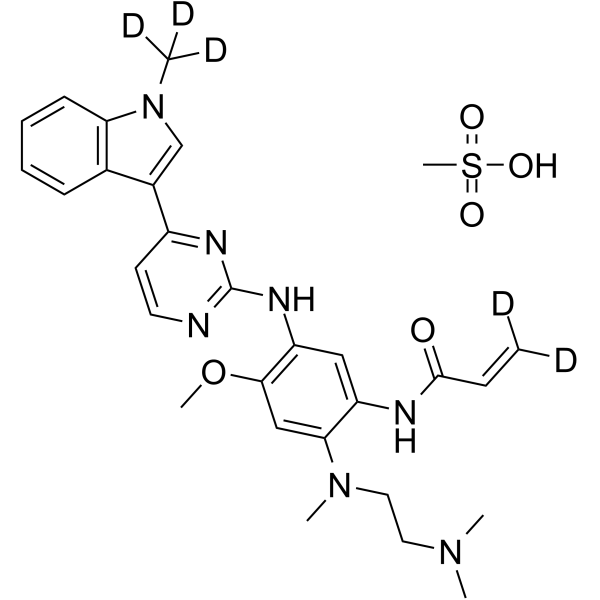 0 ImagesSynonyms: AZD-9291-d5 mesylate; Mereletinib-d5 mesylateDosimertinib-d5 (mesylate) is a potent and orally active EGFR inhibitor. Dosimertinib-d5 (mesylate) decreases the expression of p-EGFR and p-ERK protein levels. Dosimertinib-d5 (mesylate) shows antiproliferative and anti-tumor activity. Dosimertinib-d5 (mesylate) has the potential for the research of non-small-cell lung cancer (NSCLC).
-
Tomuzotuximab
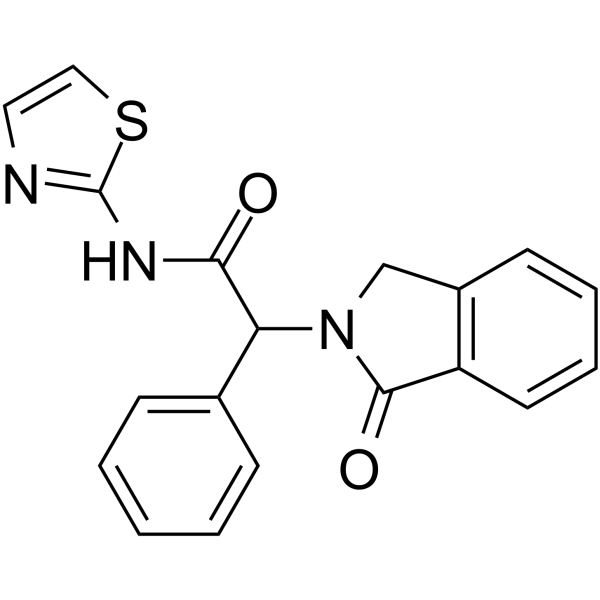
 0 ImagesSynonyms: Anti-Human EGFR Recombinant Antibody; CetuxiMab-GEX, GEXMab52201Tomuzotuximab (Anti-Human EGFR Recombinant Antibody) is a fully human glycoengineered IgG1 monoclonal antibody against EGFR. Tomuzotuximab has anticancer effects.
-
G7-18NATE TFA
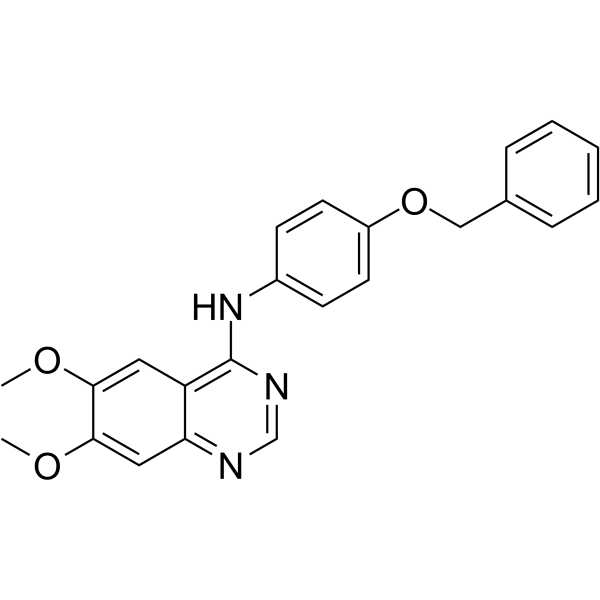
 0 ImagesCat. No.: HY-P10224APurity: 98.06%G7-18NATE TFA is a peptide inhibitor of Grb7. G7-18NATE TFA binds to the Grb7-SH2 domain with micromolar affinity (Kd = 18.1 μM). G7-18NATE TFA inhibits cell proliferation, motility, cell invasion and 3D culture formation in several cancer cell lines.
-
Astragaloside VI
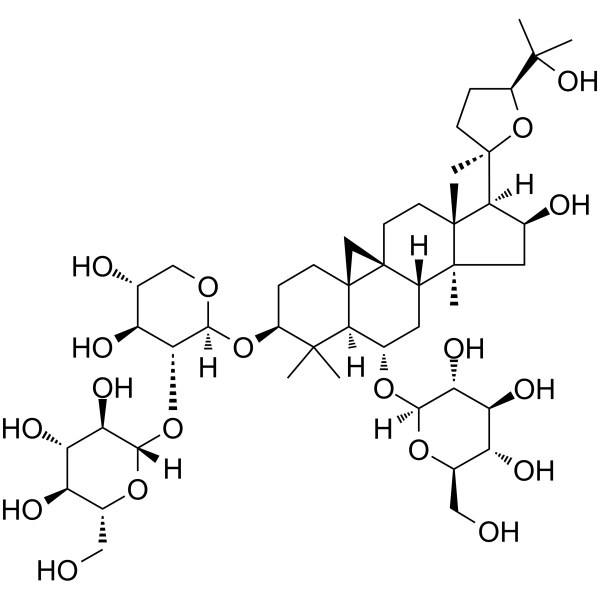 0 ImagesAstragaloside VI could activate EGFR/ERK signalling pathway to improve wound healing.
-
SJF-1528 hemihydrate
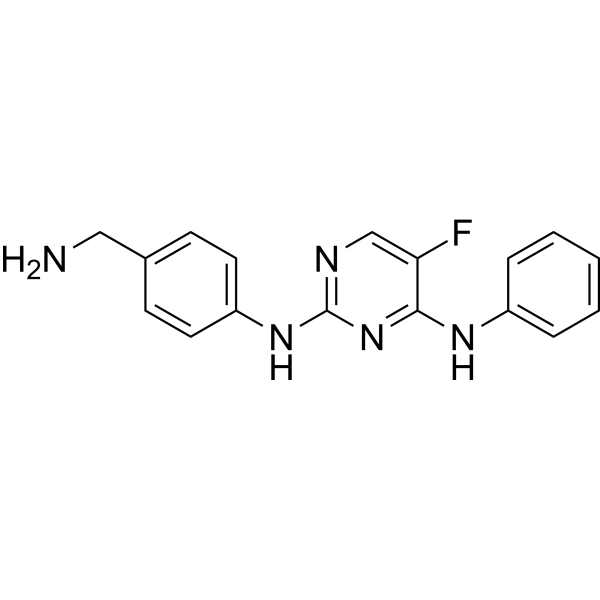
 0 ImagesCat. No.: HY-131864APurity: 98.90%SJF-1528 (PROTAC 1) hemihydrate is a potent EGFR PROTAC degrader with DC50 values of 39.2 nM and 736.2 nM for wild-type EGFR in OVCAR8 cells and Exon 20 Ins mutant EGFR in HeLa cells. SJF-1528 hemihydrate also degrades HER2. SJF-1528 hemihydrate promotes ubiquitination and degradation of EGFR and can be used in breast cancer research.
-
Rociletinib hydrobromide
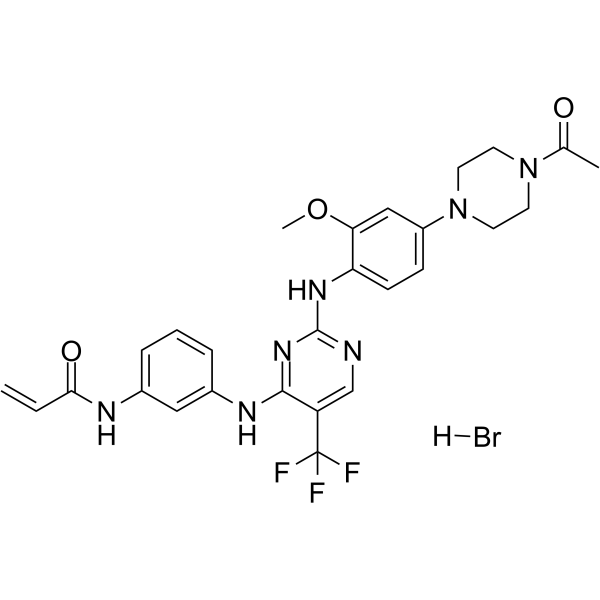 0 ImagesSynonyms: CO-1686 hydrobromide; AVL-301 hydrobromide; CNX-419 hydrobromideRociletinib hydrobromide (CO-1686 hydrobromide) is an orally delivered kinase inhibitor that specifically targets the mutant forms of EGFR including T790M, and the Ki values for EGFRL858R/T790M and EGFRWT are 21.5 nM and 303.3 nM, respectively.
-
Voacamine
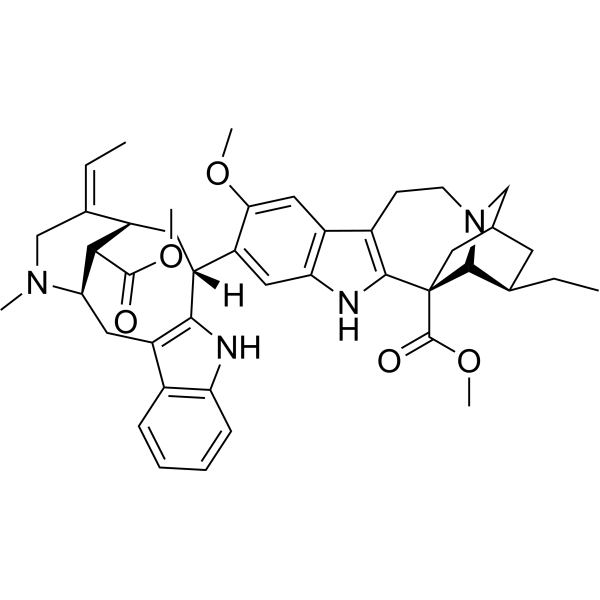 0 ImagesVoacamine is an indole alkaloid with cannabinoid 1 (CB1) antagonistic activity. Voacamine can inhibit nuclear translocation. Voacamine is effective in enhancing the effect of Doxorubicin (HY-15142A) as it interferes with the P-glycoprotein (P-gp) function. Voacamine promotes apoptosis-independent autophagic cell death in human osteosarcoma cells. Voacamine activates mitochondrial-associated apoptosis signaling pathway and inhibition of PI3K/Akt/mTOR signaling pathway to suppress breast cancer progression. Voacamine inhibits EGFR to exert oncogenic activity against colorectal cancer.
-
Anvatabart
 0 ImagesSynonyms: ARX-788