



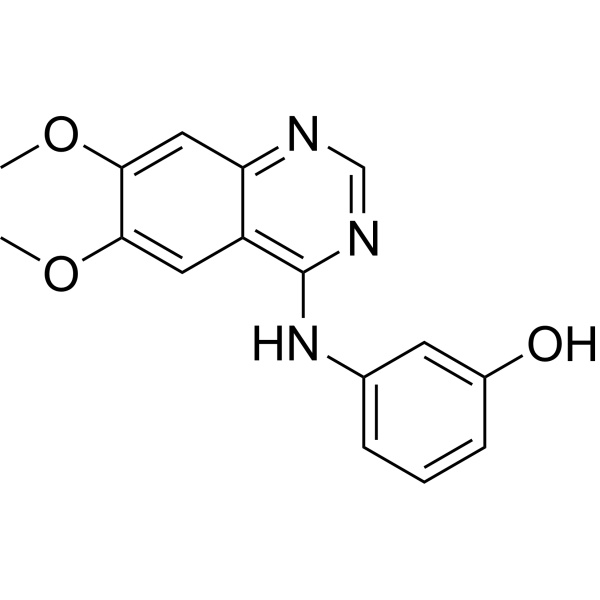
WHI-P180
Based on 1 publication(s) in Google Scholar
WHI-P180 (Janex 3) is a multi-kinase inhibitor; inhibits RET, KDR and EGFR with IC50s of 5 nM, 66 nM and 4 μM, respectively.
For research use only. We do not sell to patients.
- Purity : 99.84%
- CAS No.: 211555-08-7
- Formula: C16H15N3O3
- Molecular Weight:297.31
-
Storage:Powder -20°C, 3 years , 4°C, 2 years ; In solvent -80°C, 2 years , -20°C, 1 year

To place orders, for customer services and technical support, please contact: MedChemExpress USA
Tel: 609-228-6898 E-mail: [email protected] [email protected]


-
 Biological Activity
-
Chemical Information
-
Solvent & Solubility
- Purity & Documentation
- References
-
 Help & FAQs


-
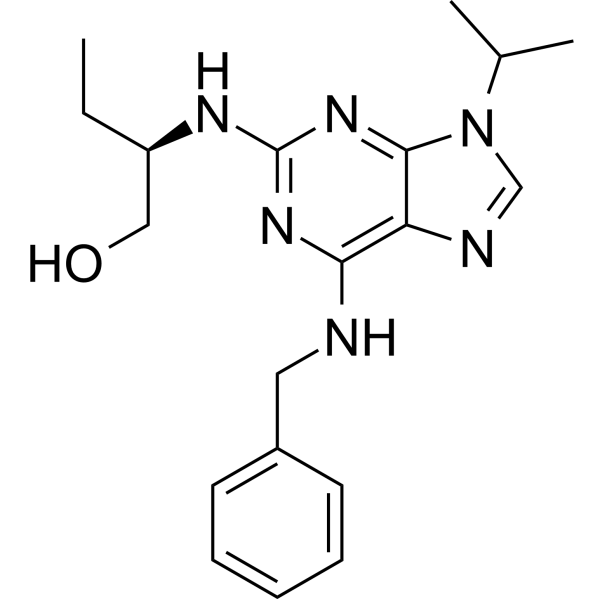
HY-30237
(R)-RoscovitineCDKs Inhibitor -
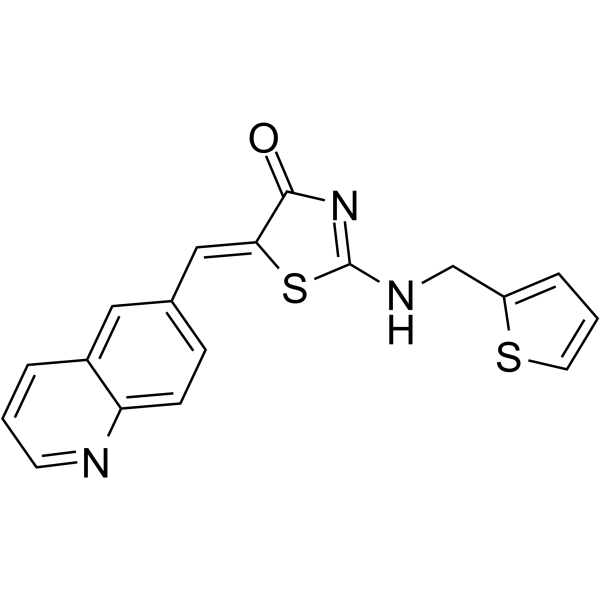
HY-12529
Ro-3306CDK1 Inhibitor -
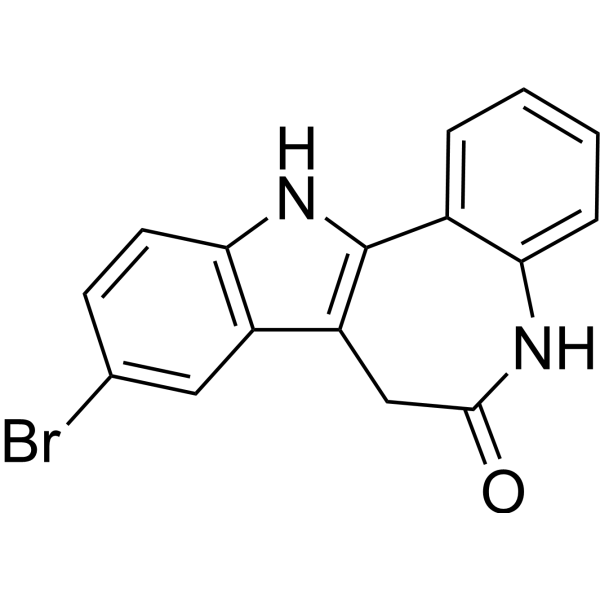
HY-12302
KenpaulloneCDK1/GSK-3β Inhibitor -
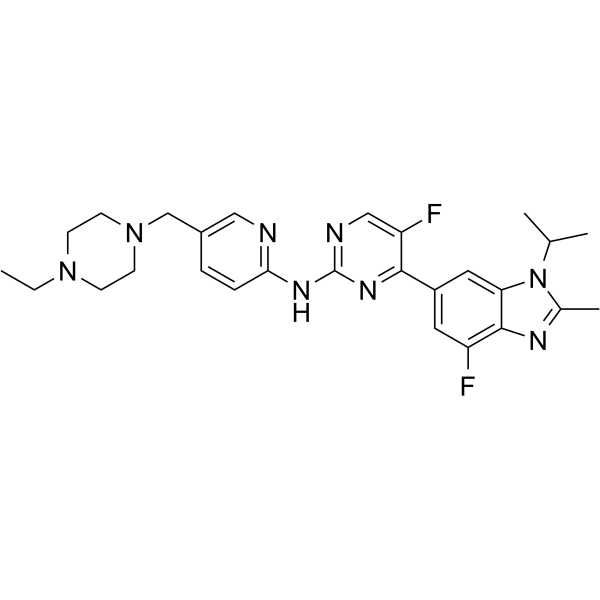
HY-16297A
AbemaciclibCDK4/6 Inhibitor -
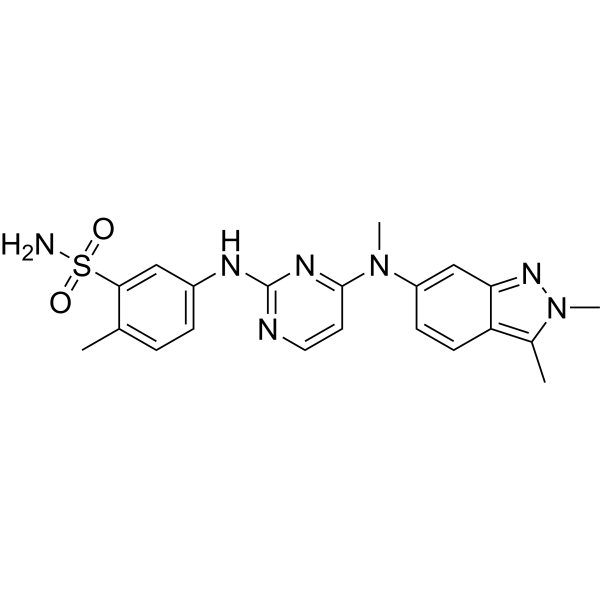
HY-10208
PazopanibVEGFR Inhibitor -
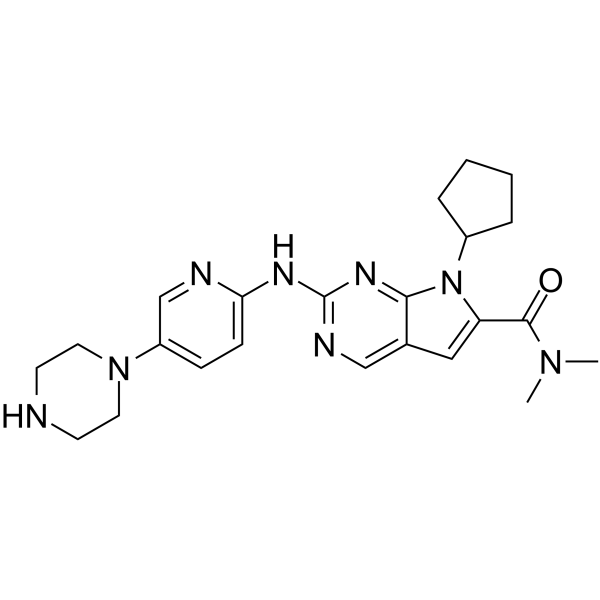
HY-15777
RibociclibCDK4/6 Inhibitor -
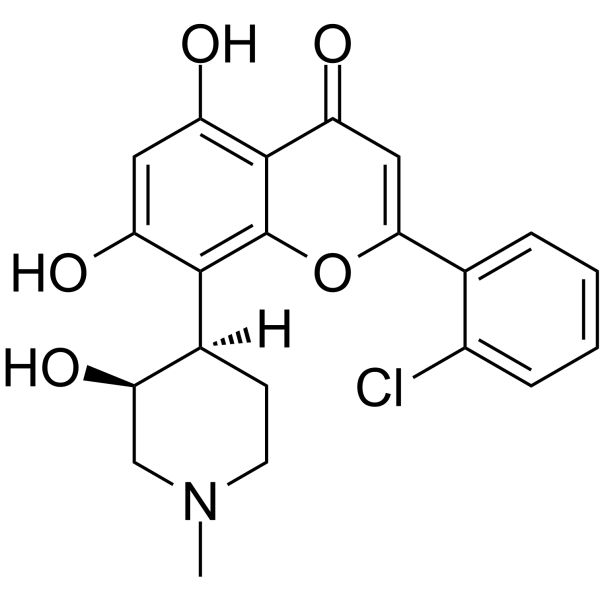
HY-10005
FlavopiridolCDK Inhibitor -
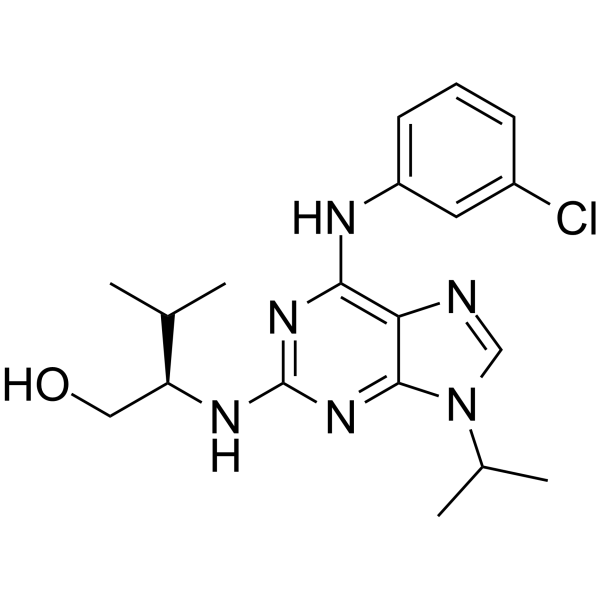
HY-18299A
Purvalanol ACDK Inhibitor -
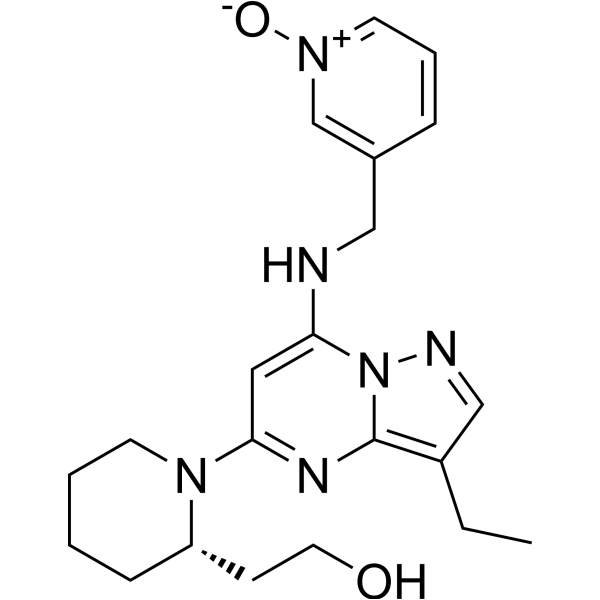
HY-10492
DinaciclibCDK2/5/9 Inhibitor -
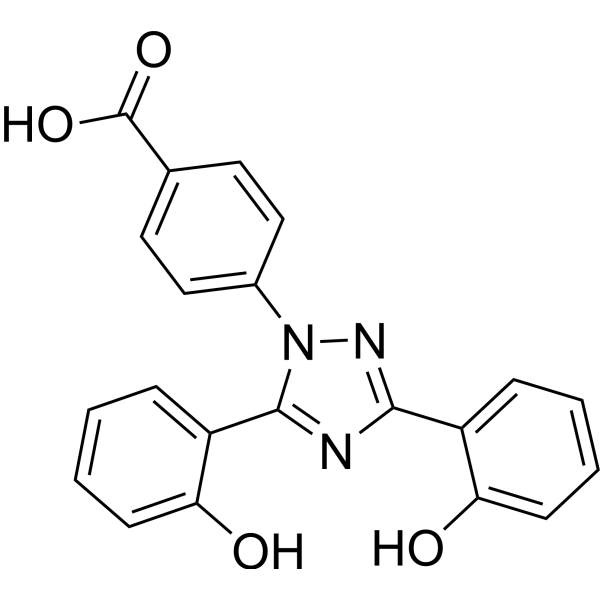
HY-17359
DeferasiroxIron Chelator -
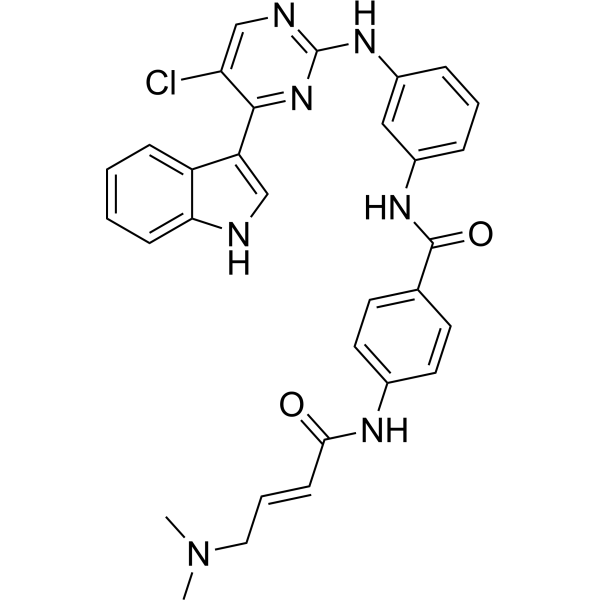
HY-80013
THZ1CDK7 Inhibitor -
HY-10008
SNS-032CDK Inhibitor
Publications Citing Use of MedChemExpress (MCE) WHI-P180
MoreAll VEGFR Isoforms
MoreAll EGFR Isoforms
More

Biological Activity
Description
IC50 & Target
[1]|
EGFR 4 μM (IC50) |
KDR 66 nM (IC50) |
RET 5 nM (IC50) |
Cellular Effect
|
Cell Line

|
Type | Value | Description | References |
|---|---|---|---|---|
| BaF3 | IC50 |
380 nM
Compound: 6
|
Inhibition of KIF5B/RET (unknown origin) expressed in mouse BA/F3 cells assessed as reduction in cell viability after 48 hrs by Cell titre glo-based luminescence assay
Inhibition of KIF5B/RET (unknown origin) expressed in mouse BA/F3 cells assessed as reduction in cell viability after 48 hrs by Cell titre glo-based luminescence assay
|
[PMID: 26874741] |
| BaF3 | IC50 |
890 nM
Compound: 6
|
Inhibition of KDR (unknown origin) expressed in mouse BA/F3 cells assessed as reduction in cell viability after 48 hrs by Cell titre glo-based luminescence assay
Inhibition of KDR (unknown origin) expressed in mouse BA/F3 cells assessed as reduction in cell viability after 48 hrs by Cell titre glo-based luminescence assay
|
[PMID: 26874741] |
| BaF3 | IC50 |
>10000 nM
Compound: 6
|
Cytotoxicity in mouse BA/F3 cells after 48 hrs by Cell titre glo-based luminescence assay
Cytotoxicity in mouse BA/F3 cells after 48 hrs by Cell titre glo-based luminescence assay
|
[PMID: 26874741] |
| HepG2 | IC50 |
18 μM
Compound: 9; WHI-P180
|
Antiproliferative activity against human HepG2 cells assessed as inhibition of cell proliferation by MTT assay
Antiproliferative activity against human HepG2 cells assessed as inhibition of cell proliferation by MTT assay
|
[PMID: 33460739] |
| MCF7 | IC50 |
24 μM
Compound: 9; WHI-P180
|
Antiproliferative activity against human MCF7 cells assessed as inhibition of cell proliferation by MTT assay
Antiproliferative activity against human MCF7 cells assessed as inhibition of cell proliferation by MTT assay
|
[PMID: 33460739] |
| Sf21 | IC50 |
66 nM
Compound: 6
|
Inhibition of recombinant His-tagged human KDR expressed in insect Sf21 cells preincubated for 15 mins followed by substrate addition measured after 20 mins by HTRF assay
Inhibition of recombinant His-tagged human KDR expressed in insect Sf21 cells preincubated for 15 mins followed by substrate addition measured after 20 mins by HTRF assay
|
[PMID: 26874741] |
In Vivo
MedChemExpress (MCE) has not independently confirmed the accuracy of these methods. They are for reference only.


Chemical Information
-
CAS No. 211555-08-7
-
Appearance Solid
-
Molecular Weight 297.31
-
Formula C16H15N3O3
-
Color White to off-white
-
SMILES
COC1=CC2=NC=NC(NC3=CC=CC(O)=C3)=C2C=C1OC
-
Synonyms
Janex 3
-
Shipping
Room temperature in continental US; may vary elsewhere.
-
Storage
Powder -20°C 3 years 4°C 2 years In solvent -80°C 2 years -20°C 1 year


Publications (1)
-
Journal Impact Factor
-
Most Recent
-
Neuropharmacology
Enriched environment mitigates cognitive impairment in pre-adolescent mice following repeated neonatal sevoflurane exposure by reducing TTBK1 expression and Tau phosphorylation. [Abstract]2025 May 1:268:110327. PMID: 39892471


Solvent & Solubility
In Vitro:
DMSO : 25 mg/mL (84.09 mM; Need ultrasonic; Hygroscopic DMSO has a significant impact on the solubility of product, please use newly opened DMSO)
Please refer to the solubility information to select the appropriate solvent. Once prepared, please aliquot and store the solution to prevent product inactivation from repeated freeze-thaw cycles.
Storage method and period of stock solution: -80°C, 2 years; -20°C, 1 year. When stored at -80°C, please use it within 2 years. When stored at -20°C, please use it within 1 year.
Please refer to the solubility information to select the appropriate solvent. Once prepared, please aliquot and store the solution to prevent product inactivation from repeated freeze-thaw cycles.
Storage method and period of stock solution: -80°C, 2 years; -20°C, 1 year. When stored at -80°C, please use it within 2 years. When stored at -20°C, please use it within 1 year.
Concentration (start) × Volume (start) = Concentration (final) × Volume (final)
In Vivo:
Select the appropriate dissolution method based on your experimental animal and administration route.
- For the following dissolution methods, please ensure to first prepare a clear stock solution using an In Vitro approach and then sequentially add co-solvents:
- To ensure reliable experimental results, the clarified stock solution can be appropriately stored based on storage conditions. As for the working solution for In Vivo experiments, it is recommended to prepare freshly and use it on the same day.
- The percentages shown for the solvents indicate their volumetric ratio in the final prepared solution. If precipitation or phase separation occurs during preparation, heat and/or sonication can be used to aid dissolution.
Add each solvent one by one: 10% DMSO 40% PEG300 5% Tween-80 45% Saline
Solubility: ≥ 2.5 mg/mL (8.41 mM); Clear solution
This protocol yields a clear solution of ≥ 2.5 mg/mL (saturation unknown).
Taking 1 mL working solution as an example, add 100 μL DMSO stock solution (25.0 mg/mL) to 400 μL PEG300, and mix evenly; then add 50 μL Tween-80 and mix evenly; then add 450 μL Saline to adjust the volume to 1 mL.
Preparation of Saline: Dissolve 0.9 g sodium chloride in ddH₂O and dilute to 100 mL to obtain a clear Saline solution.
For the following dissolution methods, please prepare the working solution directly:
It is recommended to prepare fresh solutions and use them promptly within a short period of time.
The percentages shown for the solvents indicate their volumetric ratio in the final prepared solution. If precipitation or phase separation occurs during preparation, heat and/or sonication can be used to aid dissolution.
Add each solvent one by one: 50% PEG300 50% Saline
Solubility: 10 mg/mL (33.63 mM); Suspended solution; Need ultrasonic
In Vivo Dissolution Calculator
Please enter the basic information of animal experiments:
-
-
-
-
Recommended: Prepare an additional quantity of animals to account for potential losses during experiments.
Please enter your animal formula composition:
-
%DMSO +
Recommended: Keep the proportion of DMSO in working solution below 2% if your animal is weak.
-
%+
-
+%Tween-80 + +
-
%Saline +
The co-solvents required include: DMSO, . All of co-solvents are available by MedChemExpress (MCE). , Tween 80. All of co-solvents are available by MedChemExpress (MCE).
Working solution concentration: 0.22 mg/mL
Method for preparing stock solution: mg drug dissolved in μL DMSO. Stock solution concentration: mg/mL.
1. Take μL DMSO stock solution;
2. Add μL .
μL , mix evenly;
3. Then add μL Tween 80, mix evenly;
4. Then add μL
Please ensure that the stock solution in the first step is dissolved to a clear state, and add co-solvents in sequence. You can use ultrasonic heating (ultrasonic cleaner, recommended frequency 20-40 kHz), vortexing, etc. to assist dissolution.


Purity & Documentation
-
Data Sheet (277 KB)
-
SDS (393 KB)
- English - EN (393 KB)
- Français - FR (393 KB)
- Deutsch - DE (393 KB)
- Norwegian - NO (393 KB)
- Español - ES (393 KB)
- Swedish - SV (393 KB)
- Italian - IT (393 KB)
- Korean - KR (393 KB)
- Portuguese - PT (393 KB)
-
Handling Instructions (2659 KB)
References
[1]. Newton R, et al. The discovery of 2-substituted phenol quinazolines as potent RET kinase inhibitors with improved KDR selectivity. Eur J Med Chem. 2016 Apr 13;112:20-32. [Content Brief]
[2]. Ghosh S, et al. 4-[3-Bromo-4-hydroxyphenyl)amino]-6,7-dimethoxyquinazolin-1-ium chloride methanol solvateand 4-[(3-hydroxyphenyl)amino]-6,7-dimethoxy-1-quinazolinium chloride. Acta Crystallogr C. 2001 Jan;57(Pt 1):76-8. [Content Brief]
[3]. Chen CL, et al. Pharmacokinetics and biologic activity of the novel mast cell inhibitor, 4-(3-hydroxyphenyl)-amino-6,7-dimethoxyquinazoline in mice. Pharm Res. 1999 Jan;16(1):117-22. [Content Brief]


Complete Stock Solution Preparation Table
Please refer to the solubility information to select the appropriate solvent. Once prepared, please aliquot and store the solution to prevent product inactivation from repeated freeze-thaw cycles.
Storage method and period of stock solution: -80°C, 2 years; -20°C, 1 year. When stored at -80°C, please use it within 2 years. When stored at -20°C, please use it within 1 year.
| Optional Solvent | Concentration Solvent Mass | 1 mg | 5 mg | 10 mg | 25 mg |
|---|---|---|---|---|---|
| DMSO | 1 mM | 3.3635 mL | 16.8175 mL | 33.6349 mL | 84.0873 mL |
| 5 mM | 0.6727 mL | 3.3635 mL | 6.7270 mL | 16.8175 mL | |
| 10 mM | 0.3363 mL | 1.6817 mL | 3.3635 mL | 8.4087 mL | |
| 15 mM | 0.2242 mL | 1.1212 mL | 2.2423 mL | 5.6058 mL | |
| 20 mM | 0.1682 mL | 0.8409 mL | 1.6817 mL | 4.2044 mL | |
| 25 mM | 0.1345 mL | 0.6727 mL | 1.3454 mL | 3.3635 mL | |
| 30 mM | 0.1121 mL | 0.5606 mL | 1.1212 mL | 2.8029 mL | |
| 40 mM | 0.0841 mL | 0.4204 mL | 0.8409 mL | 2.1022 mL | |
| 50 mM | 0.0673 mL | 0.3363 mL | 0.6727 mL | 1.6817 mL | |
| 60 mM | 0.0561 mL | 0.2803 mL | 0.5606 mL | 1.4015 mL | |
| 80 mM | 0.0420 mL | 0.2102 mL | 0.4204 mL | 1.0511 mL |


WHI-P180 Related Classifications
HY-15769 Related Classifications
 Powered by Bioz