



P-glycoprotein
P-gp; Pgp; Multidrug resistance protein 1; MDR1; ATP-binding cassette sub-family B member 1; ABCB1; Cluster of differentiation 243; CD243
P-glycoprotein (P-gp) also known as multidrug resistance protein 1 (MDR1) is an important protein of the cell membrane that pumps many foreign substances out of cells. More formally, it is an ATP-dependent efflux pump with broad substrate specificity. P-gp is extensively distributed and expressed in the intestinal epithelium where it pumps xenobiotics (such as toxins or drugs) back into the intestinal lumen, in liver cells where it pumps them into bile ducts, in the cells of the proximal tubular of the kidney where it pumps them into urine-conducting ducts, and in the capillary endothelial cells comprising the blood–brain barrier and blood-testis barrier, where it pumps them back into the capillaries. Some cancer cells also express large amounts of P-gp, which renders these cancers multi-drug resistant. P-gp is an ATP-dependent drug efflux pump for xenobiotic compounds with broad substrate specificity. It is responsible for decreased drug accumulation in multidrug-resistant cells and often mediates the development of resistance to anticancer drugs. This protein also functions as a transporter in the blood–brain barrier.
All Product Categories
-
P-glycoprotein Inhibitors
(277)
View all products
-
P-glycoprotein Agonists
(2)
View all products
-
P-glycoprotein Antagonist
(1)
View all products
-
P-glycoprotein Activators
(3)
View all products
-
P-glycoprotein Modulators
(24)
View all products
-
P-glycoprotein Inducer
(1)
View all products
-
P-glycoprotein Controls
(3)
View all products
-
P-glycoprotein Substrates
(22)
View all products
-
P-glycoprotein Ligand
(1)
View all products
-
P-glycoprotein Related Products (375)
Related Products (375)

-
Antibodies (3)
-
Quinidine hydrochloride
 0 ImagesCat. No.: HY-W115674CAS No.: 1668-99-1Quinidine hydrochloride is an orally active antiarrhythmic agent. Quinidine hydrochloride reduces the expression level of P-gp, inhibits P-gp-mediated efflux, increases the intracellular accumulation of P-gp substrates, induces PARP cleavage and Caspase-3 activation, and elevates the proportion of Apoptotic cells at the sub-G1 phase. Quinidine hydrochloride exerts sustained block and open-channel block effects on IK(f). Quinidine hydrochloride alters the urinary metabolic ratio of Amphetamine, modulates the Pentylenetetrazol-induced seizure threshold, and regulates the anticonvulsant effect of Dextromethorphan. Quinidine hydrochloride can be used in studies related to uterine sarcoma and seizures.
-
ABCB1-IN-1
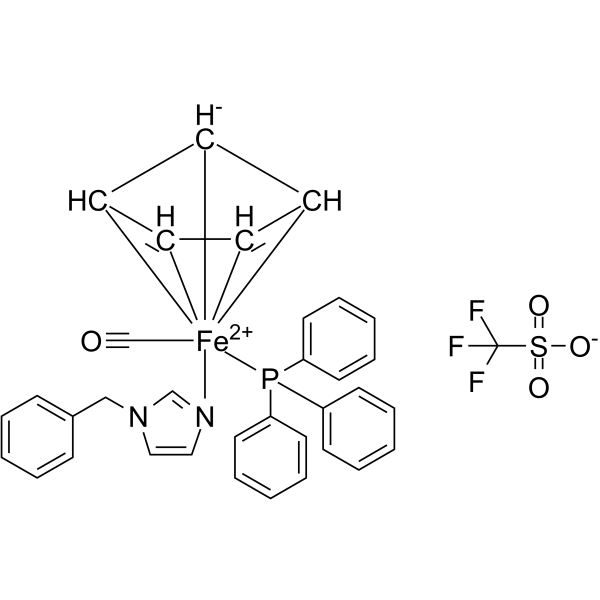 0 ImagesCat. No.: HY-149366CAS No.: 2986412-70-6ABCB1-IN-1 (compound 3) is a potent ABCB1 inhibitor. ABCB1-IN-1 induces cell apoptosis. ABCB1-IN-1 bearing 1-benzylimidazole has IC50 values of 1.26 μM and 2.21 μM for Colo205 and Colo320 cells, respectively.
-
DM-4107
 0 ImagesCat. No.: HY-W702908CAS No.: 1346599-75-4DM-4107 is a major metabolite of Tolvaptan (HY-17000) that is metabolized primarily by the CYP3A4 enzyme in the liver. DM-4107 inhibits the ability of human liver transporters NTCP, BSEP, MRP3, MRP4 (IC50 values are 95.6, 119, 61.2, 37.9 μM, respectively) and bile acid transport in SCHH cells. DM-4107 can be used in the study of autosomal dominant polycystic kidney disease (ADPKD).
-
CRL-42872
 0 ImagesCat. No.: HY-119238CAS No.: 256385-24-7CRL-42872 is an orally active, highly bioavailable Gp IIb/IIIa platelet receptor inhibitor. CRL-42872 inhibits the binding of fibrinogen to the Gp IIb/IIIa receptor, thereby suppressing collagen-induced platelet aggregation. CRL-42872 is widely used in thrombosis-related studies.
-
(S)-Tenacissoside F
 0 ImagesCat. No.: HY-N16577CAS No.: 928151-78-4(S)-Tenacissoside F (Compound P20) is a polyoxypregnane compound found in Marsdenia tenacissima. (S)-Tenacissoside F can inhibit the drug efflux activity mediated by P-glycoprotein (P-gp/ABCB1) and reverse multidrug resistance. (S)-Tenacissoside F can be used for the research of cancer, such as colon cancer.
-
R 101933
 0 ImagesCat. No.: HY-165491CAS No.: 278798-78-0R 101933 is a P-glycoprotein (P-gp) inhibitor. R 101933 can be used for the research of cancer.
-
P-gp modulator 3
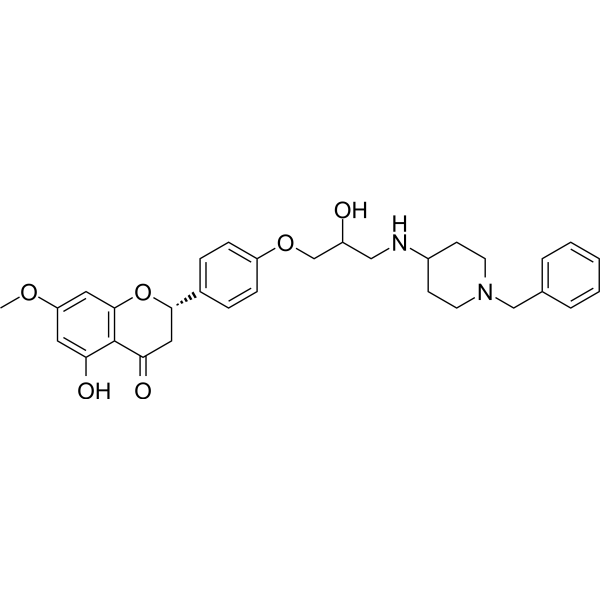 0 ImagesCat. No.: HY-146118CAS No.: 2987145-15-1P-gp modulator 3 (Compound 37) is a potent, competitive, allosteric P-glycoprotein (P-gp) modulator.
-
Atazanavir sulfate (Standard)
 0 ImagesSynonyms: BMS-232632 sulfate (Standard)Atazanavir (sulfate) (Standard) is the analytical standard of Atazanavir (sulfate). This product is intended for research and analytical applications. Atazanavir (BMS-232632) sulfate, a highly selective HIV-1 protease inhibitor, is the first protease inhibitor approved for once-daily administration. Atazanavir sulfate is a substrate and inhibitor of CYP3A4, and an inhibitor and inducer of P-glycoprotein (P-gp). Atazanavir sulfate is also a SARS-CoV 3CLpro inhibitor with an IC50 of 3.49 μM.
-
Carmegliptin hydrochloride
 0 ImagesCat. No.: HY-10289ACAS No.: 813452-14-1Synonyms: RO-4876904 hydrochlorideCarmegliptin hydrochloride (RO-4876904 hydrochloride) is an orally active and potent DPP‑IV inhibitor with a human DPP‑IV IC50 of 6.8 nM. Carmegliptin hydrochloride binds to the S1 pocket of DPP‑IV, blocks the degradation of GLP‑1, potentiates endogenous GLP‑1, increases plasma insulin levels, alleviates hyperglycemia, improves glucose tolerance. Carmegliptin hydrochloride acts as a substrate for human P‑glycoprotein without inhibiting the transporter, shows low in vitro cell permeability. Carmegliptin hydrochloride can be used for the research of type 2 diabetes, non‑insulin‑dependent diabetes mellitus.
-
Verapamil-d7
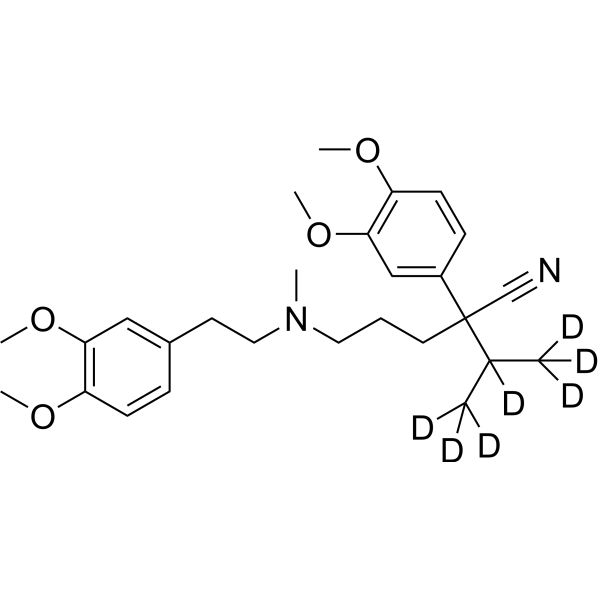 0 ImagesCat. No.: HY-14275S1CAS No.: 100578-79-8Synonyms: (±)-Verapamil-d7; CP-16533-1-d7Verapamil-d7 is the deuterium labeled Verapamil (HY-14275). Verapamil ((±)-Verapamil) is a calcium channel blocker and a potent and orally active first-generation P-glycoprotein (P-gp) inhibitor. Verapamil also inhibits CYP3A4. Verapamil has the potential for high blood pressure, heart arrhythmias and angina research.
-
Quinidine-13C, d2 hydrochloride
 0 ImagesCat. No.: HY-B1751S1Quinidine-13C, d2 hydrochloride is the 13C, d2 labeled Quinidine hydrochloride (HY-W115674). Quinidine hydrochloride is an orally active antiarrhythmic agent. Quinidine hydrochloride reduces the expression level of P-gp, inhibits P-gp-mediated efflux, increases the intracellular accumulation of P-gp substrates, induces PARP cleavage and Caspase-3 activation, and elevates the proportion of Apoptotic cells at the sub-G1 phase. Quinidine hydrochloride exerts sustained block and open-channel block effects on IK(f). Quinidine hydrochloride alters the urinary metabolic ratio of Amphetamine, modulates the Pentylenetetrazol-induced seizure threshold, and regulates the anticonvulsant effect of Dextromethorphan. Quinidine hydrochloride can be used in studies related to uterine sarcoma and seizures.
-
11α-O-Benzoyl-12β-O-acetyltenacigenin B
 0 ImagesCat. No.: HY-N13157CAS No.: 154022-52-311α-O-Benzoyl-12β-O-acetyltenacigenin B is a P-glycoprotein (Pgp) inhibitor derived from Marsdenia tenacissima and belongs to the Tenacigenin B (HY-N1168) derivatives. 11α-O-Benzoyl-12β-O-acetyltenacigenin B can inhibit multidrug resistance (MDR) caused by P-glycoprotein (Pgp) overexpression in HepG2/Dox cells and holds potential for research in the field of cancer.
-
Tubulin polymerization/P-gp-IN-1
 0 ImagesCat. No.: HY-178466Tubulin polymerization/P-gp-IN-1 is a Tubulin polymerization/P-gp dual inhibitor. Tubulin polymerization/P-gp-IN-1 inhibits tubulin polymerization and induces G2/M arrest and apoptosis. Tubulin polymerization/P-gp-IN-1 reverses MDR by inhibiting P-gp efflux function. Tubulin polymerization/P-gp-IN-1 has dual functions: direct antitumor activity and reversal of P-gp-mediated Cisplatin (HY-17394) resistance. Tubulin polymerization/P-gp-IN-1 stable binds to the tubulin CBS (ΔG = −12.4 kcal/mol) and the P-gp hydrophobic lumen (ΔG = −10.8 kcal/mol). Tubulin polymerization/P-gp-IN-1 can be used for the study of drug-resistant cervical cancer.
-
(E/Z)-Piperine
 0 ImagesSynonyms: (E/Z)-Bioperine; (E/Z)-1-Piperoylpiperidine(E/Z)-Piperine ((E/Z)-Bioperine) is an alkaloid with a pungent property. (E/Z)-Piperine shows anti-inflammation, immunomodulatory and anti-cancer, antispasmodic and anti-secretory effects. (E/Z)-Piperine demonstrates significant neuroprotective effect in Alzheimer’s disease and Parkinson’s disease.
-
Bromotetrandrine
 0 ImagesCat. No.: HY-121247CAS No.: 62067-29-2Synonyms: 5-Bromotetrandrine; BrTet; W198Bromotetrandrine is a potent inhibitor of P-glycoprotein (P-gp)-mediated multidrug resistance (MDR). Bromotetrandrine shows significant MDR reversal activity in vitro and in vivo, which may be related to the inhibition of P-gp overexpression and the increase in intracellular accumulation of anticancer agents. Bromotetrandrine is a brominated derivative of tetrandrine, which is promising for MDR modulator for tumor assessment.
-
DM-4103
 0 ImagesCat. No.: HY-W702907CAS No.: 1346599-56-1DM-4103 is a major metabolite of Tolvaptan (HY-17000) that is metabolized primarily by the CYP3A4 enzyme in the liver. DM-4103 inhibits the ability of human liver transporters NTCP, BSEP, MRP2, MRP3, MRP4 (IC50 values are 16.3, 4.15, 51.0, 44.6, 4.26 μM, respectively) and bile acid transport in SCHH cells. DM-4103 can be used in the study of autosomal dominant polycystic kidney disease (ADPKD).
-
Norverapamil hydrochloride (Standard)
 0 ImagesCat. No.: HY-100750RCAS No.: 67812-42-4Synonyms: (±)-Norverapamil hydrochloride (Standard); D591 hydrochloride (Standard)Norverapamil (hydrochloride) (Standard) is the analytical standard of Norverapamil (hydrochloride). This product is intended for research and analytical applications. Norverapamil hydrochloride ((±)-Norverapamil hydrochloride), an N-demethylated metabolite of Verapamil, is a L-type calcium channel blocker and a P-glycoprotein (P-gp) function inhibitor[1][2].
-
Selamectin (Standard)
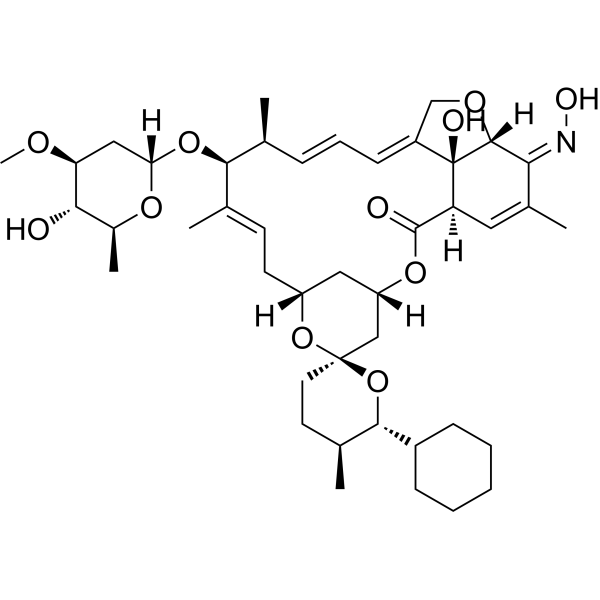 0 ImagesSelamectin (Standard) is the analytical standard of Selamectin. This product is intended for research and analytical applications. Selamectin, a semi-synthetic macrocyclic lactone, is a potent parasiticide and anthelminthic. Selamectin activates glutamate-gated chloride channels in neurons and pharyngeal muscles to prevent heartworm, Lymphatic filariae, and nematode infection. Selamectin is also a potent P-glycoprotein substrate and a P-glycoprotein inhibitor with an IC50 of 120 nM.
-
PROTAC CYP1B1 degrader-2
 0 ImagesCat. No.: HY-158429CAS No.: 2836297-26-6PROTAC CYP1B1 degrader-2 is a CYP1B1 PROTAC degrader with a DC50 of approximately 0.1 nM. PROTAC CYP1B1 degrader-2 induces ubiquitination and proteasomal degradation of CYP1B1, and forms a ternary complex with VHL ubiquitin ligase and CYP1B1. PROTAC CYP1B1 degrader-2 inhibits P-gp. PROTAC CYP1B1 degrader-2 inhibits FAK/SRC. PROTAC CYP1B1 degrader-2 exhibits anticancer activity against paclitaxel (HY-B0015)-resistant non-small cell lung cancer. PROTAC CYP1B1 degrader-2 can be used in studies related to non-small cell lung cancer.
-
Glycocholic acid sodium (Standard)
 0 ImagesCat. No.: HY-N1423ARCAS No.: 863-57-0Glycocholic acid (sodium) (Standard) is the analytical standard of Glycocholic acid sodium (HY-N1423A). This product is intended for research and analytical applications. Glycocholic acid sodium is a bile acid derivative. Glycocholic acid downregulates MDR1, Bcl-2, MRP1, MRP2 and FXR, upregulates Bax, p53, caspase-9, caspase-3, TGR5 and S1PR2. Glycocholic acid sodium inhibits multidrug resistance and efflux pumps, induces mitochondrial apoptosis, and enhances chemosensitivity. Glycocholic acid sodium modulates related bile acid receptor signaling. Glycocholic acid sodium suppresses growth and conjugation of Enterobacteriaceae and increases their antibiotic susceptibility. Glycocholic acid sodium can be used for the research of colon adenocarcinoma and cholangiocarcinoma (CCA).




