



PDGFR
Platelet-derived growth factor receptor
PDGFR (Platelet-derived growth factor receptors) are cell surface tyrosine kinase receptors for members of the platelet-derived growth factor (PDGF) family. PDGF subunits -A and -B are important factors regulating cell proliferation, cellular differentiation, cell growth, development and many diseases including cancer. There are two forms of the PDGFR: PDGFR alpha and PDGFR beta.
PDGFR Isoform Specific Products
All Product Categories
-
PDGFR Inhibitors
(273)
View all products
-
PDGFR Antagonist
(1)
View all products
-
PDGFR Activators
(3)
View all products
-
PDGFR Modulators
(2)
View all products
-
PDGFR Chemical
(1)
View all products
-
PDGFR Control
(1)
View all products
-
PDGFR Ligands
(3)
View all products
-
PDGF-R-alpha Proteins
(12)
View all products
-
PDGF-R-beta Proteins
(8)
View all products
-
PDGFR Proteins
(22)
View all products
-
PDGFR Related Products (315)
Related Products (315)

-
Recombinant Proteins (22)
-
Antibodies (5)
-
PDGFR Isoform Comparison
-
SU14813 maleate
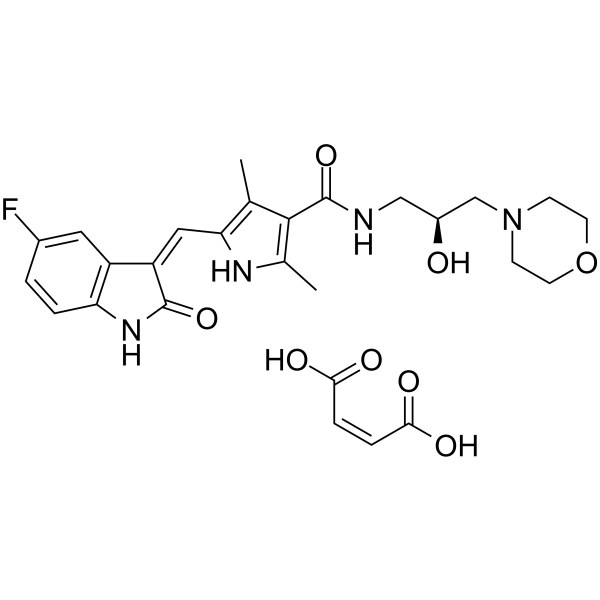 0 ImagesSU14813 maleate is a multi-targeted receptor tyrosine kinases inhibitor with IC50s of 50, 2, 4, 15 nM for VEGFR2, VEGFR1, PDGFRβ and KIT.
-
SU4984
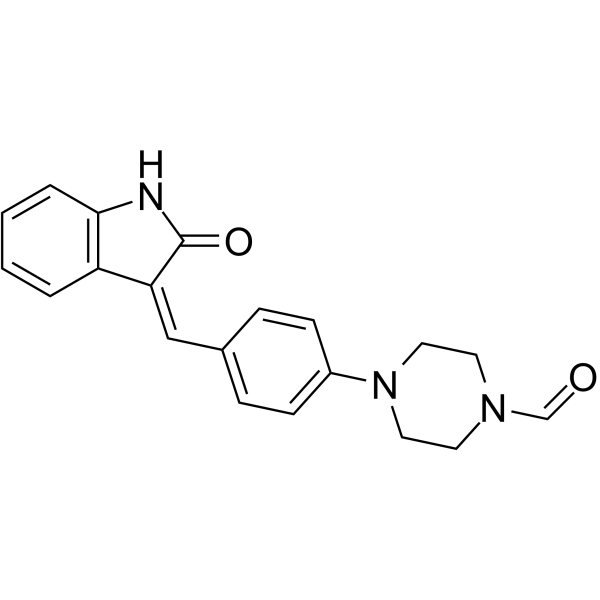 0 ImagesSU4984 is a protein tyrosine kinase inhibitor, with an IC50 of 10-20 μM for fibroblast growth factor receptor 1 (FGFR1). SU4984 is also inhibits platelet-derived growth factor receptor, and insulin receptor. SU4984 can be used for the research of cancer.
-
Labuxtinib
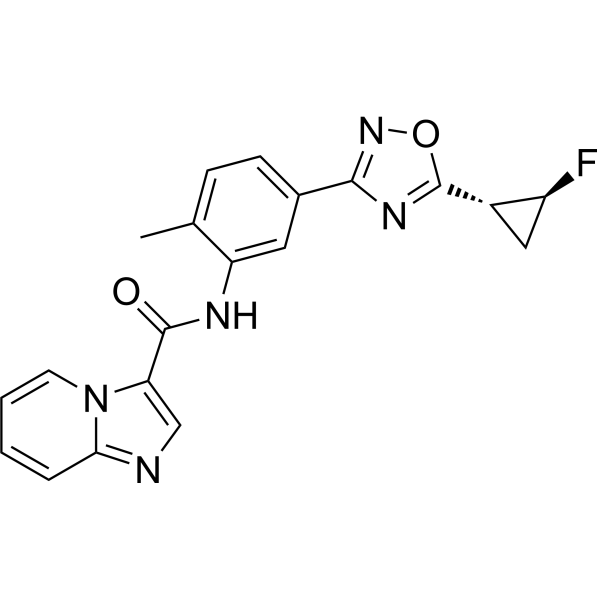 0 ImagesSynonyms: EVT-8565072; THB335Labuxtinib (EVT-8565072; THB335) is a potent dual inhibitor of c-Kit and PDGFR. Labuxtinib exhibits potent inhibitory activity against wild-type c-Kit (IC50 = 0.005 μM). Labuxtinib inhibits SCF-dependent and PDGF-dependent cell proliferation, and blocks the proliferation of cells dependent on c-Kit or PDGFR signaling pathways. In animal models of skin allergy, Labuxtinib depletes skin mast cells and significantly alleviates anaphylactic shock responses. Labuxtinib can be used in research on mast cell-related diseases, respiratory diseases, inflammatory diseases, fibrotic diseases, metabolic diseases, and other related conditions.
-
Rinucumab
 0 ImagesSynonyms: REGN 2176Rinucumab (REGN 2176) is an anti-PDGFR-β antibody. Rinucumab is used for research on neovascular age-related macular degeneration.
-
Dovitinib lactate
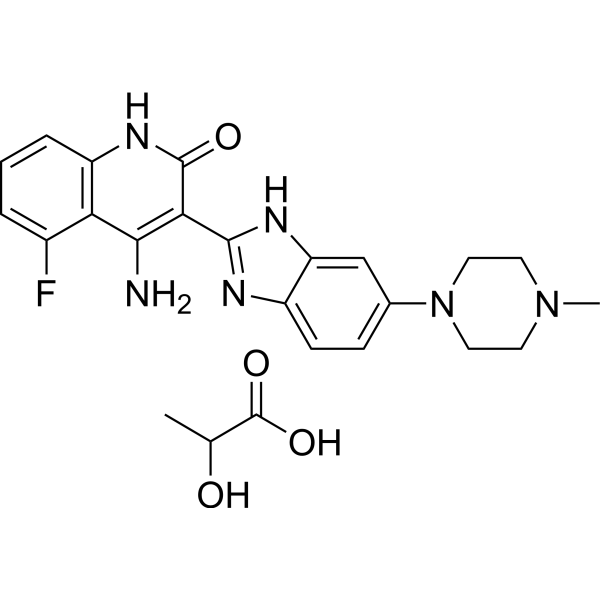 0 ImagesSynonyms: CHIR-258 lactate; TKI-258 lactate
-
Ansornitinib
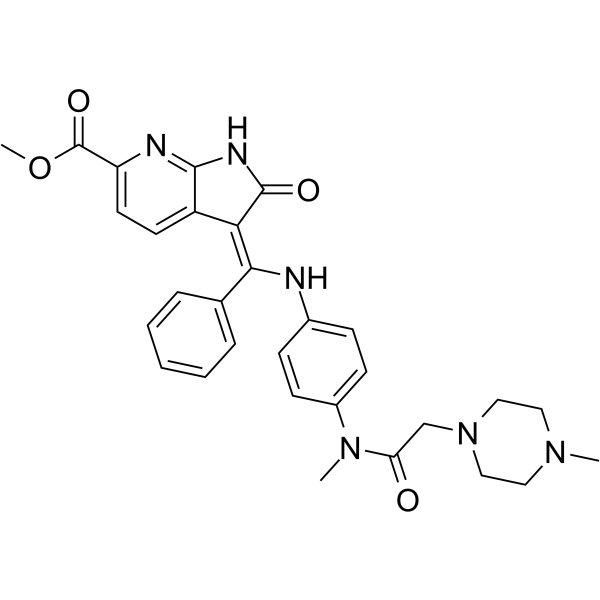 0 ImagesSynonyms: ANG-3070Ansornitinib is an orally active dual kinase inhibitor that inhibits platelet-derived growth factor receptor (PDGFR) and vascular endothelial growth factor receptor (VEGFR2). Ansornitinib can be used as an antifibrotic agent in lung, liver, kidney, and gastrointestinal fibrotic diseases.
-
Imatinib-d4
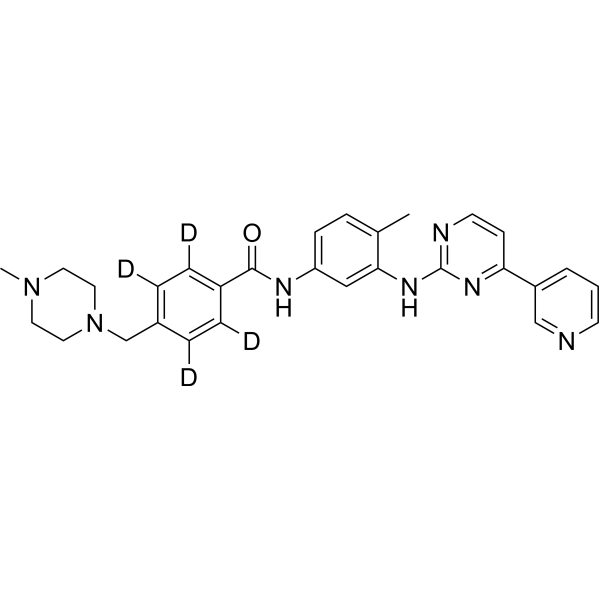 0 ImagesSynonyms: STI571 d4; CGP-57148B d4
-
1-Phenylindole
 0 Images1-Phenylindole (Compound 8) is a 1-Phenylbenzimidazole analogue. 1-Phenylindole shows IC50 values of >50 μM and >50 μM for PDGFR and FGFR, respectively. 1-Phenylbenzimidazole is a selective PDGFR inhibitor.
-
Ilorasertib hydrochloride
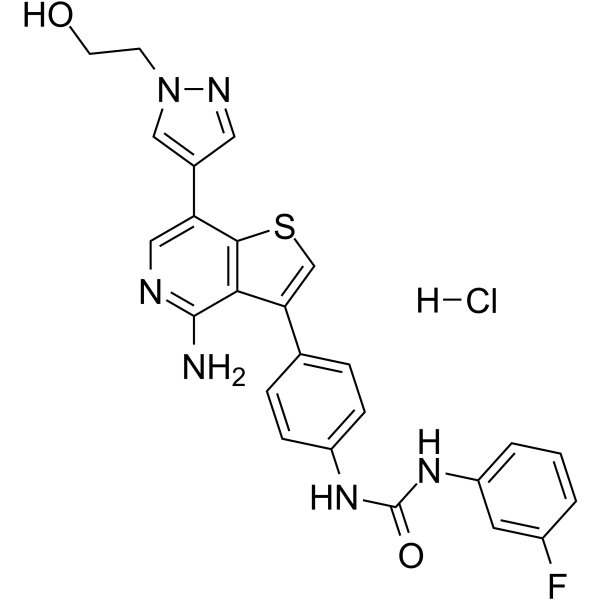 0 ImagesSynonyms: ABT-348 hydrochlorideIlorasertib (ABT-348) hydrochloride is a potent, orally active and ATP-competitive aurora inhibitor with IC50s of116, 5, 1 nM for aurora A, aurora B, aurora C, respectively. Ilorasertib hydrochloride also is a potent VEGF, PDGF inhibitor. Ilorasertib hydrochloride has the potential for the research of acute myeloid leukemia (AML) and myelodysplastic syndrome (MDS).
-
Tandutinib hydrochloride
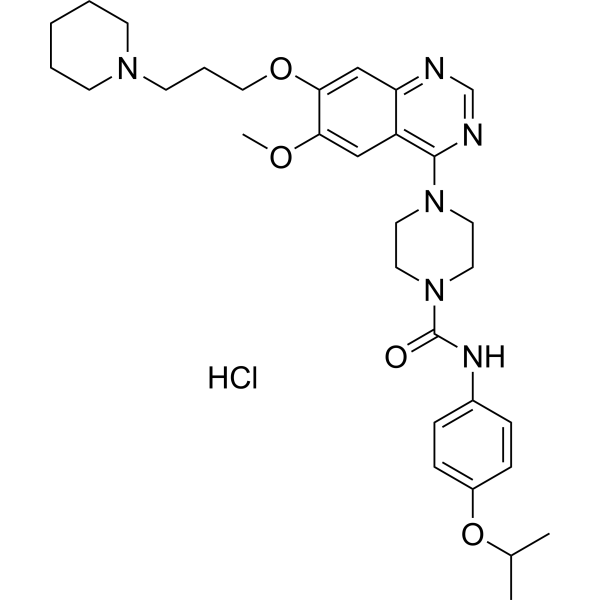 0 ImagesSynonyms: MLN518 hydrochloride; CT53518 hydrochlorideTandutinib hydrochloride (MLN518 hydrochloride) is a potent and selective inhibitor of the FLT3 with an IC50 of 0.22 μM, and also inhibits c-Kit and PDGFR with IC50s of 0.17 μM and 0.20 μM, respectively. Tandutinib hydrochloride can be used for acute myelogenous leukemia (AML). Tandutinib hydrochloride has the ability to cross the blood-brain barrier.
-
NVP-ACC789
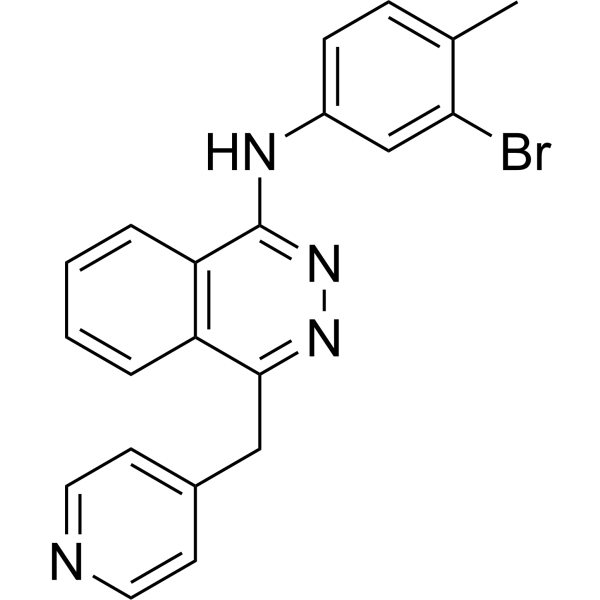 0 ImagesSynonyms: ACC-789; ZK202650
-
Nintedanib-d8
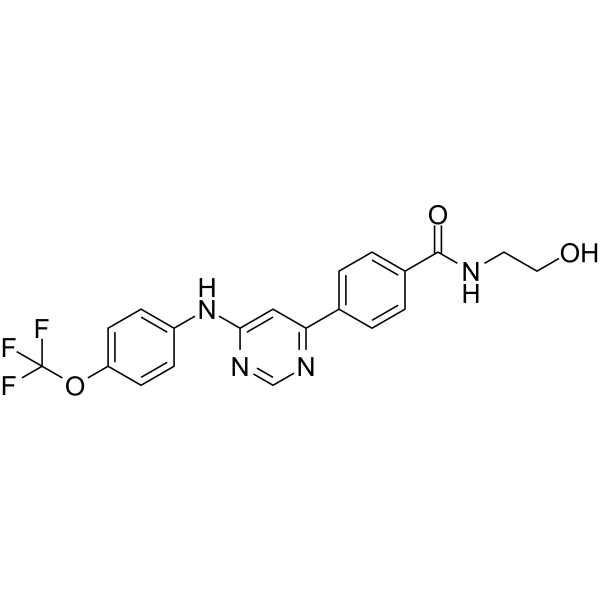
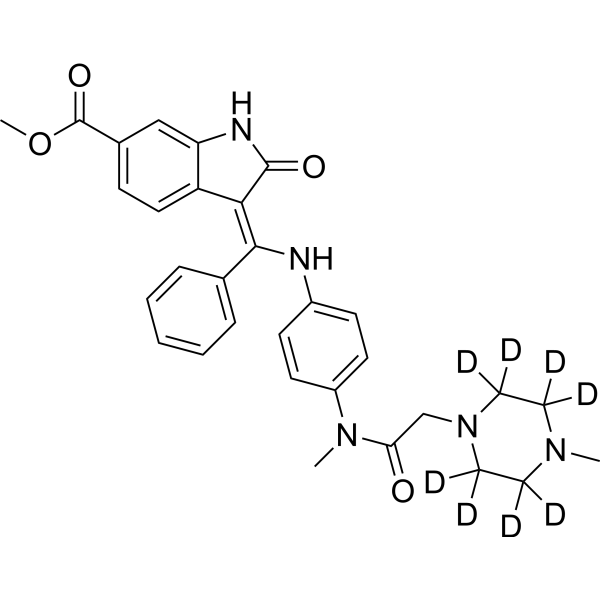 0 ImagesSynonyms: BIBF 1120-d8Nintedanib-d8 is deuterium labeled Nintedanib. Nintedanib (BIBF 1120) is a potent triple angiokinase inhibitor for VEGFR1/2/3, FGFR1/2/3 and PDGFRα/β with IC50s of 34 nM/13 nM/13 nM, 69 nM/37 nM/108 nM and 59 nM/65 nM, respectively.
-
Imatinib-d8
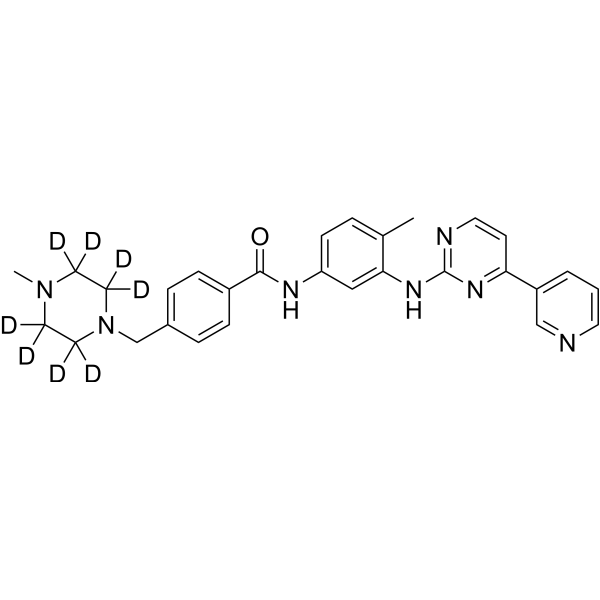 0 ImagesSynonyms: STI571-d8; CGP-57148B-d8
-
Xanthinol Nicotinate
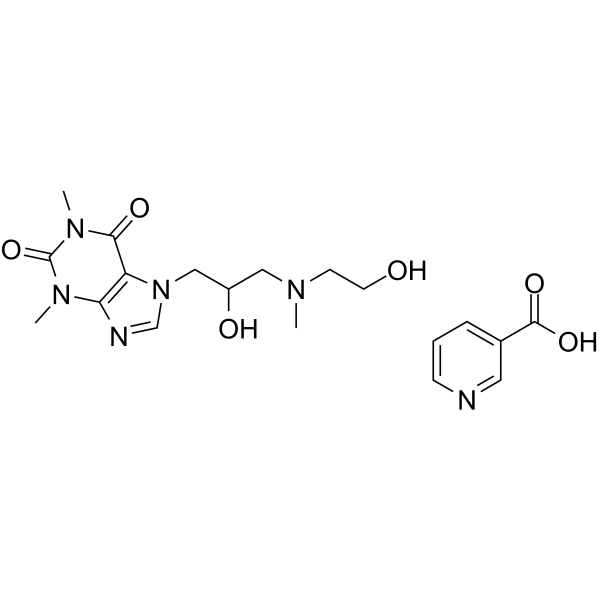 0 ImagesXanthinol Nicotinate (Xanthinol Niacinate), a vasodilator, can act directly on the smooth muscle of small arteries and capillaries. Xanthinol Nicotinate expands blood vessels, improves blood rheology and reduces peripheral vascular resistance.
-
Flumatinib mesylate
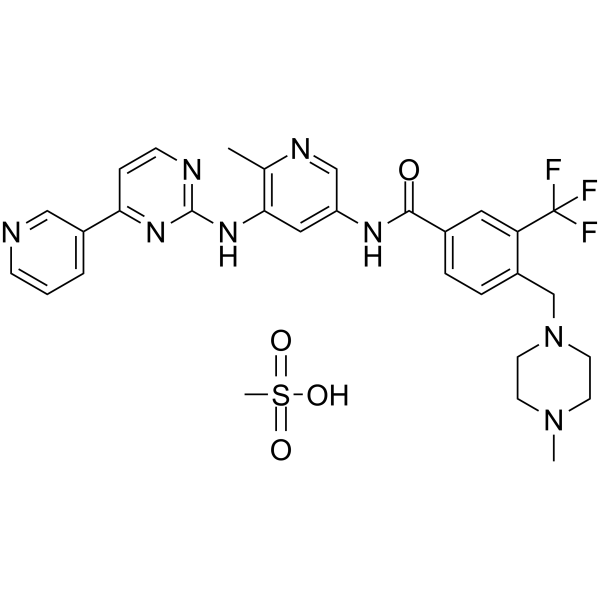 0 ImagesSynonyms: HHGV678 mesylateFlumatinib (HHGV678) mesylate is an orally active and selective inhibitor of Bcr-Abl. Flumatinib mesylate inhibits c-Abl, PDGFRβ and c-Kit with IC50 values of 1.2, 307.6 and 665.5 nM, respectively. Flumatinib mesylate inhibits Bcr-Abl autophosphorylation and Stat5 and Erk1/2 phosphorylation. Flumatinib mesylate inhibits tumor growth in chronic myelogenous leukemia model.
-
Lenvatinib (Standard)
 0 ImagesSynonyms: E7080 (Standard)




