



Myoferlin
Myoferlin (MYOF) is a ferlin-family membrane protein that supports membrane integrity, membrane fusion, endocytosis, and receptor trafficking in non-muscle cells[1]. Mechanistically, myoferlin stabilizes VEGFR-2 at the endothelial cell surface and enables VEGF-induced proliferation, migration, nitric oxide release, and vascular permeability[1]. In tumor models, myoferlin also chaperones activated STAT3 to the nucleus during IL-6 signaling, supporting tumor cell migration, tumorsphere formation, cancer stem-cell enrichment, tumor growth, and metastasis[2]. This vesicle- and receptor-centered function connects myoferlin to tumor angiogenesis, because myoferlin silencing in pancreatic cancer cells impairs VEGFA exocytosis, reduces functional blood vessels, and decreases tumor volume[3]. In carcinoma models, myoferlin-dependent membrane repair and signaling sustain cancer-cell proliferation and tumor burden[4]. Compared with the related isoform dysferlin, myoferlin shows distinct epithelial relevance, because myoferlin siRNA, but not dysferlin siRNA, causes cell rounding, adhesion loss, decreased ZO-1, and apoptotic marker increase in airway epithelial cells[5]. For experimental inhibition, WJ460 directly targets myoferlin and reduces breast-cancer extravasation, while YQ456 binds myoferlin, disrupts Rab-protein interactions, and attenuates colorectal-cancer invasion and progression[6][7].
References:
- [1]. Bernatchez PN, et al. Myoferlin regulates vascular endothelial growth factor receptor-2 stability and function. J Biol Chem. 2007 Oct 19;282(42):30745-53. [Content Brief]
- [2]. Yadav A, et al. A muscle-specific protein 'myoferlin' modulates IL-6/STAT3 signaling by chaperoning activated STAT3 to nucleus. Oncogene. 2017 Nov 16;36(46):6374-6382. [Content Brief]
- [3]. Fahmy K, et al. Myoferlin plays a key role in VEGFA secretion and impacts tumor-associated angiogenesis in human pancreas cancer. Int J Cancer. 2016 Feb 1;138(3):652-63. [Content Brief]
- [4]. Leung C, et al. Expression of myoferlin in human and murine carcinoma tumors: role in membrane repair, cell proliferation, and tumorigenesis. Am J Pathol. 2013 May;182(5):1900-9. [Content Brief]
- [5]. Leung C, et al. Expression of myoferlin in human airway epithelium and its role in cell adhesion and zonula occludens-1 expression. PLoS One. 2012;7(7):e40478. [Content Brief]
- [6]. Zhang T, et al. A small molecule targeting myoferlin exerts promising anti-tumor effects on breast cancer. Nat Commun. 2018 Sep 13;9(1):3726. [Content Brief]
- [7]. He Y, et al. A potent and selective small molecule inhibitor of myoferlin attenuates colorectal cancer progression. Clin Transl Med. 2021 Feb;11(2):e289. [Content Brief]
All Product Categories
-
Myoferlin Related Products (1)
Related Products (1)

-
HJ445A
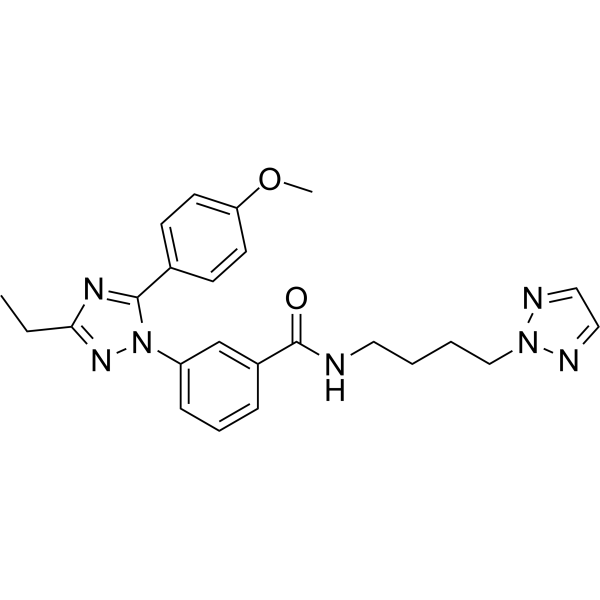 0 ImagesHJ445A is an orally active myoferlin (MYOF) inhibitor with a Kd value of 0.17 μM against human targets. HJ445A directly binds to the MYOF-C2D domain to stabilize the MYOF protein, thereby regulating vesicle trafficking, cell proliferation, colony formation, migration and apoptosis processes in cancer cells, and exhibits anti-tumor efficacy. HJ445A can be used in gastric cancer-related research.



