



Fluorescent Dye
Fluorescence is a phenomenon of photoluminescence in luminescence. When an atom is irradiated by light, some electrons around the nucleus jump from their original orbitals to higher energy orbitals under the influence of light energy, i.e., from the ground state to the first or second excited single-line state, etc. Due to the instability of the first or second excited singlet state, the electron returns from the excited singlet state to the ground state accompanied by released energy, resulting in fluorescence.
Fluorescent dyes can be covalently bound or physically adsorbed in the structure of the substance. The fluorescence properties allow for the characterization, localization and quantitative analysis of the labeled object. Fluorescent dyes have shown great potential for the detection of proteins, nucleic acids, cells, and immunoassays, attributed to the advantages in non-radioactive contamination, simple experimental operation and easy observation.
Fluorescent dyes have penetrated many fields such as pharmacology, physiology, environmental science, and information science, as well as functional studies of proteins and drug screening.
All Product Categories
-
Fluorescent Dye Related Products (4852)
Related Products (4852)

-
Antibodies (4)
-
Cy3 labled Rimigorsen sodium
 0 ImagesCat. No.: HY-177659DCy3 labled Rimigorsen sodium is a Cy3 labled Rimigorsen sodium.
-
SBP-2
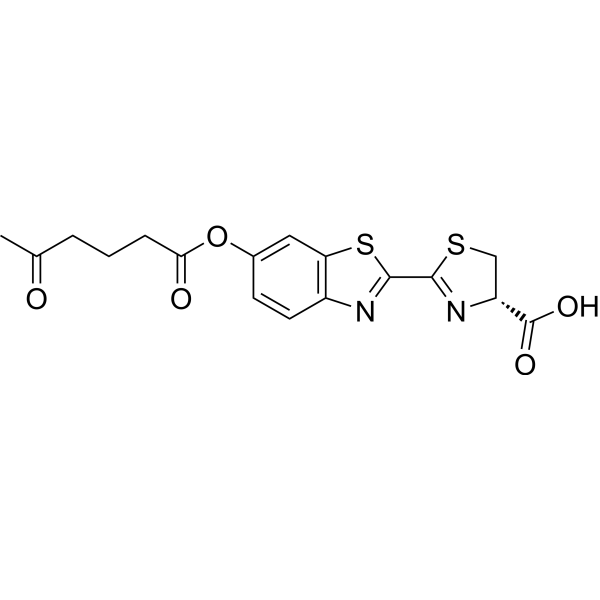 0 ImagesCat. No.: HY-147508CAS No.: 2494035-92-4SBP-2 is a sulfite bioluminescent probe (SBP). The recognition of SBP-2 towards sulfite is based on the mechanism of a sulfite-mediated intramolecular cleavage reaction.

-
RB-PEG10000-COOH
 0 ImagesCat. No.: HY-D2881HSynonyms: Rhodamine B-PEG10000-COOHRB-PEG10000-COOH (Rhodamine B-PEG10000-COOH) is a fluorescent dye composed of Rhodamine B (HY-Y0016), PEG and a COOH. RRB-PEG10000-COOH can be used for fluorescent labeling and imaging (Ex/Em=546/610 nm).

-
H-Ala-4MβNA hydrochloride
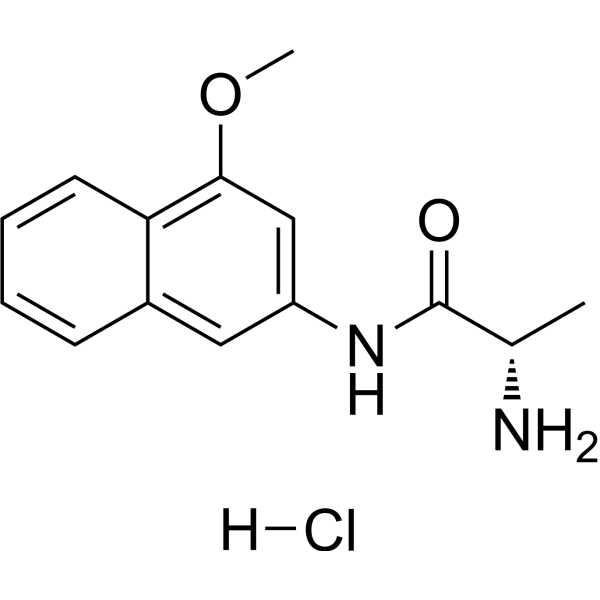 0 ImagesH-Ala-4MβNA hydrochloride is a specific fluorogenic substrate for aminopeptidase M.
-
Mca-PLA-Nva-Dap(Dnp)-AR-NH2
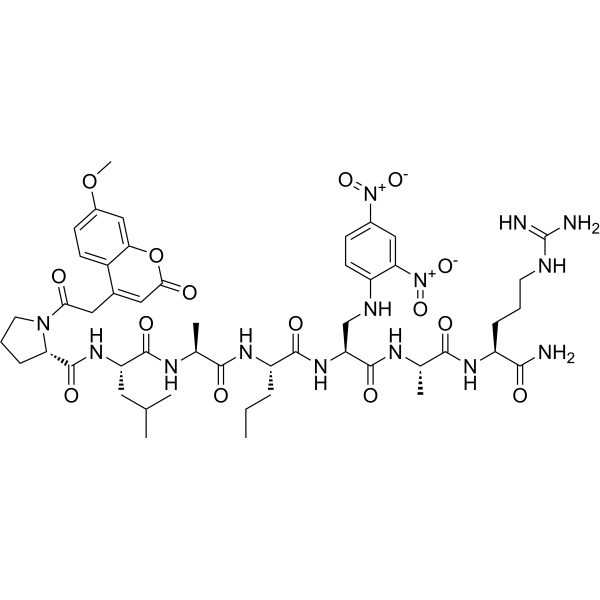 0 ImagesCat. No.: HY-P3477CAS No.: 256394-92-0Mca-PLA-Nva-Dap(Dnp)-AR-NH2 is a fluorogenic substrate for matrix metalloproteinase-2 (MMP-2) .

-
FAM labled ISIS 2503 sodium
 0 ImagesCat. No.: HY-153488DFAM labled ISIS 2503 sodiumis a FAM labled ISIS 2503 sodium.
-
Alkyne MegaStokes dye 608
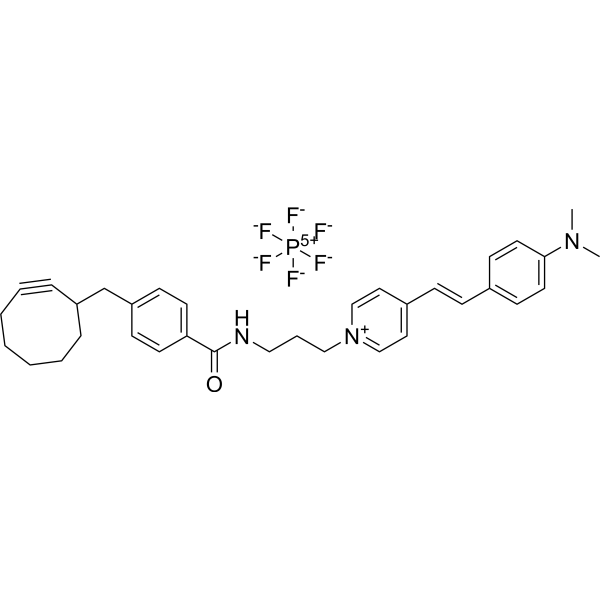 0 ImagesCat. No.: HY-D1358CAS No.: 1188292-56-9Alkyne MegaStokes dye 608 is a multifunctional dye. Dyes are important tools in biological experiments. They can help researchers observe and analyze cell structures, track biomolecules, evaluate cell functions, distinguish cell types, detect biomolecules, study tissue pathology and monitor microorganisms. Their applications range from basic scientific research to clinical A wide range of diagnostics. Dyes are also widely used in traditional fields such as textile dyeing, as well as in emerging fields such as functional textile processing, food pigments and dye-sensitized solar cells.
-
ATTO 700
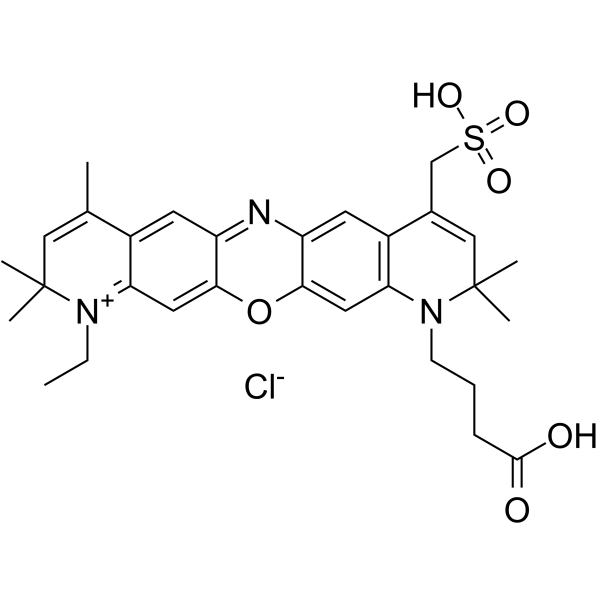 0 ImagesCat. No.: HY-D2056ATTO 700 is a new type of fluorescent dye with high fluorescence yield, which can be used for most labeling applications, maximum excitation/emission wavelength: 700/716 nm.
-
RB-PEG10000-Mal
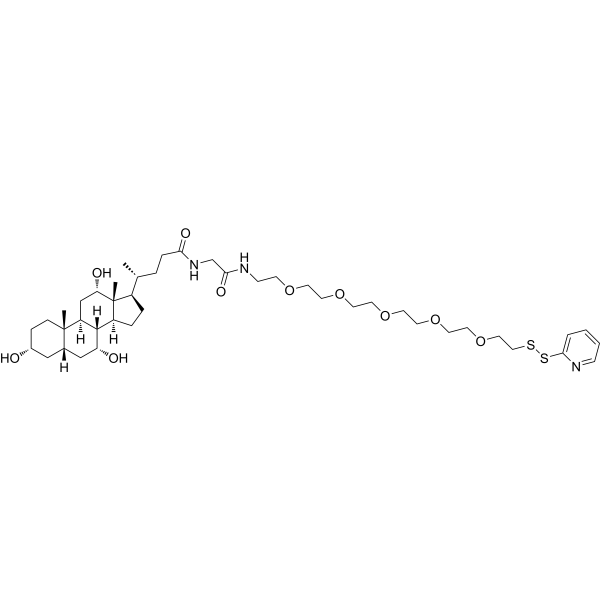
 0 ImagesCat. No.: HY-D2885HSynonyms: Rhodamine B-PEG10000-MalRB-PEG10000-Mal (Rhodamine B-PEG10000-Mal) is a fluorescent dye composed of Rhodamine B (HY-Y0016), PEG and Maleimide (HY-W007324) (Mal). RB-PEG10000-Mal can be used for fluorescent labeling and imaging (Ex/Em=546/610 nm).
-
Cyanine 7.5 NHS chloride
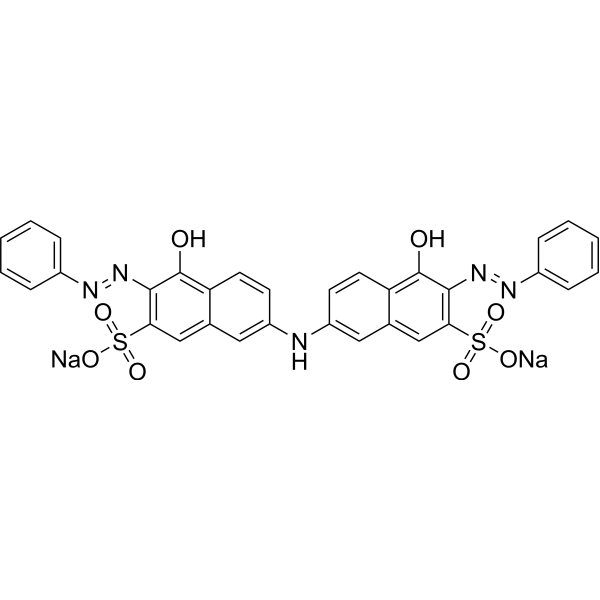
 0 ImagesCat. No.: HY-N16296CAS No.: 3091879-96-5Cy7.5 NHS ester chloride is a fluorescent dye. Cy7.5 NHS ester chloride can be conjugated to mPEG-b-PDPA to form a mPEG-b-PDPA-Cy7.5 fluorescent copolymer. Cy7.5 NHS ester chloride can be used for fluorescent imaging study (Ex/Em = 780/820 nm).
-
ATTO 425 NHS ester
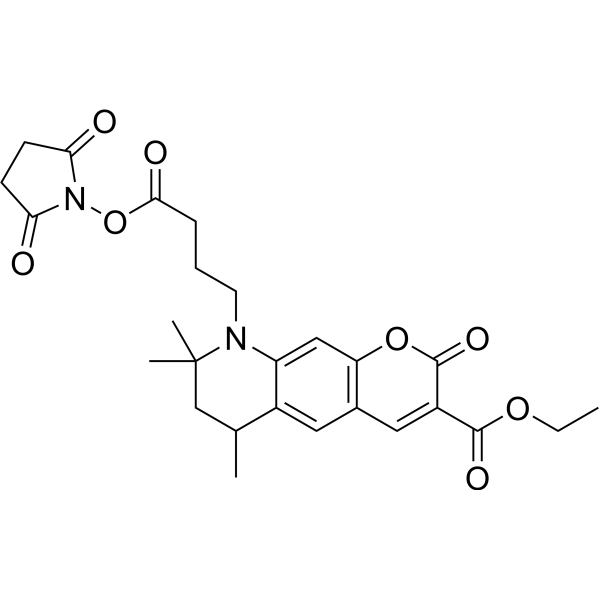 0 ImagesCat. No.: HY-153524CAS No.: 892156-28-4ATTO 425 NHS ester is a new fluorescent marker based on the Rhodamine structure. It has strong absorption, high fluorescence quantum yield, high thermal stability and photochemical stability, and is suitable for single molecule detection and high-resolution microscopy. ATTO 425 NHS ester is an NHS ester derivative of ATTO 425 that can be used to label proteins or antibodies.
-
Sodium-binding benzofuran isophthalate
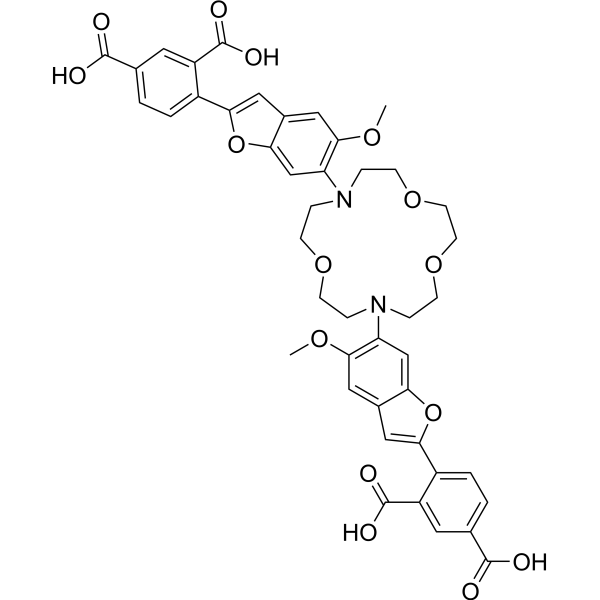 0 ImagesCat. No.: HY-D1760CAS No.: 124549-08-2SBFI is a cell-impermeant, fluorescent Na+ indicator dye. SBFI is excited at 340 nm and the fluorophore emission is collected at 450 nm. SBFI selective for Na+ over K+ with Kd values of 20 and 120 mM for these ions, respectively. .

-
AF647-PEG12-TCO
 0 ImagesCat. No.: HY-D3585AF647-PEG12-TCO is a derivative of Alexa Fluor 647 featuring a TCO (trans-cyclooctene) group for use in inverse-electron-demand Diels-Alder (IEDDA) click chemistry reactions. It incorporates a PEG12 linker to enhance hydrophilicity and provide increased spacer length. AF647-PEG12-TCO is primarily used for IEDDA click chemistry-based bioconjugation (Ex/Em = 650/668 nm).




