Fluorescent Dye
Fluorescence is a phenomenon of photoluminescence in luminescence. When an atom is irradiated by light, some electrons around the nucleus jump from their original orbitals to higher energy orbitals under the influence of light energy, i.e., from the ground state to the first or second excited single-line state, etc. Due to the instability of the first or second excited singlet state, the electron returns from the excited singlet state to the ground state accompanied by released energy, resulting in fluorescence.
Fluorescent dyes can be covalently bound or physically adsorbed in the structure of the substance. The fluorescence properties allow for the characterization, localization and quantitative analysis of the labeled object. Fluorescent dyes have shown great potential for the detection of proteins, nucleic acids, cells, and immunoassays, attributed to the advantages in non-radioactive contamination, simple experimental operation and easy observation.
Fluorescent dyes have penetrated many fields such as pharmacology, physiology, environmental science, and information science, as well as functional studies of proteins and drug screening.
All Product Categories
-
Fluorescent Dye Related Products (4853)
Related Products (4853)

-
Antibodies (4)
-
HEX azide, 6-isomer
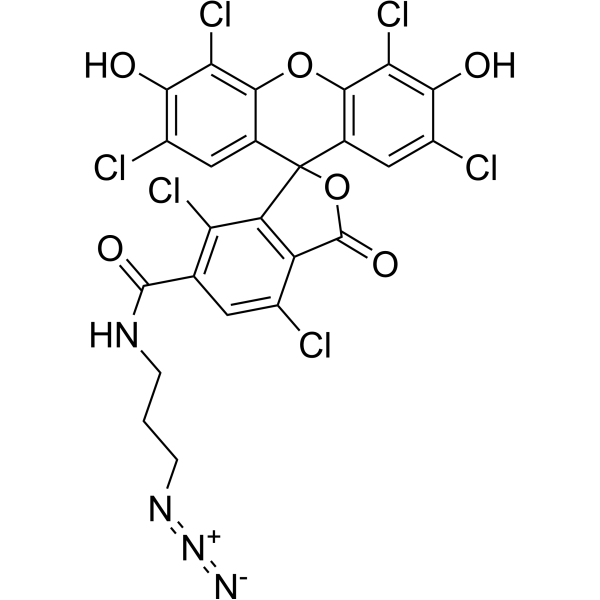 0 ImagesCat. No.: HY-D1893CAS No.: 1450752-91-6HEX azide, 6-isomer, a derivate of fluorescent dye hexachlorofluorescein (HEX), can be used for labeling oligonucleotides.
-
FAM labled Agazisiran sodium
 0 ImagesCat. No.: HY-177611CFAM labled Agazisiran sodiumis a FAM labled Agazisiran sodium.
-
Datura Stramonium Lectin-AF594
 0 ImagesCat. No.: HY-NP065ESynonyms: DSL-AF594Datura Stramonium Lectin-AF594 (DSL-AF594) is a datura lectin (DSL) labeled with the AF594 fluorescent dye. Datura Stramonium Lectin is a dimeric glycoprotein that specifically recognizes and binds to glycan structures containing N-acetylglucosamine (GlcNAc) oligomers. Datura Stramonium Lectin-AF594 can be used for glycosyl studies on cell surfaces (Ex/Em = 590/617 nm).
-
Rhod-5N
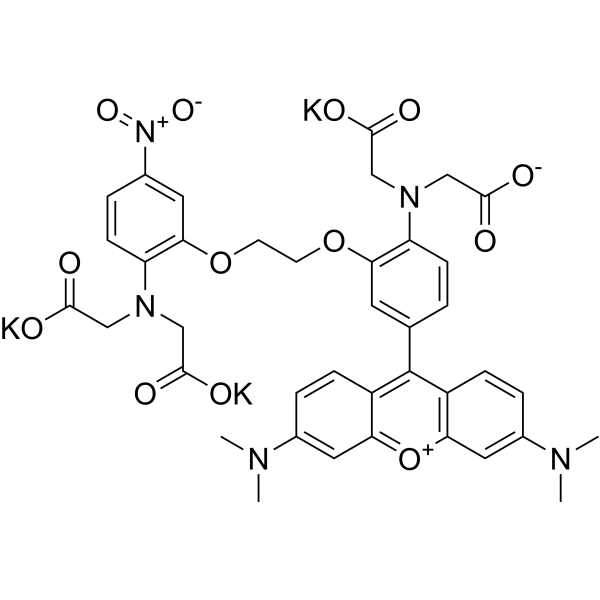 0 ImagesCat. No.: HY-136894CAS No.: 888229-31-0Rhod-5N is a cell-impermeant calcium-binding fluorescent dye composed of a BAPTA chelating group and a rhodamine fluorophore. Rhod-5N is often added to MOPS buffer to complex and indicate cation content. The selectivity of Rhod-5N for Cd2+ is higher than other interfering cations ((Na+, K+, Mg2+, Ca2+, Zn2+) except Pb2+), and the detection limit is 3.1 μg/L.
-
SNAP-430
 0 ImagesCat. No.: HY-D2948CAS No.: 928760-60-5SNAP-430 is a (diethylamino) coumarin-labeled SNAP tag fluorescent probe. SNAP-430 can be used for making SNAP-tag fusion proteins inside living cells, on cell surfaces, or in vitro.
-
5(6)-carbonylated rhodamine 110 amine
 0 ImagesCat. No.: HY-D30515(6)-carbonylated rhodamine 110 amine is a primary amine fluorescent reagent based on 5(6)-carbonylated rhodamine 110. Primary amines can be covalently linked with various functional groups such as carboxylic acids, active esters (e.g., NHS esters), and isothiocyanates to achieve labeling (Ex/Em = 502/527 nm).
-
Cy5-ALN
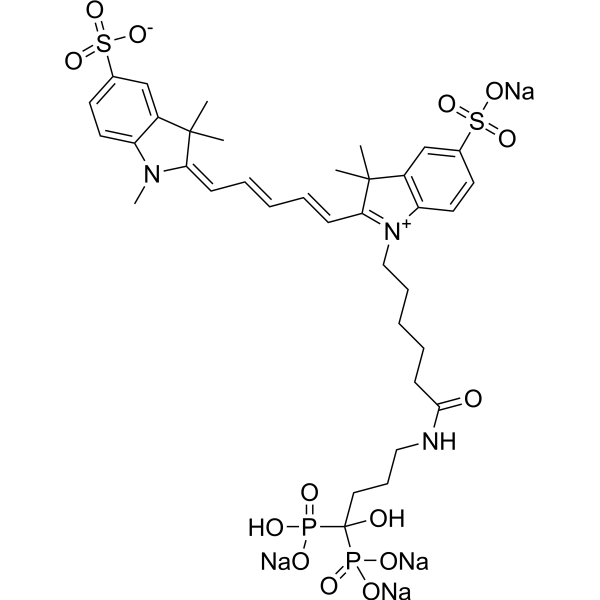 0 ImagesCat. No.: HY-D2133CAS No.: 1629601-00-8Synonyms: Alendronate-Cy5Cy5-ALN (Alendronate-Cy5) is a fluorescently labeled bisphosphonate probe.
-
Cy3 labled SARSi-4 sodium
 0 ImagesCat. No.: HY-177663CCy3 labled SARSi-4 sodium is a Cy3 labled SARSi-4 sodium.
-
Cy3-PEG2-exo-BCN
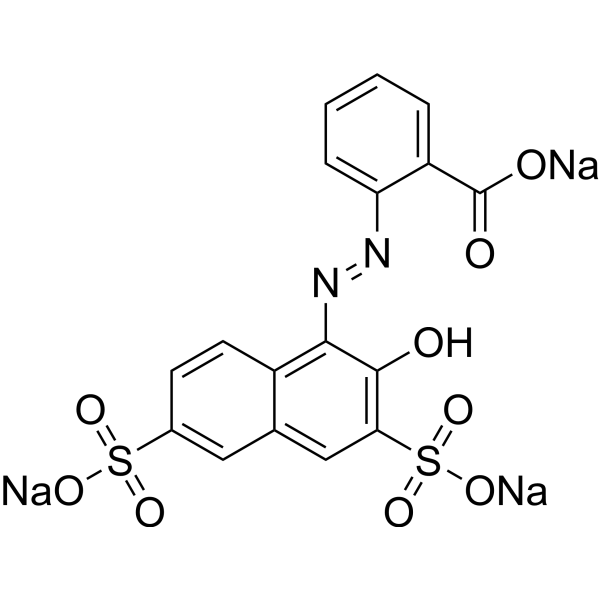
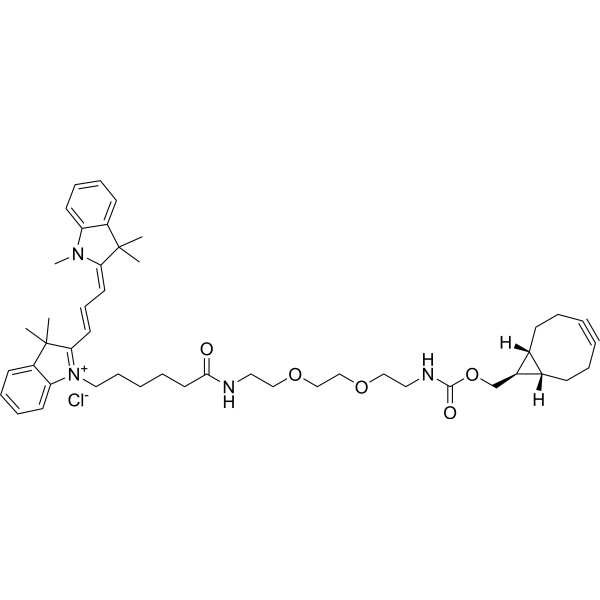 0 ImagesCat. No.: HY-155327ACAS No.: 1663449-60-2Cy3-PEG2-exo-BCN is a dye derivative of Cyanine 3 (Cy3) (HY-D0822) containing 2 PEG units. Cy3-PEG2-exo-BCN contains the lyophilic bidentate macrocyclic ligand BCN, which can further synthesize macrocyclic complexes. In click chemistry, exo-BCN can react with molecules containing azide groups to form stable triazoles in the absence of catalysts.
-
FAM labled ISIS 1082 sodium
 0 ImagesCat. No.: HY-177638CFAM labled ISIS 1082 sodiumis a FAM labled ISIS 1082 sodium.
-
Lacinilene C
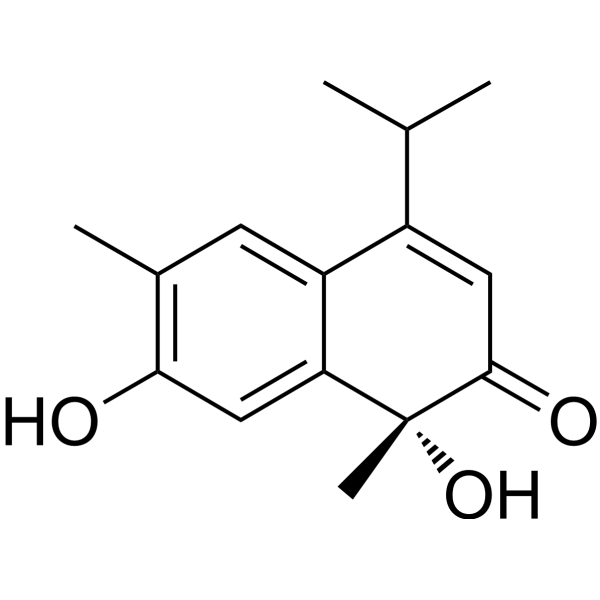 0 ImagesCat. No.: HY-N3410CAS No.: 41653-72-9Lacinilene C is a sesquiterpene-like compound isolated from the root of Bombax malabaricum.
-
FITC-LC-Antennapedia Peptide
 0 ImagesCat. No.: HY-P4135FITC-LC-Antennapedia Peptide is a FITC labeled Antennapedia Peptide (HY-P0307). Antennapedia Peptide is a cellular-membrane permeable peptides (CPP). FITC-LC-Antennapedia Peptide has good penetration in 3T3 cell line, which was rapidly accumulated into nuclei.

-
HOTPy
 0 ImagesCat. No.: HY-D3121CAS No.: 2763752-95-8HOTPy is a mitochondria-targeted fluorescent viscosity probe with aggregation-induced emission properties, which responds to microenvironmental viscosity. HOTPy can recognize the abnormal increase in mitochondrial viscosity and capture dynamic viscosity changes in acute alcoholic liver injury models at both cellular and in vivo levels. The maximum absorption peak of HOTPy in PBS solution is at 379 nm; its maximum emission peak reaches 611 nm in a high-viscosity glycerol system. HOTPy can be used for the research of acute alcoholic liver injury.