



Fluorescent Dye
Fluorescence is a phenomenon of photoluminescence in luminescence. When an atom is irradiated by light, some electrons around the nucleus jump from their original orbitals to higher energy orbitals under the influence of light energy, i.e., from the ground state to the first or second excited single-line state, etc. Due to the instability of the first or second excited singlet state, the electron returns from the excited singlet state to the ground state accompanied by released energy, resulting in fluorescence.
Fluorescent dyes can be covalently bound or physically adsorbed in the structure of the substance. The fluorescence properties allow for the characterization, localization and quantitative analysis of the labeled object. Fluorescent dyes have shown great potential for the detection of proteins, nucleic acids, cells, and immunoassays, attributed to the advantages in non-radioactive contamination, simple experimental operation and easy observation.
Fluorescent dyes have penetrated many fields such as pharmacology, physiology, environmental science, and information science, as well as functional studies of proteins and drug screening.
All Product Categories
-
Fluorescent Dye Related Products (4889)
Related Products (4889)

-
Antibodies (4)
-
Si-DMA
 0 ImagesCat. No.: HY-D3409CAS No.: 1854026-50-8Si-DMA is a far-red fluorescent singlet oxygen probe (Ex/Em = 640/690 nm). After reacting with singlet oxygen, Si-DMA forms an endoperoxide with a 17-fold fluorescence enhancement. Si-DMA localizes selectively to mitochondria with negligible auto-oxidation. Si-DMA can be used for high spatiotemporal resolution visualization and detection of mitochondrial singlet oxygen in living cells.
-
3-Nitrotetrazolium blue chloride
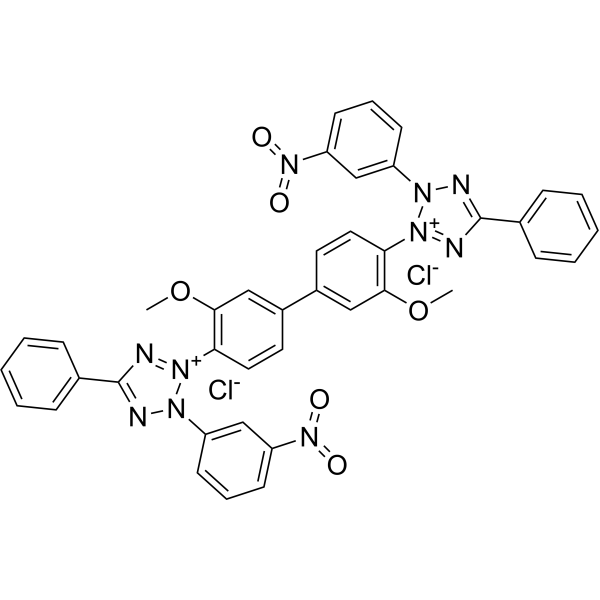 0 ImagesCat. No.: HY-D1192CAS No.: 38184-50-83-Nitrotetrazolium blue (chloride) is a multifunctional dye. Dyes are important tools in biological experiments. They can help researchers observe and analyze cell structures, track biomolecules, evaluate cell functions, distinguish cell types, detect biomolecules, study tissue pathology and monitor microorganisms. Their applications range from basic scientific research to clinical A wide range of diagnostics. Dyes are also widely used in traditional fields such as textile dyeing, as well as in emerging fields such as functional textile processing, food pigments and dye-sensitized solar cells.

-
Biotin-FRETS-VWF73 TFA
 0 ImagesCat. No.: HY-DP5354AFBiotin-FRETS-VWF73 TFA is a biotin-labeled 73-amino acid peptide. FRETS-VWF73 TFA is a fluorescent substrate for ADAMTS13 detection (Ex=340 nm; Em=450 nm).
-
Pyrene phosphoramidite dU
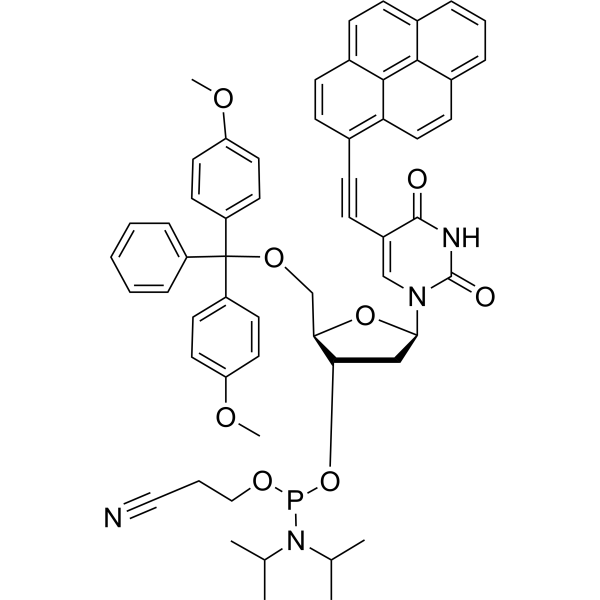 0 ImagesCat. No.: HY-151750CAS No.: 199920-17-7Pyrene phosphoramidite Du is a click chemistry reagent containing pyrene groups. The pyrene group in Pyrene phosphoramidite Du can be inserted into DNA with strong blue fluorescence.
-
AMCA-PEG4-DBCO
 0 ImagesCat. No.: HY-D3339AMCA-PEG4-DBCO is a derivative of AMCA featuring a DBCO (dibenzocyclooctyne) group, designed for copper-free click chemistry (SPAAC). It incorporates a PEG4 linker to enhance solubility and minimize steric hindrance. AMCA-PEG4-DBCO is suitable for copper-free click chemistry (SPAAC) bioconjugation (Ex/Em = 347/444 nm).

-
Z-Nle-Lys-Arg-AMC
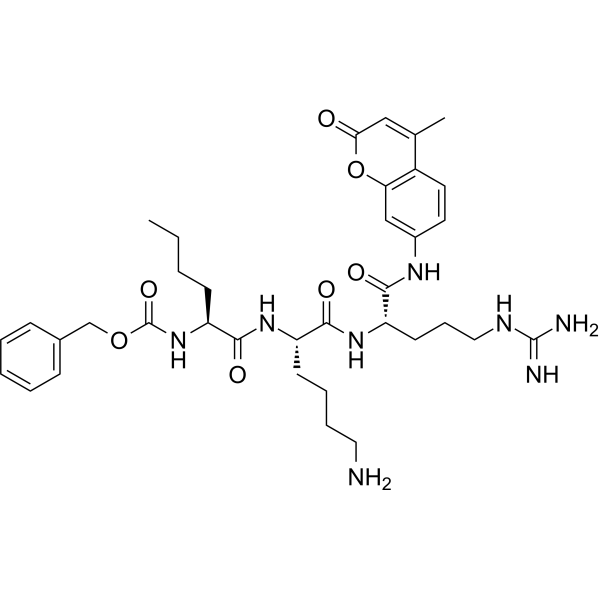 0 ImagesCat. No.: HY-155667CAS No.: 1135364-14-5Z-Nle-Lys-Arg-AMC is a fluorogenic peptide substrate that specifically monitors cathepsin B activity over a broad pH range.
-
OGDA
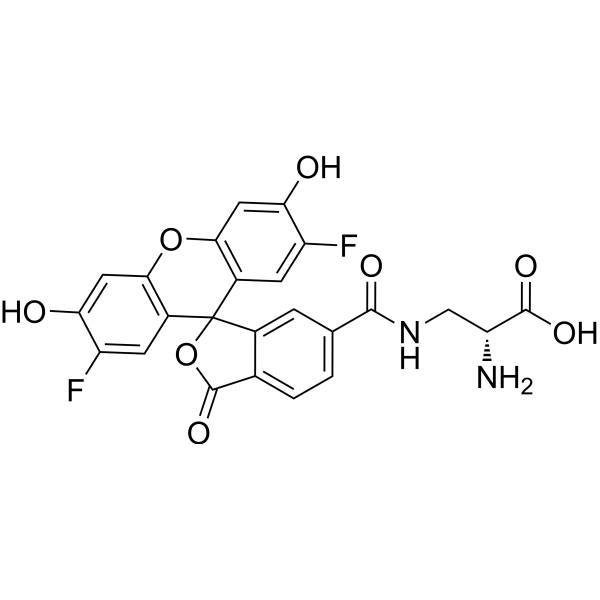 0 ImagesCat. No.: HY-D1697CAS No.: 2758364-01-9OGDA is a green fluorescent D-amino acid. OGDA is suitable for labeling peptidoglycan in Gram-positive and Gram-negative bacteria.
-
RB-PEG1000-Mal
 0 ImagesCat. No.: HY-D2885BSynonyms: Rhodamine B-PEG1000-MalRB-PEG1000-Mal (Rhodamine B-PEG1000-Mal) is a fluorescent dye composed of Rhodamine B (HY-Y0016), PEG and Maleimide (HY-W007324) (Mal). RB-PEG1000-Mal can be used for fluorescent labeling and imaging (Ex/Em=546/610 nm).
-
Cy3 labled Vortosiran sodium
 0 ImagesCat. No.: HY-177669DSynonyms: Cy3 labled RBD4059 sodiumCy3 labled Vortosiran (RBD4059) sodium is a Cy3 labled Vortosiran sodium. Vortosiran (RBD4059) sodium is a siRNA that inhibits the synthesis of coagulation factor XI (FXI). Vortosiran sodium shows potent inhibitory activity against mouse FXI transcripts with an IC50 of 69 pM; it exerts similar effects on common FXI transcripts from humans and monkeys, with an IC50 of 59 pM. Vortosiran sodium exhibits antithrombotic activity without impairing hemostatic function. Vortosiran sodium can be used in research related to intravascular thrombosis.
-
OptoDArG
 0 ImagesCat. No.: HY-126424CAS No.: 2230617-93-1OptoDArG is a photoswitchable probe that has the activity to recognize lipid-gated pores by controlling TRPC3 channels and can be used as a tool to study the lipid sensing mechanism of TRPC channels.
-
RO 16-6491 free base
 0 ImagesCat. No.: HY-W205529CAS No.: 87235-61-8RO 16-6491 Free base is a selective, reversible inhibitor of monoamine oxidase type B (MAO-B), exhibiting high affinity and specificity for binding sites in human frontal cortex mitochondria and platelet membranes. RO 16-6491 demonstrates a fast dissociation of bound radioactivity at 20 degrees C, indicating its dynamic binding properties. RO 16-6491 also acts as a substrate for MAO-B, suggesting that its oxidation may produce a stable intermediate responsible for its potent inhibitory effects. RO 16-6491 serves as an excellent radioligand probe for investigating the regional tissue distribution of MAO-B in various physiological and pathological states.
-
CB2-H
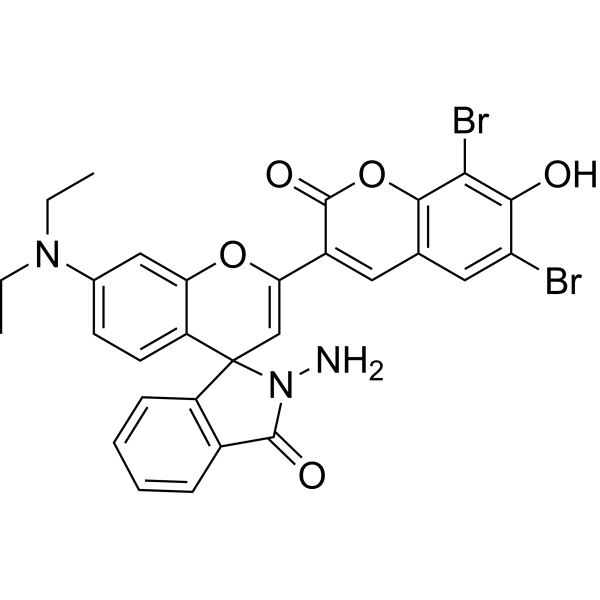 0 ImagesCat. No.: HY-152103CB2-H is a dual-channel fluorescent probe for the simultaneous detection of HOCl and ONOO-. CB2-H enables the concurrent detection of HOCl and ONOO- at two independent channels without spectral cross-interference and can be applied for dual-channel fluorescence imaging of endogenously produced HOCl and ONOO- in living cells and zebrafish under different stimulants.
-
DNA intercalator 1
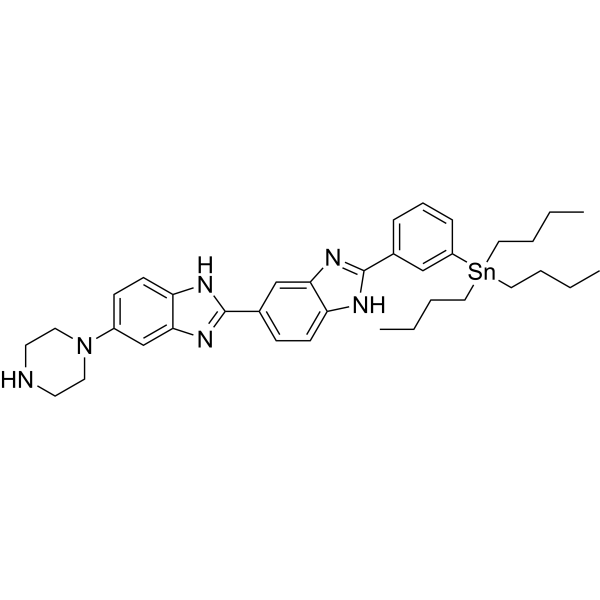 0 ImagesCat. No.: HY-D1100CAS No.: 864281-61-8DNA intercalator 1 is a DNA intercalating agent that can be used for DNA staining.
-
BTC-AM
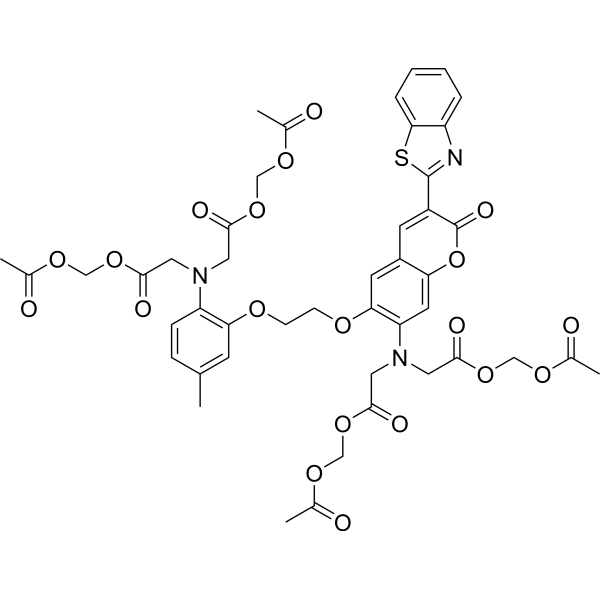 0 ImagesCat. No.: HY-137103CAS No.: 176767-94-5BTC-AM is a low affinity calcium indicator. BTC-AM has substantial calcium-independent fluorescence at all excitation wavelengths. BTC-AM is readily loaded into neurons and is rapidly hydrolysed.
-
HEX azide, 6-isomer
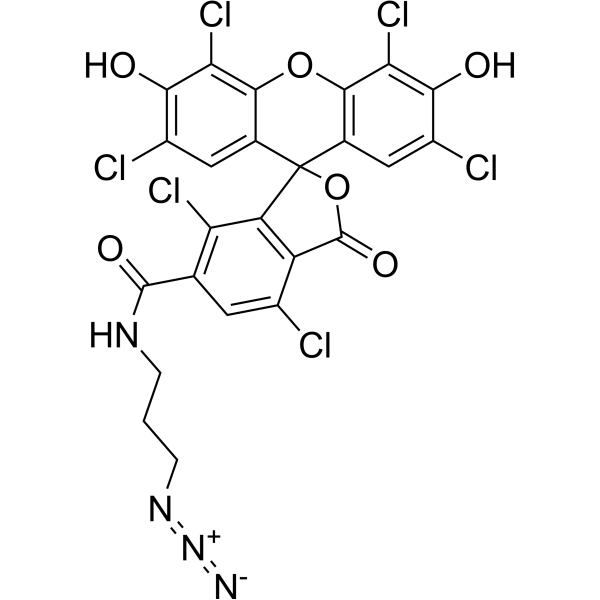 0 ImagesCat. No.: HY-D1893CAS No.: 1450752-91-6HEX azide, 6-isomer, a derivate of fluorescent dye hexachlorofluorescein (HEX), can be used for labeling oligonucleotides.
-
FAM labled Agazisiran sodium
 0 ImagesCat. No.: HY-177611CFAM labled Agazisiran sodiumis a FAM labled Agazisiran sodium.
-
Datura Stramonium Lectin-AF594
 0 ImagesCat. No.: HY-NP065ESynonyms: DSL-AF594Datura Stramonium Lectin-AF594 (DSL-AF594) is a datura lectin (DSL) labeled with the AF594 fluorescent dye. Datura Stramonium Lectin is a dimeric glycoprotein that specifically recognizes and binds to glycan structures containing N-acetylglucosamine (GlcNAc) oligomers. Datura Stramonium Lectin-AF594 can be used for glycosyl studies on cell surfaces (Ex/Em = 590/617 nm).
-
Rhod-5N
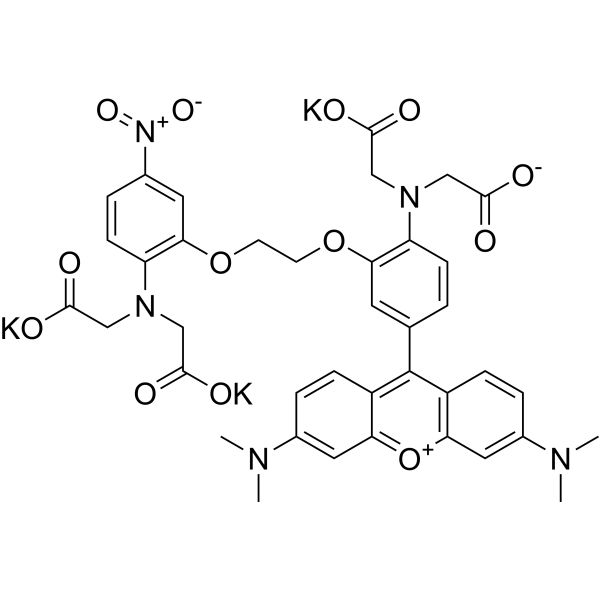 0 ImagesCat. No.: HY-136894CAS No.: 888229-31-0Rhod-5N is a cell-impermeant calcium-binding fluorescent dye composed of a BAPTA chelating group and a rhodamine fluorophore. Rhod-5N is often added to MOPS buffer to complex and indicate cation content. The selectivity of Rhod-5N for Cd2+ is higher than other interfering cations ((Na+, K+, Mg2+, Ca2+, Zn2+) except Pb2+), and the detection limit is 3.1 μg/L.




