



Anti-Mouse CD8 Antibody (HB-129)

Based on 1 Customer Validation
Anti-Mouse CD8 Antibody (HB-129) is a mouse-derived IgG2a κ type antibody inhibitor, targeting to mouse CD8. Anti-Mouse CD8 Antibody (HB-129) can deplete CD8+ T cells. Anti-Mouse CD8 Antibody (HB-129) can be used for the researches of cancer, inflammation, immunology and metabolic disease, such as P815 tumor, experimental autoimmune thyroiditis (EAT) and graft versus host disease (GVHD).
For research use only. We do not sell to patients.
- Purity : 95.054%
- Molecular Weight:150 kDa
-
Storage:
Please store the product under the recommended conditions in the Certificate of Analysis.

To place orders, for customer services and technical support, please contact: MedChemExpress USA
Tel: 609-228-6898 E-mail: [email protected] [email protected]


-
 Biological Activity
-
Chemical Information
- Purity & Documentation
- References
-
 Help & FAQs




Biological Activity
Description
Isotype
Mouse IgG2a kappa
Recommend Isotype Controls
Species Reactivity
Mouse
IC50 & Target
CD8
In Vitro
The antibody framework is stable, specific and adaptable, and has the ability to bind both antigens and endogenous immune receptors. Monoclonal antibodies have several derivatives, including bispecific antibodies, antibody-drug conjugates, and antibody fragments, and have significant effects in fields such as immunology and oncology. When designing inhibitory antibodies, considerations include identification of antigen-specific variable regions, choice of expression system, use of multispecific formats, and antibody derivatives based on fragmentation, oligomerization, or conjugation with other functional moieties[1].
MedChemExpress (MCE) has not independently confirmed the accuracy of these methods. They are for reference only.
In Vivo
Anti-Mouse CD8 Antibody (HB-129) (i.p., at days 1 and 12 and at 10-day intervals thereafter) slightly increases the severity of granulomatous EAT and inhibits its resolution in experimental autoimmune thyroiditis (EAT) mice models[2].
Anti-Mouse CD8 Antibody (HB-129) (5 μg/g, 5 days before transfer) prevents graft versus host disease (GVHD) in hematopoietic cell transplantation transferred NOD mice[3].
MedChemExpress (MCE) has not independently confirmed the accuracy of these methods. They are for reference only.
-
Animal Model:P815 tumor mice models[1]
-
Dosage:200 μg
-
Administration:Intraperitoneally injection, once a week from day 8
-
Result:Reduced anti-tumor responses of Dasatinib (HY-10181), with big tumor size and short survival.
-
Animal Model:Experimental autoimmune thyroiditis (EAT) mice models[2]
-
Dosage:/
-
Administration:Intraperitoneally injection, at days 1 and 12 and at 10-day intervals thereafter
-
Result:Developed 4-5+ granulomatous EAT 21 days after cell transfer.
Persisted infiltration at both 35 and 48 days after cell transfer.
Reduced CD8 mRNA levels.
Unaffected or increased IFN-α, IL-2, IL-4, and IL-10 mRNA levels.
Gene ID
Accession
P01731-1
Conjugated
Unconjugated
Reconsititution
The product can be reconstituted/diluted with sterile PBS or saline.
Format
-
Product Image
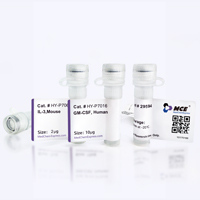
Application
in vivo CD8+ T cell depletion; Flow cytometry


Chemical Information
-
Appearance Liquid
-
Molecular Weight 150 kDa
-
Color Colorless to light yellow
-
SMILES
[Anti-Mouse CD8 Antibody (HB-129)]
-
Formulation
Please refer to the lot-specific COA for specific buffer information.
-
Storage
Please store the product under the recommended conditions in the Certificate of Analysis.


Purity & Documentation
-
Data Sheet (262 KB)
-
SDS (251 KB)
- English - EN (251 KB)
- Français - FR (251 KB)
- Deutsch - DE (251 KB)
- Norwegian - NO (251 KB)
- Español - ES (251 KB)
- Swedish - SV (251 KB)
- Italian - IT (251 KB)
- Korean - KR (251 KB)
- Portuguese - PT (251 KB)
-
Inhibitory Antibodies User Guide (603 KB)
References
[1]. ang Y, et al. Antitumor T-cell responses contribute to the effects of dasatinib on c-KIT mutant murine mastocytoma and are potentiated by anti-OX40. Blood. 2012 Nov 29;120(23):4533-43. [Content Brief]
[2]. Tang H, et al. The kinetics of cytokine gene expression in the thyroids of mice developing granulomatous experimental autoimmune thyroiditis. J Autoimmun. 1998 Dec;11(6):581-9. [Content Brief]
[3]. Racine JJ, et al. Induction of mixed chimerism depletes pre-existing and de novo-developed autoreactive B cells in autoimmune NOD mice. Diabetes. 2014 Jun;63(6):2051-62. [Content Brief]

Calculators
Concentration (start) × Volume (start) = Concentration (final) × Volume (final)


Anti-Mouse CD8 Antibody (HB-129) Related Classifications
HY-P990262 Related Classifications
 Powered by Bioz