



Anti-Mouse TIM-3 Antibody (RMT3-23)

Based on 1 Customer Validation
Anti-Mouse TIM-3 Antibody (RMT3-23) is a kind of rat-derived anti-mouse TIM-3 IgG2a antibody inhibitor. Anti-Mouse TIM-3 Antibody (RMT3-23) blocks Tim-3 binding to phosphatidylserine (PtdSer) and carcinoembryonic antigen cell adhesion molecule 1 (CEACAM1). Anti-Mouse TIM-3 Antibody (RMT3-23) inhibits phagocytosis of apoptotic cells in peritoneal exudate Mac1+ cells. Anti-Mouse TIM-3 Antibody (RMT3-23) can be used for the researches of inflammation and immunology, such as rheumatoid arthritis.
For research use only. We do not sell to patients.
- Purity: 99.64%
- Molecular Weight:150 kDa
-
Storage:
Please store the product under the recommended conditions in the Certificate of Analysis.


To place orders, for customer services and technical support, please contact: MedChemExpress USA
Tel: 609-228-6898 E-mail: [email protected] [email protected]


-
 Biological Activity
-
Chemical Information
- Purity & Documentation
- References
-
 Help & FAQs





Biological Activity
Description
Isotype
Rat IgG2a kappa
Recommend Isotype Controls
Species Reactivity
Mouse
IC50 & Target
TIM-3
In Vitro
Anti-Mouse TIM-3 Antibody (RMT3-23) (30 μg/mL, 1.5 h) inhibits approximately 50% recognition of apoptotic cells by CD8+ dendritic cells and reduces IFN-γproduction in splenic dendritic cells [1].
Anti-Mouse TIM-3 Antibody (RMT3-23) (30 mins) significantly inhibits phagocytosis of apoptotic cells in peritoneal exudate Mac1+ cells[1].
Anti-Mouse TIM-3 Antibody (RMT3-23) (10 μg/mL, 30 mins) blocks Tim-3 binding to phosphatidylserine (PtdSer) in thymocytes and carcinoembryonic antigen cell adhesion molecule 1 (CEACAM1) in Jurkat T cells[3].
MedChemExpress (MCE) has not independently confirmed the accuracy of these methods. They are for reference only.
In Vivo
Anti-Mouse TIM-3 Antibody (RMT3-23) (0.25 mg/dose, i.p., 3 times/week from week 4) ameliorates disease by inhibiting the TIM-1 and -3 signaling pathway in a murine model of rheumatoid arthritis[2].
Anti-Mouse TIM-3 Antibody (RMT3-23) (200 μg, i.p.) down-modulates Tim-3 surface expression but does not deplete Tim-3C cells in Tim-3 transgenic mice models[3].
MedChemExpress (MCE) has not independently confirmed the accuracy of these methods. They are for reference only.
-
Animal Model:B6 mice were transferred with CFSE-labeled OT-I cells (2 x 10⁶ per mouse)[1]
-
Dosage:200 μg/mouse
-
Administration:Intraperitoneally injection, twice a week for 4 weeks.
-
Result:Abrogated cells apoptosis induced by Tim-3.
Significantly increased TUNEL+ cells and serum level of anti-dsDNA antibodies.
Reduced proliferation of OT-I cells.
-
Animal Model:Rheumatoid arthritis mice models (SKG mice, 8-9 weeks) [2]
-
Dosage:0.25 mg/dose
-
Administration:Intraperitoneally injection, 3 times/week from week 4
-
Result:Exhibited signifcantly lower arthritis scores and histological scores in the radialcarpal joint and around proximal carpal bones with synovitis and erosions.
Significantly suppressed serum TNF-α level.
Reduced the mRNA expressions of cytokines IFN-γ, IL-6, and TNF-α.
Signifcantly decreased CD4+ T cells, CD11b+ cells, and CD11c+ cells.
-
Animal Model:Tim-3 transgenic mice models (C57Bl/6)
-
Dosage:200 μg
-
Administration:v
-
Result:Did not deplete Tim-3+ cells.
Significantly downregulated of Tim-3.
Gene ID
Accession
Q8VIM0-1
Conjugated
Unconjugated
Reconsititution
The product can be reconstituted/diluted with sterile PBS or saline.
Format
-
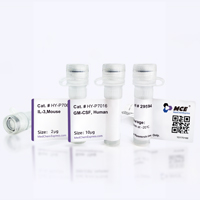
Product Image
Application
in vivo TIM-3 neutralization; in vitro TIM-3 blocking; Flow cytometry


Chemical Information
-
Appearance Liquid
-
Molecular Weight 150 kDa
-
Color Colorless to light yellow
-
SMILES
[Anti-Mouse TIM-3 Antibody (RMT3-23)]
-
Formulation
Please refer to the lot-specific COA for specific buffer information.
-
Storage
Please store the product under the recommended conditions in the Certificate of Analysis.


Purity & Documentation
-
Data Sheet (263 KB)
-
SDS (251 KB)
- English - EN (251 KB)
- Français - FR (251 KB)
- Deutsch - DE (251 KB)
- Norwegian - NO (251 KB)
- Español - ES (251 KB)
- Swedish - SV (251 KB)
- Italian - IT (251 KB)
- Korean - KR (251 KB)
- Portuguese - PT (251 KB)
-
Inhibitory Antibodies User Guide (603 KB)
References
[1]. Nakayama M, et al. Tim-3 mediates phagocytosis of apoptotic cells and cross-presentation. Blood. 2009 Apr 16;113(16):3821-30. [Content Brief]
[2]. Nozaki Y, et al. Inhibition of the TIM-1 and -3 signaling pathway ameliorates disease in a murine model of rheumatoid arthritis. Clin Exp Immunol. 2024 Sep 16;218(1):55-64. [Content Brief]
[3]. Sabatos-Peyton CA, et al. Blockade of Tim-3 binding to phosphatidylserine and CEACAM1 is a shared feature of anti-Tim-3 antibodies that have functional efficacy. Oncoimmunology. 2017 Nov 9;7(2):e1385690. [Content Brief]

Calculators
Concentration (start) × Volume (start) = Concentration (final) × Volume (final)


Anti-Mouse TIM-3 Antibody (RMT3-23) Related Classifications
HY-P990821 Related Classifications
 Powered by Bioz