5423 Results for "

dependent

" in MedChemExpress (MCE) Product Catalog:
Products (5423)

5423 Results for "dependent" in MCE Product Catalog:

Cat. No.: HY-170316
Target:  

Ras

Research Areas:  

Cancer

Ibetazol is a Importin β1 (KPNB1) inhibitor and nucleocytoplasmic transport disruptor. Ibetazol binds covalently to Cys585 of Importin β1, blocks both Importin β1-mediated direct transport and Importin α-dependent nuclear import processes, without affecting transport mediated by other nucleocytoplasmic transport proteins. Ibetazol induces cytoplasmic accumulation of Importin α1, and inhibits nuclear import of substrates carrying nuclear localization signals (NLS), including the NLS-cMyc reporter gene, RelA/p65 and SREBP1. Ibetazol triggers spindle malformation and chromosome misalignment by disrupting the mitotic function of Importin β1. Ibetazol inhibits the proliferation of cells expressing wild-type Importin β1. Ibetazol has a high activity-cytotoxicity window, lacks intrinsic fluorescence, and acts rapidly on nucleocytoplasmic transport processes. Ibetazol serves as a tool compound for investigating nuclear import processes specifically mediated by Importin β1 .
loading...
    loading...
Cat. No.: HY-176498
CAS No.: 1246952-34-0
Synonyms: BMX
NBM-T-BMX-OS01 (BMX) is a derivative of Osthole (HY-N0054). NBM-T-BMX-OS01 attenuates the phosphorylation levels of ERK and Akt in an AMPK-dependent manner. NBM-T-BMX-OS01 induces oxidative stress through the production of ROS. NBM-T-BMX-OS01 enhances Cisplatin-induced cell proliferation inhibition, colony formation inhibition, apoptosis (apoptosis) and cell cycle arrest. NBM-T-BMX-OS01 inhibits VEGF-induced phosphorylation of VEGFR2 and FAK. NBM-T-BMX-OS01 inhibits VEGF-induced endothelial cell proliferation, migration and tube formation, as well as microvessel sprouting in rat aortic rings and angiogenesis induced by colorectal cancer cells. NBM-T-BMX-OS01 inhibits the growth of subcutaneous colorectal cancer xenografts in nude mice. NBM-T-BMX-OS01 can be used in studies related to lung cancer, colorectal cancer and angiogenesis .
loading...
    loading...
Cat. No.: HY-179484
CAS No.: 2915282-32-3
Research Areas:  

Cancer

KRASG12C IN-19 is a selective and orally active KRAS G12C inhibitor. KRASG12C IN-19 exerts potent antiproliferative activity against the KRAS G12C-mutant non small cell lung cancer (NSCLC) cell line H358 with an IC50 of 7.6 nM, and effectively suppresses downstream ERK phosphorylation (IC50 = 24.06 nM). KRASG12C IN 19 has no significant inhibitory activity against KRAS G12V and KRAS G12D-mutant cancer cells (PANC 1, Panc, AsPC 1, and GP2d cells) with IC50 > 10,000 nM. KRASG12C IN-19 rapidly forms a covalent bond with KRAS G12V-GDP, leading to dose-dependent inhibition of the downstream KRAS pathway. KRASG12C IN 19 can be employed for research in KRAS G12C driven cancers, including non small cell lung cancer, pancreatic cancer, and colorectal cancer .
loading...
    loading...
Cat. No.: HY-182517
CAS No.: 2225980-49-2
Target:  

TRP Channel

Research Areas:  

Inflammation/Immunology

AG1529 is a TRPV1 inhibitor and capsaicinoid-based soft agent with a human TRPV1 IC50 of 0.9-0.93 μM. AG1529 reversibly blocks capsaicin-evoked TRPV1 activation, binds to the TRPV1 capsaicin binding site, moderately affects pH-induced TRPV1 gating, and does not alter voltage- or heat-mediated TRPV1 responses. AG1529 suppresses TRPV1-mediated neuronal excitability, reduces capsaicin- and pH-evoked neuronal firing, abolishes histaminergic and inflammation-mediated TRPV1 sensitization. AG1529 exhibits anti-nociceptive and antipruritic effects, attenuates in vivo hyperalgesia and pruritus, dose-dependently reduces acute histaminergic itch in rodents, and mildly blocks hTRPA1 and hTRPM8 channel activity. AG1529 undergoes hydrolysis and dermal deactivation, minimizes TRPV1-associated side reactions, does not evoke capsaicin-like burning sensation, and does not disrupt physiological thermal regulation. AG1529 can be used for the research of inflammatory cutaneous nociception and acute histaminergic pruritus .
loading...
    loading...
Cat. No.: HY-187014
CAS No.: 141360-03-4
NNC 09-0026 is a neuronal calcium channel inhibitor. NNC 09-0026 exhibits IC50 values of 10 μM and 13 μM against neuronal L-type voltage-gated calcium channels, and an IC50 value of 13 μM against rat neuronal N-type voltage-gated calcium channels, with higher selectivity for neuronal L-type channels over peripheral L-type channels. NNC 09-0026 inhibits voltage-dependent Ca 2+ channel currents, blocks Ca 2+ influx through neuronal L-type and N-type voltage-gated calcium channels, and reduces potassium-stimulated calcium uptake in rat cerebral cortex synaptosomes. NNC 09-0026 inhibits TTX-sensitive Na + channel currents in rat cerebellar Purkinje neurons. NNC 09-0026 attenuates ischemia-induced neuronal death, infarct volume and neurological deficits in rat models of cerebral ischemia. NNC 09-0026 can be used for studies on global cerebral ischemia, focal ischemia and cerebral ischemia-related research .
loading...
    loading...
Cat. No.: HY-187390
BRD4 RIMTAC-1 is a BRD4 PROTAC degrader based on the RIPK1-mediated targeted chimera (RIMTAC) technology. It hijacks the endogenous RIPK1-VHL complex via the RIPK1 inhibitor moiety to indirectly recruit the VHL E3 ligase, forming a BRD4-Compound 10-RIPK1-VHL quaternary complex, and degrades BRD4 through the ubiquitin-proteasome system (UPS). BRD4 RIMTAC-1 exhibits selectivity over other BET proteins, induces concentration- and time-dependent, reversible post-translational degradation of BRD4 without altering the target mRNA level. BRD4 RIMTAC-1 potently induces endogenous BRD4 degradation in RAW264.7 and HEK-293T cells, with DC50 values of 179.1 nM and 54.12 nM, respectively. BRD4 RIMTAC-1 can be used for the research of cancer and inflammation-related diseases .
loading...
    loading...
Cat. No.: HY-189126
CAS No.: 1240580-64-6
Research Areas:  

Cancer

YL064 is a multi-target STAT3-c-MYC inhibitor that directly binds to ATXN3 and inhibits its deubiquitinating activity, thereby promoting the ubiquitination and proteasomal degradation of oncogenic substrates of ATXN3. YL064 inhibits the phosphorylation of STAT3-Tyr705 without altering the total protein level of STAT3; meanwhile, it directly binds to the SH2 domain of STAT3 to block the dimerization, nuclear translocation, and DNA-binding activity of STAT3. YL064 directly targets the C-terminal HLH-Zip domain of c-Myc, upregulates the phosphorylation of c-Myc at the Thr58 site, and induces the ubiquitination and proteasome-dependent degradation of c-Myc. YL064 suppresses tumor cell proliferation, induces G2/M cell cycle arrest, reduces cell migration and invasion capacities, and triggers cancer cell apoptosis. YL064 can be used in related research on breast cancer, prostate cancer, diffuse large B-cell lymphoma, and multiple myeloma .
loading...
    loading...
Cat. No.: HY-30004
CAS No.: 22059-21-8
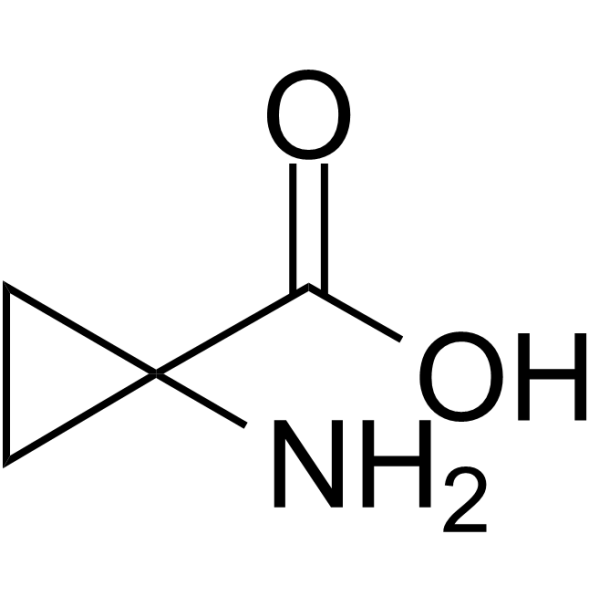
1-Aminocyclopropane-1-carboxylic acid is an endogenous metabolite. In the presence of low concentrations (1 μM) of glutamate, 1-Aminocyclopropane-1-carboxylic acid acts as a small molecule agonist of NMDA receptors with an EC50 of 0.7-0.9 μM. At high concentrations (10 μM) of glutamate, 1-Aminocyclopropane-1-carboxylic acid acts as a competitive antagonist of NMDA receptors with an EC50 of 81.6 nM. 1-Aminocyclopropane-1-carboxylic acid exerts neuroprotective activity by moderately activating NMDA receptors to prevent neuronal cell death in ischemic animal models. Additionally, 1-Aminocyclopropane-1-carboxylic acid is an antagonist of NMDA receptors, inducing blood pressure reduction and antioxidant effects in stroke-prone hypertensive rats. 1-Aminocyclopropane-1-carboxylic acid enhances object recognition memory and cognitive flexibility dependent on the prefrontal cortex, but does not affect impulsivity nor exhibit an antipsychotic-like profile. 1-Aminocyclopropane-1-carboxylic acid shows promise for research in the field of neurotoxicity. .
loading...
    loading...
Cat. No.: HY-B1829AR
CAS No.: 2392-39-4
Synonyms: Dexamethasone 21-phosphate disodium (Standard)
Dexamethasone phosphate (Dexamethasone 21-phosphate) disodium (Standard) is the analytical standard of Dexamethasone phosphate disodium (HY-B1829A). This product is intended for research and analytical applications. Dexamethasone phosphate (Dexamethasone 21-phosphate) disodium is a prodrug form of the glucocorticoid Dexamethasone (HY-14648). Dexamethasone phosphate disodium is produced by introducing a phosphate ester group at the 21-position of the Dexamethasone molecule, forming a salt with sodium ions, thereby significantly improving water solubility. Dexamethasone phosphate disodium inhibits LPS (HY-D1056)-induced degradation of IRAK-1 and IRAK-4, and blocks LPS-induced activation of TRAF6, p-TAK1 and p-JNK. Dexamethasone phosphate disodium inhibits the secretion of RANTES, TGF-β1 and NO, promotes the production of MIP-1α and IL-10, and blocks microglial migration. Dexamethasone phosphate disodium is almost completely converted to Dexamethasone in rat blood, and supports transdermal delivery via iontophoresis. Dexamethasone phosphate disodium can be used in research related to steroid-dependent ulcerative colitis, chemotherapy-induced vomiting, allergic asthma and acute colitis (inflammatory bowel disease).
loading...
    loading...
Cat. No.: HY-FLB1829A
CAS No.: 2392-39-4
Synonyms: Dexamethasone 21-phosphate disodium solution
Dexamethasone sodium phosphate solution is mainly composed of Dexamethasone phosphate disodium (HY-B1829A). Dexamethasone phosphate (Dexamethasone 21-phosphate) disodium is a prodrug form of the glucocorticoid Dexamethasone (HY-14648). Dexamethasone phosphate disodium is produced by introducing a phosphate ester group at the 21-position of the Dexamethasone molecule, forming a salt with sodium ions, thereby significantly improving water solubility. Dexamethasone phosphate disodium inhibits LPS (HY-D1056)-induced degradation of IRAK-1 and IRAK-4, and blocks LPS-induced activation of TRAF6, p-TAK1 and p-JNK. Dexamethasone phosphate disodium inhibits the secretion of RANTES, TGF-β1 and NO, promotes the production of MIP-1α and IL-10, and blocks microglial migration. Dexamethasone phosphate disodium is almost completely converted to Dexamethasone in rat blood, and supports transdermal delivery via iontophoresis. Dexamethasone phosphate disodium can be used in research related to steroid-dependent ulcerative colitis, chemotherapy-induced vomiting, allergic asthma and acute colitis (inflammatory bowel disease) .
loading...
    loading...
Cat. No.: HY-N10508S
CAS No.: 1637678-42-2
Calcitroic acid-13C is the 13C-labeled Calcitroic acid (HY-N10508). Calcitroic acid is a water-soluble terminal vitamin D metabolite and also a ligand for vitamin D receptor (VDR). Calcitroic acid binds to the ligand-binding domain of VDR, forms a retinoic X receptor complex, recruits the coactivator peptide MED1, mediates partial VDR-dependent transcription, inhibits Calcitriol (HY-10002)-induced VDR activation, and reduces the transcription level of CYP24A1 in the presence of 1α,25-dihydroxyvitamin D3. Calcitroic acid exerts selective activating effects on VDR, upregulates the expression of CYP24A1 and CYP3A4, decreases the transcription levels of iNOS and IL-1β, reduces the secretion of nitric oxide and IL-1β, and possesses metabolic stability due to its resistance to phase I oxidation and hepatic glucuronidation. Calcitroic acid can be used in research related to colon cancer, inflammatory bowel disease and rickets .
loading...
    loading...
Cat. No.: HY-P992081

Target:  

Orthopoxvirus

Research Areas:  

Infection

Anti-H3L Antibody (NAL_A185) is a neutralizing antibody targeting the H3L envelope protein of vaccinia virus (CV) belonging to the genus Orthopoxvirus. By binding to the H3L protein of intracellular mature virions, Anti-H3L Antibody (NAL_A185) blocks the binding of the virus to host cells, thereby neutralizing viral infectivity. Anti-H3L Antibody (NAL_A185) not only protects BALB/c mice from intranasal challenge with the lethal vaccinia virus WR strain, reducing weight loss and mortality, but also exhibits complement-dependent neutralizing activity against monkeypox virus. Among these properties, NAL_A185 is an immune target induced by the smallpox vaccine Dryvax; it elicits a robust recall antibody response and induces high-titer neutralizing antibodies in mice. Anti-H3L Antibody (NAL_A185) can be used for studies related to vaccinia virus infection, monkeypox and monkeypox disease .
loading...
    loading...
Cat. No.: HY-W008806S
Synonyms: OHHL-d3; N-(3-Oxohexanoyl)homoserine lactone-d3
N-(3-Oxohexanoyl)-L-homoserine lactone-d3 (OHHL-d3) is the deuterated-labeled N-(3-Oxohexanoyl)-L-homoserine lactone (HY-W008806). N-(3-Oxohexanoyl)-L-homoserine lactone (OHHL; N-(3-Oxohexanoyl)homoserine lactone) is a specific agonist of LuxR-type transcription factor CarR with a Kd of 1.8 μM. N-(3-Oxohexanoyl)-L-homoserine lactone activates CarR by inducing protein multimerization, promoting its binding to target DNA sequences in the carR-carA intergenic region, thereby upregulating the transcription of carbapenem biosynthesis genes. N-(3-Oxohexanoyl)-L-homoserine lactone acts as a quorum sensing signal molecule, enabling bacteria to coordinate the production of carbapenem antibiotics in a cell density-dependent manner. N-(3-Oxohexanoyl)-L-homoserine lactone is used to study bacterial quorum sensing mechanisms, especially the secondary metabolism and virulence factor regulatory pathways of Erwinia carotovora and Yersinia enterocolitica .
loading...
    loading...
Cat. No.: HY-W008806S1
Synonyms: OHHL-d2; N-(3-Oxohexanoyl)homoserine lactone-d2
N-(3-Oxohexanoyl)-L-homoserine lactone-d2 (OHHL-d2) is the deuterated-labeled N-(3-Oxohexanoyl)-L-homoserine lactone (HY-W008806). N-(3-Oxohexanoyl)-L-homoserine lactone (OHHL; N-(3-Oxohexanoyl)homoserine lactone) is a specific agonist of LuxR-type transcription factor CarR with a Kd of 1.8 μM. N-(3-Oxohexanoyl)-L-homoserine lactone activates CarR by inducing protein multimerization, promoting its binding to target DNA sequences in the carR-carA intergenic region, thereby upregulating the transcription of carbapenem biosynthesis genes. N-(3-Oxohexanoyl)-L-homoserine lactone acts as a quorum sensing signal molecule, enabling bacteria to coordinate the production of carbapenem antibiotics in a cell density-dependent manner. N-(3-Oxohexanoyl)-L-homoserine lactone is used to study bacterial quorum sensing mechanisms, especially the secondary metabolism and virulence factor regulatory pathways of Erwinia carotovora and Yersinia enterocolitica .
loading...
    loading...
Cat. No.: HY-W517092
CAS No.: 55673-89-7
Synonyms: 1,2,3,4,7,8,9-HpCDF
1,2,3,4,7,8,9-Heptachlorodibenzofuran (1,2,3,4,7,8,9-HpCDF) is a compound that induces the expression of CYP1A1 and CYP1B1 genes in human peripheral blood lymphocytes, while also promoting the expression of the aryl hydrocarbon receptor repressor (AhRR). 1,2,3,4,7,8,9-Heptachlorodibenzofuran can increase ethoxyresorufin-O-deethylase (EROD) activity in isolated human peripheral blood lymphocytes in a concentration-dependent manner, which serves as a marker of CYP1A1 activity. Furthermore, 1,2,3,4,7,8,9-Heptachlorodibenzofuran exhibits immunosuppressive effects by reducing the number of splenic plaque-forming cells in mice and increasing aryl hydrocarbon hydroxylase (AHH) activity in liver microsomes of mice injected with sheep red blood cells. 1,2,3,4,7,8,9-Heptachlorodibenzofuran can be used in research in the fields of immunology, metabolic diseases, and environmental toxicology .
loading...
    loading...
Cat. No.: HY-L081
185 compounds

Protein phosphorylation is a key post-translational modification underlying the regulation of many cellular processes. Phosphatases and kinases contribute to the regulation of protein phosphorylation homeostasis in the cell. This reversible regulation of protein phosphorylation is critical for the proper control of a wide range of cellular activities, including cell cycle, proliferation and differentiation, metabolism, cell-cell interactions, etc.

Protein phosphatases have evolved in separate families that are structurally and mechanistically distinct. Based on substrate specificity and functional diversity, protein phosphatases are classified into two superfamilies: Protein serine/threonine phosphatases and Protein tyrosine phosphatases. Ser/Thr phosphatases are metalloenzymes belonging to two major gene families termed PPP (phosphoprotein phosphatase) and PPM (metal-dependent protein phosphatases), whereas protein tyrosine phosphatases (PTPs) belong to distinct classes of enzymes that utilize a phospho-cysteine enzyme intermediate as a part of their catalytic action.

MCE supplies a unique collection of 185 phosphatase inhibitors that mainly targeting protein tyrosine phosphatases (PTPs) and serine/threonine-specific protein phosphatases. MCE Phosphatase Inhibitor Library is a useful tool for phosphatase drug discovery and related research.

Cat. No.: HY-13443S
Synonyms: Exenatide (Leu-13C6,15N) TFA
Exendin-4 (Leu- 13C6, 15N) TFA (Exenatide (Leu- 13C6, 15N) TFA) is the 13C, 15N-labeled Exendin-4 (HY-13443). Exendin‑4 (Exenatide) is an orally active, blood-brain barrier-permeable glucagon-like peptide-1 receptor (GLP‑1 receptor) agonist that resists degradation mediated by dipeptidyl peptidase IV. Exendin‑4 mediates multiple glucose-regulating effects, including stimulation of glucose-dependent insulin secretion, inhibition of glucagon production, increase in β-cell mass, delay of gastric emptying, reduction of food intake, improvement of peripheral insulin sensitivity, and restoration of normal islet structure. Exendin‑4 inhibits oxidative stress, alleviates inflammatory responses, and reduces neuronal apoptosis. Exendin‑4 reduces the aggregation level of mutant huntingtin, improves motor function, prolongs survival time, and regulates the expression levels of leptin and ghrelin. Exendin‑4 can be used in research related to type 2 diabetes, acute ischemic stroke, and Huntington's disease .
loading...
    loading...
Cat. No.: HY-137055
CAS No.: 1171824-96-6
Target:  

Others

Research Areas:  

Others

PF-3774076 is a highly central nervous system (CNS) penetrant, potent, and selective human α1A-adrenoceptor partial agonist. It exhibits good potency and selectivity in multiple binding and functional assays. PF-3774076 increases peak urethral pressure in anesthetized female dogs in a dose-dependent manner via a central mechanism. PF-3774076 affects both the proximal and distal portions of the urethra in vivo. These properties suggest that PF-3774076 may have significant benefit in the treatment of stress urinary incontinence (SUI) as a CNS-penetrant α1A receptor partial agonist. However, despite its partial agonism and selectivity for α1A receptors, PF-3774076 failed to provide adequate safety differences in in vivo models of cardiovascular function. This may be due to the simultaneous activation of both peripheral and central α1A receptors. These data suggest that while central α1A partial agonists may have significant benefit in the treatment of SUI, this class of agents may have difficulty achieving the desired urethral selectivity without affecting cardiovascular function.
loading...
    loading...
Cat. No.: HY-141439
CAS No.: 936475-62-6
TBE 31 is an orally active Keap1/Nrf2 pathway activator and NQO1 inducer with a Dm value of 1.1 nM for NQO1. TBE 31 binds to cysteine residues of Keap1, inhibits ubiquitination and degradation of Nrf2, thereby activating the expression of ARE-dependent genes. TBE 31 induces cytoprotective enzymes including NQO1 and GST isoforms, promotes Nrf2 accumulation, and upregulates Nrf2-regulated genes related to antioxidation and lipid metabolism. TBE 31 inhibits pro-inflammatory responses, formation of AFB1-DNA adducts, endoplasmic reticulum stress, cell apoptosis (apoptosis), hepatic fibrosis, oxidative stress, and the expression of ChREBP. TBE 31 reduces the number of tumors in a mouse model of ultraviolet-induced skin carcinogenesis. TBE 31 enhances nerve growth factor-induced neurite outgrowth. TBE 31 attenuates LPS-induced serum TNF-α levels and immobility time in mice. TBE 31 can be used in research related to liver cancer, skin cancer, inflammation-related depression, and non-alcoholic steatohepatitis .
loading...
    loading...
Cat. No.: HY-162275
CAS No.: 861224-48-8
Research Areas:  

Cancer

JMJD1C-IN-1 is an orally active and selective inhibitor of JMJD1C (IC50 = 0.59 μM, Kd = 1.96 μM). JMJD1C-IN-1 inhibits the binding of JMJD1C to H3K9me2 peptide substrate in the HTRF assay (IC50 = 1.47 μM). JMJD1C-IN-1 disrupts intratumoral regulatory T (Treg) cell fitness by dual mechanisms: promoting H3K9me2 accumulation to downregulate PD1 expression and reducing STAT3 demethylation to enhance STAT3 activation. JMJD1C-IN-1 demonstrates dose-dependent antitumor efficacy in multiple mouse tumor models (MCA205 fibrosarcoma, B16-F10 melanoma, LLC lung cancer, Hepa1-6 hepatocellular carcinoma, CT26 colorectal cancer). JMJD1C-IN-1 can be used for the study of tumor immunotherapy by selectively targeting intratumoral Treg cells .
loading...
    loading...

