



Glaucoma
-
Glaucoma (41)

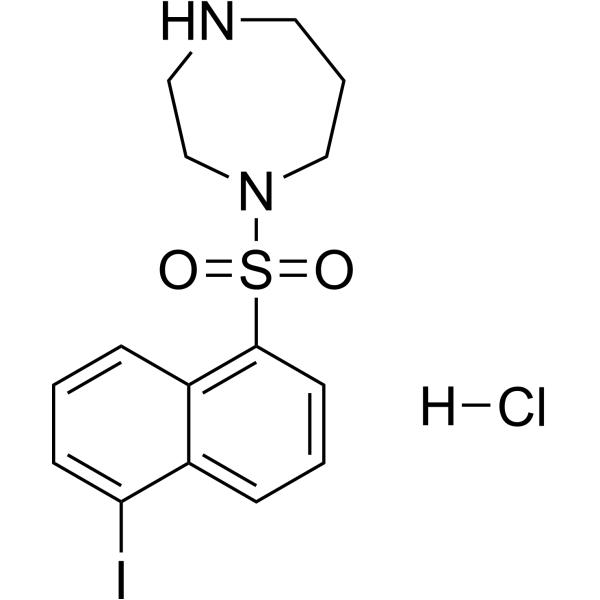
- Formula: C15H18ClIN2O2S
- Molecular Weight: 452.74
ML-7 hydrochloride is a selective and highly specific myosin light chain kinase (MLCK) inhibitor that acts as a trabecular meshwork (TM) relaxant. ML-7 hydrochloride enhances Quinocetone (HY-123581)-induced phosphorylation of ERK, p38 MAPK and JNK, attenuates Akt activation, and promotes apoptosis of hepatocellular carcinoma cells. ML-7 hydrochloride reduces Th2 cytokine secretion by inhibiting MLCK, while alleviating smooth muscle hyperplasia and collagen deposition. As a non-antibiotic adjuvant, ML-7 hydrochloride restores the sensitivity of drug-resistant bacteria to Tigecycline (HY-B0117). ML-7 hydrochloride can be used in research related to glaucoma, hepatocellular carcinoma, asthma, and Klebsiella pneumoniae infection.

- Formula: C71H100N18O16
- Molecular Weight: 1461.66
Xelafaslatide (ONL-1204) is a Fas receptor antagonist. Xelafaslatide blocks the Fas receptor signaling pathway and inhibits downstream apoptosis and inflammatory pathways. Xelafaslatide suppresses neuroinflammation and microglial activation in glaucoma models, protects retinal ganglion cells and prevents axonal degeneration. Xelafaslatide is applicable to relevant research on glaucoma.
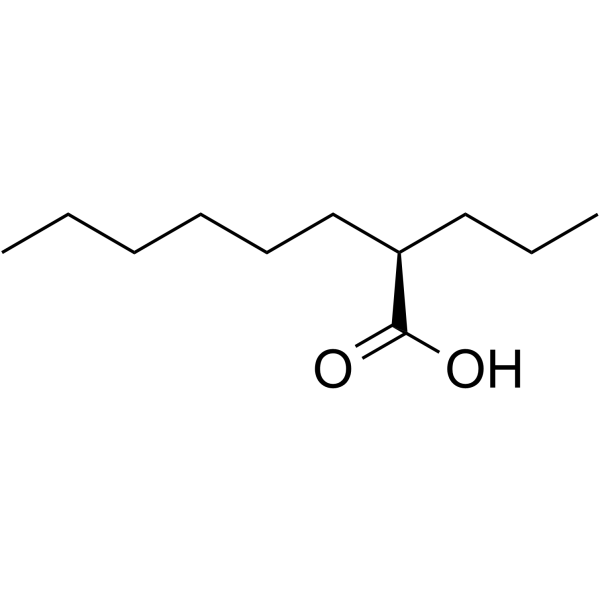
- Formula: C11H22O2
- Molecular Weight: 186.29
Arundic Acid is an orally effective astrocyte function modulator and neuroprotective agent. Arundic Acid increases the expression and function of the astrocytic glutamate transporter EAAT1 by activating the ERK, Akt and NF-κB pathways. Arundic Acid attenuates retinal ganglion cell death in a normal-tension glaucoma model. Arundic Acid exerts neuroprotective effects in a mouse model of Parkinson's disease. Arundic Acid is a S100β protein synthesis inhibitor that prevents neurological deficits and brain tissue damage after intracerebral hemorrhage in rats. Arundic Acid downregulates neuroinflammation and astrocytic dysfunction after status epilepticus in immature rats. Arundic Acid is applicable to research related to Parkinson's disease, cerebral ischemia, glaucoma, intracerebral hemorrhage and epilepsy.
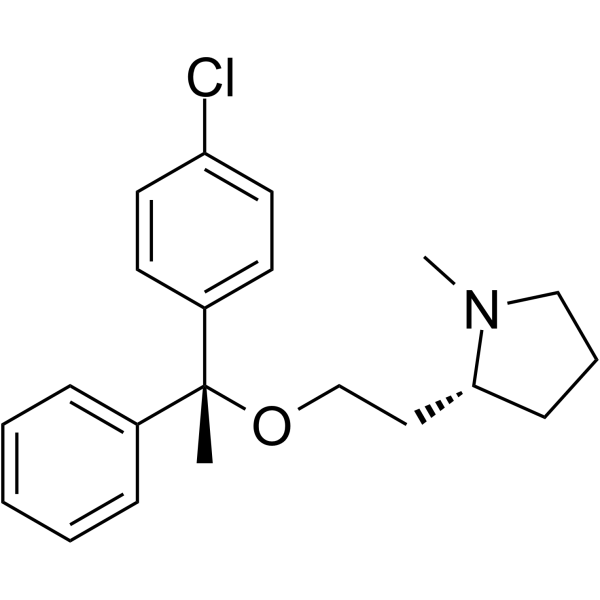
- Formula: C21H26ClNO
- Molecular Weight: 343.89
Clemastine (HS-592; Meclastine) is an orally active, blood-brain barrier-permeable H1 histamine receptor (H1 histamine receptor) antagonist with potent antiallergic effects. Clemastine also antagonizes muscarinic acetylcholine receptors (mAChR), particularly the M1 and M4 subtypes. In addition to antihistamine effects, Clemastine exhibits multiple pharmacological activities, especially in promoting central nervous system remyelination, activating autophagy and pyroptosis, exerting anti-apoptotic and neuroprotective effects, and suppressing inflammation.
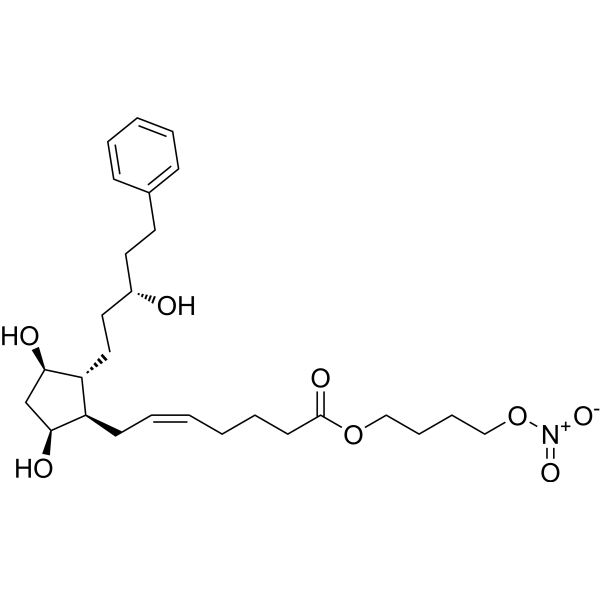
- Formula: C27H41NO8
- Molecular Weight: 507.62
Latanoprostene bunod (NCX116; LBN) is a nitric oxide-releasing prostaglandin F2α analog. Latanoprostene bunod is a prodrug that, upon instillation into the eye, is hydrolyzed by corneal esterases into two active metabolites: Latanoprost (HY-B0577) and NO. Latanoprost activates the prostaglandin FP receptor to increase the outflow of aqueous humor through the uveoscleral pathway. NO increases aqueous humor drainage through the trabecular meshwork pathway, achieving synergistic enhancement targeting the dual pathways of aqueous humor outflow. Latanoprostene bunod can be used in research related to open-angle glaucoma and ocular hypertension.

- Formula: C24H29F2N3O5
- Molecular Weight: 477.50
PIPE-791 is an orally active, blood-brain barrier-permeable selective antagonist of LPAR1. PIPE-791 inhibits LPA-induced calcium mobilization, collagen expression, histamine release, and the activation of fibroblasts, microglia and macrophages. PIPE-791 induces oligodendrocyte precursor cell differentiation, myelination and remyelination, and increases the number of microglia in the retina of normotensive rats. PIPE-791 protects mature oligodendrocytes from cytokine-induced death, reduces the levels of pulmonary fibrosis markers and alleviates neuroinflammation in preclinical models. PIPE-791 can be used in the research of glaucoma, neuroinflammatory diseases, chronic osteoarthritis pain, idiopathic pulmonary fibrosis and multiple sclerosis.

- Formula: C22H22N2O3S
- Molecular Weight: 394.49
TH251 is a LIMK1 and LIMK2 inhibitor with IC50s of 52 nM and 47 nM against LIMK1 and LIMK2, respectively. TH251 binds to inactive αC-out and DFG-out LIMK1 conformations, inhibits unphosphorylated LIMK1 and LIMK2 enzymatic activity, and exhibits unchanged potency despite PAK-mediated phosphorylation of either kinase. TH251 can be used for the research of cancers, glaucoma, and CNS diseases.

- Formula: C23H26F3NO4S
- Molecular Weight: 469.52
CP-432 (CP-734432) is a EP4 receptor agonist with an IC50 of 2 nM for human sources, 8 nM for canine sources, and an EC50 of 1 nM for human sources. CP-432 stimulates cAMP production and activates β-lactamase (β-lactamase) activity via the cAMP response element signaling pathway. CP-432 is applicable to research related to glaucoma.

- Formula: C₂₀₆H₃₁₈N₅₄O₆₉S₂(C₂H₄O)m+₂n; m≈₁₀; n≈₂₀
Pegsebrenatide (NLY01) is a blood-brain barrier-penetrant GLP-1R agonist. Pegsebrenatide alleviates retinal inflammation and neuronal death secondary to ocular hypertension. Pegsebrenatide significantly delays onset and reduces disease severity in experimental autoimmune encephalomyelitis. Pegsebrenatide inhibits the formation of A1 reactive astrocytes in nerve cells and reduces the loss of retinal ganglion cells and dopaminergic neurons. Pegsebrenatide exerts neuroprotective effects in a mouse model of Parkinson's disease by directly preventing microglia-mediated conversion of astrocytes to the A1 neurotoxic phenotype. Pegsebrenatide can be used for research on glaucoma, Parkinson's disease, and multiple sclerosis.

- Formula: C26H36F2O6
- Molecular Weight: 482.56
Sepetaprost (ONO-9054) is a dual agonist of the prostaglandin E3 receptor and prostaglandin F receptor. Sepetaprost reduces intraocular pressure in animal models. Sepetaprost is applicable for research on ocular hypertension and open-angle glaucoma.

- Formula: C22H18FNO3
- Molecular Weight: 363.39
KUNG94 is a selective Grp94/HSP90B inhibitor (IC50=8 nM). By inhibiting the chaperone function of Grp94, KUNG94 reduces the maturation and cell surface trafficking of its specific client proteins. KUNG94 can be used for studies on Grp94-related biological mechanisms, as well as diseases including cancer and primary open-angle glaucoma.

- Formula: C29H42N6O9·xC2HF3O2
- Molecular Weight: 618.68 (free base)
Nocarnickelamide B TFA is a ROCK1/2 inhibitor with IC50 values of 14.9 μM and 21.9 μM, respectively. Nocarnickelamide B TFA inhibits the activation of ROCK-regulated cytoskeletal contraction markers (especially myosin light chain) in human trabecular meshwork cells. Nocarnickelamide B TFA can be used in the research of glaucoma.

- Formula: C20H17N5O3S2
- Molecular Weight: 439.51
COX-2/CA II-2 is an orally active dual selective inhibitor targeting COX-2 and hCA II. COX-2/CA II-2 inhibits COX-2 with an IC50 value of 0.05 μM (SI = 12.02 vs COX-1) and hCA II with a Ki value of 62.6 nM (SI = 704.2 vs hCA I). COX-2/CA II-2 demonstrates significant analgesic and anti-inflammatory effects with rapid onset and sustained duration in animal models, shows improved gastric safety with reduced ulcerogenic liability, and exhibits a gradual intraocular pressure (IOP)-lowering effect without statistical significance relative to the sham-treated eye in rabbit glaucoma models. COX-2/CA II-2 can be used for anti-inflammatory, analgesic and antiglaucoma research.

- Formula: C19H15N5O5S2
- Molecular Weight: 457.48
COX-2/CA II-1 is an orally active dual selective inhibitor targeting COX-2 and hCA II. COX-2/CA II-1 inhibits COX-2 with an IC50 value of 0.13 μM (SI = 9.25 vs COX-1) and hCA II with a Ki value of 39.1 nM (SI = 933.8 vs hCA I). COX-2/CA II-1 demonstrates significant analgesic and anti-inflammatory effects in animal models, shows improved gastric safety with reduced ulcerogenic liability, and exhibits intraocular pressure (IOP)-lowering effects in rabbit glaucoma models. COX-2/CA II-1 can be used for anti-inflammatory, analgesic and antiglaucoma research.

- Formula: C36H35FN6O6S
- Molecular Weight: 698.76
VEGFR/PDGFR/CA II-IN-1 is a VEGFR/PDGFR/CA II inhibitor. VEGFR/PDGFR/CA II-IN-1 potently inhibits VEGFR2 (IC50 = 62.66 nM), PDGFRα (IC50 = 18.65 nM), PDGFRβ (IC50 = 5.23 nM), and hCA II (Ki = 19.4 nM), with weaker activity against hCA I (Ki = 154.2 nM) and hCA IX (Ki = 121.0 nM). VEGFR/PDGFR/CA II-IN-1 exhibits potent antiproliferative activity in VEGFR2-BAF3 cells and robust inhibition of angiogenesis in human umbilical vein endothelial cells (HUVECs). VEGFR/PDGFR/CA II-IN-1 inhibits the formation of corneal neovascularization in rabbits through multiple signaling pathways, and significantly reduced intraocular pressure (IOP) in both acute and chronic glaucoma models. VEGFR/PDGFR/CA II-IN-1 can be used to study neovascular glaucoma (NVG).

- Formula: C25H24FN5O10S
- Molecular Weight: 605.55
CAII-IN-16 is a selective inhibitor of carbonic anhydrase II (CA II), with an IC50 of 0.5 nM against hCA II. CAII-IN-16 exhibits excellent intraocular pressure-lowering activity in a rabbit glaucoma animal model. CAII-IN-16 can be used for the research of glaucoma.

- Formula: C17H12N6O3
- Molecular Weight: 348.32
A3AR antagonist-8 is a selective A3 adenosine receptor antagonist with a Ki of 98 nM for human A3 adenosine receptor. A3AR antagonist-8 can be used for the research of glaucoma, chronic renal disease, acute renal ischemia and reperfusion injury, and cancer.

- Formula: C26H32F3NO4S
- Molecular Weight: 511.60
PF-04475270 is a prodrug of CP-734432 (HY-119236), as well as an agonist of the EP4 prostaglandin receptor, with IC50 values of 2 nM and 8 nM against human and canine sources, respectively. PF-04475270 is rapidly hydrolyzed into its active metabolite CP-734432 by ocular esterases or corneal homogenate, stimulates cAMP production, and activates cAMP response element-mediated β-lactamase activity in cells expressing EP4. PF-04475270 can be used in research related to glaucoma.

- Formula: C14H13N3O6S
- Molecular Weight: 351.33
CAII-IN-15 is a potent carbonic anhydrase II (CA II) inhibitor with a hCA II IC50 of 10 nM. CAII-IN-15 elevates cGMP levels, releases nitric oxide, reduces oxidative stress, and exhibits neuroprotective activity in vitro. CAII-IN-15 inhibits NLRP3 inflammasome activation, reduces neuronal apoptosis. CAII-IN-15 reduces Intraocular pressure (IOP) in rabbits. CAII-IN-15 can be used for the research of glaucoma.

- Formula: C67H105ClN2O5S
- Molecular Weight: 1086.08
Neuro-DiO 4-chlorobenzenesulfonate is a hydrophobic C18 alkyl chain carbocyanine dye with green fluorescence, commonly used as a vascular marker, cell internalizer and deposition agent. Neuro-DiO 4-chlorobenzenesulfonate inserts its alkyl chain into the endothelial plasma membrane via liposome-mediated perfusion to achieve vascular labeling. Neuro-DiO chlorobenzenesulfonate can also stain the cell membrane and cytoplasm of cancer cells to assist in confocal microscopy observations. Neuro-DiO chlorobenzenesulfonate can be released from nanosponges and accumulate on the surface of mouse retina, then internalize into retinal ganglion cells, which is applicable to researches related to glaucoma and other diseases. It should be noted that during liposome-mediated vascular staining in mice, Neuro-DiO 4-chlorobenzenesulfonate may cause leakage of airway lavage fluid.



