



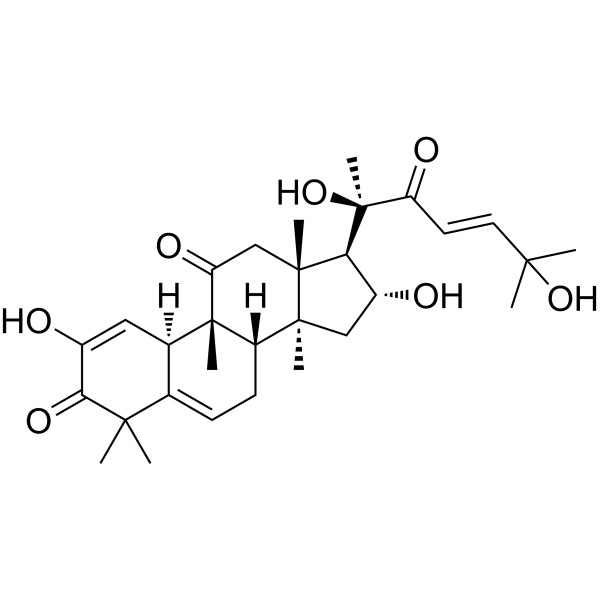
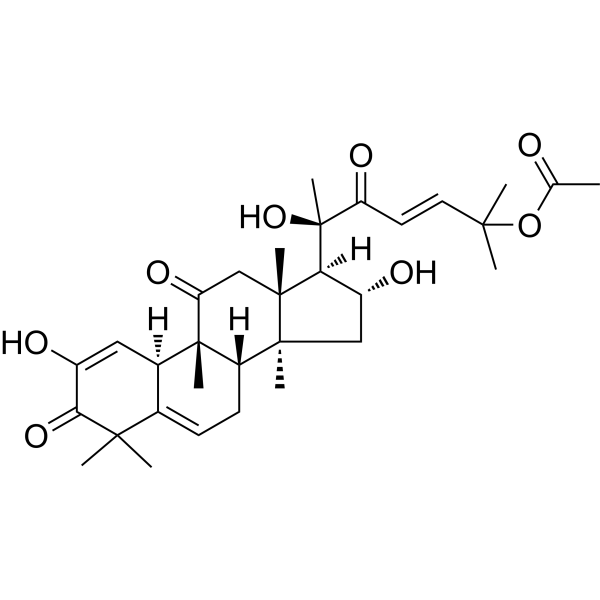
Cucurbitacin I
Based on 13 publication(s) in Google Scholar
Cucurbitacin I is a natural selective inhibitor of JAK2/STAT3, with potent anti-cancer activity.
Nos produits utilisent uniquement pour la recherche. Nous ne vendons pas aux patients.
- Pureté : 99.60%
- CAS No.: 2222-07-3
- Formule: C30H42O7
- Masse moléculaire:514.65
-
Stockage:Powder -20°C, 3 years , 4°C, 2 years ; In solvent -80°C, 2 years , -20°C, 1 year

To place orders, for customer services and technical support, please contact: MedChemExpress USA
Tel: 609-228-6898 E-mail: [email protected] [email protected]


-
 Activité biologique
-
Chemical Information
-
Solvant et solubilité
- Pureté et documentation
- Références
-
 Help & FAQs


-
HY-13818
StatticSTAT3 Inhibitor -
HY-100410
FCCPOXPHOS Uncoupler -
HY-10219
RapamycinmTOR Inhibitor -
HY-N0417
Cucurbitacin EPANoptosis Inducer -
HY-12000
AG490EGFR Inhibitor -
HY-N0416
Cucurbitacin BBioactive Tetracyclic Triterpenoid -
HY-B0272
RifampicinAntivirus Agent -
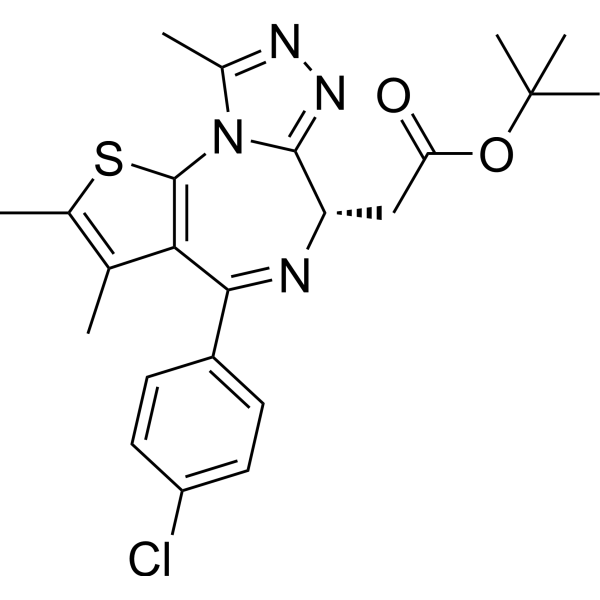
HY-13030
(+)-JQ-1BET Inhibitor -
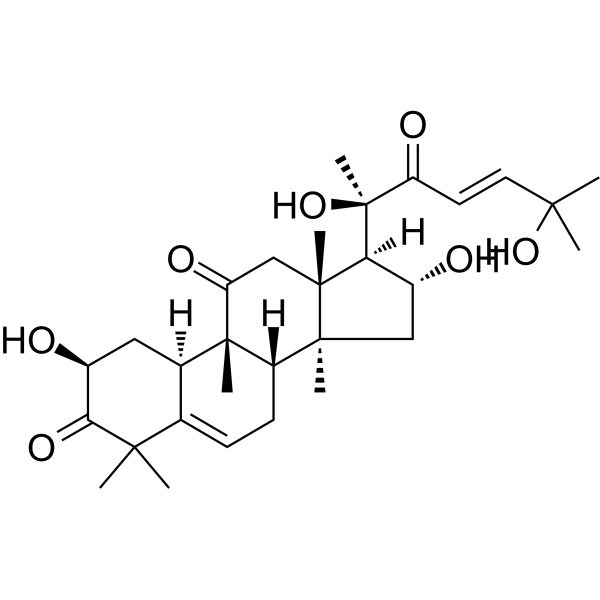
HY-N1986
Cucurbitacin DHSP Inhibitor -
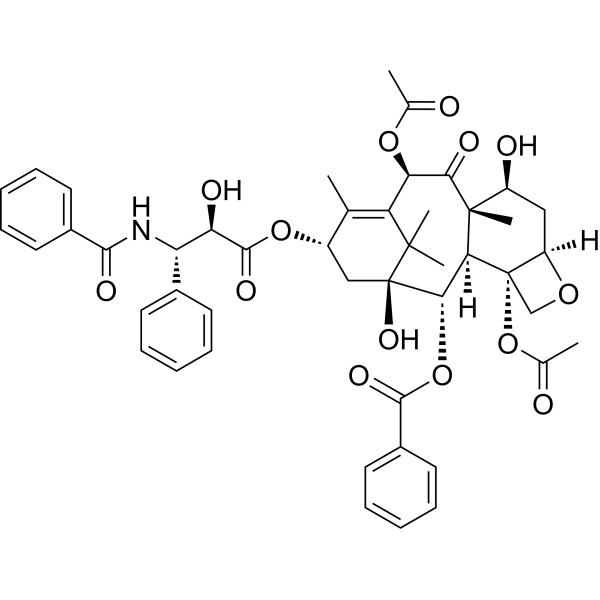
HY-B0015
PaclitaxelAntitumor Agent -
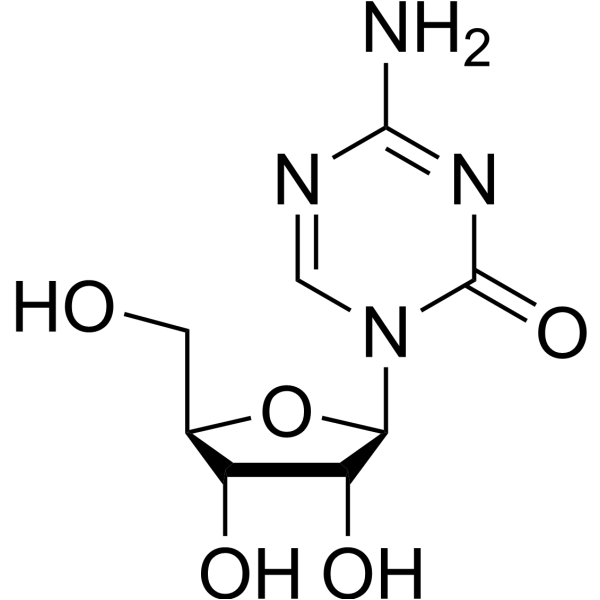
HY-10586
5-AzacytidineDNMT Inhibitor -
HY-13027
DAPTγ-secretase Inhibitor
Publications Citing Use of MedChemExpress (MCE) Cucurbitacin I
More- Nature. 2023 Sep;621(7980):830-839. [Abstract]
- J Neuroinflammation. 2021 Nov 5;18(1):256. [Abstract]
- Neural Regen Res. 2025 Dec 1;20(12):3635-3648. [Abstract]
- Arch Pharm Res. 2026 Feb;49(2):223-241. [Abstract]
- Cancer Cell Int. 2023 Sep 2;23(1):191. [Abstract]
- Chem Biol Interact. 2022 Dec 1:368:110226. [Abstract]
- Cell Cycle. 2019 Nov;18(21):3010-3029. [Abstract]
- Parasit Vectors. 2023 Jul 17;16(1):237. [Abstract]
- Mol Cell Endocrinol. 2024 Apr 1:583:112159. [Abstract]
- Photodiagnosis Photodyn Ther. 2024 Dec:50:104364. [Abstract]
- Biochem Biophys Res Commun. 2023 Dec 20:687:149196. [Abstract]
- Research Square Preprint. 2023 Oct 11.
- Research Square Preprint. 2021 May.
 Customer Validation & Images

-
WB

-
WB

-
Flow Cytometry

-
In Vivo Efficacy Study

-
RT-PCR


Activité biologique
Description
IC50 & Target
|
JAK2 |
STAT3 |
Cellular Effect
|
Cell Line

|
Type | Value | Description | References |
|---|---|---|---|---|
| A549 | IC50 |
140 nM
Compound: Cucurbitacin I
|
Growth inhibition of human A549 cells
Growth inhibition of human A549 cells
|
[PMID: 28814374] |
| C8166 | CC50 |
14.4 μg/mL
Compound: 7
|
Cytotoxicity against human C8166 cells by MTT method
Cytotoxicity against human C8166 cells by MTT method
|
[PMID: 18088099] |
| C8166 | EC50 |
0.7 μg/mL
Compound: 7
|
Antiviral activity against HIV1 in C8166 cells after 72 hrs
Antiviral activity against HIV1 in C8166 cells after 72 hrs
|
[PMID: 18088099] |
| Cancer cell lines | IC50 |
<0.4 μM
Compound: Cucurbitacin I
|
Growth inhibition of human breast cancer cells
Growth inhibition of human breast cancer cells
|
[PMID: 15332833] |
| Cancer cell lines | IC50 |
<0.4 μM
Compound: Cucurbitacin I
|
Growth inhibition of human CNS cancer cells
Growth inhibition of human CNS cancer cells
|
[PMID: 15332833] |
| Cancer cell lines | IC50 |
<0.4 μM
Compound: Cucurbitacin I
|
Growth inhibition of human colon cancer cells
Growth inhibition of human colon cancer cells
|
[PMID: 15332833] |
| Cancer cell lines | IC50 |
<0.4 μM
Compound: Cucurbitacin I
|
Growth inhibition of human lung cancer cells
Growth inhibition of human lung cancer cells
|
[PMID: 15332833] |
| HepG2 | EC50 |
3.16 μM
Compound: 5
|
Hepatoprotective activity in human HepG2 cells assessed as inhibition of CCl4-induced toxicity after 24 hrs by MTT assay
Hepatoprotective activity in human HepG2 cells assessed as inhibition of CCl4-induced toxicity after 24 hrs by MTT assay
|
[PMID: 21459003] |
| HepG2 | IC50 |
15.8 μM
Compound: 5
|
Cytotoxicity against human HepG2 cells after 24 hrs assessed as inhibition of cell viability by MTT assay
Cytotoxicity against human HepG2 cells after 24 hrs assessed as inhibition of cell viability by MTT assay
|
[PMID: 21459003] |
| HL-60 | IC50 |
0.1 nM
Compound: 2
|
Cytotoxicity against human HL60 cells after 72 hrs by WST-8 assay
Cytotoxicity against human HL60 cells after 72 hrs by WST-8 assay
|
[PMID: 20347305] |
| HSC-T6 | EC50 |
0.02 μM
Compound: 5
|
Antiproliferative activity against serum-stimulated rat HSC-T6 cells after 24 hrs by MTT assay
Antiproliferative activity against serum-stimulated rat HSC-T6 cells after 24 hrs by MTT assay
|
[PMID: 21459003] |
| HSC-T6 | IC50 |
3.6 μM
Compound: 5
|
Cytotoxicity against rat HSC-T6 cell after 24 hrs by MTT assay
Cytotoxicity against rat HSC-T6 cell after 24 hrs by MTT assay
|
[PMID: 21459003] |
| HT-1080 | IC50 |
0.47 nM
Compound: 2
|
Cytotoxicity against human HT1080 cells after 72 hrs by WST-8 assay
Cytotoxicity against human HT1080 cells after 72 hrs by WST-8 assay
|
[PMID: 20347305] |
| HT-29 | IC50 |
0.19 μM
Compound: 12
|
Cytotoxicity against human HT-29 cells after 3 days by sulforhodamine B assay
Cytotoxicity against human HT-29 cells after 3 days by sulforhodamine B assay
|
[PMID: 22239601] |
| JY | IC50 |
0.95 μM
Compound: 3
|
Inhibition of LFA1 expressed in human JY cells interaction with ICAM1-IG expressed in human HeLa cell monolayer after 45 mins by cell adhesion assay
Inhibition of LFA1 expressed in human JY cells interaction with ICAM1-IG expressed in human HeLa cell monolayer after 45 mins by cell adhesion assay
|
[PMID: 7852999] |
| MCF7 | IC50 |
0.0607 μM
Compound: 7
|
Cytotoxicity against human MCF7 cells assessed as growth inhibition after 72 hrs by MTS/PMS assay
Cytotoxicity against human MCF7 cells assessed as growth inhibition after 72 hrs by MTS/PMS assay
|
[PMID: 25756299] |
| U-937 | IC50 |
0.3 nM
Compound: 2
|
Cytotoxicity against human U937 cells after 72 hrs by WST-8 assay
Cytotoxicity against human U937 cells after 72 hrs by WST-8 assay
|
[PMID: 20347305] |
In Vitro
Exposure of the COLO205 cells to Cucurbitacin I significantly decreases cell viability. The anticancer activity of Cucurbitacin I is accomplished by downregulating p-STAT3 and MMP-9 expression[1].
PE-induced cell enlargement and upregulation of ANF and β-MHC are significantly suppressed by pretreatment of the cardiomyocytes with Cucurbitacin I. Notably, Cucurbitacin I also impaires connective tissue growth factor (CTGF) and MAPK signaling, pro-hypertrophic factors, as well as TGF-β/Smad signaling, the important contributing factors to fibrosis[2].
Incubation of the Seax cell line with the Jak/Stat3 inhibitor Cucurbitacin I result in a time- and concentration-dependent decrease of P-Stat3 and Stat3. In freshly isolated Sz cells (n=3), Cucurbitacin I induces a concentration-dependent decrease in Stat3 expression whereas P-Stat3 is undetectable. Finally, incubation of freshly isolated Sz cells (n=4) with 30 μM Cucurbitacin I for 6 hours induces apoptosis in the large majority (73-91%) of tumor cells[3].
MedChemExpress (MCE) has not independently confirmed the accuracy of these methods. They are for reference only. .
In Vivo
MedChemExpress (MCE) has not independently confirmed the accuracy of these methods. They are for reference only.


Chemical Information
-
CAS No. 2222-07-3
-
Appearance Solid
-
Masse moléculaire 514.65
-
Formule C30H42O7
-
Color White to yellow
-
SMILES
CC(C)(C1=CC[C@@]2([H])[C@@]3(C[C@@H](O)[C@@H]([C@]3(C4)C)[C@@](C)(O)C(/C=C/C(C)(O)C)=O)C)C(C(O)=C[C@@]1([H])[C@]2(C)C4=O)=O
-
Synonyms
Elatericin B; JSI-124; NSC-521777
-
Structure Classification
-
Initial Source
-
Livraison
Room temperature in continental US; may vary elsewhere.
-
Stockage
Powder -20°C 3 years 4°C 2 years In solvent -80°C 2 years -20°C 1 year


Publications (13)
-
Journal Impact Factor
-
Most Recent
-
Nature
2023 Sep;621(7980):830-839. PMID: 37674079 -
J Neuroinflammation
Photobiomodulation inhibits the activation of neurotoxic microglia and astrocytes by inhibiting Lcn2/JAK2-STAT3 crosstalk after spinal cord injury in male rats. [Abstract]2021 Nov 5;18(1):256. PMID: 34740378
Cucurbitacin I purchased from MedChemExpress. Usage Cited in: J Neuroinflammation. 2021 Nov 5;18(1):256. [Abstract]
Cucurbitacin I (0.5 μM; 24 h) co-treated with PBM resulted in enhanced inhibition of microglial and astrocyte activation in neurotoxic microglia and astrocytes.
-
Neural Regen Res
Single-cell RNA sequencing reveals the heterogeneity and interactions of immune cells and Müller glia during zebrafish retina regeneration. [Abstract]2025 Dec 1;20(12):3635-3648. PMID: 38934409
Cucurbitacin I purchased from MedChemExpress. Usage Cited in: Neural Regen Res. 2025 Dec 1;20(12):3635-3648. [Abstract]
Cucurbitacin I (JSI-124; 1, 5 μM; intravitreous injections; once daily for 4 days) decreased Zym injection promotes MG proliferation in the injured retina.
Cucurbitacin I purchased from MedChemExpress. Usage Cited in: Neural Regen Res. 2025 Dec 1;20(12):3635-3648. [Abstract]
Cucurbitacin I (JSI-124; 1, 5 μM; intravitreous injections; 1 days) decreased the injury-dependent induction of immunoregulatory MG markers, such as c4b, c7a, steap4, and cebpd, as well as activated MG markers such as lin28a, clcf1, lepb, and crlf1a in the retina.
-
Arch Pharm Res
JAK2/STAT3-dependent regulation of MDM4/MDM2-p53 signaling in methotrexate-induced ferroptosis and nephrotoxicity. [Abstract]2026 Feb;49(2):223-241. PMID: 41723769
Cucurbitacin I purchased from MedChemExpress. Usage Cited in: Arch Pharm Res. 2026 Feb;49(2):223-241. [Abstract]
Cucurbitacin I (JSI-124; 128.83 nM; 24 h) significantly reduced the phosphorylation levels of JAK2 and STAT3, and consequently altered the expression of downstream key proteins in HK-2 cells.
Cucurbitacin I purchased from MedChemExpress. Usage Cited in: Arch Pharm Res. 2026 Feb;49(2):223-241. [Abstract]
Cucurbitacin I (JSI-124; 128.83 nM; 24 h) effectively reversed the MTX-induced promotion of the MDM4/MDM2, the inhibition of p53 in HK-2 cells.
Cucurbitacin I purchased from MedChemExpress. Usage Cited in: Arch Pharm Res. 2026 Feb;49(2):223-241. [Abstract]
Cucurbitacin I (JSI-124; 128.83 nM; 24 h) reduced MTX-induced ROS accumulation in HK-2 cells.
-
Cancer Cell Int
Progranulin promoted the proliferation, metastasis, and suppressed apoptosis via JAK2-STAT3/4 signaling pathway in papillary thyroid carcinoma. [Abstract]2023 Sep 2;23(1):191. PMID: 37660003 -
Chem Biol Interact
Induction of cardiotoxicity in zebrafish embryos by 1,1-dichloro-2,2-bis(p-chlorophenyl)ethylene through the JAK-STAT and NOTCH signaling pathways. [Abstract]2022 Dec 1:368:110226. PMID: 36280156 -
Cell Cycle
Blocking Notch signal pathway suppresses the activation of neurotoxic A1 astrocytes after spinal cord injury. [Abstract]2019 Nov;18(21):3010-3029. PMID: 31530090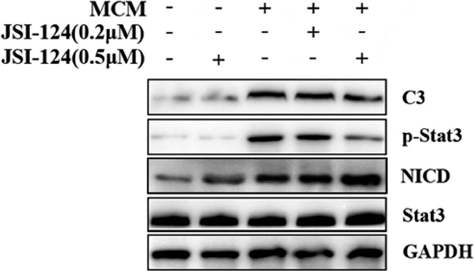
Cucurbitacin I purchased from MedChemExpress. Usage Cited in: Cell Cycle. 2019 Nov;18(21):3010-3029. [Abstract]
Western blot analysis of C3, NICD, p-Stat3, and Stat3 expression in astrocytes treated with MCM or MCM plus the Stat3 inhibitor JSI-124 (0.2 or 0.5 μM) for 24 h.
-
Parasit Vectors
LILRB4 regulates the function of decidual MDSCs via the SHP-2/STAT6 pathway during Toxoplasma gondii infection. [Abstract]2023 Jul 17;16(1):237. PMID: 37461040 -
Mol Cell Endocrinol
In vitro primary hyperparathyroidism model application of computationally repurposed drugs. [Abstract]2024 Apr 1:583:112159. PMID: 38228226 -
Photodiagnosis Photodyn Ther
Photobiomodulation reduces spinal cord edema by decreasing the expression of AQP4 in the astrocytes of male spinal cord injury rats via the JAK2/STAT3 signaling pathway. [Abstract]2024 Dec:50:104364. PMID: 39401645 -
Biochem Biophys Res Commun
Chinese herb related molecules Catechins, Caudatin and Cucurbitacin-I inhibit the proliferation of glioblastoma by activating KDELR2-mediated endoplasmic reticulum stress. [Abstract]2023 Dec 20:687:149196. PMID: 37939504 -
-


Solvant et solubilité
In Vitro:
DMSO : ≥ 100 mg/mL (194.31 mM; Hygroscopic DMSO has a significant impact on the solubility of product, please use newly opened DMSO)
* "≥" means soluble, but saturation unknown.
Please refer to the solubility information to select the appropriate solvent. Once prepared, please aliquot and store the solution to prevent product inactivation from repeated freeze-thaw cycles.
Storage method and period of stock solution: -80°C, 2 years; -20°C, 1 year. When stored at -80°C, please use it within 2 years. When stored at -20°C, please use it within 1 year.
Please refer to the solubility information to select the appropriate solvent. Once prepared, please aliquot and store the solution to prevent product inactivation from repeated freeze-thaw cycles.
Storage method and period of stock solution: -80°C, 2 years; -20°C, 1 year. When stored at -80°C, please use it within 2 years. When stored at -20°C, please use it within 1 year.
Concentration (start) × Volume (start) = Concentration (final) × Volume (final)
In Vivo:
Select the appropriate dissolution method based on your experimental animal and administration route.
- For the following dissolution methods, please ensure to first prepare a clear stock solution using an In Vitro approach and then sequentially add co-solvents:
- To ensure reliable experimental results, the clarified stock solution can be appropriately stored based on storage conditions. As for the working solution for In Vivo experiments, it is recommended to prepare freshly and use it on the same day.
- The percentages shown for the solvents indicate their volumetric ratio in the final prepared solution. If precipitation or phase separation occurs during preparation, heat and/or sonication can be used to aid dissolution.
Add each solvent one by one: 10% DMSO 40% PEG300 5% Tween-80 45% Saline
Solubility: ≥ 3 mg/mL (5.83 mM); Clear solution
This protocol yields a clear solution of ≥ 3 mg/mL (saturation unknown).
Taking 1 mL working solution as an example, add 100 μL DMSO stock solution (30.0 mg/mL) to 400 μL PEG300, and mix evenly; then add 50 μL Tween-80 and mix evenly; then add 450 μL Saline to adjust the volume to 1 mL.
Preparation of Saline: Dissolve 0.9 g sodium chloride in ddH₂O and dilute to 100 mL to obtain a clear Saline solution.
Add each solvent one by one: 10% DMSO 90% (20% SBE-β-CD in Saline)
Solubility: ≥ 3 mg/mL (5.83 mM); Clear solution
This protocol yields a clear solution of ≥ 3 mg/mL (saturation unknown).
Taking 1 mL working solution as an example, add 100 μL DMSO stock solution (30.0 mg/mL) to 900 μL 20% SBE-β-CD in Saline, and mix evenly.
Preparation of 20% SBE-β-CD in Saline (4°C, storage for one week): 2 g SBE-β-CD powder is dissolved in 10 mL Saline, completely dissolve until clear.
In Vivo Dissolution Calculator
Please enter the basic information of animal experiments:
-
-
-
-
Recommended: Prepare an additional quantity of animals to account for potential losses during experiments.
Please enter your animal formula composition:
-
%DMSO +
Recommended: Keep the proportion of DMSO in working solution below 2% if your animal is weak.
-
%+
-
+%Tween-80 + +
-
%Saline +
The co-solvents required include: DMSO, . All of co-solvents are available by MedChemExpress (MCE). , Tween 80. All of co-solvents are available by MedChemExpress (MCE).
Working solution concentration: 0.22 mg/mL
Method for preparing stock solution: mg drug dissolved in μL DMSO. Stock solution concentration: mg/mL.
1. Take μL DMSO stock solution;
2. Add μL .
μL , mix evenly;
3. Then add μL Tween 80, mix evenly;
4. Then add μL
Please ensure that the stock solution in the first step is dissolved to a clear state, and add co-solvents in sequence. You can use ultrasonic heating (ultrasonic cleaner, recommended frequency 20-40 kHz), vortexing, etc. to assist dissolution.


Pureté et documentation
-
Fiche technique (282 KB)
-
SDS (480 KB)
- English - EN (480 KB)
- Français - FR (480 KB)
- Deutsch - DE (480 KB)
- Norwegian - NO (480 KB)
- Español - ES (480 KB)
- Swedish - SV (480 KB)
- Italian - IT (480 KB)
- Korean - KR (480 KB)
- Portuguese - PT (480 KB)
-
Instruction de manipulation (2659 KB)
Références
[1]. Song J, et al. Cucurbitacin I inhibits cell migration and invasion and enhances chemosensitivity in colon cancer. Oncol Rep. 2015 Apr;33(4):1867-71. [Content Brief]
[2]. Moon Hee Jeong, et al. Cucurbitacin I Attenuates Cardiomyocyte Hypertrophy via Inhibition of Connective Tissue Growth Factor (CCN2) and TGF- β/Smads Signalings. PLoS One. 2015 Aug 21;10(8):e0136236. [Content Brief]


Complete Stock Solution Preparation Table
Please refer to the solubility information to select the appropriate solvent. Once prepared, please aliquot and store the solution to prevent product inactivation from repeated freeze-thaw cycles.
Storage method and period of stock solution: -80°C, 2 years; -20°C, 1 year. When stored at -80°C, please use it within 2 years. When stored at -20°C, please use it within 1 year.
| Optional Solvent | Concentration Solvent Mass | 1 mg | 5 mg | 10 mg | 25 mg |
|---|---|---|---|---|---|
| DMSO | 1 mM | 1.9431 mL | 9.7153 mL | 19.4307 mL | 48.5767 mL |
| 5 mM | 0.3886 mL | 1.9431 mL | 3.8861 mL | 9.7153 mL | |
| 10 mM | 0.1943 mL | 0.9715 mL | 1.9431 mL | 4.8577 mL | |
| 15 mM | 0.1295 mL | 0.6477 mL | 1.2954 mL | 3.2384 mL | |
| 20 mM | 0.0972 mL | 0.4858 mL | 0.9715 mL | 2.4288 mL | |
| 25 mM | 0.0777 mL | 0.3886 mL | 0.7772 mL | 1.9431 mL | |
| 30 mM | 0.0648 mL | 0.3238 mL | 0.6477 mL | 1.6192 mL | |
| 40 mM | 0.0486 mL | 0.2429 mL | 0.4858 mL | 1.2144 mL | |
| 50 mM | 0.0389 mL | 0.1943 mL | 0.3886 mL | 0.9715 mL | |
| 60 mM | 0.0324 mL | 0.1619 mL | 0.3238 mL | 0.8096 mL | |
| 80 mM | 0.0243 mL | 0.1214 mL | 0.2429 mL | 0.6072 mL | |
| 100 mM | 0.0194 mL | 0.0972 mL | 0.1943 mL | 0.4858 mL |


Cucurbitacin I Related Classifications
HY-N1405 Related Classifications
 Powered by Bioz