



150322-05-7
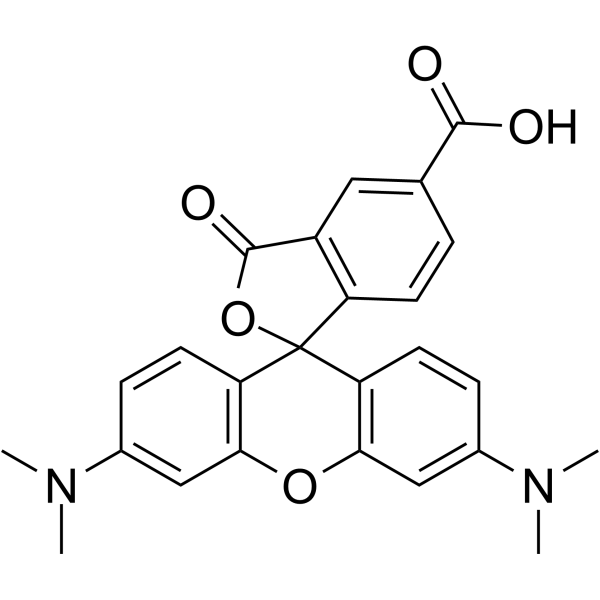
Chemical Structure
5-Carboxytetramethylrhodamine
- CAS No.: 150322-05-7
- Formula:C25H22N2O5
- Molecular Weight:430.45
IUPAC Name: 3',6'-bis(dimethylamino)-3-oxo-3H-spiro[isobenzofuran-1,9'-xanthene]-5-carboxylic acid
InChIKey: DCVXPZDNLDPUES-UHFFFAOYSA-N
SMILES: O=C(C1=CC2=C(C3(C4=C(OC5=C3C=CC(N(C)C)=C5)C=C(N(C)C)C=C4)OC2=O)C=C1)O
Biological Activity: 5-Carboxytetramethylrhodamine is a red-emitting fluorescent xanthene and rhodamine derivative with a maximum absorption wavelength of 540‑554 nm and a maximum emission wavelength of 575‑583 nm. 5-Carboxytetramethylrhodamine possesses photosensitizer properties. 5-Carboxytetramethylrhodamine can covalently conjugate with polypeptides, PNA, oligonucleotides, and other molecules, and is applied in research related to bioimaging and biosensing[1][2][3].
| Cat. No. | Product Name | Purity | Description | Pricing | |||||||||||||||||||
|---|---|---|---|---|---|---|---|---|---|---|---|---|---|---|---|---|---|---|---|---|---|---|---|
|
|
5-Carboxytetramethylrhodamine | 98.85% | 5-Carboxytetramethylrhodamine is a red-emitting fluorescent xanthene and rhodamine derivative with a maximum absorption wavelength of 540‑554 nm and a maximum emission wavelength of 575‑583 nm. 5-Carboxytetramethylrhodamine possesses photosensitizer properties. 5-Carboxytetramethylrhodamine can covalently conjugate with polypeptides, PNA, oligonucleotides, and other molecules, and is applied in research related to bioimaging and biosensing. | ||||||||||||||||||||
|
loading...
/
|
|||||||||||||||||||||||
-
Similarity Score 0.92
 HY-W1423956-TAMRA free acid
-
Similarity Score 0.78
 HY-D28905-TAMRA-NHS
-
Similarity Score 0.75
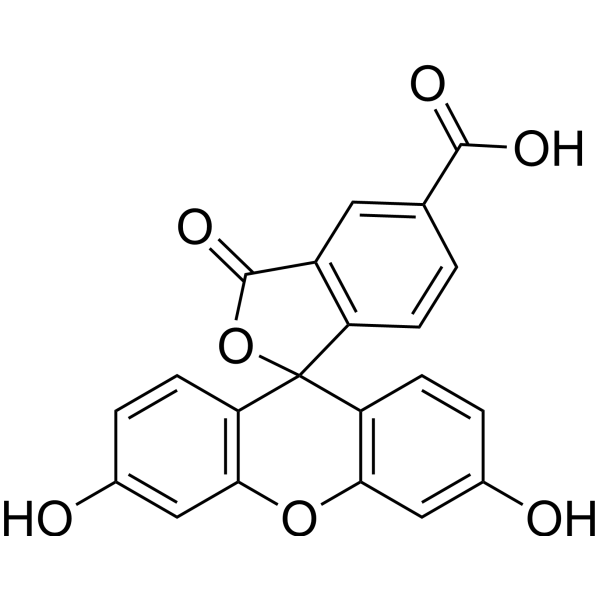 HY-660225-FAM
-
Similarity Score 0.72
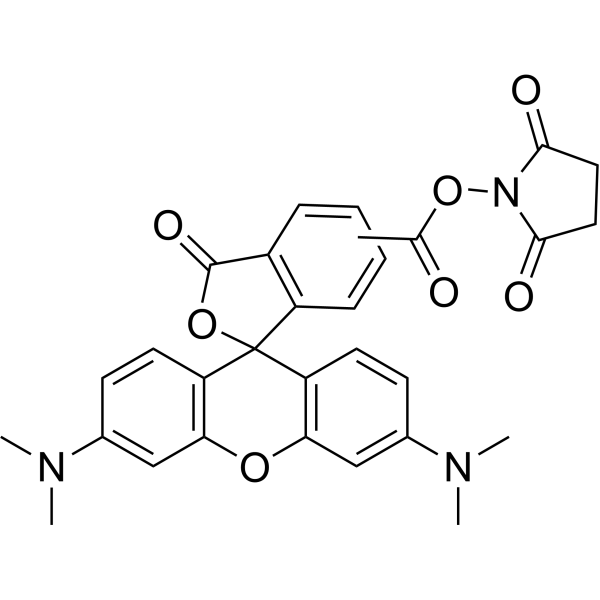 HY-D0167NHS-5(6)Carboxyrhodamine
-
Similarity Score 0.71
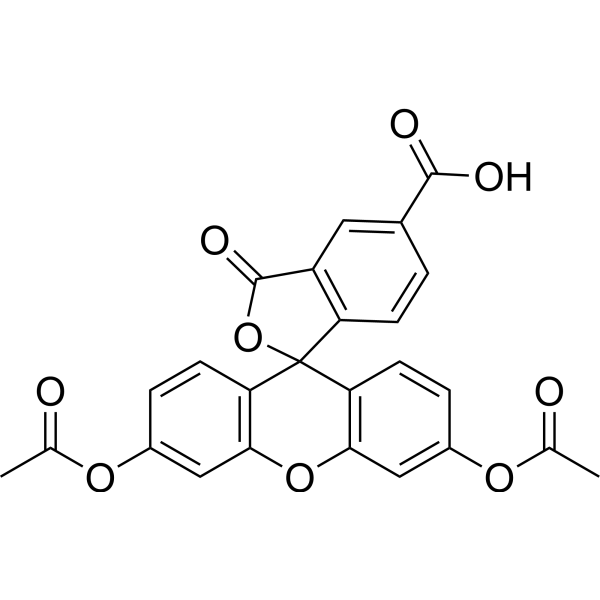 HY-D00475-CFDA
-
Similarity Score 0.70
 HY-D0304Rhodamine B base
-
Similarity Score 0.69
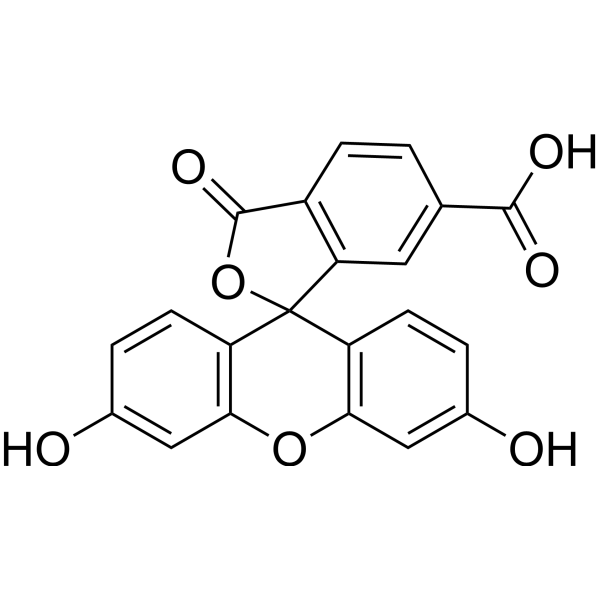 HY-660216-FAM
-
Similarity Score 0.68
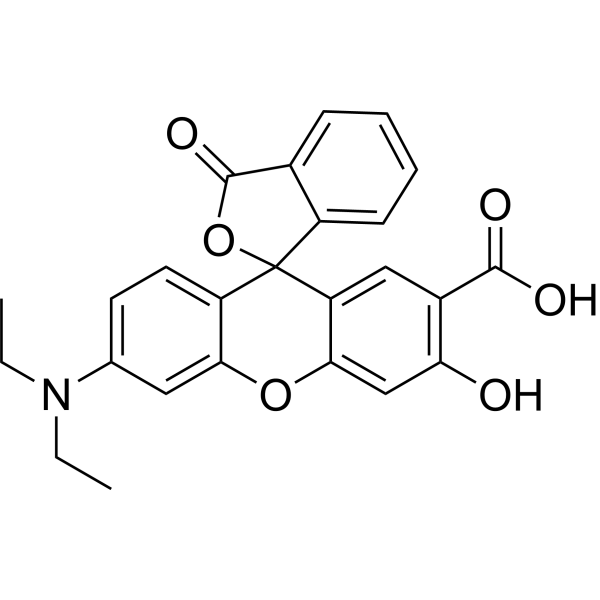 HY-D1230Mordant red 15
-
Similarity Score 0.68
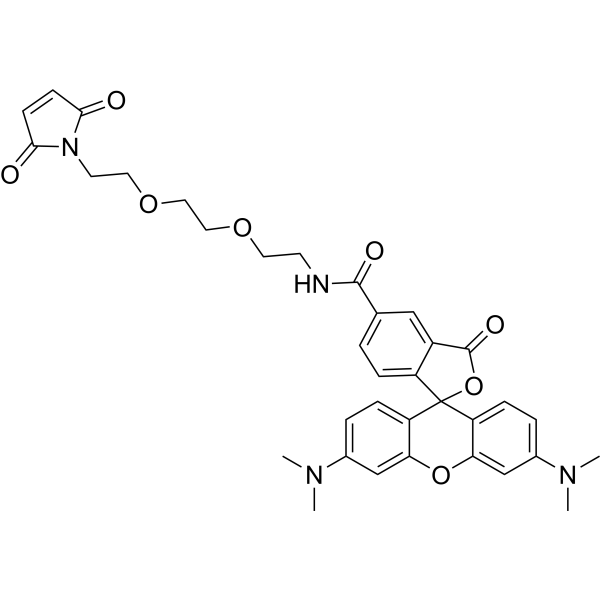 HY-W190932TAMRA-PEG2-Maleimide
-

Explore the MedChemAI to find more analogs


References
- [1]. Bøe SL, et al. A novel photosensitizer for light-controlled gene silencing. Nucleic acid therapeutics. 2011 Oct;21(5):359-67. [Content Brief]
- [2]. Eisold U, et al. Bright or dark immune complexes of anti-TAMRA antibodies for adapted fluorescence-based bioanalysis. Analytical and bioanalytical chemistry. 2015 May;407(12):3313-23. [Content Brief]
-
[3]. Kim J, et al. TAMRA-conjugated DRL tripeptide for the visualization of synovium. Dyes and Pigments, 2022, 205: 110590.



