



LHVS
Based on 3 publication(s) in Google Scholar
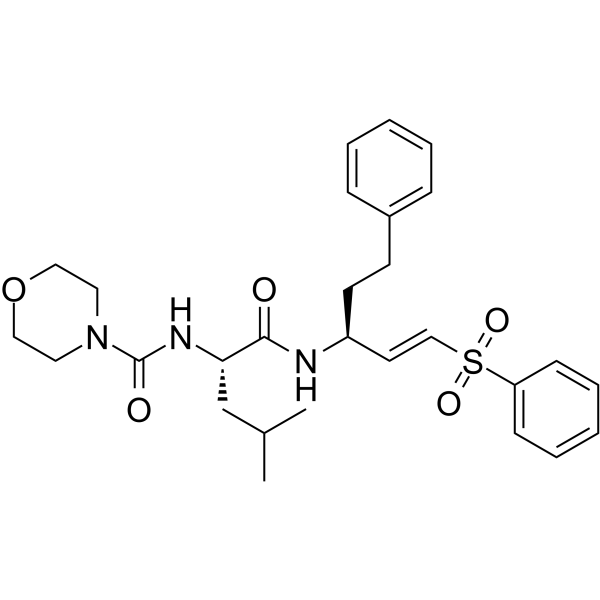
LHVS is a potent, non-selective, irreversible, cell-permeable cysteine protease and cathepsin inhibitor. LHVS decreases actin ring formation. LHVS inhibits T. gondii invasion with an IC50 of 10 μM.
Nos produits utilisent uniquement pour la recherche. Nous ne vendons pas aux patients.
- Pureté : 98.15%
- CAS No.: 170111-28-1
- Formule: C28H37N3O5S
- Masse moléculaire:527.68
-
Stockage:Powder -20°C, 3 years , 4°C, 2 years ; In solvent -80°C, 6 months , -20°C, 1 month

To place orders, for customer services and technical support, please contact: MedChemExpress USA
Tel: 609-228-6898 E-mail: [email protected] [email protected]


-
 Activité biologique
-
Chemical Information
-
Solvant et solubilité
- Protocole
- Pureté et documentation
- Références
-
 Help & FAQs


-
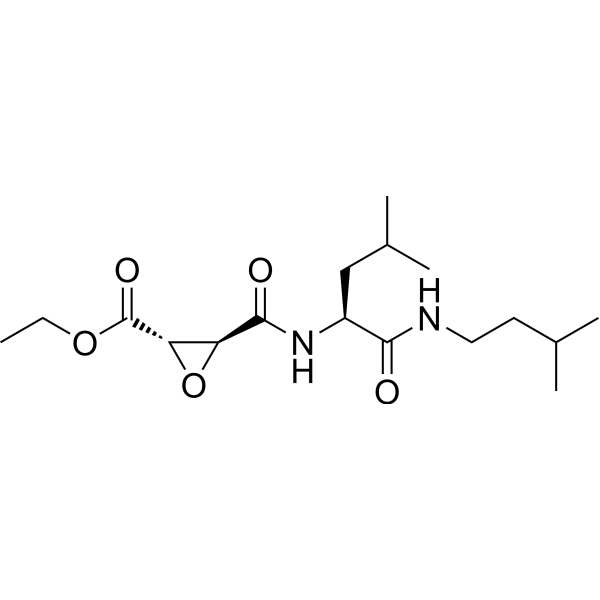
HY-100229
AloxistatinCysteine Protease Inhibitor -
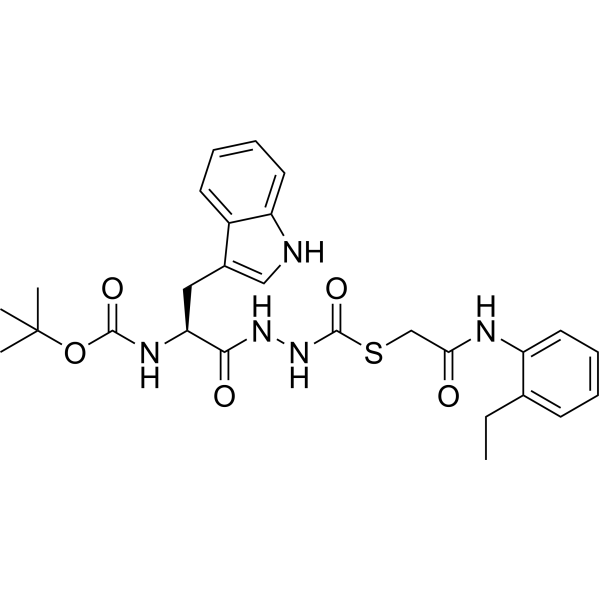
HY-103353
SID 26681509Cathepsin L Inhibitor -
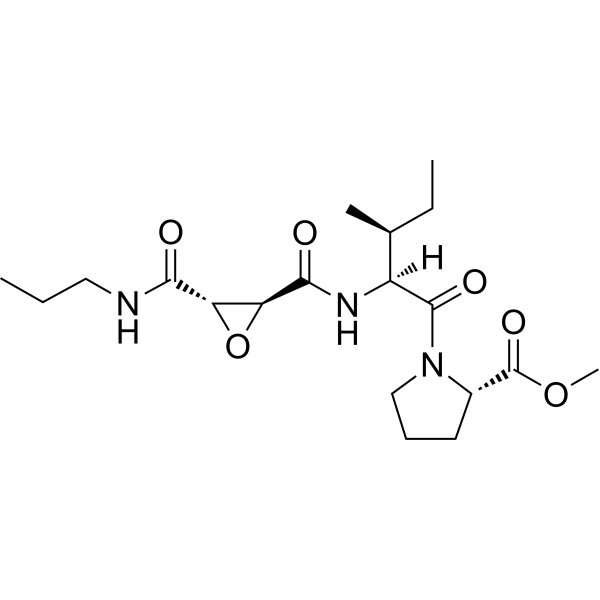
HY-100350
CA-074 methyl esterCathepsin B Inhibitor -
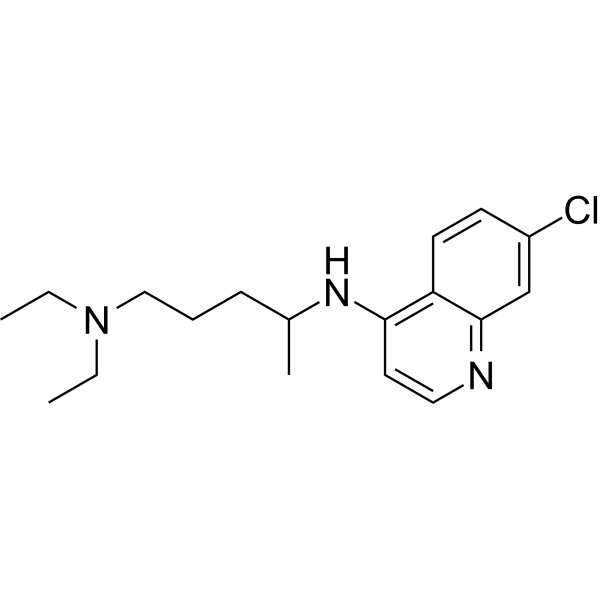
HY-17589A
ChloroquineAntimalarial Agent -
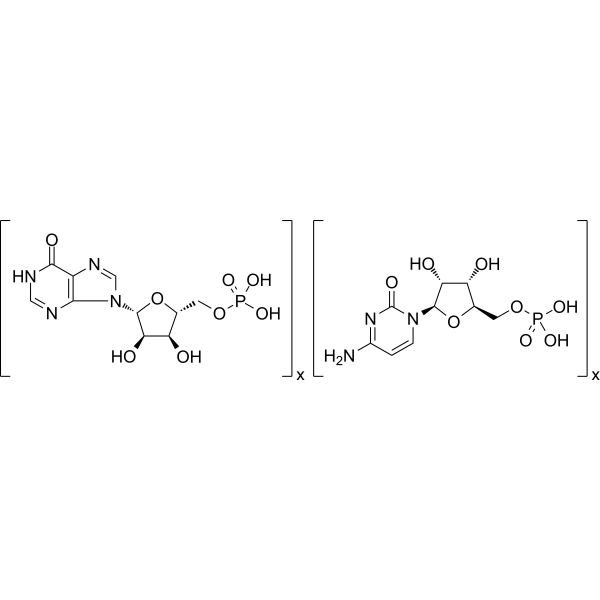
HY-107202
Polyinosinic-polycytidylic acidTLR-3 Agonist -
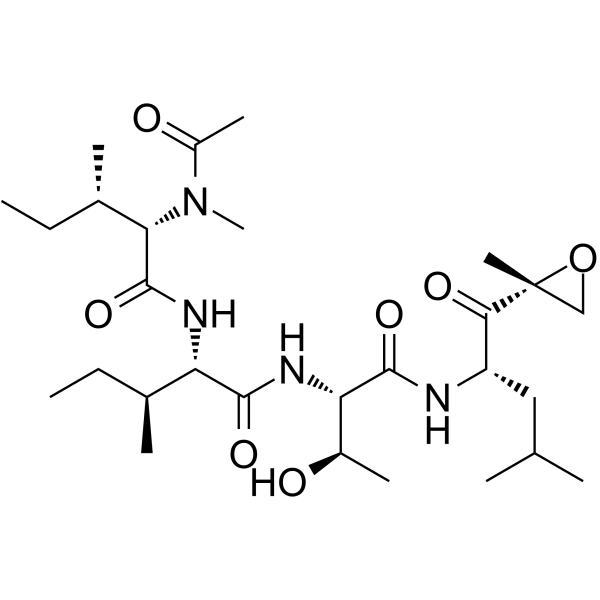
HY-13821
EpoxomicinProteasome Inhibitor -
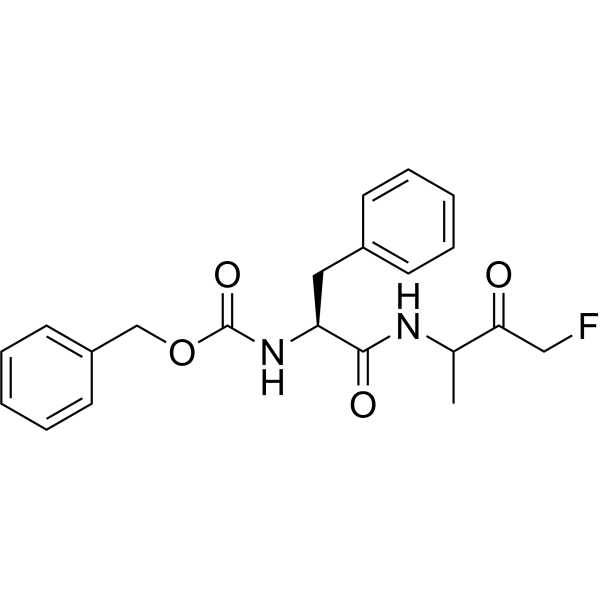
HY-P0109A
Z-FA-FMKCathepsin B/L Inhibitor -
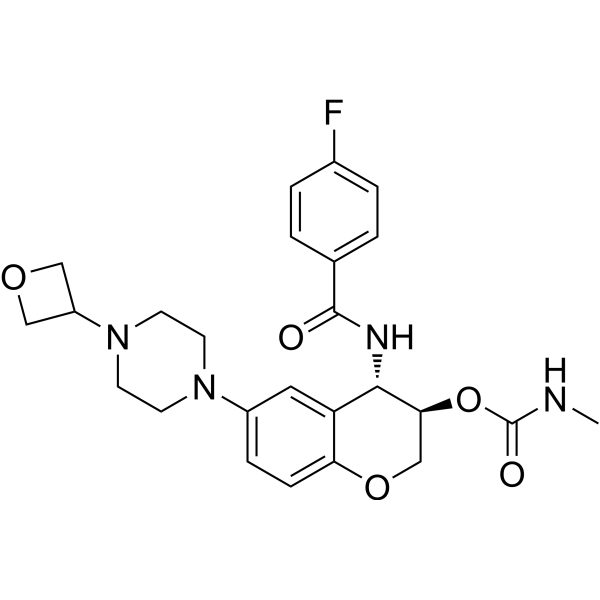
HY-15533
LY 3000328Cathepsin S Inhibitor -
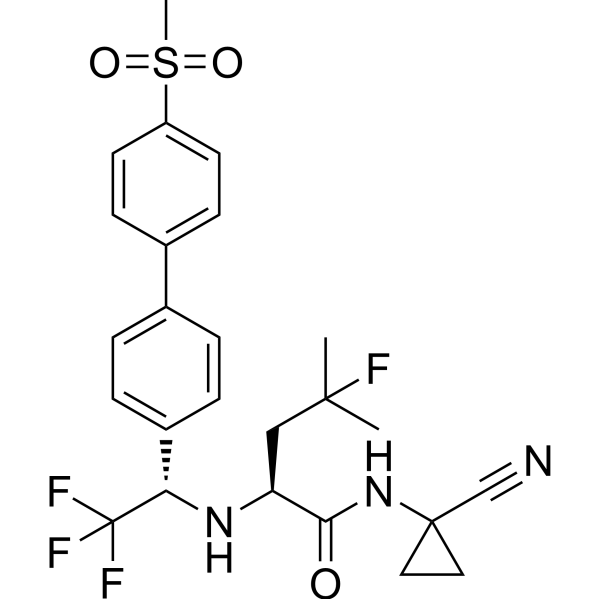
HY-10042
OdanacatibCathepsin K Inhibitor -
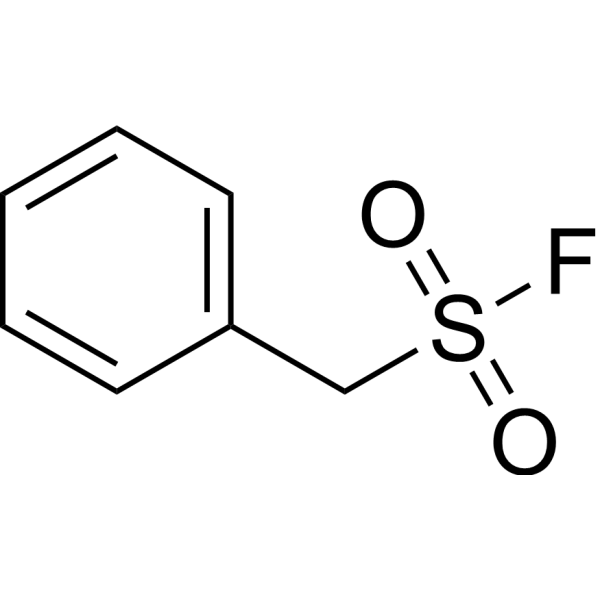
HY-B0496
PMSFCathepsin Inhibitor -
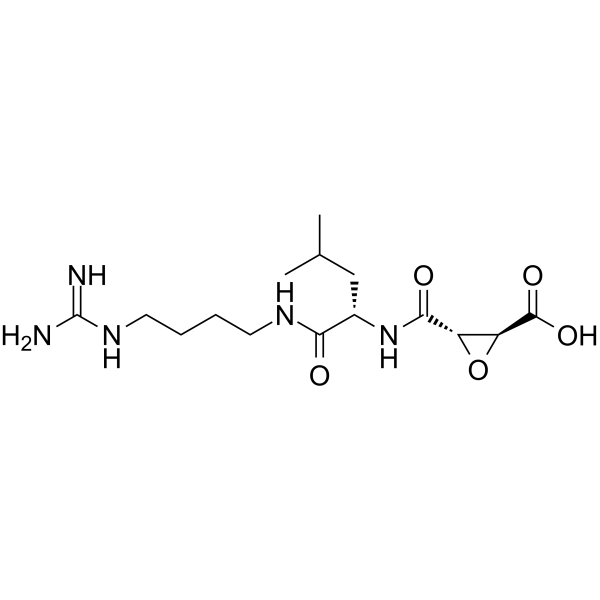
HY-15282
E-64Cysteine Peptidase Inhibitor -
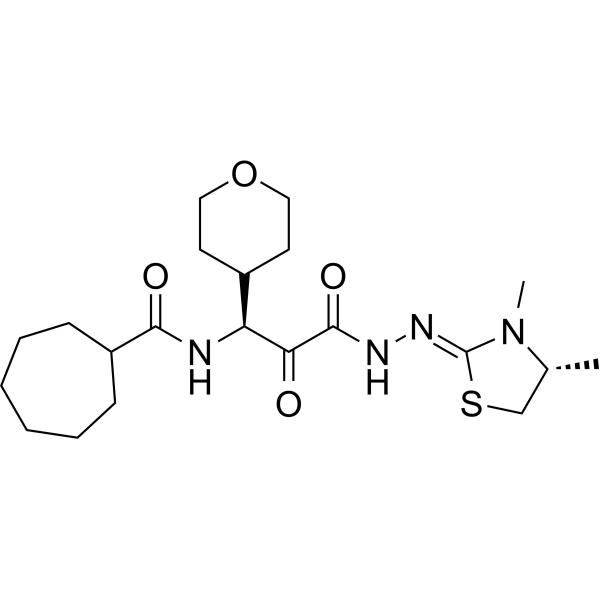
HY-108044
ONO-5334Cathepsin K Inhibitor
Publications Citing Use of MedChemExpress (MCE) LHVS
MoreVoir tous les produits spécifiques à Isoform Cathepsin
MoreVoir tous les produits spécifiques à Isoform Parasite
More

Activité biologique
Description
IC50 & Target
|
cathepsin S |
cathepsin K |
cathepsin L |
Cathepsin B |
Cellular Effect
|
Cell Line

|
Type | Value | Description | References |
|---|---|---|---|---|
| Huh-7 | CC50 |
48.8 μM
Compound: GNF-Pf-5434
|
NOVARTIS: Cytotoxicity against human hepatocellular carcinoma cell line (Huh7)
NOVARTIS: Cytotoxicity against human hepatocellular carcinoma cell line (Huh7)
|
[PMID: 18579783] |
In Vitro
LHVS (5 μM, 2 h) results in a 50% reduction of actin ring formation in wild-type osteoclasts when compared with untreated osteoclasts[1].
LHVS acts in a dose-dependent manner on osteoclasts and at 5 μM, LHVS inhibits cathepsins K, L, S, and B[1].
LHVS (1-5 nM) can inhibit specifically cathepsin S in HOM2 cells, leaving other cysteine proteases functionally active[3].
LHVS impairs tachyzoite attachment by blocking the release of at least two key invasion proteins, MIC2 and M2AP, from the micronemes[2].
LHVS (50 μM) selectively impairs microneme protein secretion[2].
MedChemExpress (MCE) has not independently confirmed the accuracy of these methods. They are for reference only.
In Vivo
LHVS (30 nmol per rat, spinal delivery, daily) is antinociceptive in neuropathic rats[5].
LHVS (1-50 nmol per rat, Intrathecal injection, daily) reverses established neuropathic mechanical hyperalgesia in 14-day neuropathic rats[5].
MedChemExpress (MCE) has not independently confirmed the accuracy of these methods. They are for reference only.
-
Animal Model:Male Wistar rats (180-220 g)[4]
-
Dosage:3-30 mg/kg
-
Administration:SC, once
-
Result:Produced a dose-dependent reversal of the mechanical hyperalgesia which lasted up to 3 h in neuropathic rats. In contrast, a single systemic administration of LHVS did not reverse mechanical allodynia in neuropathic rats.
-
Animal Model:Male Wistar rats received a partial ligation of the left sciatic nerve (PNL)[5]
-
Dosage:30 nmol per rat
-
Administration:Spinal delivery, Daily
-
Result:Failed to prevent the development of allodynia when continuous delivery from day 0 to day 7 post-PNL, but significantly reversed allodynia on day 7 post-PNL. In addition, the delivery of LHVS from day 7 to day 14 post-PNL significantly reversed established mechanical allodynia from day 8.
-
Animal Model:Male Wistar rats received a partial ligation of the left sciatic nerve (PNL)[5]
-
Dosage:1, 10 or 50 nmol per rat
-
Administration:Intrathecal injection, Daily
-
Result:Reduced established mechanical hyperalgesia. This effect was dose-dependent and remained significant until 3 h after administration of the highest dose.


Chemical Information
-
CAS No. 170111-28-1
-
Appearance Solid
-
Masse moléculaire 527.68
-
Formule C28H37N3O5S
-
Color White to off-white
-
SMILES
O=C(N1CCOCC1)N[C@H](C(N[C@@H](CCC2=CC=CC=C2)/C=C/S(=O)(C3=CC=CC=C3)=O)=O)CC(C)C
-
Livraison
Room temperature in continental US; may vary elsewhere.
-
Stockage
Powder -20°C 3 years 4°C 2 years In solvent -80°C 6 months -20°C 1 month


Publications (3)
-
Journal Impact Factor
-
Most Recent
-
Immunity
Metallophilic marginal zone macrophages cross-prime CD8+ T cell-mediated protective immunity against blood-borne tumors. [Abstract]2025 Mar 18:S1074-7613(25)00094-9. PMID: 40139188 -
Int Immunopharmacol
IRF8-Cathepsin S/PAR2 axis-mediated spinal microglia-neuron crosstalk is responsible for the exacerbation of postsurgical pain induced by preoperative stress. [Abstract]2025 Aug 28:161:115034. PMID: 40482455 -
Neuropharmacology
Bioinformatics and validation reveal spinal cord cathepsin S potential degradation of perineuronal nets in neuropathic pain. [Abstract]2025 Nov 1:278:110577. PMID: 40571122


Solvant et solubilité
In Vitro:
DMSO : 100 mg/mL (189.51 mM; Need ultrasonic; Hygroscopic DMSO has a significant impact on the solubility of product, please use newly opened DMSO)
Please refer to the solubility information to select the appropriate solvent. Once prepared, please aliquot and store the solution to prevent product inactivation from repeated freeze-thaw cycles.
Storage method and period of stock solution: -80°C, 6 months; -20°C, 1 month. When stored at -80°C, please use it within 6 months. When stored at -20°C, please use it within 1 month.
Please refer to the solubility information to select the appropriate solvent. Once prepared, please aliquot and store the solution to prevent product inactivation from repeated freeze-thaw cycles.
Storage method and period of stock solution: -80°C, 6 months; -20°C, 1 month. When stored at -80°C, please use it within 6 months. When stored at -20°C, please use it within 1 month.
Concentration (start) × Volume (start) = Concentration (final) × Volume (final)
In Vivo:
Select the appropriate dissolution method based on your experimental animal and administration route.
- For the following dissolution methods, please ensure to first prepare a clear stock solution using an In Vitro approach and then sequentially add co-solvents:
- To ensure reliable experimental results, the clarified stock solution can be appropriately stored based on storage conditions. As for the working solution for In Vivo experiments, it is recommended to prepare freshly and use it on the same day.
- The percentages shown for the solvents indicate their volumetric ratio in the final prepared solution. If precipitation or phase separation occurs during preparation, heat and/or sonication can be used to aid dissolution.
Add each solvent one by one: 10% DMSO 40% PEG300 5% Tween-80 45% Saline
Solubility: ≥ 2.5 mg/mL (4.74 mM); Clear solution
This protocol yields a clear solution of ≥ 2.5 mg/mL (saturation unknown).
Taking 1 mL working solution as an example, add 100 μL DMSO stock solution (25.0 mg/mL) to 400 μL PEG300, and mix evenly; then add 50 μL Tween-80 and mix evenly; then add 450 μL Saline to adjust the volume to 1 mL.
Preparation of Saline: Dissolve 0.9 g sodium chloride in ddH₂O and dilute to 100 mL to obtain a clear Saline solution.
Add each solvent one by one: 10% DMSO 90% (20% SBE-β-CD in Saline)
Solubility: 2.5 mg/mL (4.74 mM); Suspended solution; Need ultrasonic
This protocol yields a suspended solution of 2.5 mg/mL. Suspended solution can be used for oral and intraperitoneal injection.
Taking 1 mL working solution as an example, add 100 μL DMSO stock solution (25.0 mg/mL) to 900 μL 20% SBE-β-CD in Saline, and mix evenly.
Preparation of 20% SBE-β-CD in Saline (4°C, storage for one week): 2 g SBE-β-CD powder is dissolved in 10 mL Saline, completely dissolve until clear.
In Vivo Dissolution Calculator
Please enter the basic information of animal experiments:
-
-
-
-
Recommended: Prepare an additional quantity of animals to account for potential losses during experiments.
Please enter your animal formula composition:
-
%DMSO +
Recommended: Keep the proportion of DMSO in working solution below 2% if your animal is weak.
-
%+
-
+%Tween-80 + +
-
%Saline +
The co-solvents required include: DMSO, . All of co-solvents are available by MedChemExpress (MCE). , Tween 80. All of co-solvents are available by MedChemExpress (MCE).
Working solution concentration: 0.22 mg/mL
Method for preparing stock solution: mg drug dissolved in μL DMSO. Stock solution concentration: mg/mL.
1. Take μL DMSO stock solution;
2. Add μL .
μL , mix evenly;
3. Then add μL Tween 80, mix evenly;
4. Then add μL
Please ensure that the stock solution in the first step is dissolved to a clear state, and add co-solvents in sequence. You can use ultrasonic heating (ultrasonic cleaner, recommended frequency 20-40 kHz), vortexing, etc. to assist dissolution.


Pureté et documentation
-
Fiche technique (280 KB)
-
SDS (252 KB)
- English - EN (252 KB)
- Français - FR (252 KB)
- Deutsch - DE (252 KB)
- Norwegian - NO (252 KB)
- Español - ES (252 KB)
- Swedish - SV (252 KB)
- Italian - IT (252 KB)
- Korean - KR (252 KB)
- Portuguese - PT (252 KB)
-
Instruction de manipulation (2659 KB)
Références
[1]. Wilson SR, et al. Cathepsin K activity-dependent regulation of osteoclast actin ring formation and bone resorption. J Biol Chem. 2009 Jan 23;284(4):2584-92. [Content Brief]
[2]. Teo CF, et al.Cysteine protease inhibitors block Toxoplasma gondii microneme secretion and cell invasion. Antimicrob Agents Chemother. 2007 Feb;51(2):679-88. [Content Brief]
[3]. Riese RJ, et al. Essential role for cathepsin S in MHC class II-associated invariant chain processing and peptide loading. Immunity. 1996 Apr;4(4):357-66. [Content Brief]
[4]. Barclay J, et al. Role of the cysteine protease cathepsin S in neuropathic hyperalgesia. Pain. 2007 Aug;130(3):225-234. [Content Brief]
[5]. Clark AK, et al. Inhibition of spinal microglial cathepsin S for the reversal of neuropathic pain. Proc Natl Acad Sci U S A. 2007 Jun 19;104(25):10655-60. [Content Brief]


Complete Stock Solution Preparation Table
Please refer to the solubility information to select the appropriate solvent. Once prepared, please aliquot and store the solution to prevent product inactivation from repeated freeze-thaw cycles.
Storage method and period of stock solution: -80°C, 6 months; -20°C, 1 month. When stored at -80°C, please use it within 6 months. When stored at -20°C, please use it within 1 month.
| Optional Solvent | Concentration Solvent Mass | 1 mg | 5 mg | 10 mg | 25 mg |
|---|---|---|---|---|---|
| DMSO | 1 mM | 1.8951 mL | 9.4754 mL | 18.9509 mL | 47.3772 mL |
| 5 mM | 0.3790 mL | 1.8951 mL | 3.7902 mL | 9.4754 mL | |
| 10 mM | 0.1895 mL | 0.9475 mL | 1.8951 mL | 4.7377 mL | |
| 15 mM | 0.1263 mL | 0.6317 mL | 1.2634 mL | 3.1585 mL | |
| 20 mM | 0.0948 mL | 0.4738 mL | 0.9475 mL | 2.3689 mL | |
| 25 mM | 0.0758 mL | 0.3790 mL | 0.7580 mL | 1.8951 mL | |
| 30 mM | 0.0632 mL | 0.3158 mL | 0.6317 mL | 1.5792 mL | |
| 40 mM | 0.0474 mL | 0.2369 mL | 0.4738 mL | 1.1844 mL | |
| 50 mM | 0.0379 mL | 0.1895 mL | 0.3790 mL | 0.9475 mL | |
| 60 mM | 0.0316 mL | 0.1579 mL | 0.3158 mL | 0.7896 mL | |
| 80 mM | 0.0237 mL | 0.1184 mL | 0.2369 mL | 0.5922 mL | |
| 100 mM | 0.0190 mL | 0.0948 mL | 0.1895 mL | 0.4738 mL |


LHVS Related Classifications
HY-128971 Related Classifications
 Powered by Bioz