



N-Isovaleroylglycine (Standard)
N-Isovaleroylglycine (Standard) is the analytical standard of N-Isovaleroylglycine (HY-W015464). This product is intended for research and analytical applications. N-Isovaleroylglycine is a peptidylglycine α-amidating monooxygenase (PAM) inhibitor with a Ki value of 2.0 mM against human hsPAM. N-Isovaleroylglycine undergoes oxidative cleavage by purified rat PAM to produce fatty acid amide and glyoxylic acid. N-Isovaleroylglycine exerts competitive inhibition by binding to hsPAM, blocking the amidation of dansyl-Tyr-Val-Gly. N-Isovaleroylglycine exhibits lowered urinary abundance in MRSA-infected mice, which qualifies it as a non-invasive biomarker. N-Isovaleroylglycine can be used in studies related to Staphylococcus aureus pneumonia and diabetic foot.
For research use only. We do not sell to patients.
- Purity: 98%
- CAS No.: 16284-60-9
- Formula: C7H13NO3
- Molecular Weight:159.18
-
Storage:
Please store the product under the recommended conditions in the Certificate of Analysis.


To place orders, for customer services and technical support, please contact: MedChemExpress USA
Tel: 609-228-6898 E-mail: [email protected] [email protected]


-
 Product Information
-
Chemical Information
- Purity & Documentation
-
 Help & FAQs


-
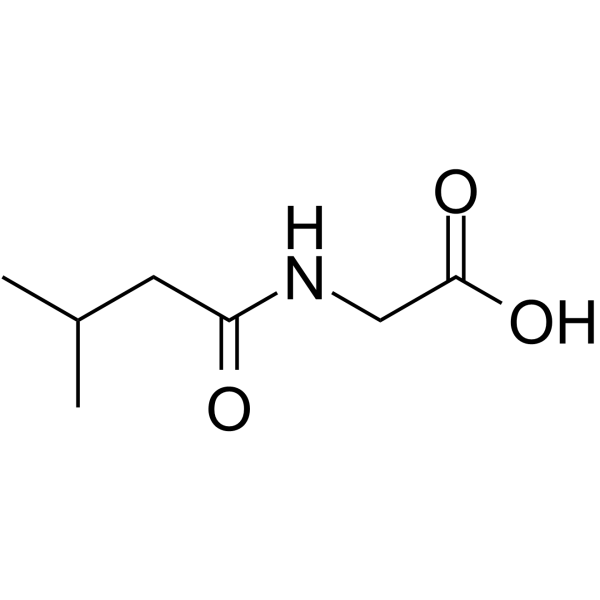
HY-W015464
N-Isovaleroylglycine -
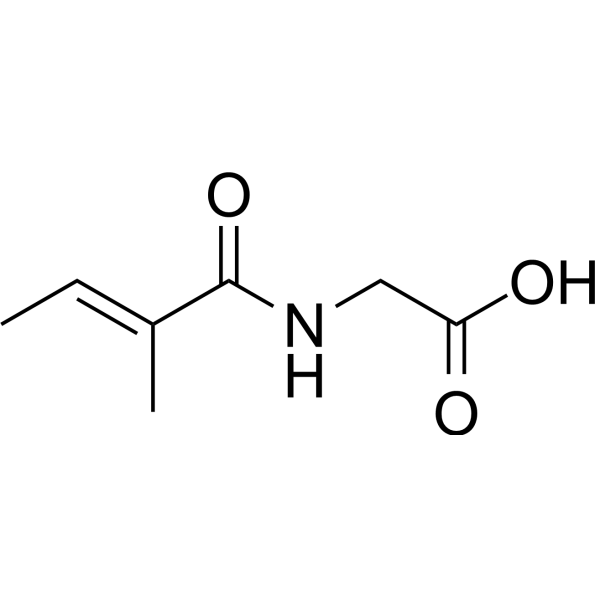
HY-W013652
(E)-2-(2-Methylbut-2-enamido)acetic acid -
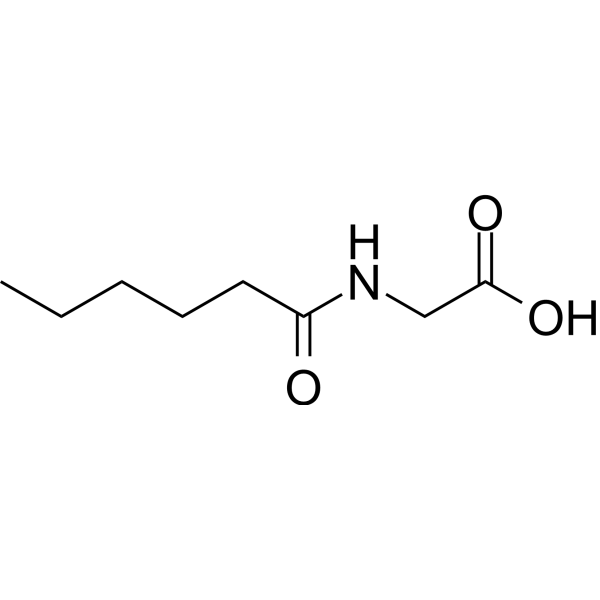
HY-113150
Hexanoylglycine -
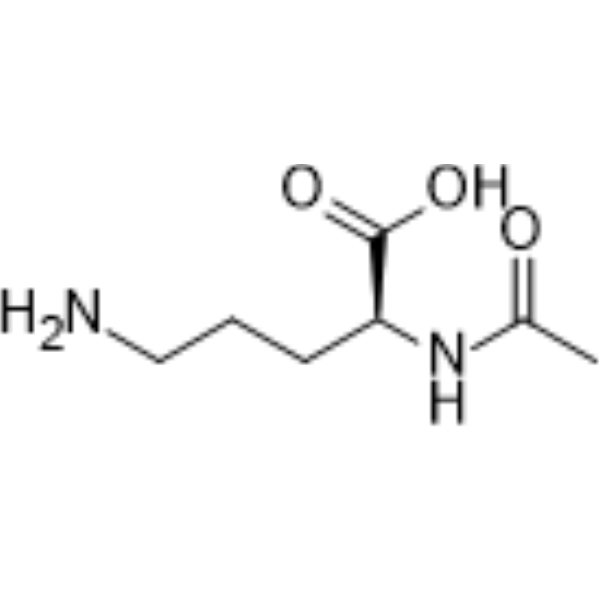
HY-113080
N-Acetylornithine -
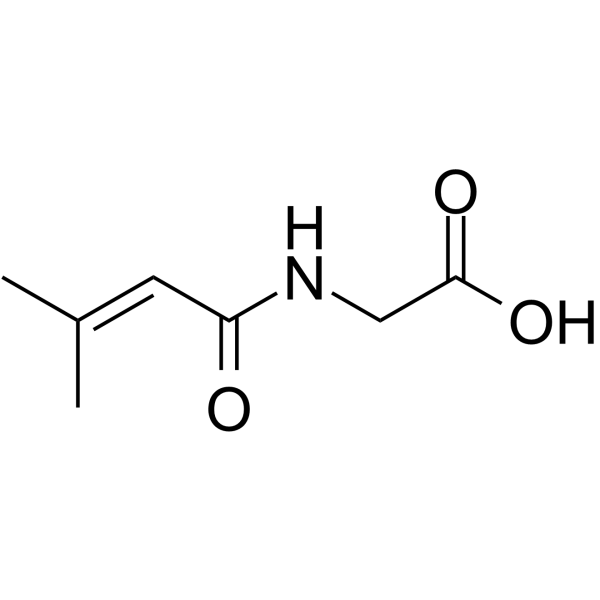
HY-113232
3-Methylcrotonylglycine -

HY-113080R
N-Acetylornithine (Standard) -
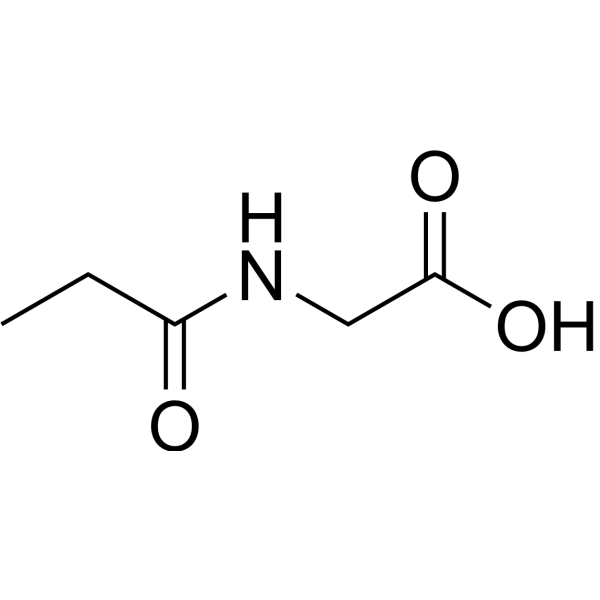
HY-W587803
Propionylglycine -
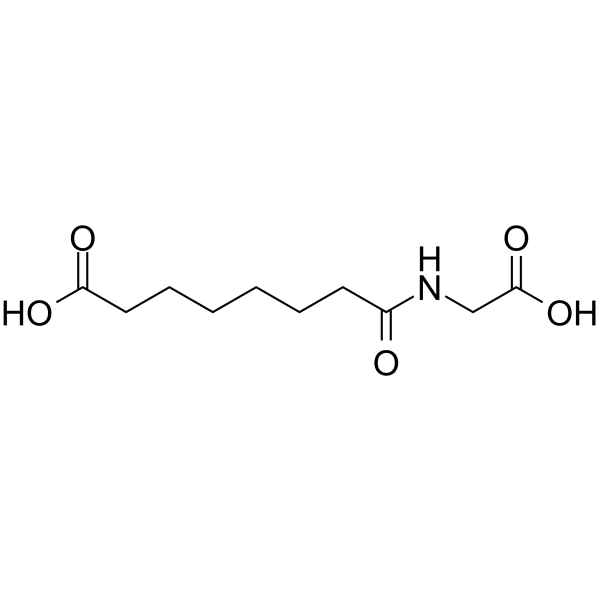
HY-113367
Suberylglycine -
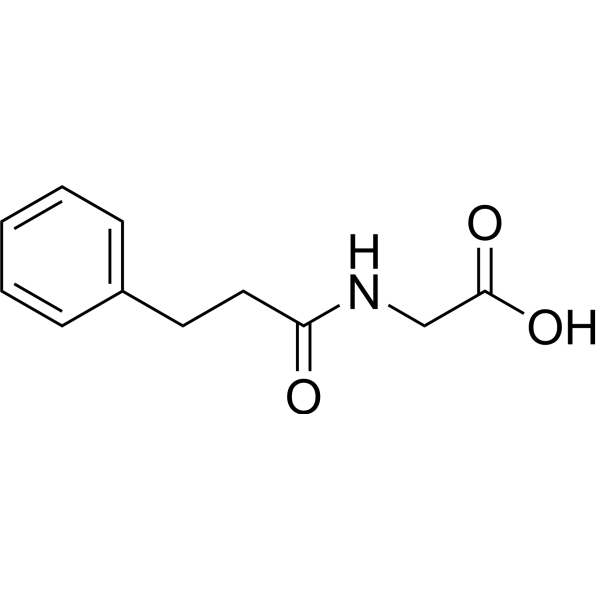
HY-N7403
3-Phenylpropionylglycine -

HY-W141880
N-Lauroylglycine -
HY-Y1080
N-Acetyl-R-leucine -

HY-113150R
Hexanoylglycine (Standard)


Product Information
Information
Application
The compound is the grade of analytical standard, which is the reference standard supplied assay. It is commonly used in qualitative, quantitative and methodological research experiments in HPLC, GC and MS.


Chemical Information
-
CAS No. 16284-60-9
-
Molecular Weight 159.18
-
Formula C7H13NO3
-
SMILES
O=C(O)CNC(CC(C)C)=O
-
Structure Classification
-
Shipping
Room temperature in continental US; may vary elsewhere.
-
Storage
Please store the product under the recommended conditions in the Certificate of Analysis.


Purity & Documentation
References
[1]. Slupsky CM, et al. Streptococcus pneumoniae and Staphylococcus aureus pneumonia induce distinct metabolic responses. Journal of proteome research. 2009 Jun;8(6):3029-36. [Content Brief]
[3]. Lian F, et al. Distinct urine and plasma metabolic signatures in diabetic foot: early diagnostic biomarkers and predictive modeling. BMC endocrine disorders. 2025 Dec 29;25(1):285. [Content Brief]

Calculators
Concentration (start) × Volume (start) = Concentration (final) × Volume (final)


N-Isovaleroylglycine (Standard) Related Classifications
HY-W015464R Related Classifications
 Powered by Bioz