



Desipramine-d3
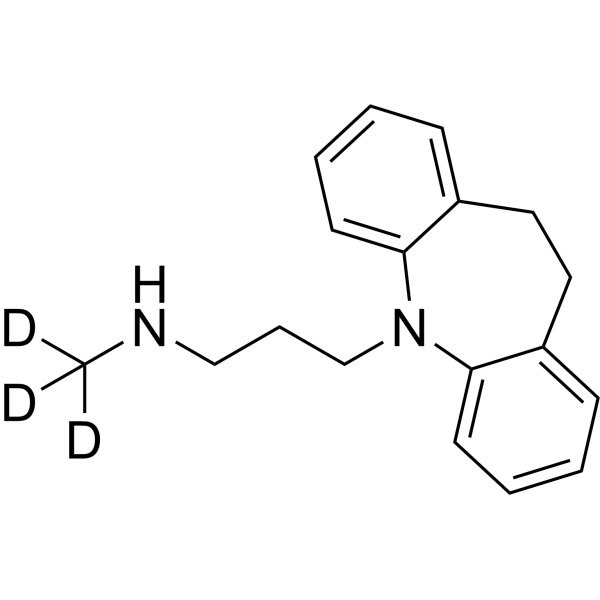
Desipramine-d3 is the deuterium labeled Desipramine (HY-B1272A). Desipramine is a first-generation tricyclic antidepressant. Desipramine selectively binds to norepinephrine transporter and blocks neuronal norepinephrine reuptake. Desipramine activates MAPK signaling via ERK1/2, JNK, and p38, represses NF-κB and AP-1 activity, and induces apoptosis via ROS elevation, mitochondrial membrane potential reduction, and intracellular calcium increase. Desipramine also shows anyi-inflammatory activity, inhibiting TNF-α production. Desipramine can be used for the research of hepatocellular cancer, inflammation, and neurological diseases.
For research use only. We do not sell to patients.
- CAS No.: 65100-49-4
- Formula: C18H19D3N2
- Molecular Weight:269.40
-
Storage:
Please store the product under the recommended conditions in the Certificate of Analysis.


-
 Biological Activity
-
Chemical Information
- Purity & Documentation
- References
-
 Help & FAQs




Biological Activity
Stable heavy isotopes of hydrogen, carbon, and other elements have been incorporated into drug molecules, largely as tracers for quantitation during the drug development process. Deuteration has gained attention because of its potential to affect the pharmacokinetic and metabolic profiles of drugs[1].
MedChemExpress (MCE) has not independently confirmed the accuracy of these methods. They are for reference only.
1. This compound can be used as a tracer
2. This compound can be used as an internal standard for quantitative analysis by NMR, GC-MS, or LC-MS.


Chemical Information
-
CAS No. 65100-49-4
-
Unlabeled Cas 58-28-6
-
Molecular Weight 269.40
-
Formula C18H19D3N2
-
SMILES
[2H]C([2H])([2H])NCCCN1C2=CC=CC=C2CCC3=CC=CC=C31
-
Shipping
Room temperature in continental US; may vary elsewhere.
-
Storage
Please store the product under the recommended conditions in the Certificate of Analysis.


Purity & Documentation
References
[1]. Yang DK, et al. Desipramine induces apoptosis in hepatocellular carcinoma cells. Oncol Rep. 2017;38(2):1029-1034. [Content Brief]
[2]. Kishore-Kumar R, et al. Desipramine relieves postherpetic neuralgia. Clin Pharmacol Ther. 1990;47(3):305-312. [Content Brief]
[3]. Deupree JD, et al. Pharmacological properties of the active metabolites of the antidepressants desipramine and citalopram. Eur J Pharmacol. 2007;576(1-3):55-60. [Content Brief]
[4]. Roumestan C, et al. Anti-inflammatory properties of desipramine and fluoxetine. Respir Res. 2007;8(1):35. Published 2007 May 3. [Content Brief]

Calculators
Concentration (start) × Volume (start) = Concentration (final) × Volume (final)


 Powered by Bioz