2352 Results for "

Azide groups

" in MedChemExpress (MCE) Product Catalog:
Products (2352)

2352 Results for "Azide groups" in MCE Product Catalog:

Cat. No.: HY-147414
CAS No.: 1416241-23-0
Purity:  98.69%
Synonyms: PF-114
Target:  

Bcr-Abl

Research Areas:  

Cancer

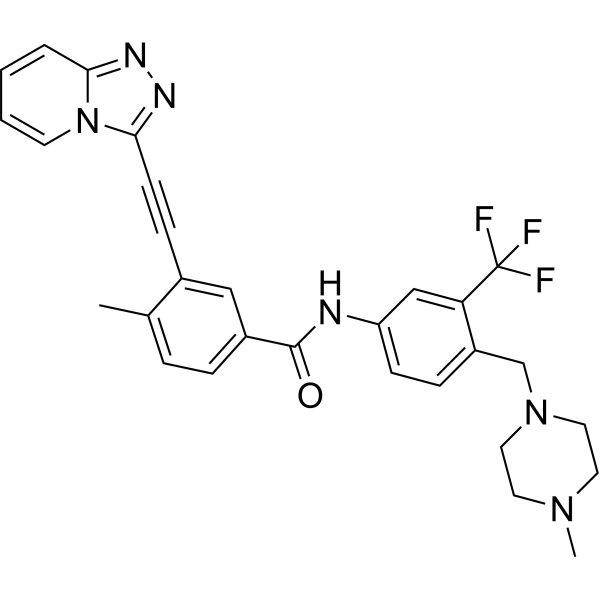
Vamotinib (PF-114) is a potent, selective and orally active tyrosine kinase inhibitor. Vamotinib inhibits the autophosphorylation of BCR/ABL and BCR/ABL-T315I. Vamotinib induces apoptosis. Vamotinib shows anti-proliferative and anti-tumor activity. Vamotinib has the potential for the research of resistant philadelphia chromosome-positive (Ph+) leukemia. Vamotinib inhibits ABL series kinases with IC50s of 0.49 nM (ABL), 0.78 nM (ABL T315I), 9.5 nM (ABL E255K), 2.0 nM (ABL F317I), 7.4 nM (ABL G250E), 1.0 nM (ABL H396P), 2.8 nM (ABL M351T), 12 nM (ABL Q252H), and 4.1 nM (ABL Y253F), respectively . Vamotinib is a click chemistry reagent, it contains an Alkyne group and can undergo copper-catalyzed azide-alkyne cycloaddition (CuAAc) with molecules containing Azide groups.
loading...
    loading...
Cat. No.: HY-E70289
Synonyms: Bovin B4GALT1 (Y289L)
Target:  

Glycosyltransferase

Research Areas:  

Cancer

Bovin beta-1,4-galactosyltransferase 1 (Y289L) (Bovin B4GALT1 (Y289L)) is a mutated form of bovine-derived galactosyltransferase with a mutation at the Y289L genetic site. Bovin beta-1,4-galactosyltransferase 1 can label O-GlcNAcylated proteins with an N-azidoacetylgalactosamine (GalNAz) group. This labeling method allows for the specific, unbiased, and global labeling of O-GlcNAcylated proteins. After labeling, the appended azide group can react with a wide variety of alkyne-modified chemical probes, facilitating multiple downstream analyses .
loading...
    loading...
Cat. No.: HY-149620
Target:  

Fluorescent Dye

Research Areas:  

Others

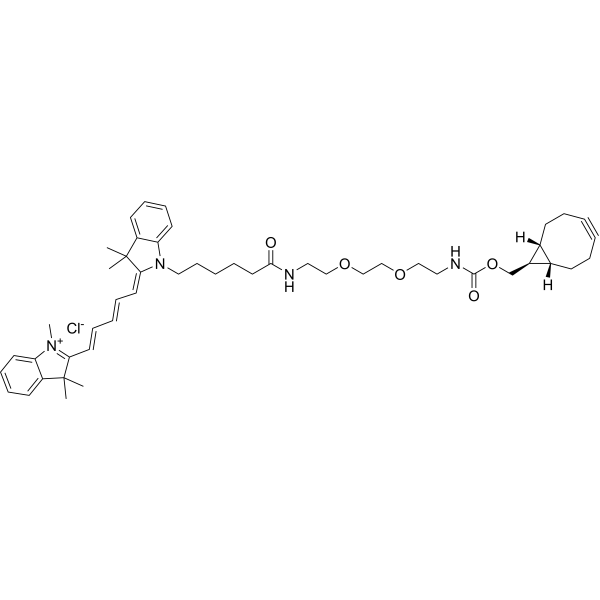
Cy5-PEG2-exo-BCN is a dye derivative of Cyanine 5 (Cy5) (HY-D0821) containing 2 PEG units. Cy5-PEG2-exo-BCN contains the lyophilic bidentate macrocyclic ligand BCN, which can further synthesize macrocyclic complexes. In click chemistry, BCN reacts with molecules containing azide groups to form stable triazoles in the absence of catalysts.
loading...
    loading...
Cat. No.: HY-151766
CAS No.: 2109751-68-8
Target:  

ADC Linkers

Research Areas:  

Others

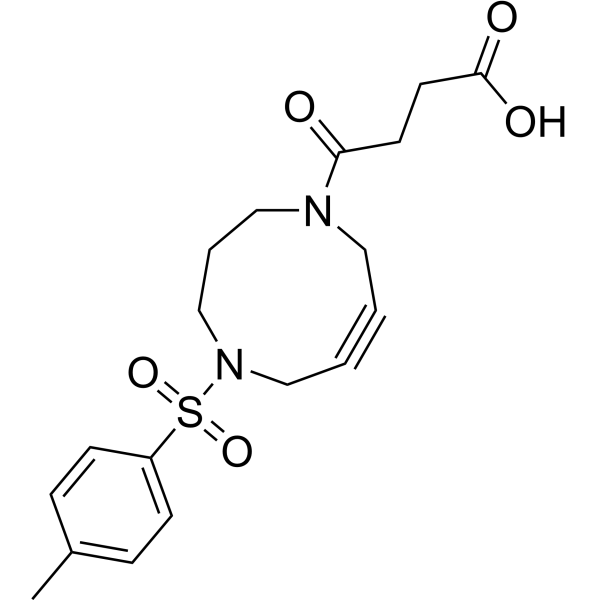
DACN(Tos,Suc-OH) is a click chemistry reagent containing a cycloalkyne group. The alkyne moiety within the ring has a unique bent structure and high reactivity toward cycloaddition reactions. Such strain-promoted azide-alkyne cycloadditions (SPAAC) using cycloalkynes have served for reliable molecular conjugation in a broad range of fields. The nitrogens are used as connection points for a variety of functional units. DACNs possess high thermal and chemical stability along with comparable click reactivity .
loading...
    loading...
Cat. No.: HY-W781921
CAS No.: 1006592-47-7
Target:  

Fluorescent Dye

Research Areas:  

Others

BP Fluor 488 Alkyne is a popular labeling dye used in Click Chemistry reactions. It will react with the azide group in antibody, proteins, peptides, amino-modified oligos, and other target molecules. The dye has an excitation peak at 499 nm and an emission peak at 520 nm. The conjugates are widely used in microscopy, flow cytometry, and other applications. BP Fluor 488 is a pure 5-sulfonated rhodamine molecule and it eliminates the lot-to-lot variation caused by two isomers ratio differences.
loading...
    loading...
Cat. No.: HY-W800680
CAS No.: 2423960-92-1
BP Fluor 488 DBCO is a popular labeling dye used in copper-free Click Chemistry reactions. It will react with the azide group in antibody, proteins, peptides, amino-modified oligos, and other target molecules. The dye has an excitation peak at 499 nm and an emission peak at 520 nm. The conjugates are widely used in microscopy, flow cytometry, and other applications. BP Fluor 488 is a pure 5-sulfonated rhodamine molecule and it eliminates the lot-to-lot variation caused by two isomers ratio differences.
loading...
    loading...
Cat. No.: HY-N10834
CAS No.: 120166-71-4
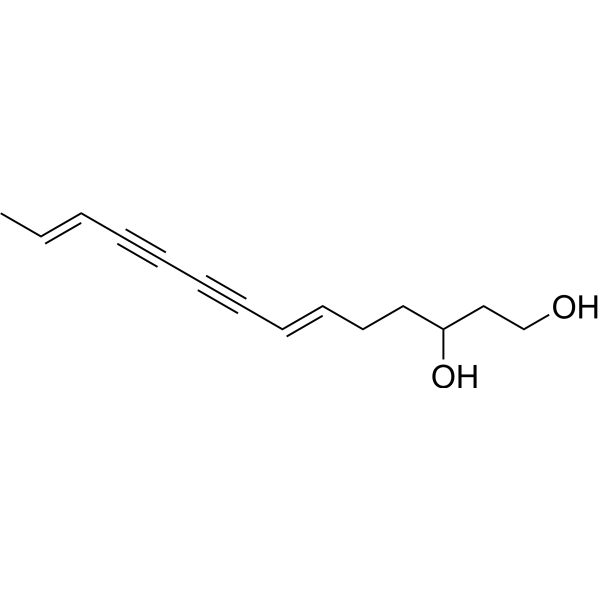
(6E,12E)-Tetradecadiene-8,10-diyne-1,3-diol is an antibacterial compound. (6E,12E)-Tetradecadiene-8,10-diyne-1,3-diol can be isolated from the roots of Atractylodes japonica. (6E,12E)-Tetradecadiene-8,10-diyne-1,3-diol has anti-methicillin-resistant Staphylococcus aureus (MRSA) activity with MIC values of 4-32 μg/mL. (6E,12E)-Tetradecadiene-8,10-diyne-1,3-diol can be used for the research of bacterial infection . (6E,12E)-Tetradecadiene-8,10-diyne-1,3-diol is a click chemistry reagent, it contains an Alkyne group and can undergo copper-catalyzed azide-alkyne cycloaddition (CuAAc) with molecules containing Azide groups.
loading...
    loading...
Cat. No.: HY-173390
CAS No.: 2059099-03-3
Research Areas:  

Others

BCN-E-BCN is a strained cycloalkyne-based probe designed for detecting protein sulfenylation, the primary intermediate in protein oxidation. This structurally constrained cycloalkyne compound specifically recognizes sulfenic acid groups formed during thiol oxidation, while remaining completely unreactive toward other oxidative states (such as free thiols, sulfinic, or sulfonic acid groups). Researchers can leverage its efficient conjugation with azide-bearing tags through copper-free click chemistry to amplify detection signals. Compared to conventional detection methods, BCN-E-BCN demonstrates superior reaction kinetics and enhanced sensitivity. With these advantages, BCN-E-BCN shows great promise as an effective tool for protein oxidation research .
loading...
    loading...
Cat. No.: HY-149619
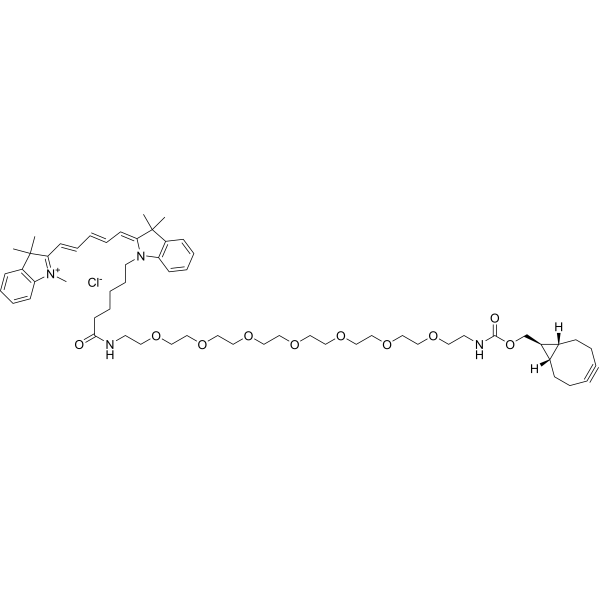
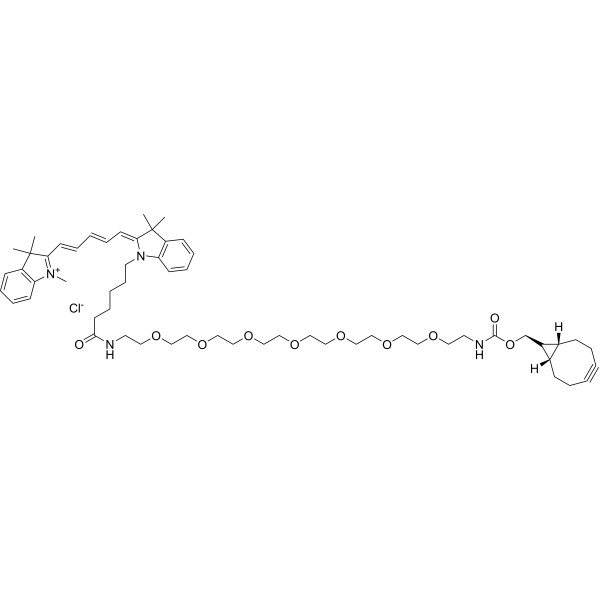
Cy5-PEG7-endo-BCN is a dye derivative of Cyanine 5 (Cy5) (HY-D0821) containing 7 PEG units. Cy5-PEG7-endo-BCN contains the lyophilic bidentate macrocyclic ligand endo-BCN, which can further synthesize macrocyclic complexes. In click chemistry, endo-BCN can react with molecules containing azide groups to form stable triazoles in the absence of catalysts.
loading...
    loading...
Cat. No.: HY-155327
CAS No.: 1663449-60-2
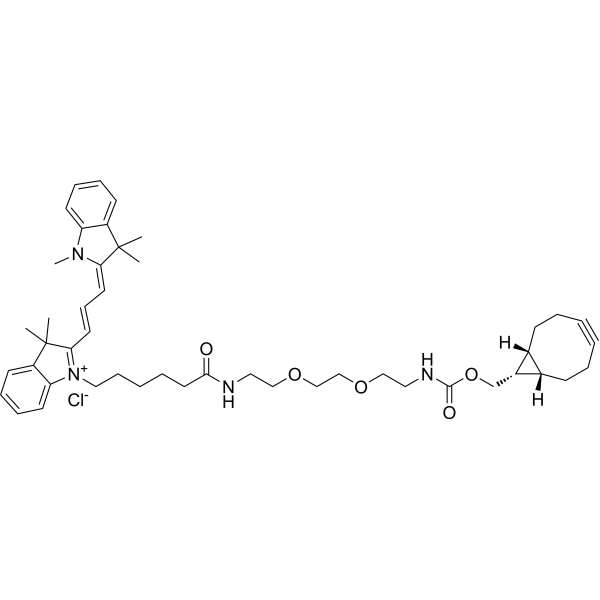
Cy3-PEG2-endo-BCN is a dye derivative of Cyanine 3 (Cy3) (HY-D0822) containing 2 PEG units. Cy3-PEG2-endo-BCN contains the lyophilic bidentate macrocyclic ligand endo-BCN, which can further synthesize macrocyclic complexes. In click chemistry, endo-BCN can react with molecules containing azide groups to form stable triazoles in the absence of catalysts.
loading...
    loading...
Cat. No.: HY-155327A
CAS No.: 1663449-60-2
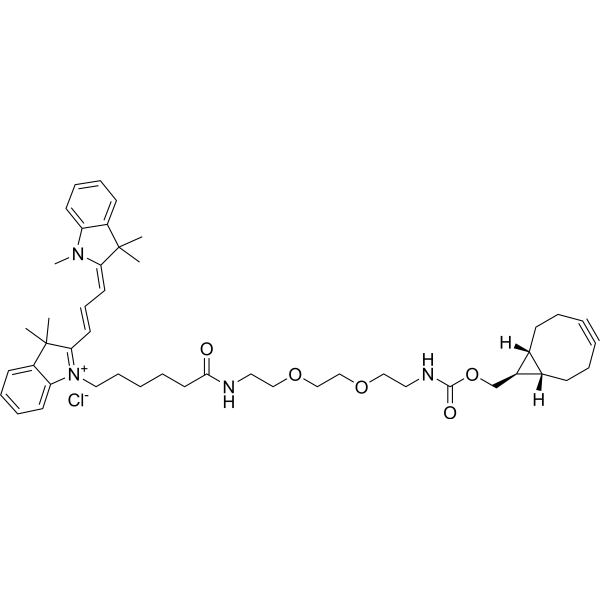
Cy3-PEG2-exo-BCN is a dye derivative of Cyanine 3 (Cy3) (HY-D0822) containing 2 PEG units. Cy3-PEG2-exo-BCN contains the lyophilic bidentate macrocyclic ligand BCN, which can further synthesize macrocyclic complexes. In click chemistry, exo-BCN can react with molecules containing azide groups to form stable triazoles in the absence of catalysts.
loading...
    loading...
Cat. No.: HY-D2120
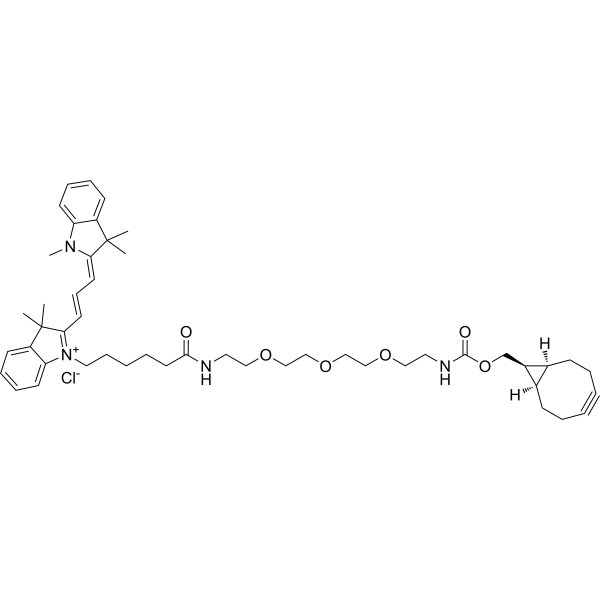
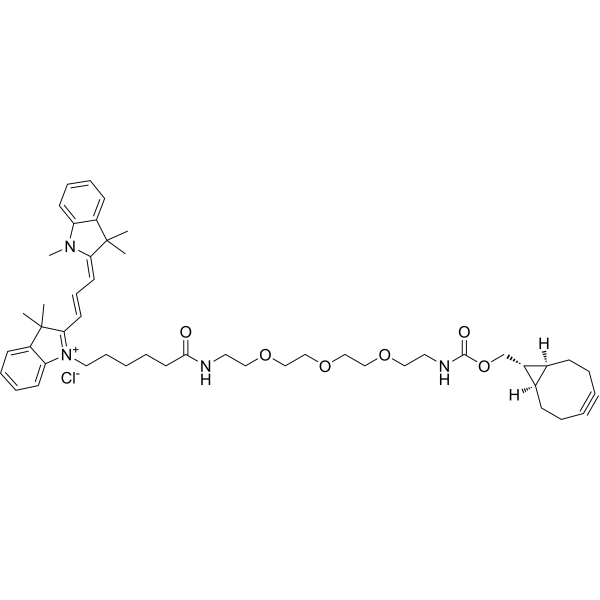
Cy3-PEG3-endo-BCN is a dye derivative of Cyanine 3 (Cy3) (HY-D0822) containing 3 PEG units. Cy3-PEG3-endo-BCN contains the lyophilic bidentate macrocyclic ligand BCN, which can further synthesize macrocyclic complexes. In click chemistry, endo-BCN can react with molecules containing azide groups to form stable triazoles in the absence of catalysts.
loading...
    loading...
Cat. No.: HY-D2120A
Cy3-PEG3-exo-BCN is a dye derivative of Cyanine 3 (Cy3) (HY-D0822) containing 3 PEG units. Cy3-PEG3-exo-BCN contains the lyophilic bidentate macrocyclic ligand BCN, which can further synthesize macrocyclic complexes. In click chemistry, exo-BCN can react with molecules containing azide groups to form stable triazoles in the absence of catalysts.
loading...
    loading...
Cat. No.: HY-D2121
Cy3-PEG7-endo-BCN is a dye derivative of Cyanine 3 (Cy3) (HY-D0822) containing 7 PEG units. Cy3-PEG7-endo-BCN contains the lyophilic bidentate macrocyclic ligand BCN, which can further synthesize macrocyclic complexes. In click chemistry, endo-BCN can react with molecules containing azide groups to form stable triazoles in the absence of catalysts.
loading...
    loading...
Cat. No.: HY-D2121A
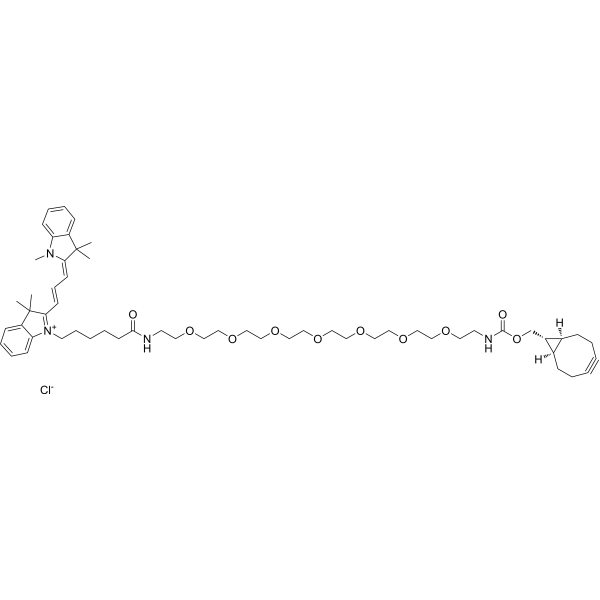
Cy3-PEG7-exo-BCN is a dye derivative of Cyanine 3 (Cy3) (HY-D0822) containing 7 PEG units. Cy3-PEG7-exo-BCN contains the lyophilic bidentate macrocyclic ligand BCN, which can further synthesize macrocyclic complexes. In click chemistry, exo-BCN can react with molecules containing azide groups to form stable triazoles in the absence of catalysts.
loading...
    loading...
Cat. No.: HY-D2149
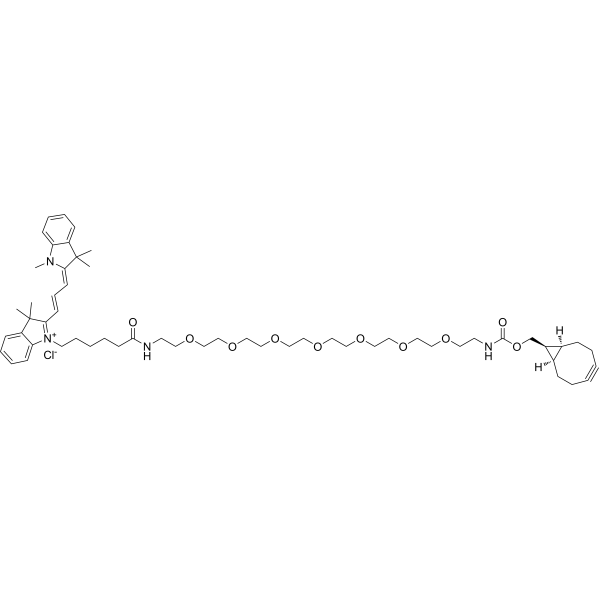
Cy5-PEG7-exo-BCN is a dye derivative of Cyanine 5 (Cy5) (HY-D0821) containing 7 PEG units. Cy5-PEG7-exo-BCN contains the lyophilic bidentate macrocyclic ligand BCN, which can further synthesize macrocyclic complexes. In click chemistry, exo-BCN can react with molecules containing azide groups to form stable triazoles in the absence of catalysts.
loading...
    loading...
Cat. No.: HY-W440835A
Research Areas:  

Inflammation/Immunology

DSPE-PEG400-DBCO is a phospholipid PEG polymer that combines a hydrophobic phospholipid (DSPE), a hydrophilic polyethylene glycol spacer with a molecular weight of 400 Da, and a reactive click chemistry terminal group (DBCO). DSPE-PEG-DBCO migrates to lymph nodes via the endogenous albumin transport system, implants bioorthogonal DBCO docking sites, and enables the enrichment of azide-functionalized vesicles in lymph nodes mediated by click chemistry. DSPE-PEG-DBCO can be used in studies related to atherosclerosis .
loading...
    loading...
Cat. No.: HY-W440835B
Research Areas:  

Inflammation/Immunology

DSPE-PEG600-DBCO is a phospholipid PEG polymer that combines a hydrophobic phospholipid (DSPE), a hydrophilic polyethylene glycol spacer with a molecular weight of 600 Da, and a reactive click chemistry terminal group (DBCO). DSPE-PEG-DBCO migrates to lymph nodes via the endogenous albumin transport system, implants bioorthogonal DBCO docking sites, and enables the enrichment of azide-functionalized vesicles in lymph nodes mediated by click chemistry. DSPE-PEG-DBCO can be used in studies related to atherosclerosis .
loading...
    loading...
Cat. No.: HY-W440835C
Research Areas:  

Inflammation/Immunology

DSPE-PEG1000-DBCO is a phospholipid PEG polymer that combines a hydrophobic phospholipid (DSPE), a hydrophilic polyethylene glycol spacer with a molecular weight of 1000 Da, and a reactive click chemistry terminal group (DBCO). DSPE-PEG-DBCO migrates to lymph nodes via the endogenous albumin transport system, implants bioorthogonal DBCO docking sites, and enables the enrichment of azide-functionalized vesicles in lymph nodes mediated by click chemistry. DSPE-PEG-DBCO can be used in studies related to atherosclerosis .
loading...
    loading...
Cat. No.: HY-W440835D
Research Areas:  

Inflammation/Immunology

DSPE-PEG3400-DBCO is a phospholipid PEG polymer that combines a hydrophobic phospholipid (DSPE), a hydrophilic polyethylene glycol spacer with a molecular weight of 3400 Da, and a reactive click chemistry terminal group (DBCO). DSPE-PEG-DBCO migrates to lymph nodes via the endogenous albumin transport system, implants bioorthogonal DBCO docking sites, and enables the enrichment of azide-functionalized vesicles in lymph nodes mediated by click chemistry. DSPE-PEG-DBCO can be used in studies related to atherosclerosis .
loading...
    loading...

