96 Results for "

motor function

" in MedChemExpress (MCE) Product Catalog:
Products (96)

96 Results for "motor function" in MCE Product Catalog:

Cat. No.: HY-18100
CAS No.: 138847-85-5
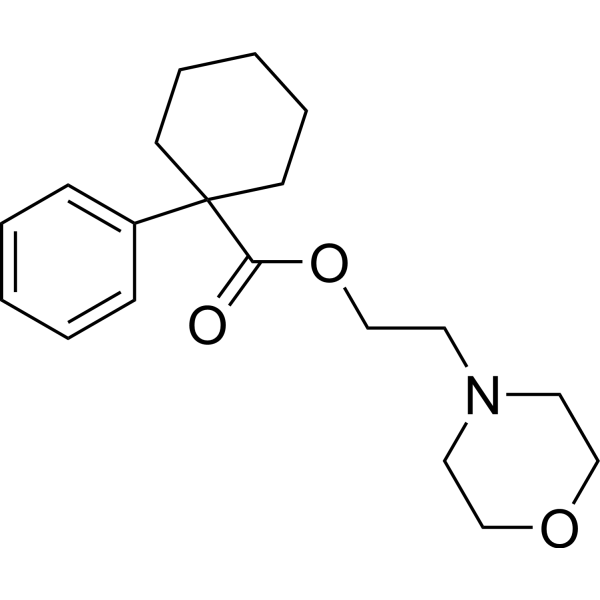
PRE-084 is a highly selective σ1 receptor (S1R) agonist, with an IC50 of 44 nM. PRE-084 exhibits good neuroprotective effects, can improve motor function and motor neuron survival in mice. PRE-084 also can ameliorate myocardial ischemia-reperfusion injury in rats by activating the Akt-eNOS pathway .
loading...
    loading...
Cat. No.: HY-W129456
CAS No.: 4214-72-6
Research Areas:  

Neurological Disease

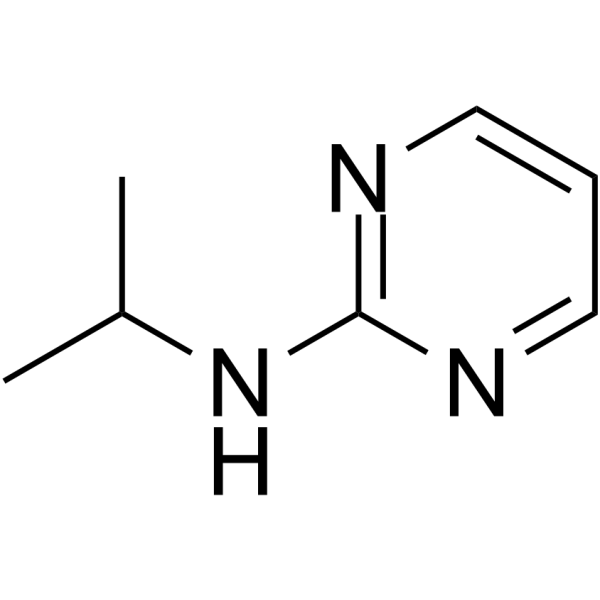
Isaxonine acts as a modifier of the surface pH of the bilayer . Isaxonine accelerates the rate of peripheral nerve regeneration, stimulate axonal sprouting and promote motor and sensory function recovery . Isaxonine is a neurotrophic agent .
loading...
    loading...
Cat. No.: HY-120596
CAS No.: 1258076-66-2
Purity:  99.91%
Target:  

PPAR

Research Areas:  

Neurological Disease

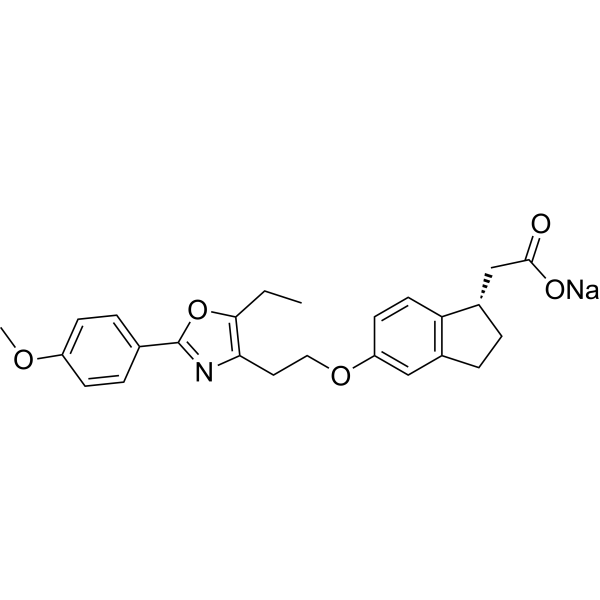
PPARδ/γ agonist 1 sodium is a chemically unique and brain penetrant dual PPAR delta/gamma agonist. PPARδ/γ agonist 1 sodium can be used for the research of Alzheimer’s disease .
loading...
    loading...
Cat. No.: HY-12501
CAS No.: 1160521-50-5
Purity:  ≥98.0%
Research Areas:  

Neurological Disease

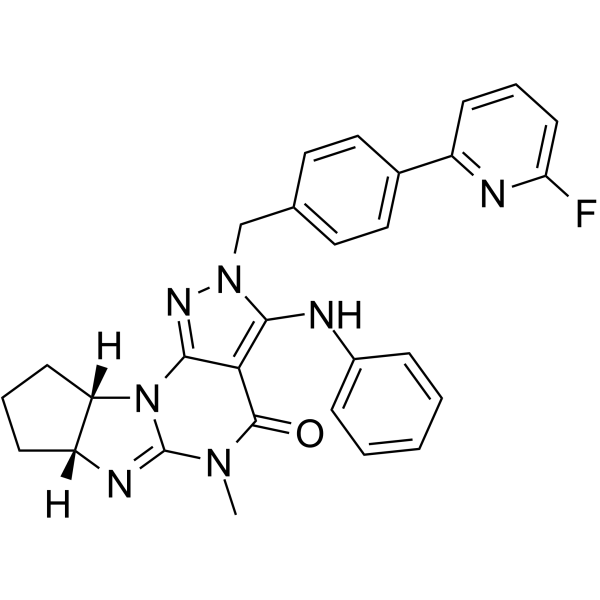
ITI-214 free base is a potent, CNS-active, orally bioavailable PDE1 inhibitor (Ki of 58 pM) with excellent selectivity against other PDE family members and against a panel of enzymes, receptors, transporters and ion channels. ITI-214 free base inhibits recombinant full-length human PDE1A, PDE1B and PDE1C with Kis of 33 pM, 380 pM and 35 pM, respectively. ITI-214 free base shows efficacy in various animal models of motor and cognitive functions .
loading...
    loading...
Cat. No.: HY-114901
CAS No.: 186141-75-3
Target:  

Adenosine Kinase

Research Areas:  

Neurological Disease

A-134974 is a selective adenosine kinase (ADK) inhibitor, with an IC50 of 0.06 nM and 45 nM in rat brain cytoplasmic ADK enzyme assays and intact IMR-32 cells, respectively . A-134974 inhibits adenosine phosphorylation and elevates intracellular and extracellular adenosine levels, alleviates neuropathic tactile allodynia and inflammatory thermal hyperalgesia via endogenous adenosine signaling in the spinal cord, and shows favorable dose separation between its analgesic effects and motor function impairment . A-134974 can be used in research on neuropathic pain, inflammatory pain, RNA silencing and thermoregulation .
loading...
    loading...
Cat. No.: HY-120276
CAS No.: 2089238-18-4
Synonyms: GR3027
Target:  

GABA Receptor

Research Areas:  

Neurological Disease

Golexanolone is a GABAA receptor modulating steroid antagonist. Golexanolone reduces peripheral inflammation and neuroinflammation and improves cognitive and motor function in hyperammonemic rats .
loading...
    loading...
Cat. No.: HY-176248
CAS No.: 14394-26-4
Dimephosphon is an anti-inflammatory agent with antihistamine and antiserotonin activities. Dimephosphon helps maintain the conduction function of the spinal cord and reduces the excitability of spinal motor neurons in the area surrounding the lesion. Dimephosphon directly activates lymphatic vessel movement and improves lymphatic circulation. Dimephosphon can be used for the study of inflammatory edema, acute spinal cord injury and lymphatic circulation disorders .
loading...
    loading...
Cat. No.: HY-17417AS
CAS No.: 1261079-38-2
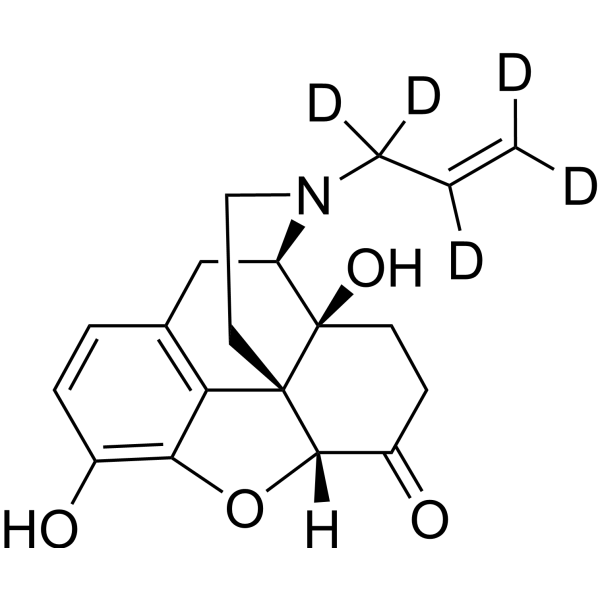
Naloxone-d5 is the deuterated-labeled Naloxone (HY-17417A). Naloxone is an orally active opioid receptor antagonist. Naloxone attenuates spinal cord stimulation‑associated anti‑hyperalgesic effects, antagonizes physiologic effects of endogenous opioid peptides linked to central nervous system injury sequelae, functions as a pressor agent to induce modest elevations in mean arterial blood pressure, exerts neuroprotective effects to improve post‑traumatic neurologic motor function, blocks opioid receptor‑mediated amnesic pathways, enhances memory consolidation, reverses Adrenocorticotropic hormone (ACTH) (HY-106373)‑ and epinephrine‑induced amnesia, and potentiates the memory‑facilitatory effects of ACTH and epinephrine .
loading...
    loading...
Cat. No.: HY-175340
CAS No.: 1361107-81-4
Target:  

Potassium Channel TSPO

Research Areas:  

Neurological Disease

Kv7.2/Kv7.3 activator-3 (GRT-X) is an orally active Kv7.2/Kv7.3 and TSPO activator. Kv7.2/Kv7.3 activator-3 activates Kv7.2/Kv7.3, Kv7.4, and Kv7.5 with EC50 values of 0.37, 2.06, and 0.75 μM, respectively, and binds to TSPO with Ki values of 0.07 μM (rat membrane) and 4.60 μM (human U-118 MG cells). Kv7.2/Kv7.3 activator-3 prevents motor neuron degeneration in mice and humans conditioned by ALS/FTD astrocytes. Kv7.2/Kv7.3 activator-3 stimulates dorsal root ganglion axonal growth through TSPO and Kv7.2/3 activation. Kv7.2/Kv7.3 activator-3 has anti-epileptic effects in epileptic seizure models. Kv7.2/Kv7.3 activator-3 reduces pain hypersensitivity in patients with diabetic neuropathy, promotes neuronal survival and regeneration after cervical neuropathy in rats, and accelerates the recovery of normal function of sensory and motor neurons .
loading...
    loading...
Cat. No.: HY-N8693
CAS No.: 362472-81-9
Withanoside IV is an orally active, blood-brain barrier-permeable withanolide derivative. Withanoside IV specifically binds to the Sudlow I site of HSA, induces secondary structural changes in HSA, and forms stable HSA complexes. Withanoside IV inhibits the enzymatic activity of COX-2. Withanoside IV induces axonal regeneration, peripheral nervous system myelination and increased axonal density in spinal cord tissue, reduces reactive gliosis-related changes, and improves hindlimb motor function. Withanoside IV binds to amyloid-β 1-42 to inhibit its aggregation, induces neurite outgrowth and synapse reconstruction, repairs damaged axons and dendrites, enhances mitochondrial biogenesis, exerts neuroprotective effects via the BDNF and SIRT1 signaling pathways, reduces ROS production and neuronal apoptosis, and ameliorates memory deficits. Withanoside IV inhibits the activity of the SARS-CoV-2 main protease. Withanoside IV can be used in research related to spinal cord injury, Alzheimer's disease, and coronavirus disease 2019 (COVID-19) .
loading...
    loading...
Cat. No.: HY-13443S
Synonyms: Exenatide (Leu-13C6,15N) TFA
Exendin-4 (Leu- 13C6, 15N) TFA (Exenatide (Leu- 13C6, 15N) TFA) is the 13C, 15N-labeled Exendin-4 (HY-13443). Exendin‑4 (Exenatide) is an orally active, blood-brain barrier-permeable glucagon-like peptide-1 receptor (GLP‑1 receptor) agonist that resists degradation mediated by dipeptidyl peptidase IV. Exendin‑4 mediates multiple glucose-regulating effects, including stimulation of glucose-dependent insulin secretion, inhibition of glucagon production, increase in β-cell mass, delay of gastric emptying, reduction of food intake, improvement of peripheral insulin sensitivity, and restoration of normal islet structure. Exendin‑4 inhibits oxidative stress, alleviates inflammatory responses, and reduces neuronal apoptosis. Exendin‑4 reduces the aggregation level of mutant huntingtin, improves motor function, prolongs survival time, and regulates the expression levels of leptin and ghrelin. Exendin‑4 can be used in research related to type 2 diabetes, acute ischemic stroke, and Huntington's disease .
loading...
    loading...
Cat. No.: HY-149941
Target:  

Neurotensin Receptor

Research Areas:  

Neurological Disease

hNTS1R agonist-1 (Compound 10) is a BBB permeable hNTS1R full agonist (Ki: 6.9 nM) . hNTS1R agonist-1 increases motor function and memory in a mouse model of Parkinson's disease (PD). hNTS1R agonist-1 is a Neurotensin(8-13) analog and is a neuroprotective agent .
loading...
    loading...
Cat. No.: HY-106935A
CAS No.: 113240-27-0
Target:  

Drug Derivative

Research Areas:  

Neurological Disease

CGP 29030A is an orally effective and specific analgesic agent. CGP 29030A inhibits nociceptive spinal cord neurons without affecting normal sensory functions. CGP 29030A also inhibits gamma motor neurons, which may be beneficial for studying pain disorders that occur concurrently due to increased motor activity (such as cramp, spasm) .
loading...
    loading...
Cat. No.: HY-B1430S
Synonyms: Butyl 4-aminobenzoate-d9
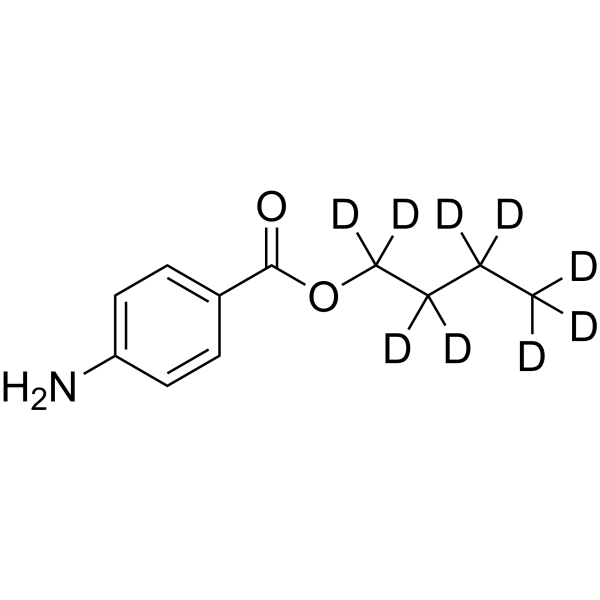
Butamben-d9 is the deuterium labeled Butamben. Butamben (Butyl 4-aminobenzoate) results in long-lasting relief from pain, without impairing motor function or other sensory functions .
loading...
    loading...
Cat. No.: HY-B1430R
CAS No.: 94-25-7
Synonyms: Butyl 4-aminobenzoate (Standard)
Butamben (Standard) is the analytical standard of Butamben. This product is intended for research and analytical applications. Butamben (Butyl 4-aminobenzoate) results in long-lasting relief from pain, without impairing motor function or other sensory functions .
loading...
    loading...
Cat. No.: HY-18100AR
CAS No.: 75136-54-8
PRE-084 (hydrochloride) (Standard) is the analytical standard of PRE-084 (hydrochloride). This product is intended for research and analytical applications. PRE-084 hydrochloride is a highly selective σ1 receptor (S1R) agonist, with an IC50 of 44 nM. PRE-084 hydrochloride exhibits good neuroprotective effects, can improve motor function and motor neuron survival in mice. PRE-084 hydrochloride also can ameliorate myocardial ischemia-reperfusion injury in rats by activating the Akt-eNOS pathway .
loading...
    loading...
Cat. No.: HY-135222
CAS No.: 132980-17-7
Synonyms: 5-Methoxy-6-methyl-2-aminoindan hydrochloride
Target:  

5-HT Receptor

Research Areas:  

Neurological Disease

MMAI (5-Methoxy-6-methyl-2-aminoindan) hydrochloride is a selective serotonin releaser that does not produce psychoactive or hallucinogenic effects in the context of drug discrimination in rats. MMAI hydrochloride induces a behavioral syndrome in rats, including hypokinesia with freezing, spinning, Straub tail, flat posture, and reduced sleep time .
loading...
    loading...
Cat. No.: HY-B0411S
CAS No.: 1329614-18-7
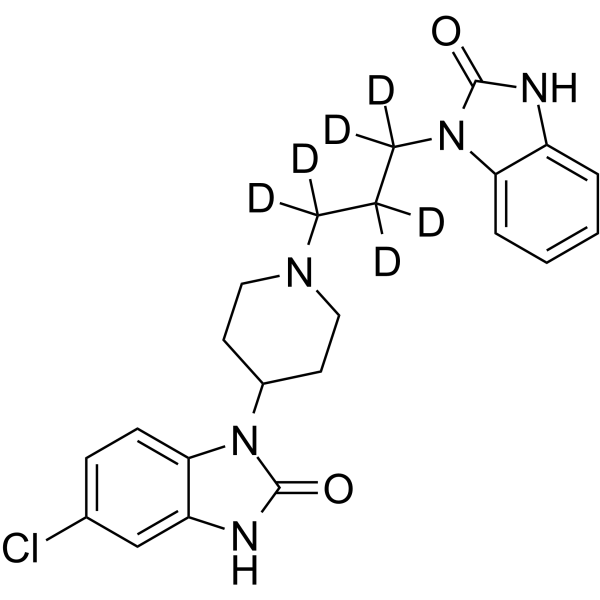
Domperidone-d6 is the deuterium labeled Domperidone. Domperidone (R33812) is a selective dopamine-2 receptor antagonist. Domperidone acts as an antiemetic and a prokinetic agent through its effects on the chemoreceptor trigger zone and motor function of the stomach and small intestine .
loading...
    loading...
Cat. No.: HY-172530
Research Areas:  

Neurological Disease

Heptanoyl-coenzyme A (Heptanoyl-CoA) tetrasodium is a derivative of CoA. Heptanoyl-coenzyme A tetrasodium is an inhibitor of butyryl-CoA acetate-CoA transferase (BUT) and inhibits butyric acid synthesis. Heptanoyl-coenzyme A tetrasodium blocks the improvements in motor function induced by the isoquinoline alkaloid Berberine (HY-N0716) .
loading...
    loading...
Cat. No.: HY-P1245A
CAS No.: 2924824-03-1
Synonyms: Neuropeptide NPFF (human) acetate
Target:  

CRFR

Research Areas:  

Others

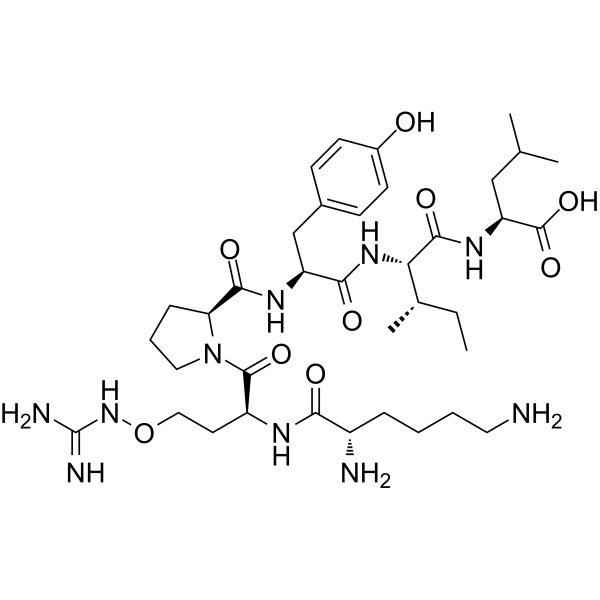
Neuropeptide SF (human) acetate augments paraventricular corticotrophin-releasing hormone (CRH) release and increases adrenocorticotropic hormone (ACTH) and corticosterone levels in the plasma. Neuropeptide SF (human) acetate play a physiologic role in the regulation of such circadian functions as the activity of motor centers and the HPA axis, through the release of CRH .
loading...
    loading...

