96 Results for "

motor function

" in MedChemExpress (MCE) Product Catalog:
Products (96)

96 Results for "motor function" in MCE Product Catalog:

Cat. No.: HY-B0411R
CAS No.: 57808-66-9
Synonyms: R33812 (Standard)
Domperidone (Standard) is the analytical standard of Domperidone. This product is intended for research and analytical applications. Domperidone (R33812) is an orally active and selective dopamine-2 receptor antagonist. Domperidone acts as an antiemetic and a prokinetic agent through its effects on the chemoreceptor trigger zone and motor function of the stomach and small intestine .
loading...
    loading...
Cat. No.: HY-110010
CAS No.: 149649-22-9
Target:  

Dopamine Receptor

Research Areas:  

Neurological Disease

Nafadotride is a dopamine D3 receptor antagonist. Nafadotrode regulates dopamine signaling primarily by antagonizing dopamine D3 receptors. The dopamine D3 receptor plays an important role in regulating emotion, motivation, reward, and certain motor functions. By blocking these receptors, Nafadotrode may affect neurotransmission processes associated with these functions. Nafadotrode can be used to explore the role of dopamine D3 receptors in various behavioral and neuropsychiatric disorders .
loading...
    loading...
Cat. No.: HY-114270
CAS No.: 1408054-46-5
Target:  

GSK-3

Research Areas:  

Neurological Disease

JGK-263 is an orally active Glycogen synthase kinase-3β (GSK-3β) inhibitor. JGK-263 exhibits neuroprotective effect and can improve motor function. JGK-263 can be used for the research of neurological disease, such as amyotrophic lateral sclerosis (ALS) .
loading...
    loading...
Cat. No.: HY-B0411S2
Synonyms: R33812-13C6
Domperidone- 13C6 (R33812- 13C6) is 13C labeled Domperidone. Domperidone (R33812) is an orally active and selective dopamine-2 receptor antagonist. Domperidone acts as an antiemetic and a prokinetic agent through its effects on the chemoreceptor trigger zone and motor function of the stomach and small intestine .
loading...
    loading...
Cat. No.: HY-B0411AR
CAS No.: 83898-65-1
Synonyms: R33812 monomaleate (Standard)
Domperidone (monomaleate) (Standard) is the analytical standard of Domperidone (monomaleate). This product is intended for research and analytical applications. Domperidone (R33812) monomaleate is an orally active and selective dopamine-2 receptor antagonist. Domperidone monomaleate acts as an antiemetic and a prokinetic agent through its effects on the chemoreceptor trigger zone and motor function of the stomach and small intestine .
loading...
    loading...
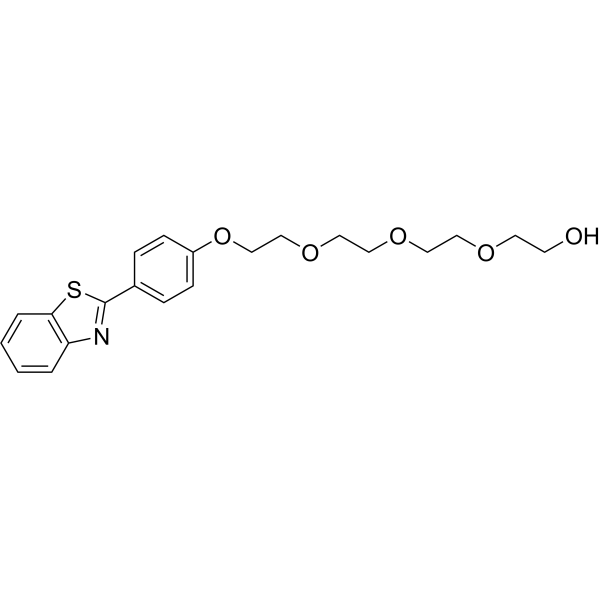
Cat. No.: HY-153172
CAS No.: 2274723-90-7
Synonyms: Phenylbenzothiazole-PEG4-OH; SPG302
Target:  

Drug Intermediate

Tazbentetol (Phenylbenzothiazole-PEG4-OH) is a synaptogenic compound. Tazbentetol partially preserves inner retinal neurotransmission function and maintains retinal function. Tazbentetol increases dendritic spine glutamatergic synapses via cytoskeleton signaling pathways, enhances synaptic density both in vitro and in vivo, and restores glutamatergic synapses. Tazbentetol improves the progression of motor symptoms and enhances memory. Tazbentetol can be used in the research of glaucoma, diabetic retinopathy and amyotrophic lateral sclerosis .
loading...
    loading...
Cat. No.: HY-126758
CAS No.: 36149-87-8
Ludartin a sesquiterpene lactone, which can be isolated from the plant Artemisia carruthii Wood. Ludartin reduces the expression of myeloperoxidase and malondialdehyde, enhances the expression of glutathione and superoxide dismutase in spinal cord tissue. Ludartin inhibits neuronal apoptosis. Ludartin inhibits the upregulation of tumor necrosis factor-α, interleukin-1β, and interleukin-6. Ludartin improves the motor function of rats with spinal cord injury .
loading...
    loading...
Cat. No.: HY-B0824A
CAS No.: 439680-76-9
Target:  

Autophagy

Research Areas:  

Others

(1R)-cis-Bifenthrin is a widely used pyrethroid pesticide with activity that reduces motor coordination. (1R)-cis-Bifenthrin has a significant impact on the motor function of ParKin-/- mice, as shown by increased pole climbing time and wheel running Time decreases. Exposure of (1R)-cis-Bifenthrin resulted in a significant reduction in tyrosine hydroxylase-positive cell counts and protein expression. (1R)-cis-Bifenthrin caused increased expression of mitophagy-related proteins LC3B and p62. (1R)-cis-Bifenthrin has a lower binding energy with transferrin and transferrin receptor 2, showing stronger interactions. The biological effects of (1R)-cis-Bifenthrin show relationships with mitophagy and ferroptosis-related pathways .
loading...
    loading...
Cat. No.: HY-167645
CAS No.: 140-65-8
Synonyms: Pramoxine
Target:  

Sodium Channel

Research Areas:  

Neurological Disease

Pramocaine (Pramoxine) is a topical surface anesthetic and antipruritic agent. Pramocaine reversibly inhibits voltage-gated sodium channel, reduces transmembrane permeability of sodium ions, stabilizes cell membranes, prevents depolarization, blocks action potential conduction, and inhibits peripheral slow C-fiber pathways associated with pain, pruritus and thermoception. Pramocaine can be used in research related to chronic pruritus, renal pruritus, atopic dermatitis, xerotic pruritus, uremic pruritus, and cutaneous hyperalgesia/pain .
loading...
    loading...
Cat. No.: HY-B1319R
CAS No.: 637-58-1
Synonyms: Pramoxine hydrochloride (Standard)
Research Areas:  

Neurological Disease

Pramocaine (Pramoxine) hydrochloride (Standard) is the analytical standard of Pramocaine hydrochloride (HY-B1319). This product is intended for research and analytical applications. Pramocaine hydrochloride is a topical surface anesthetic and antipruritic agent. Pramocaine hydrochloride reversibly inhibits voltage-gated sodium channel, reduces transmembrane permeability of sodium ions, stabilizes cell membranes, prevents depolarization, blocks action potential conduction, and inhibits peripheral slow C-fiber pathways associated with pain, pruritus and thermoception. Pramocaine hydrochloride can be used in research related to chronic pruritus, renal pruritus, atopic dermatitis, xerotic pruritus, uremic pruritus, and cutaneous hyperalgesia/pain .
loading...
    loading...
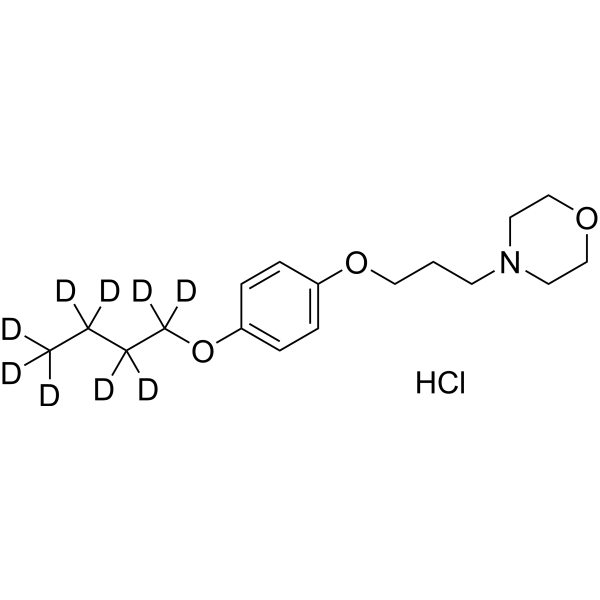
Cat. No.: HY-B1319S1
Synonyms: Pramoxine-d9 hydrochloride
Pramocaine-d9 (Pramoxine-d9) hydrochloride is the d9-labeled Pramocaine hydrochloride (HY-B1319). Pramocaine hydrochloride is a topical surface anesthetic and antipruritic agent. Pramocaine hydrochloride reversibly inhibits voltage-gated sodium channel, reduces transmembrane permeability of sodium ions, stabilizes cell membranes, prevents depolarization, blocks action potential conduction, and inhibits peripheral slow C-fiber pathways associated with pain, pruritus and thermoception. Pramocaine hydrochloride can be used in research related to chronic pruritus, renal pruritus, atopic dermatitis, xerotic pruritus, uremic pruritus, and cutaneous hyperalgesia/pain .
loading...
    loading...
Cat. No.: HY-173307
Nrf2 activator 19 is a BBB-penetrable NRF2/HO-1 activator. Nrf2 activator 19 exerts potent antioxidant and neuroprotective effects. Nrf2 activator 19 can also effectively reduce brain damage, reduce Reactive Oxygen Species (ROS) accumulation. Nrf2 activator 19 inhibits neuronal apoptosis. Nrf2 activator 19 promotes the recovery of neurological function and motor ability. Nrf2 activator 19 shows significant potential in ischemic stroke research .
loading...
    loading...
Cat. No.: HY-17417AR
CAS No.: 465-65-6
Naloxone Standard is the analytical standard of Naloxone (HY-17417A). This product is intended for research and analytical applications. Naloxone is an opioid receptor antagonist. Naloxone attenuates spinal cord stimulation‑associated anti‑hyperalgesic effects, antagonizes physiologic effects of endogenous opioid peptides linked to central nervous system injury sequelae, functions as a pressor agent to induce modest elevations in mean arterial blood pressure, exerts neuroprotective effects to improve post‑traumatic neurologic motor function, blocks opioid receptor‑mediated amnesic pathways, enhances memory consolidation, reverses Adrenocorticotropic hormone (ACTH) (HY-106373)‑ and epinephrine‑induced amnesia, and potentiates the memory‑facilitatory effects of ACTH and epinephrine .
loading...
    loading...
Cat. No.: HY-169831
CAS No.: 3006795-68-9
Target:  

α-synuclein

Research Areas:  

Neurological Disease

HUP-55 is a prolyl endopeptidase inhibitor (IC50 = 5 nM). HUP-55 reduces the dimerization of α-synuclein in Neuro2a cells and induces autophagy (Autophagy) in HEK293 cells. It also decreases the increase in reactive oxygen species (ROS) production induced by hydrogen peroxide in SH-SY5Y cells at a concentration of 10 μM. In a mouse Parkinson’s disease model, HUP-55 (10 mg/kg) improves motor function (reduces the use frequency of the impaired paw) and decreases the levels of harmful oligomers of α-synuclein in the striatum caused by overexpression of α-synuclein .
loading...
    loading...
Cat. No.: HY-171472
CAS No.: 171961-95-8
Target:  

Dopamine Receptor

Research Areas:  

Neurological Disease

A-86929 is a highly potent and selective dopamine D1 receptor agonist with a pKi value of 7.3. In the 6-OHDA (HY-B1081)-induced unilateral nigrostriatal lesion rat model, A-86929 significantly induces rotational behavior. It also improves motor function in the MPTP (HY-15608)-induced Parkinson's disease marmoset model. Additionally, A-86929 demonstrates potential therapeutic value in reducing cocaine-seeking behavior in rats and reversing Haloperidol (HY-14538)-induced cognitive deficits in rhesus monkeys. A-86929 can be used for research in neurological disorders .
loading...
    loading...
Cat. No.: HY-W017424R
CAS No.: 136-95-8
2-Aminobenzothiazole (Standard) is the analytical standard of 2-Aminobenzothiazole. This product is intended for research and analytical applications. 2-Aminobenzothiazole acts as a caspase 3/7 activator, an anticancer cytotoxic agent, and also exhibits neurotoxicity. 2-Aminobenzothiazole drives the apoptotic pathway by activating caspase 3/7, induces mitochondrial inner membrane depolarization, and triggers both early and late apoptosis via a caspase-dependent pathway. In zebrafish models, 2-Aminobenzothiazole induces oxidative damage in brain tissues and inhibits genes related to GABA and 5-HT synthesis pathways. Long-term exposure to 2-Aminobenzothiazole impairs motor ability, social behavior, anxiety-like state and cognitive function. 2-Aminobenzothiazole can be used in studies of human laryngeal carcinoma and related neurotoxicity .
loading...
    loading...
Cat. No.: HY-187172
CAS No.: 2060801-74-1
Target:  

hnRNP

Research Areas:  

Neurological Disease

BDF34019555 is a blood-brain barrier-permeable binder targeting the conserved region (amino acid residues 320-340) of TDP-43, with a Kd of 10.4 μM for full-length TDP-43 and 7.8 μM for the CR polypeptide, respectively. BDF34019555 binds to the conserved α-helical region of TDP-43 in a Trp334-dependent manner, inhibits liquid-liquid phase separation, aggregation and mitochondrial localization of TDP-43, restores mitochondrial function, reduces cytoplasmic and insoluble TDP-43 levels, without affecting the splicing activity of TDP-43. BDF34019555 exerts neuroprotective effects, alleviates motor neuron loss and improves motor neuron function. BDF34019555 can be used in studies related to amyotrophic lateral sclerosis .
loading...
    loading...
Cat. No.: HY-105056R
CAS No.: 84379-13-5
Synonyms: Ro 16-6028 (Standard)
Research Areas:  

Neurological Disease

Bretazenil (Standard) is the analytical standard of Bretazenil (HY-105056). This product is intended for research and analytical applications. Bretazenil (Ro 16-6028) is a partial agonist at the gamma-aminobutyric acid A (GABAA) receptor-linked benzodiazepine site. Bretazenil is potent benzodiazepine examined, exhibiting an IC50 (concentration at which half-maximal inhibition of specific [35S]TBPS binding occurs) of 6.1 nM. Bretazenil shows an EC50 of 10 nM for recombinant α1β1γ2. Anticonvulsant effects .
loading...
    loading...
Cat. No.: HY-174579
Target:  

mRNA

Research Areas:  

Metabolic Disease

Human MNX1 mRNA encodes the human motor neuron and pancreas homeobox 1 (MNX1) protein, a putative transcription factor involved in pancreas development and function.
loading...
    loading...
Cat. No.: HY-186073
CAS No.: 300399-36-4
Target:  

HDAC

Research Areas:  

Neurological Disease

HDAC1 activator-1 is a specific HDAC1 activator with orally activity, exerting no significant effects on other HDAC family members. HDAC1 activator-1 exhibits neuroprotective activity, ameliorates cognitive and motor function deficits by reducing neuronal loss and gliosis. HDAC1 activator-1 specifically activates HDAC1 in SH-SY5Y cells and exerts regulatory effects on aberrant cell cycle and DNA damage. HDAC1 activator-1 can be used for the research of TDP-43 proteinopat1-related neurodegenerative diseases including Amyotrophic Lateral Sclerosis (ALS) and cerebral ischemia-related neurological injury .
loading...
    loading...

