212 Results for "

studying biological processes

" in MedChemExpress (MCE) Product Catalog:
Products (212)

212 Results for "studying biological processes" in MCE Product Catalog:

Art. -Nr.: HY-W123012
CAS. Nr.: 1643841-88-6
Synonyms: 3-(4-Azidophenyl)propiolonitrile
Target:  

Fluorescent Dye

APN-Azide (3-(4-Azidophenyl)propiolonitrile) is a codon-active compound that can achieve specific labeling of target molecules in biological systems through its unique chemical structure. APN-Azide can be used for bioimaging and the development of molecular probes to study biological processes within cells.
loading...
    loading...
Art. -Nr.: HY-W777429
CAS. Nr.: 634151-16-9
Ceratamine B is a fluorescent substrate with significant biological activity and can be used for cell imaging and biolabeling. Ceratamine B can effectively penetrate cell membranes, facilitating the study of cellular processes. Ceratamine B also shows broad application potential in compound screening and biosensor development.
loading...
    loading...
Art. -Nr.: HY-W791727
CAS. Nr.: 81319-59-7
7-Methyladenosine perchlorate is a synthetic analog of adenosine with agonist activity at adenosine receptors. 7-Methyladenosine perchlorate is able to modulate cell signaling and is useful for studying adenosine-related biological processes. 7-Methyladenosine perchlorate can be used as a potential inhibitor in compound development.
loading...
    loading...
Art. -Nr.: HY-167820
CAS. Nr.: 19767-16-9
3-Ketosphingosine trifluoroacetate is a chemically modified sphingomyelin analog with specific enzymatic pathway research activity. It is mainly used to explore the functions of sphingomyelin kinases and lyases in sphingomyelin metabolism. 3-Ketosphingosine trifluoroacetate has important application value in the study of cell signal transduction and related diseases. The study of 3-Ketosphingosine trifluoroacetate helps to deepen the understanding of sphingomyelin-related biological processes.
loading...
    loading...
Art. -Nr.: HY-P2595
CAS. Nr.: 111372-60-2
Target:  

Endogenous Metabolite

Forschungsgebiete:  

Cardiovascular Disease

SKF 103784 is an vasopressin antagonist with activity against vasopressin. SKF 103784 inhibits the physiological response caused by antidiuretic and is therefore used to study biological processes related to water and salt balance. SKF 103784 can also be used to explore pathological mechanisms related to cardiovascular diseases and endocrine dysfunction .
loading...
    loading...
Art. -Nr.: HY-W923366
CAS. Nr.: 119110-38-2
Synonyms: ETH 4030
Magnesium ionophore III (ETH 4030) is an ionophore that has the activity of regulating the intracellular magnesium concentration. Magnesium ionophore III can promote the permeability of cell membranes to magnesium ions and enhance cell functions and metabolic activities. Magnesium ionophore III is also used to study the importance of magnesium ions in biological processes and its effects on cell physiology.
loading...
    loading...
Art. -Nr.: HY-W925660
CAS. Nr.: 20226-99-7
(+)-Potassium Ds-threo-isocitrate monobasic is a biologically active compound that has the activity of promoting cellular metabolism and regulating energy production. (+)-Potassium Ds-threo-isocitrate monobasic can also be used to study the regulation of metabolic pathways and enzyme activities. (+)-Potassium Ds-threo-isocitrate monobasic is widely used in biochemical research to explore its potential role in cellular function and disease processes.
loading...
    loading...
Art. -Nr.: HY-121315
CAS. Nr.: 1550053-19-4
Target:  

HDAC

Forschungsgebiete:  

Metabolic Disease

BRD4097 is an inhibitor of histone deacetylase (HDAC). BRD4097 acts by inhibiting the activity of HDACs, especially HDAC 1,2 and 3, through metal chelation and spatial rejection mechanisms, and this inhibition may help regulate gene expression and alter chromatin structure, thereby affecting a variety of biological processes. BRD4097 is used to study the role of HDAC in cholesterol metabolism and NPC1 diseases .
loading...
    loading...
Art. -Nr.: HY-123389
CAS. Nr.: 57236-85-8
Synonyms: (R)-UM-1071
Target:  

Opioid Receptor

Forschungsgebiete:  

Endocrinology

MR2034 ((R)-UM-1071) is a κ-opioid receptor agonist with activity that stimulates the hypothalamic-pituitary-adrenal axis. MR2034 has shown the potential to promote mood and inhibit addictive behaviors in animal models and can be used to study inhibitory approaches related to mood and addictive disorders. MR2034 is selective for κ-opioid receptors and can effectively modulate biological processes related to stress and mood .
loading...
    loading...
Art. -Nr.: HY-W127719
CAS. Nr.: 96087-38-6
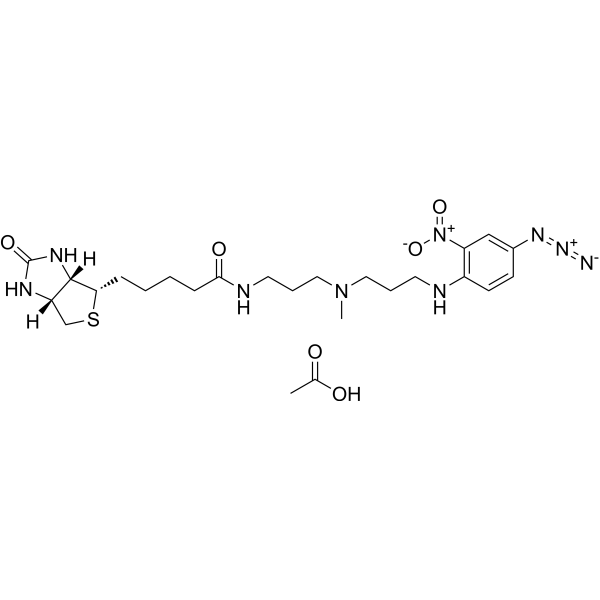
Photobiotin (acetate)It is a biological probe used to study biochemical processes such as protein interactions and enzymatic reactions. It is a molecule containing a photosensitive group, which can be combined with specific target molecules (such as proteins, nucleic acids, etc.) through photochemical cross-linking technology, so as to realize the labeling and detection of these molecules. During the photosensitive crosslinking process, Photobiotin (acetate)Can participate in the formation of covalent bonds and form stable compounds. In addition, the compound also has high biocompatibility and biological activity, so it is widely used in the field of biomedical research, such as enzymatic research, proteomics, western blotting and other aspects. Photobiotin (acetate) is a click chemistry reagent, it contains an Azide group and can undergo copper-catalyzed azide-alkyne cycloaddition reaction (CuAAc) with molecules containing Alkyne groups. It can also undergo strain-promoted alkyne-azide cycloaddition (SPAAC) reactions with molecules containing DBCO or BCN groups.
loading...
    loading...
Art. -Nr.: HY-D0030
CAS. Nr.: 17407-98-6
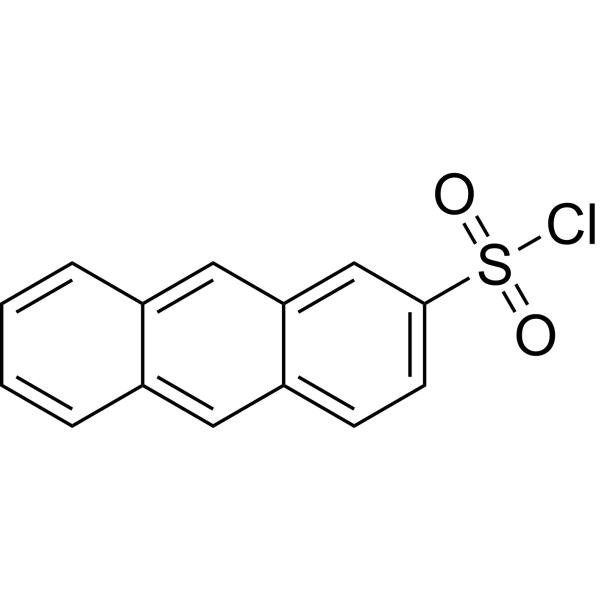
2-Anthracenylsulfonyl chloride is a multifunctional dye. Dyes are important tools in biological experiments. They can help researchers observe and analyze cell structures, track biomolecules, evaluate cell functions, distinguish cell types, detect biomolecules, study tissue pathology and monitor microorganisms. Their applications range from basic scientific research to clinical A wide range of diagnostics. Dyes are also widely used in traditional fields such as textile dyeing, as well as in emerging fields such as functional textile processing, food pigments and dye-sensitized solar cells.
loading...
    loading...
Art. -Nr.: HY-D0101A
CAS. Nr.: 197777-68-7
Fluorescein-diphosphat (ammonium) is a multifunctional dye. Dyes are important tools in biological experiments. They can help researchers observe and analyze cell structures, track biomolecules, evaluate cell functions, distinguish cell types, detect biomolecules, study tissue pathology and monitor microorganisms. Their applications range from basic scientific research to clinical A wide range of diagnostics. Dyes are also widely used in traditional fields such as textile dyeing, as well as in emerging fields such as functional textile processing, food pigments and dye-sensitized solar cells.
loading...
    loading...
Art. -Nr.: HY-D1218
CAS. Nr.: 51503-28-7
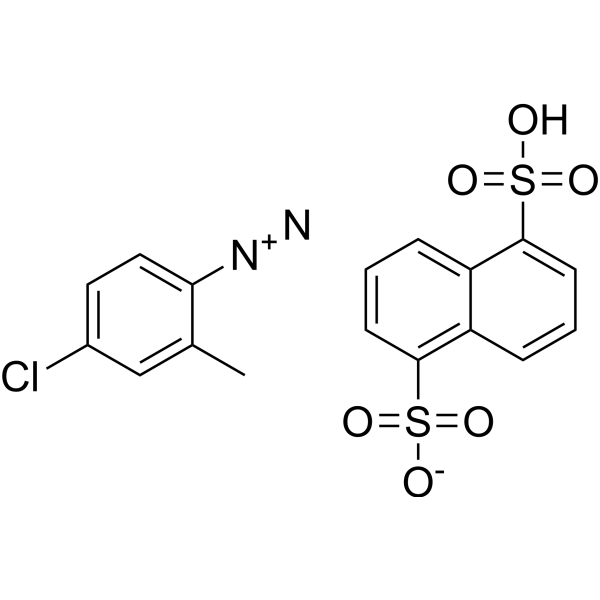
Fast Red TR (napadisylate) is a multifunctional dye. Dyes are important tools in biological experiments. They can help researchers observe and analyze cell structures, track biomolecules, evaluate cell functions, distinguish cell types, detect biomolecules, study tissue pathology and monitor microorganisms. Their applications range from basic scientific research to clinical A wide range of diagnostics. Dyes are also widely used in traditional fields such as textile dyeing, as well as in emerging fields such as functional textile processing, food pigments and dye-sensitized solar cells.
loading...
    loading...
Art. -Nr.: HY-D0139
CAS. Nr.: 142179-00-8
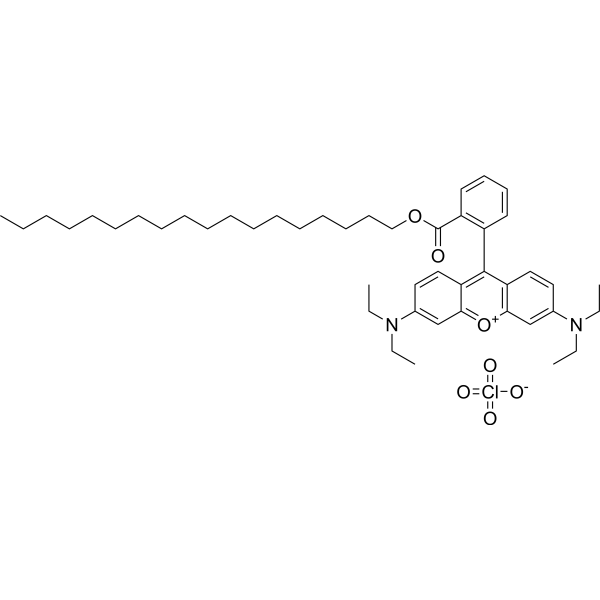
Octadecyl Rhodamine B (perchlorate) is a multifunctional dye. Dyes are important tools in biological experiments. They can help researchers observe and analyze cell structures, track biomolecules, evaluate cell functions, distinguish cell types, detect biomolecules, study tissue pathology and monitor microorganisms. Their applications range from basic scientific research to clinical A wide range of diagnostics. Dyes are also widely used in traditional fields such as textile dyeing, as well as in emerging fields such as functional textile processing, food pigments and dye-sensitized solar cells.
loading...
    loading...
Art. -Nr.: HY-161492
Estradiol/OVA is a multifunctional dye. Dyes are important tools in biological experiments. They can help researchers observe and analyze cell structures, track biomolecules, evaluate cell functions, distinguish cell types, detect biomolecules, study tissue pathology and monitor microorganisms. Their applications range from basic scientific research to clinical A wide range of diagnostics. Dyes are also widely used in traditional fields such as textile dyeing, as well as in emerging fields such as functional textile processing, food pigments and dye-sensitized solar cells.
loading...
    loading...
Art. -Nr.: HY-D0006A
CAS. Nr.: 98645-86-4
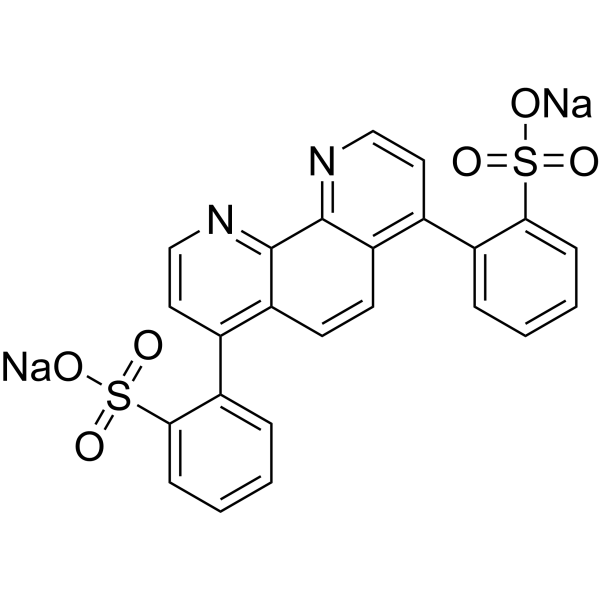
Bathophenanthroline disulfonic acid sodium is a multifunctional dye. Dyes are important tools in biological experiments. They can help researchers observe and analyze cell structures, track biomolecules, evaluate cell functions, distinguish cell types, detect biomolecules, study tissue pathology and monitor microorganisms. Their applications range from basic scientific research to clinical A wide range of diagnostics. Dyes are also widely used in traditional fields such as textile dyeing, as well as in emerging fields such as functional textile processing, food pigments and dye-sensitized solar cells.
loading...
    loading...
Art. -Nr.: HY-D0037
CAS. Nr.: 148942-72-7
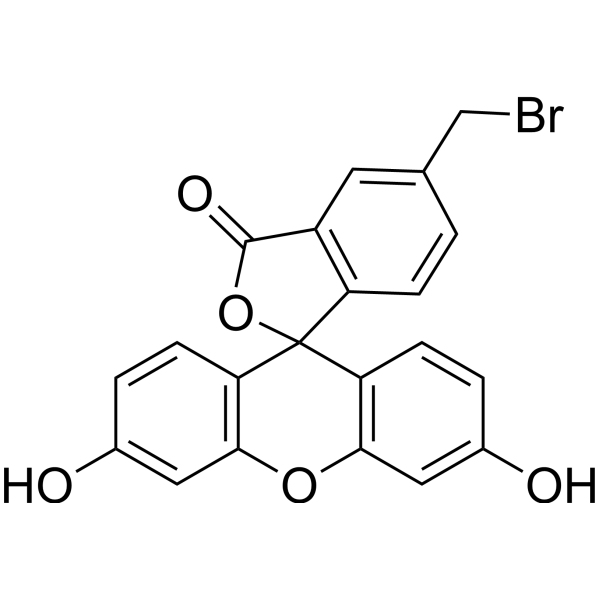
5-Bromomethyl-fluorescein is a multifunctional dye. Dyes are important tools in biological experiments. They can help researchers observe and analyze cell structures, track biomolecules, evaluate cell functions, distinguish cell types, detect biomolecules, study tissue pathology and monitor microorganisms. Their applications range from basic scientific research to clinical A wide range of diagnostics. Dyes are also widely used in traditional fields such as textile dyeing, as well as in emerging fields such as functional textile processing, food pigments and dye-sensitized solar cells.
loading...
    loading...
Art. -Nr.: HY-D0052
CAS. Nr.: 161338-87-0
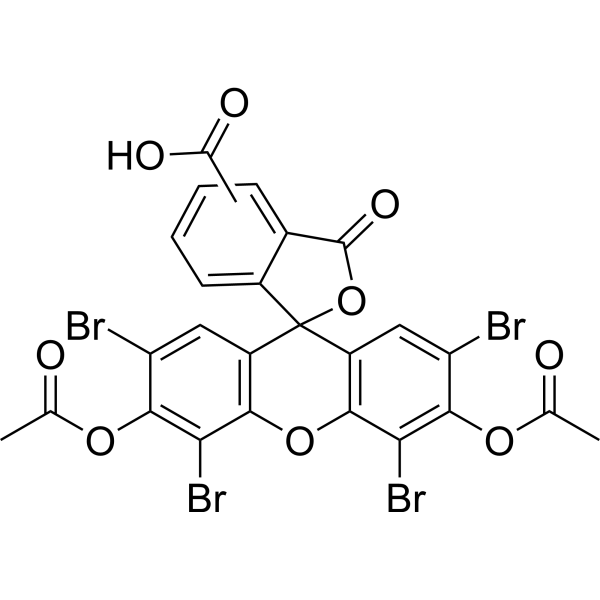
5(6)-Carboxyeosin-diacetate is a multifunctional dye. Dyes are important tools in biological experiments. They can help researchers observe and analyze cell structures, track biomolecules, evaluate cell functions, distinguish cell types, detect biomolecules, study tissue pathology and monitor microorganisms. Their applications range from basic scientific research to clinical A wide range of diagnostics. Dyes are also widely used in traditional fields such as textile dyeing, as well as in emerging fields such as functional textile processing, food pigments and dye-sensitized solar cells.
loading...
    loading...
Art. -Nr.: HY-D0089
CAS. Nr.: 442151-50-0
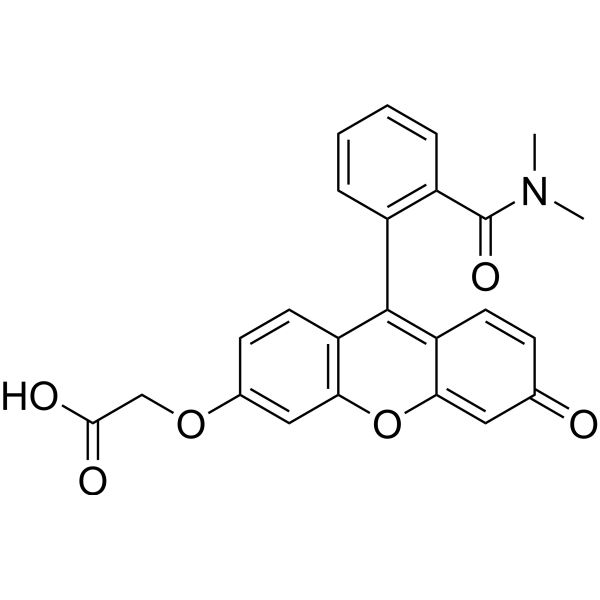
O'-(carboxymethyl)fluoresceinamide is a multifunctional dye. Dyes are important tools in biological experiments. They can help researchers observe and analyze cell structures, track biomolecules, evaluate cell functions, distinguish cell types, detect biomolecules, study tissue pathology and monitor microorganisms. Their applications range from basic scientific research to clinical A wide range of diagnostics. Dyes are also widely used in traditional fields such as textile dyeing, as well as in emerging fields such as functional textile processing, food pigments and dye-sensitized solar cells.
loading...
    loading...
Art. -Nr.: HY-D0095
CAS. Nr.: 127070-69-3
B261 is a multifunctional dye. Dyes are important tools in biological experiments. They can help researchers observe and analyze cell structures, track biomolecules, evaluate cell functions, distinguish cell types, detect biomolecules, study tissue pathology and monitor microorganisms. Their applications range from basic scientific research to clinical A wide range of diagnostics. Dyes are also widely used in traditional fields such as textile dyeing, as well as in emerging fields such as functional textile processing, food pigments and dye-sensitized solar cells.
loading...
    loading...

