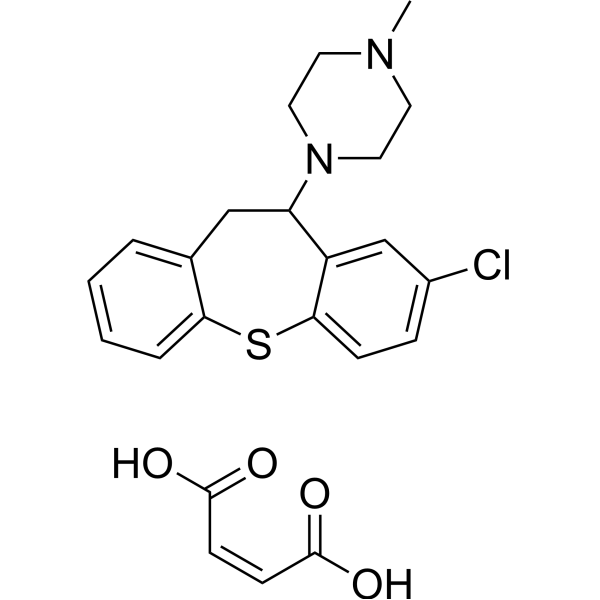
1. Search Result
Search Result
Results for "

α1D

" in MedChemExpress (MCE) Product Catalog:

52

Inhibitors & Agonists

2

Peptides

4

Natural
Products

7

Isotope-Labeled Compounds

Cat. No. 상품명 Target 연구분야 Chemical Structure
  • HY-B0471
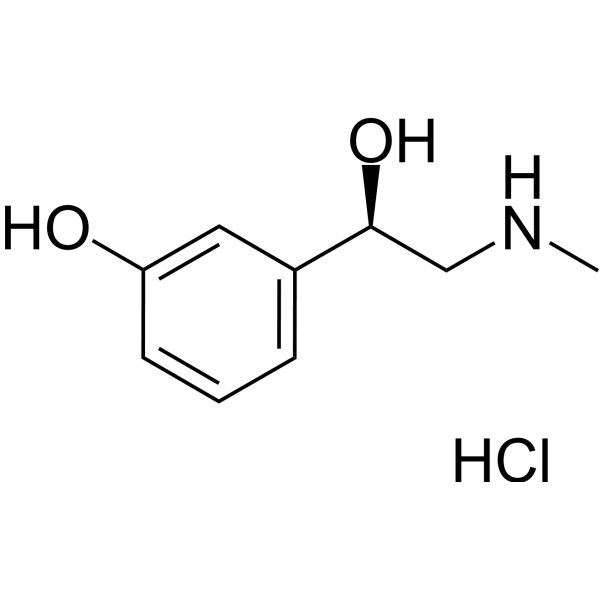
    Phenylephrine hydrochloride
    30+ Cited Publications

    (R)-(-)-Phenylephrine hydrochloride; L-Phenylephrine hydrochloride

    Adrenergic Receptor Endogenous Metabolite Cardiovascular Disease Endocrinology Cancer
    (R)-(-)-Phenylephrine hydrochloride is a selective α1-adrenoceptor agonist with pKis of 5.86, 4.87 and 4.70 for α1D, α1B and α1A receptors respectively.
    Phenylephrine hydrochloride
  • HY-10122
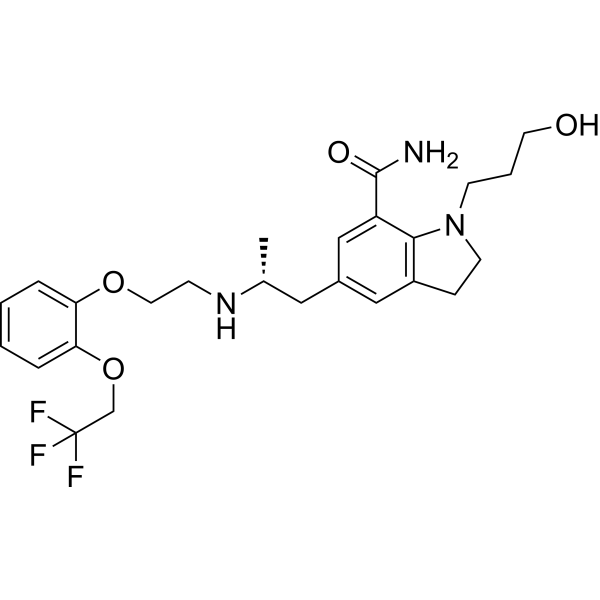
    Silodosin
    5 Publications Verification

    KAD 3213; KMD 3213

    Adrenergic Receptor Bacterial Endocrinology Cancer
    Silodosin (KAD 3213; KMD 3213) is a potent, selective and orally active α1A-adrenergic receptor (α1A-AR) blocker. Silodosin exhibits high affinity for α1A-AR (Ki=0.036 nM), over 162-fold and 50-fold than for α1B-AR and α1D-AR with Ki values of 21 nM and 2.0 nM, respectively. Silodosin is an effective and well-tolerated agent, it can be used for the investigation of LUTS/BPH [1] .
    Silodosin
  • HY-N1255

    (-)-Scoulerine; Discretamine

    Bcl-2 Family Apoptosis mTOR GABA Receptor PI3K Adrenergic Receptor Beta-secretase Akt Cancer
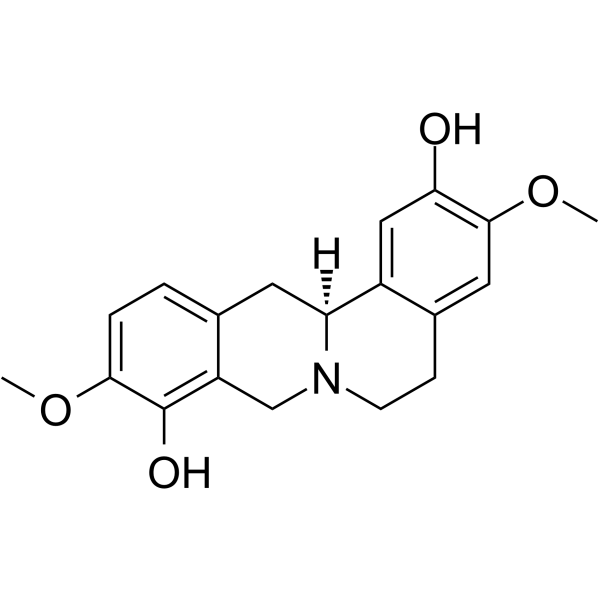
    Scoulerine ((-)-Scoulerine; Discretamine) hydrochloride is a multi-target inhibitor with anti-tumor and antioxidant activities. Scoulerine mainly targets the PI3K/Akt/mTOR signaling axis and α1D-adrenergic receptor, disrupts microtubule structure, and induces cell cycle arrest and apoptosis. Scoulerine effectively inhibits mitochondrial dehydrogenase activity, targets GABA receptors and BACE1, and suppresses the proliferation, migration, invasion, epithelial-mesenchymal transition and stem cell properties of cancer cells. Scoulerine also exhibits multiple pharmacological activities including anti-Plasmodium falciparum, antibacterial, antiemetic and antitussive effects, and regulates endoplasmic reticulum stress and mitochondrial function (modulates Bax, Bcl-2 and cytochrome c). Scoulerine is applicable to research related to leukemia, ovarian cancer, and colorectal cancer [1] .
    Scoulerine
  • HY-100554
    BMY 7378
    2 Publications Verification

    Adrenergic Receptor 5-HT Receptor Cardiovascular Disease
    BMY 7378 is a selective antagonist of α1D-adrenoceptor 1D-AR). BMY 7378 binds to membranes expressing the cloned rat α1D-AR with a >100-fold higher affinity (Ki=2 nM) than binding to either the cloned rat α1A-AR (Ki=800 nM) or the hamster α1B-AR (Ki=600 nM). BMY 7378 is a 5-HT1A receptor partial agonist [1] .
    BMY 7378
  • HY-101300

    LD 3098 hydrochloride

    Adenosine Receptor Neurological Disease
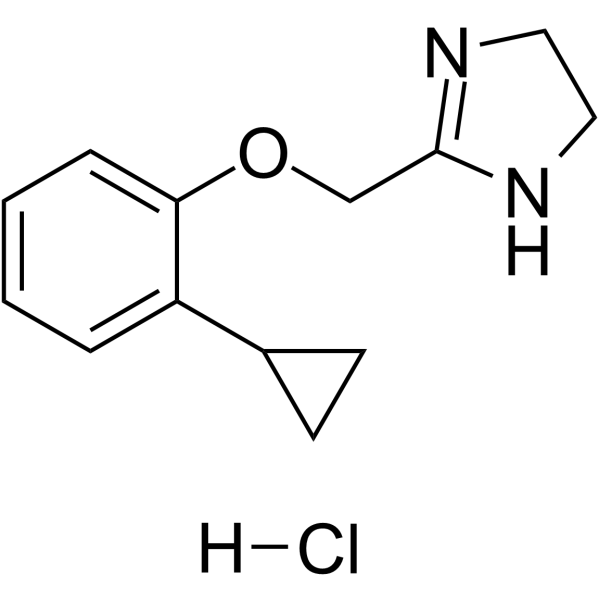
    Cirazoline hydrochloride (LD 3098 hydrochloride) is a potent competitive full α1A-adrenergic receptor (α1A-AR) agonist (Ki=120 nM) and only a partial agonist at α1B-AR (Ki= 960 nM) and α1D-AR (Ki=660 nM) [1].
    Cirazoline hydrochloride
  • HY-B0391
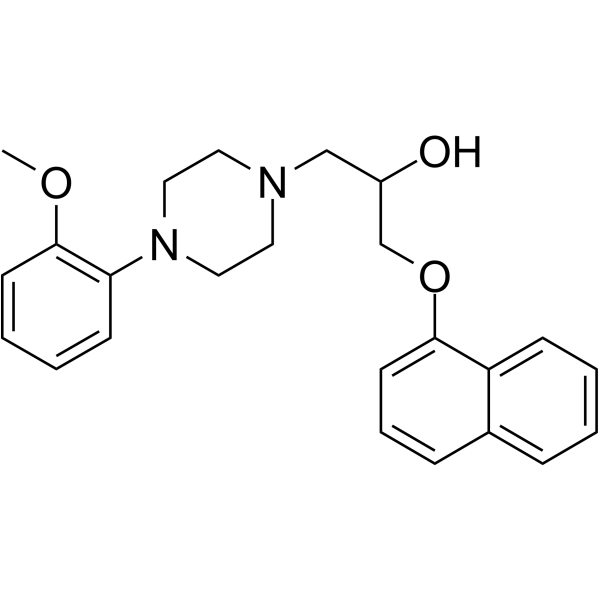
    Naftopidil
    1 Publications Verification

    KT-611; BM-15275

    Adrenergic Receptor Cardiovascular Disease Endocrinology
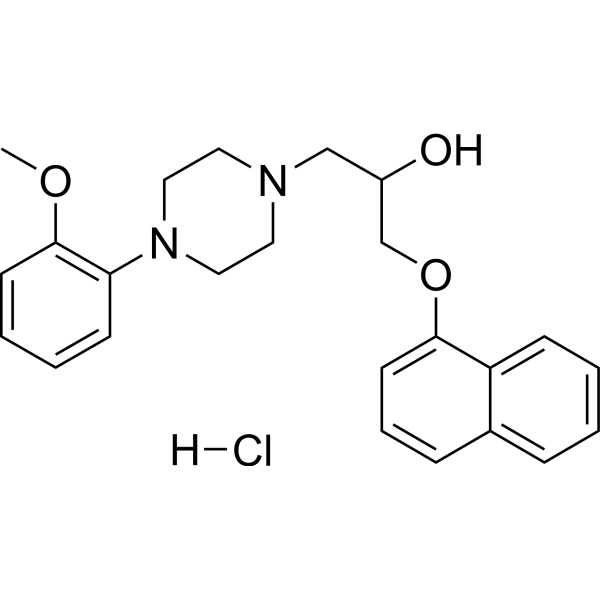
    Naftopidil (KT-611) is is a selective alpha1-adrenoceptor antagonist, with Kis of 3.7 nM, 20 nM and 1.2 nM for the cloned human α1a-, α1b- and α1d-adrenoceptor subtypes, respectively. Naftopidil has antiproliferative effects. Naftopidil can be used for the research of prostate hyperplasia [1] .
    Naftopidil
  • HY-135270

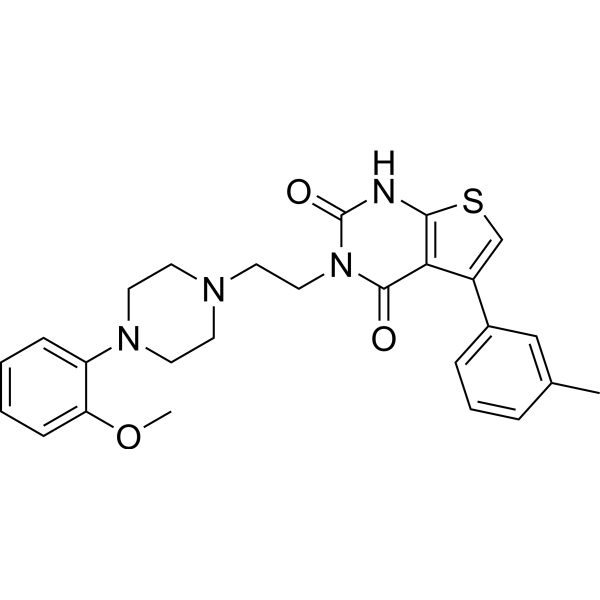
    Adrenergic Receptor Endocrinology
    ADRA1D receptor antagonist 1 is a potent, selective and orally active α1D adrenoceptor antagonist, with a Ki of 1.6 nM [1].
    ADRA1D receptor antagonist 1
  • HY-U00399A

    ABT 980

    Adrenergic Receptor Endocrinology
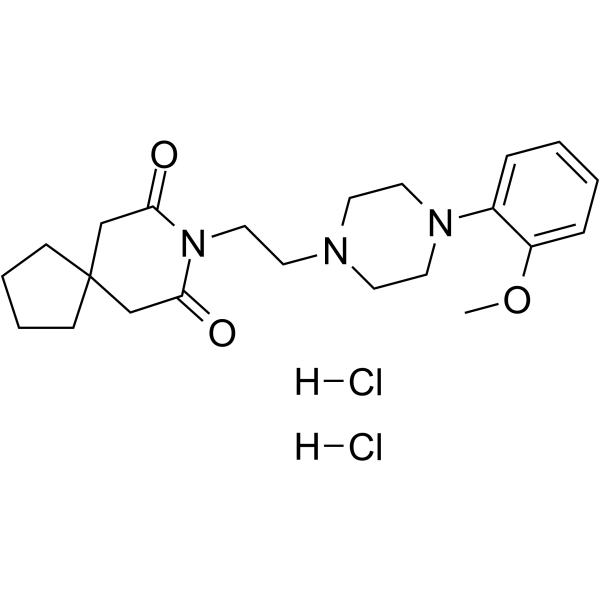
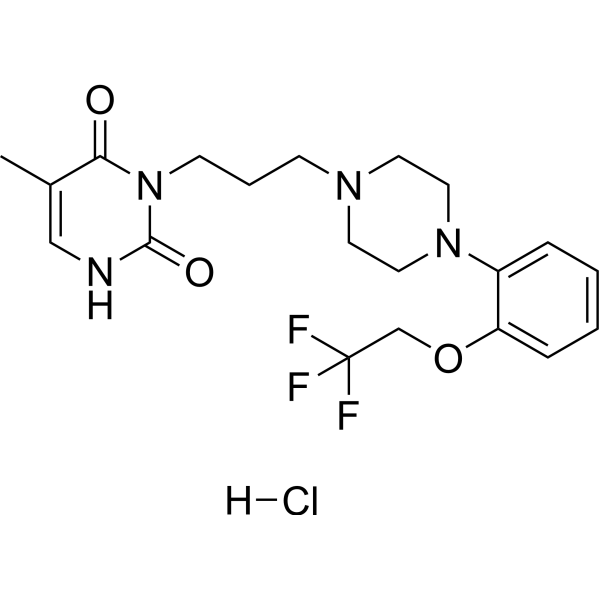
    Fiduxosin hydrochloride (ABT 980) is a potent α1-adrenoceptor antagonist, with Ki of 0.160 nM, 24.9 nM, and 0.920 nM for α1a-, α1b-, and α1d-adrenoceptors, respectively [1].
    Fiduxosin hydrochloride
  • HY-B0471R

    (R)-(-)-Phenylephrine hydrochloride (Standard); L-Phenylephrine hydrochloride (Standard)

    Reference Standards Adrenergic Receptor Endogenous Metabolite Cardiovascular Disease Endocrinology Cancer
    Phenylephrine (hydrochloride) (Standard) is the analytical standard of Phenylephrine (hydrochloride). This product is intended for research and analytical applications. (R)-(-)-Phenylephrine hydrochloride is a selective α1-adrenoceptor agonist with pKis of 5.86, 4.87 and 4.70 for α1D, α1B and α1A receptors respectively.
    Phenylephrine hydrochloride (Standard)
  • HY-B0371B

    Adrenergic Receptor Endocrinology
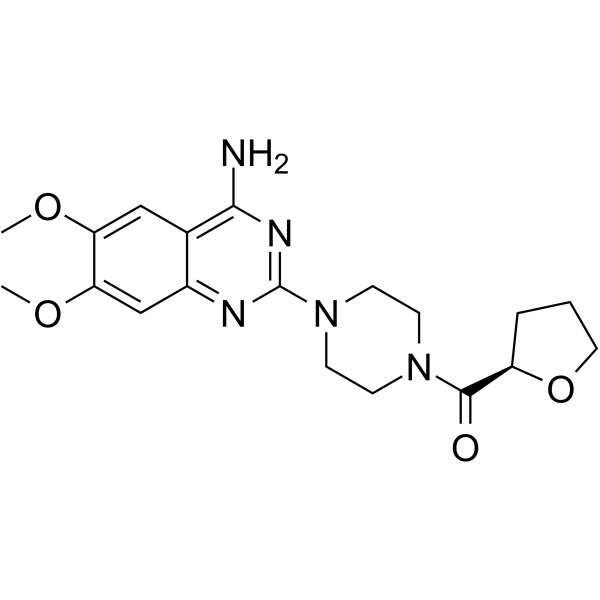
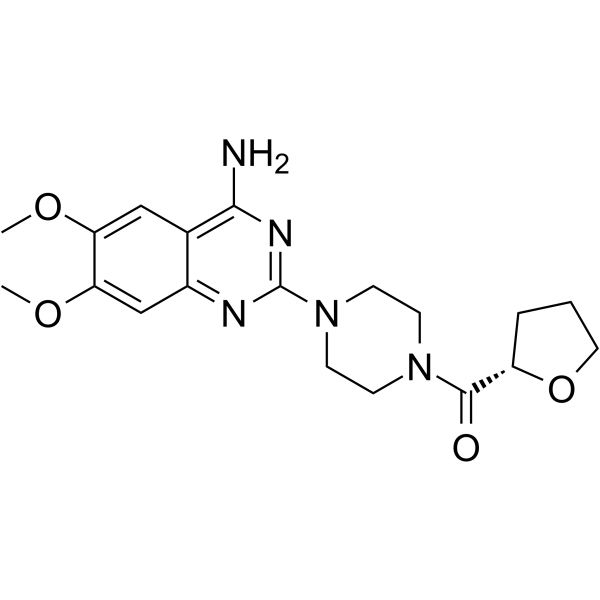
    (R)-Terazosin is an active R-enantiomer of Terazosin. (R)-Terazosin is a potent α1-adrenoceptor antagonist with Ki values of 6.51 nM, 1.01 nM and 1.97 nM for α1a, α1b and α1d-adrenoceptor, respectively [1].
    (R)-Terazosin
  • HY-103204

    Adrenergic Receptor Endocrinology
    RS100329 hydrochloride is a potent and selective α1A-adrenoceptor antagonist with pKi values of 9.6, 7.9 and 7.5 for α1A, α1D, and α1B, respectively. RS100329 hydrochloride inhibits reflex urethral contractions. RS100329 hydrochloride can be used in research of benign prostatic hyperplasia [1] .
    RS100329 hydrochloride
  • HY-12697

    Dopamine Receptor Neurological Disease
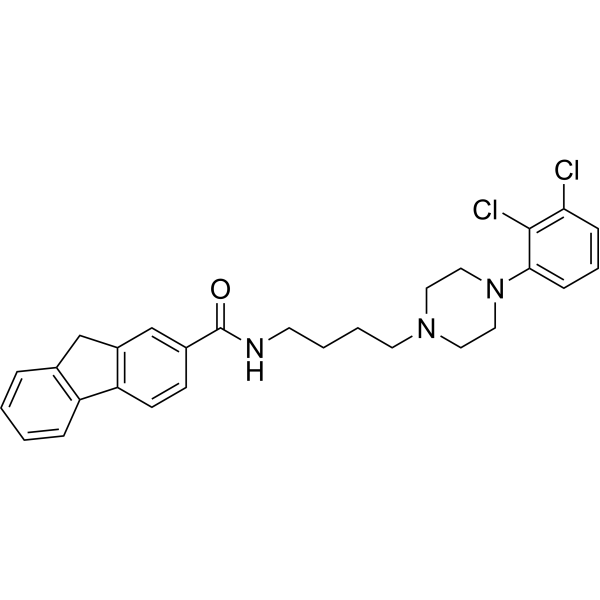
    NGB 2904 is a potent, selective, orally active and brain-penetrated antagonist of dopamine D3 receptor, with a Ki of 1.4 nM. NGB 2904 shows selectivity for D3 over D2, 5-HT2, α1, D4, D1 and D5 receptors (Kis=217, 223, 642, >5000, >10000 and >10000 nM, respectively). NGB 2904 antagonizes Quinpirole-stimulated mitogenesis [1] .
    NGB 2904
  • HY-B0371D

    Adrenergic Receptor Endocrinology
    (S)-Terazosin is an active S-enantiomer of Terazosin. (S)-Terazosin is a potent and high-affinity α-adrenoceptor antagonist with Ki values of 3.91 nM, 0.79 nM and 1.16 nM for α1a, α1b and α1d-adrenoceptor, respectively. (S)-Terazosin also has high-affinity for α2a, α2B and α2c-adrenoceptor with Ki values of 729 nM, 3.5 nM and 46.4 nM, respectively [1].
    (S)-Terazosin
  • HY-U00399

    Adrenergic Receptor Endocrinology
    Fiduxosin is a potent α1-adrenoceptor antagonist, with Ki of 0.160 nM, 24.9 nM, and 0.920 nM for α1a-, α1b-, and α1d-adrenoceptors, respectively.
    Fiduxosin
  • HY-19268

    GW 1818

    Adrenergic Receptor Metabolic Disease
    GG-818 (GW 1818) is a potent and selective α1 adrenoceptor antagonist, with pKi values of 9.7 for α1a, 7.8 for α1b, and 7.6 for α1d. GG-818 (GW 1818) can be used for benign prostatic hyperplasia research [1].
    GG-818
  • HY-120473

    Adrenergic Receptor Metabolic Disease
    TAK-259 is an orally active α1D-adrenergic receptor antagonist with a Ki value of 1.1 nM for human α1D-adrenergic receptors. TAK-259 can inhibit the contraction of isolated bladder strips in rats with bladder outlet obstruction, reduce non-voiding bladder contractions, and improve urinary frequency symptoms. TAK-259 can be used in research related to overactive bladder [1].
    TAK-259
  • HY-116623

    Adrenergic Receptor Endocrinology
    A-123189 is a selective and potent α1D antagonist with Kis of 0.312 and 0.17 for human α1D and rat α1D, respectively. A-123189 displays selectivities between 10- to 20-fold for the α1D receptor over the human α1A and rat α1A receptors [1].
    A-123189
  • HY-B0471S

    (R)-(-)-Phenylephrine-d3 hydrochloride; L-Phenylephrine-d3 hydrochloride

    Adrenergic Receptor Endogenous Metabolite Cardiovascular Disease Endocrinology
    Phenylephrine-d3 (hydrochloride) is the deuterium labeled Phenylephrine hydrochloride. (R)-(-)-Phenylephrine hydrochloride is a selective α1-adrenoceptor agonist with pKis of 5.86, 4.87 and 4.70 for α1D, α1B and α1A receptors respectively.
    Phenylephrine-d3 hydrochloride
  • HY-125641

    5-HT Receptor Adrenergic Receptor Cardiovascular Disease
    AL-34662 is a selective 5-HT2A receptoragonist (IC50: 0.77 nM and 1.5 nM for rat and human 5-HT2 receptor). AL-34662 is also a weak α-1D adrenergic agonist activity (EC50:0.4 μM). AL-34662 is an ocular hypotensive agent [1] .
    AL-34662
  • HY-B0471S1

    (R)-(-)-Phenylephrine-2,4,6-d3 hydrochloride; L-Phenylephrine-2,4,6-d3 hydrochloride

    Adrenergic Receptor Endogenous Metabolite Cardiovascular Disease Endocrinology
    Phenylephrine-2,4,6-d3 (hydrochloride) is the deuterium labeled Phenylephrine hydrochloride. (R)-(-)-Phenylephrine hydrochloride is a selective α1-adrenoceptor agonist with pKis of 5.86, 4.87 and 4.70 for α1D, α1B and α1A receptors respectively.
    Phenylephrine-2,4,6-d3 hydrochloride
  • HY-103209

    Adrenergic Receptor Cardiovascular Disease Endocrinology
    Rec 15/2615 hydrochloride is a potent and selective α-1B adrenoceptor antagonist with Ki values of 1.9 nM, 0.3 nM, 2.6 nM for α1A, α1B, α1D, respectively. Rec 15/2615 hydrochloride modulates vaginal smooth muscle contractility and genital engorgement [1] .
    Rec 15/2615 hydrochloride
  • HY-113918

    PTHR Metabolic Disease
    SW-106 is a selective antagonist of parathyroid hormone/parathyroid hormone-related peptide receptor (PPR) and PTHR1, with an IC50 value of 0.99 μM against PPR. SW-106 antagonizes cAMP responses. SW-106 can be used in the research of osteoporosis [1] .
    SW-106
  • HY-B0391A

    KT-611 dihydrochloride; BM-15275 dihydrochloride

    Adrenergic Receptor Cancer
    Naftopidil dihydrochloride (KT-611 dihydrochloride) is a selective alpha1-adrenoceptor antagonist, with Kis of 3.7 nM, 20 nM and 1.2 nM for the cloned human α1a-, α1b- and α1d-adrenoceptor subtypes, respectively. Naftopidil dihydrochloride has antiproliferative effects. Naftopidil dihydrochloride can be used for the research of prostate hyperplasia [1] .
    Naftopidil dihydrochloride
  • HY-123514

    Adrenergic Receptor Dopamine Receptor 5-HT Receptor Others
    SNAP8719 free base is a selective α1D-adrenoceptor antagonist (pKi = 8.89). SNAP8719 free base shows affinity for the dopamine D2-, 5-HT1A-, and the human clonal α2a-adrenoceptor, with pKi values of 5.98, 6.47, and <5.0, respectively. SNAP8719 free base causes a concentration-dependent increase in the twitch response [1].
    SNAP8719 free base
  • HY-175669

    Chloride Channel Metabolic Disease Endocrinology
    ANO1-IN-5 is an orally active ANO1 inhibitor with an IC50 of 4.57 μM. J ANO1-IN-5 demonstrates 118-, 642-, and 10000-fold selectivity over α1A-1B-, andα1D-AR, respectively. ANO1-IN-5 exhibits significant inhibitory effects on osteoclast differentiation and function. ANO1-IN-5 can used for the study of osteoporosis [1].
    ANO1-IN-5
  • HY-P5158

    Adrenergic Receptor Others
    Conopeptide rho-TIA is a peptide derived from the venom contained in the predatory sea snail Conus tulipa, has highly selective and noncompetitive inhibitor at human α1B-Adrenergic Receptor. Conopeptide rho-TIA acts a competitive inhibitor at human α1A-Adrenergic Receptor and α1D-Adrenergic Receptor. Conopeptide rho-TIA binds to each subtype and may provide useful information for the development of novel α1-Adrenergic Receptor subtype-selective drugs [1].
    Conopeptide rho-TIA
  • HY-116982

    Adrenergic Receptor 5-HT Receptor
    BMY 7378 (free base) is a selective antagonist of α1D-adrenoceptor 1D-AR). BMY 7378 (free base) binds to membranes expressing the cloned rat α1D-AR with a >100-fold higher affinity (Ki=2 nM) than binding to either the cloned rat α1A-AR (Ki=800 nM) or the hamster α1B-AR (Ki=600 nM). BMY 7378 (free base) is a 5-HT1A receptor partial agonist [1] .
    BMY 7378 free base
  • HY-W724254

    Adrenergic Receptor Endocrinology
    SNAP-6201 is a selective α1a adrenoceptor antagonist with a Ki of 0.2 nM. SNAP-6201 exhibits >1400-fold selectivity over α1b and α1d adrenoceptors. SNAP-6201 exhibits excellent selectively to inhibit intraurethral pressure (IUP) in the anesthetized dog model. SNAP-6201 can be used for benign prostatic hyperplasia (BPH) research [1].
    SNAP-6201
  • HY-148252

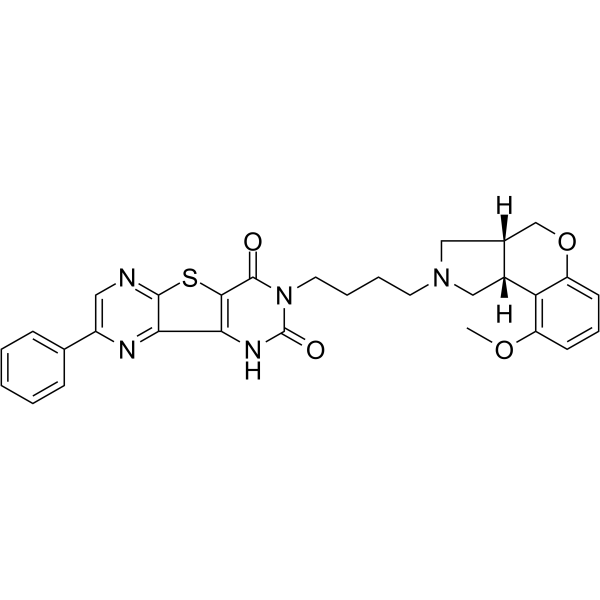
    Adrenergic Receptor Endocrinology
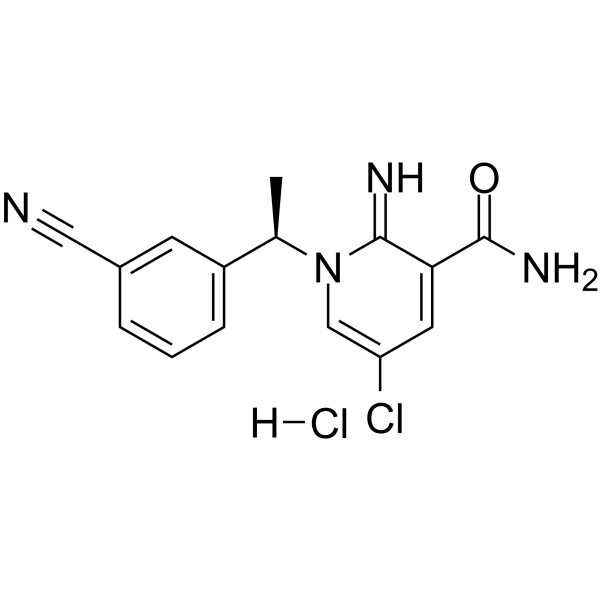
    ADRA1D receptor antagonist 1 (free base) (compound (R)-9s) is an orally active, potent and selective human α1D-adrenoceptor (α1D-AR) antagonist (Ki=1.6 nM). ADRA1D receptor antagonist 1 (free base) dose-dependently inhibits bladder contraction with an IC30 value of 15 nM. ADRA1D receptor antagonist 1 (free base) can be used in studies of overactive bladder disorders such as urinary urgency, frequency and incontinence.
    ADRA1D receptor antagonist 1 free base
  • HY-119262

    Adrenergic Receptor Cardiovascular Disease Endocrinology
    ABT-866 is an α1A-adrenoceptor agonist and an antagonist at the α1B- and α1D-adrenoceptor subtypes. ABT-866 has an EC50 of 0.60 μM for the α1A in the rabbit urethra. ABT-866 has a pA2 value of 5.4 for the α1B in the rat spleen. ABT-866 has a pA2 value of 6.2 for the α1D in the rat aorta. ABT-866 exhibits good urethral selectivity and lower cardiovascular side effects in stress urinary incontinence models. ABT-866 can be used for the research of diseases such as stress urinary incontinence [1] .
    ABT-866
  • HY-B0471S3

    (R)-(-)-Phenylephrine-d6 hydrochloride; L-Phenylephrine-d6 hydrochloride

    Isotope-Labeled Compounds Adrenergic Receptor Endogenous Metabolite Cardiovascular Disease Endocrinology
    Phenylephrine-d6 (hydrochloride) is deuterium labeled Phenylephrine (hydrochloride). (R)-(-)-Phenylephrine hydrochloride is a selective α1-adrenoceptor agonist with pKis of 5.86, 4.87 and 4.70 for α1D, α1B and α1A receptors respectively.
    Phenylephrine-d6 hydrochloride
  • HY-B0471S2

    Isotope-Labeled Compounds Adrenergic Receptor Endogenous Metabolite Cardiovascular Disease Endocrinology
    (S)-Phenylephrine-d6 (hydrochloride) is deuterium labeled Phenylephrine (hydrochloride). (R)-(-)-Phenylephrine hydrochloride is a selective α1-adrenoceptor agonist with pKis of 5.86, 4.87 and 4.70 for α1D, α1B and α1A receptors respectively.
    (S)-Phenylephrine-d6 hydrochloride
  • HY-135488

    Adrenergic Receptor Cardiovascular Disease
    A 131701 is a selective α1a- (Ki: 0.22 nM for human α1a) and α1d-adrenoceptor antagonist. A 131701 antagonizes epinephrine-induced increases in intraurethral pressure (IUP). A 131701 causes transient decreases in mean arterial blood pressure (MABP) and transient tachycardia. A 131701 can be used in the research of spontaneous hypertension [1].
    A 131701
  • HY-B0391B

    KT-611 hydrochloride; BM-15275 hydrochloride

    Adrenergic Receptor Cancer
    Naftopidil hydrochloride (KT-611 hydrochloride) is a selective alpha1-adrenoceptor antagonist, with Kis of 3.7 nM, 20 nM and 1.2 nM for the cloned human α1a-, α1b- and α1d-adrenoceptor subtypes, respectively. Naftopidil hydrochloride has antiproliferative effects. Naftopidil hydrochloride can be used for the research of prostate hyperplasia [1].
    Naftopidil hydrochloride
  • HY-B0391S1

    KT-611-d5; BM-15275-d5

    Isotope-Labeled Compounds Adrenergic Receptor Cardiovascular Disease Endocrinology
    Naftopidil-d5 is deuterium labeled Naftopidil. Naftopidil (KT-611) is is a selective alpha1-adrenoceptor antagonist, with Kis of 3.7 nM, 20 nM and 1.2 nM for the cloned human α1a-, α1b- and α1d-adrenoceptor subtypes, respectively. Naftopidil has antiproliferative effects. Naftopidil can be used for the research of prostate hyperplasia [1] .
    Naftopidil-d5
  • HY-101300R

    LD 3098 hydrochloride (Standard)

    Reference Standards Adenosine Receptor Neurological Disease
    Cirazoline (hydrochloride) (Standard) is the analytical standard of Cirazoline (hydrochloride). This product is intended for research and analytical applications. Cirazoline hydrochloride (LD 3098 hydrochloride) is a potent competitive full?α1A-adrenergic receptor (α1A-AR) agonist (Ki=120 nM) and only a partial agonist at α1B-AR (Ki= 960 nM) and α1D-AR (Ki=660 nM) [1].
    Cirazoline hydrochloride (Standard)
  • HY-B0391R

    KT-611 (Standard); BM-15275 (Standard)

    Reference Standards Adrenergic Receptor Cardiovascular Disease Endocrinology
    Naftopidil (Standard) is the analytical standard of Naftopidil. This product is intended for research and analytical applications. Naftopidil (KT-611) is is a selective alpha1-adrenoceptor antagonist, with Kis of 3.7 nM, 20 nM and 1.2 nM for the cloned human α1a-, α1b- and α1d-adrenoceptor subtypes, respectively. Naftopidil has antiproliferative effects. Naftopidil can be used for the research of prostate hyperplasia [1] .
    Naftopidil (Standard)
  • HY-B0391S2

    KT-611-d7; BM-15275-d7

    Isotope-Labeled Compounds Adrenergic Receptor Cardiovascular Disease Endocrinology
    Naftopidil-d7 (KT-611-d7 ) is deuterium labeled Naftopidil. Naftopidil (KT-611) is is a selective alpha1-adrenoceptor antagonist, with Kis of 3.7 nM, 20 nM and 1.2 nM for the cloned human α1a-, α1b- and α1d-adrenoceptor subtypes, respectively. Naftopidil has antiproliferative effects. Naftopidil can be used for the research of prostate hyperplasia [1] .
    Naftopidil-d7
  • HY-P5846

    MT3

    mAChR Adrenergic Receptor Neurological Disease
    Muscarinic toxin 3 (MT3) is a potent and non-competitive mAChR and adrenoceptors antagonist with pIC50s of 6.71, 8.79, 8.86, 7.57, 8.13, 8.49, <6.5, 7.29 against M1, M4, α1A, α1B, α1D2A2B and α2C receptors, respectively. Muscarinic toxin 3 displays prominent adrenoceptor activity [1].
    Muscarinic toxin 3
  • HY-162677

    Adrenergic Receptor 5-HT Receptor Cardiovascular Disease
    MT-1207 is an orally active and selective adrenergic α1 and 5-HT2A receptor antagonist. MT-1207 shows IC50<0.1 nM, 0.15 nM, 1.40 nM and 0.27 nM for α1A, α1B, α1D and 5-HT2A, respectively. MT-1207 achieves an effective blood pressure (BP) reduction in the 2K2C rat model without damaging renal function. MT-1207 is a potent multitarget inhibitor with the potential for vasodilatation research [1].
    MT-1207
  • HY-U00237B

    Adrenergic Receptor Others
    L-771688 hydrochloride is a potent and highly selective α1A-adrenoceptor antagonist (Kd=43-90 pM). L-771688 hydrochloride is effective against cloned human, rat and dog α1A-adrenergic receptors. L-771688 exhibits high affinity (Ki ≤ 1 nM) and over 500-fold selectivity over the α1B and α1D isoforms. L-771688 potently antagonizes norepinephrine-induced responses at these receptors. Inhibits contractions induced by phenylephrine or A-61603 in rat, dog, human and monkey models [1].
    L-771688 hydrochloride
  • HY-10122S

    Isotope-Labeled Compounds Adrenergic Receptor Endocrinology Cancer
    Silodosin-d4 is the deuterium labeled Silodosin. Silodosin (KAD 3213) is a potent, selective and orally active α1A-adrenergic receptor (α1A-AR) blocker. Silodosin exhibits high affinity for α1A-AR (Ki=0.036 nM), over 162-fold and 50-fold than for α1B-AR and α1D-AR with Ki values of 21 nM and 2.0 nM, respectively. Silodosin is an effective and well-tolerated agent, it can be used for the investigation of LUTS/BPH [1] .
    Silodosin-d4
  • HY-10122R

    KAD 3213 (Standard); KMD 3213 (Standard)

    Reference Standards Adrenergic Receptor Bacterial Endocrinology Cancer
    Silodosin (Standard) is the analytical standard of Silodosin. This product is intended for research and analytical applications. Silodosin (KAD 3213; KMD 3213) is a potent, selective and orally active α1A-adrenergic receptor (α1A-AR) blocker. Silodosin exhibits high affinity for α1A-AR (Ki=0.036 nM), over 162-fold and 50-fold than for α1B-AR and α1D-AR with Ki values of 21 nM and 2.0 nM, respectively. Silodosin is an effective and well-tolerated agent, it can be used for the investigation of LUTS/BPH [1] .
    Silodosin (Standard)
  • HY-100554R

    Adrenergic Receptor Reference Standards 5-HT Receptor Cardiovascular Disease
    BMY 7378 (Standard) is the analytical standard of BMY 7378 (HY-100554). This product is intended for research and analytical applications. BMY 7378 is a selective antagonist of α1D-adrenoceptor (α1D-AR). BMY 7378 binds to membranes expressing the cloned rat α1D-AR with a >100-fold higher affinity (Ki=2 nM) than binding to either the cloned rat α1A-AR (Ki=800 nM) or the hamster α1B-AR (Ki=600 nM). BMY 7378 is a 5-HT1A receptor partial agonist [1] .
    BMY 7378 (Standard)
  • HY-120473A

    Adrenergic Receptor Metabolic Disease
    TAK-259 hydrochloride is an orally active α1D-adrenergic receptor antagonist with a Ki value of 1.1 nM for human α1D-adrenergic receptors. TAK-259 hydrochloride can inhibit the contraction of isolated bladder strips in rats with bladder outlet obstruction, reduce non-voiding bladder contractions, and improve urinary frequency symptoms. TAK-259 hydrochloride can be used in research related to overactive bladder [1].
    TAK-259 hydrochloride
  • HY-12697A

    Dopamine Receptor Neurological Disease
    NGB 2904 hydrochloride is a potent, selective, orally active and brain-penetrated antagonist of dopamine D3 receptor, with a Ki of 1.4 nM. NGB 2904 hydrochloride shows selectivity for D3 over D2, 5-HT2, α1, D4, D1 and D5 receptors (Kis=217, 223, 642, >5000, >10000 and >10000 nM, respectively). NGB 2904 hydrochloride antagonizes Quinpirole-stimulated mitogenesis [1] .
    NGB 2904 hydrochloride
  • HY-130418

    Adrenergic Receptor Cancer
    (-)-Domesticine is an anti-α-1D-adrenoceptor compound with cytotoxic activity. (-)-Domesticine showed activity in MTS cytotoxicity assays against human colon cancer cell lines HCT-116 and Caco-2. (-)-Domesticine tolerates alkoxy substituents and benzoate functional groups at the C1 position in modifications of its chemical structure. The most potent compounds of (-)-Domesticine have IC50 values in the range of 23-38 μM, similar to the known cytotoxic compound etoposide [1].
    (-)-Domesticine
  • HY-103204R

    Reference Standards Adrenergic Receptor Endocrinology
    RS100329 hydrochloride (Standard) is the analytical standard of RS100329 hydrochloride (HY-103204). This product is intended for research and analytical applications. RS100329 hydrochloride is a potent and selective α1A-adrenoceptor antagonist with pKi values of 9.6, 7.9 and 7.5 for α1A, α1D, and α1B, respectively. RS100329 hydrochloride inhibits reflex urethral contractions. RS100329 hydrochloride can be used in research of benign prostatic hyperplasia [1] .
    RS100329 hydrochloride (Standard)
  • HY-183177

    Adrenergic Receptor Cardiovascular Disease
    Zolertine is an α-adrenergic receptor antagonist, with a pKi of 6.35 for rabbit α1A-adrenergic receptor and a pKi of 6.81 for rat α1B-adrenergic receptor. Zolertine competitively blocks α1D-adrenergic receptor-mediated vasoconstriction and α1A-adrenergic receptor-mediated vasoconstriction in arteries. Zolertine can be used in the research of hypertension [1].
    Zolertine
  • HY-N1255A

    (-)-Scoulerine hydrochloride; Discretamine hydrochloride

    Apoptosis PI3K Akt mTOR Adrenergic Receptor GABA Receptor Beta-secretase Bcl-2 Family Cancer
    Scoulerine ((-)-Scoulerine; Discretamine) hydrochloride is a multi-target inhibitor with anti-tumor and antioxidant activities. Scoulerine hydrochloride mainly targets the PI3K/Akt/mTOR signaling axis and α1D-adrenergic receptor, disrupts microtubule structure, and induces cell cycle arrest and apoptosis. Scoulerine hydrochloride effectively inhibits mitochondrial dehydrogenase activity, targets GABA receptors and BACE1, and suppresses the proliferation, migration, invasion, epithelial-mesenchymal transition and stem cell properties of cancer cells. Scoulerine hydrochloride also exhibits multiple pharmacological activities including anti-Plasmodium falciparum, antibacterial, antiemetic and antitussive effects, and regulates endoplasmic reticulum stress and mitochondrial function (modulates Bax, Bcl-2 and cytochrome c). Scoulerine hydrochloride is applicable to research related to leukemia, ovarian cancer, and colorectal cancer [1] .
    Scoulerine hydrochloride

온라인 문의

Your information is safe with us. * Required Fields.

호칭


Country or Region *

고객명 *


회사명 *

Department *


메일주소 *


상품명 *

Cat. No.


Requested quantity *

전화번호 *


비고

온라인 문의

Inquiry Information

상품명:
Cat. No.:
수량:
MCE Japan Authorized Agent:

