1. Search Result
Search Result
Results for "

1321N1

" in MedChemExpress (MCE) Product Catalog:

25

Inhibitors & Agonists

2

Fluorescent Dyes

2

Peptides

1

Natural
Products

Cat. No. Product Name Target Research Areas Chemical Structure
  • HY-D1321
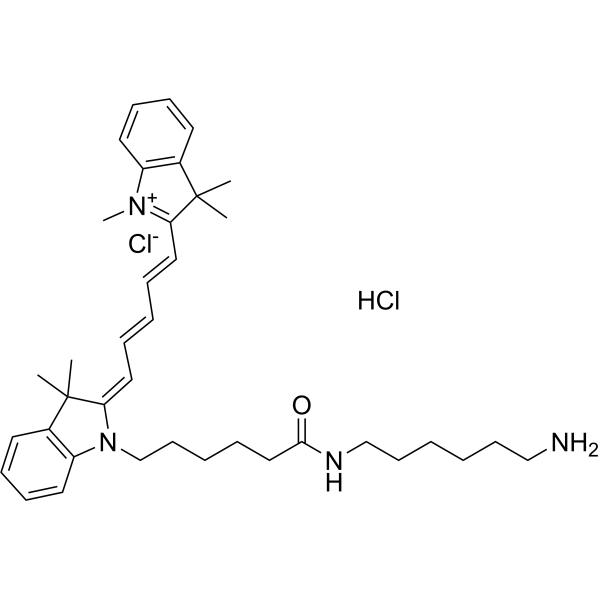
    Cy 5 amine hydrochloride
    1 Publications Verification

    Cyanine5 amine hydrochloride

    Fluorescent Dye Others
    Cyanine5 amine hydrochloride is a potent fluorescent dye. Cyanine5 amine hydrochloride can be reacted with terminal alkynes via a copper-catalyzed click reaction (CuAAC). (λex=646 nm, λem=662 nm) .
    Cy 5 amine hydrochloride
  • HY-D1321A
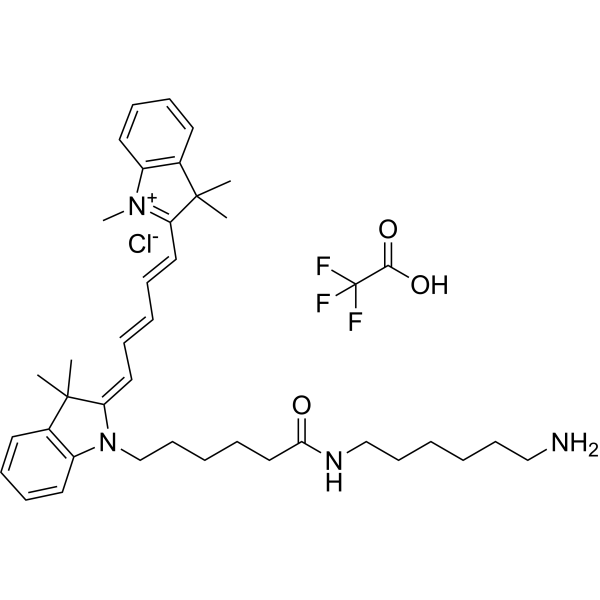
    Cy 5 amine TFA
    1 Publications Verification

    Cyanine5 amine TFA

    Fluorescent Dye Others
    Cy 5 amine (Cyanine5 amine) TFA is a fluorescent dye. Cy 5 amine TFA can be used in the preparation of Cy5.5-labeled compound or polymers, which can be used for imaging cellular process and trafficking .
    Cy 5 amine TFA
  • HY-P1321

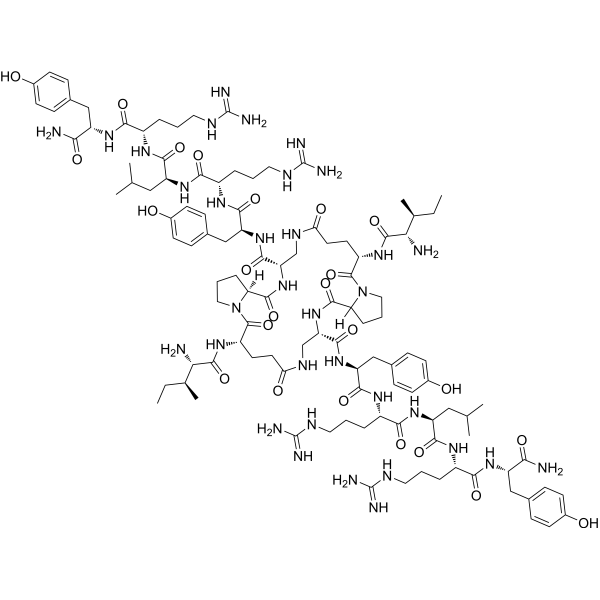
    1229U91; GW1229

    Neuropeptide Y Receptor Neurological Disease
    GR231118, an analogue of the C-terminus of neuropeptide Y, is a potent , competitive and relative seletive antagonist at human neuropeptide Y Y receptor with a pKi of 10.4. GR231118 a potent agonist at the human neuropeptide Y Y4 receptor (pEC50=8.6; pKi=9.6) and a weak agonist at the human and rat neuropeptide YY2 and Y5 receptors. GR231118 also has high affinity for the mouse neuropeptide Y Y6 receptor (pKi= 8.8) .
    GR231118
  • HY-P1321A

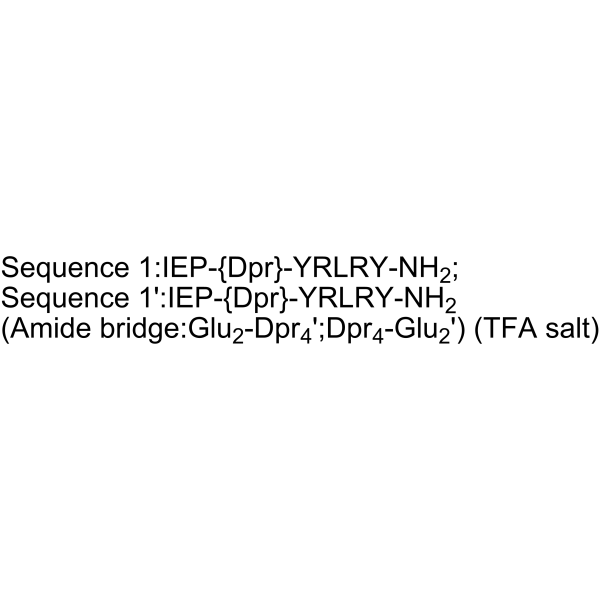
    1229U91 TFA; GW1229 TFA

    Neuropeptide Y Receptor Neurological Disease
    GR231118 TFA, an analogue of the C-terminus of neuropeptide Y, is a potent , competitive and relative seletive antagonist at human neuropeptide YY receptor with a pKi of 10.4. GR231118 a potent agonist at the human neuropeptide YY4 receptor (pEC50=8.6; pKi=9.6) and a weak agonist at the human and rat neuropeptide Y Y2 and Y5 receptors. GR231118 also has high affinity for the mouse neuropeptide YY6 receptor (pKi= 8.8) .
    GR231118 TFA
  • HY-N1321

    Others Others
    Samidin is a Coumarins product that can be isolated from the fruits of Ammi visnaga. .
    Samidin
  • HY-W068682

    Hemipyocyanine; 1-Phenazinol; Hemi-pyocyanin

    Amylases Bacterial Infection Neurological Disease Metabolic Disease Inflammation/Immunology Cancer
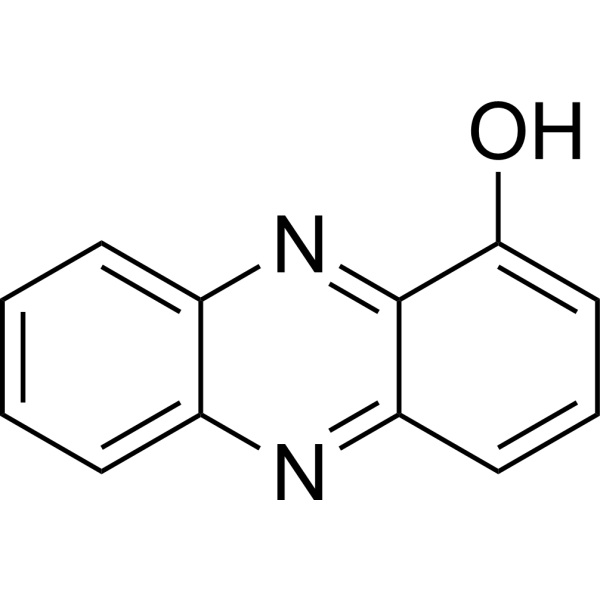
    1-Hydroxyphenazine (Hemipyocyanine; 1-Phenazinol; Hemi-pyocyanin) is an inhibitor for α-Amylase with an IC50 of 3.1 μg/mL . 1-Hydroxyphenazine exhibits anticancer and anti-inflammatory activity against cells A549, 1321N1 and RAW264.7, antifungal and antibacterial activity against strains Candida albicans, Aspergillus fumigatus, Escherichia coli and Xanthomonas campestris .
    1-Hydroxyphenazine
  • HY-108667

    P2X Receptor Interleukin Related Fluorescent Dye Neurological Disease
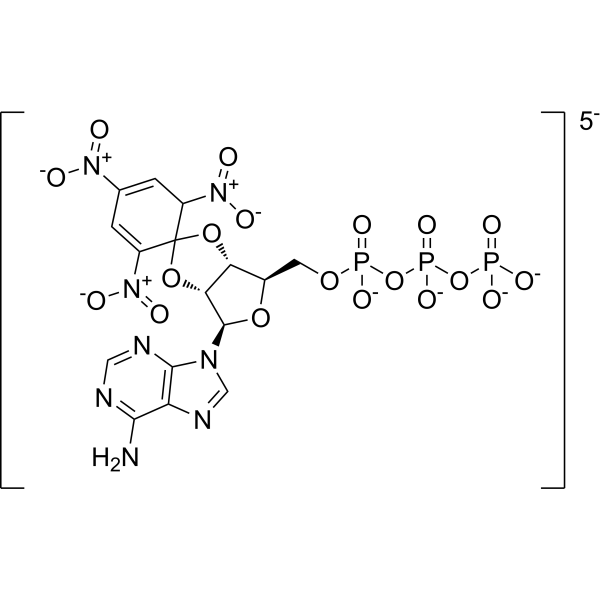
    TNP-ATP triethylammonium is a P2X receptor antagonist with an IC50 of 0.010 μM for P2X3 and an IC50 of 0.062 μM for P2X2/3. TNP-ATP triethylammonium acts as an inhibitor of CheA autophosphorylation, with a Ki of 0.7 µM. TNP-ATP triethylammonium blocks the functional activation of P2X1-7 receptors. TNP-ATP triethylammonium attenuates hypoxia-induced IL-1β expression and release. TNP-ATP triethylammonium alleviates visceral pain, and improves hypoxia-induced cognitive impairment, insufficient myelination and neuroinflammation. Binding of TNP-ATP triethylammonium to CheA enhances the fluorescence of the TNP group. TNP-ATP triethylammonium can be used in studies related to visceral pain. NP-ATP triethylammonium can be used in studies related to hypoxia-induced insufficient myelination and cognitive decline .
    TNP-ATP triethylammonium
  • HY-151919

    FAAH Inflammation/Immunology
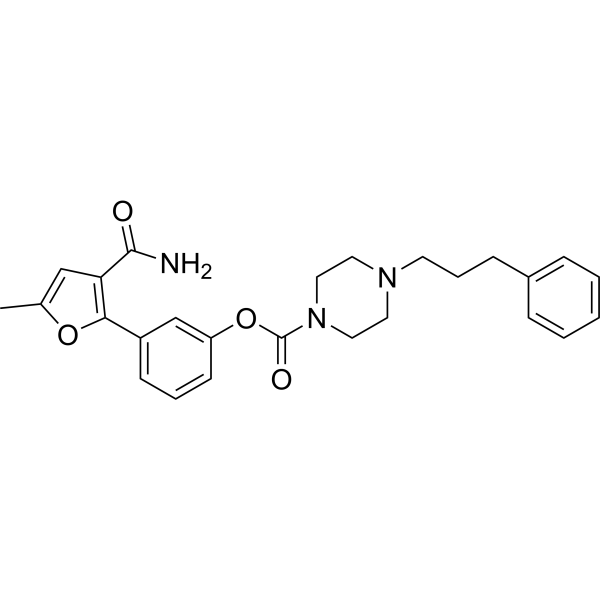
    FAAH-IN-7 is a reversible and potent FAAH inhibitor with an IC50 value of 8.29 nM. FAAH-IN-7 suppresses oxidative stress in 1321N1 astrocytes and exhibits notable neuroprotective effect in ex vivo neuroinflammation model .
    FAAH-IN-7
  • HY-137610A

    P2X Receptor P2Y Receptor Neurological Disease
    TNP-ATP is an antagonist of purinergic P2Y1, P2X3, and P2X2/3 receptors (IC50 = 6, 0.9, and 7 nM, respectively, in HEK293 cells expressing human receptors). TNP-ATP reduces acetate-induced calcium flux in 1321N1 cells expressing P2X3 and P2X2/3 receptors (IC50 = 100 and 62 nM, respectively). TNP-ATP dose-dependently attenuates acetate-induced abdominal contractions in a mouse visceral pain model (ED50 = 6.35 µmol/kg) [1][2].
    TNP-ATP tetrasodium
  • HY-103172

    P2Y Receptor Metabolic Disease
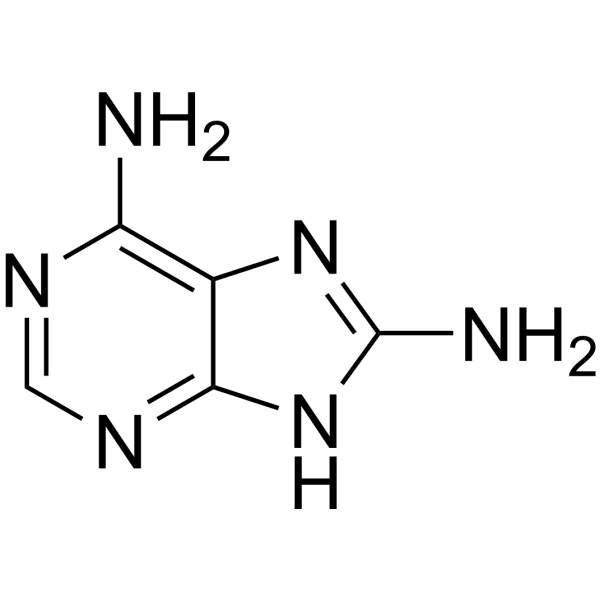
    8-Aminoadenine is an adenine receptor 1 (rAde1R) inhibitor with a Ki of 6.51 μM in rat and 0.0341 μM in human. 8-Aminoadenine inhibits isoprenaline-induced cAMP accumulation and adenine uptake in astrocytoma cells expressing rAde1R. 8-Aminoadenine serves as a lead structure for the development of adenine receptor ligands to elucidate the functions of the adenine receptor family .
    8-Aminoadenine
  • HY-137616C

    P2Y Receptor Cancer
    Rp-dUTPαS (tetrasodium) is an isomer of the sulfur-containing nucleoride dUTP-α-S and an agonist of the purinergic P2Y2 receptor. Rp-dUTPαS (tetrasodium) selectively induces inositol phosphate accumulation in P2Y2-expressing 1321N1 cells with an EC50 of 12.5 μM .
    Rp-dUTPαS tetrasodium
  • HY-137612C

    Rp-Uridine 5'-O-1-thiotriphosphate tetrasodium

    P2Y Receptor Cancer
    Rp-UTP-α-S (Rp-Uridine 5'-O-(1-thiotriphosphate)) tetrasodium is a nucleotide agonist of purinergic P2Y2 and P2Y4 receptors. Rp-UTP-α-S (tetrasodium) can induce inositol phosphate accumulation in P2Y2 or P2Y4 expressing 1321N1 cells with EC50 values of 5.4 and 27 μM .
    Rp-UTP-α-S tetrasodium
  • HY-137603

    UTPγS

    P2Y Receptor Metabolic Disease
    Uridine-5'-O-(3-thiotriphosphate) (UTPγS), a stable analogue of Uridine triphosphate (UTP) (HY-107372), is a potent agonist of the P2Y2 and P2Y4 receptors with increased metabolic stability. Uridine-5'-O-(3-thiotriphosphate) stimulates inositol phosphate formation in human 1321N1 astrocytoma cells stably expressing the phospholipase C-coupled human P2U-purinoceptor (EC50 = 240 nM) .
    Uridine-5'-O-3-thiotriphosphate
  • HY-173044

    5-HT Receptor Dopamine Receptor Neurological Disease
    5-HT1AR/5-HT6R ligand-1 (Compound PP13) is the ligand for 5-HT receptor that exhibits good affinity to 5-HT1AR, 5-HT6R and 5-HT7R (Ki of 19, 69 and 198 nM, respectively), thereby inhibiting the cAMP production in HEK293 cell with EC50 of 1535, 488 and 53 nM, respectively. 5-HT1AR/5-HT6R ligand-1 exhibits anti-proliferative activity against a variety of cancer cells (IC50 for 1321N1, U87MG, MCF7, and AsPC-1 is 9.6, 13.6, 19.3 and 14.6 μM, respectively). 5-HT1AR/5-HT6R ligand-1 also exhibits antagonist activity for dopamine receptor D2R with Ki of 1903 nM .
    5-HT1AR/5-HT6R ligand-1
  • HY-108663

    5-Methoxyuridine 5'-trihydrogen diphosphate

    P2Y Receptor Neurological Disease Metabolic Disease
    5-OMe-UDP (5-methoxyuridine 5'-trihydrogen diphosphate) is a P2Y6 receptor agonist (EC50=0.08 μM). 5-OMe-UDP activates the P2Y6 receptor by binding to it, which triggers signaling pathways within the cell. This activation can lead to an increase in intracellular calcium ion concentration, which in turn regulates cellular function. The methoxy groups of 5-OMe-UDP provide additional activity and selectivity, contributing to the binding of 5-OMe-UDP to the P2Y6 receptor. 5-OMe-UDP can be used to study diseases related to P2Y6 receptor function, such as diabetes, inflammatory bowel disease, Alzheimer's disease, etc .
    5-OMe-UDP
  • HY-137608

    UDP-β-S

    P2Y Receptor DNA/RNA Synthesis Cardiovascular Disease Inflammation/Immunology
    Uridine 5'-O-thiodiphosphate (UDP-β-S) is a P2Y6 receptor agonist with an EC50 of 25 nM. Uridine 5'-O-thiodiphosphate resists degradation by extracellular nucleotidases and stimulates the accumulation of inositol phosphates. Uridine 5'-O-thiodiphosphate stimulates contractile responses in endothelium-denuded rat mesenteric arteries. As a mitogen, Uridine 5'-O-thiodiphosphate stimulates DNA synthesis, [ 3H] thymidine incorporation, protein synthesis, [ 3H]leucine incorporation, and increases the number of vascular smooth muscle cells. Uridine 5'-O-thiodiphosphate can be used in the research of cardiovascular diseases such as atherosclerosis .
    Uridine 5'-O-thiodiphosphate
  • HY-137608A

    UDP-β-S trisodium

    P2Y Receptor DNA/RNA Synthesis Cardiovascular Disease Inflammation/Immunology
    Uridine 5'-O-thiodiphosphate trisodium (UDP-β-S trisodium) is a P2Y6 receptor agonist with an EC50 of 25 nM. Uridine 5'-O-thiodiphosphate trisodium resists degradation by extracellular nucleotidases and stimulates the accumulation of inositol phosphates. Uridine 5'-O-thiodiphosphate trisodium stimulates contractile responses in endothelium-denuded rat mesenteric arteries. As a mitogen, Uridine 5'-O-thiodiphosphate trisodium stimulates DNA synthesis, [ 3H] thymidine incorporation, protein synthesis, [ 3H]leucine incorporation, and increases the number of vascular smooth muscle cells. Uridine 5'-O-thiodiphosphate trisodium can be used in the research of cardiovascular diseases such as atherosclerosis .
    Uridine 5'-O-thiodiphosphate trisodium
  • HY-137603A

    UTPγS tetrasodium

    P2Y Receptor Neurological Disease Metabolic Disease
    Uridine-5'-O-(3-thiotriphosphate) (UTPγS) tetrasodium, a stable analogue of Uridine triphosphate (UTP) (HY-107372), is a potent agonist of the P2Y2 and P2Y4 receptors with increased metabolic stability. Uridine-5'-O-(3-thiotriphosphate) tetrasodium stimulates inositol phosphate formation in human 1321N1 astrocytoma cells stably expressing the phospholipase C-coupled human P2U-purinoceptor (EC50 = 240 nM) .
    Uridine-5'-O-3-thiotriphosphate tetrasodium
  • HY-147998

    Phosphodiesterase (PDE) Cancer
    Enpp-1-IN-13 (Compound 1a) is an ectonucleotide pyrophosphatase/phosphodiesterase (ENPP) inhibitor with IC50 values of 1.29 μM and 20.2 μM against ENPP1 and ENPP3, respectively. Enpp-1-IN-13 shows anticancer activity .
    Enpp-1-IN-13
  • HY-123202

    P2Y Receptor Cancer
    MRS2603 is a pyridoxal derivative. MRS2603 antagonized both P2Y1 and P2Y13 receptors .
    MRS2603
  • HY-168333

    5-HT Receptor mTOR CDK Neurological Disease
    5-HT6 inverse agonist 1 (Compound 33) is an antagonist for 5-HT6 receptor with a Ki of 23 nM and a Kb of 6.62 nM. 5-HT6 inverse agonist 1 inhibits the 5-HT6R mediated Cdk5 and mTOR signaling pathway. 5-HT6 inverse agonist 1 reduces tactile hypersensitivity in spinal nerve ligation (SNL)-induced rat model .
    5-HT6 inverse agonist 1
  • HY-173045

    5-HT Receptor Cancer
    5-HT5AR/5-HT6R ligand-1 (Compound PP10) is a ligand for serotonin receptors, showing high affinity for 5-HT5A and 5-HT6 receptors, with Ki values of 59 nM and 96 nM, respectively. 5-HT5AR/5-HT6R ligand-1 exhibits certain antiproliferative activity against tumor cells and can be used in the study of cancer .
    5-HT5AR/5-HT6R ligand-1
  • HY-173043

    5-HT Receptor Cancer
    5-HT6R antagonist 6 exhibits high affinity and selectivity for 5-HT6R , with a Ki value of 42 nM. 5-HT6R antagonist 6 shows weak antiproliferative activity against tumor cells and low toxicity to normal cells. 5-HT6R antagonist 6 can be used in the study of cancer .
    5-HT6R antagonist 6
  • HY-108654

    P2Y Receptor Apoptosis Drug Derivative Phospholipase NO Synthase Neurological Disease Inflammation/Immunology Endocrinology
    PSB 0474 (3-phenacyl-UDP) is a UDP (HY-113359) analog and selective P2Y6 receptor agonist, with an EC50 value of 70 nM for the hP2Y6 receptor. PSB 0474 activates Phospholipase C-coupled receptors to increase intracellular inositol phosphate levels. PSB 0474 enhances NO release by upregulating inducible iNOS and induces Apoptosis. PSB 0474 increases micturition frequency in urine of anesthetized rats, without altering bladder contraction amplitude/duration or causing urothelial damage. PSB 0474 can be used in studies related to chronic brain inflammation .
    PSB 0474
  • HY-182724

    Transmembrane Glycoprotein Inflammation/Immunology
    PSB-18422 is a GPR17 agonist, with an EC50 of 0.0279 μM for humans, 0.47 μM for rats, 0.753 μM for mice, and a human Ki of 1.46 μM. PSB-18422 triggers intracellular calcium mobilization via cross-species activation of GPR17. PSB-18422 can be used in the research of allergic bronchial inflammation .
    PSB-18422

Inquiry Online

Your information is safe with us. * Required Fields.

Salutation


Country or Region *

Applicant Name *


Organization Name *

Department *


Email Address *


Product Name *

Cat. No.


Requested quantity *

Phone Number *


Remarks

Inquiry Online

Inquiry Information

Product Name:
Cat. No.:
Quantity:
MCE Japan Authorized Agent:

