


206 Results for "

5% HCl solution

" in MedChemExpress (MCE) Product Catalog:
Products (206)

206 Results for "5% HCl solution" in MCE Product Catalog:

582
582 Publications Verification
Cat. No.: HY-D1056
Synonyms: LPS, from Escherichia coli (O55:B5)
Lipopolysaccharides, from E. coli O55:B5 (LPS, from Escherichia coli (O55:B5)) are endotoxins and TLR4 activators extracted from Escherichia coli (E. coli O55:B5) and are classified as S (smooth) type LPS. Lipopolysaccharides, from E. coli O55:B5 possess the typical three-part structure: O-antigen, core oligosaccharide, and lipid A. Lipopolysaccharides, from E. coli O55:B5 activate TLR-4 in immune cells, exhibit high pyrogenicity, and demonstrate dose and serotype specificity. Lipopolysaccharides, from E. coli O55:B5 can be widely used to induce cellular inflammation and establish animal models related to inflammation [5] .
It is recommended to prepare a solution with concentration ≥2 mg/mL. Vortex thoroughly for more than 10 minutes. Due to the adsorption characteristics of LPS, silanized container or low adsorption centrifuge tubes should be used for aliquoting and storage, and mix thoroughly before use.
loading...
    loading...
164
164 Cited Publications
Cat. No.: HY-B2176I
CAS No.: 987-65-5
Synonyms: Adenosine 5'-triphosphate disodium salt, 100 mM solution, PCR Grade
ATP (Adenosine 5'-triphosphate) disodium salt, 100 mM Solution, PCR Grade is a central component of energy storage and metabolism in vivo. ATP disodium salt, 100 mM Solution, PCR Grade provides the metabolic energy to drive metabolic pumps and serves as a coenzyme in cells. ATP disodium salt, 100 mM Solution, PCR Grade is an important endogenous signaling molecule in immunity and inflammation. ATP disodium salt, 100 mM Solution, PCR Grade can activate the NLRP3 inflammasome and induce IL-1β and chemokines secretion. ATP disodium salt, 100 mM Solution, PCR Grade has anti-bacterial infection effects and can protect mice against bacterial infection in mice .
loading...
    loading...
27
27 Cited Publications
Cat. No.: HY-P1363
Synonyms: Amyloid β-peptide (1-42) (human) TFA
Target:  

Amyloid-β

Research Areas:  

Neurological Disease

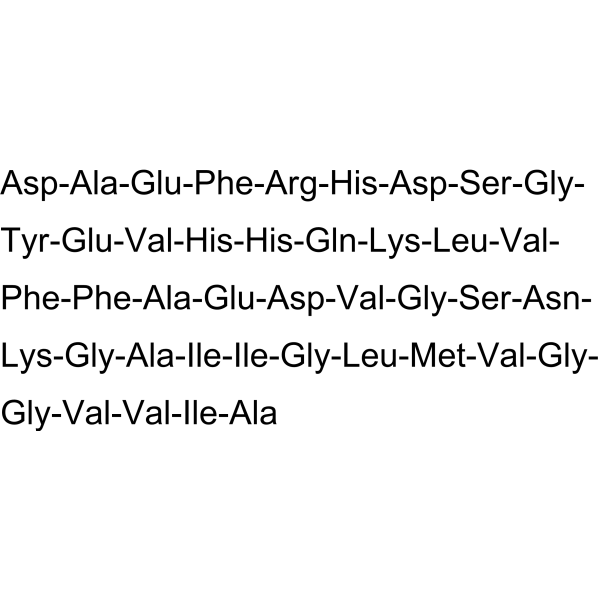
β-Amyloid (1-42) (Amyloid β-peptide (1-42), human TFA, a 42-amino acid peptide that has not been treated with HFIP, is a brain-penetrant amyloid protein fragment, which can be used in research on Alzheimer's disease and Down’s syndrome. β-Amyloid (1-42), human TFA remaining as a monomer exhibits antioxidant and neuroprotective effects. β-Amyloid (1-42), human TFA, after being monomericized by HFIP and dissolved in DMSO to form the stock solution, on the one hand, can form soluble oligomers (AβOs) when incubated at 4 °C, which have synaptic toxicity and neurotoxicity; on the other hand, it can be incubated at 37 °C to form insoluble fibrils, with lower neurotoxicity, and participating in the oxidative damage process. Aβ42 oligomers bind to various neuronal surface receptors (such as PrPc, mGluR5, NMDA receptors, etc.), triggering oxidative stress, calcium homeostasis imbalance, and synaptic toxicity via activating downstream signaling pathways, leading to neuronal dysfunction and death [5] .
loading...
    loading...
27
27 Cited Publications
Cat. No.: HY-P1363A
CAS No.: 107761-42-2
Synonyms: Amyloid β-peptide (1-42) (human)
Target:  

Amyloid-β

Research Areas:  

Neurological Disease

β-Amyloid (1-42) (Amyloid β-peptide (1-42)), human, a 42-amino acid peptide that has not been treated with HFIP, is a brain-penetrant amyloid protein fragment, which can be used in research on Alzheimer's disease and Down’s syndrome. β-Amyloid (1-42), human remaining as a monomer exhibits antioxidant and neuroprotective effects. β-Amyloid (1-42), human, after being monomericized by HFIP and dissolved in DMSO to form the stock solution, on the one hand, can form soluble oligomers (AβOs) when incubated at 4 °C, which have synaptic toxicity and neurotoxicity; on the other hand, it can be incubated at 37 °C to form insoluble fibrils, with lower neurotoxicity, and participating in the oxidative damage process. Aβ42 oligomers bind to various neuronal surface receptors (such as PrPc, mGluR5, NMDA receptors, etc.), triggering oxidative stress, calcium homeostasis imbalance, and synaptic toxicity via activating downstream signaling pathways, leading to neuronal dysfunction and death [5] .
loading...
    loading...
27
27 Cited Publications
Cat. No.: HY-P1363B
CAS No.: 107761-42-2
Target:  

Amyloid-β

Research Areas:  

Neurological Disease

β-Amyloid (1-42), human, HFIP-treated, a 42-amino acid peptide that has been treated with HFIP from β-Amyloid (1-42), human (HY-P1363A), is a brain-penetrant amyloid protein fragment, which can be used in research on Alzheimer's disease and Down’s syndrome. β-Amyloid (1-42), human, HFIP-treated remaining as a monomer exhibits antioxidant and neuroprotective effects. β-Amyloid (1-42), human, HFIP-treated, after being dissolved in DMSO to form the stock solution, on the one hand, can form soluble oligomers (AβOs) when incubated at 4°C, which have synaptic toxicity and neurotoxicity; on the other hand, it can be incubated at 37°C to form insoluble fibrils, with lower neurotoxicity, and participating in the oxidative damage process. Aβ42 oligomers bind to various neuronal surface receptors (such as PrPc, mGluR5, NMDA receptors, etc.), triggering oxidative stress, calcium homeostasis imbalance, and synaptic toxicity via activating downstream signaling pathways, leading to neuronal dysfunction and death [5] .
loading...
    loading...
6
6 Cited Publications
Cat. No.: HY-D1056A1
Synonyms: LPS, from Escherichia coli (O111:B4)
Lipopolysaccharides, from E. coli O111:B4 (LPS, from Escherichia coli (O111:B4)) are endotoxins and TLR4 activators extracted from Escherichia coli (E. coli O111:B4) and are classified as S (smooth) type LPS. Lipopolysaccharides (LPS), from E. coli O111:B4 possess the typical three-part structure: O-antigen, R3-type core oligosaccharide, and lipid A. Lipopolysaccharides (LPS), from E. coli O111:B4 activate TLR-4 in immune cells and can cause significant gastric diseases. Lipopolysaccharides (LPS), from E. coli O111:B4 can be used to induce cellular inflammation and establish animal models related to inflammation [5] .
It is recommended to prepare a solution with concentration ≥2 mg/mL. Vortex thoroughly for more than 10 minutes. Due to the adsorption characteristics of LPS, silanized container or low adsorption centrifuge tubes should be used for aliquoting and storage, and mix thoroughly before use.
loading...
    loading...
3
3 Cited Publications
Cat. No.: HY-P77835
Purity:  ≥ 95%, as determined by Bis-Tris PAGE.
Synonyms: sFRP-2; SARP-1; Sarp1; Sdf5; Sfrp2; AI851596
Species:  
Source:  
loading...
    loading...
3
3 Cited Publications
Cat. No.: HY-108831A
CAS No.: 189261-10-7
Purity:  98.72%
Synonyms: AN100226; BG00002
Natalizumab (Anti-CD49d) (AN100226; BG00002) Solution is a humanized monoclonal IgG4 antibody inhibitor that selectively targets α4 integrin (CD49d), blocking the interaction of integrins such as α4β1 (VLA-4) with vascular cell adhesion molecule VCAM-1, intercellular adhesion molecule ICAM-1, and fibronectin by competitively binding to the α4 subunit. Natalizumab solution inhibits the adhesion, retention, and transendothelial migration of immune cells (such as CD4 + T cells), reducing the infiltration of inflammatory cells into the central nervous system or lesion sites, thereby exerting anti-inflammatory and immunomodulatory activity. Natalizumab (Anti-CD49d) solution is used in the study of relapsing-remitting multiple sclerosis (RRMS) and is also applied in the research of autoimmune or inflammation-related diseases such as Crohn's disease, B-cell lymphoma, and non-infectious uveitis. Natalizumab (Anti-CD49d) can also prevent lymphocytes from entering the central nervous system, thus preventing acute demyelinating relapses [5].
loading...
    loading...
3
3 Cited Publications
Cat. No.: HY-B0580
CAS No.: 74103-06-3
Synonyms: RS37619
Target:  

COX Apoptosis

Research Areas:  

Inflammation/Immunology Cancer

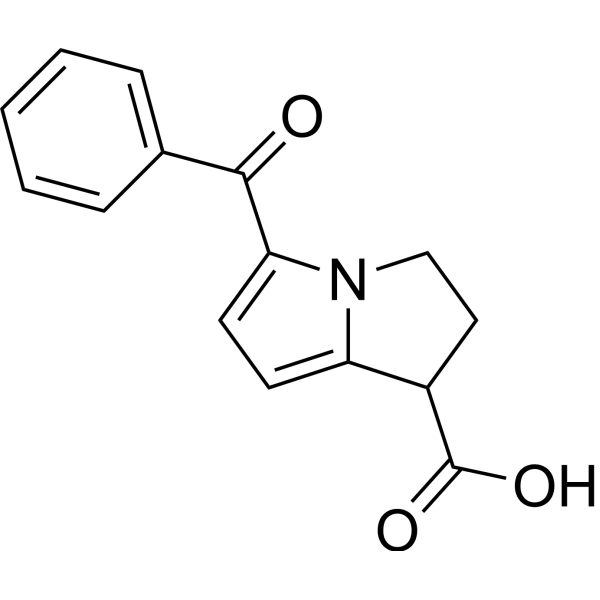
Ketorolac (RS37619) is a non-steroidal anti-inflammatory drug (NSAID), acting as a nonselective COX inhibitor, with IC50s of 20 nM for COX-1 and 120 nM for COX-2. Ketorolac tromethamine is used as 0.5% ophthalmic solution for the research of allergic conjunctivitis, cystoid macular edema, intraoperative miosis, and postoperative ocular inflammation and pain. Ketorolac tromethamine is also a DDX3 inhibitor that can be used for cancer research .
loading...
    loading...
2
2 Cited Publications
Cat. No.: HY-P74791
Purity:  ≥ 90%, as determined by reducing SDS-PAGE.
Synonyms: Neural cell adhesion molecule L1; NCAM-L1; CD171; L1CAM; CAML1; MIC5
Species:  
Source:  
loading...
    loading...
1
1 Cited Publications
Cat. No.: HY-P99107A
CAS No.: 914088-09-8
Research Areas:  

Cancer

Brentuximab vedotin (solution) (cAC10-vcMMAE) is an antibody-drug conjugate (ADC) comprising an anti-CD30 antibody and the cytotoxic agent Monomethyl auristatin E (MMAE). The antibody portion is Brentuximab (HY-P99151), and the drug-linker conjugate for ADC is VcMMAE (HY-15575). Brentuximab vedotin (solution) inhibits CD30-positive cells with an IC50 of 2.5 ng/mL. Brentuximab vedotin (solution) can be used for the research of relapsed and refractory Hodgkin lymphoma .
loading...
    loading...
1
1 Cited Publications
Cat. No.: HY-112582C
CAS No.: 3056945-59-3
Purity:  99.70%
Synonyms: 1-Methylpseudouridine-5′-triphosphate trisodium; N1-Me-Pseudo UTP trisodium; N1-Methyl-Pseudo-UTP trisodium
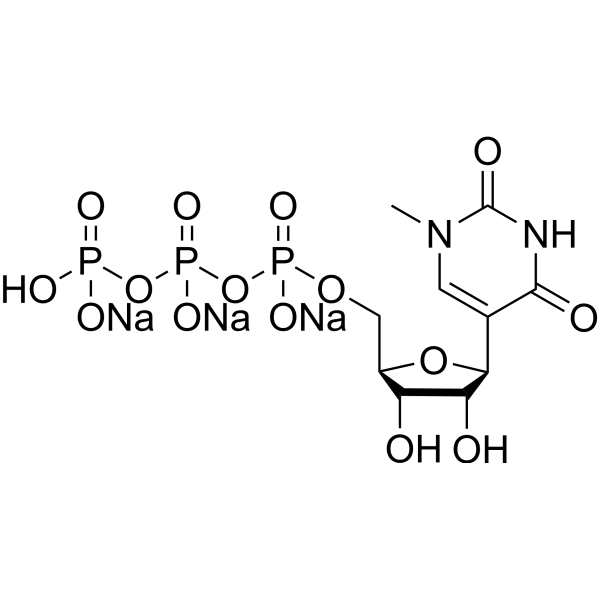
N1-Methylpseudouridine-5′-triphosphate (1-Methylpseudouridine-5′-triphosphate) trisodium solution (100 mM) is a nucleobase-modified nucleotide. N1-Methylpseudouridine-5′-triphosphate (1-Methylpseudouridine-5′-triphosphate) trisodium solution (100 mM) is used for synthesizing mRNA with reduced immunogenicity and improved stability .
loading...
    loading...
1
1 Cited Publications
Cat. No.: HY-112582A
CAS No.: 1428903-59-6
Synonyms: 1-Methylpseudouridine-5′-triphosphate
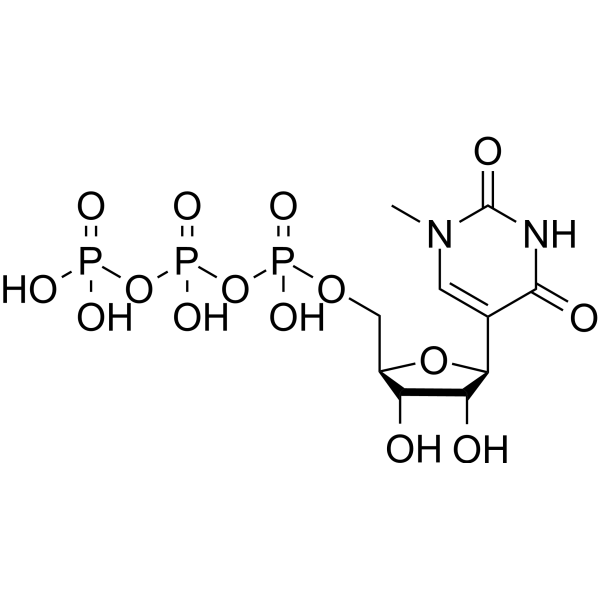
N1-Methylpseudouridine-5′-triphosphate (1-Methylpseudouridine-5′-triphosphate) is a nucleobase-modified nucleotide, used for synthesizing mRNA with reduced immunogenicity and improved stability.
loading...
    loading...
1
1 Cited Publications
Cat. No.: HY-101400A
CAS No.: 109909-44-6
Purity:  99.46%
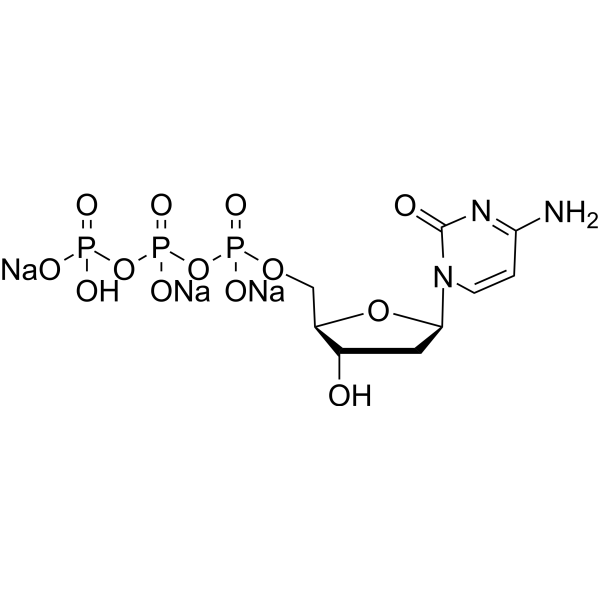
Synonyms: dCTP trisodium solution (100 mM); 2′-Deoxycytidine-5′-triphosphate trisodium solution (100 mM)
Deoxycytidine triphosphate trisodium (dCTP trisodium) solution (100 mM) is a nucleoside triphosphate that can be used for DNA synthesis. Deoxycytidine triphosphate trisodium salt has many applications, such as real-time PCR, cDNA synthesis, and DNA sequencing .
loading...
    loading...
1
1 Cited Publications
Cat. No.: HY-W008661
CAS No.: 93919-41-6
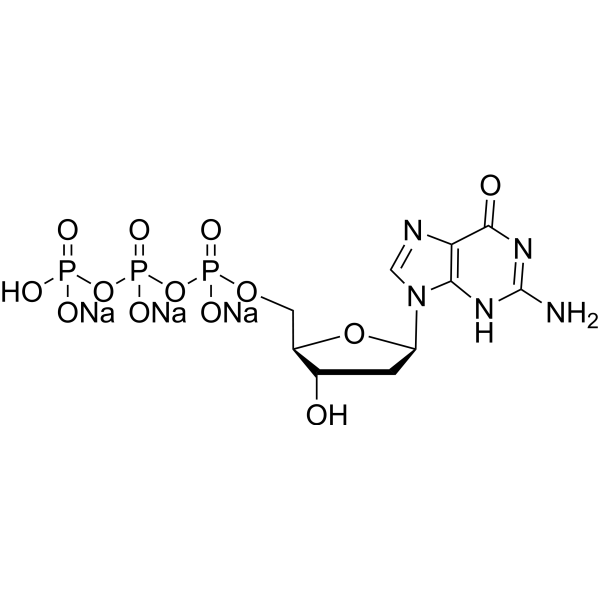
Synonyms: dGTP trisodium solution (100 mM); 2'-Deoxyguanosine-5'-triphosphate trisodium solution (100 mM)
Deoxyguanosine triphosphate (dGTP) trisodium solution (100 mM) is a nucleotide precursor in cells for DNA synthesis. Deoxyguanosine triphosphate trisodium is used in reverse transcription-polymerase chain reaction (RT-PCR) for DNA amplification .
loading...
    loading...
1
1 Cited Publications
Cat. No.: HY-141567A
Purity:  ≥98.0%
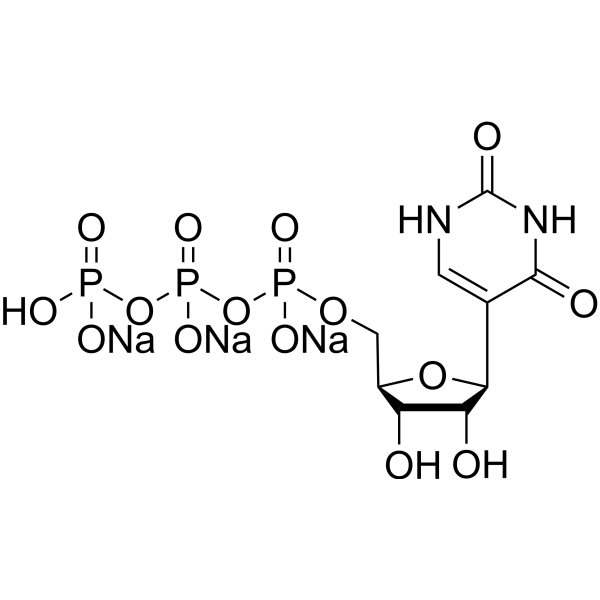
Synonyms: Pseudo-UTP trisodium solution (100 mM)
Pseudouridine 5'-triphosphate (Pseudo-UTP) trisodium solution (100 mM) is a modified ribonucleoside triphosphate and uracil base-modified UTP derivative. Pseudouridine 5'-triphosphate trisodium solution (100 mM) enhances translational properties and stability of mRNA, reduces innate immune responses in mammalian cells, and inhibits signal-dependent transcription termination of vaccinia virus early gene transcription while supporting transcription elongation. Pseudouridine 5'-triphosphate trisodium solution (100 mM) can be used for the research of vaccinia virus infection .
loading...
    loading...
1
1 Cited Publications
Cat. No.: HY-128036B
CAS No.: 72029-21-1
Purity:  99.93%
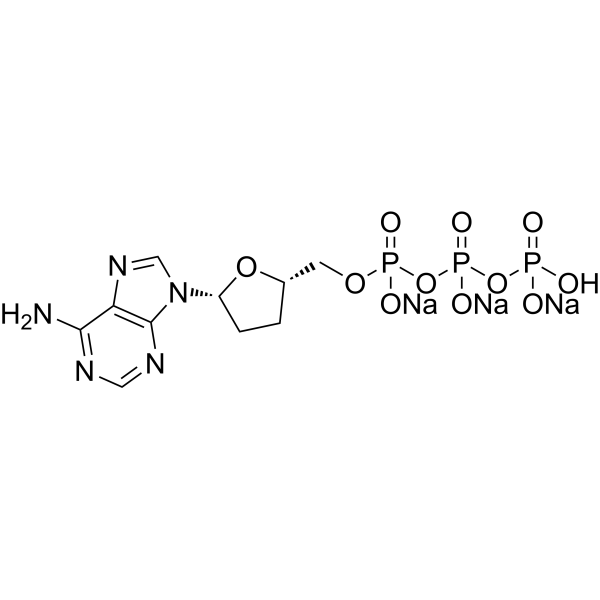
Synonyms: 2',3'-Dideoxyadenosine 5'-triphosphate trisodium
Target:  

DNA/RNA Synthesis HIV

Research Areas:  

Infection

ddATP (2',3'-Dideoxyadenosine 5'-triphosphate) trisodium, an active metabolite of 2',3'-dideoxyinosine, is a chain-elongating inhibitor of DNA polymerase. ddATP trisodium can be used for Sanger method for DNA sequencing and research of virus infection .
loading...
    loading...
1
1 Cited Publications
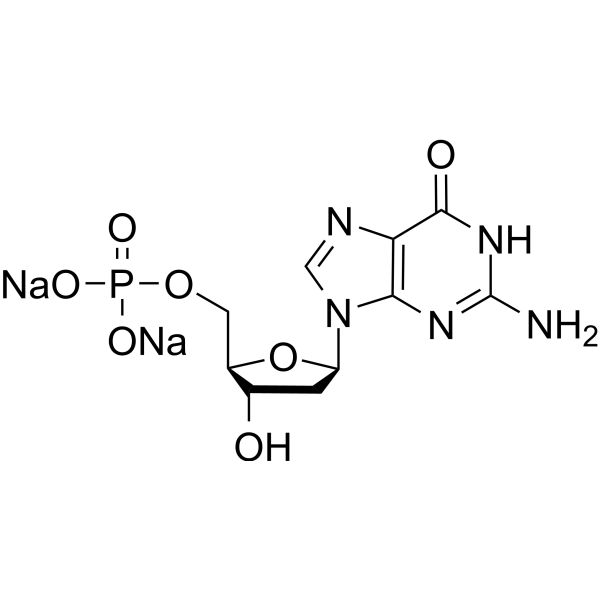
Cat. No.: HY-W013159
CAS No.: 33430-61-4
Synonyms: 5′-dGMP disodium
2'-Deoxyguanosine 5'-monophosphate (5′-dGMP) disodium is a mononucleotide having guanine as the nucleobase. 2'-Deoxyguanosine 5'-monophosphate disodium is a reactant involved in analysis of self-assembling in solution and nucleation/growth of G-qudruplexes, nucleophilic trapping and reductive alkylation. 2'-Deoxyguanosine 5'-monophosphate disodium can be used as an oxidizable target. 2'-Deoxyguanosine 5'-monophosphate disodium is a nucleic acid guanosine triphosphate (GTP) derivative and is a nucleotide precursor used in DNA synthesis .
loading...
    loading...
1
1 Cited Publications
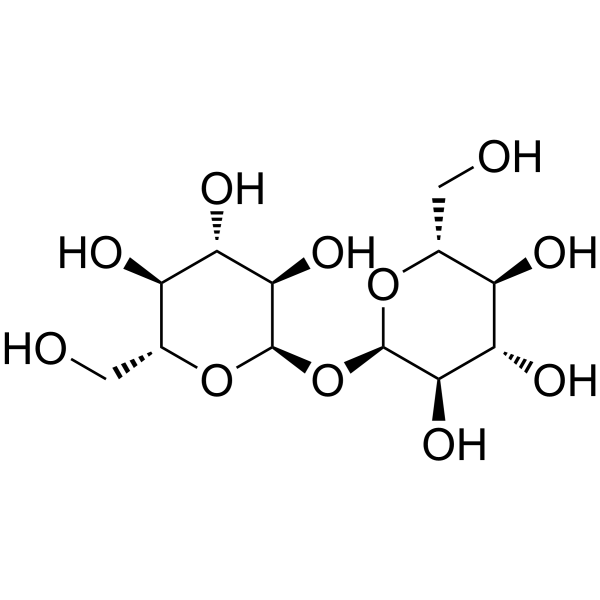
Cat. No.: HY-CP001
CAS No.: 99-20-7
Research Areas:  

Metabolic Disease

D-Trehalose is a disaccharide formed by a 1,1-glycosidic bond between two α-glucose units and is widely used as a food ingredient and pharmaceutical excipient. D-Trehalose is known to protect and stabilise proteins. For long-term storage, recombinant protein solution should be diluted further with 5% D-Trehalose, Carrier Protein.
loading...
    loading...
1
1 Cited Publications
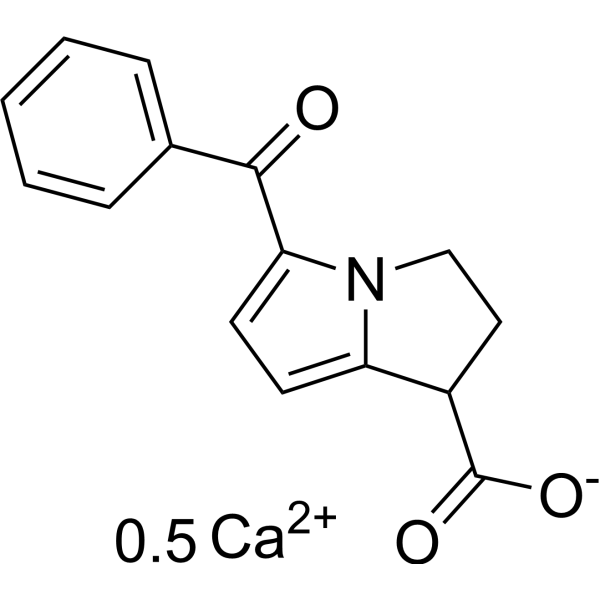
Cat. No.: HY-B0580C
CAS No.: 167105-81-9
Synonyms: RS37619 hemicalcium
Target:  

COX Apoptosis

Research Areas:  

Inflammation/Immunology Cancer

Ketorolac (RS37619) hemicalcium is a non-steroidal anti-inflammatory drug (NSAID), acting as a nonselective COX inhibitor, with IC50s of 20 nM for COX-1 and 120 nM for COX-2. Ketorolac tromethamine is used as 0.5% ophthalmic solution for the research of allergic conjunctivitis, cystoid macular edema, intraoperative miosis, and postoperative ocular inflammation and pain. Ketorola chemicalcium is also a DDX3 inhibitor that can be used for cancer research .
loading...
    loading...

