10 Results for "

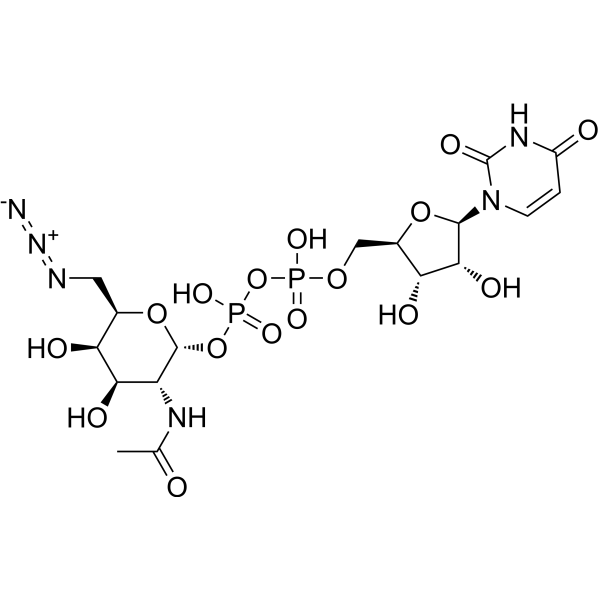
6-Azido-N-acetylgalactosamine-UDP

" in MedChemExpress (MCE) Product Catalog:
Products (10)

10 Results for "6-Azido-N-acetylgalactosamine-UDP" in MCE Product Catalog:

Cat. No.: HY-156905
CAS No.: 1202854-87-2
Research Areas:  

Others

6-Azido-N-acetylgalactosamine-UDP (Compound 5) is a 6-azido-modified nucleotide sugar. It acts as an active sugar donor in lactose glycosylation catalyzed by beta-1,3-N-Acetylhexaminyltransferase (LgtA). Azido-modified nucleotide sugars are strategically used in copper-free click chemistry to modify the N-glycan core structure of IgG .
loading...
    loading...
4
4 Cited Publications
Cat. No.: HY-P2161B
Target:  

Kisspeptin Receptor

Research Areas:  

Cancer

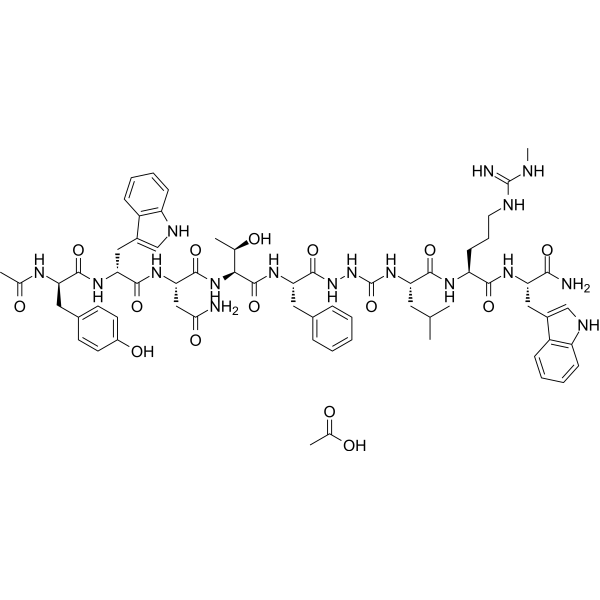
TAK-683 acetate is a potent full KISS1 receptor (KISS1R) agonist (IC50=170 pM) with improved metabolic stability. TAK-683 acetate is a nonapeptide metastin analog, exhibits agonistic activities to KISS1R with EC50 values of 0.96 nM and 1.6 nM for human and rat, respectively . TAK-683 acetate depletes GnRH in the hypothalamus and reduces plasma FSH, LH, and testosterone levels in vivo, it has the potential for the study of hormone-dependent prostate cancer .
loading...
    loading...
Cat. No.: HY-172320
CAS No.: 2919596-13-5
Target:  

PD-1/PD-L1

Research Areas:  

Cancer

BMS-986238 is an orally active macrocyclic peptide PD-L1 inhibitor. BMS-986238 can be used in the research of tumors such as solid tumors and lymphomas .
loading...
    loading...
Cat. No.: HY-P5544
CAS No.: 60230-21-9
Synonyms: N-Acetylmuramyl-L-Ala-γ-D-Glu-meso-diaminopimelic acid
Research Areas:  

Others

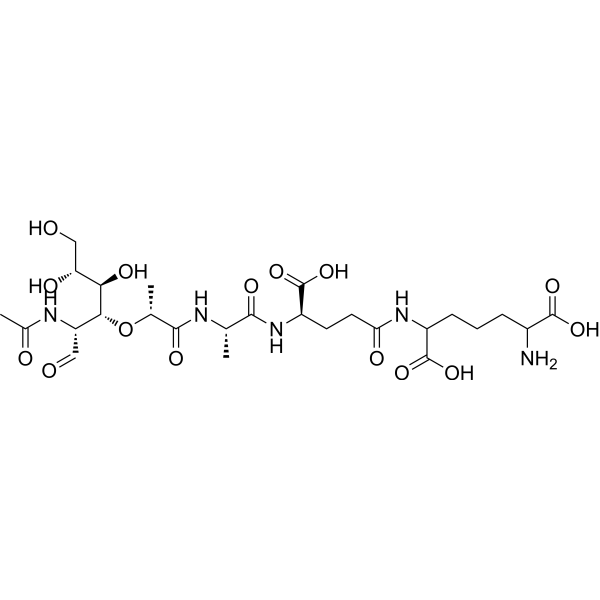
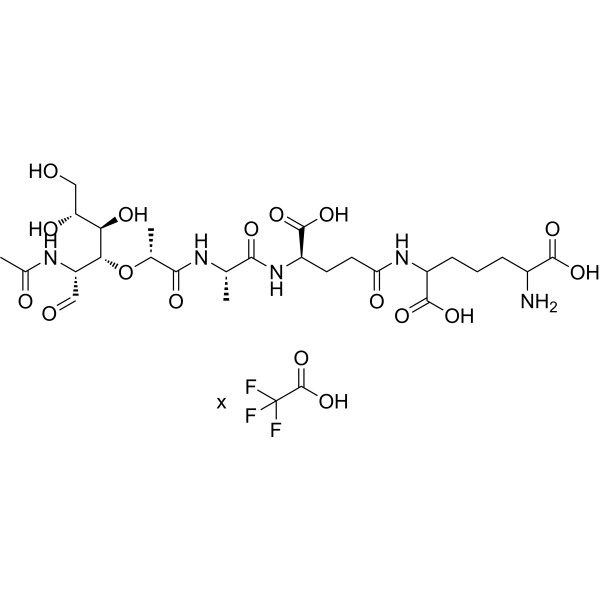
M-TriDAP (N-Acetylmuramyl-L-Ala-γ-D-Glu-meso-diaminopimelic acid) is a NOD1/2 agoist and biological active peptide .
loading...
    loading...
Cat. No.: HY-156905A
CAS No.: 1202807-45-1
Research Areas:  

Others

6-Azido-N-acetylgalactosamine-UDP diammonium is a 6-azido-modified nucleotide sugar. 6-Azido-N-acetylgalactosamine-UDP diammonium acts as an active sugar donor in lactose glycosylation catalyzed by beta-1,3-N-Acetylhexaminyltransferase (LgtA). Azido-modified nucleotide sugars are strategically used in copper-free click chemistry to modify the N-glycan core structure of IgG .
loading...
    loading...
Cat. No.: HY-P2161
CAS No.: 872719-49-8
Target:  

Kisspeptin Receptor

Research Areas:  

Cancer

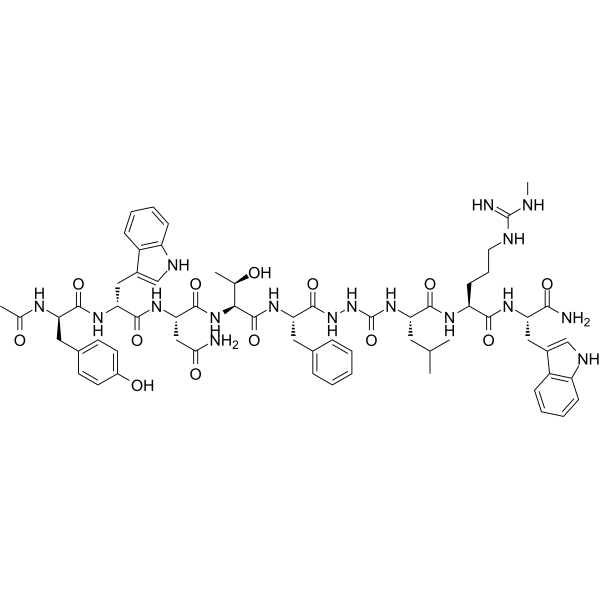
TAK-683 is a potent full KISS1 receptor (KISS1R) agonist (IC50=170 pM) with improved metabolic stability. TAK-683 is a nonapeptide metastin analog, exhibits agonistic activities to KISS1R with EC50 values of 0.96 nM and 1.6 nM for human and rat, respectively . TAK-683 depletes GnRH in the hypothalamus and reduces plasma FSH, LH, and testosterone levels in vivo, it has the potential for the study of hormone-dependent prostate cancer .
loading...
    loading...
Cat. No.: HY-P5025
CAS No.: 1392269-21-4
Synonyms: Azido-c(RGDyK)
Target:  

Drug Intermediate

Research Areas:  

Others

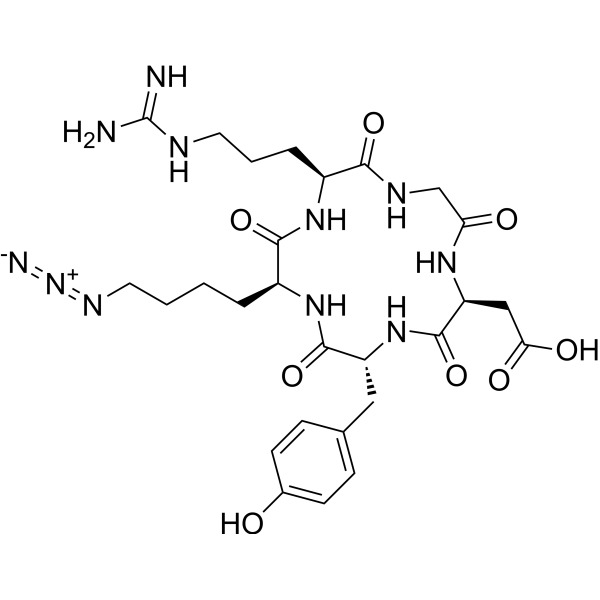
Cyclo(Arg-Gly-Asp-D-Tyr-ε-azido-Nle) (Azido-c(RGDyK)) is a polypeptide composed of arginine, glycine, aspartic acid, and tyrosine that can be used for Synthesis of [ 18F]FPyKYNE-c(RGDyK) .
loading...
    loading...
Cat. No.: HY-P2115
CAS No.: 127932-90-5
Target:  

GnRH Receptor

Research Areas:  

Cancer

Ramorelix is a luteinizing-hormone-releasing hormone (LHRH) antagonist. Ramorelix can inhibit tumor progression in vivo. Ramorelix can be studied in anti-cancer research .
loading...
    loading...
Cat. No.: HY-P5544A
Synonyms: N-Acetylmuramyl-L-Ala-γ-D-Glu-meso-diaminopimelic acid TFA
Research Areas:  

Others

M-TriDAP (N-Acetylmuramyl-L-Ala-γ-D-Glu-meso-diaminopimelic acid) TFA is a NOD1/2 agoist and biological active peptide .
loading...
    loading...
Cat. No.: HY-P2161A
Target:  

Kisspeptin Receptor

Research Areas:  

Cancer

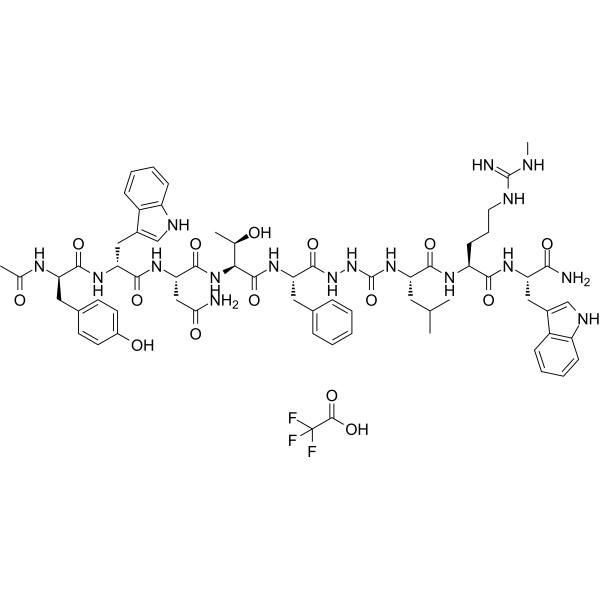
TAK-683 TFA is a potent full KISS1 receptor (KISS1R) agonist (IC50=170 pM) with improved metabolic stability. TAK-683 TFA is a nonapeptide metastin analog, exhibits agonistic activities to KISS1R with EC50 values of 0.96 nM and 1.6 nM for human and rat, respectively . TAK-683 TFA depletes GnRH in the hypothalamus and reduces plasma FSH, LH, and testosterone levels in vivo, it has the potential for the study of hormone-dependent prostate cancer .
loading...
    loading...

