1. Search Result
Search Result
Results for "

6-phosphate

" in MedChemExpress (MCE) Product Catalog:

44

Inhibitors & Agonists

5

Biochemical Assay Reagents

18

Natural
Products

3

Isotope-Labeled Compounds

1

Antibodies

Cat. No. Product Name Target Research Areas Chemical Structure
  • HY-113407A

    Endogenous Metabolite FBPase Neurological Disease Metabolic Disease
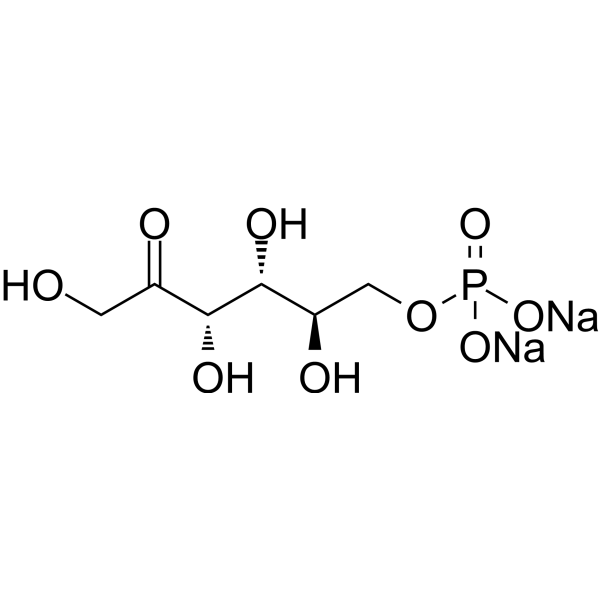
    D-Fructose 6-phosphate disodium is an endogenous metabolite. D-Fructose 6-phosphate disodium can be obtained by hydrolysis of Fructose-1,6-bisphosphatase (FBPase). D-Fructose-6-phosphate disodium is a sugar intermediate in the glycolysis pathway and the pentose phosphate pathway. D-Fructose-6-phosphate disodium can be used to detect glucosamine-6-phosphate synthase and TAL activities. D-Fructose 6-phosphate disodium can be used to study Lewy body dementia .
    D-Fructose-6-phosphate disodium
  • HY-112537
    D-Glucose 6-phosphate
    4 Publications Verification

    Endogenous Metabolite mTOR Cardiovascular Disease Metabolic Disease
    D-Glucose 6-phosphate is a key central node metabolite in glucose metabolism. It serves as the initiating metabolite for glycolysis and the pentose phosphate pathway, as well as a substrate for glycogen synthesis. D-Glucose 6-phosphate acts as a metabolic stress signal, which activates the mTOR pathway to promote protein synthesis, especially when phosphoglucose isomerase (PGI) is inhibited, thereby participating in cardiac remodeling processes. D-Glucose 6-phosphate can be used in research related to non-insulin-dependent diabetes mellitus and heart failure .
    D-Glucose 6-phosphate
  • HY-W011184

    Endogenous Metabolite Metabolic Disease
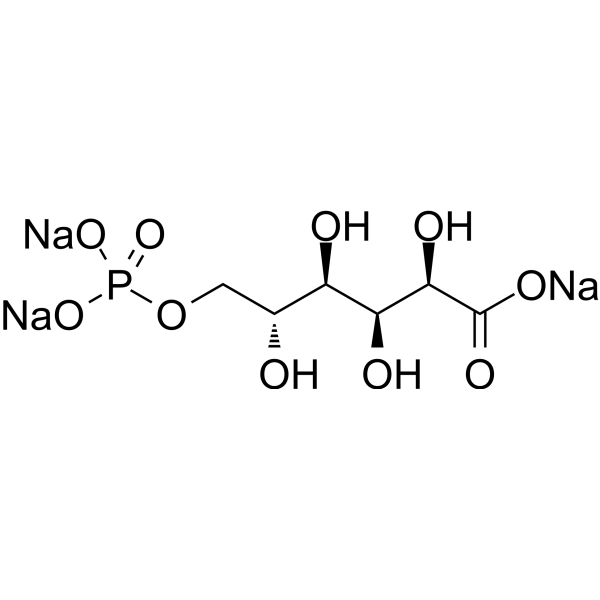
    6-Phosphogluconic acid trisodium is a potent and competitive phosphoglucose isomerase (PGI) inhibitor with Kis of 48 μM for glucose 6-phosphate and 42 μM for fructose 6-phosphate. 6-Phosphogluconic acid trisodium is an endogenous metabolite .
    6-Phosphogluconic acid trisodium
  • HY-131368

    Tre6P potassium

    Endogenous Metabolite Drug Derivative Metabolic Disease
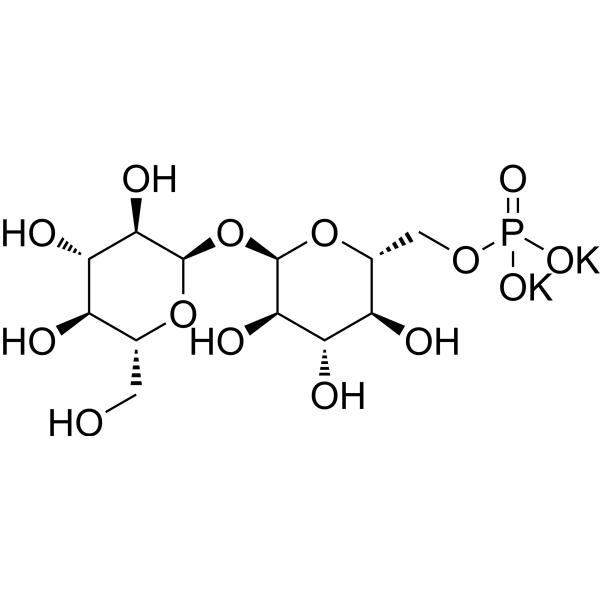
    α,α-Trehalose 6-phosphate (Tre6P) potassium is a glucose analogue with potent anti-hyperglcaemic activity. α,α-Trehalose 6-phosphate potassium is rapidly converted to the end product, α,α′-trehalose, through the action of α,α-Trehalose 6-phosphate phosphatase (T6PP) .
    α,α-Trehalose 6-phosphate potassium
  • HY-128374
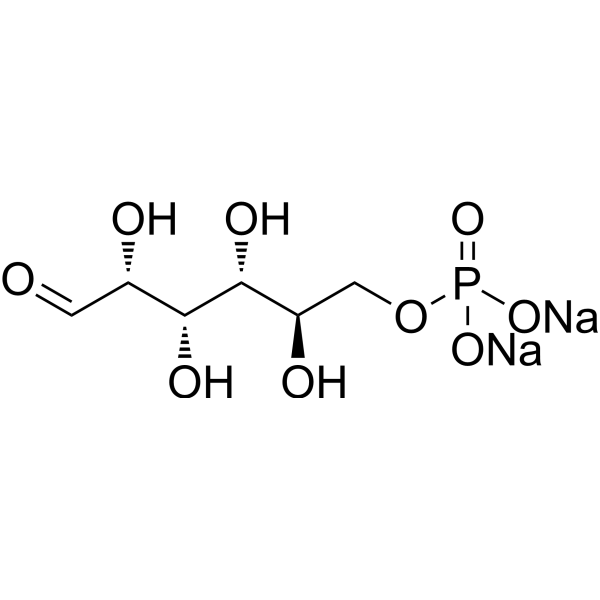
    D-Glucose 6-phosphate disodium salt
    4 Publications Verification

    Endogenous Metabolite Metabolic Disease
    D-Glucose-6-phosphate disodium salt is a glucose sugar phosphorylated at the hydroxy group on carbon 6 .
    D-Glucose 6-phosphate disodium salt
  • HY-N11848

    Glucosamine-6-phosphate; D-GlcN-6-P

    Endogenous Metabolite Metabolic Disease
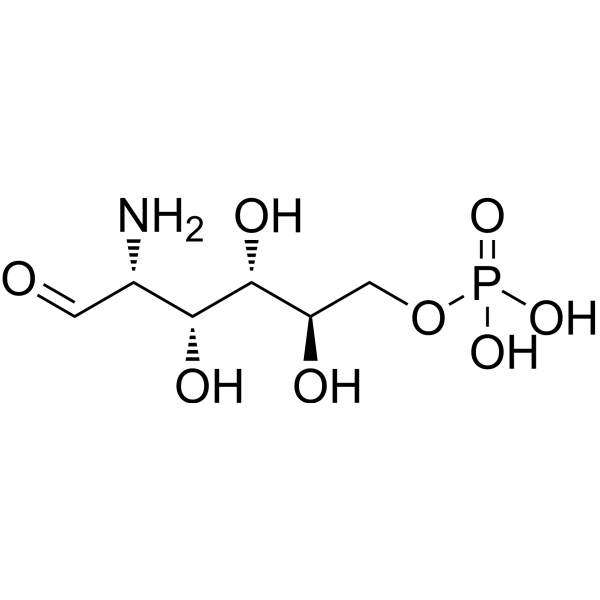
    D-Glucosamine 6-phosphate is an endogenous metabolite that can be synthesized by glutamine fructose-6-phosphate amidotransferase (GFAT). D-Glucosamine 6-phosphate can be used for the research of diabetes mellitus .
    D-Glucosamine 6-phosphate
  • HY-112537B
    D-Glucose 6-phosphate sodium
    3 Publications Verification

    Endogenous Metabolite Metabolic Disease
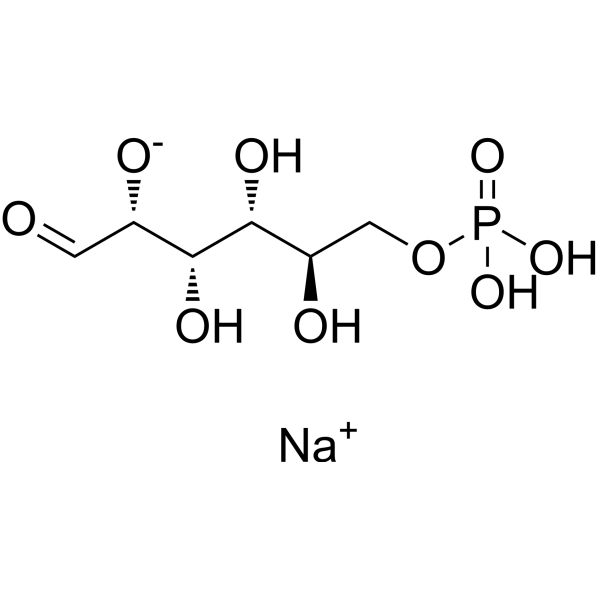
    D-Glucose 6-phosphate sodium is an endogenous metabolite.
    D-Glucose 6-phosphate sodium
  • HY-113514

    Endogenous Metabolite Metabolic Disease
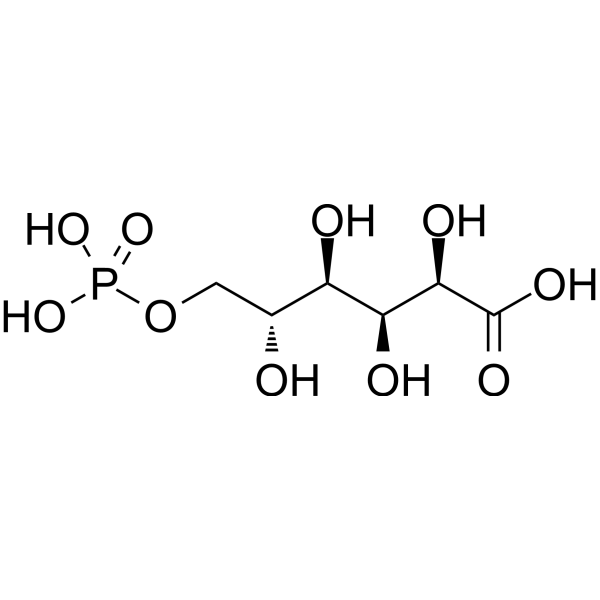
    6-Phosphogluconic acid is a potent and competitive phosphoglucose isomerase (PGI) inhibitor with Kis of 48 μM for glucose 6-phosphate and 42 μM for fructose 6-phosphate. 6-Phosphogluconic acid is an endogenous metabolite .
    6-Phosphogluconic acid
  • HY-139409A
    2-Deoxy-D-glucose 6-phosphate disodium
    2 Publications Verification

    Hexokinase Glucose-6-Phosphate Isomerase (GPI) Cancer
    2-Deoxy-D-glucose 6-phosphate disodium is an ATP-competitive, 2-deoxy-D-glucose non-competitive Hexokinase inhibitor, with a Ki value of 1.45 mM against bovine heart hexokinase. 2-Deoxy-D-glucose 6-phosphate disodium exerts ATP-competitive and 2-deoxy-D-glucose non-competitive inhibitory effects on bovine heart hexokinase. 2-DG inhibits glycolysis via the production and intracellular accumulation of 2-Deoxy-D-glucose 6-phosphate disodium, thereby inhibiting the functions of hexokinase and Glucose-6-phosphate isomerase, and inducing cell death. 2-Deoxy-D-glucose 6-phosphate disodium can be used in cancer-related research .
    2-Deoxy-D-glucose 6-phosphate disodium
  • HY-112537S1

    Isotope-Labeled Compounds Endogenous Metabolite mTOR Cardiovascular Disease Metabolic Disease
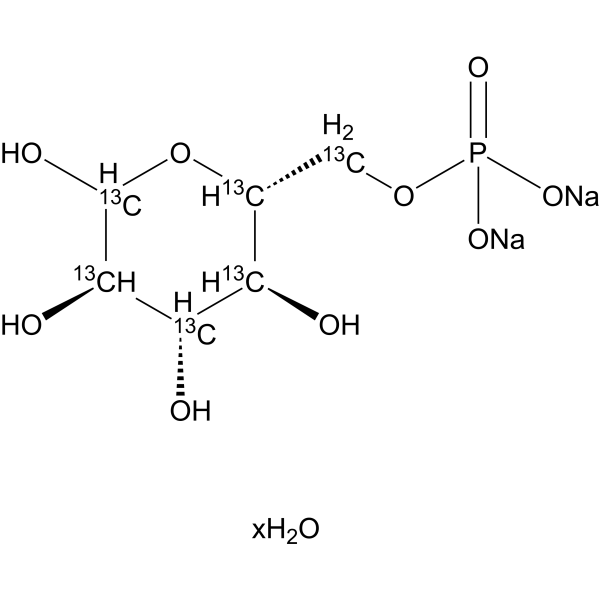
    D-Glucose 6-Phosphate- 13C6 disodium xhydrate is a 13C-labeled D-Glucose 6-phosphate disodium xhydrate. D-Glucose 6-phosphate disodium xhydrate is a key central node metabolite in sugar metabolism, serving as the initial metabolite of glycolysis and pentose phosphate pathway, and also a substrate for glycogen synthesis. D-Glucose 6-phosphate disodium xhydrate can act as a metabolic stress signal, especially when phosphoglucomutase (PGI) is inhibited, activating the mTOR pathway, promoting protein synthesis, and thereby participating in the remodeling process of the heart. D-Glucose 6-phosphate disodium xhydrate can be used in research related to non-insulin-dependent diabetes and heart failure.
    D-Glucose 6-Phosphate-13C6 (disodium xhydrate)
  • HY-113407

    Endogenous Metabolite FBPase Neurological Disease Metabolic Disease
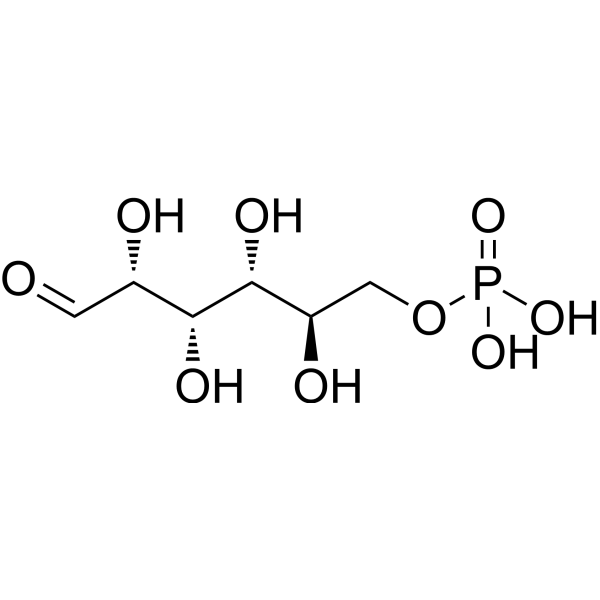
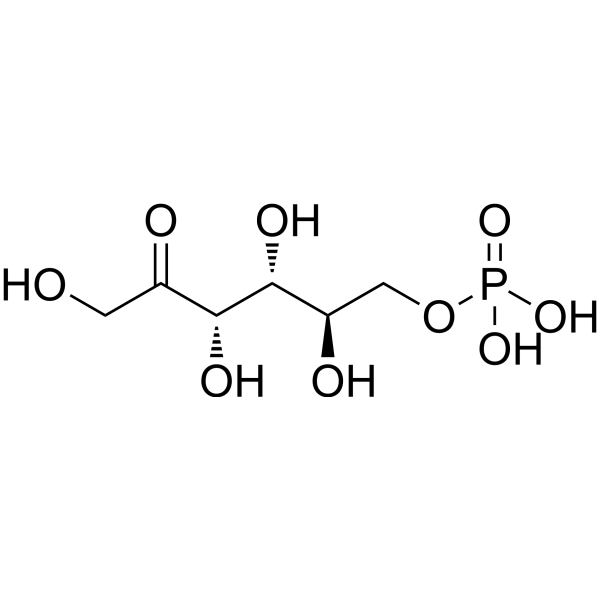
    D-Fructose 6-phosphate is an endogenous metabolite. D-Fructose 6-phosphate can be obtained by hydrolysis of Fructose-1,6-bisphosphatase (FBPase). D-Fructose-6-phosphate is a sugar intermediate in the glycolysis pathway and the pentose phosphate pathway. D-Fructose-6-phosphate can be used to detect glucosamine-6-phosphate synthase and TAL activities. D-Fructose 6-phosphate can be used to study Lewy body dementia .
    D-Fructose-6-phosphate
  • HY-112253

    Endogenous Metabolite Metabolic Disease
    D-Fructose 1-phosphate is a key intermediate metabolite in the fructose metabolic pathway. As a key signaling molecule linking fructose metabolism and glucose metabolic regulation, D-Fructose 1-phosphate acts as an allosteric modulator to counteract the inhibitory effect of the glucokinase-regulatory protein complex, thereby finely regulating the direction of hepatic glucose metabolism at the substrate level .
    D-Fructose 1-phosphate
  • HY-160821A

    ManNAc-6P sodium salt

    Endogenous Metabolite Others
    N-Acetylmannosamine 6-phosphate sodium salt is a NanR modulator and an intermediate in the sialic acid pathway. N-Acetylmannosamine 6-phosphate sodium salt disrupts the binding of NanR to the promoter regions of nanAT and nanE, and prevents NanR-mediated transcriptional repression of these loci. N-Acetylmannosamine 6-phosphate sodium salt acts as a key precursor for sialic acid biosynthesis, participating in this process via Neu5Ac-9-P synthase. N-Acetylmannosamine 6-phosphate sodium salt can be used in research related to GNE myopathy .
    N-Acetylmannosamine 6-phosphate sodium salt
  • HY-N6841
    Rhodiolin
    1 Publications Verification

    Glucose-6-Phosphate Isomerase (GPI) Casein Kinase Virus Protease Flavivirus PI3K Akt mTOR Apoptosis Infection Cancer
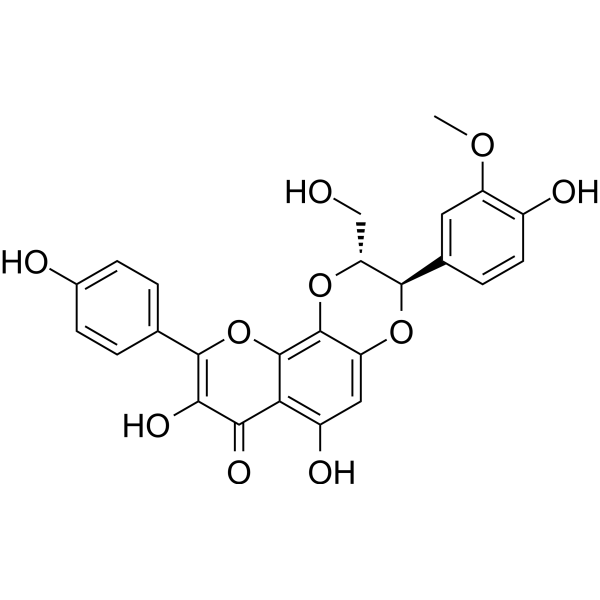
    Rhodiolin, a flavonoid, is an orally active glucose 6-phosphate isomerase (GPI) inhibitor. Rhodiolin inhibits papillary thyroid cancer (PTC) by targeting glycolysis enzyme glucose 6-phosphate isomerase GPI and suppressing PI3K/AKT/mTOR phosphorylation and induce apoptosis. Rhodiolin as a NS2B-NS3 protease inhibitor can disrupt dengue viral replication. Rhodiolin is also a potential candidate for developing anticancer strategies inhibiting CK1ε kinase. Rhodiolin can be used for the study of anti-tumor and anti-viral .
    Rhodiolin
  • HY-W718136

    GlcN6P-Na

    Biochemical Assay Reagents Others
    D-Glucosamine 6-phosphate (sodium) (GlcN6P-Na) is a class of biochemical reagents used in glycobiology research. Glycobiology studies the structure, synthesis, biology, and evolution of sugars. It involves carbohydrate chemistry, enzymology of glycan formation and degradation, protein-glycan recognition, and the role of glycans in biological systems. This field is closely related to basic research, biomedicine, and biotechnology .
    D-Glucosamine 6-phosphate sodium
  • HY-167805

    Biochemical Assay Reagents
    D-Glucose 6-phosphate potassium is a biologically active compound that has the activity of being a substrate for glucose-6-phosphate isomerase. D-Glucose 6-phosphate potassium can participate in the sugar metabolism process and promote the production and utilization of energy in cells.
    D-Glucose 6-phosphate potassium
  • HY-128374R

    Reference Standards Endogenous Metabolite Metabolic Disease
    D-Glucose 6-phosphate disodium salt (Standard) is the analytical standard of D-Glucose 6-phosphate disodium salt (HY-128374). This product is intended for research and analytical applications. D-Glucose-6-phosphate disodium salt is a glucose sugar phosphorylated at the hydroxy group on carbon 6.
    D-Glucose 6-phosphate disodium salt (Standard)
  • HY-N11848R

    Glucosamine-6-phosphate (Standard)

    Endogenous Metabolite Reference Standards Metabolic Disease
    D-Glucosamine 6-phosphate (Glucosamine-6-phosphate; D-GlcN-6-P) (Standard) is an analytical standard for D-Glucosamine 6-phosphate. This product is used for research and analytical applications. D-Glucosamine 6-phosphate is a phosphorylated amino sugar synthesized by glutamine fructose-6-phosphate aminotransferase (GFAT). The expression level of D-Glucosamine 6-phosphate is regulated by glucose and glutamine concentrations .
    D-Glucosamine 6-phosphate (Standard)
  • HY-131368A

    Tre6P

    Endogenous Metabolite Drug Derivative Metabolic Disease
    α,α-Trehalose 6-phosphate (Tre6P) is a glucose analogue with potent anti-hyperglcaemic activity. α,α-Trehalose 6-phosphate is rapidly converted to the end product, α,α′-trehalose, through the action of α,α-Trehalose 6-phosphate phosphatase (T6PP) .
    α,α-Trehalose 6-phosphate
  • HY-112537S2

    Isotope-Labeled Compounds Endogenous Metabolite mTOR Others
    D-Glucose 6-phosphate- 13C is 13C labeled D-Glucose 6-phosphate (HY-112537). D-Glucose 6-phosphate is a key central node metabolite in glucose metabolism. It serves as the initiating metabolite for glycolysis and the pentose phosphate pathway, as well as a substrate for glycogen synthesis. D-Glucose 6-phosphate acts as a metabolic stress signal, which activates the mTOR pathway to promote protein synthesis, especially when phosphoglucose isomerase (PGI) is inhibited, thereby participating in cardiac remodeling processes. D-Glucose 6-phosphate can be used in research related to non-insulin-dependent diabetes mellitus and heart failure.
    D-Glucose 6-phosphate-13C
  • HY-W612338

    9-ONA

    Acetyl-CoA Carboxylase Inflammation/Immunology
    9-Oxononanoic acid (9-ONA) is an orally active acetyl-CoA carboxylase inhibitor. 9-Oxononanoic acid inhibits acetyl-CoA carboxylase via accumulation of long-chain acyl-CoA. 9-Oxononanoic acid increases carnitine palmitoyltransferase, isocitrate dehydrogenase and glucose 6-phosphate dehydrogenase activity to elevate β-oxidation and support NADPH (HY-113324) supplyactivity. 9-Oxononanoic acid stimulates phospholipase A2 activity via post-translational, non-transcriptional mechanisms. 9-Oxononanoic acid can be used for the research of atherothrombosis .
    9-Oxononanoic acid
  • HY-P2918

    GPI; Phosphoglucose Isomerase

    Endogenous Metabolite Metabolic Disease Cancer
    Phosphoglucose Isomerase, Rabbit muscle (GPI), i.e., phosphoglucose isomerase/phosphoglucoisomerase (PGI) or phosphohexose isomerase (PHI), is often used in biochemical studies. Glucose 6-phosphate isomeras is a highly conserved glycolytic and dimeric enzyme. Glucose 6-phosphate isomeras catalyzes the reversible isomerization of glucose-6-phosphate to fructose-6-phosphate .
    Phosphoglucose Isomerase, Rabbit muscle
  • HY-125863B

    G6PD (yeast, recombinant)

    Endogenous Metabolite Cardiovascular Disease Metabolic Disease Cancer
    Glucose 6-phosphate dehydrogenase (yeast, recombinant) is the rate-limiting enzyme of the pentose phosphate pathway and a major source of NADPH in antioxidant pathways, nitric oxide synthase, NADPH oxidase, and cytochrome P450 systems. Glucose 6-phosphate dehydrogenase helps cells resist oxidative stress and regulates metabolic rates. It holds potential for research in fields such as diabetes, endothelial dysfunction, cancer, and cardiomyopathy .
    Glucose 6-phosphate dehydrogenase (yeast, recombinant)
  • HY-147062

    Biochemical Assay Reagents Metabolic Disease
    N-acetyl-D-galactosamine 6-phosphate is a galactosamine phosphate that involved in galactose metabolism and phosphotransferase system (PTS). N-Acetyl-D-galactosamine-6-phosphate can be hydrolyze by NagA .
    N-Acetyl-D-galactosamine-6-phosphate
  • HY-139409

    Hexokinase Glucose-6-Phosphate Isomerase (GPI) Cancer
    2-Deoxy-D-glucose 6-phosphate disodium is an ATP-competitive and 2-deoxy-D-glucose non-competitive Hexokinase inhibitor, with a Ki value of 1.45 mM against bovine heart hexokinase. 2-Deoxy-D-glucose 6-phosphate disodium exerts ATP-competitive and 2-deoxy-D-glucose non-competitive inhibitory effects on bovine heart hexokinase. 2-DG inhibits glycolysis via the generation and intracellular accumulation of 2-Deoxy-D-glucose 6-phosphate disodium, thereby inhibiting the functions of hexokinase and Glucose-6-phosphate isomerase, and inducing cell death. 2-Deoxy-D-glucose 6-phosphate disodium can be used in cancer-related research .
    2-Deoxy-D-glucose 6-phosphate
  • HY-W011184R

    Reference Standards Endogenous Metabolite Metabolic Disease
    6-Phosphogluconic acid trisodium (Standard) is the analytical standard of 6-Phosphogluconic acid trisodium (HY-W011184). This product is intended for research and analytical applications. 6-Phosphogluconic acid trisodium is a potent and competitive phosphoglucose isomerase (PGI) inhibitor with Kis of 48 μM for glucose 6-phosphate and 42 μM for fructose 6-phosphate. 6-Phosphogluconic acid trisodium is an endogenous metabolite.
    6-Phosphogluconic acid trisodium (Standard)
  • HY-112537A

    Endogenous Metabolite mTOR Cardiovascular Disease Metabolic Disease
    D-Glucose 6-phosphate dipotassium is a key central node metabolite in glucose metabolism. It serves as the initiating metabolite for glycolysis and the pentose phosphate pathway, as well as a substrate for glycogen synthesis. D-Glucose 6-phosphate dipotassium acts as a metabolic stress signal, which activates the mTOR pathway to promote protein synthesis, especially when phosphoglucose isomerase (PGI) is inhibited, thereby participating in cardiac remodeling processes. D-Glucose 6-phosphate dipotassium can be used in research related to non-insulin-dependent diabetes mellitus and heart failure .
    D-Glucose 6-phosphate dipotassium
  • HY-N15740

    Endogenous Metabolite Others
    Chondrosamine, 6-phosphate is an amino sugar phosphate compound that participates in sugar metabolism and amino sugar metabolic pathways .
    Chondrosamine, 6-phosphate
  • HY-W725496

    Endogenous Metabolite Neurological Disease Metabolic Disease
    D-Fructose 6-phosphate dipotassium is an endogenous metabolite in saliva that affects cell growth and autophagy; it can be hydrolyzed by Fructose-1,6-bisphosphatase (FBPase). D-Fructose 6-phosphate dipotassium can be converted into D-glucose 6-phosphate (HY-112537) by the action of phosphoglucose isomerase. D-Fructose 6-phosphate dipotassium is a sugar intermediate in the glycolysis pathway and the pentose phosphate pathway. D-Fructose 6-phosphate dipotassium can be used to study Lewy body dementia .
    D-Fructose 6-phosphate dipotassium
  • HY-W654206

    Isotope-Labeled Compounds Others
    D-Glucose 6-Phosphate Sodium Salt Hydrate- 13C6 is the 13C-labeled D-Glucose 6-Phosphate Sodium Salt Hydrate.
    D-Glucose 6-Phosphate Sodium Salt Hydrate-13C6
  • HY-131368R

    Tre6P potassium (Standard)

    Endogenous Metabolite Drug Derivative Reference Standards Others
    α,α-Trehalose 6-phosphate potassium (Standard) is the analytical standard of α,α-Trehalose 6-phosphate potassium (HY-131368). This product is intended for research and analytical applications. α,α-Trehalose 6-phosphate (Tre6P) potassium is a glucose analogue with potent anti-hyperglcaemic activity. α,α-Trehalose 6-phosphate potassium is rapidly converted to the end product, α,α′-trehalose, through the action of α,α-Trehalose 6-phosphate phosphatase (T6PP) .
    α,α-Trehalose 6-phosphate potassium (Standard)
  • HY-E70407

    1-5-Anhydroglucitol-6-phosphate dehydrogenase, escherichia coli

    Endogenous Metabolite Metabolic Disease
    Sorbitol-6-phosphate 2-dehydrogenase, escherichia coli is a dehydrogenase produced by E. coli. Sorbitol-6-phosphate 2-dehydrogenase, escherichia coli can catalyze the conversion between D-sorbitol 6-phosphate and D-fructose 6-phosphate, with the oxidation of D-sorbitol 6-phosphate happening at a rate 10 times faster than the reduction of D-fructose 6-phosphate, and it plays a role in various cellular processes .
    Sorbitol-6-phosphate 2-dehydrogenase, escherichia coli
  • HY-139409B

    Drug Derivative Metabolic Disease
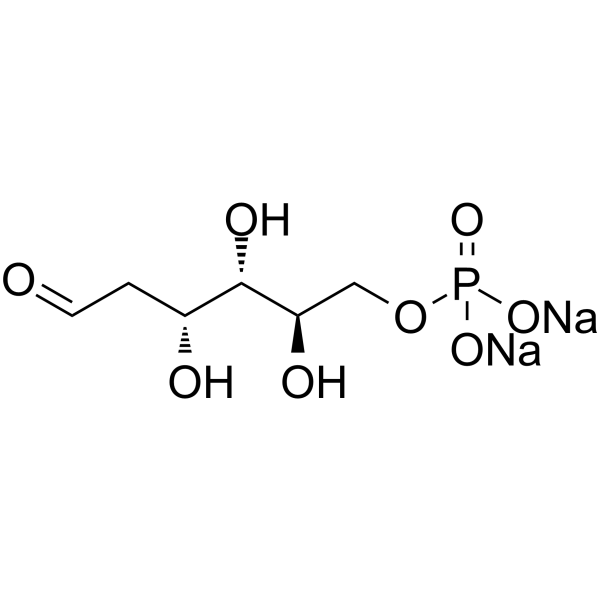
    2-Deoxy-D-glucose 6-phosphate sodium, a derivative of 2-Deoxy-D-glucose (HY-13966), is produced in mammalian cells by the action of hexokinase on 2-DG. 2-Deoxy-D-glucose is a glucose analog that acts as a competitive inhibitor of glucose metabolism, inhibiting glycolysis via its actions on hexokinase .
    2-Deoxy-D-glucose 6-phosphate sodium
  • HY-W145606

    Biochemical Assay Reagents Others
    D-Glucose 6-Phosphate Barium Salt Heptahydrate is a biochemical reagent that can be used as a biological material or organic compound for life science related research.
    D-Glucose-6-Phosphate barium salt heptahydrate
  • HY-P2918D

    Endogenous Metabolite Metabolic Disease
    Phosphoglucose isomerase, E.coli (EC 5.3.1.9) is an enzyme crucial for the interconversion of D-glucose 6-phosphate and D-fructose 6-phosphate. Phosphoglucose isomerase is responsible for the second step of glycolysis and is involved in glucogenesis.
    Phosphoglucose isomerase, E.coli
  • HY-P2918E

    Endogenous Metabolite Metabolic Disease
    Phosphoglucose isomerase, Bacillus subtilis (EC 5.3.1.9) is an enzyme crucial for the interconversion of D-glucose 6-phosphate and D-fructose 6-phosphate. Phosphoglucose isomerase is responsible for the second step of glycolysis and is involved in glucogenesis.
    Phosphoglucose isomerase, Bacillus subtilis
  • HY-P2918C

    Endogenous Metabolite Metabolic Disease
    Phosphoglucose isomerase, Saccharomyces cerevisiae (EC 5.3.1.9) is an enzyme crucial for the interconversion of D-glucose 6-phosphate and D-fructose 6-phosphate. Phosphoglucose isomerase is responsible for the second step of glycolysis and is involved in glucogenesis.
    Phosphoglucose isomerase, Saccharomyces cerevisiae
  • HY-113407B

    Endogenous Metabolite FBPase Neurological Disease Metabolic Disease
    D-Fructose 6-phosphate disodium hydrate is an endogenous metabolite. D-Fructose 6-phosphate disodium hydrate can be obtained by hydrolysis of Fructose-1,6-bisphosphatase (FBPase). D-Fructose-6-phosphate disodium hydrate is a sugar intermediate in the glycolysis pathway and the pentose phosphate pathway. D-Fructose-6-phosphate disodium hydrate can be used to detect glucosamine-6-phosphate synthase and TAL activities. D-Fructose 6-phosphate disodium hydrate can be used to study Lewy body dementia .
    D-Fructose-6-phosphate disodium hydrate
  • HY-181430

    TGF-beta/Smad Metabolic Disease Inflammation/Immunology
    PXS 25 is a cation-independent mannose 6-phosphate receptor (CI-M6PR) inhibitor that inhibits CI-M6PR-mediated activation of latent TGF-β1. PXS 25 inhibits conversion of high glucose-induced latent TGF-β1 to active TGF-β1 in proximal tubule cells under normoxic conditions. PXS 25 suppresses high glucose-induced fibronectin, collagen IV production, and phosphorylated Smad 2 in proximal tubule cells under normoxic conditions. PXS 25 has antifibrotic properties in skin fibroblasts. PXS 25 can be used for the research of diabetic nephropathy .
    PXS 25
  • HY-E71021

    Endogenous Metabolite Metabolic Disease
    Transaldolase, Baker's yeast (S. cerevisiae) (EC 2.2.1.2) is an enzyme of the non-oxidative phase of the pentose phosphate pathway. The following chemical reaction is catalyzed by transaldolase:sedoheptulose 7-phosphate + glyceraldehyde 3-phosphate? erythrose 4-phosphate + fructose 6-phosphate.
    Transaldolase, Baker's yeast (S. cerevisiae)
  • HY-P2820C

    Biochemical Assay Reagents Metabolic Disease
    Phosphoglucomutase, Chicken (EC 5.4.2.2) is an enzyme that transfers a phosphate group on an α-D-glucose monomer from the 1' to the 6' position in the forward direction or the 6' to the 1' position in the reverse direction. Phosphoglucomutase, Chicken (EC 5.4.2.2) facilitates the interconversion of glucose 1-phosphate and glucose 6-phosphate.
    Phosphoglucomutase, Chicken
  • HY-W248922

    PDI Infection
    2,6-Dibromo-4-(hydroxymethyl) phenol (Compound 5) acts as a selective inhibitor of Saccharomyces cerevisiae glucose-6-phosphate dehydrogenase, with an IC50 value of 50.2 μM, and shows no activity against Leuconostoc mesenteroides glucose-6-phosphate dehydrogenase .
    2,6-Dibromo-4-(hydroxymethyl)phenol
  • HY-181431

    TGF-beta/Smad Inflammation/Immunology
    PXS 64, a mannose-6-phosphate (M6P) analogue. a lipophilic prodrug of PXS 25 (HY-181430). PXS 64 is an effective anti-fibrotic agent by inhibiting the activation of latent TGF-β1. PXS64, inhibits fibrosis via TGF-β1 pathway in human lung fibroblasts. PXS 64 reduces TGFβ-mediated collagen IV, fibronectin, MCP-1, and phospho-smad2 expression in kidney cells. PXS 64 reduces collagen deposition in dermal scar fibroblasts. PXS 64 can be used for the research of chronic kidney disease, idiopathic pulmonary fibrosis, scarring .
    PXS 64
  • HY-N18991

    Endogenous Metabolite Bacterial Infection
    D-Mannitol 1-phosphate is a non-nucleotide phosphate ester. D-Mannitol 1-phosphate is isolable from Lactobacillus arabinosus. D-Mannitol 1-phosphate is associated with active polyol metabolism in Lactobacillus arabinosus .
    D-Mannitol 1-phosphate

Inquiry Online

Your information is safe with us. * Required Fields.

Salutation


Country or Region *

Applicant Name *


Organization Name *

Department *


Email Address *


Product Name *

Cat. No.


Requested quantity *

Phone Number *


Remarks

Inquiry Online

Inquiry Information

Product Name:
Cat. No.:
Quantity:
MCE Japan Authorized Agent:

